Maximize Torque in Synchronous Generators for High Output
JAN 7, 20269 MIN READ
Generate Your Research Report Instantly with AI Agent
Patsnap Eureka helps you evaluate technical feasibility & market potential.
Synchronous Generator Torque Maximization Background and Objectives
Synchronous generators have served as the backbone of electrical power generation systems for over a century, evolving from early industrial applications to modern large-scale power plants and renewable energy installations. The fundamental principle of electromagnetic induction, first demonstrated by Michael Faraday in 1831, laid the groundwork for these machines. Throughout the 20th century, continuous improvements in materials science, electromagnetic design, and control systems have progressively enhanced generator performance. The transition from conventional fossil fuel plants to renewable energy sources has intensified the demand for generators capable of delivering higher power density and improved efficiency.
The primary objective of maximizing torque in synchronous generators centers on achieving higher power output within constrained physical dimensions. As global energy demand continues to rise and installation space becomes increasingly limited, particularly in offshore wind farms and urban power facilities, the need for compact yet powerful generators has become critical. Enhanced torque production directly translates to increased power generation capacity without proportionally expanding machine size or weight, thereby reducing material costs and improving overall system economics.
Current technological pursuits focus on optimizing electromagnetic field distribution, minimizing losses, and enhancing thermal management capabilities. The integration of advanced magnetic materials, innovative winding configurations, and sophisticated cooling systems represents key pathways toward torque maximization. Additionally, the advent of high-temperature superconducting materials and permanent magnet technologies has opened new possibilities for breakthrough performance improvements.
The strategic importance of this research extends beyond mere performance metrics. Maximizing generator torque contributes to grid stability, enables more efficient renewable energy integration, and supports the global transition toward sustainable power generation. Furthermore, enhanced torque characteristics facilitate better dynamic response during load variations and fault conditions, thereby improving overall power system reliability. The ultimate goal encompasses developing generators that combine maximum torque output with optimal efficiency, minimal environmental footprint, and extended operational lifespan, positioning them as cornerstone technologies for future energy infrastructure.
The primary objective of maximizing torque in synchronous generators centers on achieving higher power output within constrained physical dimensions. As global energy demand continues to rise and installation space becomes increasingly limited, particularly in offshore wind farms and urban power facilities, the need for compact yet powerful generators has become critical. Enhanced torque production directly translates to increased power generation capacity without proportionally expanding machine size or weight, thereby reducing material costs and improving overall system economics.
Current technological pursuits focus on optimizing electromagnetic field distribution, minimizing losses, and enhancing thermal management capabilities. The integration of advanced magnetic materials, innovative winding configurations, and sophisticated cooling systems represents key pathways toward torque maximization. Additionally, the advent of high-temperature superconducting materials and permanent magnet technologies has opened new possibilities for breakthrough performance improvements.
The strategic importance of this research extends beyond mere performance metrics. Maximizing generator torque contributes to grid stability, enables more efficient renewable energy integration, and supports the global transition toward sustainable power generation. Furthermore, enhanced torque characteristics facilitate better dynamic response during load variations and fault conditions, thereby improving overall power system reliability. The ultimate goal encompasses developing generators that combine maximum torque output with optimal efficiency, minimal environmental footprint, and extended operational lifespan, positioning them as cornerstone technologies for future energy infrastructure.
Market Demand for High-Output Synchronous Generators
The global demand for high-output synchronous generators is experiencing robust growth driven by multiple converging factors across energy, industrial, and infrastructure sectors. The accelerating transition toward renewable energy sources, particularly wind and hydroelectric power generation, has created substantial requirements for generators capable of delivering maximum torque output while maintaining operational efficiency. Large-scale wind farms and hydroelectric installations increasingly require synchronous generators that can handle variable load conditions while maximizing power conversion efficiency through enhanced torque characteristics.
Industrial electrification trends are reshaping demand patterns significantly. Heavy manufacturing sectors, including steel production, mining operations, and chemical processing facilities, require reliable high-output generators to support energy-intensive processes. These applications demand generators with superior torque performance to ensure stable power delivery during peak operational loads and transient conditions. The push toward industrial automation and electrification of previously mechanically-driven systems further amplifies this demand trajectory.
The marine propulsion sector represents another critical demand driver. Modern electric and hybrid-electric ship propulsion systems require compact, high-torque synchronous generators to replace or supplement traditional diesel engines. Naval vessels, commercial shipping fleets, and offshore platforms are increasingly adopting integrated electric propulsion systems where torque maximization directly translates to improved vessel performance and fuel efficiency.
Data center expansion and the proliferation of mission-critical facilities have intensified requirements for backup power generation systems. These installations demand synchronous generators with rapid response capabilities and high torque output to ensure seamless power transition during grid failures. The exponential growth in cloud computing infrastructure and edge computing facilities continues to expand this market segment.
Emerging markets in Asia-Pacific and developing regions are experiencing accelerated infrastructure development, creating substantial demand for reliable power generation equipment. Grid modernization initiatives and distributed generation projects in these regions prioritize high-efficiency generators capable of operating under diverse environmental conditions while delivering consistent torque performance. The convergence of electrification goals, renewable energy integration, and industrial growth establishes a sustained upward trajectory for high-output synchronous generator demand across global markets.
Industrial electrification trends are reshaping demand patterns significantly. Heavy manufacturing sectors, including steel production, mining operations, and chemical processing facilities, require reliable high-output generators to support energy-intensive processes. These applications demand generators with superior torque performance to ensure stable power delivery during peak operational loads and transient conditions. The push toward industrial automation and electrification of previously mechanically-driven systems further amplifies this demand trajectory.
The marine propulsion sector represents another critical demand driver. Modern electric and hybrid-electric ship propulsion systems require compact, high-torque synchronous generators to replace or supplement traditional diesel engines. Naval vessels, commercial shipping fleets, and offshore platforms are increasingly adopting integrated electric propulsion systems where torque maximization directly translates to improved vessel performance and fuel efficiency.
Data center expansion and the proliferation of mission-critical facilities have intensified requirements for backup power generation systems. These installations demand synchronous generators with rapid response capabilities and high torque output to ensure seamless power transition during grid failures. The exponential growth in cloud computing infrastructure and edge computing facilities continues to expand this market segment.
Emerging markets in Asia-Pacific and developing regions are experiencing accelerated infrastructure development, creating substantial demand for reliable power generation equipment. Grid modernization initiatives and distributed generation projects in these regions prioritize high-efficiency generators capable of operating under diverse environmental conditions while delivering consistent torque performance. The convergence of electrification goals, renewable energy integration, and industrial growth establishes a sustained upward trajectory for high-output synchronous generator demand across global markets.
Current Torque Limitations and Technical Challenges
Synchronous generators face fundamental electromagnetic and mechanical constraints that limit maximum torque output in high-power applications. The primary limitation stems from magnetic saturation in the rotor and stator cores, where increasing excitation current beyond certain thresholds yields diminishing returns in flux density. This saturation effect directly restricts the electromagnetic torque that can be developed, particularly during peak load conditions or transient operations.
Thermal management represents another critical challenge affecting torque maximization. High current densities in both field windings and armature conductors generate substantial heat, which degrades insulation materials and reduces conductor efficiency. Conventional cooling systems struggle to dissipate heat effectively in compact high-output designs, forcing derating of torque capacity to maintain safe operating temperatures. The thermal time constants of large generators further complicate dynamic torque response during load variations.
Mechanical stress limitations impose additional constraints on torque enhancement strategies. Centrifugal forces acting on rotor windings and retaining rings increase exponentially with rotational speed, restricting the feasible combinations of torque and speed for high-output operation. The structural integrity of rotor components must withstand both steady-state stresses and dynamic forces during fault conditions, limiting the maximum electromagnetic forces that can be safely applied.
Harmonic distortion and electromagnetic losses present significant technical obstacles. Space harmonics in the air-gap flux distribution create parasitic torques and additional heating, reducing net output torque. Time harmonics from power electronic converters in excitation systems introduce pulsating torque components that cause mechanical vibrations and acoustic noise. These harmonic effects become more pronounced as torque density increases, necessitating sophisticated mitigation strategies.
Material property limitations constrain further performance improvements. Conventional electrical steels approach their theoretical magnetic flux density limits, while high-temperature superconductors remain economically prohibitive for widespread deployment. Permanent magnet materials face demagnetization risks under high armature reaction fields, limiting their application in maximum torque scenarios. The trade-offs between electrical, magnetic, thermal, and mechanical properties of available materials fundamentally bound the achievable torque density in current synchronous generator designs.
Thermal management represents another critical challenge affecting torque maximization. High current densities in both field windings and armature conductors generate substantial heat, which degrades insulation materials and reduces conductor efficiency. Conventional cooling systems struggle to dissipate heat effectively in compact high-output designs, forcing derating of torque capacity to maintain safe operating temperatures. The thermal time constants of large generators further complicate dynamic torque response during load variations.
Mechanical stress limitations impose additional constraints on torque enhancement strategies. Centrifugal forces acting on rotor windings and retaining rings increase exponentially with rotational speed, restricting the feasible combinations of torque and speed for high-output operation. The structural integrity of rotor components must withstand both steady-state stresses and dynamic forces during fault conditions, limiting the maximum electromagnetic forces that can be safely applied.
Harmonic distortion and electromagnetic losses present significant technical obstacles. Space harmonics in the air-gap flux distribution create parasitic torques and additional heating, reducing net output torque. Time harmonics from power electronic converters in excitation systems introduce pulsating torque components that cause mechanical vibrations and acoustic noise. These harmonic effects become more pronounced as torque density increases, necessitating sophisticated mitigation strategies.
Material property limitations constrain further performance improvements. Conventional electrical steels approach their theoretical magnetic flux density limits, while high-temperature superconductors remain economically prohibitive for widespread deployment. Permanent magnet materials face demagnetization risks under high armature reaction fields, limiting their application in maximum torque scenarios. The trade-offs between electrical, magnetic, thermal, and mechanical properties of available materials fundamentally bound the achievable torque density in current synchronous generator designs.
Existing Torque Optimization Solutions
01 Torque control methods for synchronous generators
Various control methods can be implemented to regulate and optimize torque output in synchronous generators. These methods include field-oriented control, direct torque control, and vector control techniques that adjust the excitation current and stator currents to achieve desired torque characteristics. Advanced control algorithms can improve dynamic response, reduce torque ripple, and enhance overall generator performance under varying load conditions.- Torque control methods for synchronous generators: Various control methods can be implemented to regulate and optimize the torque output of synchronous generators. These methods include field-oriented control, direct torque control, and vector control techniques that adjust the excitation current and stator currents to achieve desired torque characteristics. Advanced control algorithms can improve dynamic response, reduce torque ripple, and enhance overall generator performance under varying load conditions.
- Torque measurement and monitoring systems: Accurate measurement and continuous monitoring of torque in synchronous generators is essential for optimal operation and maintenance. Systems employ various sensing technologies including strain gauges, optical sensors, and magnetic sensors to detect torque values in real-time. These monitoring systems can provide feedback for control systems and enable predictive maintenance by detecting abnormal torque fluctuations that may indicate mechanical issues or electrical faults.
- Damping of torque oscillations and pulsations: Synchronous generators can experience torque oscillations and pulsations due to load variations, grid disturbances, or mechanical resonances. Damping techniques include the use of damper windings, power electronic damping controllers, and active filtering methods. These solutions help stabilize generator operation, reduce mechanical stress on the shaft and coupling systems, and improve power quality by minimizing torque fluctuations that can propagate through the mechanical drivetrain.
- Torque enhancement through rotor and stator design optimization: The torque capability of synchronous generators can be improved through optimized design of rotor and stator components. Design considerations include pole configuration, magnetic circuit optimization, winding arrangements, and the use of high-performance magnetic materials. Advanced rotor designs such as salient pole configurations and permanent magnet arrangements can enhance torque density and efficiency. Finite element analysis and electromagnetic modeling are used to optimize these designs for maximum torque output.
- Transient torque management during synchronization and fault conditions: Managing transient torque during synchronization to the grid and during fault conditions is critical for protecting synchronous generators and associated equipment. Techniques include soft synchronization methods, controlled excitation ramping, and fast-acting protection systems that can detect and respond to excessive torque conditions. These methods help prevent mechanical damage from sudden torque shocks, reduce stress on couplings and gearboxes, and ensure safe operation during abnormal grid conditions such as short circuits or voltage sags.
02 Damper winding configurations for torque enhancement
Damper windings can be incorporated into synchronous generator designs to improve torque characteristics and stability. These windings help dampen oscillations, reduce torque pulsations during transient conditions, and provide additional starting torque. The configuration and placement of damper bars in the rotor structure significantly influence the generator's ability to maintain synchronous operation and handle sudden load changes.Expand Specific Solutions03 Rotor design optimization for torque performance
The rotor structure and magnetic circuit design play crucial roles in determining torque output and efficiency of synchronous generators. Optimization techniques include the use of permanent magnets, salient pole configurations, and advanced magnetic materials to enhance torque density. Rotor geometry modifications, such as pole shaping and air gap adjustments, can improve torque characteristics and reduce cogging torque effects.Expand Specific Solutions04 Excitation system design for torque regulation
Excitation systems are essential for controlling the magnetic field and thereby regulating torque in synchronous generators. Modern excitation systems employ static or brushless configurations with fast-response control circuits that can quickly adjust field current to maintain desired torque levels. These systems incorporate feedback mechanisms and power electronic converters to provide precise torque control during both steady-state and transient operations.Expand Specific Solutions05 Torque measurement and monitoring systems
Accurate torque measurement and monitoring are critical for optimal operation and protection of synchronous generators. Various sensing technologies and calculation methods can be employed to determine instantaneous and average torque values. These systems utilize current and voltage measurements, shaft sensors, or model-based estimation techniques to provide real-time torque information for control and diagnostic purposes.Expand Specific Solutions
Major Players in Synchronous Generator Manufacturing
The synchronous generator torque maximization technology operates in a mature, competitive landscape characterized by intense innovation across power generation sectors. The market spans traditional industrial manufacturing, renewable energy systems, and advanced propulsion applications, with significant growth driven by wind power expansion and electrification demands. Major established players including Mitsubishi Electric Corp., Kawasaki Heavy Industries Ltd., Vestas Wind Systems A/S, and Cummins Generator Technologies Ltd. demonstrate high technical maturity through extensive patent portfolios and commercial deployments. Emerging contributors like Harbin Institute of Technology, Xi'an Jiaotong University, and State Grid Corp. of China indicate strong R&D momentum in Asia. Technology maturity varies from proven industrial solutions by TMEIC and DENSO Corp. to cutting-edge developments by Safran Electrical & Power SA and Rolls-Royce Corp. in aerospace applications, reflecting a dynamic ecosystem balancing incremental optimization with breakthrough innovations for next-generation high-output systems.
Kawasaki Heavy Industries Ltd.
Technical Solution: Kawasaki Heavy Industries develops high-torque synchronous generator solutions primarily for marine propulsion and industrial power generation applications. Their technology employs salient-pole rotor designs with optimized pole-face shaping to maximize reluctance torque contribution alongside excitation torque. The generators utilize high-conductivity copper rotor windings with enhanced current density capabilities, supported by forced ventilation cooling systems that maintain optimal operating temperatures during peak torque demands. Kawasaki integrates digital excitation control systems with fast-response thyristor-based voltage regulators, enabling rapid torque adjustment within 50-100 milliseconds for dynamic load conditions. Their stator design incorporates distributed winding patterns with harmonic suppression features, reducing torque pulsations and improving overall power quality while maintaining high electromagnetic torque production.
Strengths: Strong expertise in marine and heavy industrial applications requiring robust high-torque performance, excellent transient response characteristics, proven reliability in harsh operating environments. Weaknesses: Technology focus primarily on medium-speed applications rather than ultra-low or ultra-high speed ranges, conventional salient-pole design may have lower torque density compared to advanced permanent magnet alternatives.
Mitsubishi Electric Corp.
Technical Solution: Mitsubishi Electric employs advanced field-oriented control (FOC) strategies combined with optimized rotor pole design to maximize torque output in synchronous generators. Their technology utilizes high-performance permanent magnet materials with enhanced magnetic flux density, achieving torque density improvements of 15-20% compared to conventional designs. The system incorporates real-time flux weakening control algorithms that maintain optimal torque production across wide speed ranges. Additionally, their multi-layer interior permanent magnet (IPM) rotor configuration exploits both permanent magnet torque and reluctance torque components, enabling higher power output while maintaining compact generator dimensions. The thermal management system ensures sustained high-torque operation without demagnetization risks.
Strengths: Proven track record in industrial power systems, excellent torque density through dual-torque utilization, robust thermal management. Weaknesses: Higher manufacturing complexity due to multi-layer rotor design, premium cost for high-grade permanent magnet materials.
Core Patents in Electromagnetic Torque Maximization
Synchronous machine control apparatus
PatentInactiveUS7554281B2
Innovation
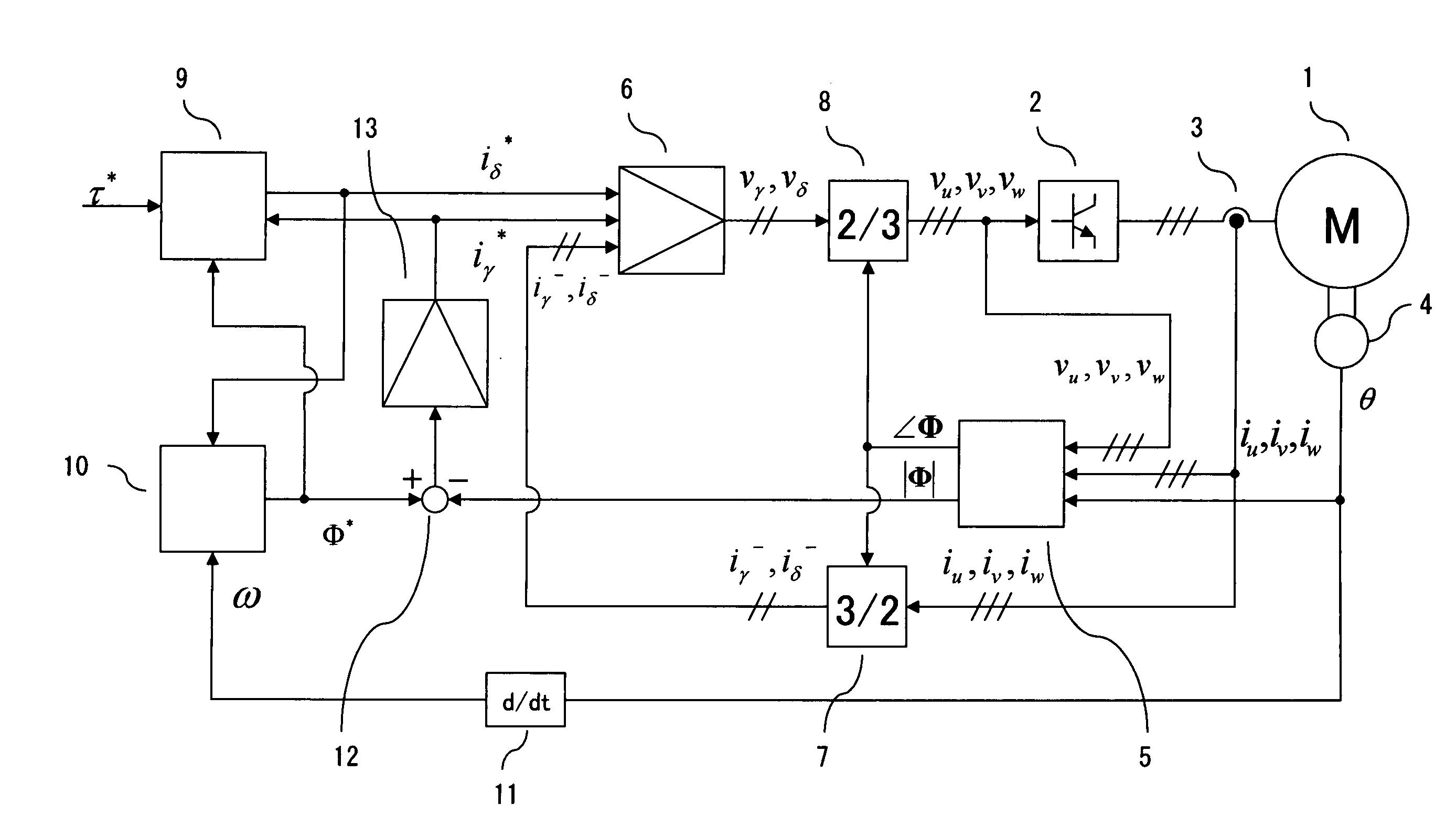
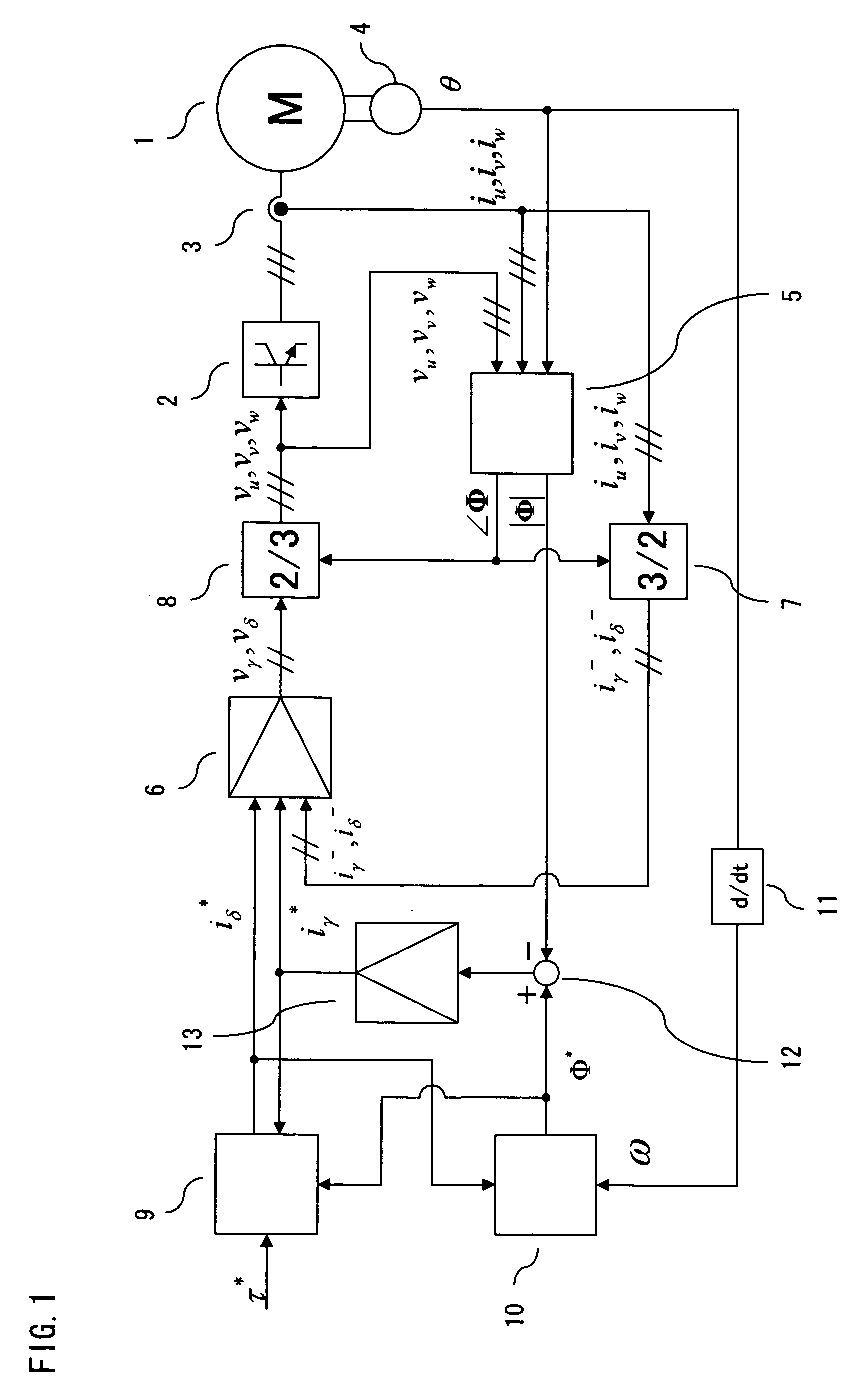
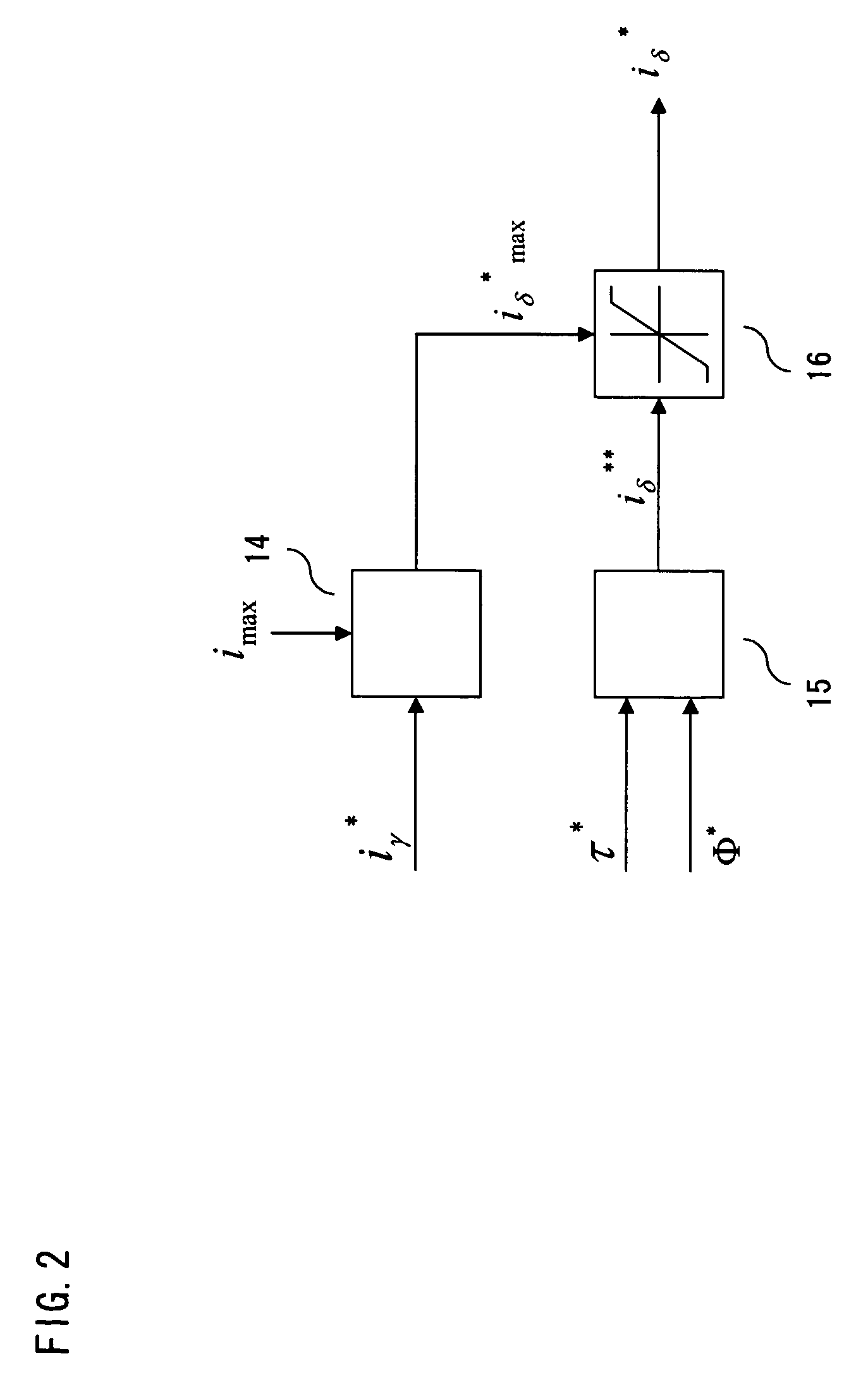
- A synchronous machine control apparatus that generates armature current commands based on torque and flux commands, incorporating a torque current calculator, flux calculator, and limiter to ensure the armature current does not exceed the power conversion unit's maximum output, allowing for optimized flux command calculation that reflects torque current limitations.

Synchronous machine having magnetic rotary field reduction and flux concentration
PatentActiveEP3545610A1
Innovation
- The addition of at least one permanent magnet that generates magnetic flux opposite to the direction of magnetization in the rotor's flux guiding areas increases the flux density, allowing for a higher overall magnetization and significantly increased torque through flux concentration, with optimal configurations such as cylindrical or disc rotors and laminated flux guiding areas.
Grid Integration Standards and Compliance Requirements
Synchronous generators designed for maximum torque output must comply with stringent grid integration standards to ensure safe and reliable operation within modern power systems. International standards such as IEEE 1547, IEC 61400-27, and regional grid codes establish fundamental requirements for voltage regulation, frequency response, and power quality that directly impact generator design parameters. High-output synchronous generators must demonstrate compliance with voltage ride-through capabilities, enabling continuous operation during grid disturbances while maintaining torque delivery within specified limits. These requirements often necessitate advanced excitation control systems and robust mechanical designs to handle transient conditions without compromising structural integrity.
Power quality standards impose strict limitations on harmonic distortion, voltage flicker, and reactive power management, which become increasingly challenging as torque output increases. Generators operating at maximum torque levels must incorporate sophisticated filtering and compensation mechanisms to maintain total harmonic distortion below mandated thresholds, typically 5% for voltage and 8% for current under IEEE 519 guidelines. The electromagnetic design must balance high torque density with low harmonic content, requiring careful optimization of rotor and stator configurations to minimize space harmonics while maximizing fundamental flux linkage.
Grid synchronization protocols demand precise control over generator parameters during connection and disconnection sequences. High-torque synchronous generators require enhanced protection systems including anti-islanding detection, overcurrent protection, and differential relaying that meet UL 1741 and IEC 62116 certification standards. The control systems must execute seamless transitions between grid-connected and isolated operation modes while maintaining torque stability margins above 15% to prevent loss of synchronism during fault conditions.
Compliance verification involves extensive testing protocols including factory acceptance tests, commissioning procedures, and periodic performance assessments. Documentation requirements encompass detailed technical specifications, protection settings, and operational characteristics that demonstrate conformity with applicable standards. Manufacturers must maintain certification records and implement quality management systems aligned with ISO 9001 frameworks to ensure consistent compliance throughout the product lifecycle, particularly critical for generators deployed in utility-scale applications where grid stability depends on predictable performance characteristics.
Power quality standards impose strict limitations on harmonic distortion, voltage flicker, and reactive power management, which become increasingly challenging as torque output increases. Generators operating at maximum torque levels must incorporate sophisticated filtering and compensation mechanisms to maintain total harmonic distortion below mandated thresholds, typically 5% for voltage and 8% for current under IEEE 519 guidelines. The electromagnetic design must balance high torque density with low harmonic content, requiring careful optimization of rotor and stator configurations to minimize space harmonics while maximizing fundamental flux linkage.
Grid synchronization protocols demand precise control over generator parameters during connection and disconnection sequences. High-torque synchronous generators require enhanced protection systems including anti-islanding detection, overcurrent protection, and differential relaying that meet UL 1741 and IEC 62116 certification standards. The control systems must execute seamless transitions between grid-connected and isolated operation modes while maintaining torque stability margins above 15% to prevent loss of synchronism during fault conditions.
Compliance verification involves extensive testing protocols including factory acceptance tests, commissioning procedures, and periodic performance assessments. Documentation requirements encompass detailed technical specifications, protection settings, and operational characteristics that demonstrate conformity with applicable standards. Manufacturers must maintain certification records and implement quality management systems aligned with ISO 9001 frameworks to ensure consistent compliance throughout the product lifecycle, particularly critical for generators deployed in utility-scale applications where grid stability depends on predictable performance characteristics.
Thermal Management in High-Torque Generator Design
Thermal management represents a critical engineering challenge in high-torque synchronous generator design, as the pursuit of maximum torque output inevitably generates substantial heat that must be effectively dissipated to maintain operational reliability and performance. The electromagnetic forces required to produce high torque levels result in increased current densities in both stator windings and rotor field coils, leading to elevated copper losses that manifest as heat. Additionally, core losses from magnetic hysteresis and eddy currents intensify proportionally with flux density increases necessary for torque maximization.
The thermal constraints directly impact the generator's continuous power rating and torque capability. Excessive temperatures accelerate insulation degradation, reducing the expected lifespan of winding materials and potentially causing catastrophic failures. Modern high-torque designs typically operate with stator winding temperatures approaching 180°C, necessitating advanced insulation systems rated for Class H or higher temperature classifications. The rotor presents additional thermal challenges, particularly in brushless excitation systems where heat removal pathways are limited by rotating components.
Effective cooling architectures have evolved to address these thermal demands. Liquid cooling systems, utilizing water or specialized dielectric fluids, provide superior heat extraction compared to traditional air-cooling methods. Direct winding cooling, where coolant channels are integrated within or adjacent to conductor bundles, enables localized heat removal at the source of generation. Heat pipe technologies and advanced thermal interface materials further enhance heat transfer efficiency from critical components to cooling media.
Thermal modeling and simulation have become indispensable tools in the design phase, allowing engineers to predict temperature distributions and identify potential hotspots before physical prototyping. Computational fluid dynamics coupled with electromagnetic finite element analysis enables optimization of cooling channel geometries and flow rates to achieve uniform temperature profiles across the generator structure.
The integration of real-time thermal monitoring systems with embedded sensors provides operational safeguards, enabling predictive maintenance strategies and dynamic load management to prevent thermal excursions that could compromise generator integrity or performance sustainability.
The thermal constraints directly impact the generator's continuous power rating and torque capability. Excessive temperatures accelerate insulation degradation, reducing the expected lifespan of winding materials and potentially causing catastrophic failures. Modern high-torque designs typically operate with stator winding temperatures approaching 180°C, necessitating advanced insulation systems rated for Class H or higher temperature classifications. The rotor presents additional thermal challenges, particularly in brushless excitation systems where heat removal pathways are limited by rotating components.
Effective cooling architectures have evolved to address these thermal demands. Liquid cooling systems, utilizing water or specialized dielectric fluids, provide superior heat extraction compared to traditional air-cooling methods. Direct winding cooling, where coolant channels are integrated within or adjacent to conductor bundles, enables localized heat removal at the source of generation. Heat pipe technologies and advanced thermal interface materials further enhance heat transfer efficiency from critical components to cooling media.
Thermal modeling and simulation have become indispensable tools in the design phase, allowing engineers to predict temperature distributions and identify potential hotspots before physical prototyping. Computational fluid dynamics coupled with electromagnetic finite element analysis enables optimization of cooling channel geometries and flow rates to achieve uniform temperature profiles across the generator structure.
The integration of real-time thermal monitoring systems with embedded sensors provides operational safeguards, enabling predictive maintenance strategies and dynamic load management to prevent thermal excursions that could compromise generator integrity or performance sustainability.
Unlock deeper insights with Patsnap Eureka Quick Research — get a full tech report to explore trends and direct your research. Try now!
Generate Your Research Report Instantly with AI Agent
Supercharge your innovation with Patsnap Eureka AI Agent Platform!