

Maximizing Machine Olfaction for Predictive Maintenance Strategies
APR 29, 20269 MIN READ
Generate Your Research Report Instantly with AI Agent
PatSnap Eureka helps you evaluate technical feasibility & market potential.
Machine Olfaction Technology Background and Predictive Goals
Machine olfaction technology represents a revolutionary advancement in sensor-based detection systems, drawing inspiration from biological olfactory mechanisms to create artificial sensing capabilities. This field emerged from the convergence of chemical sensor technology, pattern recognition algorithms, and materials science, evolving from simple gas detection systems in the 1960s to sophisticated electronic nose platforms capable of identifying complex chemical signatures. The technology fundamentally relies on arrays of chemical sensors that respond to volatile organic compounds, generating distinctive response patterns that can be analyzed through machine learning algorithms.
The historical development of machine olfaction began with early metal oxide semiconductor sensors and has progressed through multiple generations of sensing technologies. Conducting polymer sensors, quartz crystal microbalances, and surface acoustic wave devices have each contributed to expanding the detection capabilities and sensitivity ranges. Recent breakthroughs in nanomaterial-based sensors, including carbon nanotube arrays and graphene-based platforms, have dramatically enhanced selectivity and response times while reducing power consumption requirements.
Contemporary machine olfaction systems integrate advanced signal processing techniques with artificial intelligence frameworks to achieve unprecedented accuracy in chemical identification and quantification. Deep learning architectures, particularly convolutional neural networks and recurrent neural networks, have proven exceptionally effective in extracting meaningful patterns from complex sensor array responses. These systems can now distinguish between thousands of different chemical compounds and detect trace concentrations at parts-per-billion levels.
The predictive maintenance application domain represents one of the most promising frontiers for machine olfaction technology. Industrial equipment degradation often produces characteristic volatile emissions long before visible or mechanical symptoms appear. By continuously monitoring these chemical signatures, machine olfaction systems can identify incipient failures, optimize maintenance schedules, and prevent catastrophic equipment breakdowns. The technology aims to transform reactive maintenance paradigms into proactive, data-driven strategies that maximize operational efficiency while minimizing downtime costs.
Current research objectives focus on developing robust, field-deployable systems capable of operating in harsh industrial environments while maintaining calibration stability over extended periods. Integration with Internet of Things platforms and cloud-based analytics represents a critical pathway toward scalable predictive maintenance solutions across diverse industrial sectors.
The historical development of machine olfaction began with early metal oxide semiconductor sensors and has progressed through multiple generations of sensing technologies. Conducting polymer sensors, quartz crystal microbalances, and surface acoustic wave devices have each contributed to expanding the detection capabilities and sensitivity ranges. Recent breakthroughs in nanomaterial-based sensors, including carbon nanotube arrays and graphene-based platforms, have dramatically enhanced selectivity and response times while reducing power consumption requirements.
Contemporary machine olfaction systems integrate advanced signal processing techniques with artificial intelligence frameworks to achieve unprecedented accuracy in chemical identification and quantification. Deep learning architectures, particularly convolutional neural networks and recurrent neural networks, have proven exceptionally effective in extracting meaningful patterns from complex sensor array responses. These systems can now distinguish between thousands of different chemical compounds and detect trace concentrations at parts-per-billion levels.
The predictive maintenance application domain represents one of the most promising frontiers for machine olfaction technology. Industrial equipment degradation often produces characteristic volatile emissions long before visible or mechanical symptoms appear. By continuously monitoring these chemical signatures, machine olfaction systems can identify incipient failures, optimize maintenance schedules, and prevent catastrophic equipment breakdowns. The technology aims to transform reactive maintenance paradigms into proactive, data-driven strategies that maximize operational efficiency while minimizing downtime costs.
Current research objectives focus on developing robust, field-deployable systems capable of operating in harsh industrial environments while maintaining calibration stability over extended periods. Integration with Internet of Things platforms and cloud-based analytics represents a critical pathway toward scalable predictive maintenance solutions across diverse industrial sectors.
Market Demand for Olfactory-Based Predictive Maintenance
The industrial maintenance sector is experiencing a paradigm shift toward predictive maintenance strategies, driven by the need to minimize unplanned downtime and optimize operational efficiency. Traditional condition monitoring techniques, while effective, often fail to detect early-stage equipment degradation that manifests through subtle chemical emissions and odor signatures. This gap has created substantial market demand for olfactory-based predictive maintenance solutions that can identify potential failures before they become critical.
Manufacturing industries, particularly chemical processing, petrochemicals, and heavy machinery sectors, represent the primary demand drivers for machine olfaction technologies. These industries face significant financial losses from unexpected equipment failures, with downtime costs often exceeding maintenance expenses by substantial margins. The ability to detect chemical leaks, overheating components, and material degradation through advanced olfactory sensors addresses a critical operational need that conventional monitoring systems cannot fulfill.
The automotive and aerospace industries have emerged as secondary but rapidly growing market segments for olfactory-based maintenance solutions. These sectors require extremely high reliability standards and are increasingly adopting sophisticated predictive maintenance approaches. Electronic nose technologies capable of detecting lubricant degradation, seal failures, and component wear through chemical signature analysis are becoming essential tools for maintaining operational excellence.
Energy sector applications, including power generation facilities and renewable energy installations, represent another significant demand area. Wind turbines, in particular, benefit from olfactory monitoring systems that can detect gearbox oil degradation and bearing failures in remote locations where traditional inspection methods are costly and logistically challenging.
The market demand is further amplified by regulatory pressures and safety requirements across various industries. Environmental compliance mandates and workplace safety standards increasingly require early detection of chemical emissions and hazardous material leaks, positioning olfactory-based systems as compliance enablers rather than optional enhancements.
Small and medium enterprises are beginning to recognize the value proposition of affordable olfactory monitoring solutions, expanding the addressable market beyond large industrial facilities. This democratization of advanced predictive maintenance technologies is creating new opportunities for scalable, cost-effective machine olfaction systems.
The integration of artificial intelligence and machine learning capabilities with olfactory sensors has enhanced the appeal of these solutions, enabling more sophisticated pattern recognition and predictive analytics. This technological convergence is driving adoption across industries that previously considered such systems too complex or expensive to implement effectively.
Manufacturing industries, particularly chemical processing, petrochemicals, and heavy machinery sectors, represent the primary demand drivers for machine olfaction technologies. These industries face significant financial losses from unexpected equipment failures, with downtime costs often exceeding maintenance expenses by substantial margins. The ability to detect chemical leaks, overheating components, and material degradation through advanced olfactory sensors addresses a critical operational need that conventional monitoring systems cannot fulfill.
The automotive and aerospace industries have emerged as secondary but rapidly growing market segments for olfactory-based maintenance solutions. These sectors require extremely high reliability standards and are increasingly adopting sophisticated predictive maintenance approaches. Electronic nose technologies capable of detecting lubricant degradation, seal failures, and component wear through chemical signature analysis are becoming essential tools for maintaining operational excellence.
Energy sector applications, including power generation facilities and renewable energy installations, represent another significant demand area. Wind turbines, in particular, benefit from olfactory monitoring systems that can detect gearbox oil degradation and bearing failures in remote locations where traditional inspection methods are costly and logistically challenging.
The market demand is further amplified by regulatory pressures and safety requirements across various industries. Environmental compliance mandates and workplace safety standards increasingly require early detection of chemical emissions and hazardous material leaks, positioning olfactory-based systems as compliance enablers rather than optional enhancements.
Small and medium enterprises are beginning to recognize the value proposition of affordable olfactory monitoring solutions, expanding the addressable market beyond large industrial facilities. This democratization of advanced predictive maintenance technologies is creating new opportunities for scalable, cost-effective machine olfaction systems.
The integration of artificial intelligence and machine learning capabilities with olfactory sensors has enhanced the appeal of these solutions, enabling more sophisticated pattern recognition and predictive analytics. This technological convergence is driving adoption across industries that previously considered such systems too complex or expensive to implement effectively.
Current State and Challenges of Electronic Nose Systems
Electronic nose systems have achieved significant technological maturity over the past two decades, with commercial applications spanning food quality control, environmental monitoring, and medical diagnostics. Current e-nose architectures predominantly utilize metal oxide semiconductor sensors, conducting polymer arrays, and quartz crystal microbalances to detect volatile organic compounds. These systems demonstrate remarkable sensitivity in controlled laboratory environments, with detection limits reaching parts-per-billion levels for specific target molecules.
However, the integration of electronic nose technology into predictive maintenance frameworks faces substantial technical barriers. Sensor drift remains the most critical challenge, as individual sensing elements experience gradual changes in baseline response and sensitivity over extended operational periods. This phenomenon significantly compromises the reliability of long-term monitoring applications essential for predictive maintenance strategies.
Cross-sensitivity issues further complicate deployment scenarios. Industrial environments present complex chemical matrices where target analytes coexist with numerous interfering compounds. Current sensor arrays struggle to maintain selectivity under these conditions, leading to false positive alerts and reduced diagnostic accuracy. Temperature and humidity fluctuations in real-world settings exacerbate these selectivity challenges, as sensor responses exhibit non-linear dependencies on environmental conditions.
Data processing and pattern recognition capabilities represent another significant bottleneck. While machine learning algorithms have improved classification accuracy, most systems require extensive training datasets specific to each application context. The lack of standardized calibration protocols and reference materials hinders the development of robust, transferable models across different industrial settings.
Manufacturing consistency and sensor reproducibility pose additional obstacles to widespread adoption. Variations in sensor fabrication processes result in device-to-device performance disparities, necessitating individual calibration procedures that increase deployment costs and complexity. Current sensor lifespans typically range from six months to two years, creating maintenance burdens that conflict with the cost-effectiveness goals of predictive maintenance programs.
Integration challenges with existing industrial monitoring infrastructure further limit practical implementation. Most electronic nose systems operate as standalone units with proprietary communication protocols, complicating integration with established SCADA systems and maintenance management platforms. Real-time processing requirements for predictive maintenance applications demand computational resources that exceed the capabilities of many current portable e-nose devices.
However, the integration of electronic nose technology into predictive maintenance frameworks faces substantial technical barriers. Sensor drift remains the most critical challenge, as individual sensing elements experience gradual changes in baseline response and sensitivity over extended operational periods. This phenomenon significantly compromises the reliability of long-term monitoring applications essential for predictive maintenance strategies.
Cross-sensitivity issues further complicate deployment scenarios. Industrial environments present complex chemical matrices where target analytes coexist with numerous interfering compounds. Current sensor arrays struggle to maintain selectivity under these conditions, leading to false positive alerts and reduced diagnostic accuracy. Temperature and humidity fluctuations in real-world settings exacerbate these selectivity challenges, as sensor responses exhibit non-linear dependencies on environmental conditions.
Data processing and pattern recognition capabilities represent another significant bottleneck. While machine learning algorithms have improved classification accuracy, most systems require extensive training datasets specific to each application context. The lack of standardized calibration protocols and reference materials hinders the development of robust, transferable models across different industrial settings.
Manufacturing consistency and sensor reproducibility pose additional obstacles to widespread adoption. Variations in sensor fabrication processes result in device-to-device performance disparities, necessitating individual calibration procedures that increase deployment costs and complexity. Current sensor lifespans typically range from six months to two years, creating maintenance burdens that conflict with the cost-effectiveness goals of predictive maintenance programs.
Integration challenges with existing industrial monitoring infrastructure further limit practical implementation. Most electronic nose systems operate as standalone units with proprietary communication protocols, complicating integration with established SCADA systems and maintenance management platforms. Real-time processing requirements for predictive maintenance applications demand computational resources that exceed the capabilities of many current portable e-nose devices.
Existing Olfactory Solutions for Equipment Monitoring
01 Electronic nose sensor array optimization
Advanced sensor array configurations and optimization techniques for electronic nose systems to maximize olfactory detection capabilities. This involves the development of multi-sensor arrays with enhanced sensitivity and selectivity for various odor compounds, utilizing different sensing materials and technologies to create comprehensive olfactory detection systems.- Electronic nose sensor array optimization: Advanced sensor array configurations and optimization techniques for electronic nose systems to maximize olfactory detection capabilities. This involves the development of multi-sensor arrays with enhanced sensitivity and selectivity for various odor compounds, utilizing different sensing materials and technologies to create comprehensive olfactory detection systems.
- Machine learning algorithms for odor recognition: Implementation of artificial intelligence and machine learning algorithms to improve pattern recognition and classification of olfactory signals. These systems utilize neural networks, deep learning, and other AI techniques to analyze complex odor patterns and enhance the accuracy of smell identification and discrimination.
- Gas chromatography integration with electronic systems: Integration of gas chromatography techniques with electronic olfaction systems to provide enhanced analytical capabilities. This approach combines traditional analytical chemistry methods with modern electronic sensing to achieve superior odor detection, identification, and quantification performance.
- Portable and miniaturized olfaction devices: Development of compact, portable electronic nose devices for field applications and real-time odor monitoring. These systems focus on miniaturization of sensing components while maintaining high performance, enabling widespread deployment for environmental monitoring, food quality control, and industrial applications.
- Signal processing and data fusion techniques: Advanced signal processing methods and data fusion algorithms to maximize the information extraction from olfactory sensors. These techniques involve preprocessing, feature extraction, and multi-sensor data integration to enhance the overall performance and reliability of machine olfaction systems.
02 Machine learning algorithms for odor recognition
Implementation of artificial intelligence and machine learning algorithms to improve pattern recognition and classification of olfactory signals. These systems utilize neural networks, deep learning, and other AI techniques to analyze complex odor patterns and enhance the accuracy of smell identification and discrimination.Expand Specific Solutions03 Gas chromatography integration with olfactory systems
Integration of gas chromatography techniques with electronic olfaction systems to provide enhanced analytical capabilities. This approach combines the separation power of chromatography with electronic nose detection to achieve better compound identification and quantification in complex odor mixtures.Expand Specific Solutions04 Portable and miniaturized olfaction devices
Development of compact, portable electronic nose devices for field applications and real-time odor monitoring. These systems focus on miniaturization of sensing components while maintaining high performance, enabling widespread deployment for environmental monitoring, food quality assessment, and industrial applications.Expand Specific Solutions05 Multi-modal sensing and data fusion techniques
Advanced data fusion methods that combine multiple sensing modalities to maximize olfactory detection performance. This includes integration of different sensor types, signal processing techniques, and data analysis methods to create robust and reliable olfactory measurement systems with enhanced discrimination capabilities.Expand Specific Solutions
Key Players in Electronic Nose and Predictive Maintenance
The machine olfaction for predictive maintenance market is in its early growth stage, characterized by emerging technological convergence between sensor technologies and AI-driven analytics. The market remains relatively niche but shows significant expansion potential as industries increasingly adopt IoT-enabled maintenance strategies. Technology maturity varies considerably across market participants, with established industrial giants like Siemens AG, ABB Ltd., and Johnson Controls leveraging their automation expertise to integrate olfactory sensing into comprehensive maintenance platforms. Traditional equipment manufacturers such as Caterpillar SARL and MTU Aero Engines are incorporating these technologies into their existing maintenance frameworks, while specialized firms like Computational Systems focus on dedicated predictive maintenance solutions. The competitive landscape reflects a hybrid approach where legacy industrial companies are adapting their established maintenance services to include machine olfaction capabilities, creating a multi-tiered market with varying levels of technological sophistication and implementation readiness across different industrial sectors.
Caterpillar SARL
Technical Solution: Caterpillar has implemented machine olfaction technology in their Cat Connect predictive maintenance platform for heavy machinery and mining equipment. Their system utilizes ruggedized gas sensor arrays capable of detecting hydraulic fluid degradation, engine oil contamination, and exhaust system anomalies through chemical signature analysis. The technology employs metal oxide sensors and infrared spectroscopy to identify specific molecular markers indicating component wear and fluid breakdown. Integrated with their telematics systems, the olfactory monitoring can predict hydraulic system failures up to 20 days in advance and detect engine problems 15 days before traditional diagnostic methods, significantly reducing equipment downtime in mining and construction operations.
Strengths: Robust design for harsh environments, specialized heavy equipment expertise, comprehensive telematics integration. Weaknesses: Limited to specific equipment types, higher maintenance requirements for sensor systems in dusty conditions.
ABB Ltd.
Technical Solution: ABB has integrated machine olfaction technology into their Ability condition monitoring systems, specifically targeting rotating equipment and electrical assets. Their solution combines multi-sensor arrays with advanced signal processing algorithms to detect chemical markers of equipment degradation. The system employs semiconductor gas sensors and mass spectrometry techniques to identify specific volatile compounds associated with bearing wear, electrical arcing, and insulation deterioration. ABB's predictive maintenance platform can process olfactory data in conjunction with vibration and thermal analysis, providing comprehensive asset health assessment with detection capabilities up to 45 days before critical failures in power generation and industrial automation applications.
Strengths: Strong industrial automation expertise, comprehensive multi-parameter monitoring, proven reliability in harsh environments. Weaknesses: Higher initial investment costs, requires specialized technical expertise for deployment.
Core Innovations in Chemical Sensor Arrays and AI
Multi-parametric machine olfaction
PatentActiveUS11828742B2
Innovation
- A system comprising an array of chemical, pressure, and temperature sensors, along with a temporal airflow modulator, which provides sniffed vapors in a temporally-modulated sequence through multiple air paths, expanding the feature space and mimicking biological olfaction by incorporating spatiotemporal time signatures and physical properties of odors.


Robust predictive maintenance method for machinery using measured vibration data and estimated sound data
PatentActiveUS20240264045A1
Innovation
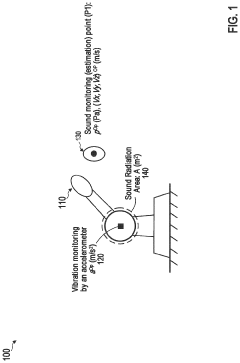
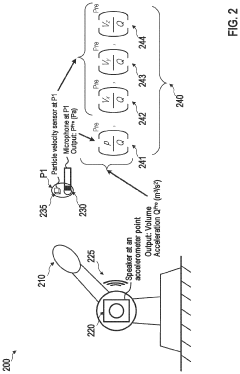
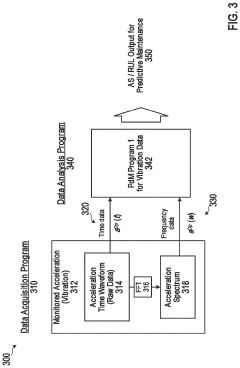
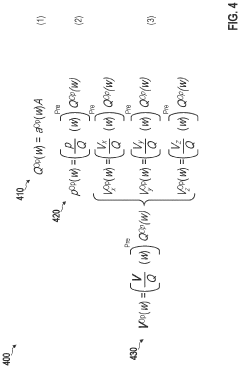
- The method involves estimating sound data from measured vibration data using a pre-measured acoustic transfer function, which is calculated during quiet times, allowing for reduced microphone usage and improved noise reduction by leveraging the lower noise levels in vibration data.
Industrial Safety Standards for Chemical Detection
Industrial safety standards for chemical detection in machine olfaction systems represent a critical framework that governs the deployment of electronic nose technologies in predictive maintenance applications. These standards establish mandatory protocols for detecting hazardous chemical compounds, volatile organic compounds, and toxic gases that could pose risks to personnel and equipment in industrial environments.
The International Electrotechnical Commission (IEC) 61508 standard provides the foundational safety integrity level requirements for electronic systems used in chemical detection applications. This standard mandates that machine olfaction systems achieve specific performance criteria, including detection accuracy rates exceeding 95% for target compounds and false alarm rates below 2% to ensure reliable operation in critical industrial settings.
Occupational Safety and Health Administration (OSHA) regulations define permissible exposure limits for various chemical substances, directly influencing the sensitivity requirements for machine olfaction sensors. These regulations require detection systems to identify chemical concentrations at levels significantly below established threshold limit values, typically at 10-25% of the permissible exposure limit to provide adequate warning time for protective measures.
The ATEX directive (2014/34/EU) establishes specific requirements for equipment used in potentially explosive atmospheres, mandating that machine olfaction devices incorporate intrinsically safe designs and explosion-proof enclosures. These standards require comprehensive testing protocols including temperature cycling, vibration resistance, and electromagnetic compatibility assessments to ensure reliable operation in hazardous industrial environments.
National Institute for Occupational Safety and Health (NIOSH) guidelines specify calibration procedures and maintenance protocols for chemical detection systems, requiring regular validation against certified reference standards and documented traceability to national measurement standards. These protocols ensure consistent performance and regulatory compliance throughout the operational lifecycle of machine olfaction systems in predictive maintenance applications.
The International Electrotechnical Commission (IEC) 61508 standard provides the foundational safety integrity level requirements for electronic systems used in chemical detection applications. This standard mandates that machine olfaction systems achieve specific performance criteria, including detection accuracy rates exceeding 95% for target compounds and false alarm rates below 2% to ensure reliable operation in critical industrial settings.
Occupational Safety and Health Administration (OSHA) regulations define permissible exposure limits for various chemical substances, directly influencing the sensitivity requirements for machine olfaction sensors. These regulations require detection systems to identify chemical concentrations at levels significantly below established threshold limit values, typically at 10-25% of the permissible exposure limit to provide adequate warning time for protective measures.
The ATEX directive (2014/34/EU) establishes specific requirements for equipment used in potentially explosive atmospheres, mandating that machine olfaction devices incorporate intrinsically safe designs and explosion-proof enclosures. These standards require comprehensive testing protocols including temperature cycling, vibration resistance, and electromagnetic compatibility assessments to ensure reliable operation in hazardous industrial environments.
National Institute for Occupational Safety and Health (NIOSH) guidelines specify calibration procedures and maintenance protocols for chemical detection systems, requiring regular validation against certified reference standards and documented traceability to national measurement standards. These protocols ensure consistent performance and regulatory compliance throughout the operational lifecycle of machine olfaction systems in predictive maintenance applications.
Cost-Benefit Analysis of Olfactory Maintenance Systems
The economic evaluation of olfactory-based predictive maintenance systems reveals a compelling value proposition when analyzed through comprehensive cost-benefit frameworks. Initial capital expenditures typically range from $50,000 to $200,000 per facility, depending on the complexity of sensor networks and analytical infrastructure required. These upfront investments encompass electronic nose hardware, data processing units, software licensing, and installation costs.
Operational expenses demonstrate favorable scaling characteristics, with annual maintenance costs averaging 8-12% of initial capital investment. Energy consumption remains minimal due to the low-power nature of most olfactory sensors, contributing less than 2% to total operational costs. Personnel training and system calibration represent recurring expenses that decrease over time as operational expertise develops within maintenance teams.
The primary economic benefits manifest through substantial reductions in unplanned downtime, which can cost industrial facilities between $50,000 to $500,000 per hour depending on the sector. Olfactory systems typically detect equipment degradation 2-6 weeks earlier than traditional monitoring methods, enabling proactive maintenance scheduling that reduces emergency repair costs by 40-60%. Additionally, optimized maintenance intervals extend equipment lifespan by 15-25%, deferring major capital replacements.
Return on investment calculations consistently demonstrate payback periods of 12-24 months across various industrial applications. Manufacturing facilities report the strongest financial returns, with some implementations achieving ROI exceeding 300% within three years. The technology's ability to prevent catastrophic failures generates risk mitigation value that often exceeds direct cost savings, particularly in safety-critical applications where failure consequences extend beyond immediate repair costs.
Long-term economic advantages include reduced spare parts inventory requirements, optimized maintenance workforce allocation, and enhanced regulatory compliance. These secondary benefits contribute an additional 20-30% to the overall value proposition, making olfactory maintenance systems increasingly attractive for strategic operational planning.
Operational expenses demonstrate favorable scaling characteristics, with annual maintenance costs averaging 8-12% of initial capital investment. Energy consumption remains minimal due to the low-power nature of most olfactory sensors, contributing less than 2% to total operational costs. Personnel training and system calibration represent recurring expenses that decrease over time as operational expertise develops within maintenance teams.
The primary economic benefits manifest through substantial reductions in unplanned downtime, which can cost industrial facilities between $50,000 to $500,000 per hour depending on the sector. Olfactory systems typically detect equipment degradation 2-6 weeks earlier than traditional monitoring methods, enabling proactive maintenance scheduling that reduces emergency repair costs by 40-60%. Additionally, optimized maintenance intervals extend equipment lifespan by 15-25%, deferring major capital replacements.
Return on investment calculations consistently demonstrate payback periods of 12-24 months across various industrial applications. Manufacturing facilities report the strongest financial returns, with some implementations achieving ROI exceeding 300% within three years. The technology's ability to prevent catastrophic failures generates risk mitigation value that often exceeds direct cost savings, particularly in safety-critical applications where failure consequences extend beyond immediate repair costs.
Long-term economic advantages include reduced spare parts inventory requirements, optimized maintenance workforce allocation, and enhanced regulatory compliance. These secondary benefits contribute an additional 20-30% to the overall value proposition, making olfactory maintenance systems increasingly attractive for strategic operational planning.
Unlock deeper insights with PatSnap Eureka Quick Research — get a full tech report to explore trends and direct your research. Try now!
Generate Your Research Report Instantly with AI Agent
Supercharge your innovation with PatSnap Eureka AI Agent Platform!