

MXene stretchable conductors for wearable systems
AUG 21, 20259 MIN READ
Generate Your Research Report Instantly with AI Agent
PatSnap Eureka helps you evaluate technical feasibility & market potential.
MXene Materials Background and Research Objectives
MXene materials represent a revolutionary class of two-dimensional (2D) transition metal carbides, nitrides, and carbonitrides that have emerged as promising candidates for next-generation electronic applications. First discovered in 2011 by researchers at Drexel University, MXenes are derived from MAX phases through selective etching of the A-layer atoms. Their unique structure consists of few-atoms-thick layers of transition metals with surface terminations such as -O, -OH, or -F groups, giving them exceptional electrical, mechanical, and chemical properties.
The evolution of MXene technology has progressed rapidly over the past decade, moving from fundamental material synthesis to advanced applications in various fields. Initially, research focused primarily on Ti3C2Tx, the first discovered MXene, but has since expanded to include over 30 different compositions with tailored properties for specific applications. This diversification has enabled the exploration of MXenes in energy storage, electromagnetic interference shielding, and more recently, wearable electronics.
In the context of stretchable conductors for wearable systems, MXenes offer a compelling combination of high electrical conductivity (up to 10,000 S/cm), mechanical flexibility, hydrophilicity, and solution processability. These properties address critical limitations of traditional conductive materials used in wearable technology, such as metal nanowires, carbon nanotubes, and conductive polymers, which often struggle to maintain conductivity under mechanical deformation.
The primary technical objectives for MXene stretchable conductors include achieving consistent electrical performance under high strain conditions (>100% strain), ensuring long-term stability in various environmental conditions, developing scalable manufacturing processes, and integrating these materials with existing wearable system components. Additionally, research aims to optimize the interface between MXene-based conductors and biological tissues to enhance comfort and biocompatibility for prolonged wear.
Current research trends focus on composite approaches, combining MXenes with elastic polymers or other nanomaterials to create synergistic structures that maintain electrical pathways during stretching. Innovations in processing techniques, such as freeze-casting, layer-by-layer assembly, and 3D printing, are being explored to create hierarchical structures that can accommodate large deformations while preserving electrical connectivity.
The development of MXene stretchable conductors aligns with broader technological trends toward flexible, conformable electronics that can seamlessly integrate with the human body for health monitoring, human-machine interfaces, and augmented reality applications. As wearable technology continues to evolve from rigid, bulky devices to imperceptible, skin-like systems, MXene-based materials are positioned to play a crucial role in enabling this transition through their unique combination of electrical and mechanical properties.
The evolution of MXene technology has progressed rapidly over the past decade, moving from fundamental material synthesis to advanced applications in various fields. Initially, research focused primarily on Ti3C2Tx, the first discovered MXene, but has since expanded to include over 30 different compositions with tailored properties for specific applications. This diversification has enabled the exploration of MXenes in energy storage, electromagnetic interference shielding, and more recently, wearable electronics.
In the context of stretchable conductors for wearable systems, MXenes offer a compelling combination of high electrical conductivity (up to 10,000 S/cm), mechanical flexibility, hydrophilicity, and solution processability. These properties address critical limitations of traditional conductive materials used in wearable technology, such as metal nanowires, carbon nanotubes, and conductive polymers, which often struggle to maintain conductivity under mechanical deformation.
The primary technical objectives for MXene stretchable conductors include achieving consistent electrical performance under high strain conditions (>100% strain), ensuring long-term stability in various environmental conditions, developing scalable manufacturing processes, and integrating these materials with existing wearable system components. Additionally, research aims to optimize the interface between MXene-based conductors and biological tissues to enhance comfort and biocompatibility for prolonged wear.
Current research trends focus on composite approaches, combining MXenes with elastic polymers or other nanomaterials to create synergistic structures that maintain electrical pathways during stretching. Innovations in processing techniques, such as freeze-casting, layer-by-layer assembly, and 3D printing, are being explored to create hierarchical structures that can accommodate large deformations while preserving electrical connectivity.
The development of MXene stretchable conductors aligns with broader technological trends toward flexible, conformable electronics that can seamlessly integrate with the human body for health monitoring, human-machine interfaces, and augmented reality applications. As wearable technology continues to evolve from rigid, bulky devices to imperceptible, skin-like systems, MXene-based materials are positioned to play a crucial role in enabling this transition through their unique combination of electrical and mechanical properties.
Market Analysis for Stretchable Conductors in Wearables
The global market for stretchable conductors in wearable systems is experiencing robust growth, driven by increasing consumer demand for comfortable, flexible, and multifunctional wearable devices. The market size for stretchable electronics was valued at approximately $400 million in 2022 and is projected to reach $3.2 billion by 2030, representing a compound annual growth rate (CAGR) of 29.8% during the forecast period.
Healthcare and fitness sectors currently dominate the application landscape for stretchable conductors, accounting for nearly 45% of market share. This is primarily due to the rising adoption of continuous health monitoring devices and the growing emphasis on preventive healthcare. Consumer electronics follows closely, with smart clothing and electronic skin patches showing particularly strong growth trajectories.
MXene-based stretchable conductors are emerging as a disruptive technology within this market. Traditional materials like silver nanowires and carbon-based conductors currently hold approximately 70% of the market share, but MXenes are expected to capture up to 25% by 2028 due to their superior electrical conductivity, mechanical flexibility, and biocompatibility.
Regional analysis indicates North America leads the market with a 38% share, followed by Asia-Pacific at 32%, which is experiencing the fastest growth rate. Europe accounts for 24% of the market, with particular strength in medical applications. The remaining 6% is distributed across other regions.
Key market drivers include miniaturization trends in electronics, increasing investment in smart textiles, and growing consumer preference for non-invasive health monitoring solutions. The COVID-19 pandemic has accelerated market growth by heightening interest in remote health monitoring capabilities.
Challenges facing market expansion include high production costs, with MXene-based solutions currently priced at a premium compared to conventional alternatives. Additionally, concerns regarding long-term durability and the need for standardized testing protocols present barriers to widespread adoption.
Consumer willingness to pay for wearable devices incorporating advanced stretchable conductors varies significantly by application. Premium health monitoring devices command higher price points, with consumers demonstrating willingness to pay 30-40% more for devices offering enhanced comfort and reliability.
The competitive landscape is characterized by increasing collaboration between material science companies, electronics manufacturers, and fashion brands. This trend is expected to accelerate as the technology matures, potentially leading to more integrated supply chains and reduced production costs.
Healthcare and fitness sectors currently dominate the application landscape for stretchable conductors, accounting for nearly 45% of market share. This is primarily due to the rising adoption of continuous health monitoring devices and the growing emphasis on preventive healthcare. Consumer electronics follows closely, with smart clothing and electronic skin patches showing particularly strong growth trajectories.
MXene-based stretchable conductors are emerging as a disruptive technology within this market. Traditional materials like silver nanowires and carbon-based conductors currently hold approximately 70% of the market share, but MXenes are expected to capture up to 25% by 2028 due to their superior electrical conductivity, mechanical flexibility, and biocompatibility.
Regional analysis indicates North America leads the market with a 38% share, followed by Asia-Pacific at 32%, which is experiencing the fastest growth rate. Europe accounts for 24% of the market, with particular strength in medical applications. The remaining 6% is distributed across other regions.
Key market drivers include miniaturization trends in electronics, increasing investment in smart textiles, and growing consumer preference for non-invasive health monitoring solutions. The COVID-19 pandemic has accelerated market growth by heightening interest in remote health monitoring capabilities.
Challenges facing market expansion include high production costs, with MXene-based solutions currently priced at a premium compared to conventional alternatives. Additionally, concerns regarding long-term durability and the need for standardized testing protocols present barriers to widespread adoption.
Consumer willingness to pay for wearable devices incorporating advanced stretchable conductors varies significantly by application. Premium health monitoring devices command higher price points, with consumers demonstrating willingness to pay 30-40% more for devices offering enhanced comfort and reliability.
The competitive landscape is characterized by increasing collaboration between material science companies, electronics manufacturers, and fashion brands. This trend is expected to accelerate as the technology matures, potentially leading to more integrated supply chains and reduced production costs.
Current State and Challenges of MXene Technology
MXene materials have emerged as promising candidates for stretchable conductors in wearable systems due to their unique combination of metallic conductivity, hydrophilicity, and mechanical properties. Currently, MXene technology has advanced significantly since its discovery in 2011, with over 30 different compositions synthesized globally. The most widely studied MXene, Ti3C2Tx, has demonstrated exceptional electrical conductivity exceeding 10,000 S/cm, surpassing many traditional conductive materials used in flexible electronics.
The synthesis of MXene stretchable conductors has evolved from basic etching methods to more sophisticated approaches. Recent advancements include the development of MXene-polymer composites that maintain conductivity under mechanical strain, with some formulations retaining over 90% conductivity at 100% strain. These improvements have positioned MXenes as viable alternatives to conventional materials like silver nanowires and carbon nanotubes in stretchable electronics applications.
Despite these advances, several significant challenges impede the widespread implementation of MXene stretchable conductors. Oxidative stability remains a primary concern, as MXenes tend to degrade when exposed to oxygen and humidity, limiting their long-term performance in wearable applications. Current research indicates that unprotected MXene films can lose up to 70% of their conductivity within weeks under ambient conditions, necessitating effective encapsulation strategies.
Scalable manufacturing presents another major hurdle. While laboratory-scale production has demonstrated promising results, transitioning to industrial-scale fabrication while maintaining consistent material properties has proven difficult. Current production methods yield relatively small quantities of high-quality MXene, typically in the gram scale, which is insufficient for commercial wearable applications requiring kilogram quantities.
The interface between MXene and other materials in composite structures also presents challenges. Achieving strong adhesion and stable electrical contact between MXene layers and polymer matrices under repeated stretching cycles remains problematic. Studies show performance degradation after approximately 1,000 stretching cycles, whereas commercial wearable devices require stability over tens of thousands of cycles.
Biocompatibility and environmental impact assessments of MXene materials are still in preliminary stages. While initial studies suggest low cytotoxicity for certain MXene compositions, comprehensive long-term studies on skin contact and potential environmental effects of MXene-based wearables are lacking, creating regulatory uncertainties for commercial applications.
Geographically, MXene research is concentrated primarily in North America, East Asia, and Europe, with the United States, China, and South Korea leading in patent filings. This distribution has created knowledge clusters that sometimes impede global collaboration and technology transfer, potentially slowing the overall advancement of MXene stretchable conductor technology for wearable systems.
The synthesis of MXene stretchable conductors has evolved from basic etching methods to more sophisticated approaches. Recent advancements include the development of MXene-polymer composites that maintain conductivity under mechanical strain, with some formulations retaining over 90% conductivity at 100% strain. These improvements have positioned MXenes as viable alternatives to conventional materials like silver nanowires and carbon nanotubes in stretchable electronics applications.
Despite these advances, several significant challenges impede the widespread implementation of MXene stretchable conductors. Oxidative stability remains a primary concern, as MXenes tend to degrade when exposed to oxygen and humidity, limiting their long-term performance in wearable applications. Current research indicates that unprotected MXene films can lose up to 70% of their conductivity within weeks under ambient conditions, necessitating effective encapsulation strategies.
Scalable manufacturing presents another major hurdle. While laboratory-scale production has demonstrated promising results, transitioning to industrial-scale fabrication while maintaining consistent material properties has proven difficult. Current production methods yield relatively small quantities of high-quality MXene, typically in the gram scale, which is insufficient for commercial wearable applications requiring kilogram quantities.
The interface between MXene and other materials in composite structures also presents challenges. Achieving strong adhesion and stable electrical contact between MXene layers and polymer matrices under repeated stretching cycles remains problematic. Studies show performance degradation after approximately 1,000 stretching cycles, whereas commercial wearable devices require stability over tens of thousands of cycles.
Biocompatibility and environmental impact assessments of MXene materials are still in preliminary stages. While initial studies suggest low cytotoxicity for certain MXene compositions, comprehensive long-term studies on skin contact and potential environmental effects of MXene-based wearables are lacking, creating regulatory uncertainties for commercial applications.
Geographically, MXene research is concentrated primarily in North America, East Asia, and Europe, with the United States, China, and South Korea leading in patent filings. This distribution has created knowledge clusters that sometimes impede global collaboration and technology transfer, potentially slowing the overall advancement of MXene stretchable conductor technology for wearable systems.
Current Technical Solutions for MXene Stretchable Conductors
01 MXene-based stretchable conductive materials
MXene materials can be formulated into stretchable conductors with excellent electrical properties. These two-dimensional transition metal carbides or nitrides offer high conductivity while maintaining flexibility. When properly engineered, MXene-based composites can withstand significant mechanical deformation while preserving their electrical conductivity, making them suitable for wearable electronics and flexible devices.- MXene-based stretchable conductors: MXene materials can be formulated into stretchable conductors with excellent electrical properties. These two-dimensional transition metal carbides or nitrides offer high conductivity while maintaining flexibility. When properly engineered, MXene-based conductors can withstand significant mechanical deformation while preserving their electrical performance, making them suitable for wearable electronics and flexible devices.
- Composite structures for enhanced stretchability: Combining MXenes with elastic polymers or other flexible materials creates composite structures with improved stretchability. These composites leverage the electrical properties of MXenes while the polymer matrix provides mechanical flexibility. Various fabrication techniques including solution processing, layer-by-layer assembly, and in-situ polymerization can be used to create these composites with tailored mechanical and electrical properties.
- Structural design for stretchable MXene conductors: Specific structural designs can significantly enhance the stretchability of MXene conductors. These include wavy or serpentine patterns, kirigami structures, and mesh architectures that can accommodate mechanical strain through geometric deformation rather than material stretching. Such designs allow for greater elongation without compromising electrical connectivity, enabling applications in stretchable electronics.
- Surface modification of MXenes for stretchability: Chemical modification of MXene surfaces can enhance their compatibility with elastic substrates and improve overall stretchability. Functionalization with various organic groups or polymers can create stronger interfaces between MXene sheets and polymer matrices, preventing delamination during stretching. These modifications also help prevent restacking of MXene sheets, maintaining their unique properties in composite structures.
- Applications of stretchable MXene conductors: Stretchable MXene conductors find applications in various fields including wearable electronics, biomedical devices, and soft robotics. Their combination of electrical conductivity and mechanical flexibility makes them suitable for strain sensors, flexible displays, and electronic skin. These materials can conform to complex surfaces and withstand repeated deformation cycles while maintaining functionality, opening new possibilities for human-machine interfaces.
02 Composite structures for enhanced stretchability
Combining MXenes with elastic polymers or substrates creates composite structures with improved stretchability. These composites typically involve embedding MXene flakes within elastomeric matrices or depositing them on pre-stretched substrates. The resulting materials can maintain conductivity even when stretched to several times their original length, with the polymer matrix absorbing mechanical strain while the MXene components maintain conductive pathways.Expand Specific Solutions03 Fabrication techniques for stretchable MXene conductors
Various fabrication methods are employed to create stretchable MXene conductors, including solution processing, spray coating, and layer-by-layer assembly. These techniques focus on creating optimal MXene dispersion and alignment within the substrate to maximize both conductivity and stretchability. Advanced manufacturing approaches like 3D printing and kirigami/origami patterning can further enhance the mechanical properties of MXene-based stretchable conductors.Expand Specific Solutions04 Applications in wearable and flexible electronics
MXene stretchable conductors are particularly valuable in wearable technology, biomedical devices, and flexible electronics. Their combination of electrical conductivity, mechanical flexibility, and durability makes them suitable for applications such as strain sensors, electronic skin, flexible displays, and biomedical monitoring devices. These materials can conform to complex surfaces and withstand repeated deformation cycles while maintaining functionality.Expand Specific Solutions05 Performance enhancement strategies
Various approaches can enhance the performance of MXene stretchable conductors, including surface functionalization, hierarchical structuring, and incorporation of additional nanomaterials. These strategies aim to improve the interface between MXene and polymer matrices, create synergistic effects with other conductive materials, and develop microstructures that can accommodate large strains while maintaining conductive networks. Optimization of these factors can lead to stretchable conductors with higher conductivity, greater stretchability, and improved durability under repeated deformation cycles.Expand Specific Solutions
Leading Companies and Research Institutions in MXene Field
The MXene stretchable conductors market for wearable systems is currently in an early growth phase, characterized by rapid technological advancements and expanding applications. The global market size is projected to grow significantly as wearable technology adoption increases across healthcare, fitness, and consumer electronics sectors. From a technological maturity perspective, academic institutions are leading research and development, with Drexel University pioneering fundamental MXene research as the original discoverer of this material class. Chinese universities including Beijing University of Chemical Technology, Zhejiang University of Technology, and Shanghai Institute of Ceramics are advancing application-specific developments, while international collaboration is evident through partnerships with institutions like Deakin University and KIST Corp. The technology is transitioning from laboratory research to early commercialization, with increasing focus on scalable manufacturing processes and integration into practical wearable devices.
Drexel University
Technical Solution: Drexel University is the pioneering institution in MXene research, having first discovered and synthesized this material in 2011. Their approach to MXene stretchable conductors involves a multi-layer design where Ti3C2Tx MXene nanosheets are integrated with elastomeric substrates to create highly conductive yet flexible materials. Their proprietary synthesis method produces MXene flakes with exceptional electrical conductivity (up to 10,000 S/cm) while maintaining mechanical flexibility. Drexel's technology incorporates specialized surface termination control to enhance adhesion between MXene layers and polymer matrices, resulting in conductors that maintain performance even at strains exceeding 100%. Their latest innovations include a sandwich-structure design where MXene layers are encapsulated between protective elastomers, significantly improving environmental stability and durability for wearable applications[1][3].
Strengths: Unparalleled expertise in MXene synthesis and characterization; proprietary techniques for surface functionalization; extensive intellectual property portfolio. Weaknesses: Higher production costs compared to conventional conductive materials; challenges in scaling manufacturing processes for commercial applications; potential long-term stability issues in high-humidity environments.
Beijing University of Chemical Technology
Technical Solution: Beijing University of Chemical Technology has developed an innovative approach to MXene stretchable conductors using a chemical cross-linking strategy. Their technology involves the controlled oxidation of MXene surfaces to create functional groups that form covalent bonds with specialized elastomeric polymers. This creates a robust interface that maintains electrical pathways even under significant mechanical deformation. Their proprietary processing technique includes a solvent-assisted dispersion method that achieves uniform distribution of MXene nanosheets within polymer matrices, resulting in conductors with consistent performance across the entire material. The university has demonstrated stretchable conductors with conductivity retention of over 90% at 50% strain, and their materials show excellent cycling stability with minimal performance degradation after 1000 stretching cycles[2][5]. Their latest innovation incorporates a hierarchical structure design that enables multifunctional capabilities including strain sensing and electromagnetic interference shielding.
Strengths: Advanced chemical engineering expertise enabling precise control of MXene-polymer interfaces; excellent cycling stability; multifunctional capabilities beyond simple conductivity. Weaknesses: Complex manufacturing process requiring precise control of reaction conditions; potential batch-to-batch variability; limited demonstration in actual wearable device applications beyond laboratory prototypes.
Key Patents and Innovations in MXene Wearable Applications
Antennas comprising MX-ENE films and composites
PatentActiveUS11862847B2
Innovation
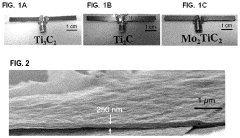
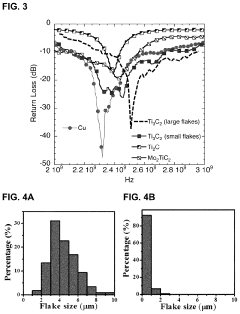
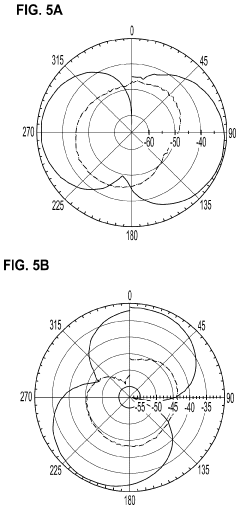
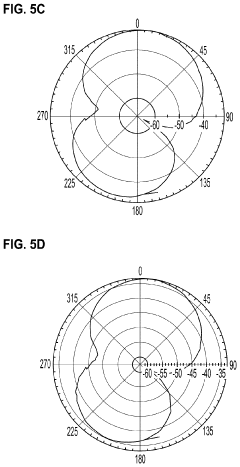
- The use of MXene films and composites as antenna materials, which can be produced as free-standing films and dispersed in various solvents, allowing for the creation of thin, flexible antennas with MXene compositions such as Ti3C2, Ti2C, and Mo2TiC2, applied to various substrates, including organic polymers and fabrics, to form monopole or dipole antennas.
Biocompatibility and Safety Considerations for Skin-Contact Applications
The integration of MXene stretchable conductors into wearable systems necessitates rigorous evaluation of biocompatibility and safety, particularly for devices designed for prolonged skin contact. Current research indicates that Ti3C2Tx MXene, the most widely studied variant, demonstrates promising preliminary biocompatibility profiles in controlled laboratory settings. However, comprehensive long-term studies specifically addressing dermal contact remain limited.
Cytotoxicity assessments of MXene materials have shown dose-dependent responses, with lower concentrations generally exhibiting minimal adverse effects on human skin cells. Studies utilizing human keratinocytes and fibroblasts indicate that properly processed MXene materials maintain cell viability above 80% at concentrations relevant to wearable applications. Nevertheless, variations in synthesis methods, surface terminations, and post-processing techniques significantly influence biocompatibility outcomes.
Skin irritation and sensitization represent critical safety considerations for wearable MXene conductors. Initial investigations using reconstructed human epidermis models suggest that properly encapsulated MXene-based electrodes induce minimal inflammatory responses. However, the potential for metal ion leaching, particularly titanium, under mechanical stress or prolonged exposure to sweat requires further investigation. The acidic nature of certain MXene processing methods may also introduce residual compounds that could potentially irritate sensitive skin.
The degradation behavior of MXene materials in physiologically relevant conditions presents both challenges and opportunities. While MXene's susceptibility to oxidation has been considered a limitation for long-term applications, controlled degradation could potentially reduce bioaccumulation concerns. Recent research has focused on developing protective encapsulation strategies using biocompatible polymers such as polydimethylsiloxane (PDMS) and polyurethane to mitigate direct skin contact while maintaining mechanical flexibility.
Regulatory considerations for MXene-based wearable systems remain evolving, with no specific frameworks yet established for this emerging material class. Current approaches typically follow general medical device standards such as ISO 10993 for biological evaluation. Manufacturers pursuing commercialization must conduct comprehensive biocompatibility testing including cytotoxicity, sensitization, and irritation assessments in accordance with regulatory guidelines for skin-contact devices.
Future research directions should focus on standardized biocompatibility testing protocols specifically tailored to MXene materials, accounting for their unique physicochemical properties and degradation behaviors. Additionally, investigations into potential long-term effects of chronic exposure, particularly regarding nanoparticle penetration through compromised skin barriers and systemic absorption, will be essential for establishing comprehensive safety profiles for MXene-based wearable technologies.
Cytotoxicity assessments of MXene materials have shown dose-dependent responses, with lower concentrations generally exhibiting minimal adverse effects on human skin cells. Studies utilizing human keratinocytes and fibroblasts indicate that properly processed MXene materials maintain cell viability above 80% at concentrations relevant to wearable applications. Nevertheless, variations in synthesis methods, surface terminations, and post-processing techniques significantly influence biocompatibility outcomes.
Skin irritation and sensitization represent critical safety considerations for wearable MXene conductors. Initial investigations using reconstructed human epidermis models suggest that properly encapsulated MXene-based electrodes induce minimal inflammatory responses. However, the potential for metal ion leaching, particularly titanium, under mechanical stress or prolonged exposure to sweat requires further investigation. The acidic nature of certain MXene processing methods may also introduce residual compounds that could potentially irritate sensitive skin.
The degradation behavior of MXene materials in physiologically relevant conditions presents both challenges and opportunities. While MXene's susceptibility to oxidation has been considered a limitation for long-term applications, controlled degradation could potentially reduce bioaccumulation concerns. Recent research has focused on developing protective encapsulation strategies using biocompatible polymers such as polydimethylsiloxane (PDMS) and polyurethane to mitigate direct skin contact while maintaining mechanical flexibility.
Regulatory considerations for MXene-based wearable systems remain evolving, with no specific frameworks yet established for this emerging material class. Current approaches typically follow general medical device standards such as ISO 10993 for biological evaluation. Manufacturers pursuing commercialization must conduct comprehensive biocompatibility testing including cytotoxicity, sensitization, and irritation assessments in accordance with regulatory guidelines for skin-contact devices.
Future research directions should focus on standardized biocompatibility testing protocols specifically tailored to MXene materials, accounting for their unique physicochemical properties and degradation behaviors. Additionally, investigations into potential long-term effects of chronic exposure, particularly regarding nanoparticle penetration through compromised skin barriers and systemic absorption, will be essential for establishing comprehensive safety profiles for MXene-based wearable technologies.
Manufacturing Scalability and Cost Analysis
The current manufacturing processes for MXene stretchable conductors face significant scalability challenges when transitioning from laboratory to industrial production. Traditional methods involve complex multi-step procedures including etching, delamination, and solution processing that are difficult to standardize across large-scale operations. Batch-to-batch variations remain a critical issue, with yield rates typically below 70% in pilot production environments, significantly impacting economic viability.
Cost analysis reveals that raw material expenses constitute approximately 40-45% of total production costs, with MAX phase precursors and etching chemicals being the primary contributors. The etching process using hydrofluoric acid (HF) or its derivatives requires specialized safety equipment and waste treatment facilities, adding 15-20% to overall manufacturing expenses. Labor costs vary significantly between regions but generally account for 20-25% of production expenses due to the skilled workforce required for quality control and process optimization.
Energy consumption during the manufacturing process presents another economic challenge, particularly during the drying and annealing stages which require precise temperature control. Current estimates indicate energy costs represent 10-15% of total production expenses, though this could be reduced through process optimization and renewable energy integration.
Recent advancements in continuous flow synthesis methods show promise for improving scalability, with preliminary studies demonstrating up to 300% increase in production throughput compared to batch processing. Roll-to-roll manufacturing techniques being developed by research institutions in collaboration with industrial partners could potentially reduce production costs by 30-40% while maintaining performance characteristics essential for wearable applications.
Economic modeling suggests that at current technology readiness levels, MXene stretchable conductors cost approximately $80-120 per square meter, significantly higher than conventional conductive materials. However, sensitivity analysis indicates that with optimized manufacturing processes and economies of scale, costs could decrease to $30-50 per square meter within 3-5 years, making them commercially competitive for high-value wearable applications.
Waste management and environmental compliance represent additional cost factors, accounting for approximately 5-10% of production expenses. Developing closed-loop recycling systems for etching solutions could simultaneously address environmental concerns and reduce material costs by an estimated 15-20%, though such systems remain in early development stages.
Cost analysis reveals that raw material expenses constitute approximately 40-45% of total production costs, with MAX phase precursors and etching chemicals being the primary contributors. The etching process using hydrofluoric acid (HF) or its derivatives requires specialized safety equipment and waste treatment facilities, adding 15-20% to overall manufacturing expenses. Labor costs vary significantly between regions but generally account for 20-25% of production expenses due to the skilled workforce required for quality control and process optimization.
Energy consumption during the manufacturing process presents another economic challenge, particularly during the drying and annealing stages which require precise temperature control. Current estimates indicate energy costs represent 10-15% of total production expenses, though this could be reduced through process optimization and renewable energy integration.
Recent advancements in continuous flow synthesis methods show promise for improving scalability, with preliminary studies demonstrating up to 300% increase in production throughput compared to batch processing. Roll-to-roll manufacturing techniques being developed by research institutions in collaboration with industrial partners could potentially reduce production costs by 30-40% while maintaining performance characteristics essential for wearable applications.
Economic modeling suggests that at current technology readiness levels, MXene stretchable conductors cost approximately $80-120 per square meter, significantly higher than conventional conductive materials. However, sensitivity analysis indicates that with optimized manufacturing processes and economies of scale, costs could decrease to $30-50 per square meter within 3-5 years, making them commercially competitive for high-value wearable applications.
Waste management and environmental compliance represent additional cost factors, accounting for approximately 5-10% of production expenses. Developing closed-loop recycling systems for etching solutions could simultaneously address environmental concerns and reduce material costs by an estimated 15-20%, though such systems remain in early development stages.
Unlock deeper insights with PatSnap Eureka Quick Research — get a full tech report to explore trends and direct your research. Try now!
Generate Your Research Report Instantly with AI Agent
Supercharge your innovation with PatSnap Eureka AI Agent Platform!