Nanoparticles vs Microspheres: Surface Area Impact
FEB 26, 20269 MIN READ
Generate Your Research Report Instantly with AI Agent
PatSnap Eureka helps you evaluate technical feasibility & market potential.
Nanoparticle vs Microsphere Technology Background and Objectives
The fundamental distinction between nanoparticles and microspheres lies in their dimensional characteristics, with nanoparticles typically ranging from 1 to 100 nanometers while microspheres span from 1 to 1000 micrometers in diameter. This size differential creates profound implications for surface area properties, establishing the foundation for diverse applications across pharmaceutical, biomedical, materials science, and industrial sectors.
Historically, microsphere technology emerged in the mid-20th century, initially developed for drug delivery applications and industrial processes. The evolution toward nanoparticle technology gained momentum in the 1980s with advances in nanotechnology and precision manufacturing techniques. This progression was driven by the recognition that reducing particle size exponentially increases surface area-to-volume ratios, fundamentally altering material properties and performance characteristics.
The surface area impact represents a critical parameter influencing particle behavior, reactivity, and functionality. As particle diameter decreases from micro to nano scale, surface area increases dramatically according to inverse proportional relationships. This phenomenon directly affects dissolution rates, bioavailability, catalytic efficiency, and interaction mechanisms with biological systems or chemical environments.
Current technological objectives focus on optimizing surface area characteristics for specific applications while maintaining particle stability and manufacturability. Key goals include developing controlled surface modification techniques, enhancing particle uniformity, and establishing predictable surface area-performance relationships. Advanced characterization methods now enable precise measurement of surface properties, facilitating better understanding of structure-function relationships.
The pharmaceutical industry particularly benefits from surface area optimization, where nanoparticles offer enhanced bioavailability and targeted delivery capabilities compared to traditional microsphere formulations. Similarly, catalysis applications leverage increased surface area for improved reaction efficiency and selectivity.
Contemporary research emphasizes developing hybrid approaches that combine advantages of both particle types, creating multi-scale systems with tailored surface properties. Manufacturing scalability remains a primary objective, requiring cost-effective production methods while maintaining precise control over particle characteristics and surface area distribution.
Historically, microsphere technology emerged in the mid-20th century, initially developed for drug delivery applications and industrial processes. The evolution toward nanoparticle technology gained momentum in the 1980s with advances in nanotechnology and precision manufacturing techniques. This progression was driven by the recognition that reducing particle size exponentially increases surface area-to-volume ratios, fundamentally altering material properties and performance characteristics.
The surface area impact represents a critical parameter influencing particle behavior, reactivity, and functionality. As particle diameter decreases from micro to nano scale, surface area increases dramatically according to inverse proportional relationships. This phenomenon directly affects dissolution rates, bioavailability, catalytic efficiency, and interaction mechanisms with biological systems or chemical environments.
Current technological objectives focus on optimizing surface area characteristics for specific applications while maintaining particle stability and manufacturability. Key goals include developing controlled surface modification techniques, enhancing particle uniformity, and establishing predictable surface area-performance relationships. Advanced characterization methods now enable precise measurement of surface properties, facilitating better understanding of structure-function relationships.
The pharmaceutical industry particularly benefits from surface area optimization, where nanoparticles offer enhanced bioavailability and targeted delivery capabilities compared to traditional microsphere formulations. Similarly, catalysis applications leverage increased surface area for improved reaction efficiency and selectivity.
Contemporary research emphasizes developing hybrid approaches that combine advantages of both particle types, creating multi-scale systems with tailored surface properties. Manufacturing scalability remains a primary objective, requiring cost-effective production methods while maintaining precise control over particle characteristics and surface area distribution.
Market Demand for High Surface Area Particle Applications
The pharmaceutical industry represents one of the most significant markets driving demand for high surface area particles, particularly in drug delivery systems and formulation enhancement. Nanoparticles have revolutionized pharmaceutical applications through their ability to improve bioavailability, enable targeted delivery, and enhance dissolution rates of poorly soluble drugs. The increasing prevalence of complex therapeutic molecules and personalized medicine approaches has intensified the need for advanced particle engineering solutions that maximize surface area interactions.
Catalysis applications constitute another major market segment where surface area optimization directly translates to performance improvements. Industrial catalysts utilizing high surface area nanoparticles demonstrate superior activity and selectivity compared to conventional microsphere-based systems. The petrochemical, fine chemicals, and environmental remediation sectors increasingly prioritize catalyst efficiency, driving sustained demand for particles with maximized active surface sites.
The energy storage and conversion market has emerged as a rapidly expanding application area for high surface area particles. Battery electrode materials, supercapacitor components, and fuel cell catalysts all benefit significantly from increased surface area exposure. The global transition toward renewable energy systems and electric mobility has created substantial market pull for advanced particle technologies that can deliver enhanced energy density and power performance.
Cosmetics and personal care industries leverage high surface area particles for improved product performance and consumer experience. Nanoparticle formulations enable better skin penetration, enhanced UV protection, and superior sensory properties. The premium cosmetics segment particularly values the functional advantages that high surface area particles provide in terms of product efficacy and aesthetic appeal.
Environmental applications represent a growing market segment where surface area maximization directly impacts remediation efficiency. Water treatment systems, air purification technologies, and soil remediation processes increasingly rely on high surface area particles to achieve regulatory compliance and performance targets. The tightening of environmental regulations globally continues to expand market opportunities for advanced particle solutions.
The food and nutrition industry has begun recognizing the potential of high surface area particles for improving nutrient delivery, flavor encapsulation, and product stability. Functional food development and nutraceutical applications drive demand for particles that can enhance bioavailability and controlled release characteristics.
Market dynamics increasingly favor nanoparticle solutions over traditional microsphere approaches due to the exponential relationship between particle size reduction and surface area enhancement. This fundamental advantage positions nanoparticles as the preferred choice for applications where surface interactions determine product performance and commercial viability.
Catalysis applications constitute another major market segment where surface area optimization directly translates to performance improvements. Industrial catalysts utilizing high surface area nanoparticles demonstrate superior activity and selectivity compared to conventional microsphere-based systems. The petrochemical, fine chemicals, and environmental remediation sectors increasingly prioritize catalyst efficiency, driving sustained demand for particles with maximized active surface sites.
The energy storage and conversion market has emerged as a rapidly expanding application area for high surface area particles. Battery electrode materials, supercapacitor components, and fuel cell catalysts all benefit significantly from increased surface area exposure. The global transition toward renewable energy systems and electric mobility has created substantial market pull for advanced particle technologies that can deliver enhanced energy density and power performance.
Cosmetics and personal care industries leverage high surface area particles for improved product performance and consumer experience. Nanoparticle formulations enable better skin penetration, enhanced UV protection, and superior sensory properties. The premium cosmetics segment particularly values the functional advantages that high surface area particles provide in terms of product efficacy and aesthetic appeal.
Environmental applications represent a growing market segment where surface area maximization directly impacts remediation efficiency. Water treatment systems, air purification technologies, and soil remediation processes increasingly rely on high surface area particles to achieve regulatory compliance and performance targets. The tightening of environmental regulations globally continues to expand market opportunities for advanced particle solutions.
The food and nutrition industry has begun recognizing the potential of high surface area particles for improving nutrient delivery, flavor encapsulation, and product stability. Functional food development and nutraceutical applications drive demand for particles that can enhance bioavailability and controlled release characteristics.
Market dynamics increasingly favor nanoparticle solutions over traditional microsphere approaches due to the exponential relationship between particle size reduction and surface area enhancement. This fundamental advantage positions nanoparticles as the preferred choice for applications where surface interactions determine product performance and commercial viability.
Current Status and Surface Area Optimization Challenges
The current landscape of nanoparticles and microspheres presents a complex technological environment where surface area optimization remains a critical determinant of performance across multiple applications. Both particle systems have achieved significant commercial success, yet fundamental challenges persist in maximizing their surface area potential while maintaining structural integrity and functional stability.
Nanoparticles, typically ranging from 1-100 nanometers, currently dominate applications requiring maximum surface-to-volume ratios, such as catalysis, drug delivery, and energy storage. However, their inherent tendency toward agglomeration significantly reduces effective surface area in practical applications. Current stabilization methods, including surface functionalization and dispersant systems, often compromise the very surface properties they aim to preserve.
Microspheres, spanning 1-1000 micrometers, face different optimization challenges centered on internal porosity and surface texturing. While their larger size provides structural advantages, achieving high surface areas comparable to nanoparticles requires sophisticated manufacturing techniques that often prove economically prohibitive for large-scale production.
Manufacturing scalability represents a major constraint across both particle types. Current production methods struggle to maintain consistent surface area characteristics during scale-up processes. Spray drying, emulsion polymerization, and sol-gel techniques each introduce variability that directly impacts surface area uniformity, creating significant quality control challenges for industrial applications.
Surface area measurement and characterization present ongoing technical difficulties. Traditional BET analysis, while widely accepted, often fails to capture the dynamic nature of particle surfaces in real-world environments. Advanced techniques like mercury intrusion porosimetry and gas adsorption methods provide more detailed insights but require specialized equipment and expertise that limit their widespread adoption.
Environmental stability of optimized surface areas remains problematic. Particles engineered for maximum surface area often exhibit reduced stability under ambient conditions, leading to surface area degradation over time. This temporal instability particularly affects applications in harsh environments, where maintaining consistent surface properties is crucial for long-term performance.
Cost-effectiveness barriers significantly impact surface area optimization strategies. Advanced synthesis methods capable of producing particles with tailored surface characteristics often require expensive precursors, specialized equipment, and controlled environments. These factors create substantial economic pressure to compromise on surface area optimization in favor of manufacturing feasibility.
Integration challenges emerge when incorporating high-surface-area particles into complex systems. Compatibility issues with matrix materials, processing conditions, and end-use environments frequently necessitate surface area trade-offs that diminish overall system performance, highlighting the need for more sophisticated optimization approaches that consider system-level requirements.
Nanoparticles, typically ranging from 1-100 nanometers, currently dominate applications requiring maximum surface-to-volume ratios, such as catalysis, drug delivery, and energy storage. However, their inherent tendency toward agglomeration significantly reduces effective surface area in practical applications. Current stabilization methods, including surface functionalization and dispersant systems, often compromise the very surface properties they aim to preserve.
Microspheres, spanning 1-1000 micrometers, face different optimization challenges centered on internal porosity and surface texturing. While their larger size provides structural advantages, achieving high surface areas comparable to nanoparticles requires sophisticated manufacturing techniques that often prove economically prohibitive for large-scale production.
Manufacturing scalability represents a major constraint across both particle types. Current production methods struggle to maintain consistent surface area characteristics during scale-up processes. Spray drying, emulsion polymerization, and sol-gel techniques each introduce variability that directly impacts surface area uniformity, creating significant quality control challenges for industrial applications.
Surface area measurement and characterization present ongoing technical difficulties. Traditional BET analysis, while widely accepted, often fails to capture the dynamic nature of particle surfaces in real-world environments. Advanced techniques like mercury intrusion porosimetry and gas adsorption methods provide more detailed insights but require specialized equipment and expertise that limit their widespread adoption.
Environmental stability of optimized surface areas remains problematic. Particles engineered for maximum surface area often exhibit reduced stability under ambient conditions, leading to surface area degradation over time. This temporal instability particularly affects applications in harsh environments, where maintaining consistent surface properties is crucial for long-term performance.
Cost-effectiveness barriers significantly impact surface area optimization strategies. Advanced synthesis methods capable of producing particles with tailored surface characteristics often require expensive precursors, specialized equipment, and controlled environments. These factors create substantial economic pressure to compromise on surface area optimization in favor of manufacturing feasibility.
Integration challenges emerge when incorporating high-surface-area particles into complex systems. Compatibility issues with matrix materials, processing conditions, and end-use environments frequently necessitate surface area trade-offs that diminish overall system performance, highlighting the need for more sophisticated optimization approaches that consider system-level requirements.
Current Surface Area Enhancement Solutions
01 High surface area nanoparticles for enhanced reactivity and adsorption
Nanoparticles with high specific surface areas exhibit enhanced reactivity and adsorption capabilities due to their increased surface-to-volume ratio. These materials are particularly useful in catalysis, drug delivery, and environmental remediation applications. The surface area can be controlled through synthesis methods such as sol-gel processes, precipitation techniques, and template-assisted approaches. Characterization methods including BET analysis are commonly employed to measure and verify the surface area properties of these nanomaterials.- High surface area nanoparticles for enhanced reactivity and adsorption: Nanoparticles with high specific surface areas exhibit enhanced reactivity, adsorption capacity, and catalytic properties due to their increased surface-to-volume ratio. These materials can be engineered through various synthesis methods to achieve surface areas ranging from hundreds to thousands of square meters per gram, making them suitable for applications in catalysis, drug delivery, and environmental remediation. The surface area can be controlled by adjusting particle size, porosity, and morphology during the manufacturing process.
- Porous microspheres with controlled surface area: Microspheres can be designed with porous structures to achieve specific surface area characteristics for targeted applications. The porosity and pore size distribution directly influence the accessible surface area, which is critical for applications such as chromatography, controlled release systems, and separation processes. Manufacturing techniques including spray drying, emulsion polymerization, and template methods enable precise control over microsphere surface properties.
- Surface modification techniques for nanoparticles and microspheres: Surface modification methods can alter the effective surface area and functionality of nanoparticles and microspheres. Techniques such as coating, grafting, and functionalization with various chemical groups can increase or decrease accessible surface area while imparting specific properties like hydrophilicity, biocompatibility, or targeting capabilities. These modifications are essential for optimizing performance in pharmaceutical, biomedical, and industrial applications.
- Measurement and characterization of nanoparticle and microsphere surface area: Accurate determination of surface area is crucial for quality control and performance prediction. Various analytical techniques are employed, including gas adsorption methods, electron microscopy, and dynamic light scattering. These characterization methods provide quantitative data on specific surface area, particle size distribution, and surface morphology, enabling correlation between structural properties and functional performance.
- Composite particles with optimized surface area for specific applications: Composite nanoparticles and microspheres combining multiple materials can be engineered to achieve optimal surface area characteristics for specialized applications. These hybrid structures may incorporate core-shell architectures, multilayer coatings, or dispersed phases to balance surface area with other properties such as mechanical strength, stability, and functionality. Applications include advanced drug delivery systems, sensors, and energy storage devices where surface area plays a critical role in performance.
02 Microsphere structures with controlled porosity and surface characteristics
Microspheres can be engineered with specific porous structures to achieve desired surface area properties. These spherical particles offer advantages in terms of flowability, uniform distribution, and controlled release applications. The porosity and surface area of microspheres can be tailored through various fabrication methods including spray drying, emulsion techniques, and microfluidic approaches. Such structures are widely used in pharmaceutical formulations, cosmetics, and separation technologies.Expand Specific Solutions03 Surface modification techniques for nanoparticles and microspheres
Surface modification methods are employed to alter the surface chemistry and properties of nanoparticles and microspheres without significantly changing their surface area. These techniques include coating, functionalization with organic or inorganic groups, and surface grafting. Modified surfaces can improve dispersion stability, biocompatibility, and targeting capabilities. The modifications can be achieved through chemical reactions, physical adsorption, or layer-by-layer assembly methods.Expand Specific Solutions04 Composite nanoparticles and microspheres with enhanced surface properties
Composite structures combining different materials can achieve synergistic effects and optimized surface area characteristics. These composites may include core-shell structures, hybrid organic-inorganic materials, or multi-component systems. The combination of materials allows for tailoring of surface properties while maintaining structural integrity. Applications include advanced catalysts, multifunctional drug carriers, and high-performance adsorbents.Expand Specific Solutions05 Measurement and characterization methods for surface area determination
Various analytical techniques are employed to accurately measure and characterize the surface area of nanoparticles and microspheres. Gas adsorption methods, particularly nitrogen adsorption using BET theory, are standard approaches for determining specific surface area. Additional characterization techniques include mercury intrusion porosimetry, electron microscopy for morphological analysis, and dynamic light scattering for size distribution. These methods provide comprehensive information about surface properties, pore size distribution, and particle morphology.Expand Specific Solutions
Key Players in Nanoparticle and Microsphere Industries
The nanoparticles versus microspheres surface area impact technology represents a mature field within the broader nanomaterials industry, currently experiencing significant growth with market valuations reaching billions globally. The industry has progressed beyond early research phases into commercial applications across diverse sectors including healthcare, electronics, and environmental solutions. Technology maturity varies significantly among key players, with established entities like Massachusetts Institute of Technology, Max Planck Gesellschaft, and King Abdullah University of Science & Technology leading fundamental research, while companies such as Nanoco Technologies Ltd., SDCmaterials Inc., and International Iberian Nanotechnology Laboratory focus on commercial applications. Academic institutions including Bar-Ilan University, Tongji University, and Université Paris-Saclay contribute essential theoretical foundations, whereas industrial players like SABIC Global Technologies BV and UPM-Kymmene Oyj drive practical implementations. This competitive landscape demonstrates a well-established ecosystem spanning from basic research to market-ready solutions.
Nanoco Technologies Ltd.
Technical Solution: Nanoco specializes in quantum dot nanoparticle production with precise control over surface area characteristics. Their proprietary molecular seeding technology enables production of semiconductor nanoparticles with tunable surface areas ranging from 50-300 m²/g, significantly higher than traditional microsphere alternatives. The company's cadmium-free quantum dots demonstrate how increased surface area directly correlates with enhanced optical properties and improved performance in display applications. Their manufacturing processes incorporate surface passivation techniques that maintain high surface area while preventing oxidation and aggregation, addressing key challenges in nanoparticle commercialization. Nanoco's technology platform demonstrates clear advantages of nanoparticle surface area over microspheres in electronic and optical applications.
Strengths: Commercial-scale production capabilities, proprietary cadmium-free technology, established market presence. Weaknesses: Limited to specific quantum dot applications, high capital requirements for manufacturing expansion.
Bayer Intellectual Property GmbH
Technical Solution: Bayer has developed advanced nanoparticle formulation technologies that significantly enhance surface area-to-volume ratios compared to traditional microsphere systems. Their proprietary nanoparticle platforms utilize controlled precipitation and surface modification techniques to achieve particle sizes in the 50-200nm range, resulting in surface areas that are 10-100 times greater than equivalent microsphere formulations. The company's nanoparticle drug delivery systems demonstrate improved bioavailability and faster dissolution rates due to the dramatically increased surface area, enabling more efficient drug release kinetics and enhanced therapeutic efficacy in pharmaceutical applications.
Strengths: Extensive pharmaceutical expertise, proven commercial scalability, strong IP portfolio. Weaknesses: Higher manufacturing costs, potential stability challenges with increased surface reactivity.
Core Patents in Particle Surface Engineering
Nano-skeletal catalyst
PatentInactiveUS20080280756A1
Innovation
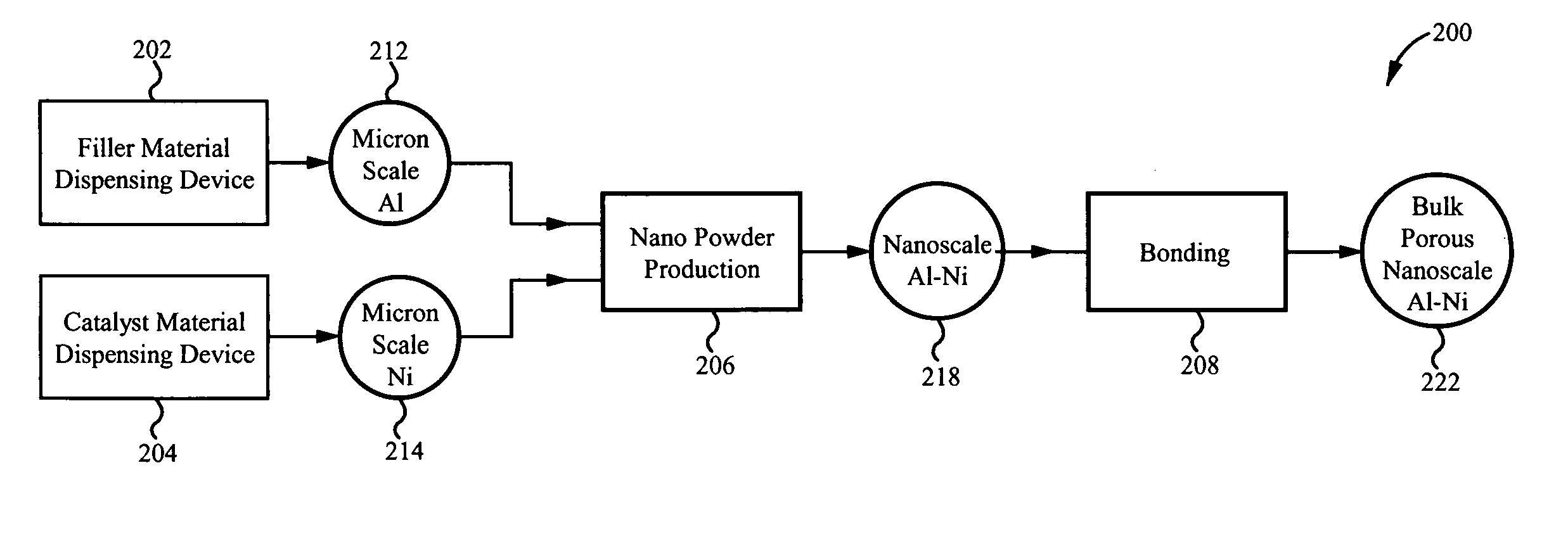
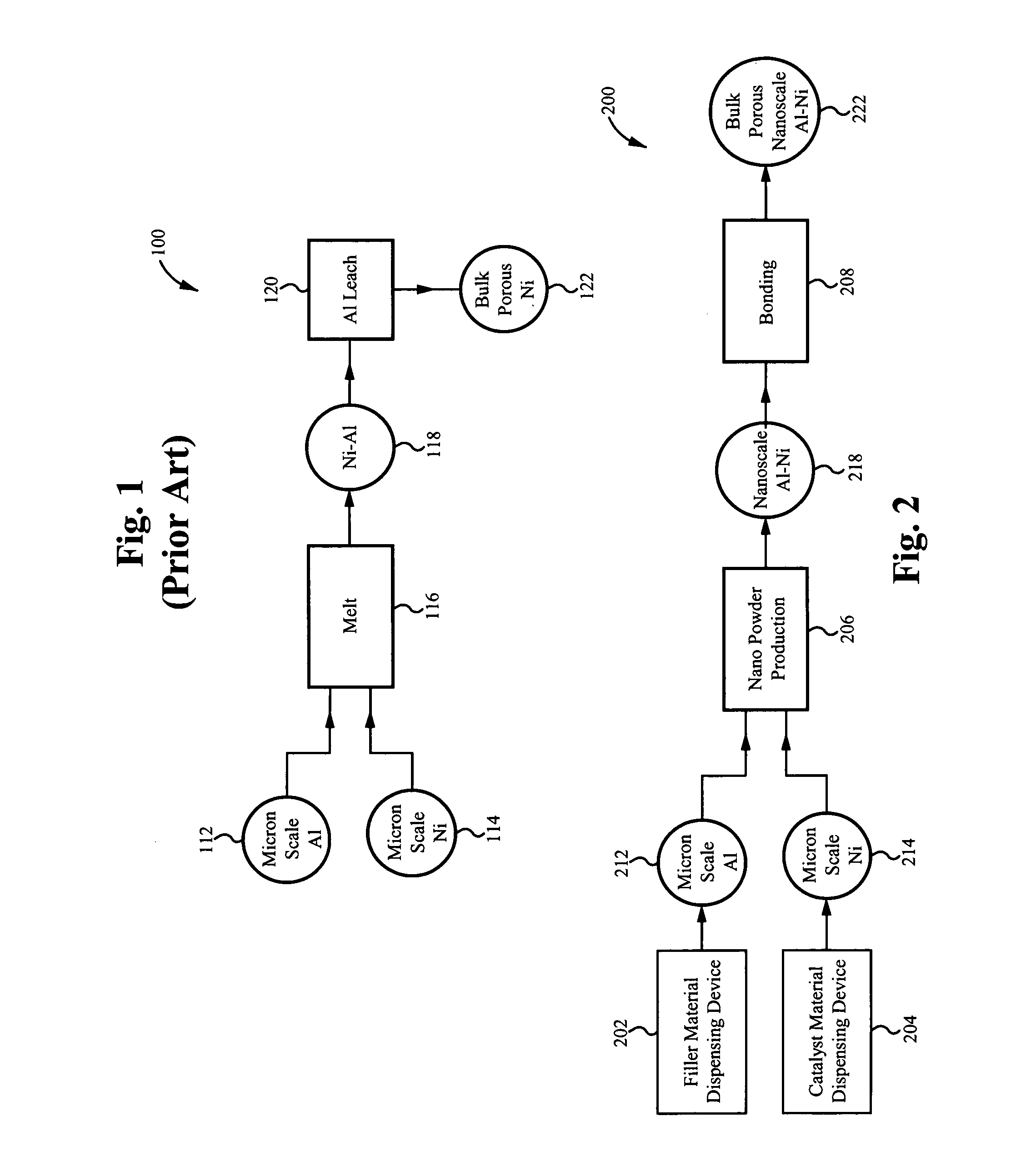
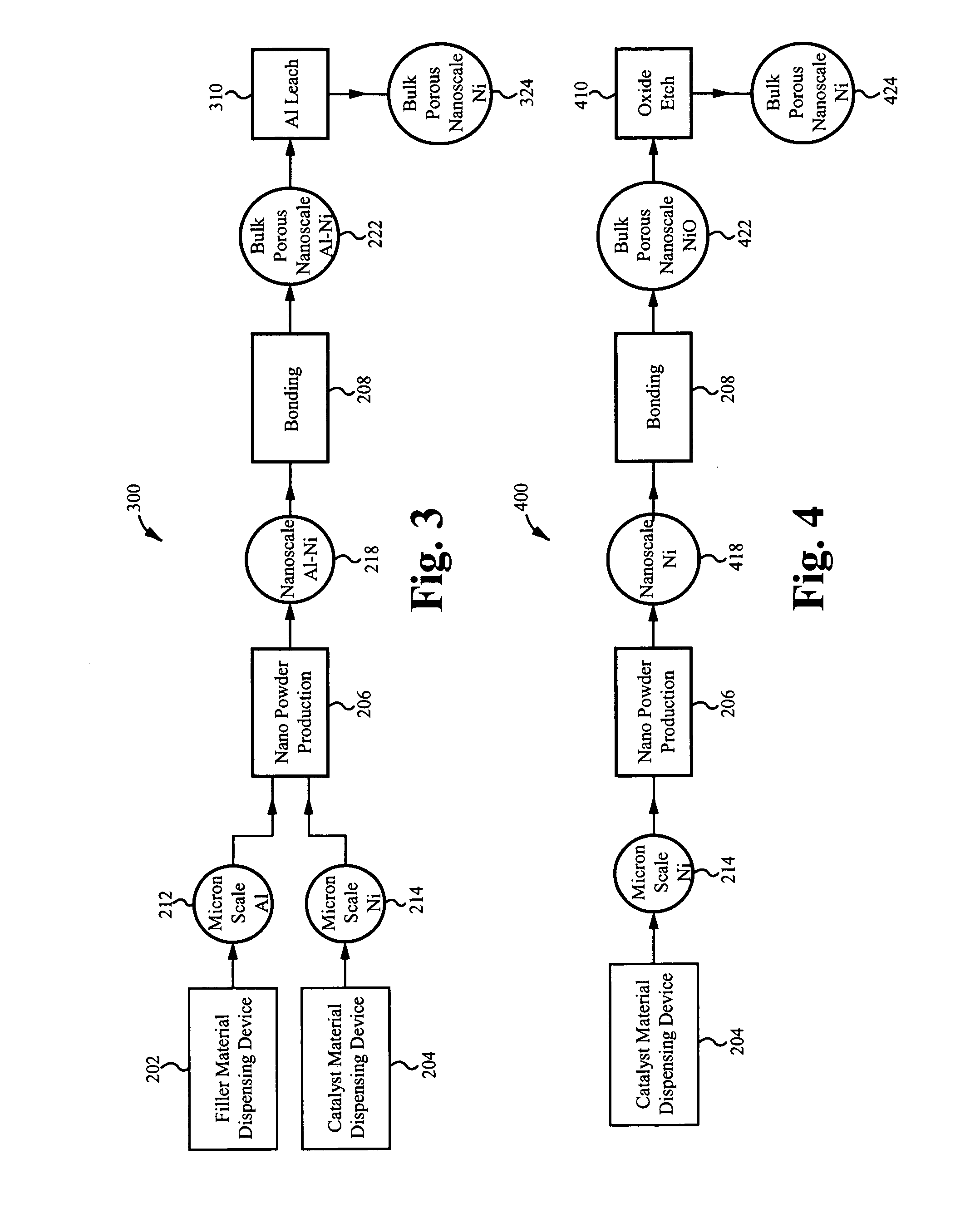
- A method and system for producing catalyst precursor materials with nano-scale structures using a nano-powder production reactor, where starting powders are nano-sized into nano-particles, and then densified into bulk porous structures using techniques like spark-plasma sintering, increasing the surface area significantly.

Surface mediated self-assembly of nanoparticles
PatentInactiveUS20090182120A1
Innovation
- The use of sub-micron ceramic or ceramic-like nanoparticles with a high surface area to volume ratio, which self-assemble onto non-colloidal surfaces, enabling rapid and efficient biopolymer binding and separation through surface-mediated self-assembly and passivation chemistry, allowing for enhanced binding capacity and processing efficiency.


Environmental Impact of Nanoparticle Manufacturing
The manufacturing of nanoparticles presents significant environmental challenges that differ substantially from traditional microsphere production processes. The enhanced surface area characteristics that make nanoparticles valuable also contribute to their environmental complexity, requiring specialized manufacturing approaches that generate distinct environmental footprints.
Energy consumption represents a primary environmental concern in nanoparticle manufacturing. The production processes typically require higher energy inputs compared to microsphere manufacturing due to the need for precise control over particle size and surface characteristics. Advanced synthesis methods such as chemical vapor deposition, sol-gel processes, and high-energy ball milling consume substantial amounts of electricity and thermal energy, contributing to increased carbon emissions.
Chemical waste generation poses another critical environmental challenge. Nanoparticle synthesis often involves toxic precursors, organic solvents, and stabilizing agents that require careful disposal. The high surface area of nanoparticles necessitates the use of specialized capping agents and surfactants to prevent agglomeration, many of which are not readily biodegradable and can persist in environmental systems.
Water consumption and contamination issues are particularly pronounced in nanoparticle manufacturing. Purification processes require extensive washing cycles to remove residual chemicals and achieve desired surface properties. The resulting wastewater often contains trace amounts of nanoparticles and processing chemicals, requiring advanced treatment technologies before safe discharge.
Air quality impacts emerge from potential nanoparticle emissions during manufacturing processes. Unlike larger microspheres, nanoparticles can become airborne more easily and penetrate deeper into respiratory systems. Manufacturing facilities must implement sophisticated containment and filtration systems, increasing operational complexity and costs.
The disposal and recycling of manufacturing equipment presents additional environmental considerations. Processing equipment exposed to nanoparticles requires specialized decontamination procedures, and worn components may retain nanoparticle residues that complicate standard recycling processes. This creates unique waste streams that demand careful environmental management throughout the manufacturing lifecycle.
Energy consumption represents a primary environmental concern in nanoparticle manufacturing. The production processes typically require higher energy inputs compared to microsphere manufacturing due to the need for precise control over particle size and surface characteristics. Advanced synthesis methods such as chemical vapor deposition, sol-gel processes, and high-energy ball milling consume substantial amounts of electricity and thermal energy, contributing to increased carbon emissions.
Chemical waste generation poses another critical environmental challenge. Nanoparticle synthesis often involves toxic precursors, organic solvents, and stabilizing agents that require careful disposal. The high surface area of nanoparticles necessitates the use of specialized capping agents and surfactants to prevent agglomeration, many of which are not readily biodegradable and can persist in environmental systems.
Water consumption and contamination issues are particularly pronounced in nanoparticle manufacturing. Purification processes require extensive washing cycles to remove residual chemicals and achieve desired surface properties. The resulting wastewater often contains trace amounts of nanoparticles and processing chemicals, requiring advanced treatment technologies before safe discharge.
Air quality impacts emerge from potential nanoparticle emissions during manufacturing processes. Unlike larger microspheres, nanoparticles can become airborne more easily and penetrate deeper into respiratory systems. Manufacturing facilities must implement sophisticated containment and filtration systems, increasing operational complexity and costs.
The disposal and recycling of manufacturing equipment presents additional environmental considerations. Processing equipment exposed to nanoparticles requires specialized decontamination procedures, and worn components may retain nanoparticle residues that complicate standard recycling processes. This creates unique waste streams that demand careful environmental management throughout the manufacturing lifecycle.
Safety Regulations for Nanomaterial Applications
The regulatory landscape for nanomaterial applications has evolved significantly as the unique properties of nanoparticles, particularly their enhanced surface area compared to microspheres, present distinct safety considerations. Current safety frameworks primarily focus on the increased reactivity and potential toxicity associated with higher surface-to-volume ratios characteristic of nanoscale materials.
International regulatory bodies have established specific guidelines addressing nanomaterial safety. The European Union's REACH regulation requires comprehensive safety assessments for nanomaterials, with particular emphasis on surface area characterization and its implications for biological interactions. The U.S. Environmental Protection Agency has implemented the Toxic Substances Control Act amendments specifically targeting nanoscale substances, mandating detailed reporting of surface area properties and their potential environmental impact.
Occupational safety standards have been developed to address workplace exposure risks associated with high surface area nanomaterials. The National Institute for Occupational Safety and Health has established recommended exposure limits that consider particle size and surface area as critical factors in determining safe handling procedures. These regulations require specialized containment systems and personal protective equipment designed specifically for nanoscale materials.
Product-specific regulations vary significantly across industries utilizing nanomaterials. In pharmaceutical applications, the FDA requires extensive biocompatibility testing that accounts for surface area effects on drug delivery and cellular interactions. Cosmetic regulations mandate safety assessments considering dermal penetration potential, which correlates directly with particle surface area characteristics.
Environmental release regulations address the unique challenges posed by nanomaterials' high surface reactivity. Water quality standards now include specific provisions for nanomaterial discharge, with monitoring requirements that consider surface area-dependent aggregation and transformation behaviors in aquatic systems.
Emerging regulatory trends indicate increasing focus on lifecycle assessment approaches that evaluate nanomaterial safety from production through disposal. These comprehensive frameworks recognize that surface area impacts extend beyond immediate application safety to include long-term environmental and health considerations, driving the development of more sophisticated regulatory approaches for nanomaterial applications.
International regulatory bodies have established specific guidelines addressing nanomaterial safety. The European Union's REACH regulation requires comprehensive safety assessments for nanomaterials, with particular emphasis on surface area characterization and its implications for biological interactions. The U.S. Environmental Protection Agency has implemented the Toxic Substances Control Act amendments specifically targeting nanoscale substances, mandating detailed reporting of surface area properties and their potential environmental impact.
Occupational safety standards have been developed to address workplace exposure risks associated with high surface area nanomaterials. The National Institute for Occupational Safety and Health has established recommended exposure limits that consider particle size and surface area as critical factors in determining safe handling procedures. These regulations require specialized containment systems and personal protective equipment designed specifically for nanoscale materials.
Product-specific regulations vary significantly across industries utilizing nanomaterials. In pharmaceutical applications, the FDA requires extensive biocompatibility testing that accounts for surface area effects on drug delivery and cellular interactions. Cosmetic regulations mandate safety assessments considering dermal penetration potential, which correlates directly with particle surface area characteristics.
Environmental release regulations address the unique challenges posed by nanomaterials' high surface reactivity. Water quality standards now include specific provisions for nanomaterial discharge, with monitoring requirements that consider surface area-dependent aggregation and transformation behaviors in aquatic systems.
Emerging regulatory trends indicate increasing focus on lifecycle assessment approaches that evaluate nanomaterial safety from production through disposal. These comprehensive frameworks recognize that surface area impacts extend beyond immediate application safety to include long-term environmental and health considerations, driving the development of more sophisticated regulatory approaches for nanomaterial applications.
Unlock deeper insights with PatSnap Eureka Quick Research — get a full tech report to explore trends and direct your research. Try now!
Generate Your Research Report Instantly with AI Agent
Supercharge your innovation with PatSnap Eureka AI Agent Platform!