

Optimize Cyclone Separator Angle to Enhance Particle Separation
FEB 24, 20269 MIN READ
Generate Your Research Report Instantly with AI Agent
PatSnap Eureka helps you evaluate technical feasibility & market potential.
Cyclone Separator Technology Background and Optimization Goals
Cyclone separators have been fundamental industrial devices for particle-gas separation since their invention in the late 19th century. These devices utilize centrifugal force generated by swirling gas flow to separate particles from gas streams, making them indispensable in industries ranging from petrochemical processing to cement manufacturing and air pollution control. The technology's evolution has been driven by the continuous demand for higher separation efficiency, lower pressure drop, and enhanced operational reliability across diverse industrial applications.
The geometric configuration of cyclone separators, particularly the cone angle, plays a critical role in determining separation performance. Traditional designs typically employ cone angles ranging from 15 to 30 degrees, based on empirical observations and classical design guidelines. However, the relationship between cone angle and separation efficiency remains complex, involving intricate interactions between flow patterns, particle trajectories, residence time, and pressure characteristics. As environmental regulations become increasingly stringent and industrial processes demand finer particle separation, optimizing the cone angle has emerged as a crucial research focus.
Current industrial challenges highlight the need for cone angle optimization. Many existing cyclone separators struggle with separating fine particles below 5 micrometers while maintaining acceptable pressure drops. The cone angle directly influences the axial velocity distribution, vortex stability, and particle residence time within the separator body. Steeper cone angles can reduce overall height and manufacturing costs but may compromise separation efficiency by shortening particle residence time. Conversely, gentler cone angles extend residence time but increase equipment footprint and potentially create flow instabilities.
The primary optimization goal is to identify cone angle configurations that maximize particle separation efficiency across target particle size ranges while minimizing energy consumption through reduced pressure drop. This involves understanding how cone angle modifications affect the internal flow field structure, particularly the forced vortex in the outer region and free vortex in the inner core. Secondary objectives include enhancing operational stability by reducing flow fluctuations, minimizing particle re-entrainment from the dust collection hopper, and extending equipment lifespan by optimizing wall wear patterns.
Advanced computational fluid dynamics and experimental validation techniques now enable systematic investigation of cone angle effects on cyclone performance. The optimization process must consider multiple operational parameters including inlet velocity, particle size distribution, gas properties, and volumetric flow rates to develop robust design guidelines applicable across various industrial contexts.
The geometric configuration of cyclone separators, particularly the cone angle, plays a critical role in determining separation performance. Traditional designs typically employ cone angles ranging from 15 to 30 degrees, based on empirical observations and classical design guidelines. However, the relationship between cone angle and separation efficiency remains complex, involving intricate interactions between flow patterns, particle trajectories, residence time, and pressure characteristics. As environmental regulations become increasingly stringent and industrial processes demand finer particle separation, optimizing the cone angle has emerged as a crucial research focus.
Current industrial challenges highlight the need for cone angle optimization. Many existing cyclone separators struggle with separating fine particles below 5 micrometers while maintaining acceptable pressure drops. The cone angle directly influences the axial velocity distribution, vortex stability, and particle residence time within the separator body. Steeper cone angles can reduce overall height and manufacturing costs but may compromise separation efficiency by shortening particle residence time. Conversely, gentler cone angles extend residence time but increase equipment footprint and potentially create flow instabilities.
The primary optimization goal is to identify cone angle configurations that maximize particle separation efficiency across target particle size ranges while minimizing energy consumption through reduced pressure drop. This involves understanding how cone angle modifications affect the internal flow field structure, particularly the forced vortex in the outer region and free vortex in the inner core. Secondary objectives include enhancing operational stability by reducing flow fluctuations, minimizing particle re-entrainment from the dust collection hopper, and extending equipment lifespan by optimizing wall wear patterns.
Advanced computational fluid dynamics and experimental validation techniques now enable systematic investigation of cone angle effects on cyclone performance. The optimization process must consider multiple operational parameters including inlet velocity, particle size distribution, gas properties, and volumetric flow rates to develop robust design guidelines applicable across various industrial contexts.
Market Demand for Enhanced Particle Separation Systems
The global demand for enhanced particle separation systems has experienced substantial growth across multiple industrial sectors, driven by increasingly stringent environmental regulations and the pursuit of operational efficiency. Industries such as cement manufacturing, power generation, chemical processing, mining, and pharmaceuticals rely heavily on cyclone separators to remove particulate matter from gas streams. The effectiveness of these separation systems directly impacts product quality, equipment longevity, and compliance with emission standards, making optimization a critical priority for industrial operators worldwide.
Environmental legislation has emerged as a primary driver for market expansion. Regulatory bodies across developed and developing nations have implemented progressively stricter particulate emission limits, compelling industries to upgrade existing separation infrastructure or invest in more efficient technologies. This regulatory pressure has created sustained demand for cyclone separators with superior separation efficiency, particularly for fine particle removal where conventional designs often underperform.
The cement and mining sectors represent particularly significant market segments, where large volumes of dust-laden air require continuous treatment. These industries face dual challenges of maintaining production throughput while meeting environmental compliance standards. Enhanced cyclone separator designs that can achieve higher separation efficiency without proportionally increasing pressure drop offer compelling value propositions, as they reduce energy consumption while improving air quality outcomes.
Emerging markets in Asia-Pacific and Latin America are experiencing accelerated industrialization, generating substantial demand for particle separation technologies. As these regions develop their manufacturing capabilities, they simultaneously face pressure to adopt cleaner production methods, creating opportunities for advanced cyclone separator solutions. The pharmaceutical and food processing industries also demonstrate growing interest in optimized separation systems, where product purity requirements necessitate highly efficient particle removal with minimal contamination risk.
Technological advancement in computational fluid dynamics and manufacturing precision has enabled more sophisticated cyclone designs, raising market expectations for performance improvements. Industrial operators increasingly seek separation systems that can be customized to specific particle size distributions and process conditions, driving demand for engineering solutions that optimize geometric parameters such as inlet configuration, cone angle, and vortex finder dimensions to maximize separation efficiency for particular applications.
Environmental legislation has emerged as a primary driver for market expansion. Regulatory bodies across developed and developing nations have implemented progressively stricter particulate emission limits, compelling industries to upgrade existing separation infrastructure or invest in more efficient technologies. This regulatory pressure has created sustained demand for cyclone separators with superior separation efficiency, particularly for fine particle removal where conventional designs often underperform.
The cement and mining sectors represent particularly significant market segments, where large volumes of dust-laden air require continuous treatment. These industries face dual challenges of maintaining production throughput while meeting environmental compliance standards. Enhanced cyclone separator designs that can achieve higher separation efficiency without proportionally increasing pressure drop offer compelling value propositions, as they reduce energy consumption while improving air quality outcomes.
Emerging markets in Asia-Pacific and Latin America are experiencing accelerated industrialization, generating substantial demand for particle separation technologies. As these regions develop their manufacturing capabilities, they simultaneously face pressure to adopt cleaner production methods, creating opportunities for advanced cyclone separator solutions. The pharmaceutical and food processing industries also demonstrate growing interest in optimized separation systems, where product purity requirements necessitate highly efficient particle removal with minimal contamination risk.
Technological advancement in computational fluid dynamics and manufacturing precision has enabled more sophisticated cyclone designs, raising market expectations for performance improvements. Industrial operators increasingly seek separation systems that can be customized to specific particle size distributions and process conditions, driving demand for engineering solutions that optimize geometric parameters such as inlet configuration, cone angle, and vortex finder dimensions to maximize separation efficiency for particular applications.
Current Cyclone Design Limitations and Angle Challenges
Cyclone separators have been widely employed in industrial applications for decades due to their simple structure, low maintenance requirements, and ability to operate without moving parts. However, despite these advantages, conventional cyclone designs face significant limitations that directly impact their separation efficiency and operational performance. The geometric configuration, particularly the cone angle, represents a critical design parameter that influences particle trajectory, residence time, and overall collection efficiency.
One of the primary limitations in current cyclone designs stems from the standardized approach to cone angle selection. Traditional cyclones typically employ cone angles ranging from 15 to 30 degrees, based on empirical guidelines rather than optimized calculations for specific applications. This one-size-fits-all approach fails to account for variations in particle size distribution, gas velocity, and material properties, resulting in suboptimal performance across different operational conditions.
The cone angle directly affects the balance between two competing mechanisms: centrifugal force acting on particles and the upward drag force from the inner vortex. When the angle is too steep, particles experience insufficient residence time within the separation zone, leading to premature entrainment in the exit gas stream. Conversely, excessively shallow angles create extended flow paths that increase pressure drop and energy consumption while potentially causing particle re-entrainment due to turbulent flow patterns near the cone walls.
Current designs also struggle with the challenge of maintaining stable vortex structure throughout the conical section. Angle variations can trigger vortex breakdown or asymmetric flow patterns, particularly when processing high dust loads or dealing with wide particle size distributions. These flow instabilities reduce separation efficiency and create unpredictable performance variations that complicate process control and optimization efforts.
Furthermore, the interaction between cone angle and other geometric parameters such as vortex finder diameter, inlet dimensions, and cylinder length remains poorly understood in many practical applications. This knowledge gap prevents designers from achieving truly optimized configurations that maximize separation efficiency while minimizing pressure drop and operational costs. The lack of comprehensive design guidelines that integrate cone angle optimization with other critical parameters represents a significant barrier to advancing cyclone separator technology and achieving superior particle separation performance across diverse industrial applications.
One of the primary limitations in current cyclone designs stems from the standardized approach to cone angle selection. Traditional cyclones typically employ cone angles ranging from 15 to 30 degrees, based on empirical guidelines rather than optimized calculations for specific applications. This one-size-fits-all approach fails to account for variations in particle size distribution, gas velocity, and material properties, resulting in suboptimal performance across different operational conditions.
The cone angle directly affects the balance between two competing mechanisms: centrifugal force acting on particles and the upward drag force from the inner vortex. When the angle is too steep, particles experience insufficient residence time within the separation zone, leading to premature entrainment in the exit gas stream. Conversely, excessively shallow angles create extended flow paths that increase pressure drop and energy consumption while potentially causing particle re-entrainment due to turbulent flow patterns near the cone walls.
Current designs also struggle with the challenge of maintaining stable vortex structure throughout the conical section. Angle variations can trigger vortex breakdown or asymmetric flow patterns, particularly when processing high dust loads or dealing with wide particle size distributions. These flow instabilities reduce separation efficiency and create unpredictable performance variations that complicate process control and optimization efforts.
Furthermore, the interaction between cone angle and other geometric parameters such as vortex finder diameter, inlet dimensions, and cylinder length remains poorly understood in many practical applications. This knowledge gap prevents designers from achieving truly optimized configurations that maximize separation efficiency while minimizing pressure drop and operational costs. The lack of comprehensive design guidelines that integrate cone angle optimization with other critical parameters represents a significant barrier to advancing cyclone separator technology and achieving superior particle separation performance across diverse industrial applications.
Existing Angle Optimization Solutions for Particle Separation
01 Conical section angle optimization for separation efficiency
The angle of the conical section in a cyclone separator is a critical design parameter that affects separation efficiency. Optimizing the cone angle, typically ranging from 10 to 30 degrees, can improve particle separation by controlling the flow pattern and residence time of particles within the separator. A smaller cone angle increases the path length and residence time, enhancing separation of fine particles, while a larger angle facilitates faster discharge of separated materials.- Conical section angle optimization for separation efficiency: The angle of the conical section in a cyclone separator is a critical design parameter that affects separation efficiency. Optimizing the cone angle, typically ranging from 10 to 30 degrees, influences the residence time of particles and the centrifugal force applied. A smaller cone angle increases the path length and residence time, improving separation of fine particles, while a larger angle facilitates faster discharge of separated materials. The cone angle must be balanced with other parameters to achieve optimal performance for specific applications.
- Inlet angle configuration for flow pattern control: The inlet angle of a cyclone separator significantly impacts the flow pattern and vortex formation within the separation chamber. Tangential inlet angles are commonly used to generate rotational flow, with variations in the angle affecting the velocity distribution and turbulence characteristics. Proper inlet angle design ensures uniform flow distribution, minimizes short-circuiting, and maximizes particle-wall contact for effective separation. Some designs incorporate adjustable inlet angles to accommodate different feed conditions and particle characteristics.
- Vortex finder angle and positioning: The vortex finder, which serves as the clean gas outlet, features specific angular configurations that influence the internal flow dynamics and prevent re-entrainment of separated particles. The angle of the vortex finder relative to the cyclone body, along with its insertion depth, affects the formation of the inner vortex and the boundary layer. Optimized vortex finder angles help minimize pressure drop while maintaining high separation efficiency by controlling the upward spiral flow pattern.
- Multi-stage cyclone with variable cone angles: Advanced cyclone separator designs incorporate multiple stages with varying cone angles to achieve enhanced separation across different particle size ranges. Each stage features a specifically designed cone angle optimized for particular particle sizes, with progressively smaller angles in subsequent stages for finer particle capture. This multi-angle approach allows for comprehensive separation in a single unit, reducing the need for multiple separate cyclones and improving overall system efficiency.
- Discharge outlet angle for material flow control: The angle of the discharge outlet at the bottom of the cyclone separator affects the removal of separated materials and prevents blockage or re-entrainment. Outlet angle design considerations include the angle of the discharge cone tip, the transition angle to collection hoppers, and any deflector angles used to direct material flow. Proper outlet angle configuration ensures smooth material discharge, reduces wear on the cyclone body, and maintains consistent separation performance by preventing accumulation of separated particles.
02 Inlet angle configuration for tangential flow
The inlet angle of a cyclone separator determines how the feed material enters the separation chamber and establishes the tangential flow pattern. Proper inlet angle design, often positioned tangentially or at specific angles to the cylindrical body, creates optimal centrifugal force for particle separation. The inlet angle affects the velocity distribution and turbulence within the cyclone, directly impacting separation performance and pressure drop.Expand Specific Solutions03 Vortex finder angle and positioning
The vortex finder, which serves as the outlet for cleaned gas or fluid, can be designed with specific angles and insertion depths to optimize separation. The angle and geometry of the vortex finder influence the internal flow field, preventing short-circuiting of feed material and reducing re-entrainment of separated particles. Proper vortex finder angle design minimizes pressure loss while maintaining high separation efficiency.Expand Specific Solutions04 Multi-stage cyclone with variable angles
Multi-stage cyclone separators employ different cone angles or configurations in series to achieve enhanced separation across a wider range of particle sizes. By varying the angles between stages, the system can optimize separation for both coarse and fine particles. The first stage typically uses a larger angle for bulk separation, while subsequent stages use smaller angles for fine particle collection, improving overall system efficiency.Expand Specific Solutions05 Adjustable angle mechanisms for operational flexibility
Some cyclone separator designs incorporate adjustable angle mechanisms that allow operators to modify the cone angle, inlet angle, or other geometric parameters during operation or maintenance. This flexibility enables optimization for different feed materials, flow rates, or separation requirements. Adjustable designs can include movable cone sections, variable inlet configurations, or modular components that can be repositioned to alter the effective separation angles.Expand Specific Solutions
Key Players in Cyclone Separator Manufacturing Industry
The cyclone separator angle optimization technology is in a mature development stage, driven by increasing demands for enhanced particle separation efficiency across petroleum refining, petrochemical processing, and industrial manufacturing sectors. The market demonstrates substantial growth potential, particularly in emerging economies expanding their refining capacities. Technology maturity varies significantly among key players: established industry leaders like UOP LLC, Shell Oil Co., and SINOPEC Engineering (Group) Co., Ltd. possess advanced optimization capabilities integrated into comprehensive process solutions, while academic institutions including China Petroleum University Beijing, Huazhong University of Science & Technology, and Karlsruhe Institute of Technology contribute fundamental research breakthroughs. Equipment manufacturers such as Robert Bosch GmbH, Hilti AG, and Donaldson Filtration Deutschland GmbH focus on precision engineering applications. Specialized firms like Cyclotech Ltd. deliver niche separation technology innovations. This competitive landscape reflects a dynamic ecosystem where traditional oil and gas companies, engineering contractors, research universities, and specialized technology providers collectively advance cyclone separator performance through geometric optimization, computational fluid dynamics modeling, and empirical validation methodologies.
UOP LLC
Technical Solution: UOP has developed proprietary cyclone separator designs for petroleum refining and petrochemical applications with optimized cone angles specifically for catalyst recovery in fluid catalytic cracking (FCC) units. Their technology employs cone angles between 8-15 degrees with computational modeling to predict particle trajectories and optimize separation performance. UOP's designs incorporate variable cone angle geometries that transition from steeper inlet sections to more gradual collection zones, enhancing both coarse and fine particle separation. The company utilizes advanced CFD simulations coupled with experimental validation to determine optimal cone angles for specific process conditions, achieving catalyst recovery rates exceeding 99.5% while minimizing pressure drop penalties. Their cyclone separators feature proprietary vortex finder designs and cone angle configurations that reduce particle re-entrainment and improve overall separation efficiency in high-temperature, high-pressure refinery environments.
Strengths: Extensive experience in industrial-scale cyclone applications; proven performance in harsh refinery conditions; strong integration with FCC process optimization. Weaknesses: Technology primarily focused on catalyst recovery applications; limited public disclosure of specific design parameters; higher capital costs for specialized materials.
SINOPEC Engineering (Group) Co., Ltd.
Technical Solution: SINOPEC Engineering has developed cyclone separator optimization methodologies focusing on cone angle adjustments for enhanced particle separation in petrochemical and refining applications. Their approach combines CFD simulation with pilot-scale testing to determine optimal cone angles ranging from 10-18 degrees depending on particle size distribution and process conditions. The company has implemented cone angle optimization in multiple industrial installations, achieving separation efficiency improvements of 15-25% compared to conventional designs. SINOPEC's technology incorporates adaptive cone angle designs that account for varying feed compositions and operating conditions, with particular emphasis on catalyst recovery in FCC units and particulate removal in gas processing facilities. Their research demonstrates that cone angles between 12-15 degrees provide optimal balance between separation efficiency and pressure drop for most refinery applications, with modifications based on specific particle characteristics and throughput requirements.
Strengths: Extensive industrial implementation experience across multiple refinery units; strong integration with Chinese petrochemical industry; cost-effective optimization approaches. Weaknesses: Limited international market presence; technology development focused primarily on refinery applications; less emphasis on novel geometric innovations compared to specialized separator companies.
Core Patents in Cyclone Angle and Flow Dynamics
Method of increasing the degree of separation in a cyclone, and cyclone for carrying out said method
PatentInactiveEP0141073A2
Innovation
- A method where particles are slowed down before entering the cyclone using a T-shaped branch pipe, allowing large particles to maintain low velocities and small particles to be accelerated to higher speeds, achieving a desired velocity profile without excessive erosion, by decelerating in a particulate 'cushion' area and then re-accelerating within the cyclone.

Cyclone separator having a variable longitudinal profile
PatentInactiveUS6596046B2
Innovation
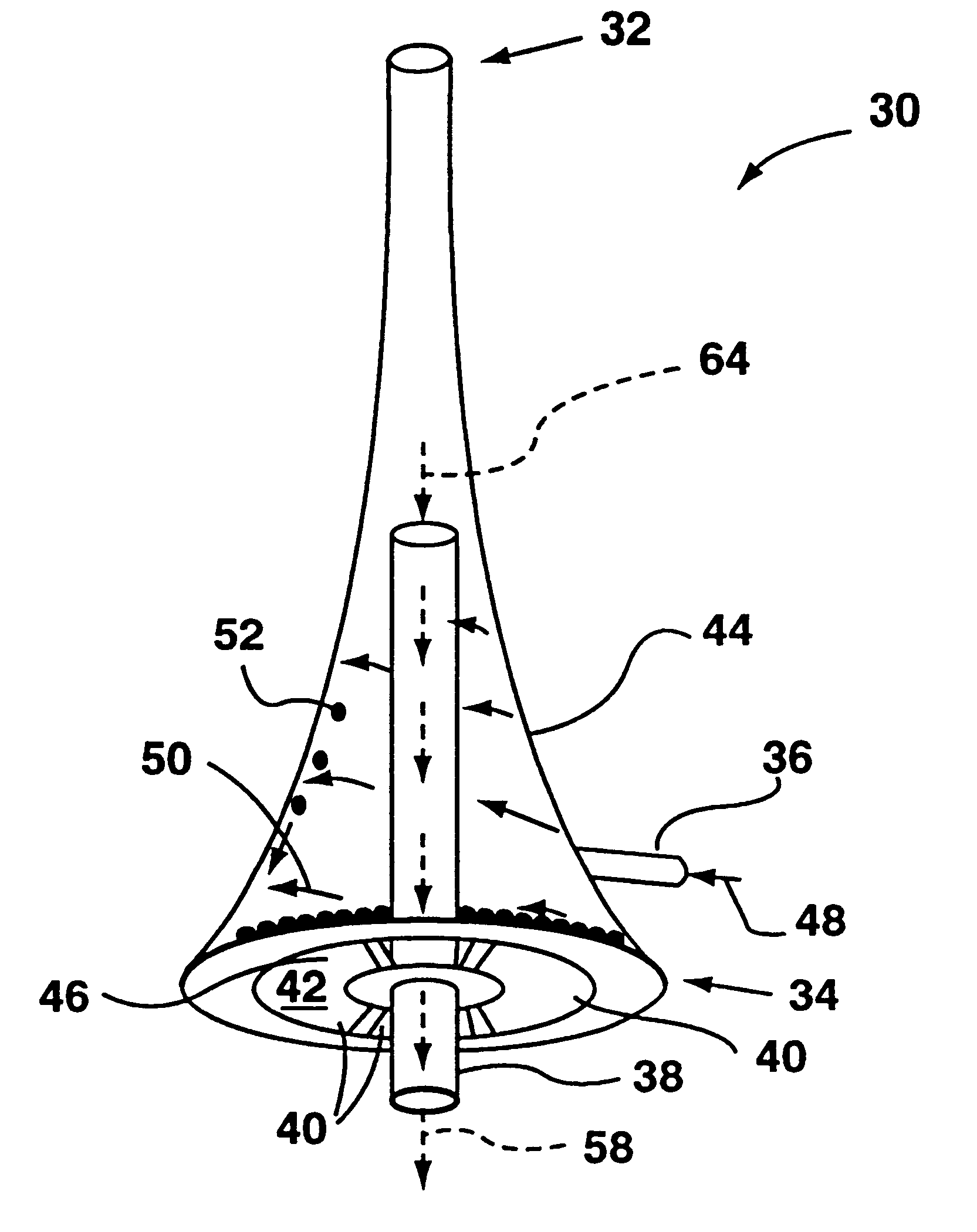
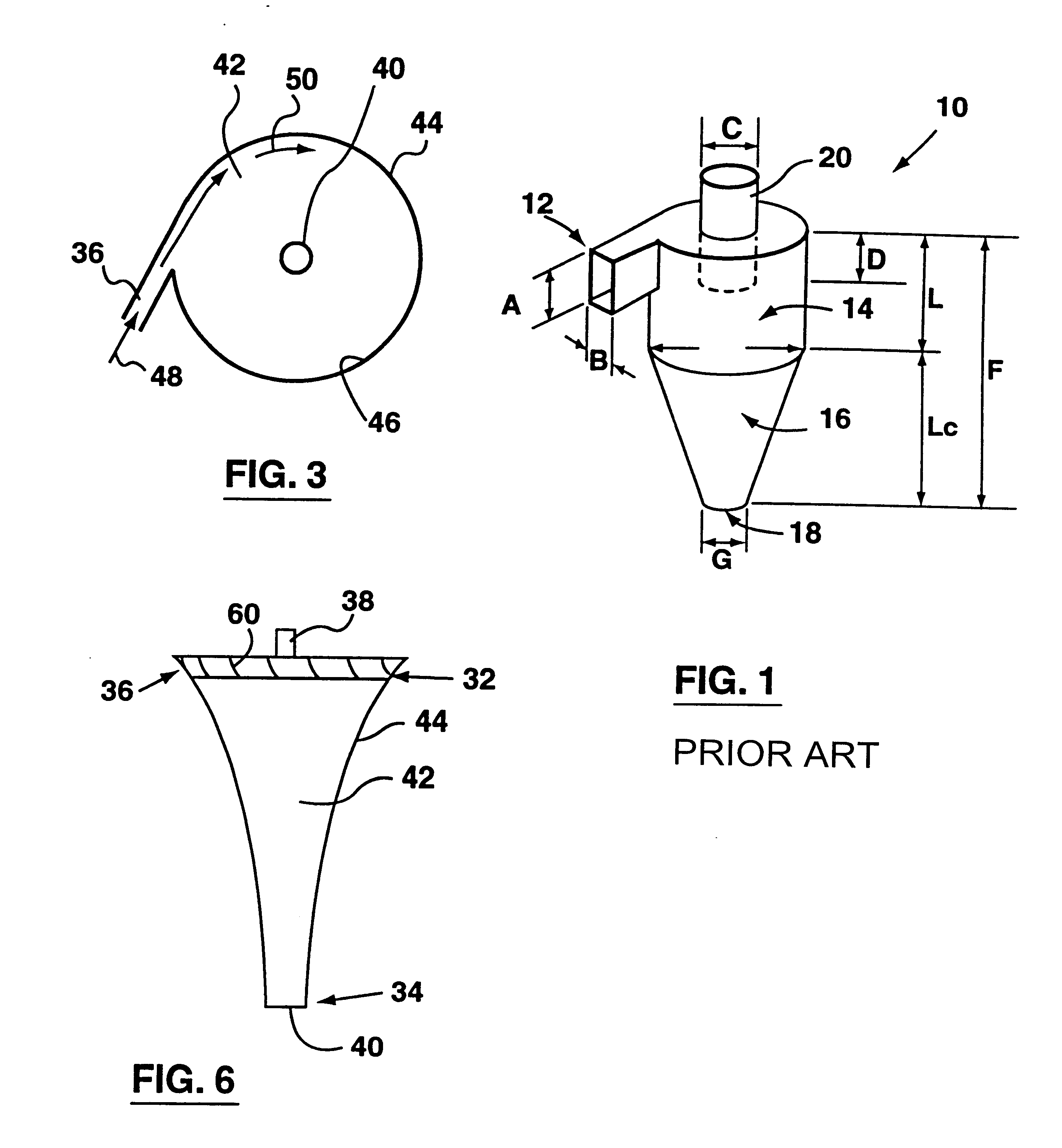
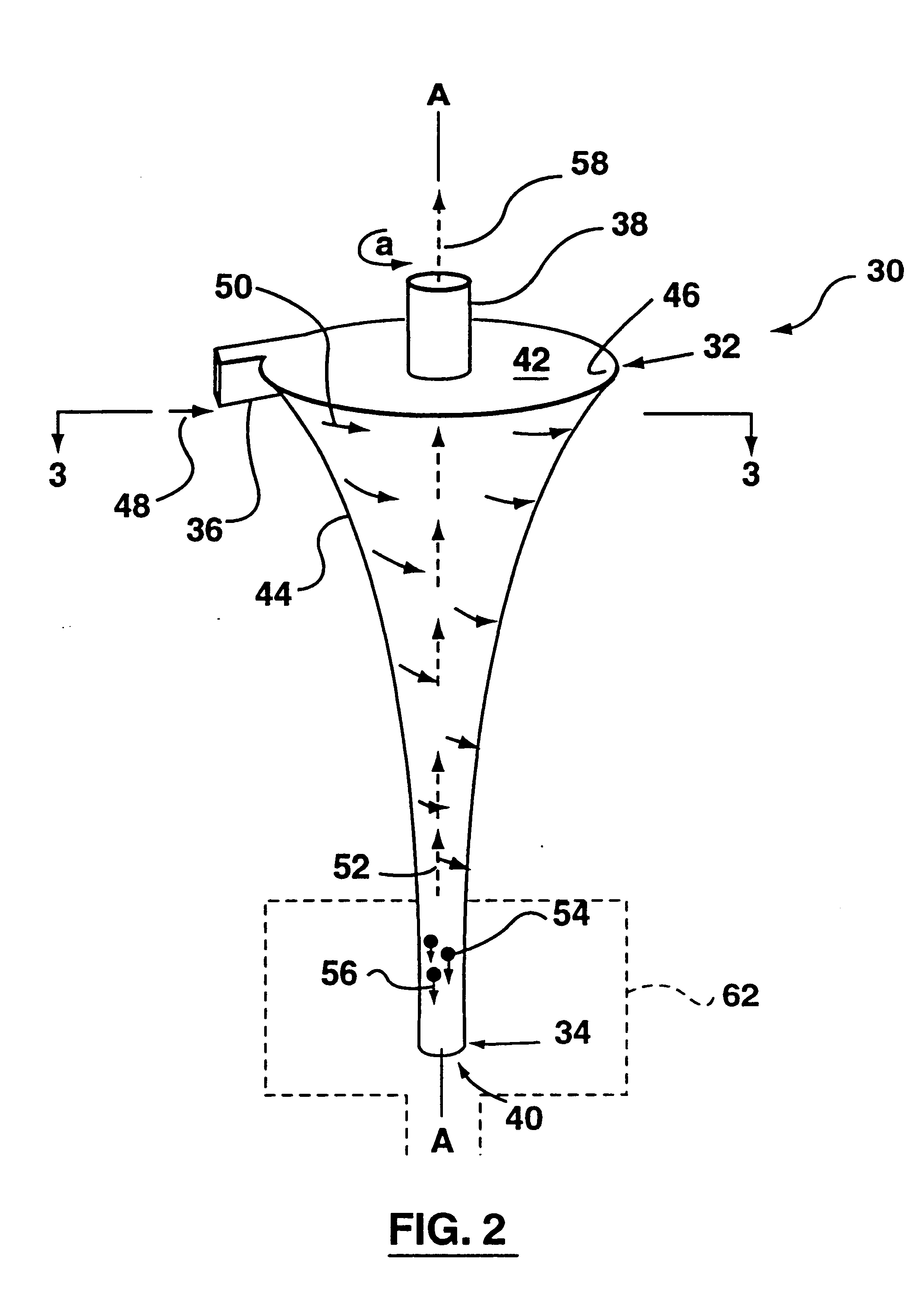
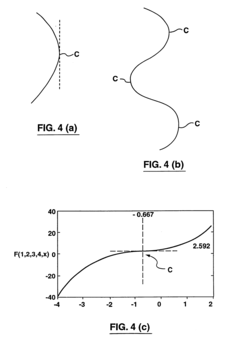
- A non-frusto-conical cyclone separator with a continuously varying inner surface defined by a continuous n-differentiable curve, allowing continuous variation of the L/d and Lc/d parameters along the cyclone axis, enabling efficient separation of a wider range of particle sizes in a single unit.
Environmental Regulations for Industrial Dust Collection
Environmental regulations governing industrial dust collection have become increasingly stringent worldwide, directly impacting the design and operational requirements of cyclone separators. In the European Union, the Industrial Emissions Directive sets strict particulate matter emission limits, typically requiring collection efficiencies exceeding 99% for particles above 10 micrometers. The United States Environmental Protection Agency enforces similar standards through the Clean Air Act, mandating Best Available Control Technology for industrial facilities. These regulations establish maximum permissible concentration levels for airborne particulates, often ranging from 10 to 50 milligrams per cubic meter depending on the industry sector and particle characteristics.
Compliance with these environmental standards necessitates precise optimization of cyclone separator geometry, particularly the cone angle, which directly influences separation efficiency. Regulatory frameworks increasingly emphasize not only emission limits but also continuous monitoring requirements, compelling manufacturers to maintain consistent performance across varying operational conditions. The cone angle optimization becomes critical as it affects the balance between pressure drop and collection efficiency, both of which are scrutinized during regulatory inspections and environmental impact assessments.
Recent regulatory trends show a shift toward more comprehensive approaches, incorporating not just emission thresholds but also energy efficiency metrics and lifecycle environmental impacts. This evolution places additional pressure on cyclone separator design, as optimized cone angles must simultaneously achieve high particle separation rates while minimizing energy consumption. Industries such as cement production, metal processing, and chemical manufacturing face particularly rigorous oversight, with penalties for non-compliance ranging from operational shutdowns to substantial financial sanctions.
Furthermore, emerging regulations in developing economies are rapidly converging with international standards, creating a global imperative for advanced cyclone separator technologies. The optimization of separator angles must therefore account for diverse regulatory landscapes while maintaining cost-effectiveness and operational reliability. This regulatory environment drives continuous innovation in cyclone design, making angle optimization not merely a technical consideration but a fundamental compliance requirement that shapes the entire industrial dust collection sector.
Compliance with these environmental standards necessitates precise optimization of cyclone separator geometry, particularly the cone angle, which directly influences separation efficiency. Regulatory frameworks increasingly emphasize not only emission limits but also continuous monitoring requirements, compelling manufacturers to maintain consistent performance across varying operational conditions. The cone angle optimization becomes critical as it affects the balance between pressure drop and collection efficiency, both of which are scrutinized during regulatory inspections and environmental impact assessments.
Recent regulatory trends show a shift toward more comprehensive approaches, incorporating not just emission thresholds but also energy efficiency metrics and lifecycle environmental impacts. This evolution places additional pressure on cyclone separator design, as optimized cone angles must simultaneously achieve high particle separation rates while minimizing energy consumption. Industries such as cement production, metal processing, and chemical manufacturing face particularly rigorous oversight, with penalties for non-compliance ranging from operational shutdowns to substantial financial sanctions.
Furthermore, emerging regulations in developing economies are rapidly converging with international standards, creating a global imperative for advanced cyclone separator technologies. The optimization of separator angles must therefore account for diverse regulatory landscapes while maintaining cost-effectiveness and operational reliability. This regulatory environment drives continuous innovation in cyclone design, making angle optimization not merely a technical consideration but a fundamental compliance requirement that shapes the entire industrial dust collection sector.
Energy Efficiency in Cyclone Separator Operations
Energy efficiency represents a critical performance metric in cyclone separator operations, directly influencing operational costs and environmental sustainability. The geometric configuration, particularly the cone angle, plays a pivotal role in determining the energy consumption patterns during particle separation processes. Traditional cyclone designs often prioritize separation efficiency while overlooking the energy penalties associated with pressure drop and flow resistance, leading to suboptimal operational economics.
The relationship between cone angle optimization and energy efficiency manifests through multiple mechanisms. A steeper cone angle typically generates higher tangential velocities, which enhance centrifugal forces for particle separation but simultaneously increase pressure drop across the system. This pressure drop directly translates to higher fan power requirements and elevated energy consumption. Conversely, shallow cone angles reduce pressure losses but may compromise particle residence time and separation effectiveness, potentially necessitating multiple separation stages that cumulatively increase energy demands.
Recent investigations demonstrate that optimal cone angles can reduce specific energy consumption by 15-25% compared to conventional designs. This improvement stems from achieving balanced flow patterns that minimize turbulent energy dissipation while maintaining adequate centrifugal acceleration. The energy efficiency gains become particularly significant in continuous industrial operations where cyclone separators operate thousands of hours annually, translating modest percentage improvements into substantial cost savings and reduced carbon footprints.
Advanced computational fluid dynamics modeling has revealed that energy-efficient cone angle optimization must account for particle size distribution characteristics. Fine particle separation inherently requires higher energy input due to lower settling velocities, while coarse particle applications can achieve satisfactory performance with reduced energy expenditure. The integration of variable geometry designs or multi-stage configurations with progressively adjusted cone angles presents promising pathways for adaptive energy management across varying operational conditions and feedstock properties.
The relationship between cone angle optimization and energy efficiency manifests through multiple mechanisms. A steeper cone angle typically generates higher tangential velocities, which enhance centrifugal forces for particle separation but simultaneously increase pressure drop across the system. This pressure drop directly translates to higher fan power requirements and elevated energy consumption. Conversely, shallow cone angles reduce pressure losses but may compromise particle residence time and separation effectiveness, potentially necessitating multiple separation stages that cumulatively increase energy demands.
Recent investigations demonstrate that optimal cone angles can reduce specific energy consumption by 15-25% compared to conventional designs. This improvement stems from achieving balanced flow patterns that minimize turbulent energy dissipation while maintaining adequate centrifugal acceleration. The energy efficiency gains become particularly significant in continuous industrial operations where cyclone separators operate thousands of hours annually, translating modest percentage improvements into substantial cost savings and reduced carbon footprints.
Advanced computational fluid dynamics modeling has revealed that energy-efficient cone angle optimization must account for particle size distribution characteristics. Fine particle separation inherently requires higher energy input due to lower settling velocities, while coarse particle applications can achieve satisfactory performance with reduced energy expenditure. The integration of variable geometry designs or multi-stage configurations with progressively adjusted cone angles presents promising pathways for adaptive energy management across varying operational conditions and feedstock properties.
Unlock deeper insights with PatSnap Eureka Quick Research — get a full tech report to explore trends and direct your research. Try now!
Generate Your Research Report Instantly with AI Agent
Supercharge your innovation with PatSnap Eureka AI Agent Platform!