

Optimize Excimer Laser Beam Shape for Uniform Fluence Distribution
MAY 21, 20269 MIN READ
Generate Your Research Report Instantly with AI Agent
PatSnap Eureka helps you evaluate technical feasibility & market potential.
Excimer Laser Beam Shaping Background and Objectives
Excimer lasers have emerged as critical tools in precision manufacturing and medical applications since their development in the 1970s. These ultraviolet light sources, operating at wavelengths between 157-351 nm, deliver high-energy photons capable of breaking molecular bonds with minimal thermal damage. The evolution from early research-grade systems to industrial-scale platforms has been driven by demands for increasingly precise material processing, particularly in semiconductor lithography, corneal surgery, and advanced manufacturing.
The fundamental challenge in excimer laser applications lies in achieving uniform energy distribution across the beam profile. Traditional Gaussian beam profiles inherent to most laser systems create non-uniform fluence distributions, resulting in inconsistent processing outcomes. This limitation becomes particularly problematic in applications requiring precise material removal rates, such as photolithography mask production or refractive surgery procedures where micron-level accuracy is essential.
Historical development of beam shaping techniques began with simple aperture-based methods in the 1980s, progressing through diffractive optical elements in the 1990s, and advancing to sophisticated adaptive optics systems in recent decades. Each evolutionary step addressed specific limitations while introducing new complexities in system design and control algorithms.
The primary objective of optimizing excimer laser beam shape centers on achieving uniform fluence distribution across the target area while maintaining beam quality and energy efficiency. This involves developing advanced optical systems capable of transforming the native Gaussian intensity profile into a flat-top or super-Gaussian distribution with less than 5% variation across the useful beam area.
Secondary objectives include minimizing energy losses during beam transformation, reducing system complexity for industrial implementation, and ensuring long-term stability under high-power operating conditions. The optimization process must also consider wavelength-specific optical material constraints, as many conventional optics exhibit poor transmission or damage susceptibility at excimer wavelengths.
Modern beam shaping requirements extend beyond simple intensity uniformity to include precise control over beam divergence, coherence properties, and temporal pulse characteristics. These parameters directly influence processing quality in applications ranging from polymer ablation to precision micromachining of advanced materials.
The fundamental challenge in excimer laser applications lies in achieving uniform energy distribution across the beam profile. Traditional Gaussian beam profiles inherent to most laser systems create non-uniform fluence distributions, resulting in inconsistent processing outcomes. This limitation becomes particularly problematic in applications requiring precise material removal rates, such as photolithography mask production or refractive surgery procedures where micron-level accuracy is essential.
Historical development of beam shaping techniques began with simple aperture-based methods in the 1980s, progressing through diffractive optical elements in the 1990s, and advancing to sophisticated adaptive optics systems in recent decades. Each evolutionary step addressed specific limitations while introducing new complexities in system design and control algorithms.
The primary objective of optimizing excimer laser beam shape centers on achieving uniform fluence distribution across the target area while maintaining beam quality and energy efficiency. This involves developing advanced optical systems capable of transforming the native Gaussian intensity profile into a flat-top or super-Gaussian distribution with less than 5% variation across the useful beam area.
Secondary objectives include minimizing energy losses during beam transformation, reducing system complexity for industrial implementation, and ensuring long-term stability under high-power operating conditions. The optimization process must also consider wavelength-specific optical material constraints, as many conventional optics exhibit poor transmission or damage susceptibility at excimer wavelengths.
Modern beam shaping requirements extend beyond simple intensity uniformity to include precise control over beam divergence, coherence properties, and temporal pulse characteristics. These parameters directly influence processing quality in applications ranging from polymer ablation to precision micromachining of advanced materials.
Market Demand for Uniform Laser Processing Applications
The semiconductor manufacturing industry represents the largest market segment driving demand for uniform laser processing applications. Advanced lithography processes in chip fabrication require excimer lasers with precisely controlled beam profiles to achieve consistent feature dimensions across entire wafer surfaces. As semiconductor nodes continue shrinking toward sub-3nm technologies, the tolerance for fluence variations has become increasingly stringent, creating substantial market pressure for improved beam uniformity solutions.
Flat panel display manufacturing constitutes another significant market driver, where excimer laser annealing processes are essential for producing high-quality thin-film transistors. The growing demand for larger display panels, including OLED and micro-LED technologies, necessitates uniform laser processing across increasingly expansive substrate areas. Manufacturing defects caused by non-uniform fluence distribution directly impact yield rates and product quality, making beam shape optimization a critical competitive factor.
The photovoltaic industry has emerged as a rapidly expanding market for uniform laser processing applications. Solar cell manufacturing processes, including selective emitter formation and edge isolation, require consistent laser fluence to optimize cell efficiency. As solar panel manufacturers scale production and pursue higher conversion efficiencies, the demand for uniform excimer laser processing has intensified significantly.
Medical device manufacturing represents a specialized but growing market segment where uniform laser processing ensures consistent product quality and regulatory compliance. Applications include precise ablation of biocompatible materials, surface texturing for implants, and manufacturing of diagnostic devices. The stringent quality requirements in medical applications create premium market opportunities for advanced beam shaping technologies.
Industrial micromachining applications across automotive, aerospace, and electronics sectors continue expanding the market for uniform laser processing. These applications demand consistent processing quality for drilling micro-holes, cutting precision components, and surface modification tasks. The trend toward miniaturization and increased precision in manufacturing processes drives sustained market growth.
Market dynamics indicate strong growth potential driven by technological advancement requirements and quality improvement demands across multiple industries. The increasing complexity of manufactured products and tightening quality specifications create continuous pressure for enhanced beam uniformity solutions, establishing a robust foundation for sustained market expansion.
Flat panel display manufacturing constitutes another significant market driver, where excimer laser annealing processes are essential for producing high-quality thin-film transistors. The growing demand for larger display panels, including OLED and micro-LED technologies, necessitates uniform laser processing across increasingly expansive substrate areas. Manufacturing defects caused by non-uniform fluence distribution directly impact yield rates and product quality, making beam shape optimization a critical competitive factor.
The photovoltaic industry has emerged as a rapidly expanding market for uniform laser processing applications. Solar cell manufacturing processes, including selective emitter formation and edge isolation, require consistent laser fluence to optimize cell efficiency. As solar panel manufacturers scale production and pursue higher conversion efficiencies, the demand for uniform excimer laser processing has intensified significantly.
Medical device manufacturing represents a specialized but growing market segment where uniform laser processing ensures consistent product quality and regulatory compliance. Applications include precise ablation of biocompatible materials, surface texturing for implants, and manufacturing of diagnostic devices. The stringent quality requirements in medical applications create premium market opportunities for advanced beam shaping technologies.
Industrial micromachining applications across automotive, aerospace, and electronics sectors continue expanding the market for uniform laser processing. These applications demand consistent processing quality for drilling micro-holes, cutting precision components, and surface modification tasks. The trend toward miniaturization and increased precision in manufacturing processes drives sustained market growth.
Market dynamics indicate strong growth potential driven by technological advancement requirements and quality improvement demands across multiple industries. The increasing complexity of manufactured products and tightening quality specifications create continuous pressure for enhanced beam uniformity solutions, establishing a robust foundation for sustained market expansion.
Current Beam Uniformity Challenges in Excimer Systems
Excimer laser systems face significant beam uniformity challenges that directly impact their effectiveness in precision applications such as semiconductor lithography, medical procedures, and materials processing. The inherent characteristics of excimer laser discharge chambers create non-uniform energy distributions across the beam profile, resulting in spatial variations that can exceed acceptable tolerances for critical applications.
The primary challenge stems from the discharge geometry and gas dynamics within the laser cavity. Excimer lasers typically employ rectangular discharge chambers where electrical discharge occurs between elongated electrodes. This configuration naturally produces higher energy density near the electrode centers while exhibiting reduced intensity toward the edges, creating a characteristic "top-hat" profile with significant edge roll-off and potential hot spots.
Gas flow patterns within the discharge chamber contribute substantially to beam non-uniformity. Turbulent mixing of halogen and noble gas components creates localized concentration variations, leading to inconsistent gain medium properties across the discharge volume. These variations manifest as spatial fluctuations in laser output intensity, with typical non-uniformity levels ranging from 5% to 15% in standard configurations.
Thermal gradients represent another critical uniformity challenge. The high-energy discharge process generates substantial heat, creating temperature variations across the laser medium. These thermal effects alter the refractive index distribution and gain characteristics, introducing both spatial and temporal beam profile variations that compound existing uniformity issues.
Optical resonator design limitations further exacerbate uniformity problems. Traditional stable resonator configurations in excimer systems often exhibit mode competition and spatial hole burning effects, where different transverse modes compete for gain, resulting in irregular intensity distributions. The broad spectral bandwidth characteristic of excimer transitions makes achieving uniform spatial coherence particularly challenging.
Electrode erosion and contamination present long-term uniformity degradation mechanisms. As electrodes wear during operation, discharge characteristics change, leading to evolving beam profiles that require continuous compensation. Halogen chemistry inherent to excimer operation accelerates this degradation process, making sustained uniformity maintenance increasingly difficult.
Current measurement and feedback systems struggle with the rapid pulse-to-pulse variations typical of excimer lasers. Traditional beam profiling techniques often lack sufficient temporal resolution to capture fast fluctuations, making real-time uniformity correction challenging and limiting the effectiveness of adaptive beam shaping approaches.
The primary challenge stems from the discharge geometry and gas dynamics within the laser cavity. Excimer lasers typically employ rectangular discharge chambers where electrical discharge occurs between elongated electrodes. This configuration naturally produces higher energy density near the electrode centers while exhibiting reduced intensity toward the edges, creating a characteristic "top-hat" profile with significant edge roll-off and potential hot spots.
Gas flow patterns within the discharge chamber contribute substantially to beam non-uniformity. Turbulent mixing of halogen and noble gas components creates localized concentration variations, leading to inconsistent gain medium properties across the discharge volume. These variations manifest as spatial fluctuations in laser output intensity, with typical non-uniformity levels ranging from 5% to 15% in standard configurations.
Thermal gradients represent another critical uniformity challenge. The high-energy discharge process generates substantial heat, creating temperature variations across the laser medium. These thermal effects alter the refractive index distribution and gain characteristics, introducing both spatial and temporal beam profile variations that compound existing uniformity issues.
Optical resonator design limitations further exacerbate uniformity problems. Traditional stable resonator configurations in excimer systems often exhibit mode competition and spatial hole burning effects, where different transverse modes compete for gain, resulting in irregular intensity distributions. The broad spectral bandwidth characteristic of excimer transitions makes achieving uniform spatial coherence particularly challenging.
Electrode erosion and contamination present long-term uniformity degradation mechanisms. As electrodes wear during operation, discharge characteristics change, leading to evolving beam profiles that require continuous compensation. Halogen chemistry inherent to excimer operation accelerates this degradation process, making sustained uniformity maintenance increasingly difficult.
Current measurement and feedback systems struggle with the rapid pulse-to-pulse variations typical of excimer lasers. Traditional beam profiling techniques often lack sufficient temporal resolution to capture fast fluctuations, making real-time uniformity correction challenging and limiting the effectiveness of adaptive beam shaping approaches.
Existing Beam Homogenization Solutions
01 Beam shaping and homogenization techniques for excimer lasers
Various optical systems and methods are employed to achieve uniform fluence distribution across the laser beam cross-section. These techniques include the use of beam homogenizers, diffractive optical elements, and specialized lens arrays to redistribute the energy density and eliminate hot spots or non-uniform intensity patterns that can affect processing quality.- Beam shaping and homogenization techniques for uniform fluence distribution: Various optical elements and beam shaping techniques are employed to achieve uniform fluence distribution across the laser beam profile. These methods include the use of diffractive optical elements, beam homogenizers, and specially designed optical systems that redistribute the laser energy to create a more uniform intensity pattern. The goal is to eliminate hot spots and ensure consistent energy delivery across the entire treatment area.
- Measurement and monitoring systems for fluence control: Advanced measurement systems are integrated into excimer laser systems to monitor and control fluence distribution in real-time. These systems utilize various sensors, detectors, and feedback mechanisms to continuously measure the energy distribution and make necessary adjustments. The monitoring capabilities ensure precise control over the laser parameters and maintain consistent fluence levels throughout the treatment process.
- Optical delivery systems and beam steering mechanisms: Sophisticated optical delivery systems are designed to transport and direct the excimer laser beam while maintaining optimal fluence distribution. These systems incorporate beam steering mechanisms, scanning systems, and adaptive optics that can dynamically adjust the beam path and characteristics. The delivery systems ensure that the laser energy reaches the target area with the desired fluence pattern and minimal losses.
- Pulse shaping and temporal fluence modulation: Temporal control of laser pulses plays a crucial role in achieving desired fluence distribution patterns. Pulse shaping techniques allow for the modification of pulse duration, repetition rate, and temporal profile to optimize energy delivery. These methods enable precise control over how the laser energy is distributed over time, which directly affects the spatial fluence distribution and treatment outcomes.
- Calibration and compensation methods for fluence uniformity: Systematic calibration procedures and compensation algorithms are implemented to correct for non-uniformities in fluence distribution. These methods involve characterizing the beam profile, identifying areas of uneven energy distribution, and applying corrective measures through optical or electronic means. The calibration processes ensure that the laser system maintains consistent performance and delivers uniform fluence across different operating conditions.
02 Measurement and monitoring systems for fluence distribution
Real-time monitoring and measurement systems are implemented to characterize and control the spatial distribution of laser fluence. These systems utilize various detection methods including photodetector arrays, beam profiling cameras, and sampling techniques to ensure consistent energy delivery across the treatment or processing area.Expand Specific Solutions03 Optical delivery systems for controlled fluence patterns
Specialized optical delivery systems are designed to create specific fluence distribution patterns for different applications. These systems incorporate scanning mechanisms, beam steering optics, and programmable masks to achieve desired energy patterns while maintaining precise control over the spatial distribution of laser energy.Expand Specific Solutions04 Compensation methods for fluence uniformity
Active and passive compensation techniques are employed to correct for inherent non-uniformities in excimer laser output. These methods include feedback control systems, adaptive optics, and pre-compensation algorithms that adjust the beam characteristics to achieve the desired fluence distribution at the target plane.Expand Specific Solutions05 Application-specific fluence distribution optimization
Tailored approaches for optimizing fluence distribution based on specific application requirements such as material processing, medical treatments, or semiconductor manufacturing. These methods consider factors like substrate properties, processing parameters, and desired outcomes to determine optimal energy distribution patterns and delivery strategies.Expand Specific Solutions
Key Players in Excimer Laser and Beam Shaping Industry
The excimer laser beam shaping optimization market represents a mature yet evolving technological landscape, primarily driven by semiconductor lithography demands. The industry is in a consolidation phase with established market leaders like Cymer LLC and Gigaphoton Inc. dominating the commercial excimer laser space, while companies such as Coherent LaserSystems GmbH and JENOPTIK Optical Systems GmbH provide specialized optical solutions. The market demonstrates high technical maturity, evidenced by the sophisticated R&D capabilities of major display manufacturers like Samsung Display and LG Display, alongside significant academic contributions from institutions including Tsinghua University, Huazhong University of Science & Technology, and National University of Defense Technology. Technology readiness varies across applications, with semiconductor lithography applications showing highest maturity, while emerging applications in display manufacturing and materials processing continue to drive innovation in beam uniformity optimization techniques.
Semiconductor Energy Laboratory Co., Ltd.
Technical Solution: Semiconductor Energy Laboratory focuses on excimer laser annealing systems for display manufacturing, incorporating specialized beam shaping optics to achieve uniform fluence distribution across large substrate areas. Their approach utilizes linear beam shaping systems with cylindrical lens arrays, homogenizing optics, and precision scanning mechanisms to ensure consistent energy delivery during polysilicon crystallization processes. The company has developed proprietary optical designs that can maintain fluence uniformity within ±4% across beam widths exceeding 400mm, which is essential for processing large display panels efficiently. Their systems include advanced beam monitoring and control capabilities that automatically adjust optical parameters to compensate for laser output variations and maintain consistent processing quality throughout production runs.
Strengths: Specialized expertise in large-area beam shaping for display manufacturing with proven scalability for industrial production. Weaknesses: Technology primarily optimized for specific annealing applications, limiting broader industrial applicability.
Coherent LaserSystems GmbH & Co. KG
Technical Solution: Coherent develops comprehensive beam shaping solutions for excimer lasers using diffractive optical elements (DOEs), refractive beam shapers, and hybrid optical systems to transform Gaussian beam profiles into uniform top-hat distributions. Their approach combines proprietary algorithms for optical design with precision manufacturing of micro-optical components that can achieve fluence uniformity better than ±5% across various beam geometries. The company offers customizable beam shaping modules that integrate seamlessly with existing excimer laser systems, providing real-time beam monitoring and feedback control to maintain consistent fluence distribution during operation. Their solutions are widely used in materials processing, medical applications, and research environments where precise energy delivery is critical.
Strengths: Broad portfolio of beam shaping technologies with strong customization capabilities and excellent optical design expertise. Weaknesses: Higher cost compared to standard solutions and longer development times for custom applications.
Core Patents in Excimer Beam Uniformity Enhancement
Device and method to stabilize beam shape and symmetry for high energy pulsed laser applications
PatentActiveUS20070279747A1
Innovation
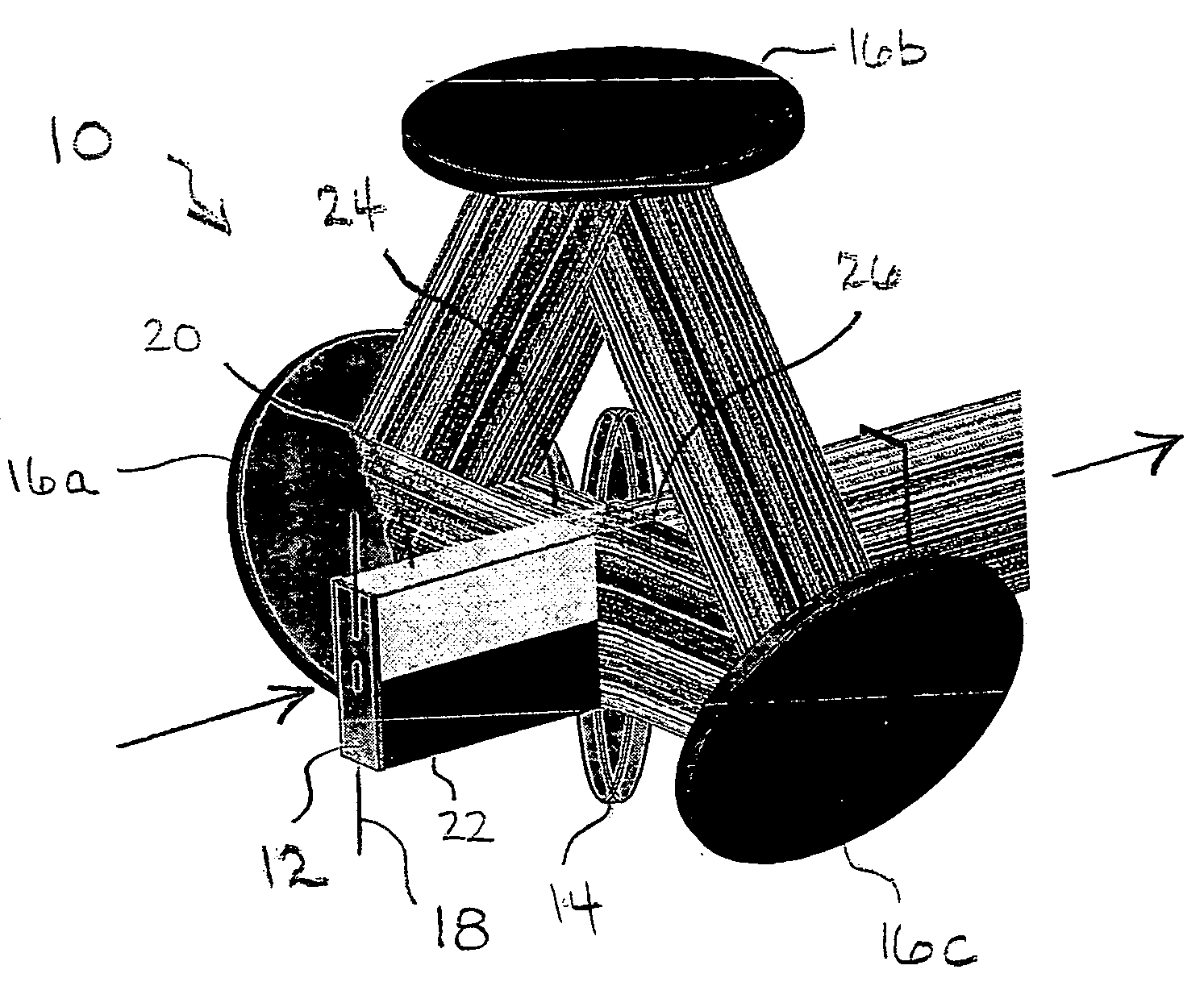
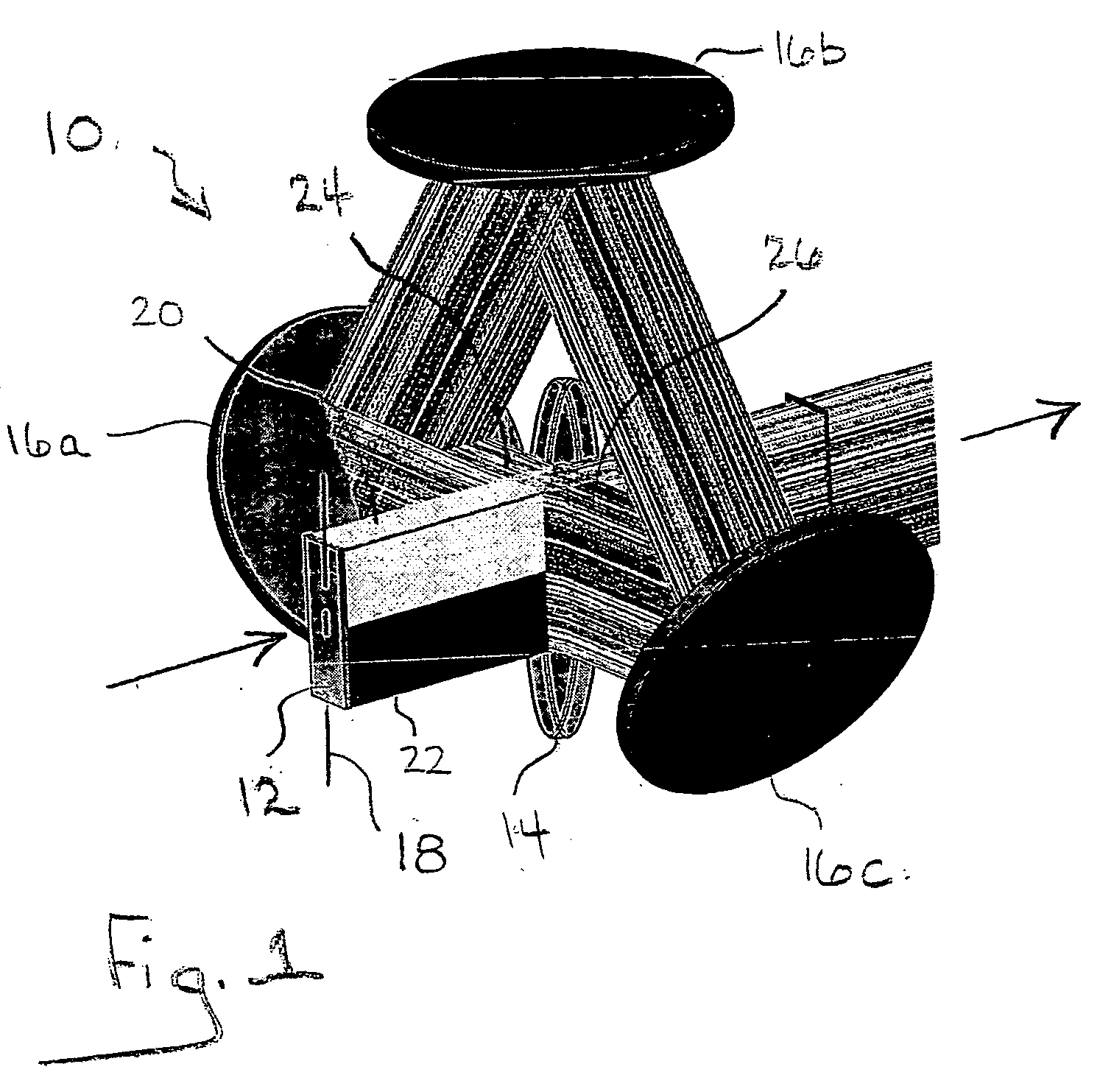
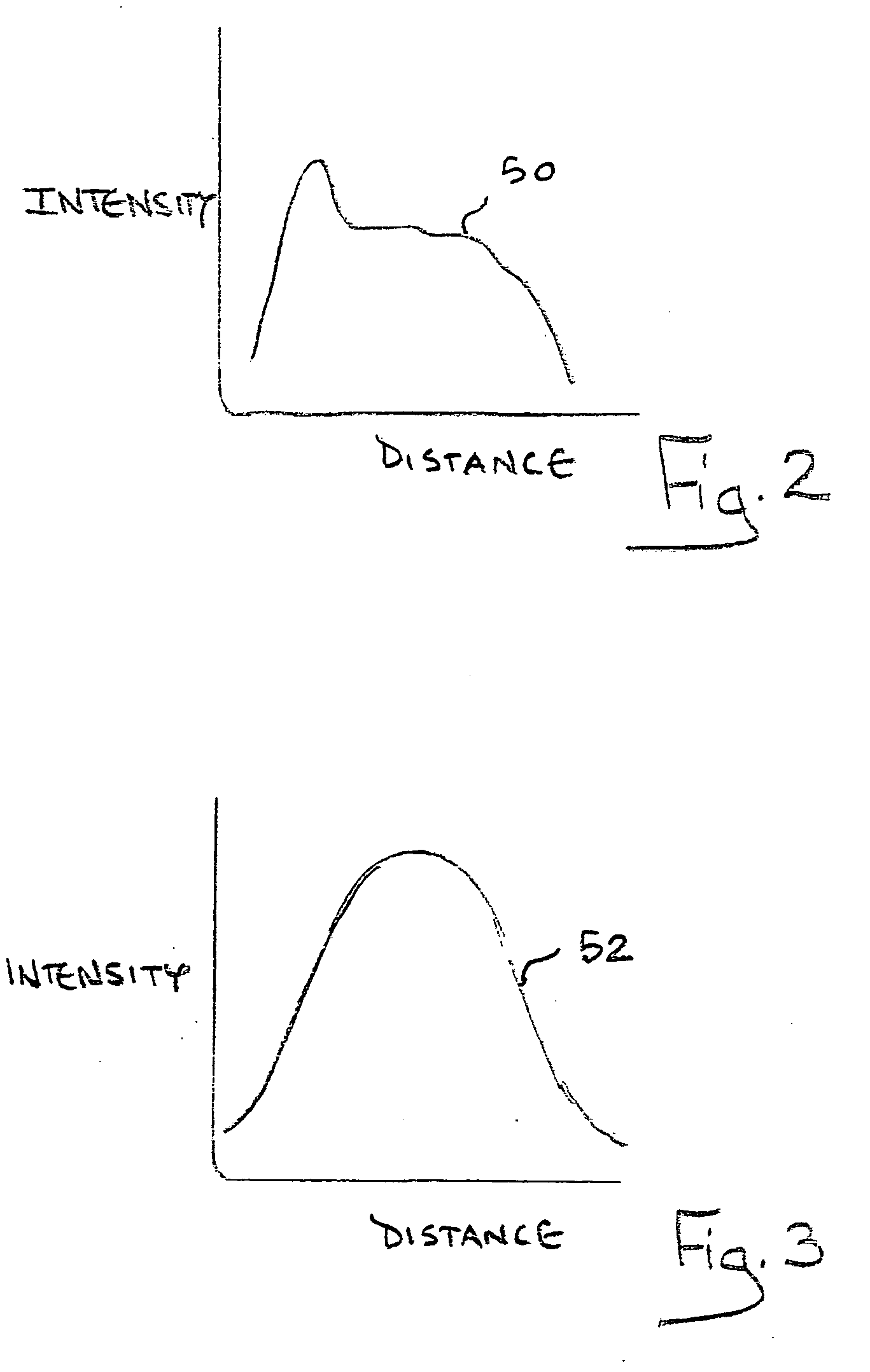
- A beam mixer system utilizing a spatially inverting path and a beam splitter to recombine beam portions, comprising three flat mirrors, which improves intensity symmetry along a selected axis by redirecting and combining parts of the beam to create a more uniform output.

Apparatus for creating a square or rectangular laser beam with a uniform intensity profile
PatentWO1995018984A1
Innovation
- An apparatus that converts a round gaussian-like laser beam into a square or rectangular beam with a uniform intensity profile using a pair of optical elements, such as fold mirrors, prisms, or diffractive optical elements, to create opposed straight edges and overlap the beam halves, ensuring uniform energy distribution across the reconfigured spot.


Safety Standards for Industrial Excimer Laser Systems
Industrial excimer laser systems operating for beam shape optimization applications must adhere to comprehensive safety frameworks established by international regulatory bodies. The primary standards governing these systems include IEC 60825 series for laser safety, ANSI Z136.1 for safe use of lasers, and ISO 11553 for safety requirements of laser processing machines. These standards specifically address the unique hazards associated with excimer lasers operating in ultraviolet wavelengths, typically between 193nm and 351nm, where conventional protective measures may prove inadequate.
Beam shaping operations introduce additional safety considerations due to the complex optical configurations required for fluence uniformization. The use of diffractive optical elements, beam homogenizers, and multi-element lens arrays creates multiple reflection points and potential beam deviation scenarios. Safety standards mandate comprehensive beam path enclosure systems with interlocked access panels, ensuring that any modification to the optical train automatically triggers laser shutdown protocols.
Personnel protection requirements for excimer laser beam shaping systems emphasize specialized eye protection rated for specific wavelengths and optical densities. Standard safety protocols require protective eyewear with minimum optical density of 5+ for direct beam exposure scenarios. Additionally, skin protection measures become critical due to the photochemical effects of UV radiation, necessitating specialized protective clothing and restricted access zones around the laser processing area.
Environmental safety standards address the toxic gas management systems essential for excimer laser operation. Halogen gas mixtures used in excimer lasers require sophisticated ventilation systems, gas leak detection protocols, and emergency response procedures. The beam shaping process may require extended operation periods, increasing the importance of continuous environmental monitoring and automated safety shutdown systems.
Electrical safety compliance focuses on high-voltage power supply systems typically operating above 20kV, with specific grounding requirements and arc flash protection protocols. The integration of beam monitoring systems for fluence measurement introduces additional electrical safety considerations, requiring isolated measurement circuits and fail-safe beam termination mechanisms to prevent overexposure incidents during optimization procedures.
Beam shaping operations introduce additional safety considerations due to the complex optical configurations required for fluence uniformization. The use of diffractive optical elements, beam homogenizers, and multi-element lens arrays creates multiple reflection points and potential beam deviation scenarios. Safety standards mandate comprehensive beam path enclosure systems with interlocked access panels, ensuring that any modification to the optical train automatically triggers laser shutdown protocols.
Personnel protection requirements for excimer laser beam shaping systems emphasize specialized eye protection rated for specific wavelengths and optical densities. Standard safety protocols require protective eyewear with minimum optical density of 5+ for direct beam exposure scenarios. Additionally, skin protection measures become critical due to the photochemical effects of UV radiation, necessitating specialized protective clothing and restricted access zones around the laser processing area.
Environmental safety standards address the toxic gas management systems essential for excimer laser operation. Halogen gas mixtures used in excimer lasers require sophisticated ventilation systems, gas leak detection protocols, and emergency response procedures. The beam shaping process may require extended operation periods, increasing the importance of continuous environmental monitoring and automated safety shutdown systems.
Electrical safety compliance focuses on high-voltage power supply systems typically operating above 20kV, with specific grounding requirements and arc flash protection protocols. The integration of beam monitoring systems for fluence measurement introduces additional electrical safety considerations, requiring isolated measurement circuits and fail-safe beam termination mechanisms to prevent overexposure incidents during optimization procedures.
Environmental Impact of Excimer Laser Manufacturing
The manufacturing of excimer lasers presents significant environmental challenges that require careful consideration throughout the production lifecycle. These high-energy laser systems rely on halogen gases such as fluorine, chlorine, and xenon, which pose substantial environmental risks during both production and disposal phases. The semiconductor and medical device industries' increasing demand for precise beam shaping capabilities has intensified scrutiny of manufacturing processes and their ecological footprint.
Raw material extraction and processing constitute the primary environmental burden in excimer laser manufacturing. The production of ultra-pure halogen gases requires energy-intensive purification processes that generate considerable carbon emissions. Fluorine gas production, essential for ArF and KrF excimer lasers, involves electrolytic processes consuming substantial electrical energy, typically sourced from fossil fuel-based power generation. Additionally, the manufacturing of precision optical components demands rare earth elements and specialized glass materials, contributing to resource depletion concerns.
Chemical waste management represents another critical environmental challenge. Manufacturing facilities must handle toxic byproducts from gas purification processes, including fluorinated compounds and chlorinated waste streams. These substances require specialized treatment and disposal methods to prevent groundwater contamination and atmospheric release. The production of high-quality optical coatings generates solvent waste and heavy metal residues that demand careful environmental management protocols.
Energy consumption during manufacturing operations significantly impacts the carbon footprint of excimer laser systems. The fabrication of precision mechanical components, optical elements, and electronic control systems requires energy-intensive machining, polishing, and assembly processes. Clean room environments necessary for optical component manufacturing consume additional energy for air filtration, temperature control, and humidity management, further increasing the overall environmental impact.
Packaging and transportation considerations add to the environmental burden, as excimer laser systems require specialized shipping containers and protective materials due to their sensitive optical components and hazardous gas cartridges. International shipping of these systems contributes to transportation-related emissions, while packaging materials often include non-recyclable protective foams and specialized cushioning systems designed to prevent optical misalignment during transit.
Raw material extraction and processing constitute the primary environmental burden in excimer laser manufacturing. The production of ultra-pure halogen gases requires energy-intensive purification processes that generate considerable carbon emissions. Fluorine gas production, essential for ArF and KrF excimer lasers, involves electrolytic processes consuming substantial electrical energy, typically sourced from fossil fuel-based power generation. Additionally, the manufacturing of precision optical components demands rare earth elements and specialized glass materials, contributing to resource depletion concerns.
Chemical waste management represents another critical environmental challenge. Manufacturing facilities must handle toxic byproducts from gas purification processes, including fluorinated compounds and chlorinated waste streams. These substances require specialized treatment and disposal methods to prevent groundwater contamination and atmospheric release. The production of high-quality optical coatings generates solvent waste and heavy metal residues that demand careful environmental management protocols.
Energy consumption during manufacturing operations significantly impacts the carbon footprint of excimer laser systems. The fabrication of precision mechanical components, optical elements, and electronic control systems requires energy-intensive machining, polishing, and assembly processes. Clean room environments necessary for optical component manufacturing consume additional energy for air filtration, temperature control, and humidity management, further increasing the overall environmental impact.
Packaging and transportation considerations add to the environmental burden, as excimer laser systems require specialized shipping containers and protective materials due to their sensitive optical components and hazardous gas cartridges. International shipping of these systems contributes to transportation-related emissions, while packaging materials often include non-recyclable protective foams and specialized cushioning systems designed to prevent optical misalignment during transit.
Unlock deeper insights with PatSnap Eureka Quick Research — get a full tech report to explore trends and direct your research. Try now!
Generate Your Research Report Instantly with AI Agent
Supercharge your innovation with PatSnap Eureka AI Agent Platform!