
Optimize Gradient Descent for Multi-Objective Learning
OCT 9, 20269 MIN READ
Generate Your Research Report Instantly with AI Agent
Patsnap Eureka helps you evaluate technical feasibility & market potential.
Multi-Objective Gradient Descent Background and Goals
Multi-objective learning has emerged as a critical paradigm in machine learning, addressing scenarios where models must simultaneously optimize multiple, often conflicting objectives. Traditional gradient descent methods, designed for single-objective optimization, face fundamental challenges when extended to multi-objective settings. The core difficulty lies in balancing trade-offs between competing objectives while ensuring convergence to Pareto-optimal solutions. This technical domain has gained prominence across diverse applications including multi-task learning, fairness-constrained optimization, and reinforcement learning with multiple reward signals.
The evolution of multi-objective gradient descent traces back to classical multi-objective optimization theory, which established foundational concepts such as Pareto dominance and Pareto frontiers. Early approaches relied on scalarization techniques that converted multiple objectives into weighted single objectives, but these methods proved inadequate for capturing the full spectrum of optimal trade-offs. The integration of gradient-based methods with multi-objective principles accelerated significantly in the past decade, driven by deep learning's computational demands and the increasing complexity of real-world applications requiring simultaneous optimization of accuracy, fairness, robustness, and efficiency.
Current research focuses on developing gradient manipulation strategies that can navigate conflicting gradient directions from different objectives. Key technical challenges include gradient interference, where updates beneficial for one objective harm others, and the computational overhead of maintaining multiple objective evaluations. The field has witnessed innovations in gradient projection methods, dynamic weighting schemes, and meta-learning approaches that adapt optimization strategies based on objective landscapes.
The primary goal of optimizing gradient descent for multi-objective learning is to develop efficient algorithms that can identify diverse Pareto-optimal solutions while maintaining computational tractability. This involves creating methods that balance exploration of the Pareto frontier with exploitation of promising regions, ensuring fair treatment of all objectives regardless of their scale or complexity. Additionally, the field aims to establish theoretical guarantees for convergence properties and develop practical frameworks that can seamlessly integrate with existing deep learning infrastructures, enabling practitioners to deploy multi-objective optimization without extensive algorithmic expertise.
The evolution of multi-objective gradient descent traces back to classical multi-objective optimization theory, which established foundational concepts such as Pareto dominance and Pareto frontiers. Early approaches relied on scalarization techniques that converted multiple objectives into weighted single objectives, but these methods proved inadequate for capturing the full spectrum of optimal trade-offs. The integration of gradient-based methods with multi-objective principles accelerated significantly in the past decade, driven by deep learning's computational demands and the increasing complexity of real-world applications requiring simultaneous optimization of accuracy, fairness, robustness, and efficiency.
Current research focuses on developing gradient manipulation strategies that can navigate conflicting gradient directions from different objectives. Key technical challenges include gradient interference, where updates beneficial for one objective harm others, and the computational overhead of maintaining multiple objective evaluations. The field has witnessed innovations in gradient projection methods, dynamic weighting schemes, and meta-learning approaches that adapt optimization strategies based on objective landscapes.
The primary goal of optimizing gradient descent for multi-objective learning is to develop efficient algorithms that can identify diverse Pareto-optimal solutions while maintaining computational tractability. This involves creating methods that balance exploration of the Pareto frontier with exploitation of promising regions, ensuring fair treatment of all objectives regardless of their scale or complexity. Additionally, the field aims to establish theoretical guarantees for convergence properties and develop practical frameworks that can seamlessly integrate with existing deep learning infrastructures, enabling practitioners to deploy multi-objective optimization without extensive algorithmic expertise.
Market Demand for Multi-Objective Optimization Solutions
The demand for multi-objective optimization solutions has experienced substantial growth across diverse industries as organizations increasingly recognize the limitations of single-objective approaches in addressing complex real-world problems. Traditional optimization methods that focus on a single performance metric often fail to capture the multifaceted nature of modern business and engineering challenges, where multiple competing objectives must be balanced simultaneously.
In the machine learning and artificial intelligence sector, multi-objective optimization has become essential for developing robust models that must balance accuracy, computational efficiency, fairness, and interpretability. Financial institutions require solutions that optimize portfolio returns while managing risk exposure and regulatory compliance constraints. Manufacturing enterprises seek to minimize production costs while maximizing quality, throughput, and sustainability metrics. These scenarios demonstrate the widespread need for sophisticated optimization frameworks capable of handling conflicting objectives.
The healthcare and pharmaceutical industries represent particularly promising markets, where drug discovery and treatment planning demand optimization across efficacy, safety, side effects, and cost considerations. Autonomous systems and robotics applications require real-time decision-making that balances safety, performance, energy consumption, and operational objectives. The growing complexity of these applications has created urgent demand for more efficient gradient descent methods that can navigate multi-objective landscapes effectively.
Cloud computing and edge computing platforms are driving demand for optimization solutions that can manage resource allocation across multiple performance dimensions including latency, throughput, energy efficiency, and cost. The proliferation of Internet of Things devices and smart systems has further amplified this need, as these systems must continuously optimize multiple objectives under dynamic constraints and limited computational resources.
The market is also witnessing increased demand from the sustainability and environmental sectors, where organizations must optimize operational performance while minimizing carbon footprint, resource consumption, and environmental impact. Regulatory pressures and corporate sustainability commitments are accelerating adoption of multi-objective optimization frameworks. This convergence of technological advancement, regulatory requirements, and business complexity has established multi-objective optimization as a critical capability across industries, creating substantial market opportunities for innovative gradient descent solutions.
In the machine learning and artificial intelligence sector, multi-objective optimization has become essential for developing robust models that must balance accuracy, computational efficiency, fairness, and interpretability. Financial institutions require solutions that optimize portfolio returns while managing risk exposure and regulatory compliance constraints. Manufacturing enterprises seek to minimize production costs while maximizing quality, throughput, and sustainability metrics. These scenarios demonstrate the widespread need for sophisticated optimization frameworks capable of handling conflicting objectives.
The healthcare and pharmaceutical industries represent particularly promising markets, where drug discovery and treatment planning demand optimization across efficacy, safety, side effects, and cost considerations. Autonomous systems and robotics applications require real-time decision-making that balances safety, performance, energy consumption, and operational objectives. The growing complexity of these applications has created urgent demand for more efficient gradient descent methods that can navigate multi-objective landscapes effectively.
Cloud computing and edge computing platforms are driving demand for optimization solutions that can manage resource allocation across multiple performance dimensions including latency, throughput, energy efficiency, and cost. The proliferation of Internet of Things devices and smart systems has further amplified this need, as these systems must continuously optimize multiple objectives under dynamic constraints and limited computational resources.
The market is also witnessing increased demand from the sustainability and environmental sectors, where organizations must optimize operational performance while minimizing carbon footprint, resource consumption, and environmental impact. Regulatory pressures and corporate sustainability commitments are accelerating adoption of multi-objective optimization frameworks. This convergence of technological advancement, regulatory requirements, and business complexity has established multi-objective optimization as a critical capability across industries, creating substantial market opportunities for innovative gradient descent solutions.
Current Challenges in Multi-Objective Gradient Methods
Multi-objective gradient descent methods face several fundamental challenges that significantly impact their effectiveness in real-world applications. The primary obstacle lies in the inherent conflict between multiple objectives, where improving one objective often leads to degradation in others. This trade-off creates a complex optimization landscape where traditional single-objective gradient descent strategies become inadequate. The challenge intensifies when objectives operate at different scales or exhibit varying degrees of sensitivity to parameter changes, making it difficult to balance their relative importance during optimization.
Gradient interference represents another critical challenge in multi-objective learning scenarios. When computing gradients for multiple objectives simultaneously, the resulting gradient vectors may point in conflicting directions, leading to oscillating or stagnant optimization trajectories. This phenomenon becomes particularly severe in deep learning applications where high-dimensional parameter spaces amplify the likelihood of gradient conflicts. Current methods struggle to effectively resolve these conflicts while maintaining reasonable convergence rates and computational efficiency.
The computational complexity of multi-objective optimization poses significant practical constraints. Many existing approaches require computing and storing multiple gradients, Hessian matrices, or performing expensive projection operations at each iteration. These computational demands scale poorly with the number of objectives and model parameters, limiting their applicability to large-scale problems. Additionally, the need for frequent hyperparameter tuning to balance different objectives adds another layer of computational burden.
Dynamic objective landscapes present ongoing difficulties for gradient-based methods. In many practical scenarios, the relative importance of objectives may shift during training, or new objectives may emerge based on intermediate results. Current methods typically rely on fixed weighting schemes or static preference structures that cannot adapt to these changing requirements. This rigidity often results in suboptimal solutions that fail to capture the evolving nature of multi-objective problems.
Theoretical guarantees for multi-objective gradient methods remain limited compared to their single-objective counterparts. Establishing convergence properties, characterizing the quality of obtained Pareto solutions, and understanding the relationship between gradient dynamics and solution diversity are still open research questions that hinder the development of more robust and reliable algorithms.
Gradient interference represents another critical challenge in multi-objective learning scenarios. When computing gradients for multiple objectives simultaneously, the resulting gradient vectors may point in conflicting directions, leading to oscillating or stagnant optimization trajectories. This phenomenon becomes particularly severe in deep learning applications where high-dimensional parameter spaces amplify the likelihood of gradient conflicts. Current methods struggle to effectively resolve these conflicts while maintaining reasonable convergence rates and computational efficiency.
The computational complexity of multi-objective optimization poses significant practical constraints. Many existing approaches require computing and storing multiple gradients, Hessian matrices, or performing expensive projection operations at each iteration. These computational demands scale poorly with the number of objectives and model parameters, limiting their applicability to large-scale problems. Additionally, the need for frequent hyperparameter tuning to balance different objectives adds another layer of computational burden.
Dynamic objective landscapes present ongoing difficulties for gradient-based methods. In many practical scenarios, the relative importance of objectives may shift during training, or new objectives may emerge based on intermediate results. Current methods typically rely on fixed weighting schemes or static preference structures that cannot adapt to these changing requirements. This rigidity often results in suboptimal solutions that fail to capture the evolving nature of multi-objective problems.
Theoretical guarantees for multi-objective gradient methods remain limited compared to their single-objective counterparts. Establishing convergence properties, characterizing the quality of obtained Pareto solutions, and understanding the relationship between gradient dynamics and solution diversity are still open research questions that hinder the development of more robust and reliable algorithms.
Existing Gradient Descent Solutions for Multi-Objective Tasks
01 Algorithmic and Methodological Improvements in Gradient Descent
Innovations focus on enhancing the core gradient descent algorithms to improve convergence speed, stability, and optimization efficiency. Techniques include step-size adaptation, forward scaling, parameter multiplexing, and combining gradient descent with alternative optimization strategies like Quasi-Newton methods.- Hardware, Chip Architecture, and System-Level Optimization for Gradient Descent: Gradient descent optimization can be achieved through specialized hardware architectures and system configurations designed to enhance processing efficiency. Innovations include specific chip designs optimized for gradient-descent computations, hardware-assisted gradient streaming techniques, and parallelized execution methods. These system-level implementations reduce computational overhead and accelerate the execution of optimization algorithms in hardware and embedded environments.
- Algorithmic Improvements, Dynamic Step Sizes, and Optimization Schemes: The efficiency and convergence of gradient descent can be improved by refining the core optimization algorithms and strategy mechanisms. Methods involve adjusting parameter precision, implementing dynamic step sizes, scaling forward gradients with local optimization, utilizing sequential iterative updates, and integrating quasi-Newton or quantum Hamiltonian descent strategies. These algorithmic enhancements help overcome slow convergence, stabilize training, and optimize hyperparameter tuning across complex landscapes.
- Parallel, Distributed, and Multi-Objective Optimization Frameworks: To tackle large-scale data and complex optimization goals, gradient descent strategies are expanded into distributed, parallel, and multi-objective frameworks. These approaches utilize parallelized stochastic gradient descent, multi-task alternating gradients, and adaptive multi-gradient schemes to simultaneously solve complex constraints and handle distributed edge computing setups. This enables scalable learning across distributed systems while balancing multiple competing performance criteria.
- Privacy-Preserving and Regularized Machine Learning Optimization: Gradient descent techniques can be optimized to protect data privacy and enhance network regularization during model training. By incorporating optimized correlation matrices, models can perform differentially private stochastic gradient descent to safeguard sensitive training data. Additionally, embedding optimization constraints directly into neural network layers and applying energy regularization improves training efficiency, security, and generalizability.
- Application-Specific Gradient Descent Optimization Methods: Gradient descent algorithms are tailored to solve parameter optimization problems across diverse specialized technical fields. Applications range from optimizing power supply network decoupling capacitance and microgrid load storage configurations to refining control parameters in radar systems, power converters, and industrial grinding tool coordinate calibration. Applying adaptive gradient schemes to specific domain physics ensures precise tuning and enhanced operational performance.
02 Hardware-Level and Parallelized Acceleration Architectures
Implementations leverage dedicated hardware architectures, streaming gradient designs, and parallel computing schemes to execute gradient descent efficiently. These technologies accelerate training and inference processes by reducing computational latency in distributed systems and specialized chip designs.Expand Specific Solutions03 Enhancements for Machine Learning Model Training and Neural Networks
Gradient descent optimization techniques are tailored for machine learning models to improve training efficiency and accuracy. Innovations address challenges such as training stability, privacy preservation using optimized correlation matrices, layer embedding, and dynamic system simulations.Expand Specific Solutions04 Application in Engineering Control, Circuit, and Parameter Optimization
Gradient descent methods are utilized to solve complex parameter optimization problems in physical systems and engineering design. Key uses include optimizing power supply network decoupling capacitance, 3D parasitic parameters, variable gain control, converter operations, and structural design.Expand Specific Solutions05 Application in Signal Processing, Physical Sensing, and Scientific Computing
Optimized gradient descent algorithms are applied across scientific and signal processing domains to analyze complex real-world data. Applications range from radar array beamforming and seismic data processing to image deformation measurement, weather parameter normalization, and power system voltage analysis.Expand Specific Solutions
Key Players in Multi-Objective Optimization Frameworks
The optimization of gradient descent for multi-objective learning represents a rapidly evolving field at the intersection of machine learning and optimization theory. The competitive landscape spans diverse players from technology giants like Google LLC, IBM, and Samsung Electronics, which leverage substantial R&D resources to advance algorithmic frameworks, to specialized firms such as Ping An Technology and NEC Laboratories America focusing on domain-specific applications. Academic institutions including Tsinghua University, Zhejiang University, and Nanyang Technological University contribute foundational research, while enterprises like Alibaba Group and Cognizant Technology Solutions drive commercial implementations. The technology remains in a growth phase with moderate maturity, characterized by active patent filings and increasing integration into production systems for recommendation engines, autonomous systems, and cloud-based AI services, indicating strong market potential across sectors.
Google LLC
Technical Solution: Google has developed advanced multi-objective optimization frameworks that leverage adaptive gradient descent algorithms with dynamic weight balancing mechanisms. Their approach implements Pareto-optimal solutions through multi-task learning architectures, utilizing automated hyperparameter tuning and gradient normalization techniques to balance conflicting objectives. The system employs sophisticated loss weighting strategies that automatically adjust during training, incorporating techniques like gradient surgery to prevent negative transfer between tasks. Google's implementation includes distributed training capabilities across TPU clusters, enabling efficient optimization of large-scale models with multiple competing objectives simultaneously, while maintaining computational efficiency through smart batching and gradient accumulation strategies.
Strengths: Industry-leading computational infrastructure, extensive research resources, proven scalability across massive datasets and model sizes. Weaknesses: Solutions may be over-engineered for smaller applications, high computational costs, potential vendor lock-in with proprietary hardware.
International Business Machines Corp.
Technical Solution: IBM has developed enterprise-grade multi-objective optimization solutions that integrate gradient descent variants with constraint satisfaction mechanisms. Their approach focuses on robust optimization frameworks that handle multiple business objectives simultaneously, incorporating fairness constraints and interpretability requirements. IBM's Watson AI platform implements adaptive learning rate scheduling combined with multi-objective loss functions that can be customized for specific industry applications. The system features automated conflict resolution between competing objectives through intelligent gradient manipulation and priority-based optimization strategies, particularly suited for regulated industries requiring explainable AI decisions and compliance with multiple regulatory objectives.
Strengths: Strong focus on enterprise reliability and regulatory compliance, excellent documentation and support, proven track record in mission-critical applications. Weaknesses: May lack cutting-edge research innovations compared to tech giants, potentially higher licensing costs, slower adaptation to emerging techniques.
Core Innovations in Pareto-Efficient Gradient Optimization
Deep learning method for distributed multi-objective optimization, computer program, and apparatus therefor
PatentPendingUS20230155889A1
Innovation
- A deep learning method for distributed multi-objective optimization using neural network modules that generate and exchange messages based on local observations and priority weights, enabling each base station to calculate a local solution that maximizes wireless network performance in real-time through cooperative optimization.


Gradient-based methods for multi-objective optimization
PatentInactiveUS20070005313A1
Innovation
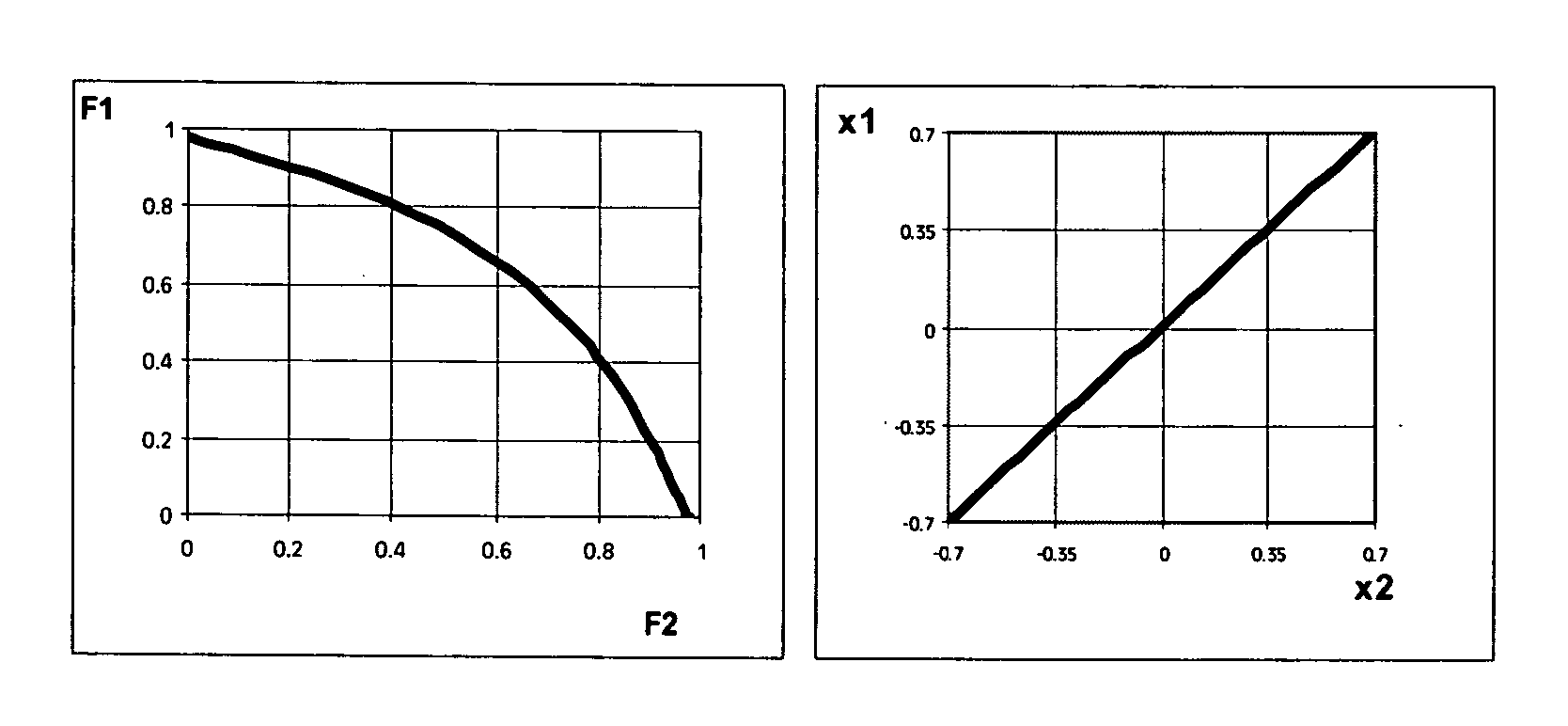
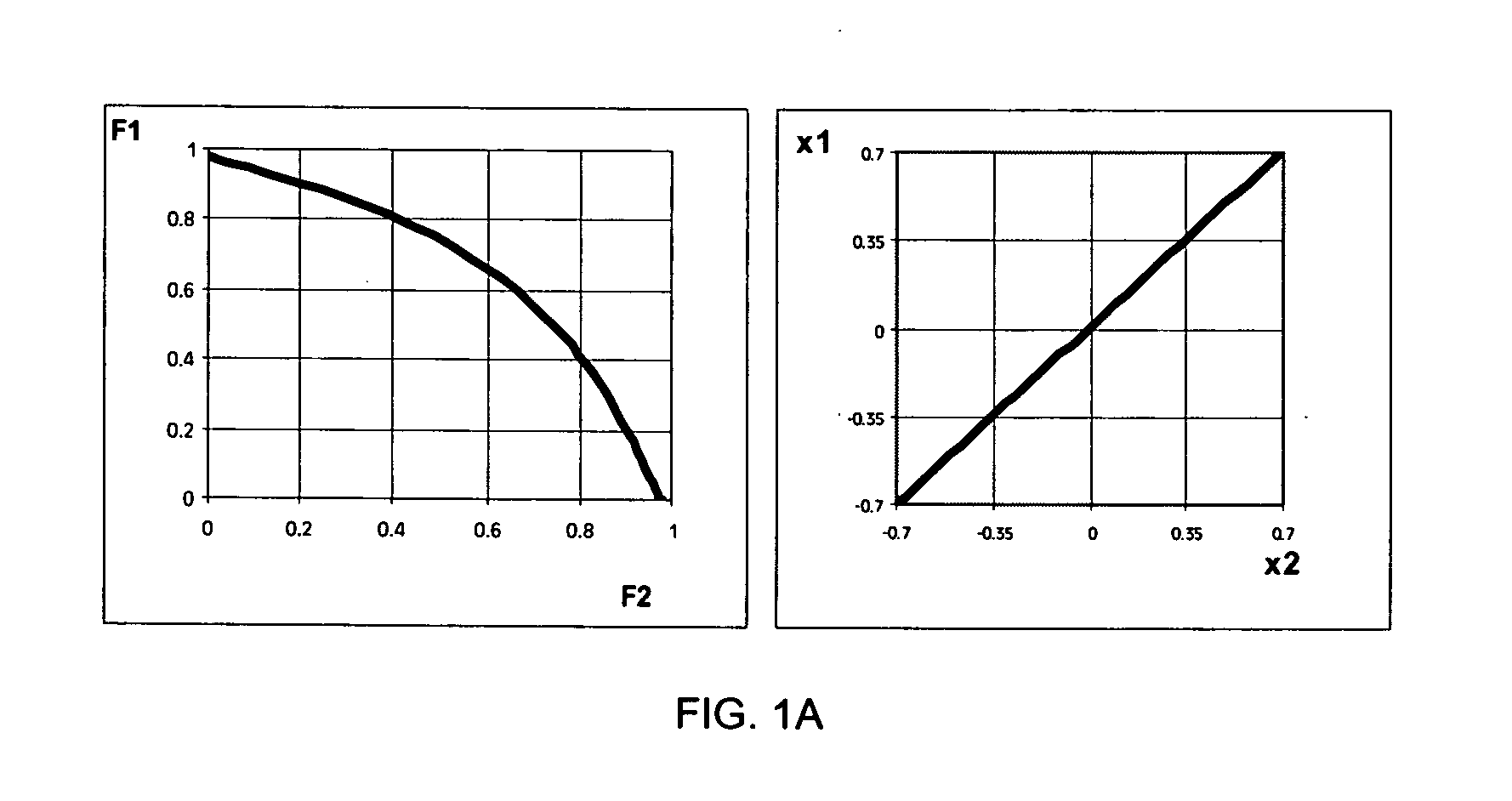
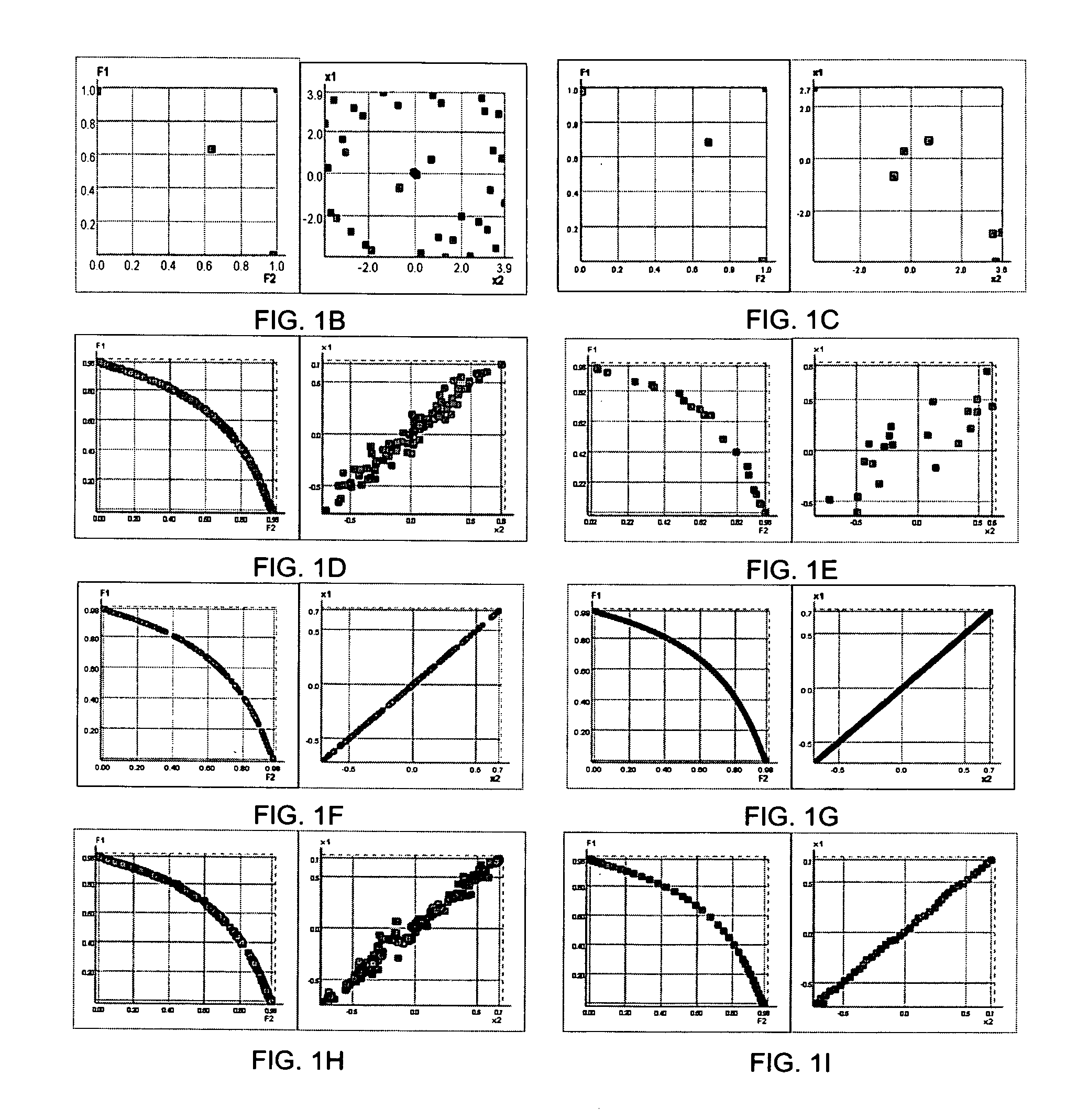
- The development of Concurrent Gradients Analysis (CGA) and related methods like Concurrent Gradients Method (CGM) and Pareto Navigator Method (PNM), which analyze gradients to determine simultaneous improvement directions for multiple objective functions, along with Dimensionally Independent Response Surface Method (DIRSM) to reduce computational complexity and improve accuracy.

Conflict Resolution Strategies in Multi-Objective Learning
In multi-objective learning scenarios, conflicting gradients emerge when optimizing multiple objectives simultaneously, as different tasks may require parameter updates in opposing directions. This fundamental challenge necessitates sophisticated conflict resolution strategies to balance competing objectives effectively. The core issue lies in determining how to aggregate or modify gradients when their directions diverge, potentially causing negative transfer and degraded performance across tasks.
Gradient projection methods represent a primary category of conflict resolution approaches. These techniques identify conflicting gradient components and project them onto a conflict-free subspace, ensuring that updates benefit all objectives or at least avoid harming any single task. By decomposing gradients into orthogonal components, these methods preserve beneficial update directions while neutralizing detrimental interference. This geometric perspective provides a principled framework for handling gradient conflicts without requiring extensive hyperparameter tuning.
Dynamic weighting strategies offer another resolution pathway by adaptively adjusting task importance based on training dynamics. These approaches monitor individual task performance, learning difficulty, or gradient magnitudes to reweight objectives dynamically. When conflicts arise, tasks experiencing slower convergence or higher uncertainty receive increased emphasis, promoting balanced optimization across all objectives. This adaptive mechanism responds to evolving training conditions rather than relying on static priority assignments.
Gradient surgery techniques directly modify conflicting gradient components through selective manipulation. When gradients from different tasks oppose each other, these methods surgically remove or attenuate the conflicting portions while preserving aligned components. This surgical intervention minimizes interference while maintaining optimization efficiency, allowing each task to progress without excessive compromise.
Pareto optimization frameworks approach conflict resolution by seeking solutions along the Pareto frontier, where improving one objective necessarily degrades another. These methods explicitly acknowledge trade-offs and guide optimization toward balanced solutions that represent optimal compromises among competing objectives. By framing multi-objective learning as Pareto optimization, these strategies provide theoretical guarantees about solution quality and convergence properties.
Gradient projection methods represent a primary category of conflict resolution approaches. These techniques identify conflicting gradient components and project them onto a conflict-free subspace, ensuring that updates benefit all objectives or at least avoid harming any single task. By decomposing gradients into orthogonal components, these methods preserve beneficial update directions while neutralizing detrimental interference. This geometric perspective provides a principled framework for handling gradient conflicts without requiring extensive hyperparameter tuning.
Dynamic weighting strategies offer another resolution pathway by adaptively adjusting task importance based on training dynamics. These approaches monitor individual task performance, learning difficulty, or gradient magnitudes to reweight objectives dynamically. When conflicts arise, tasks experiencing slower convergence or higher uncertainty receive increased emphasis, promoting balanced optimization across all objectives. This adaptive mechanism responds to evolving training conditions rather than relying on static priority assignments.
Gradient surgery techniques directly modify conflicting gradient components through selective manipulation. When gradients from different tasks oppose each other, these methods surgically remove or attenuate the conflicting portions while preserving aligned components. This surgical intervention minimizes interference while maintaining optimization efficiency, allowing each task to progress without excessive compromise.
Pareto optimization frameworks approach conflict resolution by seeking solutions along the Pareto frontier, where improving one objective necessarily degrades another. These methods explicitly acknowledge trade-offs and guide optimization toward balanced solutions that represent optimal compromises among competing objectives. By framing multi-objective learning as Pareto optimization, these strategies provide theoretical guarantees about solution quality and convergence properties.
Computational Efficiency and Scalability Considerations
Computational efficiency and scalability represent critical considerations when optimizing gradient descent algorithms for multi-objective learning scenarios. As the dimensionality of objective spaces increases and dataset sizes expand, traditional gradient-based optimization methods often encounter significant computational bottlenecks that limit their practical applicability in real-world systems.
The primary computational challenge stems from the need to calculate and balance multiple gradient vectors simultaneously. Each objective function requires separate gradient computation, and the aggregation or manipulation of these gradients introduces additional overhead. When dealing with deep neural networks containing millions of parameters, this multiplicative effect can result in training times that are several orders of magnitude longer than single-objective optimization. Memory consumption also scales proportionally with the number of objectives, as intermediate gradient information must be stored for backpropagation and potential conflict resolution.
Scalability concerns become particularly acute in distributed computing environments. Multi-objective gradient descent algorithms must coordinate gradient information across multiple objectives and potentially multiple computing nodes, creating communication overhead that can dominate actual computation time. The synchronization requirements for maintaining consistency across objectives further complicate parallel implementation strategies, often forcing trade-offs between convergence guarantees and computational throughput.
Recent research has focused on developing approximation techniques that reduce computational complexity without significantly compromising solution quality. Stochastic sampling approaches that evaluate only subsets of objectives per iteration have shown promise in reducing per-step costs. Additionally, adaptive computation methods that dynamically allocate resources based on objective importance or convergence status offer pathways to improved efficiency. Hardware acceleration through GPU parallelization and specialized tensor operations has also emerged as a practical solution for managing the increased computational demands.
The scalability challenge extends beyond raw computational power to encompass algorithmic design choices. Linear scaling with respect to both the number of objectives and problem dimensions remains an aspirational goal, with current state-of-the-art methods typically exhibiting super-linear complexity growth. Addressing these efficiency and scalability limitations is essential for enabling multi-objective gradient descent to handle increasingly complex real-world applications involving high-dimensional spaces and numerous competing objectives.
The primary computational challenge stems from the need to calculate and balance multiple gradient vectors simultaneously. Each objective function requires separate gradient computation, and the aggregation or manipulation of these gradients introduces additional overhead. When dealing with deep neural networks containing millions of parameters, this multiplicative effect can result in training times that are several orders of magnitude longer than single-objective optimization. Memory consumption also scales proportionally with the number of objectives, as intermediate gradient information must be stored for backpropagation and potential conflict resolution.
Scalability concerns become particularly acute in distributed computing environments. Multi-objective gradient descent algorithms must coordinate gradient information across multiple objectives and potentially multiple computing nodes, creating communication overhead that can dominate actual computation time. The synchronization requirements for maintaining consistency across objectives further complicate parallel implementation strategies, often forcing trade-offs between convergence guarantees and computational throughput.
Recent research has focused on developing approximation techniques that reduce computational complexity without significantly compromising solution quality. Stochastic sampling approaches that evaluate only subsets of objectives per iteration have shown promise in reducing per-step costs. Additionally, adaptive computation methods that dynamically allocate resources based on objective importance or convergence status offer pathways to improved efficiency. Hardware acceleration through GPU parallelization and specialized tensor operations has also emerged as a practical solution for managing the increased computational demands.
The scalability challenge extends beyond raw computational power to encompass algorithmic design choices. Linear scaling with respect to both the number of objectives and problem dimensions remains an aspirational goal, with current state-of-the-art methods typically exhibiting super-linear complexity growth. Addressing these efficiency and scalability limitations is essential for enabling multi-objective gradient descent to handle increasingly complex real-world applications involving high-dimensional spaces and numerous competing objectives.
Unlock deeper insights with Patsnap Eureka Quick Research — get a full tech report to explore trends and direct your research. Try now!
Generate Your Research Report Instantly with AI Agent
Supercharge your innovation with Patsnap Eureka AI Agent Platform!