
Optimize Heat Engine Combustion for Lower Emissions
OCT 9, 20269 MIN READ
Generate Your Research Report Instantly with AI Agent
Patsnap Eureka helps you evaluate technical feasibility & market potential.
Heat Engine Emission Reduction Background and Objectives
Heat engines have served as the backbone of modern transportation and power generation for over a century, yet their environmental impact has become increasingly problematic. Traditional combustion processes in internal combustion engines, gas turbines, and industrial burners produce significant quantities of harmful emissions including nitrogen oxides, particulate matter, carbon monoxide, and unburned hydrocarbons. These pollutants contribute to air quality degradation, climate change, and public health concerns, prompting stringent regulatory frameworks worldwide such as Euro 7 standards and EPA Tier 4 requirements.
The fundamental challenge lies in the inherent trade-offs within combustion thermodynamics. Achieving higher thermal efficiency typically requires elevated combustion temperatures, which paradoxically increases NOx formation through thermal mechanisms. Simultaneously, efforts to reduce emissions through lean-burn strategies or exhaust gas recirculation can compromise engine performance and fuel economy. This complex interplay demands innovative approaches that transcend conventional optimization boundaries.
The primary objective of this technical domain is to develop advanced combustion strategies that simultaneously minimize pollutant formation while maintaining or enhancing engine efficiency and power output. This encompasses multiple technological pathways including precision fuel injection control, advanced ignition systems, alternative combustion modes such as homogeneous charge compression ignition, and intelligent combustion phasing. Additionally, the integration of alternative fuels including hydrogen, ammonia, and synthetic fuels presents opportunities to fundamentally alter emission profiles.
Beyond immediate emission reduction, the broader goal involves creating adaptable combustion systems capable of operating across diverse fuel types and operating conditions while meeting increasingly stringent environmental standards. This requires sophisticated real-time combustion monitoring, predictive control algorithms, and robust hardware capable of withstanding extreme operating environments. The convergence of computational fluid dynamics, machine learning, and advanced materials science offers unprecedented opportunities to reimagine combustion optimization, positioning this field at the intersection of environmental sustainability and engineering innovation.
The fundamental challenge lies in the inherent trade-offs within combustion thermodynamics. Achieving higher thermal efficiency typically requires elevated combustion temperatures, which paradoxically increases NOx formation through thermal mechanisms. Simultaneously, efforts to reduce emissions through lean-burn strategies or exhaust gas recirculation can compromise engine performance and fuel economy. This complex interplay demands innovative approaches that transcend conventional optimization boundaries.
The primary objective of this technical domain is to develop advanced combustion strategies that simultaneously minimize pollutant formation while maintaining or enhancing engine efficiency and power output. This encompasses multiple technological pathways including precision fuel injection control, advanced ignition systems, alternative combustion modes such as homogeneous charge compression ignition, and intelligent combustion phasing. Additionally, the integration of alternative fuels including hydrogen, ammonia, and synthetic fuels presents opportunities to fundamentally alter emission profiles.
Beyond immediate emission reduction, the broader goal involves creating adaptable combustion systems capable of operating across diverse fuel types and operating conditions while meeting increasingly stringent environmental standards. This requires sophisticated real-time combustion monitoring, predictive control algorithms, and robust hardware capable of withstanding extreme operating environments. The convergence of computational fluid dynamics, machine learning, and advanced materials science offers unprecedented opportunities to reimagine combustion optimization, positioning this field at the intersection of environmental sustainability and engineering innovation.
Market Demand for Clean Combustion Technologies
The global market for clean combustion technologies is experiencing unprecedented growth driven by increasingly stringent environmental regulations and mounting societal pressure to address climate change. Governments worldwide have implemented progressively tighter emission standards for nitrogen oxides, particulate matter, carbon monoxide, and unburned hydrocarbons from heat engines across transportation, power generation, and industrial sectors. These regulatory frameworks create substantial compliance pressures on manufacturers and operators, directly translating into robust demand for advanced combustion optimization solutions.
The transportation sector represents the largest and most dynamic market segment for clean combustion technologies. With internal combustion engines still dominating global vehicle fleets and expected to remain significant for decades during the transition to electrification, there exists enormous demand for technologies that can reduce emissions from existing and new conventional powertrains. Commercial vehicle operators, particularly in logistics and public transportation, face both regulatory requirements and corporate sustainability commitments that drive investment in cleaner combustion systems.
Industrial applications constitute another critical demand driver, encompassing stationary engines for power generation, marine propulsion systems, and off-road machinery. Industries operating in urban or environmentally sensitive areas face particularly acute pressure to minimize emissions, creating premium market opportunities for advanced combustion optimization technologies. The marine sector specifically confronts new international regulations limiting sulfur and nitrogen oxide emissions, necessitating significant technological upgrades across global fleets.
Beyond regulatory compliance, economic incentives increasingly favor clean combustion technologies. Improved combustion efficiency directly correlates with reduced fuel consumption, offering operational cost savings that enhance return on investment. Carbon pricing mechanisms and emissions trading systems in various jurisdictions further strengthen the economic case for adopting advanced combustion technologies by monetizing emission reductions.
Consumer awareness and corporate environmental responsibility initiatives add another dimension to market demand. Major corporations across supply chains increasingly require suppliers and logistics partners to demonstrate environmental performance improvements, creating cascading demand throughout industrial ecosystems. Public procurement policies in numerous countries now prioritize low-emission equipment, establishing substantial guaranteed markets for clean combustion technologies.
The transportation sector represents the largest and most dynamic market segment for clean combustion technologies. With internal combustion engines still dominating global vehicle fleets and expected to remain significant for decades during the transition to electrification, there exists enormous demand for technologies that can reduce emissions from existing and new conventional powertrains. Commercial vehicle operators, particularly in logistics and public transportation, face both regulatory requirements and corporate sustainability commitments that drive investment in cleaner combustion systems.
Industrial applications constitute another critical demand driver, encompassing stationary engines for power generation, marine propulsion systems, and off-road machinery. Industries operating in urban or environmentally sensitive areas face particularly acute pressure to minimize emissions, creating premium market opportunities for advanced combustion optimization technologies. The marine sector specifically confronts new international regulations limiting sulfur and nitrogen oxide emissions, necessitating significant technological upgrades across global fleets.
Beyond regulatory compliance, economic incentives increasingly favor clean combustion technologies. Improved combustion efficiency directly correlates with reduced fuel consumption, offering operational cost savings that enhance return on investment. Carbon pricing mechanisms and emissions trading systems in various jurisdictions further strengthen the economic case for adopting advanced combustion technologies by monetizing emission reductions.
Consumer awareness and corporate environmental responsibility initiatives add another dimension to market demand. Major corporations across supply chains increasingly require suppliers and logistics partners to demonstrate environmental performance improvements, creating cascading demand throughout industrial ecosystems. Public procurement policies in numerous countries now prioritize low-emission equipment, establishing substantial guaranteed markets for clean combustion technologies.
Current Combustion Status and Emission Challenges
Heat engine combustion technology has achieved significant maturity over the past century, yet contemporary systems continue to face substantial emission challenges that threaten environmental sustainability and regulatory compliance. Modern internal combustion engines, gas turbines, and industrial burners operate under increasingly stringent emission standards, particularly regarding nitrogen oxides, particulate matter, carbon monoxide, and unburned hydrocarbons. Despite advanced fuel injection systems and electronic control units, achieving complete combustion while minimizing pollutant formation remains an elusive goal due to inherent thermodynamic and chemical kinetic constraints.
The primary challenge stems from the fundamental trade-off between thermal efficiency and emission formation. High combustion temperatures necessary for optimal efficiency create favorable conditions for thermal NOx formation through the Zeldovich mechanism. Conversely, strategies to reduce peak temperatures often result in incomplete combustion, generating carbon monoxide and unburned hydrocarbons. This dilemma is particularly acute in diesel engines, where localized fuel-rich zones produce soot particles even as lean overall mixtures generate excessive NOx. Current three-way catalytic converters and selective catalytic reduction systems provide post-combustion treatment but add complexity, cost, and energy penalties to the overall system.
Spatial and temporal heterogeneities in fuel-air mixing represent another critical obstacle. Turbulent flow patterns, spray dynamics, and wall interactions create non-uniform concentration fields that prevent ideal stoichiometric combustion throughout the chamber. Advanced direct injection technologies have improved mixture preparation, but transient operating conditions and cold-start phases continue to produce emission spikes that significantly impact overall pollutant output. Real-world driving cycles demonstrate substantially higher emissions than laboratory tests, revealing the gap between controlled optimization and practical performance.
Emerging regulatory frameworks worldwide are tightening emission limits while expanding the scope of regulated pollutants to include greenhouse gases and ultrafine particulates. The European Union's Euro 7 standards and similar initiatives in North America and Asia demand near-zero tailpipe emissions, pushing conventional combustion optimization approaches toward their practical limits. Simultaneously, fuel quality variations, aging component degradation, and diverse operating environments introduce additional variables that complicate emission control strategies. These multifaceted challenges necessitate innovative approaches that fundamentally reimagine combustion processes rather than incrementally refining existing technologies.
The primary challenge stems from the fundamental trade-off between thermal efficiency and emission formation. High combustion temperatures necessary for optimal efficiency create favorable conditions for thermal NOx formation through the Zeldovich mechanism. Conversely, strategies to reduce peak temperatures often result in incomplete combustion, generating carbon monoxide and unburned hydrocarbons. This dilemma is particularly acute in diesel engines, where localized fuel-rich zones produce soot particles even as lean overall mixtures generate excessive NOx. Current three-way catalytic converters and selective catalytic reduction systems provide post-combustion treatment but add complexity, cost, and energy penalties to the overall system.
Spatial and temporal heterogeneities in fuel-air mixing represent another critical obstacle. Turbulent flow patterns, spray dynamics, and wall interactions create non-uniform concentration fields that prevent ideal stoichiometric combustion throughout the chamber. Advanced direct injection technologies have improved mixture preparation, but transient operating conditions and cold-start phases continue to produce emission spikes that significantly impact overall pollutant output. Real-world driving cycles demonstrate substantially higher emissions than laboratory tests, revealing the gap between controlled optimization and practical performance.
Emerging regulatory frameworks worldwide are tightening emission limits while expanding the scope of regulated pollutants to include greenhouse gases and ultrafine particulates. The European Union's Euro 7 standards and similar initiatives in North America and Asia demand near-zero tailpipe emissions, pushing conventional combustion optimization approaches toward their practical limits. Simultaneously, fuel quality variations, aging component degradation, and diverse operating environments introduce additional variables that complicate emission control strategies. These multifaceted challenges necessitate innovative approaches that fundamentally reimagine combustion processes rather than incrementally refining existing technologies.
Mainstream Low-Emission Combustion Solutions
01 Engine Control Methods and Systems for Emission Optimization
Implement advanced control strategies, algorithms, and system architectures for managing engine operating parameters—such as injection timing, spark ignition, cold starts, and transient fuel delivery—to optimize combustion efficiency and minimize exhaust emissions across diverse operating conditions.- Engine Control Systems and Strategies for Emission Reduction: Methods, electronic control units, and strategies are implemented to manage engine operational parameters—such as optimizing spark ignition, controlling auxiliary loads, handling transient fuel, and managing abnormal combustion—to minimize harmful exhaust output during engine operation.
- Exhaust Gas Purification, Filtration, and Aftertreatment Systems: Apparatus and techniques are utilized to treat post-combustion exhaust gases before release into the atmosphere. This includes using photocatalytic destruction during cold starts, crankcase emission filters, post-combustion catalyst injections, oxidation catalysts, and specialized gas capture mechanisms.
- Combustion Chamber Optimization and Engine Structural Modifications: Redesigning physical engine components—such as optimizing the geometry of external or internal combustion chambers, utilizing pressure wave superchargers, employing electrically insulated engine members, and modifying dual-combustion modes—directly enhances combustion efficiency and reduces raw emission generation.
- Alternative Fuel Formulation and Fuel Parameter Optimization: Engine emissions, particularly nitrogen oxides, hydrocarbons, and particulate matter, are lowered by altering fuel properties, utilizing bio-gas mixtures, blending ethanol with diesel fuel, or analyzing HCNG combustion characteristics under specific injection pressures.
- Exhaust Heat Management and Energy Recovery Systems: Waste heat from combustion exhaust gases is managed, cooled, or recovered using heat exchangers and waste heat utilization systems. Recovering thermal energy improves overall engine thermal efficiency while simultaneously facilitating exhaust gas cooling and emission processing.
02 Exhaust Gas Purification, Filtration, and Aftertreatment Devices
Utilize dedicated aftertreatment components, such as particulate filters, catalytic converters, oxidation catalysts, and photocatalytic or chemical injection systems, to purify, capture, or chemically decompose harmful engine exhaust gases and crankcase emissions.Expand Specific Solutions03 Waste Heat Recovery and Thermal Management Systems
Incorporate heat exchangers, steam engine recovery systems, and integrated thermal management architectures to capture waste heat from engine exhaust or cooling systems, enhancing overall system operational efficiency while indirectly controlling emissions.Expand Specific Solutions04 Combustion Chamber Design and Engine Hardware Modifications
Modify structural engine components—including the geometric design of external or internal combustion chambers, pressure wave superchargers, and electrically insulated engine members—to directly alter flame propagation, enhance combustion quality, and suppress emission formation at the source.Expand Specific Solutions05 Alternative Fuel Blends and Combustion Parameter Optimization
Formulate and utilize alternative or blended fuels—such as ethanol-diesel combinations, compressed biogas, and hydrogen-compressed natural gas (HCNG)—in conjunction with tailored injection and ignition parameters to reduce particulate matter, nitrogen oxides, and hydrocarbon emissions.Expand Specific Solutions
Major Players in Clean Engine Technology
The heat engine combustion optimization sector is experiencing significant evolution driven by stringent emission regulations and climate commitments. The market demonstrates substantial growth potential as industries transition toward cleaner combustion technologies, with established automotive and power generation sectors leading adoption. Technology maturity varies considerably across players: traditional manufacturers like Ford Global Technologies LLC, Robert Bosch GmbH, General Electric Company, Cummins Inc., and Toyota Motor Corp. are advancing combustion efficiency through incremental innovations, while emerging players like MicroEra Power Inc. explore alternative thermal management solutions. Chinese state-controlled entities including CHN Energy Investment Group and National Energy Group Guoyuan Power represent major regional investments in emission reduction technologies. Government bodies like the United States Environmental Protection Agency shape regulatory frameworks driving innovation. Research institutions such as Fraunhofer-Gesellschaft eV and ABB Research Ltd. contribute fundamental breakthroughs. The competitive landscape reflects a mature industry undergoing transformation, balancing established combustion optimization approaches with disruptive clean energy alternatives.
Ford Global Technologies LLC
Technical Solution: Ford has developed advanced combustion technologies focusing on EcoBoost turbocharged direct injection engines with integrated emission control strategies. Their approach combines low-pressure and high-pressure EGR systems with Miller cycle valve timing to reduce peak combustion temperatures and NOx formation. The system utilizes split-cooling architecture separating cylinder head and block cooling circuits, enabling faster warm-up and optimal temperature management for emission control. Ford's combustion strategy employs advanced knock detection algorithms with cylinder-individual ignition control, allowing aggressive spark advance while maintaining reliability. The technology integrates gasoline particulate filters (GPF) and three-way catalysts positioned close to the engine for rapid light-off, achieving 99% conversion efficiency within 30 seconds of cold start. Their latest generation engines demonstrate 20% improvement in fuel economy with 30% reduction in CO2 emissions while meeting stringent SULEV30 standards. The system shows particular strength in downsized turbocharged applications balancing performance and emissions.
Strengths: Cost-effective downsizing approach, strong performance characteristics, effective integration of emission controls. Weaknesses: Turbocharger complexity affecting long-term durability, sensitivity to fuel quality variations, higher maintenance costs in extended service intervals.
Robert Bosch GmbH
Technical Solution: Bosch has developed advanced combustion optimization systems integrating high-pressure common rail fuel injection technology with precise electronic control units. Their solution employs multi-stage injection strategies, enabling up to 5-7 injection events per combustion cycle to achieve optimal fuel atomization and air-fuel mixing. The system utilizes real-time sensor feedback from lambda sensors, pressure sensors, and temperature monitors to dynamically adjust injection timing, duration, and pressure (up to 2500 bar). This approach significantly reduces NOx emissions by 60-80% and particulate matter by 90% compared to conventional systems, while maintaining thermal efficiency above 42%. Bosch's technology also incorporates exhaust gas recirculation (EGR) optimization and selective catalytic reduction (SCR) integration for comprehensive emission control across various operating conditions.
Strengths: Industry-leading fuel injection precision, extensive automotive integration experience, robust sensor technology. Weaknesses: High system complexity requiring sophisticated calibration, premium cost structure, dependency on high-quality fuel standards.
Core Patents in Advanced Combustion Control
Combustion process with selective heating of combustion and quench air
PatentInactiveUS3826078A
Innovation
- The method involves dividing the air stream into primary and secondary components, where the secondary air is heat-exchanged with turbine exhaust gases before being introduced as quench air into the combustion zone, reducing the primary air temperature and thereby lowering nitrogen oxide emissions while maintaining thermal efficiency.


Low emission fuel for use with controlled temperature combustion, direct injection, compression ignition engines
PatentInactiveUS7047933B2
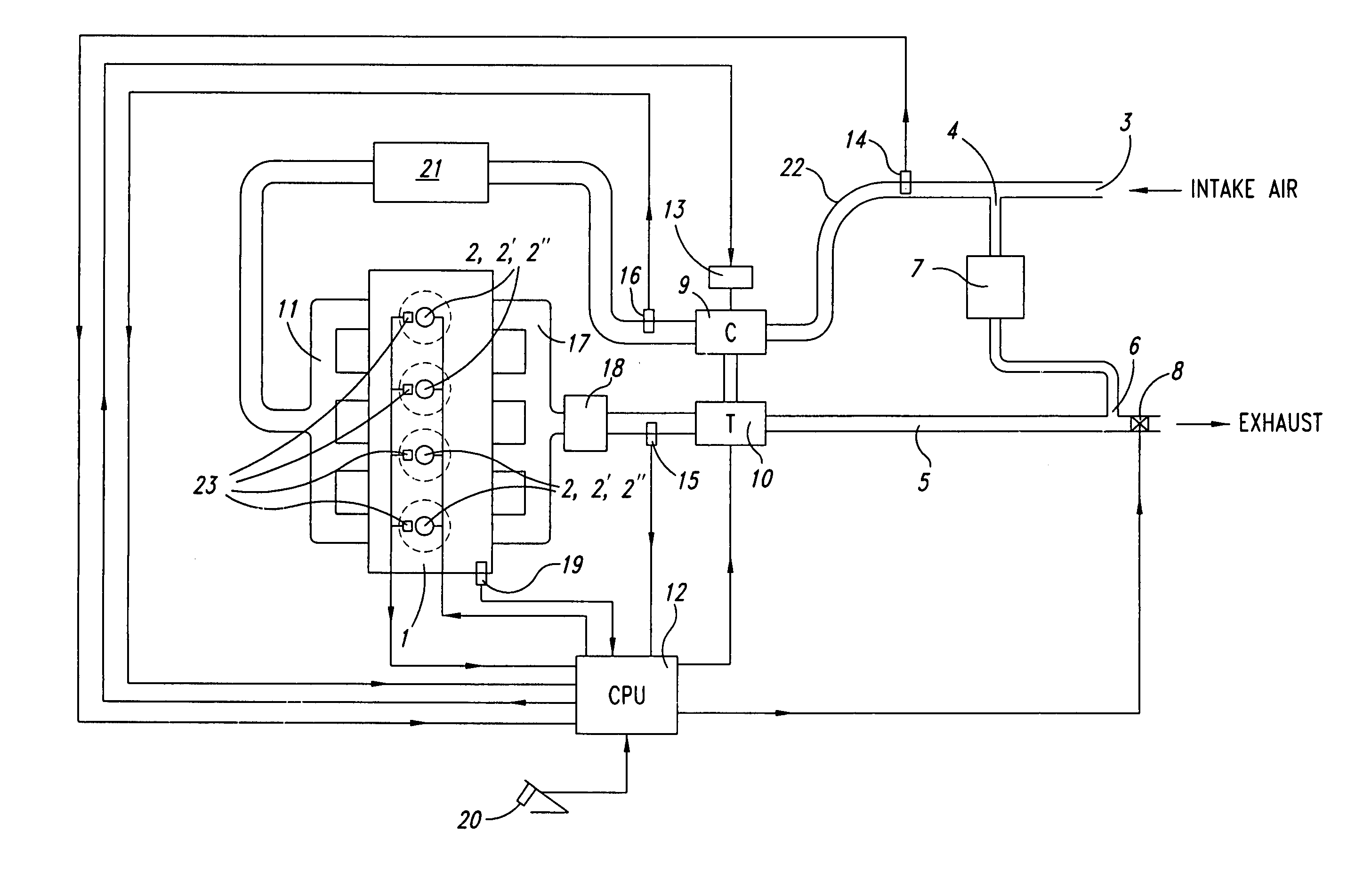
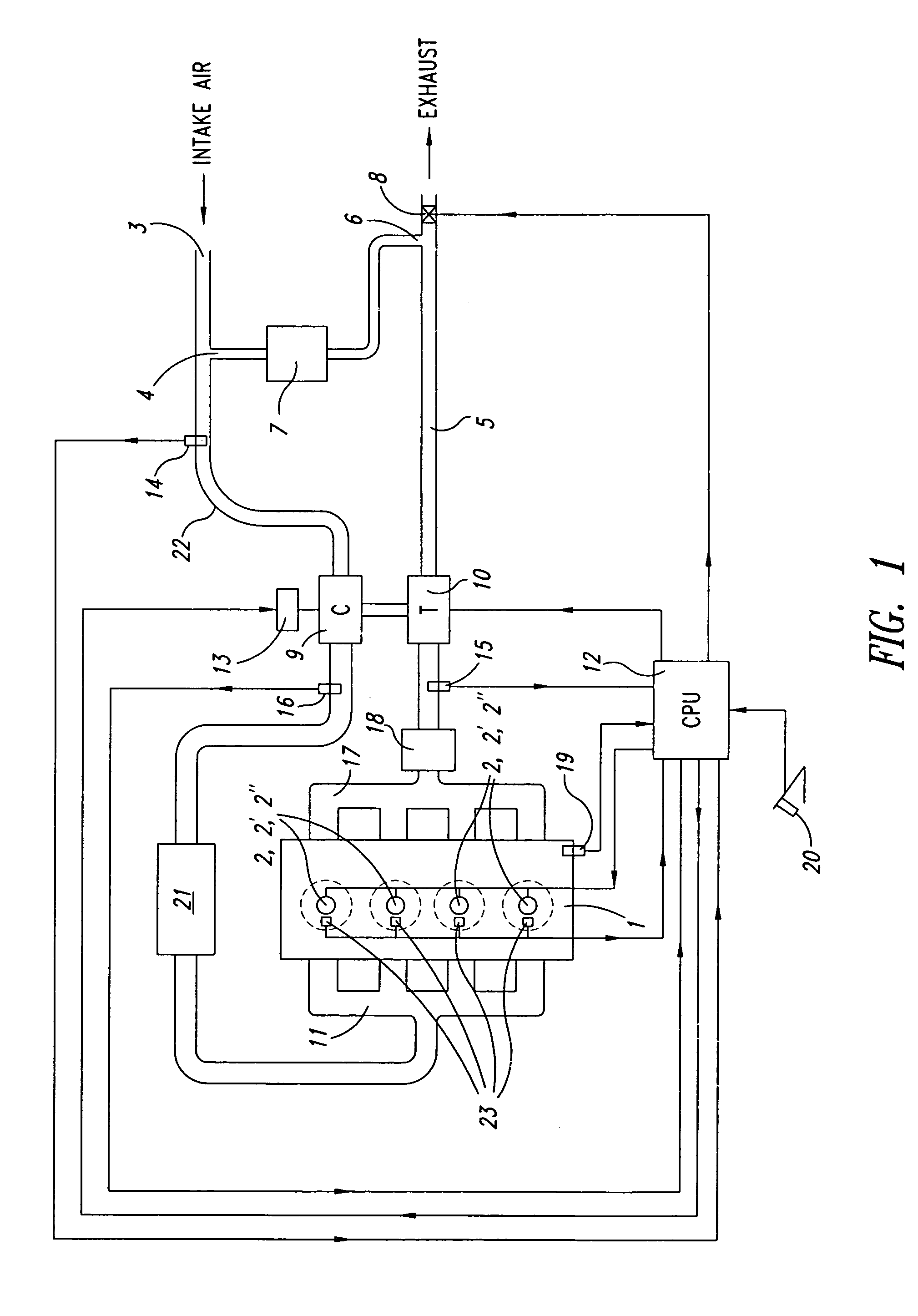
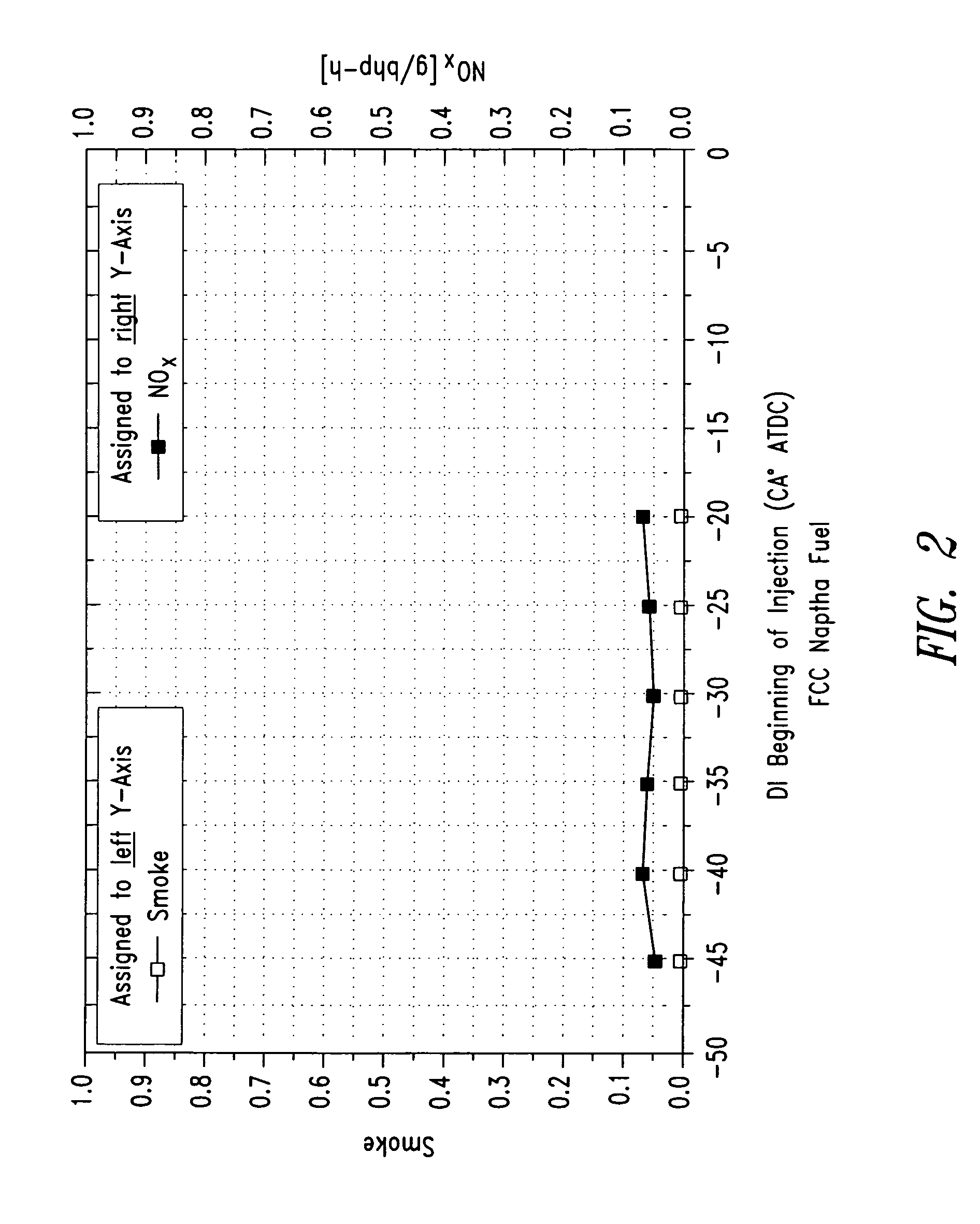
Innovation
- A fuel with a substantially lower cetane number, such as FCC Naphtha, is used in conjunction with a controlled temperature combustion diesel engine to reduce NOx and PM formation, achieving smokeless combustion while maintaining NOx levels below 0.2 g/bhp-hr without the need for extensive aftertreatment.

Emission Regulations and Compliance Standards
The regulatory landscape governing heat engine emissions has become increasingly stringent over the past two decades, driven by growing environmental concerns and public health imperatives. Major regulatory frameworks such as the European Union's Euro standards, the United States Environmental Protection Agency's Tier regulations, and China's National VI standards have progressively tightened permissible limits for nitrogen oxides, particulate matter, carbon monoxide, and unburned hydrocarbons. These regulations establish specific emission thresholds that manufacturers must meet through certification testing procedures, typically conducted under standardized driving cycles or operational conditions that simulate real-world usage patterns.
Compliance requirements extend beyond simple emission limits to encompass comprehensive testing protocols and ongoing monitoring obligations. Real Driving Emissions testing has emerged as a critical component, addressing the gap between laboratory results and actual operational performance. Manufacturers must demonstrate compliance not only during initial certification but throughout the vehicle or equipment lifecycle, necessitating robust onboard diagnostic systems that continuously monitor emission control system functionality and alert operators to malfunctions that could cause emissions to exceed regulatory thresholds.
The economic implications of non-compliance are substantial, with penalties ranging from significant financial fines to market access restrictions and mandatory recalls. In the European Union, excess emissions penalties can reach thousands of euros per vehicle, while in the United States, violations may result in fines exceeding ten thousand dollars per non-compliant unit. Beyond direct financial penalties, regulatory non-compliance damages brand reputation and erodes consumer trust, creating long-term market disadvantages that far exceed immediate penalty costs.
Future regulatory trajectories indicate continued tightening of emission standards, with particular emphasis on reducing greenhouse gas emissions alongside traditional pollutants. Emerging regulations increasingly incorporate lifecycle assessment approaches, considering emissions from fuel production and distribution alongside combustion emissions. This evolving regulatory environment necessitates proactive investment in advanced combustion optimization technologies and emission control systems to ensure sustained market access and competitive positioning in an increasingly environmentally conscious marketplace.
Compliance requirements extend beyond simple emission limits to encompass comprehensive testing protocols and ongoing monitoring obligations. Real Driving Emissions testing has emerged as a critical component, addressing the gap between laboratory results and actual operational performance. Manufacturers must demonstrate compliance not only during initial certification but throughout the vehicle or equipment lifecycle, necessitating robust onboard diagnostic systems that continuously monitor emission control system functionality and alert operators to malfunctions that could cause emissions to exceed regulatory thresholds.
The economic implications of non-compliance are substantial, with penalties ranging from significant financial fines to market access restrictions and mandatory recalls. In the European Union, excess emissions penalties can reach thousands of euros per vehicle, while in the United States, violations may result in fines exceeding ten thousand dollars per non-compliant unit. Beyond direct financial penalties, regulatory non-compliance damages brand reputation and erodes consumer trust, creating long-term market disadvantages that far exceed immediate penalty costs.
Future regulatory trajectories indicate continued tightening of emission standards, with particular emphasis on reducing greenhouse gas emissions alongside traditional pollutants. Emerging regulations increasingly incorporate lifecycle assessment approaches, considering emissions from fuel production and distribution alongside combustion emissions. This evolving regulatory environment necessitates proactive investment in advanced combustion optimization technologies and emission control systems to ensure sustained market access and competitive positioning in an increasingly environmentally conscious marketplace.
Alternative Fuel Integration Strategies
The integration of alternative fuels represents a critical pathway toward achieving lower emissions in heat engine combustion systems. This strategic approach encompasses the adoption of renewable and low-carbon fuel sources that can either supplement or replace conventional fossil fuels. The transition requires comprehensive evaluation of fuel properties, compatibility with existing infrastructure, and optimization of combustion parameters to maintain or enhance engine performance while reducing environmental impact.
Biofuels, including biodiesel and bioethanol, have emerged as prominent alternatives due to their renewable nature and potential for carbon neutrality. These fuels can be blended with traditional diesel or gasoline in varying proportions, with higher blend ratios demanding modifications to fuel injection systems and combustion chamber designs. The oxygen content in biofuels alters combustion characteristics, typically resulting in reduced particulate matter emissions but requiring careful calibration to prevent increases in nitrogen oxide formation.
Hydrogen and synthetic fuels produced through power-to-liquid technologies offer promising zero-emission or carbon-neutral combustion pathways. Hydrogen combustion produces only water vapor as a byproduct, though its low energy density and high flame speed necessitate substantial engine redesign. Synthetic fuels, manufactured from captured carbon dioxide and renewable electricity, provide the advantage of compatibility with existing engine architectures while enabling circular carbon economies.
Natural gas and liquefied petroleum gas serve as transitional alternatives, delivering immediate emission reductions compared to conventional fuels. These gaseous fuels burn cleaner due to their simpler molecular structure and higher hydrogen-to-carbon ratios, resulting in lower particulate and carbon dioxide emissions. However, methane slip during combustion and distribution remains a concern requiring mitigation strategies.
The successful integration of alternative fuels demands adaptive engine management systems capable of real-time fuel quality recognition and combustion optimization. Multi-fuel capability, achieved through flexible fuel injection strategies and variable compression ratios, enables engines to operate efficiently across diverse fuel compositions. This flexibility is essential for accommodating regional fuel availability variations and supporting the gradual transition toward sustainable energy systems in transportation and power generation sectors.
Biofuels, including biodiesel and bioethanol, have emerged as prominent alternatives due to their renewable nature and potential for carbon neutrality. These fuels can be blended with traditional diesel or gasoline in varying proportions, with higher blend ratios demanding modifications to fuel injection systems and combustion chamber designs. The oxygen content in biofuels alters combustion characteristics, typically resulting in reduced particulate matter emissions but requiring careful calibration to prevent increases in nitrogen oxide formation.
Hydrogen and synthetic fuels produced through power-to-liquid technologies offer promising zero-emission or carbon-neutral combustion pathways. Hydrogen combustion produces only water vapor as a byproduct, though its low energy density and high flame speed necessitate substantial engine redesign. Synthetic fuels, manufactured from captured carbon dioxide and renewable electricity, provide the advantage of compatibility with existing engine architectures while enabling circular carbon economies.
Natural gas and liquefied petroleum gas serve as transitional alternatives, delivering immediate emission reductions compared to conventional fuels. These gaseous fuels burn cleaner due to their simpler molecular structure and higher hydrogen-to-carbon ratios, resulting in lower particulate and carbon dioxide emissions. However, methane slip during combustion and distribution remains a concern requiring mitigation strategies.
The successful integration of alternative fuels demands adaptive engine management systems capable of real-time fuel quality recognition and combustion optimization. Multi-fuel capability, achieved through flexible fuel injection strategies and variable compression ratios, enables engines to operate efficiently across diverse fuel compositions. This flexibility is essential for accommodating regional fuel availability variations and supporting the gradual transition toward sustainable energy systems in transportation and power generation sectors.
Unlock deeper insights with Patsnap Eureka Quick Research — get a full tech report to explore trends and direct your research. Try now!
Generate Your Research Report Instantly with AI Agent
Supercharge your innovation with Patsnap Eureka AI Agent Platform!