
Optimize Mini-Batch Gradient Descent for GPU Throughput
OCT 9, 20268 MIN READ
Generate Your Research Report Instantly with AI Agent
Patsnap Eureka helps you evaluate technical feasibility & market potential.
Mini-Batch Gradient Descent GPU Optimization Background and Goals
Mini-batch gradient descent has emerged as the dominant optimization algorithm in modern deep learning, striking a critical balance between computational efficiency and convergence stability. Unlike stochastic gradient descent that processes single samples or full-batch methods that consume entire datasets, mini-batch approaches partition training data into manageable subsets, enabling parallel processing while maintaining reasonable gradient estimation accuracy. This methodology has become particularly vital as neural network architectures have grown exponentially in complexity, with models now containing billions of parameters requiring efficient training strategies.
The evolution of GPU computing has fundamentally transformed the landscape of machine learning optimization. Graphics processing units, originally designed for rendering tasks, have proven exceptionally well-suited for the matrix operations inherent in neural network training. Modern GPUs feature thousands of parallel processing cores capable of executing simultaneous computations, theoretically offering massive throughput advantages. However, realizing this potential requires careful optimization of how mini-batch gradient descent algorithms interact with GPU hardware architecture, including memory hierarchies, thread scheduling, and data transfer mechanisms.
Despite the theoretical synergy between mini-batch methods and GPU parallelism, significant performance gaps persist in practical implementations. Common bottlenecks include suboptimal memory access patterns that underutilize GPU bandwidth, inefficient batch size selections that fail to saturate computational resources, and data loading pipelines that create idle GPU cycles. These inefficiencies translate directly into extended training times and increased computational costs, particularly problematic for resource-intensive applications in computer vision, natural language processing, and scientific computing.
The primary objective of this technical investigation is to identify and address the critical factors limiting GPU throughput in mini-batch gradient descent implementations. This encompasses analyzing memory transfer optimization strategies, evaluating adaptive batch sizing techniques, examining kernel-level computational efficiency, and exploring emerging hardware-aware algorithmic modifications. The ultimate goal is to establish a comprehensive framework for maximizing GPU utilization during training, thereby reducing time-to-convergence and improving the economic viability of large-scale machine learning projects. Success in this domain directly impacts the feasibility of training next-generation models and democratizing access to advanced AI capabilities.
The evolution of GPU computing has fundamentally transformed the landscape of machine learning optimization. Graphics processing units, originally designed for rendering tasks, have proven exceptionally well-suited for the matrix operations inherent in neural network training. Modern GPUs feature thousands of parallel processing cores capable of executing simultaneous computations, theoretically offering massive throughput advantages. However, realizing this potential requires careful optimization of how mini-batch gradient descent algorithms interact with GPU hardware architecture, including memory hierarchies, thread scheduling, and data transfer mechanisms.
Despite the theoretical synergy between mini-batch methods and GPU parallelism, significant performance gaps persist in practical implementations. Common bottlenecks include suboptimal memory access patterns that underutilize GPU bandwidth, inefficient batch size selections that fail to saturate computational resources, and data loading pipelines that create idle GPU cycles. These inefficiencies translate directly into extended training times and increased computational costs, particularly problematic for resource-intensive applications in computer vision, natural language processing, and scientific computing.
The primary objective of this technical investigation is to identify and address the critical factors limiting GPU throughput in mini-batch gradient descent implementations. This encompasses analyzing memory transfer optimization strategies, evaluating adaptive batch sizing techniques, examining kernel-level computational efficiency, and exploring emerging hardware-aware algorithmic modifications. The ultimate goal is to establish a comprehensive framework for maximizing GPU utilization during training, thereby reducing time-to-convergence and improving the economic viability of large-scale machine learning projects. Success in this domain directly impacts the feasibility of training next-generation models and democratizing access to advanced AI capabilities.
Market Demand for Efficient Deep Learning Training
The global deep learning market has experienced explosive growth driven by the proliferation of artificial intelligence applications across industries including autonomous vehicles, natural language processing, computer vision, and recommendation systems. As model architectures grow increasingly complex with billions of parameters, the computational demands for training these models have escalated dramatically. Organizations face mounting pressure to reduce training time while managing infrastructure costs, creating urgent demand for optimization techniques that maximize hardware utilization.
GPU-accelerated training has become the de facto standard for deep learning workloads, yet many training pipelines fail to fully exploit available GPU computational capacity. Inefficient mini-batch gradient descent implementations result in underutilized GPU cores, memory bandwidth bottlenecks, and prolonged training cycles that directly impact time-to-market for AI-driven products. Enterprises investing heavily in GPU infrastructure seek solutions that deliver measurable improvements in throughput without requiring proportional increases in hardware expenditure.
The market demand spans multiple segments with distinct requirements. Cloud service providers offering machine learning platforms prioritize throughput optimization to serve more concurrent users per GPU instance, directly improving profit margins. Research institutions with limited budgets require cost-effective training acceleration to remain competitive in publishing cutting-edge results. Technology companies developing foundation models face astronomical training costs where even marginal efficiency gains translate to substantial financial savings and competitive advantages.
Industry adoption of transformer-based architectures and large language models has intensified the focus on training efficiency. These models demand extensive computational resources for pre-training phases that can span weeks or months on distributed GPU clusters. Optimization techniques targeting mini-batch processing efficiency enable faster experimentation cycles, more frequent model iterations, and reduced energy consumption. Environmental considerations further amplify demand as organizations commit to sustainability goals while scaling AI operations.
The convergence of increasing model complexity, rising energy costs, and competitive pressure to accelerate AI development cycles has established efficient deep learning training as a critical market priority. Solutions addressing GPU throughput optimization for mini-batch gradient descent directly respond to these multifaceted demands across commercial, academic, and research sectors.
GPU-accelerated training has become the de facto standard for deep learning workloads, yet many training pipelines fail to fully exploit available GPU computational capacity. Inefficient mini-batch gradient descent implementations result in underutilized GPU cores, memory bandwidth bottlenecks, and prolonged training cycles that directly impact time-to-market for AI-driven products. Enterprises investing heavily in GPU infrastructure seek solutions that deliver measurable improvements in throughput without requiring proportional increases in hardware expenditure.
The market demand spans multiple segments with distinct requirements. Cloud service providers offering machine learning platforms prioritize throughput optimization to serve more concurrent users per GPU instance, directly improving profit margins. Research institutions with limited budgets require cost-effective training acceleration to remain competitive in publishing cutting-edge results. Technology companies developing foundation models face astronomical training costs where even marginal efficiency gains translate to substantial financial savings and competitive advantages.
Industry adoption of transformer-based architectures and large language models has intensified the focus on training efficiency. These models demand extensive computational resources for pre-training phases that can span weeks or months on distributed GPU clusters. Optimization techniques targeting mini-batch processing efficiency enable faster experimentation cycles, more frequent model iterations, and reduced energy consumption. Environmental considerations further amplify demand as organizations commit to sustainability goals while scaling AI operations.
The convergence of increasing model complexity, rising energy costs, and competitive pressure to accelerate AI development cycles has established efficient deep learning training as a critical market priority. Solutions addressing GPU throughput optimization for mini-batch gradient descent directly respond to these multifaceted demands across commercial, academic, and research sectors.
Current GPU Throughput Bottlenecks and Challenges
Mini-batch gradient descent remains the cornerstone of modern deep learning training, yet its efficiency on GPU architectures faces several critical bottlenecks that significantly limit throughput optimization. The primary challenge stems from the inherent mismatch between computational patterns and memory access patterns, where GPU cores frequently remain idle while waiting for data transfers from global memory. This memory bandwidth bottleneck becomes particularly acute when batch sizes are small or when model architectures involve irregular memory access patterns.
Data transfer overhead between CPU and GPU represents another substantial constraint. Despite advances in PCIe and NVLink technologies, the latency and bandwidth limitations of host-to-device communication create pipeline stalls, especially during data preprocessing and batch loading phases. This issue intensifies when training on datasets requiring complex augmentation or when dealing with heterogeneous data types that cannot be efficiently preprocessed on GPU.
Kernel launch overhead and synchronization costs pose additional challenges in mini-batch processing. Modern deep learning frameworks execute numerous small kernels for operations like normalization, activation functions, and element-wise operations. The cumulative overhead of launching these kernels and synchronizing between operations can consume a significant portion of training time, particularly for models with complex computational graphs or when batch sizes are insufficient to amortize these fixed costs.
Load imbalance across GPU streaming multiprocessors emerges as a critical factor limiting throughput. Irregular computational patterns, such as those in attention mechanisms or dynamic neural networks, result in uneven workload distribution where some compute units remain underutilized while others are saturated. This imbalance is exacerbated by gradient computation patterns that differ substantially from forward pass patterns.
Precision and numerical stability constraints further complicate throughput optimization. While lower precision formats like FP16 or INT8 can theoretically double or quadruple throughput, maintaining training stability requires careful implementation of mixed-precision strategies, loss scaling, and gradient clipping mechanisms. These additional operations introduce computational overhead and complexity that can offset potential gains.
Data transfer overhead between CPU and GPU represents another substantial constraint. Despite advances in PCIe and NVLink technologies, the latency and bandwidth limitations of host-to-device communication create pipeline stalls, especially during data preprocessing and batch loading phases. This issue intensifies when training on datasets requiring complex augmentation or when dealing with heterogeneous data types that cannot be efficiently preprocessed on GPU.
Kernel launch overhead and synchronization costs pose additional challenges in mini-batch processing. Modern deep learning frameworks execute numerous small kernels for operations like normalization, activation functions, and element-wise operations. The cumulative overhead of launching these kernels and synchronizing between operations can consume a significant portion of training time, particularly for models with complex computational graphs or when batch sizes are insufficient to amortize these fixed costs.
Load imbalance across GPU streaming multiprocessors emerges as a critical factor limiting throughput. Irregular computational patterns, such as those in attention mechanisms or dynamic neural networks, result in uneven workload distribution where some compute units remain underutilized while others are saturated. This imbalance is exacerbated by gradient computation patterns that differ substantially from forward pass patterns.
Precision and numerical stability constraints further complicate throughput optimization. While lower precision formats like FP16 or INT8 can theoretically double or quadruple throughput, maintaining training stability requires careful implementation of mixed-precision strategies, loss scaling, and gradient clipping mechanisms. These additional operations introduce computational overhead and complexity that can offset potential gains.
Existing Mini-Batch GPU Optimization Solutions
01 Hardware Acceleration and Processor Architecture Optimization
Optimizing hardware architecture and dataflow execution significantly enhances the computational throughput of batch gradient descent algorithms. By leveraging custom chip architectures, matrix multiplication units, and reconfigurable dataflow processors, systems can perform batch-parallel gradient computations with minimal latency and high execution efficiency.- Batch size adjustment and execution optimization for gradient descent: Techniques to improve gradient descent throughput and efficiency by dynamically adjusting batch sizes, managing gradient checkpoint segments, and tuning learning parameters during model training.
- Hardware architecture and parallel computation acceleration: Hardware-level optimizations, including chip architectures and matrix multiplication on reconfigurable dataflow processors, designed to execute batch-parallel gradient computations with high throughput.
- Algorithmic step-size dynamic adaptation and efficiency enhancements: Methods for optimizing the gradient descent process through dynamic step size control, sequential iterative optimization, and parameter multiplexing to accelerate overall execution speed.
- Applications of gradient descent in high-throughput data processing and system optimization: Implementations of gradient descent algorithms tailored for high-throughput field applications, including 3D parasitic parameter extraction, signal processing, and dynamic parameter optimization.
- Neural network model training layer and verification optimizations: Optimizing neural network training throughput and stability through dedicated batch normalization layer training, targeted fine-tuning, and formal verification of stochastic gradient descent algorithms.
02 Adaptive Dynamic Batching and Learning Rate Control
Adjusting hyper-parameters such as batch sizes and learning rates dynamically during training improves computational throughput and algorithm efficiency. Utilizing variable batch sizing alongside gradient checkpointing, dynamic step-size adjustments, or dedicated learning rate controllers prevents computational redundancy and accelerates convergence.Expand Specific Solutions03 Algorithmic Efficiency and Optimization Techniques
Enhancing the core stochastic gradient descent process through specialized optimization algorithms boosts training throughput. Techniques such as targeted parameter multiplexing, sequential iterative optimization, stochastic verification, and fine-tuning schemes streamline gradient calculations, reduce offline overhead, and optimize model convergence rates.Expand Specific Solutions04 Signal Processing and High-Throughput Material Analytics
Applying gradient descent mechanisms within high-throughput physical and signal processing systems accelerates complex data analysis and material modeling. Improved parameter extraction methods and high-throughput gradient deformation processing help resolve operational latency, variance, and computational non-optimality in specialized engineering applications.Expand Specific Solutions05 Resource Management and Numerical Simulation Optimization
Gradient descent methodologies can be integrated into large-scale system modeling and dynamic resource allocation to minimize computation time and memory usage. By replacing redundant iterative operations with gradient-based search algorithms, numerical simulations for energy storage, fluid dynamics, and motion planning achieve higher processing speed and operational throughput.Expand Specific Solutions
Key Players in GPU Computing and ML Frameworks
The optimization of mini-batch gradient descent for GPU throughput represents a mature yet actively evolving technology domain within deep learning infrastructure. The competitive landscape spans academic institutions, telecommunications giants, and technology corporations across China, South Korea, and the United States. Key players include Microsoft Technology Licensing LLC and Advanced Micro Devices driving hardware-software co-optimization, while Chinese entities like Baidu, ZTE Corp., and Inspur focus on AI infrastructure deployment. Research institutions including National University of Defense Technology, Zhejiang University, and Korea Advanced Institute of Science & Technology contribute foundational algorithmic innovations. The market demonstrates strong growth driven by AI model scaling demands, with established players like Anthropic PBC leveraging optimized training pipelines. Technology maturity varies from production-ready implementations in cloud platforms to experimental approaches in specialized hardware accelerators, reflecting both commoditization of basic techniques and ongoing innovation in efficiency optimization.
Microsoft Technology Licensing LLC
Technical Solution: Microsoft has pioneered GPU throughput optimization for mini-batch gradient descent through their DeepSpeed framework and Azure ML infrastructure. DeepSpeed implements ZeRO (Zero Redundancy Optimizer) technology that partitions optimizer states, gradients, and parameters across GPUs, enabling training with batch sizes up to 32x larger than traditional approaches. Their gradient accumulation strategy breaks large logical batches into micro-batches that fit in GPU memory, achieving near-linear scaling across hundreds of GPUs. Microsoft's ONNX Runtime integrates graph optimizations including operator fusion, constant folding, and memory layout transformations specifically designed for batch processing efficiency. The framework employs adaptive batch sizing that monitors GPU utilization metrics in real-time and dynamically adjusts batch dimensions to maintain 95%+ GPU occupancy. Their mixed-precision training implementation uses Tensor Cores with FP16 computation and FP32 master weights, delivering 3-5x throughput gains. Microsoft Azure's NDv4 instances with A100 GPUs provide optimized networking with InfiniBand for distributed mini-batch training, reducing communication overhead to less than 10% of total training time.
Strengths: Industry-leading distributed training capabilities with DeepSpeed, seamless cloud integration with Azure infrastructure, extensive enterprise support and documentation. Weaknesses: Primarily optimized for Microsoft ecosystem, some features require Azure cloud services, learning curve for advanced optimization features.
National University of Defense Technology
Technical Solution: National University of Defense Technology has conducted extensive research on optimizing mini-batch gradient descent for GPU throughput, particularly for their Tianhe supercomputer systems. Their work focuses on adaptive batch size scheduling algorithms that dynamically adjust batch dimensions based on model convergence characteristics and hardware utilization metrics. They developed a hierarchical memory management system that coordinates data movement between CPU DRAM, GPU HBM, and on-chip caches to minimize memory access latency during batch processing. Their research introduces a gradient compression technique using sparsification and quantization that reduces communication volume by 75% in distributed training scenarios while maintaining model accuracy within 0.5% of baseline. The team has published novel work on asynchronous mini-batch SGD variants that decouple computation and communication phases, achieving 1.8x throughput improvement on multi-GPU configurations. Their optimization framework includes automated kernel generation for custom neural network operators, producing CUDA code optimized for specific batch sizes and tensor dimensions.
Strengths: Deep expertise in high-performance computing and supercomputer optimization, strong theoretical foundation in distributed algorithms, access to large-scale computing infrastructure for validation. Weaknesses: Research-focused rather than production-ready solutions, limited commercial software availability, primarily academic publications rather than deployable frameworks.
Core Techniques in Batch Size and Memory Management
Efficient parallel training of a network model on multiple graphics processing units
PatentActiveUS20180121806A1
Innovation
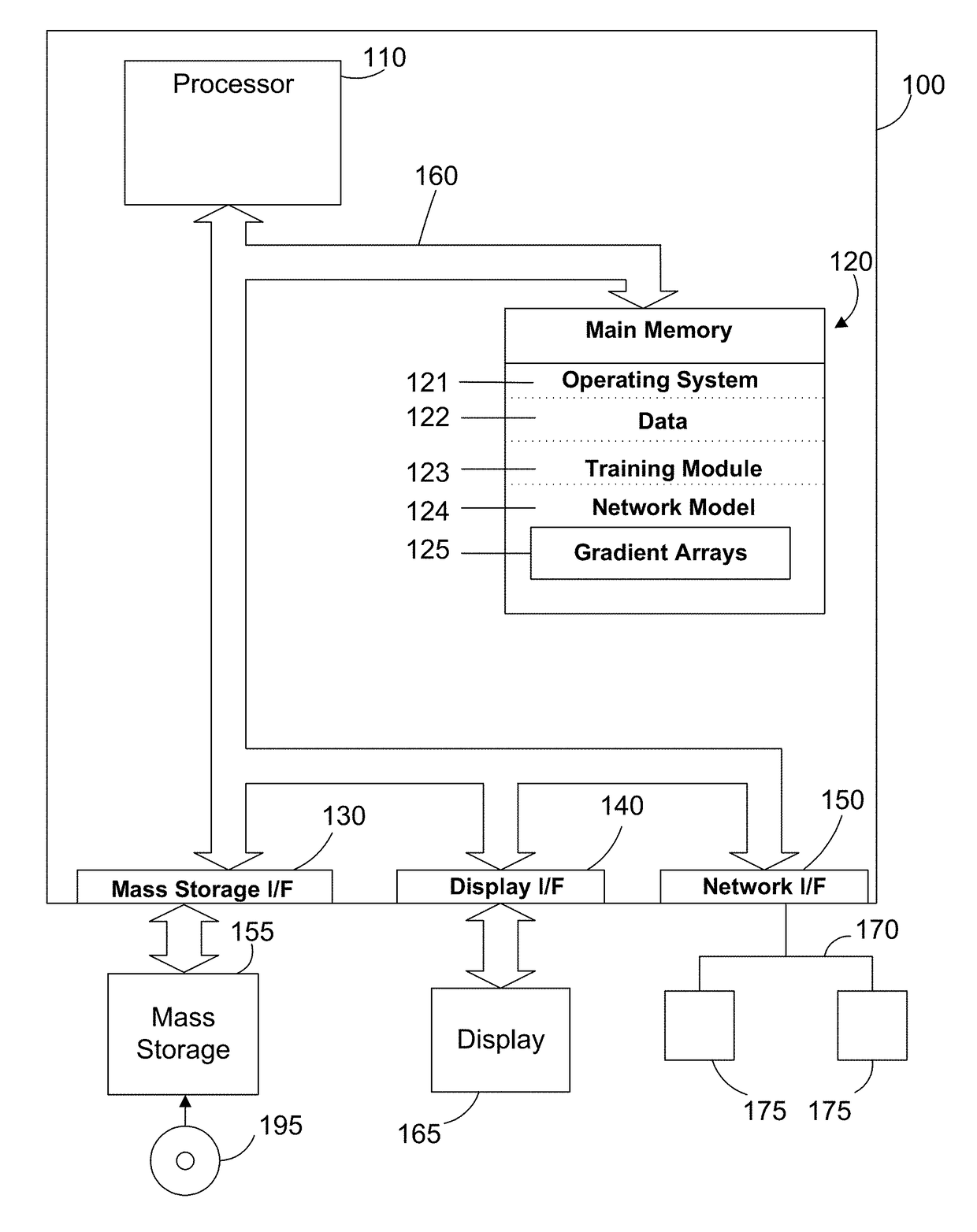
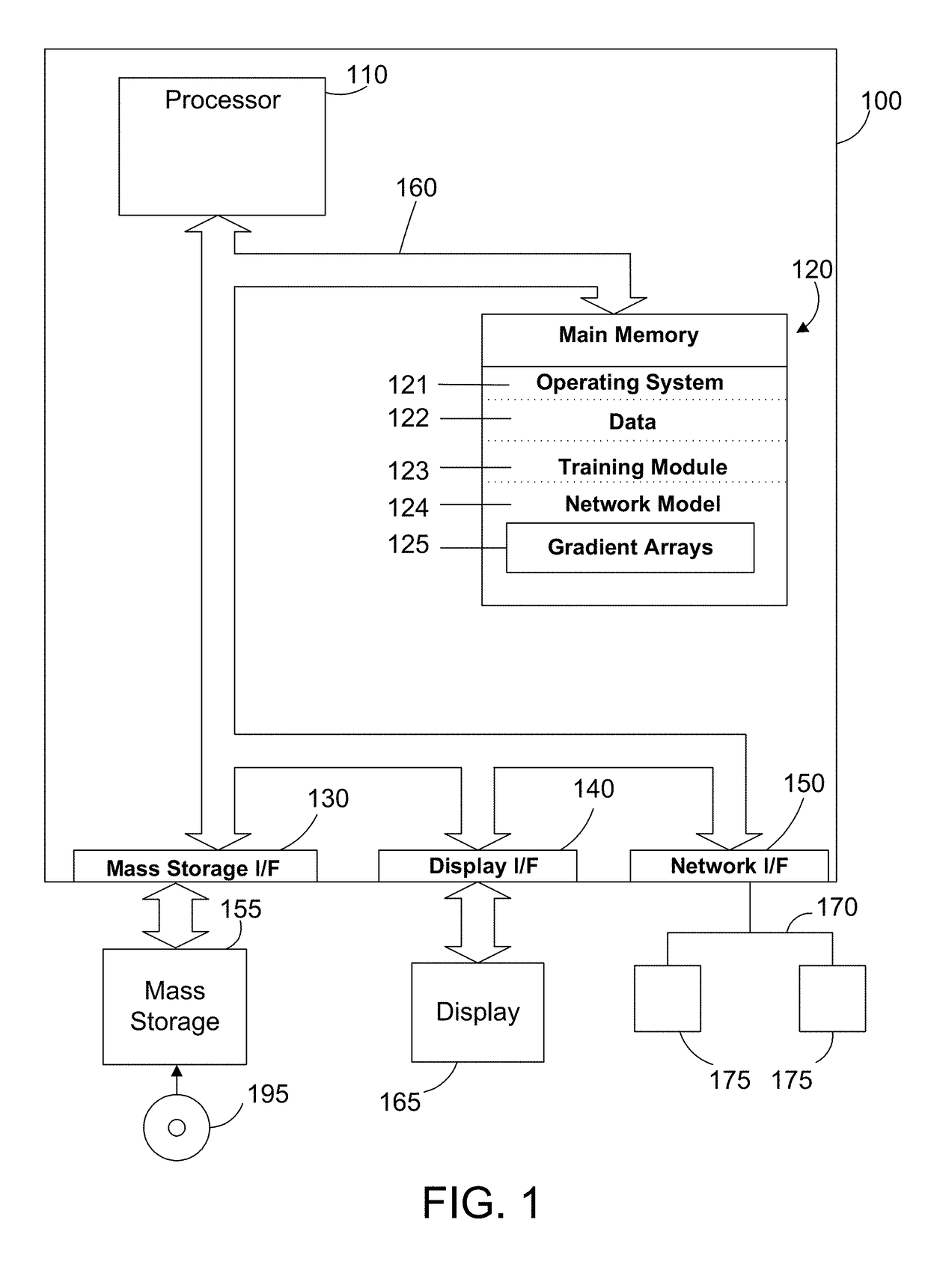
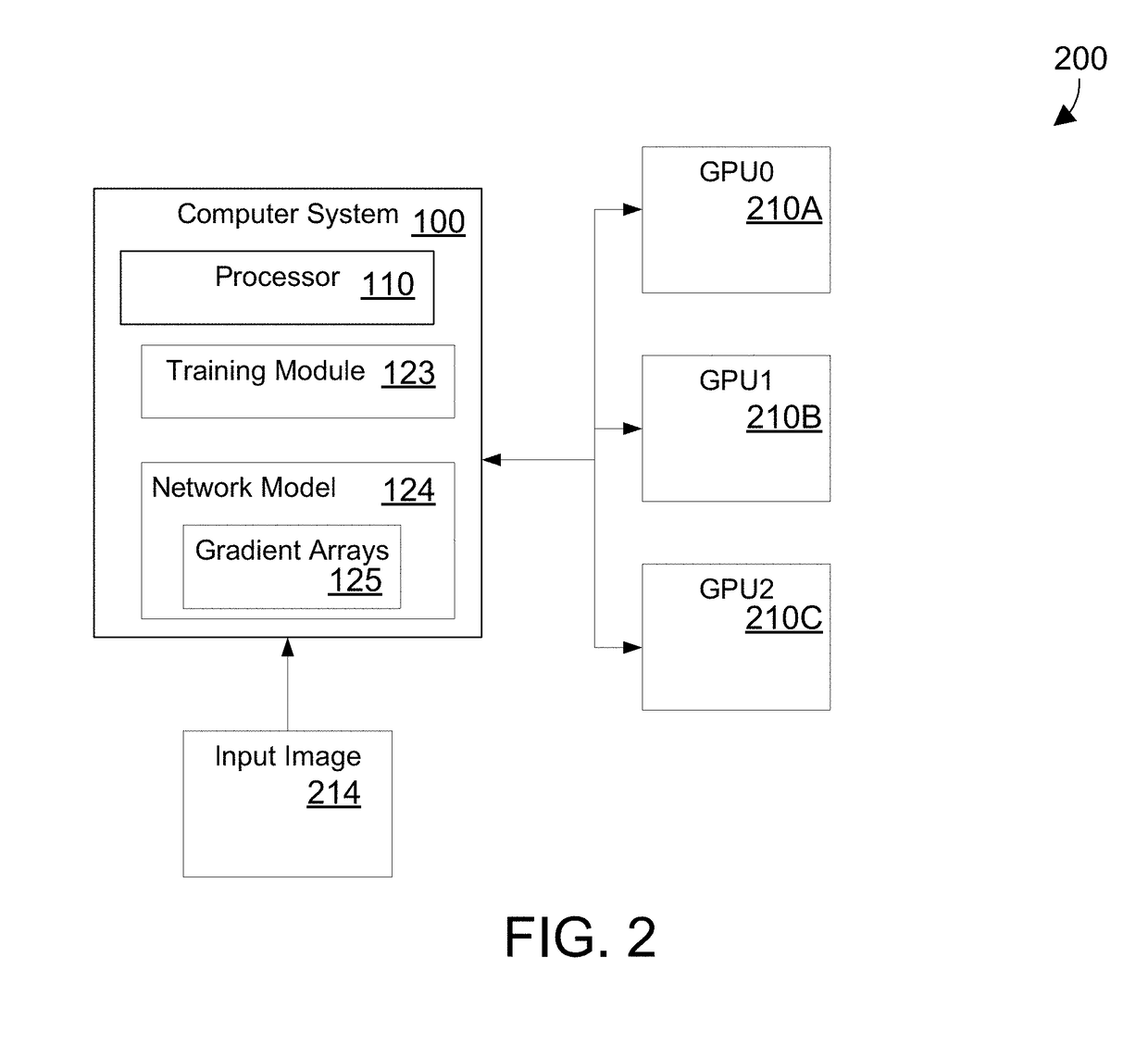
- A training module that overlaps backpropagation and gradient transfer processes by collecting and accumulating gradients on CPUs during the backward phase, allowing for efficient parameter updating on GPUs, thereby reducing communication overhead and enhancing training efficiency.

Methods of operating a graphics processing unit (GPU) to train a deep neural network using a GPU local memory and related articles of manufacture
PatentActiveUS11599798B2
Innovation
- The proposed memory optimal DNN training framework, moDNN, employs data offloading and prefetching, automatic sub-batch size selection, and convolution process optimization to reduce memory usage while maintaining accuracy, enabling the training of larger-scale DNNs on single or multiple GPUs.


Hardware-Software Co-design for Training Efficiency
Hardware-software co-design represents a critical paradigm shift in addressing the optimization challenges of mini-batch gradient descent for GPU throughput. This approach recognizes that achieving peak training efficiency requires synchronized innovation across both computational architecture and algorithmic implementation layers, moving beyond isolated optimizations in either domain.
Modern GPU architectures expose specific computational primitives and memory hierarchies that can be exploited through careful software design. Tensor cores, for instance, provide specialized matrix multiplication units that deliver substantially higher throughput when operations align with their native data formats and dimensions. Co-design strategies involve restructuring gradient descent algorithms to maximize utilization of these hardware accelerators while minimizing data movement overhead between memory tiers.
Memory bandwidth often emerges as the primary bottleneck in mini-batch processing. Hardware-software co-design addresses this through techniques such as kernel fusion, where multiple computational operations are combined to reduce intermediate memory transactions. Software frameworks can be designed to automatically detect fusion opportunities while hardware provides architectural support through larger register files and shared memory capacities that enable efficient intermediate result storage.
Communication patterns between GPU cores and across distributed systems represent another co-design frontier. Gradient synchronization in data-parallel training can be optimized through hardware-aware collective communication libraries that leverage GPU direct memory access capabilities and high-speed interconnects. Software schedulers can overlap computation with communication by intelligently partitioning workloads and initiating gradient transfers before layer computations complete.
Emerging co-design directions include specialized instruction sets for common deep learning operations, configurable precision arithmetic units that balance accuracy with throughput, and software-managed memory hierarchies that provide finer control over data placement. These innovations collectively enable training systems to approach theoretical hardware limits while maintaining algorithmic flexibility and numerical stability across diverse model architectures.
Modern GPU architectures expose specific computational primitives and memory hierarchies that can be exploited through careful software design. Tensor cores, for instance, provide specialized matrix multiplication units that deliver substantially higher throughput when operations align with their native data formats and dimensions. Co-design strategies involve restructuring gradient descent algorithms to maximize utilization of these hardware accelerators while minimizing data movement overhead between memory tiers.
Memory bandwidth often emerges as the primary bottleneck in mini-batch processing. Hardware-software co-design addresses this through techniques such as kernel fusion, where multiple computational operations are combined to reduce intermediate memory transactions. Software frameworks can be designed to automatically detect fusion opportunities while hardware provides architectural support through larger register files and shared memory capacities that enable efficient intermediate result storage.
Communication patterns between GPU cores and across distributed systems represent another co-design frontier. Gradient synchronization in data-parallel training can be optimized through hardware-aware collective communication libraries that leverage GPU direct memory access capabilities and high-speed interconnects. Software schedulers can overlap computation with communication by intelligently partitioning workloads and initiating gradient transfers before layer computations complete.
Emerging co-design directions include specialized instruction sets for common deep learning operations, configurable precision arithmetic units that balance accuracy with throughput, and software-managed memory hierarchies that provide finer control over data placement. These innovations collectively enable training systems to approach theoretical hardware limits while maintaining algorithmic flexibility and numerical stability across diverse model architectures.
Energy Consumption and Sustainability in GPU Training
The optimization of mini-batch gradient descent for GPU throughput inherently intersects with critical energy consumption considerations that have become increasingly prominent in modern deep learning infrastructure. As GPU-accelerated training scales to accommodate larger models and datasets, the electrical power demands and associated carbon footprints have emerged as significant operational and environmental concerns that cannot be overlooked in sustainable AI development.
GPU training workloads typically consume substantial electrical energy, with high-end datacenter GPUs drawing between 250 to 700 watts during intensive computational operations. When mini-batch gradient descent is poorly optimized, inefficient GPU utilization patterns lead to prolonged training durations, directly translating to increased cumulative energy consumption. Suboptimal batch sizes may cause GPU cores to remain underutilized while still drawing near-peak power, resulting in poor energy efficiency ratios measured in computations per watt.
The sustainability implications extend beyond immediate power consumption to encompass the entire lifecycle environmental impact. Training large-scale models can generate carbon emissions equivalent to multiple transatlantic flights, with estimates suggesting that training certain transformer models produces over 600,000 pounds of CO2. Optimizing throughput through efficient mini-batch processing directly reduces training time, thereby lowering both energy costs and environmental impact proportionally.
Recent industry initiatives have prioritized green AI practices, emphasizing the development of energy-aware optimization strategies. Techniques such as dynamic voltage and frequency scaling, adaptive batch sizing based on power budgets, and workload scheduling during periods of renewable energy availability represent emerging approaches to reconcile performance optimization with sustainability goals. Organizations are increasingly adopting power usage effectiveness metrics and carbon-aware computing frameworks to monitor and minimize the environmental footprint of GPU training operations.
The economic dimension further reinforces sustainability imperatives, as energy costs constitute a substantial portion of operational expenses in large-scale machine learning deployments. Efficient mini-batch optimization that maximizes GPU throughput per watt delivers dual benefits of reduced training costs and diminished environmental impact, aligning technical performance objectives with corporate sustainability commitments and regulatory compliance requirements in an era of heightened climate consciousness.
GPU training workloads typically consume substantial electrical energy, with high-end datacenter GPUs drawing between 250 to 700 watts during intensive computational operations. When mini-batch gradient descent is poorly optimized, inefficient GPU utilization patterns lead to prolonged training durations, directly translating to increased cumulative energy consumption. Suboptimal batch sizes may cause GPU cores to remain underutilized while still drawing near-peak power, resulting in poor energy efficiency ratios measured in computations per watt.
The sustainability implications extend beyond immediate power consumption to encompass the entire lifecycle environmental impact. Training large-scale models can generate carbon emissions equivalent to multiple transatlantic flights, with estimates suggesting that training certain transformer models produces over 600,000 pounds of CO2. Optimizing throughput through efficient mini-batch processing directly reduces training time, thereby lowering both energy costs and environmental impact proportionally.
Recent industry initiatives have prioritized green AI practices, emphasizing the development of energy-aware optimization strategies. Techniques such as dynamic voltage and frequency scaling, adaptive batch sizing based on power budgets, and workload scheduling during periods of renewable energy availability represent emerging approaches to reconcile performance optimization with sustainability goals. Organizations are increasingly adopting power usage effectiveness metrics and carbon-aware computing frameworks to monitor and minimize the environmental footprint of GPU training operations.
The economic dimension further reinforces sustainability imperatives, as energy costs constitute a substantial portion of operational expenses in large-scale machine learning deployments. Efficient mini-batch optimization that maximizes GPU throughput per watt delivers dual benefits of reduced training costs and diminished environmental impact, aligning technical performance objectives with corporate sustainability commitments and regulatory compliance requirements in an era of heightened climate consciousness.
Unlock deeper insights with Patsnap Eureka Quick Research — get a full tech report to explore trends and direct your research. Try now!
Generate Your Research Report Instantly with AI Agent
Supercharge your innovation with Patsnap Eureka AI Agent Platform!