Optimize Optical Burst Switching for Financial Network Security
MAR 2, 20269 MIN READ
Generate Your Research Report Instantly with AI Agent
Patsnap Eureka helps you evaluate technical feasibility & market potential.
OBS Financial Network Background and Security Objectives
Optical Burst Switching (OBS) has emerged as a critical networking paradigm for financial institutions seeking to optimize high-frequency trading, real-time risk management, and massive data processing capabilities. The financial sector's increasing reliance on microsecond-level transaction processing has driven the adoption of optical networking technologies that can handle burst traffic patterns characteristic of market data feeds, algorithmic trading systems, and cross-border financial communications.
The evolution of financial networks has progressed from traditional circuit-switched systems to packet-based architectures, and now toward optical burst switching to address latency-sensitive applications. Modern financial institutions process millions of transactions daily, requiring network infrastructures capable of handling sudden traffic surges during market volatility periods while maintaining consistent performance for routine operations.
Financial networks face unique challenges including regulatory compliance requirements, cross-jurisdictional data sovereignty concerns, and the need for real-time fraud detection systems. These requirements have intensified as digital banking, cryptocurrency trading, and decentralized finance platforms have expanded globally, creating complex network topologies that span multiple continents and regulatory domains.
The primary security objectives for OBS-enabled financial networks encompass multiple layers of protection. Data integrity must be maintained throughout the optical switching process, ensuring that financial transactions remain unaltered during burst assembly, transmission, and disassembly phases. This includes implementing robust error detection mechanisms and cryptographic validation protocols specifically designed for optical burst environments.
Confidentiality requirements demand advanced encryption techniques that can operate effectively within the time constraints of burst switching operations. Financial data must remain protected against eavesdropping and unauthorized access while maintaining the low-latency characteristics essential for competitive trading operations and real-time payment processing systems.
Availability and resilience objectives focus on maintaining continuous network operations despite potential security threats, equipment failures, or malicious attacks. Financial networks must implement redundant optical paths, rapid failover mechanisms, and distributed burst switching architectures that can isolate compromised network segments without disrupting critical financial services.
Authentication and authorization frameworks must be integrated into the OBS infrastructure to ensure that only legitimate financial institutions and authorized trading systems can access network resources. This includes developing identity management systems capable of operating at optical switching speeds while maintaining comprehensive audit trails for regulatory compliance and forensic analysis purposes.
The evolution of financial networks has progressed from traditional circuit-switched systems to packet-based architectures, and now toward optical burst switching to address latency-sensitive applications. Modern financial institutions process millions of transactions daily, requiring network infrastructures capable of handling sudden traffic surges during market volatility periods while maintaining consistent performance for routine operations.
Financial networks face unique challenges including regulatory compliance requirements, cross-jurisdictional data sovereignty concerns, and the need for real-time fraud detection systems. These requirements have intensified as digital banking, cryptocurrency trading, and decentralized finance platforms have expanded globally, creating complex network topologies that span multiple continents and regulatory domains.
The primary security objectives for OBS-enabled financial networks encompass multiple layers of protection. Data integrity must be maintained throughout the optical switching process, ensuring that financial transactions remain unaltered during burst assembly, transmission, and disassembly phases. This includes implementing robust error detection mechanisms and cryptographic validation protocols specifically designed for optical burst environments.
Confidentiality requirements demand advanced encryption techniques that can operate effectively within the time constraints of burst switching operations. Financial data must remain protected against eavesdropping and unauthorized access while maintaining the low-latency characteristics essential for competitive trading operations and real-time payment processing systems.
Availability and resilience objectives focus on maintaining continuous network operations despite potential security threats, equipment failures, or malicious attacks. Financial networks must implement redundant optical paths, rapid failover mechanisms, and distributed burst switching architectures that can isolate compromised network segments without disrupting critical financial services.
Authentication and authorization frameworks must be integrated into the OBS infrastructure to ensure that only legitimate financial institutions and authorized trading systems can access network resources. This includes developing identity management systems capable of operating at optical switching speeds while maintaining comprehensive audit trails for regulatory compliance and forensic analysis purposes.
Market Demand for High-Speed Secure Financial Networks
The global financial services industry faces unprecedented demands for network infrastructure that can simultaneously deliver ultra-high-speed data transmission and robust security capabilities. Traditional financial networks, built on legacy switching technologies, struggle to meet the microsecond-level latency requirements essential for high-frequency trading, real-time risk management, and algorithmic trading operations. The growing complexity of financial instruments and the increasing volume of transactions have created a critical need for network solutions that can process massive data streams while maintaining stringent security protocols.
High-frequency trading firms represent a particularly demanding segment, requiring network latencies measured in microseconds rather than milliseconds. These organizations generate substantial revenue streams that justify significant infrastructure investments, creating a premium market for advanced optical switching solutions. The competitive advantage gained from even marginal improvements in network performance translates directly to trading profits, establishing a clear value proposition for next-generation optical burst switching technologies.
Regulatory compliance requirements across major financial markets have intensified the demand for secure, auditable network infrastructure. Financial institutions must demonstrate comprehensive data protection capabilities while maintaining operational transparency for regulatory oversight. This dual requirement for security and auditability has created market opportunities for optical switching solutions that can provide both performance optimization and integrated security monitoring capabilities.
The proliferation of digital banking services and fintech applications has expanded the market beyond traditional trading operations. Retail banking platforms, mobile payment systems, and cryptocurrency exchanges all require high-performance network infrastructure capable of handling peak transaction volumes while protecting sensitive financial data. This broader market expansion has increased the total addressable market for secure, high-speed financial networking solutions.
Cross-border financial transactions and the growth of global trading platforms have created additional demand for network infrastructure that can maintain consistent performance and security standards across diverse geographical regions. Financial institutions operating in multiple jurisdictions require network solutions that can adapt to varying regulatory requirements while delivering uniform service quality, further driving demand for sophisticated optical switching technologies.
The emergence of cloud-based financial services and the adoption of distributed computing architectures have created new requirements for network flexibility and scalability. Financial organizations need network infrastructure that can dynamically allocate bandwidth and security resources based on real-time demand patterns, creating market opportunities for intelligent optical burst switching solutions that can optimize resource utilization while maintaining security integrity.
High-frequency trading firms represent a particularly demanding segment, requiring network latencies measured in microseconds rather than milliseconds. These organizations generate substantial revenue streams that justify significant infrastructure investments, creating a premium market for advanced optical switching solutions. The competitive advantage gained from even marginal improvements in network performance translates directly to trading profits, establishing a clear value proposition for next-generation optical burst switching technologies.
Regulatory compliance requirements across major financial markets have intensified the demand for secure, auditable network infrastructure. Financial institutions must demonstrate comprehensive data protection capabilities while maintaining operational transparency for regulatory oversight. This dual requirement for security and auditability has created market opportunities for optical switching solutions that can provide both performance optimization and integrated security monitoring capabilities.
The proliferation of digital banking services and fintech applications has expanded the market beyond traditional trading operations. Retail banking platforms, mobile payment systems, and cryptocurrency exchanges all require high-performance network infrastructure capable of handling peak transaction volumes while protecting sensitive financial data. This broader market expansion has increased the total addressable market for secure, high-speed financial networking solutions.
Cross-border financial transactions and the growth of global trading platforms have created additional demand for network infrastructure that can maintain consistent performance and security standards across diverse geographical regions. Financial institutions operating in multiple jurisdictions require network solutions that can adapt to varying regulatory requirements while delivering uniform service quality, further driving demand for sophisticated optical switching technologies.
The emergence of cloud-based financial services and the adoption of distributed computing architectures have created new requirements for network flexibility and scalability. Financial organizations need network infrastructure that can dynamically allocate bandwidth and security resources based on real-time demand patterns, creating market opportunities for intelligent optical burst switching solutions that can optimize resource utilization while maintaining security integrity.
Current OBS Security Challenges in Financial Applications
Financial institutions implementing Optical Burst Switching face unprecedented security challenges that stem from the fundamental characteristics of OBS technology. The burst-based transmission model creates inherent vulnerabilities where data packets are assembled into bursts and transmitted without establishing dedicated circuits, making traditional security monitoring and inspection mechanisms inadequate for real-time threat detection.
Authentication and authorization present critical challenges in OBS-enabled financial networks. The high-speed, connectionless nature of burst transmission makes it extremely difficult to implement robust identity verification mechanisms without introducing significant latency. Traditional authentication protocols designed for circuit-switched networks cannot effectively operate within the microsecond timeframes required for burst processing, creating potential entry points for unauthorized access.
Data integrity verification poses another substantial challenge in financial OBS implementations. The absence of acknowledgment mechanisms in standard OBS protocols means that corrupted or tampered data bursts may go undetected until they reach their final destination. This vulnerability is particularly concerning for financial transactions where data accuracy is paramount, as corrupted trading instructions or payment data could result in significant financial losses.
Eavesdropping and traffic analysis represent sophisticated threats in OBS financial networks. The optical nature of burst transmission, while offering high bandwidth, creates opportunities for unauthorized optical tapping and signal interception. Advanced attackers can potentially analyze burst patterns, timing, and routing information to infer sensitive financial activities, trading strategies, or transaction volumes without directly accessing the data content.
Denial of Service attacks targeting OBS infrastructure pose severe risks to financial operations. Attackers can exploit the burst assembly and scheduling mechanisms by flooding the network with malicious bursts or manipulating burst header information to cause network congestion or misdirection. Such attacks can disrupt critical financial services, halt trading operations, or create artificial network delays that could be exploited for market manipulation.
The lack of standardized security frameworks specifically designed for OBS in financial environments compounds these challenges. Existing network security solutions often assume packet-based transmission models and cannot adequately address the unique security requirements of burst-switched financial networks, leaving institutions vulnerable to emerging threats targeting OBS-specific vulnerabilities.
Authentication and authorization present critical challenges in OBS-enabled financial networks. The high-speed, connectionless nature of burst transmission makes it extremely difficult to implement robust identity verification mechanisms without introducing significant latency. Traditional authentication protocols designed for circuit-switched networks cannot effectively operate within the microsecond timeframes required for burst processing, creating potential entry points for unauthorized access.
Data integrity verification poses another substantial challenge in financial OBS implementations. The absence of acknowledgment mechanisms in standard OBS protocols means that corrupted or tampered data bursts may go undetected until they reach their final destination. This vulnerability is particularly concerning for financial transactions where data accuracy is paramount, as corrupted trading instructions or payment data could result in significant financial losses.
Eavesdropping and traffic analysis represent sophisticated threats in OBS financial networks. The optical nature of burst transmission, while offering high bandwidth, creates opportunities for unauthorized optical tapping and signal interception. Advanced attackers can potentially analyze burst patterns, timing, and routing information to infer sensitive financial activities, trading strategies, or transaction volumes without directly accessing the data content.
Denial of Service attacks targeting OBS infrastructure pose severe risks to financial operations. Attackers can exploit the burst assembly and scheduling mechanisms by flooding the network with malicious bursts or manipulating burst header information to cause network congestion or misdirection. Such attacks can disrupt critical financial services, halt trading operations, or create artificial network delays that could be exploited for market manipulation.
The lack of standardized security frameworks specifically designed for OBS in financial environments compounds these challenges. Existing network security solutions often assume packet-based transmission models and cannot adequately address the unique security requirements of burst-switched financial networks, leaving institutions vulnerable to emerging threats targeting OBS-specific vulnerabilities.
Existing OBS Security Solutions for Financial Systems
01 Authentication and access control mechanisms in optical burst switching networks
Security in optical burst switching can be enhanced through authentication protocols and access control mechanisms that verify the legitimacy of burst transmissions and network nodes. These mechanisms ensure that only authorized users and devices can transmit data bursts through the network, preventing unauthorized access and malicious attacks. Implementation includes cryptographic authentication methods and token-based verification systems that operate at high speeds suitable for optical burst switching environments.- Authentication and access control mechanisms in optical burst switching networks: Security in optical burst switching can be enhanced through authentication protocols and access control mechanisms that verify the identity of network nodes and users before allowing data transmission. These mechanisms ensure that only authorized entities can send or receive optical bursts, preventing unauthorized access and potential security breaches. Implementation includes cryptographic authentication methods and token-based access control systems that operate at high speeds suitable for optical networks.
- Encryption techniques for optical burst data protection: Encryption methods can be applied to optical burst switching to protect data confidentiality during transmission. These techniques involve encrypting the payload of optical bursts using various cryptographic algorithms that can operate at optical speeds. The encryption can be performed at different layers of the network stack, ensuring that even if bursts are intercepted, the data remains secure and unreadable to unauthorized parties.
- Intrusion detection and prevention systems for optical networks: Security systems can be implemented to monitor optical burst switching networks for suspicious activities and potential attacks. These systems analyze traffic patterns, burst characteristics, and network behavior to detect anomalies that may indicate security threats such as denial-of-service attacks or unauthorized access attempts. Upon detection, preventive measures can be automatically triggered to mitigate the threats and maintain network integrity.
- Secure routing and path establishment in optical burst switching: Security can be integrated into the routing protocols and path establishment procedures of optical burst switching networks. This includes secure signaling mechanisms that prevent route hijacking and ensure that optical bursts follow authenticated and authorized paths through the network. Techniques involve secure control plane protocols and verification of routing information to prevent malicious redirection of traffic.
- Quality of service and resource allocation security: Security measures can be applied to quality of service mechanisms and resource allocation in optical burst switching to prevent resource exhaustion attacks and ensure fair bandwidth distribution. These measures include secure reservation protocols, priority-based access control, and mechanisms to detect and prevent bandwidth theft or unauthorized resource consumption. Implementation ensures that network resources are allocated according to security policies and service level agreements.
02 Encryption techniques for optical burst data protection
Encryption methods can be applied to protect the confidentiality and integrity of data transmitted in optical bursts. These techniques involve encrypting burst headers and payloads using various cryptographic algorithms that can operate at optical transmission speeds. The encryption mechanisms are designed to minimize latency while providing robust security against eavesdropping and data interception attacks in the optical domain.Expand Specific Solutions03 Intrusion detection and prevention systems for optical burst switching
Security systems can monitor optical burst switching networks for suspicious activities and potential attacks through real-time analysis of burst patterns and traffic anomalies. These systems employ detection algorithms that identify irregular burst behaviors, unauthorized access attempts, and denial-of-service attacks. Prevention mechanisms can automatically respond to detected threats by blocking malicious bursts or rerouting traffic through secure paths.Expand Specific Solutions04 Secure routing and wavelength assignment protocols
Security can be integrated into routing and wavelength assignment processes to ensure secure path establishment and resource allocation in optical burst switching networks. These protocols incorporate security considerations when selecting routes and assigning wavelengths, avoiding potentially compromised nodes or links. The mechanisms include secure signaling protocols and trust-based routing decisions that enhance overall network security while maintaining quality of service.Expand Specific Solutions05 Quality of service and security integration frameworks
Integrated frameworks combine quality of service management with security features to provide both performance guarantees and protection in optical burst switching networks. These frameworks balance the trade-offs between security overhead and network performance, implementing differentiated security levels based on traffic priority and sensitivity. The integration ensures that security mechanisms do not significantly degrade the high-speed advantages of optical burst switching while maintaining adequate protection levels.Expand Specific Solutions
Key Players in Financial Network Infrastructure
The competitive landscape for optimizing Optical Burst Switching in financial network security is characterized by an emerging technology phase with significant growth potential. The market remains relatively nascent, driven by increasing demands for ultra-low latency and high-security financial communications. Technology maturity varies considerably across players, with established telecommunications giants like Huawei Technologies, Samsung Electronics, Intel, ZTE, and NEC leading hardware development and infrastructure solutions. Academic institutions including Beijing University of Posts & Telecommunications, University of Electronic Science & Technology of China, and Shanghai Jiao Tong University contribute fundamental research and algorithm development. The convergence of optical networking expertise from companies like Nokia Solutions & Networks and Alcatel-Lucent with financial security requirements creates a specialized niche market requiring both advanced photonic technologies and robust cybersecurity frameworks.
Huawei Technologies Co., Ltd.
Technical Solution: Huawei has developed comprehensive optical burst switching solutions integrated with advanced security frameworks for financial networks. Their approach combines high-speed optical switching with real-time threat detection algorithms, utilizing AI-powered traffic analysis to identify anomalous patterns in burst transmissions. The company implements multi-layer encryption protocols specifically designed for optical burst switching, ensuring data integrity during high-frequency financial transactions. Their solution features adaptive burst assembly algorithms that optimize network performance while maintaining strict security compliance requirements for financial institutions. The technology incorporates quantum-safe cryptographic methods to future-proof against emerging security threats in financial communications.
Strengths: Leading market position in optical networking, extensive R&D capabilities, proven track record in financial sector deployments. Weaknesses: High implementation costs, complex integration requirements with existing financial infrastructure.
Intel Corp.
Technical Solution: Intel's optical burst switching optimization focuses on hardware-accelerated security processing for financial networks. Their solution leverages specialized silicon photonics integrated with Intel's security processors to provide real-time encryption and decryption of optical bursts. The technology features Intel's Trust Domain Extensions (TDX) adapted for optical networking environments, creating isolated execution environments for sensitive financial data processing. Their approach includes machine learning-based burst scheduling algorithms that optimize network throughput while maintaining stringent security protocols. The solution incorporates Intel's Advanced Encryption Standard New Instructions (AES-NI) to accelerate cryptographic operations in optical burst switching systems, ensuring minimal latency impact on financial transactions.
Strengths: Strong semiconductor expertise, advanced security processor technologies, established partnerships with financial institutions. Weaknesses: Limited optical networking market presence compared to traditional networking vendors, dependency on third-party optical components.
Core Security Innovations in OBS for Finance
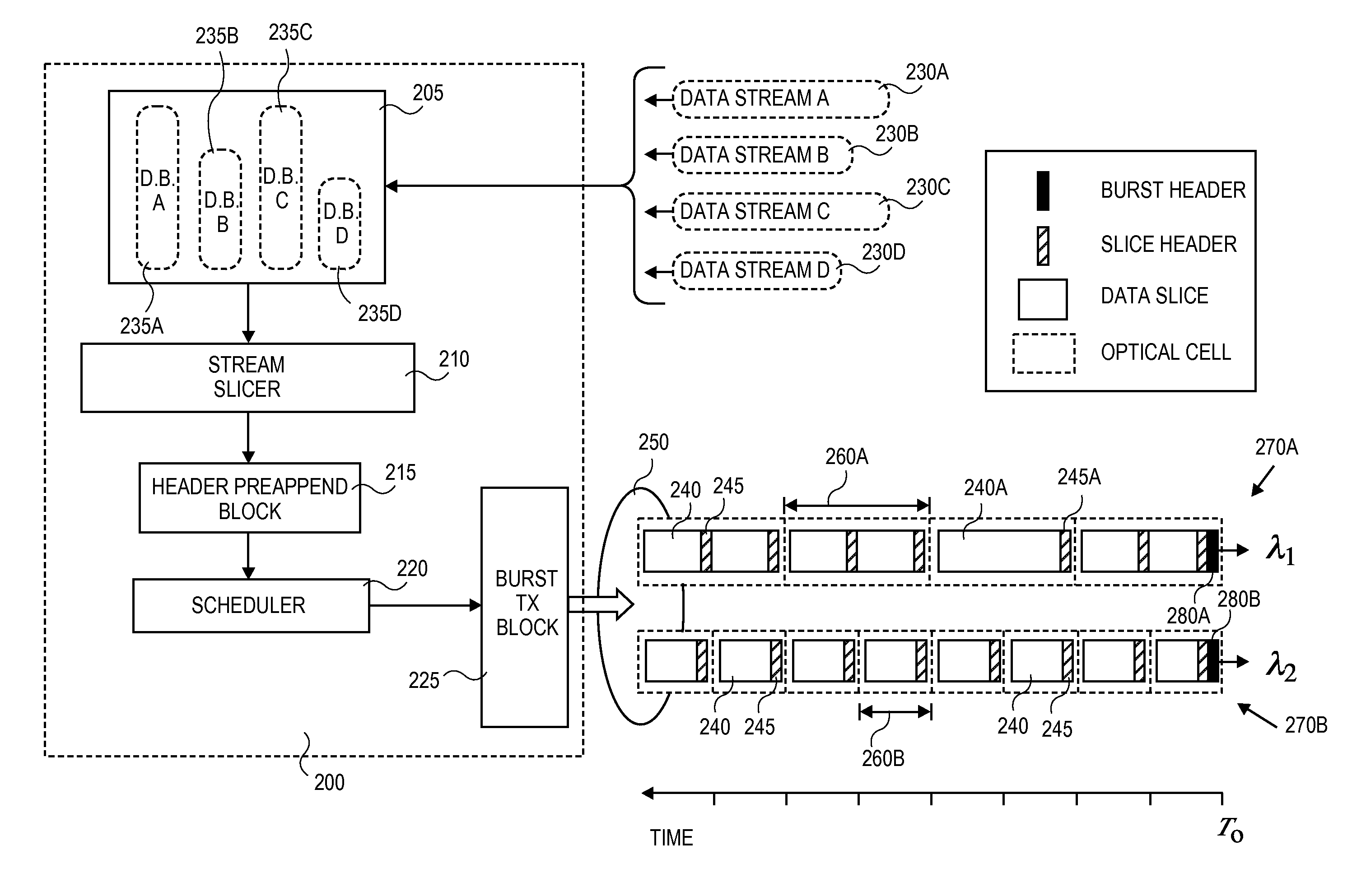
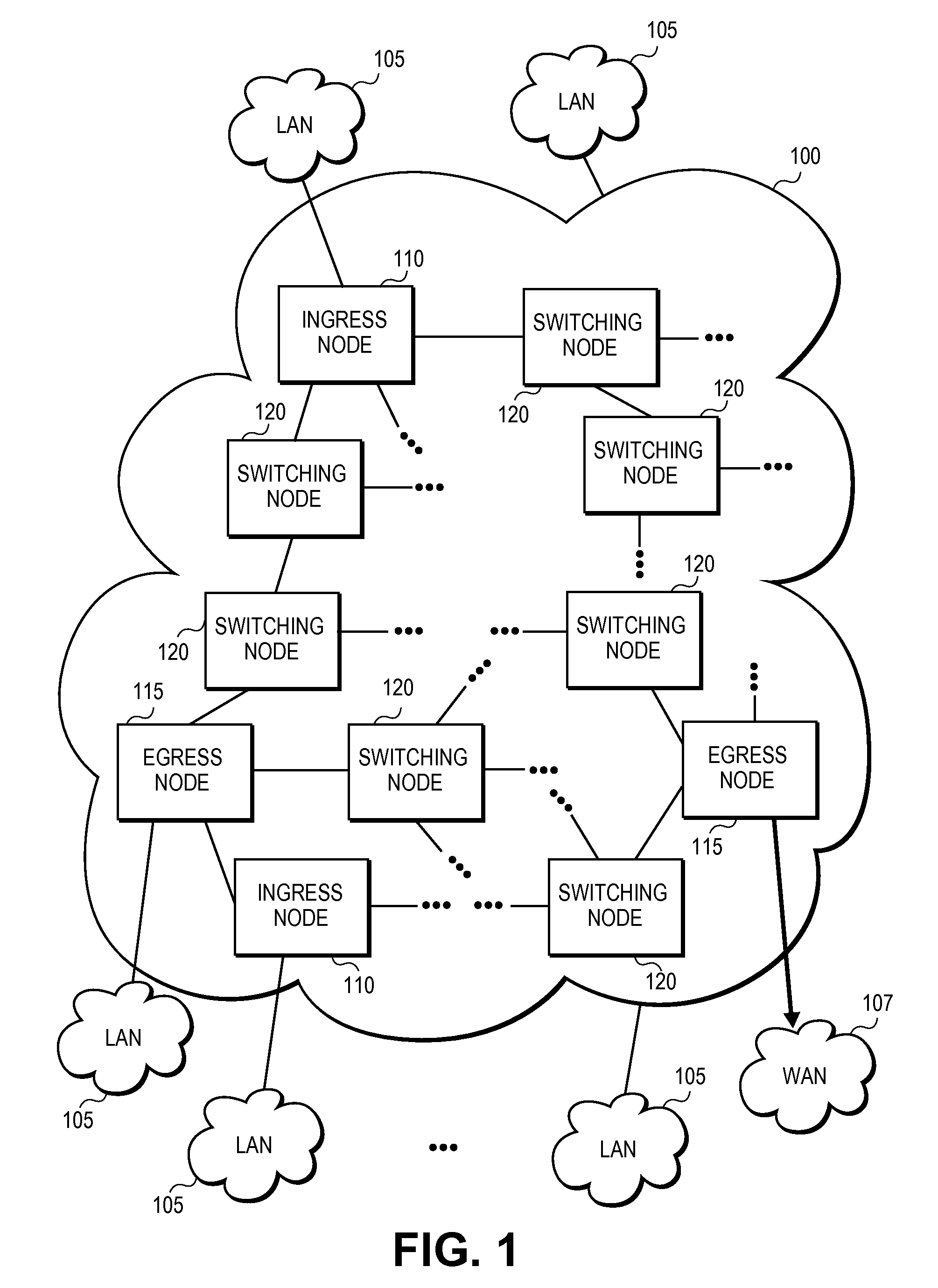
Hybrid optical burst switching with fixed time slot architecture
PatentInactiveUS7734176B2
Innovation
- Implementing a hybrid optical burst switching network that uses fixed length optical cells instead of variable length bursts, employing less hardware-intensive signaling protocols like RSVP-TE for establishing coarse-grain optical paths, and separating signaling protocols from scheduling algorithms to simplify resource reservation and improve data throughput.

Robust transport of IP traffic over WDM using optical burst switching
PatentInactiveEP1224833B1
Innovation
- A shaping mechanism is introduced to determine the offset between control packets and data bursts, using a shaper to randomize the release times of data bursts and impose predetermined statistics on the data stream, thereby reducing contention and maintaining a low burst blocking probability across the network.


Financial Regulatory Compliance for Network Security
Financial institutions operating optical burst switching networks must navigate an increasingly complex regulatory landscape that demands stringent compliance measures. The regulatory framework encompasses multiple jurisdictions, with primary oversight from financial authorities such as the Securities and Exchange Commission, Federal Reserve, and international bodies like the Basel Committee on Banking Supervision. These regulations mandate specific security protocols, data protection standards, and operational resilience requirements that directly impact network infrastructure design and implementation.
The Gramm-Leach-Bliley Act establishes fundamental privacy and security requirements for financial institutions, requiring comprehensive safeguards for customer information transmitted through optical networks. Under this regulation, institutions must implement administrative, technical, and physical safeguards that ensure the confidentiality and integrity of customer records during high-speed optical burst transmissions. Compliance necessitates end-to-end encryption, secure key management protocols, and robust access controls integrated within the optical switching infrastructure.
Payment Card Industry Data Security Standards impose additional constraints on optical burst switching systems handling credit card transactions. These standards require network segmentation, regular security testing, and continuous monitoring capabilities that must be seamlessly integrated into the optical network architecture. The dynamic nature of burst switching presents unique challenges in maintaining PCI DSS compliance, particularly regarding real-time transaction monitoring and audit trail generation across distributed optical nodes.
International regulatory harmonization efforts, including the European Union's General Data Protection Regulation and emerging quantum-safe cryptography mandates, create additional compliance layers for global financial networks. These regulations require cross-border data protection measures and forward-looking security implementations that anticipate quantum computing threats to current encryption methods used in optical communications.
Regulatory reporting requirements demand comprehensive network activity logging and real-time compliance monitoring capabilities. Financial institutions must demonstrate continuous adherence to security standards through automated compliance verification systems integrated within their optical burst switching infrastructure. This includes implementing regulatory-compliant incident response procedures, breach notification protocols, and regular security assessments that validate the effectiveness of optical network security measures while maintaining operational efficiency and low-latency transaction processing capabilities.
The Gramm-Leach-Bliley Act establishes fundamental privacy and security requirements for financial institutions, requiring comprehensive safeguards for customer information transmitted through optical networks. Under this regulation, institutions must implement administrative, technical, and physical safeguards that ensure the confidentiality and integrity of customer records during high-speed optical burst transmissions. Compliance necessitates end-to-end encryption, secure key management protocols, and robust access controls integrated within the optical switching infrastructure.
Payment Card Industry Data Security Standards impose additional constraints on optical burst switching systems handling credit card transactions. These standards require network segmentation, regular security testing, and continuous monitoring capabilities that must be seamlessly integrated into the optical network architecture. The dynamic nature of burst switching presents unique challenges in maintaining PCI DSS compliance, particularly regarding real-time transaction monitoring and audit trail generation across distributed optical nodes.
International regulatory harmonization efforts, including the European Union's General Data Protection Regulation and emerging quantum-safe cryptography mandates, create additional compliance layers for global financial networks. These regulations require cross-border data protection measures and forward-looking security implementations that anticipate quantum computing threats to current encryption methods used in optical communications.
Regulatory reporting requirements demand comprehensive network activity logging and real-time compliance monitoring capabilities. Financial institutions must demonstrate continuous adherence to security standards through automated compliance verification systems integrated within their optical burst switching infrastructure. This includes implementing regulatory-compliant incident response procedures, breach notification protocols, and regular security assessments that validate the effectiveness of optical network security measures while maintaining operational efficiency and low-latency transaction processing capabilities.
Risk Assessment Framework for OBS Financial Networks
The establishment of a comprehensive risk assessment framework for OBS financial networks requires a systematic approach to identify, quantify, and mitigate potential vulnerabilities inherent in optical burst switching architectures. This framework must address the unique characteristics of financial data transmission, where microsecond delays and packet loss can result in significant monetary losses and regulatory compliance issues.
The primary risk categories encompass network-level vulnerabilities, including burst collision scenarios that could lead to data corruption or loss during high-frequency trading operations. Optical layer attacks represent another critical concern, where malicious actors might exploit the physical properties of optical signals to intercept or manipulate financial transactions. Additionally, the framework must account for cascading failure risks, where a single node failure could propagate throughout the network, potentially disrupting multiple financial institutions simultaneously.
Quantitative risk modeling forms the cornerstone of effective assessment, utilizing probabilistic analysis to evaluate the likelihood and impact of various threat scenarios. Monte Carlo simulations can model burst traffic patterns under stress conditions, while machine learning algorithms analyze historical network performance data to predict potential failure points. The framework incorporates real-time monitoring capabilities that continuously assess network health metrics, including burst loss ratios, latency variations, and optical signal quality parameters.
Regulatory compliance considerations add another layer of complexity to the risk assessment process. Financial networks must adhere to stringent data protection requirements, necessitating the evaluation of encryption effectiveness at the optical layer and ensuring that burst switching mechanisms do not compromise data integrity standards mandated by financial regulatory bodies.
The framework establishes risk scoring methodologies that combine technical vulnerability assessments with business impact analysis. Critical financial applications receive higher weighting factors, while redundancy mechanisms and failover capabilities contribute to risk mitigation scores. Dynamic risk recalculation ensures that the assessment remains current as network conditions and threat landscapes evolve, providing financial institutions with actionable intelligence for maintaining secure and reliable optical burst switching operations.
The primary risk categories encompass network-level vulnerabilities, including burst collision scenarios that could lead to data corruption or loss during high-frequency trading operations. Optical layer attacks represent another critical concern, where malicious actors might exploit the physical properties of optical signals to intercept or manipulate financial transactions. Additionally, the framework must account for cascading failure risks, where a single node failure could propagate throughout the network, potentially disrupting multiple financial institutions simultaneously.
Quantitative risk modeling forms the cornerstone of effective assessment, utilizing probabilistic analysis to evaluate the likelihood and impact of various threat scenarios. Monte Carlo simulations can model burst traffic patterns under stress conditions, while machine learning algorithms analyze historical network performance data to predict potential failure points. The framework incorporates real-time monitoring capabilities that continuously assess network health metrics, including burst loss ratios, latency variations, and optical signal quality parameters.
Regulatory compliance considerations add another layer of complexity to the risk assessment process. Financial networks must adhere to stringent data protection requirements, necessitating the evaluation of encryption effectiveness at the optical layer and ensuring that burst switching mechanisms do not compromise data integrity standards mandated by financial regulatory bodies.
The framework establishes risk scoring methodologies that combine technical vulnerability assessments with business impact analysis. Critical financial applications receive higher weighting factors, while redundancy mechanisms and failover capabilities contribute to risk mitigation scores. Dynamic risk recalculation ensures that the assessment remains current as network conditions and threat landscapes evolve, providing financial institutions with actionable intelligence for maintaining secure and reliable optical burst switching operations.
Unlock deeper insights with Patsnap Eureka Quick Research — get a full tech report to explore trends and direct your research. Try now!
Generate Your Research Report Instantly with AI Agent
Supercharge your innovation with Patsnap Eureka AI Agent Platform!