

Optimize Voltage for Efficient Plasma Catalysis Reactions
APR 14, 20269 MIN READ
Generate Your Research Report Instantly with AI Agent
Patsnap Eureka helps you evaluate technical feasibility & market potential.
Plasma Catalysis Voltage Optimization Background and Goals
Plasma catalysis has emerged as a revolutionary technology that combines the unique properties of non-thermal plasma with traditional catalytic processes to achieve enhanced chemical reaction efficiency under mild operating conditions. This hybrid approach leverages the synergistic effects between plasma-generated reactive species and catalytic surfaces, enabling reactions that would otherwise require extreme temperatures or pressures to proceed at ambient conditions.
The historical development of plasma catalysis traces back to the early 20th century when researchers first observed the catalytic effects of electrical discharges on chemical reactions. However, significant advancement occurred in the 1990s when scientists began systematically investigating the interaction between plasma and solid catalysts. The field gained substantial momentum in the 2000s with the development of dielectric barrier discharge reactors and the growing understanding of plasma-catalyst synergistic mechanisms.
Voltage optimization represents a critical parameter in plasma catalysis systems as it directly influences plasma density, electron energy distribution, and the formation of reactive species. The applied voltage determines the electric field strength within the reactor, which governs electron acceleration and subsequent collision processes that generate ions, radicals, and excited molecules essential for catalytic enhancement.
Current technological evolution trends indicate a shift toward precise voltage control strategies that maximize energy efficiency while maintaining optimal reaction performance. Advanced power supply systems now incorporate real-time monitoring and feedback mechanisms to adjust voltage parameters dynamically based on reaction conditions and desired outcomes.
The primary technical objectives for voltage optimization in plasma catalysis encompass several key areas. Energy efficiency maximization stands as the foremost goal, aiming to achieve the highest conversion rates with minimal power consumption. This involves identifying optimal voltage ranges that balance plasma generation efficiency with catalytic activity enhancement.
Reaction selectivity improvement represents another crucial objective, where precise voltage control enables selective formation of desired products while minimizing unwanted byproducts. This is particularly important in complex reaction networks where multiple pathways compete for the same reactants.
Process stability and reproducibility constitute essential targets for industrial applications. Voltage optimization strategies must ensure consistent performance across extended operating periods while maintaining uniform plasma distribution throughout the reactor volume.
Furthermore, the integration of voltage optimization with catalyst design and reactor configuration aims to create synergistic systems where electrical parameters complement physical and chemical catalyst properties to achieve unprecedented reaction efficiencies in various industrial applications.
The historical development of plasma catalysis traces back to the early 20th century when researchers first observed the catalytic effects of electrical discharges on chemical reactions. However, significant advancement occurred in the 1990s when scientists began systematically investigating the interaction between plasma and solid catalysts. The field gained substantial momentum in the 2000s with the development of dielectric barrier discharge reactors and the growing understanding of plasma-catalyst synergistic mechanisms.
Voltage optimization represents a critical parameter in plasma catalysis systems as it directly influences plasma density, electron energy distribution, and the formation of reactive species. The applied voltage determines the electric field strength within the reactor, which governs electron acceleration and subsequent collision processes that generate ions, radicals, and excited molecules essential for catalytic enhancement.
Current technological evolution trends indicate a shift toward precise voltage control strategies that maximize energy efficiency while maintaining optimal reaction performance. Advanced power supply systems now incorporate real-time monitoring and feedback mechanisms to adjust voltage parameters dynamically based on reaction conditions and desired outcomes.
The primary technical objectives for voltage optimization in plasma catalysis encompass several key areas. Energy efficiency maximization stands as the foremost goal, aiming to achieve the highest conversion rates with minimal power consumption. This involves identifying optimal voltage ranges that balance plasma generation efficiency with catalytic activity enhancement.
Reaction selectivity improvement represents another crucial objective, where precise voltage control enables selective formation of desired products while minimizing unwanted byproducts. This is particularly important in complex reaction networks where multiple pathways compete for the same reactants.
Process stability and reproducibility constitute essential targets for industrial applications. Voltage optimization strategies must ensure consistent performance across extended operating periods while maintaining uniform plasma distribution throughout the reactor volume.
Furthermore, the integration of voltage optimization with catalyst design and reactor configuration aims to create synergistic systems where electrical parameters complement physical and chemical catalyst properties to achieve unprecedented reaction efficiencies in various industrial applications.
Market Demand for Efficient Plasma Catalysis Systems
The global plasma catalysis market is experiencing unprecedented growth driven by increasing environmental regulations and the urgent need for sustainable chemical processing technologies. Industries worldwide are seeking alternatives to traditional thermal catalysis methods that require high temperatures and consume substantial energy. Plasma catalysis systems offer a compelling solution by enabling chemical reactions at lower temperatures while maintaining high conversion rates and selectivity.
Environmental compliance requirements are becoming increasingly stringent across major industrial regions. The chemical processing industry faces mounting pressure to reduce carbon emissions and energy consumption while maintaining production efficiency. Plasma catalysis technology addresses these challenges by offering precise control over reaction conditions through voltage optimization, enabling manufacturers to meet both environmental standards and economic objectives.
The petrochemical sector represents a significant market opportunity for efficient plasma catalysis systems. Traditional refining processes consume enormous amounts of energy for heating and maintaining reaction temperatures. Voltage-optimized plasma systems can facilitate hydrocarbon conversion, reforming, and upgrading processes with substantially lower energy requirements. This capability is particularly valuable as refineries seek to process heavier crude oils and unconventional feedstocks.
Pharmaceutical and fine chemical manufacturing industries demonstrate strong demand for plasma catalysis solutions due to their need for precise reaction control and minimal by-product formation. These sectors require technologies that can handle complex molecular transformations while maintaining product purity. Optimized voltage control in plasma systems enables selective activation of specific chemical bonds, reducing unwanted side reactions and improving yield.
The renewable energy sector is driving demand for plasma-assisted processes in hydrogen production, carbon dioxide conversion, and synthetic fuel generation. As governments worldwide implement carbon neutrality targets, there is growing interest in plasma catalysis for converting waste gases into valuable chemicals. Voltage optimization becomes critical in these applications to maximize energy efficiency and economic viability.
Emerging markets in Asia-Pacific and Latin America are experiencing rapid industrialization, creating substantial demand for advanced catalysis technologies. These regions seek modern, efficient processing methods that can support economic growth while meeting international environmental standards. The ability to retrofit existing facilities with voltage-optimized plasma systems presents significant market opportunities.
The market demand is further amplified by the increasing focus on distributed chemical production and process intensification. Smaller-scale, modular plasma catalysis systems with optimized voltage control offer flexibility and reduced capital investment compared to traditional large-scale facilities, making advanced chemical processing accessible to a broader range of manufacturers.
Environmental compliance requirements are becoming increasingly stringent across major industrial regions. The chemical processing industry faces mounting pressure to reduce carbon emissions and energy consumption while maintaining production efficiency. Plasma catalysis technology addresses these challenges by offering precise control over reaction conditions through voltage optimization, enabling manufacturers to meet both environmental standards and economic objectives.
The petrochemical sector represents a significant market opportunity for efficient plasma catalysis systems. Traditional refining processes consume enormous amounts of energy for heating and maintaining reaction temperatures. Voltage-optimized plasma systems can facilitate hydrocarbon conversion, reforming, and upgrading processes with substantially lower energy requirements. This capability is particularly valuable as refineries seek to process heavier crude oils and unconventional feedstocks.
Pharmaceutical and fine chemical manufacturing industries demonstrate strong demand for plasma catalysis solutions due to their need for precise reaction control and minimal by-product formation. These sectors require technologies that can handle complex molecular transformations while maintaining product purity. Optimized voltage control in plasma systems enables selective activation of specific chemical bonds, reducing unwanted side reactions and improving yield.
The renewable energy sector is driving demand for plasma-assisted processes in hydrogen production, carbon dioxide conversion, and synthetic fuel generation. As governments worldwide implement carbon neutrality targets, there is growing interest in plasma catalysis for converting waste gases into valuable chemicals. Voltage optimization becomes critical in these applications to maximize energy efficiency and economic viability.
Emerging markets in Asia-Pacific and Latin America are experiencing rapid industrialization, creating substantial demand for advanced catalysis technologies. These regions seek modern, efficient processing methods that can support economic growth while meeting international environmental standards. The ability to retrofit existing facilities with voltage-optimized plasma systems presents significant market opportunities.
The market demand is further amplified by the increasing focus on distributed chemical production and process intensification. Smaller-scale, modular plasma catalysis systems with optimized voltage control offer flexibility and reduced capital investment compared to traditional large-scale facilities, making advanced chemical processing accessible to a broader range of manufacturers.
Current State and Voltage Control Challenges in Plasma Catalysis
Plasma catalysis has emerged as a promising technology for various chemical processes, combining the advantages of non-thermal plasma with heterogeneous catalysis to achieve enhanced reaction rates and selectivity under mild conditions. However, the field currently faces significant challenges in voltage optimization, which directly impacts the efficiency and economic viability of plasma-catalytic processes.
The current state of plasma catalysis reveals a complex landscape where voltage control remains one of the most critical yet poorly understood parameters. Most existing systems operate with fixed voltage settings determined through empirical approaches rather than systematic optimization. This approach often leads to suboptimal performance, as the voltage requirements can vary significantly depending on the specific reaction, catalyst material, reactor geometry, and operating conditions.
One of the primary challenges in voltage control stems from the non-linear relationship between applied voltage and plasma characteristics. Small voltage changes can dramatically alter electron density, energy distribution, and species generation rates within the plasma zone. This sensitivity makes it difficult to establish universal voltage optimization protocols, as each system requires individual calibration and fine-tuning.
The heterogeneity of plasma-catalyst interactions presents another significant obstacle. Different catalyst materials exhibit varying responses to plasma exposure, with some showing enhanced activity at lower voltages while others require higher energy inputs to achieve optimal performance. The surface properties of catalysts, including porosity, composition, and electronic structure, influence how plasma species interact with active sites, complicating voltage optimization strategies.
Current voltage control systems typically rely on basic feedback mechanisms that monitor overall power consumption or simple electrical parameters. However, these approaches fail to capture the complex plasma chemistry occurring at the catalyst surface. The lack of real-time diagnostic tools capable of monitoring key plasma parameters such as electron temperature, species concentrations, and surface reactions limits the ability to implement sophisticated voltage control algorithms.
Reactor design variations further complicate voltage optimization efforts. Different plasma reactor configurations, including dielectric barrier discharge, corona discharge, and microwave plasma systems, each have unique voltage-performance relationships. The scaling challenges from laboratory to industrial applications introduce additional complexity, as voltage requirements often change non-proportionally with reactor size and throughput.
Temperature management represents another critical challenge in voltage control for plasma catalysis. Higher voltages generally increase plasma power and heat generation, which can lead to catalyst deactivation or unwanted side reactions. Balancing the need for sufficient plasma activation while maintaining optimal temperature conditions requires sophisticated voltage modulation strategies that are currently underdeveloped in most commercial systems.
The current state of plasma catalysis reveals a complex landscape where voltage control remains one of the most critical yet poorly understood parameters. Most existing systems operate with fixed voltage settings determined through empirical approaches rather than systematic optimization. This approach often leads to suboptimal performance, as the voltage requirements can vary significantly depending on the specific reaction, catalyst material, reactor geometry, and operating conditions.
One of the primary challenges in voltage control stems from the non-linear relationship between applied voltage and plasma characteristics. Small voltage changes can dramatically alter electron density, energy distribution, and species generation rates within the plasma zone. This sensitivity makes it difficult to establish universal voltage optimization protocols, as each system requires individual calibration and fine-tuning.
The heterogeneity of plasma-catalyst interactions presents another significant obstacle. Different catalyst materials exhibit varying responses to plasma exposure, with some showing enhanced activity at lower voltages while others require higher energy inputs to achieve optimal performance. The surface properties of catalysts, including porosity, composition, and electronic structure, influence how plasma species interact with active sites, complicating voltage optimization strategies.
Current voltage control systems typically rely on basic feedback mechanisms that monitor overall power consumption or simple electrical parameters. However, these approaches fail to capture the complex plasma chemistry occurring at the catalyst surface. The lack of real-time diagnostic tools capable of monitoring key plasma parameters such as electron temperature, species concentrations, and surface reactions limits the ability to implement sophisticated voltage control algorithms.
Reactor design variations further complicate voltage optimization efforts. Different plasma reactor configurations, including dielectric barrier discharge, corona discharge, and microwave plasma systems, each have unique voltage-performance relationships. The scaling challenges from laboratory to industrial applications introduce additional complexity, as voltage requirements often change non-proportionally with reactor size and throughput.
Temperature management represents another critical challenge in voltage control for plasma catalysis. Higher voltages generally increase plasma power and heat generation, which can lead to catalyst deactivation or unwanted side reactions. Balancing the need for sufficient plasma activation while maintaining optimal temperature conditions requires sophisticated voltage modulation strategies that are currently underdeveloped in most commercial systems.
Existing Voltage Optimization Solutions for Plasma Reactions
01 Voltage control systems for plasma catalysis reactors
Advanced voltage control systems are employed in plasma catalysis to regulate and optimize the electrical parameters during catalytic reactions. These systems typically include power supply units with adjustable voltage outputs, monitoring circuits, and feedback mechanisms to maintain stable plasma generation. The control systems enable precise adjustment of voltage levels to achieve optimal catalytic efficiency while preventing equipment damage from voltage fluctuations.- Voltage control systems for plasma catalysis reactors: Advanced voltage control systems are employed in plasma catalysis reactors to regulate and optimize the electrical discharge conditions. These systems typically include power supply units with adjustable voltage outputs, feedback control mechanisms, and monitoring circuits to maintain stable plasma generation. The voltage control enables precise adjustment of plasma intensity and energy distribution, which is crucial for catalytic reactions. Such systems often incorporate safety features and automatic regulation to prevent voltage fluctuations that could affect catalytic efficiency.
- High voltage power supply configurations for plasma generation: Specialized high voltage power supply configurations are designed to generate and sustain plasma in catalytic systems. These configurations include various circuit topologies such as pulsed power supplies, AC/DC converters, and resonant circuits that can deliver voltages ranging from several kilovolts to tens of kilovolts. The power supply designs focus on achieving efficient energy conversion, minimizing power losses, and providing stable voltage output under varying load conditions. Multiple electrode arrangements and discharge gap configurations are optimized to work with specific voltage ranges.
- Voltage monitoring and measurement devices in plasma catalysis: Voltage monitoring and measurement devices are integrated into plasma catalysis systems to track real-time electrical parameters during operation. These devices include voltage sensors, data acquisition systems, and diagnostic tools that measure voltage waveforms, peak values, and frequency characteristics. The monitoring systems enable operators to assess plasma stability, detect abnormal discharge conditions, and optimize operating parameters. Advanced measurement techniques allow for correlation between voltage parameters and catalytic performance.
- Dielectric barrier discharge voltage optimization: Dielectric barrier discharge systems utilize specific voltage optimization strategies to enhance plasma catalysis efficiency. The voltage applied across dielectric barriers is carefully controlled to generate uniform plasma distribution while preventing arc formation. Optimization involves adjusting voltage amplitude, frequency, and waveform characteristics to match the dielectric properties of barrier materials and reactor geometry. This approach improves energy efficiency and extends electrode lifetime while maintaining effective catalytic activity.
- Multi-stage voltage regulation for enhanced catalytic performance: Multi-stage voltage regulation techniques are implemented to achieve enhanced catalytic performance in plasma systems. These techniques involve sequential or simultaneous application of different voltage levels to create varied plasma zones with distinct energy characteristics. The multi-stage approach allows for better control of reaction pathways, improved selectivity, and higher conversion rates. Voltage stepping or ramping strategies are employed to initiate and sustain different types of plasma discharges optimized for specific catalytic processes.
02 High voltage power supply configurations for plasma generation
Specialized high voltage power supply configurations are designed to generate and sustain plasma for catalytic applications. These configurations include transformer-based systems, pulse power generators, and DC or AC voltage sources that can deliver the necessary electrical energy to ionize gases and create plasma conditions. The power supply designs focus on achieving stable discharge, minimizing energy loss, and ensuring safe operation at elevated voltage levels.Expand Specific Solutions03 Voltage regulation in dielectric barrier discharge plasma systems
Dielectric barrier discharge systems utilize specific voltage regulation techniques to control plasma formation between electrodes separated by dielectric materials. The voltage regulation involves managing the amplitude, frequency, and waveform of applied voltage to optimize the discharge characteristics. These systems are particularly effective for catalytic processes requiring uniform plasma distribution and controlled energy input.Expand Specific Solutions04 Multi-stage voltage adjustment mechanisms
Multi-stage voltage adjustment mechanisms provide flexible control over plasma catalysis processes by allowing stepwise or continuous voltage modifications. These mechanisms incorporate switching circuits, voltage dividers, and programmable controllers to achieve different voltage levels suitable for various catalytic reactions. The multi-stage approach enables optimization of reaction conditions and adaptation to different feedstock materials.Expand Specific Solutions05 Voltage monitoring and protection circuits
Comprehensive voltage monitoring and protection circuits are integrated into plasma catalysis systems to ensure safe and reliable operation. These circuits include voltage sensors, current limiters, overvoltage protection devices, and automatic shutdown mechanisms. The monitoring systems continuously track voltage parameters and provide real-time feedback to prevent equipment damage, ensure operator safety, and maintain consistent catalytic performance.Expand Specific Solutions
Key Players in Plasma Catalysis Equipment Industry
The plasma catalysis field for voltage optimization is in a growth phase, driven by increasing demand for energy-efficient chemical processes and environmental applications. The market shows significant expansion potential, particularly in semiconductor manufacturing and industrial processing sectors. Technology maturity varies considerably across different applications and stakeholders. Established semiconductor equipment manufacturers like Tokyo Electron Ltd., Applied Materials Inc., and Hitachi Ltd. demonstrate advanced plasma system capabilities, while specialized companies such as terraplasma medical GmbH and Jiangsu Leuven Instrument focus on niche applications. Academic institutions including Zhejiang University, Fudan University, and Sichuan University contribute fundamental research advancing voltage control mechanisms. Research organizations like Fraunhofer-Gesellschaft and CNRS provide critical technological foundations. The competitive landscape reflects a maturing technology with established industrial players leading commercialization while academic and research institutions drive innovation in optimization techniques and novel applications.
Tokyo Electron Ltd.
Technical Solution: Tokyo Electron has developed advanced plasma processing systems with sophisticated voltage control mechanisms for semiconductor manufacturing. Their plasma etching and deposition systems utilize real-time voltage monitoring and adaptive control algorithms to optimize plasma density and reaction efficiency. The company's proprietary voltage modulation techniques enable precise control of ion energy distribution, which is critical for achieving uniform plasma catalysis reactions across large substrate areas. Their systems incorporate multi-frequency power delivery with voltage feedback loops that can adjust parameters within microseconds to maintain optimal plasma conditions for various catalytic processes.
Strengths: Industry-leading precision in voltage control, extensive experience in plasma systems, strong R&D capabilities. Weaknesses: Primarily focused on semiconductor applications, high cost of equipment, limited flexibility for non-standard catalysis applications.
Hitachi Ltd.
Technical Solution: Hitachi has developed plasma catalysis systems with intelligent voltage optimization for environmental applications and chemical processing. Their approach combines machine learning algorithms with real-time voltage adjustment to maximize catalytic efficiency while minimizing power consumption. The company's plasma reactors feature multi-electrode configurations with independent voltage control, allowing for spatial optimization of plasma parameters. Their systems can automatically detect changes in gas composition and adjust voltage profiles accordingly to maintain optimal catalytic performance for various chemical reactions including NOx reduction and volatile organic compound decomposition.
Strengths: Advanced AI-driven control systems, diverse application portfolio, strong research collaboration network. Weaknesses: Limited market presence in specialized catalysis applications, competition from dedicated plasma equipment manufacturers, higher complexity in system operation.
Core Innovations in Plasma Voltage Control Patents
Generation of electrical discharges with transient voltage pulses
PatentWO1997040515A1
Innovation
- The use of short-term voltage pulses superimposed on the excitation voltage to increase power input and shift energy distribution towards higher particle energies, with a low fundamental frequency and simple circuitry to minimize electrical losses, and the application of steep bipolar pulses at zero crossings to maintain stable plasma ignition.

Quasi-resonant plasma voltage generator
PatentActiveUS10187968B2
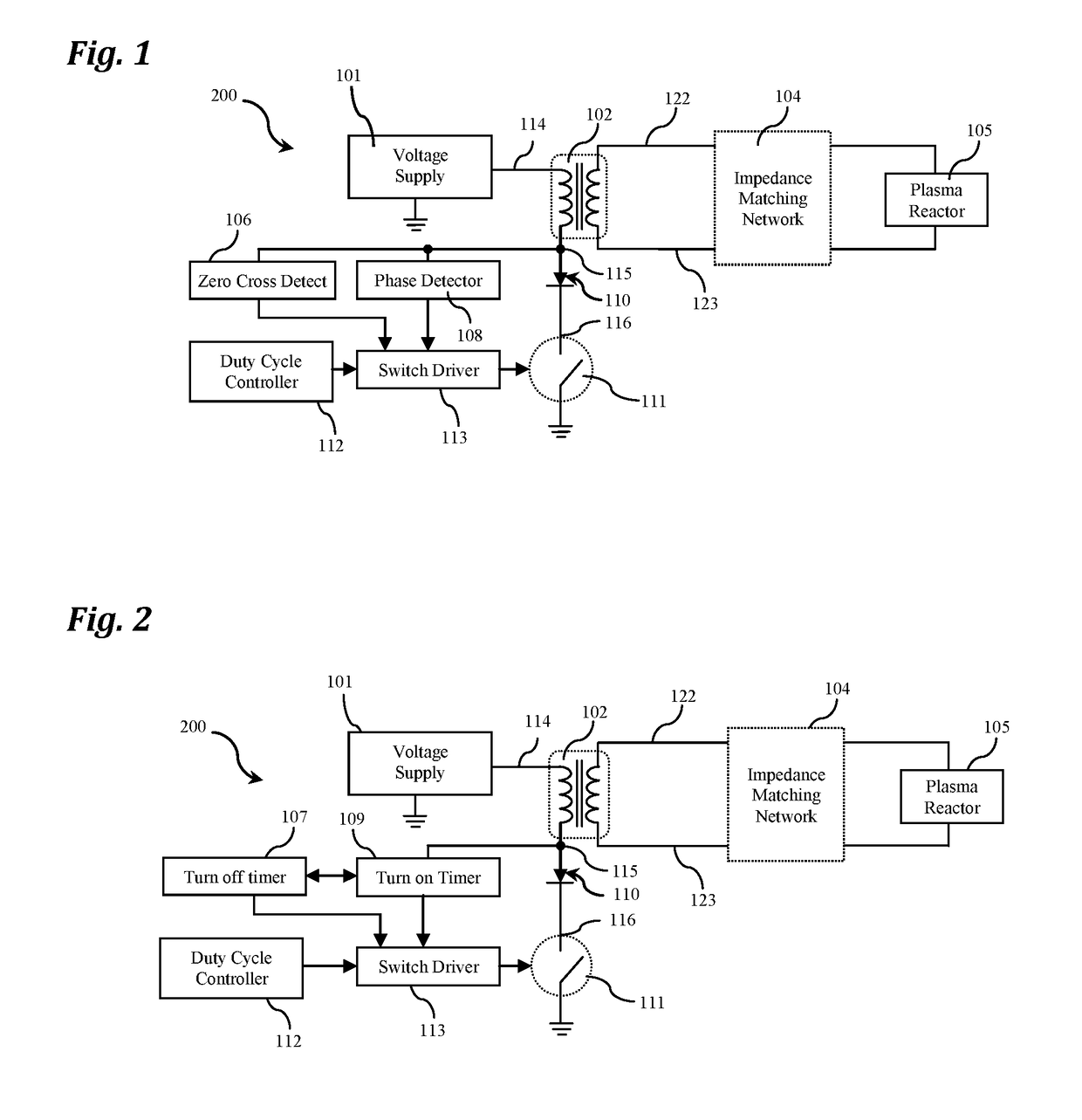
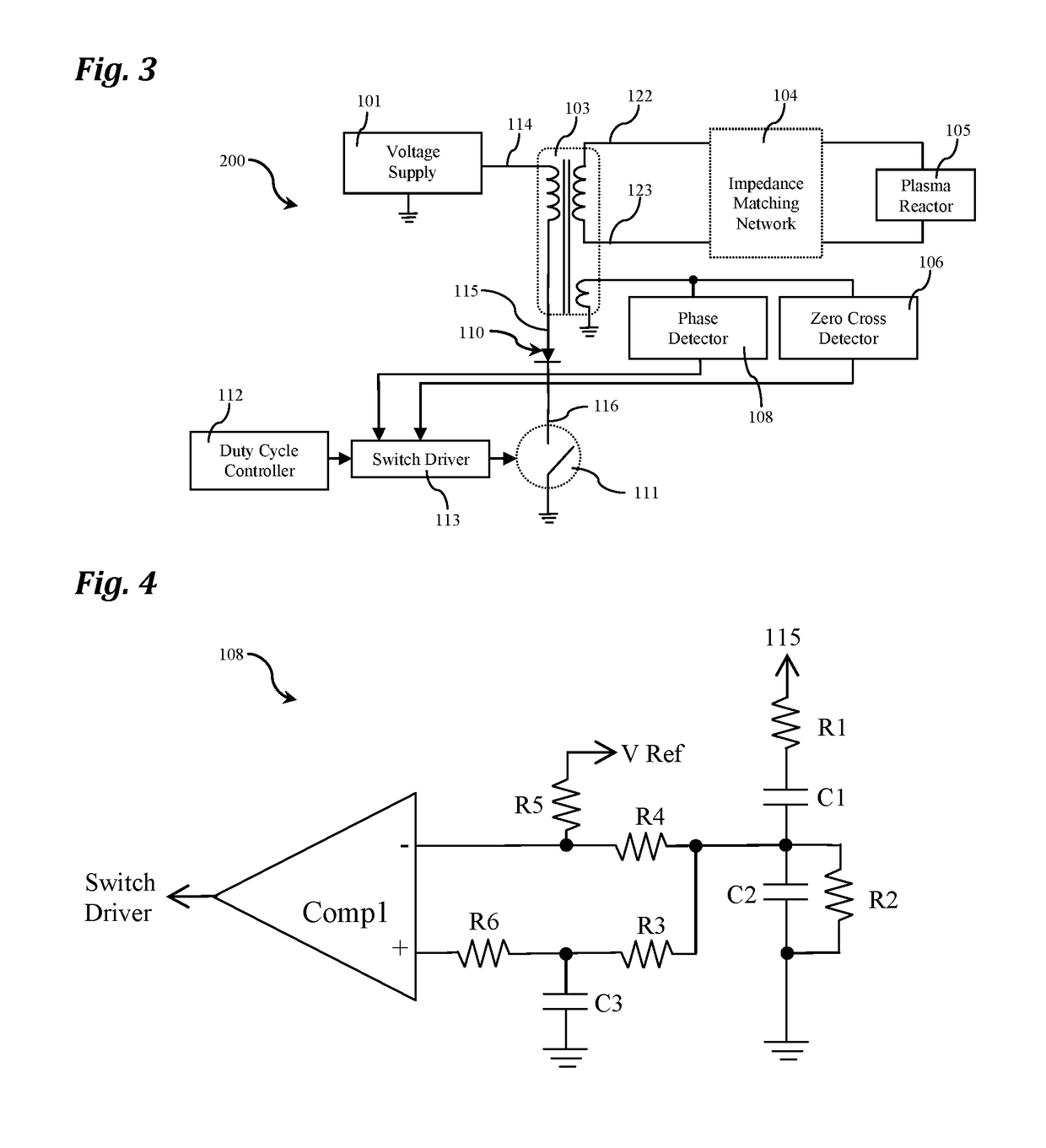
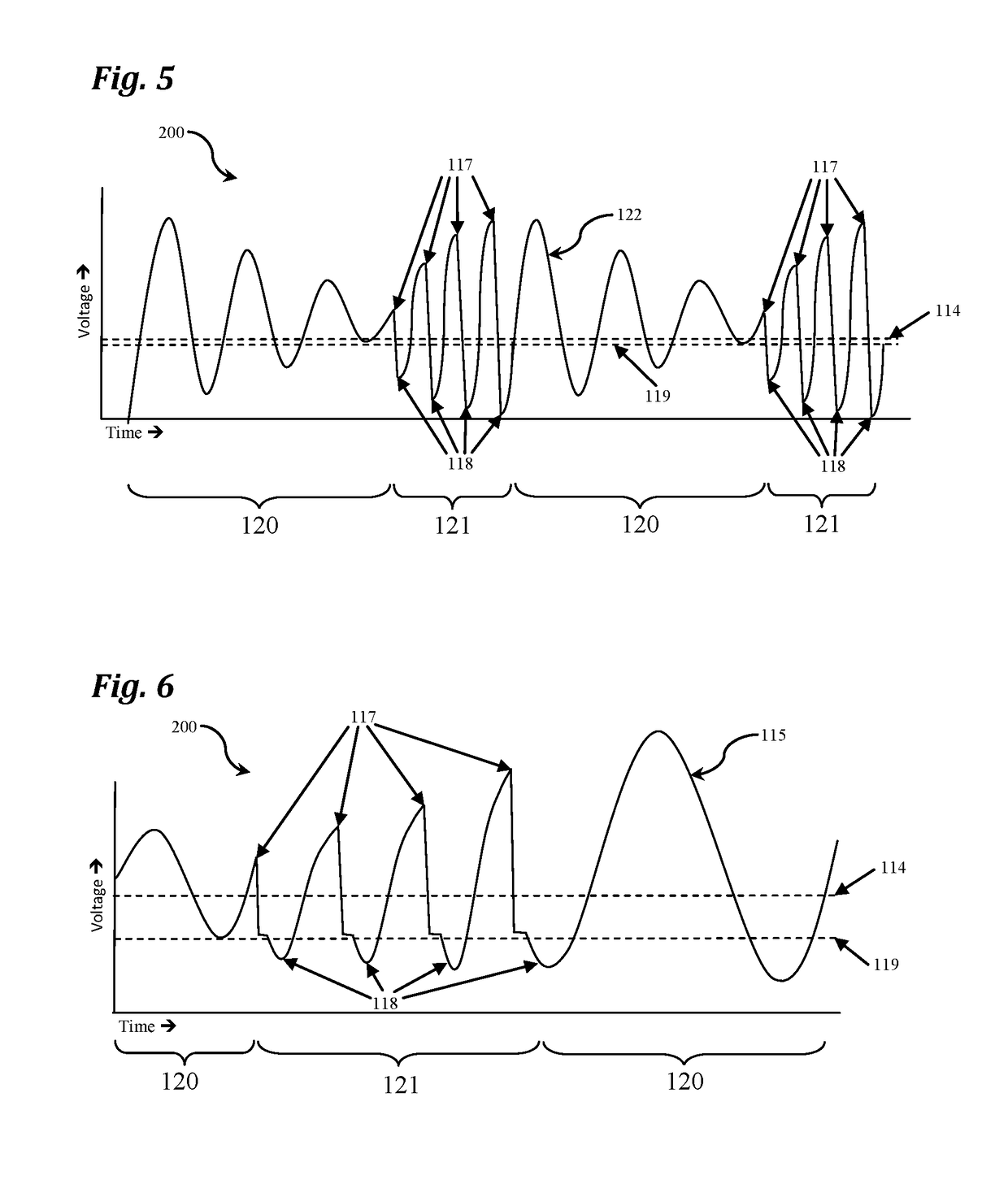
Innovation
- A novel plasma voltage generator that treats the plasma reactor as an electrical circuit element, using quasi-resonant oscillations and dynamic control of peak voltage, frequency, and power through a transformer and electronic circuits, allowing for higher frequency operation and adaptive response to changing reactor conditions.
Environmental Regulations for Plasma Catalysis Applications
The regulatory landscape for plasma catalysis applications is rapidly evolving as governments worldwide recognize both the environmental benefits and potential risks associated with this emerging technology. Current environmental regulations primarily focus on emission standards, energy efficiency requirements, and safety protocols that directly impact voltage optimization strategies in plasma catalysis systems.
In the United States, the Environmental Protection Agency (EPA) has established stringent guidelines under the Clean Air Act that affect plasma catalysis deployment in industrial applications. These regulations mandate specific emission reduction targets for nitrogen oxides, volatile organic compounds, and particulate matter, which directly influence the voltage parameters required for optimal catalytic performance. The EPA's New Source Performance Standards (NSPS) require plasma catalysis systems to demonstrate consistent pollutant removal efficiency, necessitating precise voltage control mechanisms.
European Union regulations under the Industrial Emissions Directive (IED) impose even more restrictive requirements, particularly regarding energy consumption and operational efficiency. The EU's Best Available Techniques Reference Documents (BREFs) specifically address plasma-based treatment technologies, establishing voltage optimization as a critical factor in achieving compliance with emission limit values. These regulations require continuous monitoring of plasma parameters, including voltage stability and energy consumption per unit of pollutant removed.
The regulatory framework in Asia varies significantly across jurisdictions. China's National Emission Standards for Hazardous Air Pollutants include specific provisions for plasma catalysis systems, emphasizing the need for optimized voltage control to maintain treatment efficiency while minimizing energy consumption. Japan's environmental regulations focus on electromagnetic compatibility and safety standards that influence voltage design parameters in plasma catalysis applications.
Emerging regulatory trends indicate increasing emphasis on lifecycle environmental impact assessments for plasma catalysis systems. Future regulations are expected to incorporate carbon footprint considerations, requiring voltage optimization strategies that minimize overall energy consumption while maintaining catalytic efficiency. Additionally, upcoming standards may mandate real-time voltage monitoring and adaptive control systems to ensure continuous compliance with environmental performance criteria.
In the United States, the Environmental Protection Agency (EPA) has established stringent guidelines under the Clean Air Act that affect plasma catalysis deployment in industrial applications. These regulations mandate specific emission reduction targets for nitrogen oxides, volatile organic compounds, and particulate matter, which directly influence the voltage parameters required for optimal catalytic performance. The EPA's New Source Performance Standards (NSPS) require plasma catalysis systems to demonstrate consistent pollutant removal efficiency, necessitating precise voltage control mechanisms.
European Union regulations under the Industrial Emissions Directive (IED) impose even more restrictive requirements, particularly regarding energy consumption and operational efficiency. The EU's Best Available Techniques Reference Documents (BREFs) specifically address plasma-based treatment technologies, establishing voltage optimization as a critical factor in achieving compliance with emission limit values. These regulations require continuous monitoring of plasma parameters, including voltage stability and energy consumption per unit of pollutant removed.
The regulatory framework in Asia varies significantly across jurisdictions. China's National Emission Standards for Hazardous Air Pollutants include specific provisions for plasma catalysis systems, emphasizing the need for optimized voltage control to maintain treatment efficiency while minimizing energy consumption. Japan's environmental regulations focus on electromagnetic compatibility and safety standards that influence voltage design parameters in plasma catalysis applications.
Emerging regulatory trends indicate increasing emphasis on lifecycle environmental impact assessments for plasma catalysis systems. Future regulations are expected to incorporate carbon footprint considerations, requiring voltage optimization strategies that minimize overall energy consumption while maintaining catalytic efficiency. Additionally, upcoming standards may mandate real-time voltage monitoring and adaptive control systems to ensure continuous compliance with environmental performance criteria.
Energy Efficiency Standards and Sustainability Impact
The optimization of voltage parameters in plasma catalysis reactions has become increasingly critical as global energy efficiency standards continue to evolve and tighten. Current international frameworks, including the ISO 50001 energy management standard and emerging plasma technology guidelines, emphasize the need for precise voltage control to minimize energy consumption while maximizing catalytic conversion rates. These standards are driving the development of more sophisticated voltage optimization algorithms that can adapt to varying reaction conditions in real-time.
Energy efficiency benchmarks for plasma catalysis systems typically require achieving conversion rates above 85% while maintaining power consumption below 15 kWh per kilogram of processed material. Advanced voltage optimization techniques, such as pulsed plasma modulation and adaptive frequency control, have demonstrated the ability to reduce energy consumption by 20-35% compared to conventional constant voltage approaches. These improvements directly contribute to meeting stringent efficiency targets set by regulatory bodies across different industrial sectors.
The sustainability impact of optimized voltage control extends beyond immediate energy savings to encompass broader environmental benefits. Precise voltage management reduces the formation of unwanted byproducts and minimizes electrode degradation, thereby extending equipment lifespan and reducing material waste. Studies indicate that optimized plasma systems can decrease carbon footprint by up to 40% through improved selectivity and reduced energy intensity.
Lifecycle assessment analyses reveal that voltage-optimized plasma catalysis systems contribute significantly to circular economy principles by enabling more efficient recycling processes and waste-to-energy conversion. The technology's ability to operate at lower overall energy inputs while maintaining high throughput makes it particularly valuable for sustainable manufacturing applications, where energy costs and environmental impact are primary concerns.
Furthermore, the integration of machine learning algorithms for voltage optimization aligns with emerging sustainability reporting requirements, providing detailed energy consumption data that supports corporate environmental disclosure standards and carbon accounting frameworks.
Energy efficiency benchmarks for plasma catalysis systems typically require achieving conversion rates above 85% while maintaining power consumption below 15 kWh per kilogram of processed material. Advanced voltage optimization techniques, such as pulsed plasma modulation and adaptive frequency control, have demonstrated the ability to reduce energy consumption by 20-35% compared to conventional constant voltage approaches. These improvements directly contribute to meeting stringent efficiency targets set by regulatory bodies across different industrial sectors.
The sustainability impact of optimized voltage control extends beyond immediate energy savings to encompass broader environmental benefits. Precise voltage management reduces the formation of unwanted byproducts and minimizes electrode degradation, thereby extending equipment lifespan and reducing material waste. Studies indicate that optimized plasma systems can decrease carbon footprint by up to 40% through improved selectivity and reduced energy intensity.
Lifecycle assessment analyses reveal that voltage-optimized plasma catalysis systems contribute significantly to circular economy principles by enabling more efficient recycling processes and waste-to-energy conversion. The technology's ability to operate at lower overall energy inputs while maintaining high throughput makes it particularly valuable for sustainable manufacturing applications, where energy costs and environmental impact are primary concerns.
Furthermore, the integration of machine learning algorithms for voltage optimization aligns with emerging sustainability reporting requirements, providing detailed energy consumption data that supports corporate environmental disclosure standards and carbon accounting frameworks.
Unlock deeper insights with Patsnap Eureka Quick Research — get a full tech report to explore trends and direct your research. Try now!
Generate Your Research Report Instantly with AI Agent
Supercharge your innovation with Patsnap Eureka AI Agent Platform!