

Comparing Ozone Production: Plasma vs UV Catalysis
APR 14, 20269 MIN READ
Generate Your Research Report Instantly with AI Agent
Patsnap Eureka helps you evaluate technical feasibility & market potential.
Ozone Generation Technology Background and Objectives
Ozone generation technology has emerged as a critical component in numerous industrial and environmental applications, driven by ozone's powerful oxidizing properties and its ability to decompose into harmless oxygen without leaving chemical residues. The development of efficient ozone production methods has become increasingly important as industries seek sustainable alternatives to traditional chemical treatments in water purification, air sterilization, food processing, and semiconductor manufacturing.
The evolution of ozone generation technology spans over a century, beginning with early electrical discharge methods in the late 1800s. Traditional corona discharge systems dominated the market for decades, utilizing high-voltage electrical fields to split oxygen molecules. However, the quest for improved efficiency, reduced energy consumption, and enhanced control has led to the emergence of two prominent alternative technologies: plasma-based generation and ultraviolet photocatalytic systems.
Plasma technology represents a significant advancement in ozone production, leveraging controlled ionized gas environments to achieve molecular dissociation. This approach offers precise control over reaction conditions and can operate at various pressure and temperature ranges. The technology has gained traction due to its potential for higher ozone concentrations and improved energy efficiency compared to conventional methods.
Ultraviolet catalysis has simultaneously emerged as a compelling alternative, combining photochemical processes with catalytic materials to enhance ozone production rates. This method utilizes specific wavelengths of UV light, typically around 185 nm, to break oxygen bonds while employing catalysts to optimize reaction kinetics and selectivity.
The primary objective of comparing these technologies centers on identifying the most efficient, cost-effective, and scalable solution for various industrial applications. Key performance metrics include ozone production rate, energy consumption per unit of ozone generated, system longevity, maintenance requirements, and operational stability under different environmental conditions.
Current research aims to establish comprehensive benchmarks for both technologies across multiple operational parameters. This includes evaluating their respective advantages in terms of startup time, controllability, ozone concentration achievable, and integration compatibility with existing industrial processes. Understanding these comparative aspects is essential for guiding future technology investments and development priorities.
The ultimate goal involves developing optimization strategies that could potentially combine the strengths of both approaches or identify specific application domains where each technology demonstrates superior performance characteristics.
The evolution of ozone generation technology spans over a century, beginning with early electrical discharge methods in the late 1800s. Traditional corona discharge systems dominated the market for decades, utilizing high-voltage electrical fields to split oxygen molecules. However, the quest for improved efficiency, reduced energy consumption, and enhanced control has led to the emergence of two prominent alternative technologies: plasma-based generation and ultraviolet photocatalytic systems.
Plasma technology represents a significant advancement in ozone production, leveraging controlled ionized gas environments to achieve molecular dissociation. This approach offers precise control over reaction conditions and can operate at various pressure and temperature ranges. The technology has gained traction due to its potential for higher ozone concentrations and improved energy efficiency compared to conventional methods.
Ultraviolet catalysis has simultaneously emerged as a compelling alternative, combining photochemical processes with catalytic materials to enhance ozone production rates. This method utilizes specific wavelengths of UV light, typically around 185 nm, to break oxygen bonds while employing catalysts to optimize reaction kinetics and selectivity.
The primary objective of comparing these technologies centers on identifying the most efficient, cost-effective, and scalable solution for various industrial applications. Key performance metrics include ozone production rate, energy consumption per unit of ozone generated, system longevity, maintenance requirements, and operational stability under different environmental conditions.
Current research aims to establish comprehensive benchmarks for both technologies across multiple operational parameters. This includes evaluating their respective advantages in terms of startup time, controllability, ozone concentration achievable, and integration compatibility with existing industrial processes. Understanding these comparative aspects is essential for guiding future technology investments and development priorities.
The ultimate goal involves developing optimization strategies that could potentially combine the strengths of both approaches or identify specific application domains where each technology demonstrates superior performance characteristics.
Market Demand Analysis for Ozone Production Systems
The global ozone production systems market demonstrates robust growth driven by increasing environmental regulations and expanding industrial applications. Water treatment facilities represent the largest demand segment, utilizing ozone for disinfection and oxidation processes in municipal water treatment plants, wastewater treatment facilities, and industrial water purification systems. The technology's effectiveness in eliminating pathogens without creating harmful byproducts positions it as a preferred alternative to chlorine-based treatments.
Industrial applications constitute another significant market driver, particularly in food and beverage processing, pharmaceutical manufacturing, and pulp and paper industries. Food processing facilities increasingly adopt ozone systems for surface sanitization, equipment cleaning, and air purification to meet stringent food safety standards. The pharmaceutical sector leverages ozone's sterilization capabilities for cleanroom environments and equipment decontamination.
Air purification applications show accelerating demand, especially following increased awareness of indoor air quality concerns. Commercial buildings, hospitals, and residential applications drive adoption of ozone-based air treatment systems. The hospitality industry utilizes ozone generators for odor elimination and sanitization in hotels and restaurants.
Emerging markets present substantial growth opportunities, particularly in developing regions where water infrastructure development and industrial expansion create new demand for ozone treatment systems. Asia-Pacific markets demonstrate the highest growth rates, driven by rapid industrialization and increasing environmental compliance requirements.
The market exhibits distinct preferences between plasma and UV catalysis technologies based on application requirements. Large-scale municipal water treatment facilities favor UV catalysis systems for their energy efficiency and operational stability. Smaller industrial applications and specialized treatment processes show preference for plasma-based systems due to their compact design and rapid response capabilities.
Regulatory frameworks significantly influence market dynamics, with stricter environmental standards driving adoption across multiple sectors. The phase-out of ozone-depleting substances and emphasis on sustainable treatment technologies create favorable conditions for advanced ozone production systems. Market demand increasingly focuses on energy-efficient solutions with lower operational costs and enhanced automation capabilities.
Industrial applications constitute another significant market driver, particularly in food and beverage processing, pharmaceutical manufacturing, and pulp and paper industries. Food processing facilities increasingly adopt ozone systems for surface sanitization, equipment cleaning, and air purification to meet stringent food safety standards. The pharmaceutical sector leverages ozone's sterilization capabilities for cleanroom environments and equipment decontamination.
Air purification applications show accelerating demand, especially following increased awareness of indoor air quality concerns. Commercial buildings, hospitals, and residential applications drive adoption of ozone-based air treatment systems. The hospitality industry utilizes ozone generators for odor elimination and sanitization in hotels and restaurants.
Emerging markets present substantial growth opportunities, particularly in developing regions where water infrastructure development and industrial expansion create new demand for ozone treatment systems. Asia-Pacific markets demonstrate the highest growth rates, driven by rapid industrialization and increasing environmental compliance requirements.
The market exhibits distinct preferences between plasma and UV catalysis technologies based on application requirements. Large-scale municipal water treatment facilities favor UV catalysis systems for their energy efficiency and operational stability. Smaller industrial applications and specialized treatment processes show preference for plasma-based systems due to their compact design and rapid response capabilities.
Regulatory frameworks significantly influence market dynamics, with stricter environmental standards driving adoption across multiple sectors. The phase-out of ozone-depleting substances and emphasis on sustainable treatment technologies create favorable conditions for advanced ozone production systems. Market demand increasingly focuses on energy-efficient solutions with lower operational costs and enhanced automation capabilities.
Current Status of Plasma and UV Catalysis Technologies
Plasma-based ozone generation has emerged as a dominant technology in industrial applications, leveraging non-thermal plasma discharge to dissociate oxygen molecules and facilitate ozone formation. Current plasma systems primarily utilize dielectric barrier discharge (DBD), corona discharge, and surface discharge configurations. DBD systems demonstrate superior energy efficiency, achieving ozone concentrations of 150-300 g/m³ with energy consumption ranging from 6-12 kWh/kg O₃. These systems operate effectively at atmospheric pressure and room temperature, making them suitable for large-scale industrial implementations.
UV catalysis technology has evolved significantly, incorporating advanced photocatalytic materials and optimized reactor designs. Contemporary UV-based ozone production systems employ mercury vapor lamps operating at 185 nm wavelength, combined with titanium dioxide or zinc oxide catalysts. Recent developments include LED-based UV sources that offer improved energy efficiency and longer operational lifespans. Current UV catalytic systems achieve ozone production rates of 50-150 g/m³ with energy consumption typically ranging from 8-15 kWh/kg O₃.
The technological maturity levels differ substantially between these approaches. Plasma technology has reached commercial maturity with established manufacturing processes and standardized equipment designs. Major manufacturers have developed modular plasma ozone generators capable of producing up to 500 kg/day of ozone. The technology demonstrates excellent scalability and process control capabilities, with automated monitoring systems ensuring consistent ozone output quality.
UV catalysis technology remains in the advanced development stage, with ongoing research focused on catalyst optimization and reactor design improvements. Current limitations include photocatalyst deactivation, limited penetration depth of UV radiation, and challenges in scaling up reactor systems. However, recent breakthroughs in nanostructured catalysts and photonic crystal reactors show promising potential for enhanced performance.
Energy efficiency represents a critical performance differentiator. Plasma systems currently demonstrate superior energy conversion efficiency, particularly in high-capacity applications. Advanced plasma configurations achieve energy efficiencies exceeding 150 g O₃/kWh, while UV catalytic systems typically operate at 80-120 g O₃/kWh. However, UV systems offer advantages in terms of operational simplicity and reduced maintenance requirements.
Both technologies face distinct technical challenges. Plasma systems encounter issues related to electrode degradation, ozone decomposition at high concentrations, and electromagnetic interference. UV catalytic systems struggle with catalyst fouling, limited mass transfer rates, and photocatalyst regeneration requirements. Current research efforts focus on addressing these limitations through advanced materials development and innovative reactor designs.
UV catalysis technology has evolved significantly, incorporating advanced photocatalytic materials and optimized reactor designs. Contemporary UV-based ozone production systems employ mercury vapor lamps operating at 185 nm wavelength, combined with titanium dioxide or zinc oxide catalysts. Recent developments include LED-based UV sources that offer improved energy efficiency and longer operational lifespans. Current UV catalytic systems achieve ozone production rates of 50-150 g/m³ with energy consumption typically ranging from 8-15 kWh/kg O₃.
The technological maturity levels differ substantially between these approaches. Plasma technology has reached commercial maturity with established manufacturing processes and standardized equipment designs. Major manufacturers have developed modular plasma ozone generators capable of producing up to 500 kg/day of ozone. The technology demonstrates excellent scalability and process control capabilities, with automated monitoring systems ensuring consistent ozone output quality.
UV catalysis technology remains in the advanced development stage, with ongoing research focused on catalyst optimization and reactor design improvements. Current limitations include photocatalyst deactivation, limited penetration depth of UV radiation, and challenges in scaling up reactor systems. However, recent breakthroughs in nanostructured catalysts and photonic crystal reactors show promising potential for enhanced performance.
Energy efficiency represents a critical performance differentiator. Plasma systems currently demonstrate superior energy conversion efficiency, particularly in high-capacity applications. Advanced plasma configurations achieve energy efficiencies exceeding 150 g O₃/kWh, while UV catalytic systems typically operate at 80-120 g O₃/kWh. However, UV systems offer advantages in terms of operational simplicity and reduced maintenance requirements.
Both technologies face distinct technical challenges. Plasma systems encounter issues related to electrode degradation, ozone decomposition at high concentrations, and electromagnetic interference. UV catalytic systems struggle with catalyst fouling, limited mass transfer rates, and photocatalyst regeneration requirements. Current research efforts focus on addressing these limitations through advanced materials development and innovative reactor designs.
Current Plasma vs UV Catalysis Solutions
01 Corona discharge ozone generation methods
Ozone can be produced through corona discharge methods where high voltage electrical discharge is applied to oxygen-containing gas. This method involves creating an electrical field that breaks down oxygen molecules and reforms them into ozone. The process typically uses specialized electrodes and dielectric materials to optimize ozone generation efficiency. Various configurations of discharge chambers and electrode arrangements can be employed to enhance production rates and energy efficiency.- Corona discharge ozone generation methods: Ozone can be produced through corona discharge technology, where high voltage electrical discharge is applied to oxygen-containing gas. This method creates an electric field that splits oxygen molecules and allows them to recombine as ozone. The process typically involves electrodes separated by a dielectric material, with cooling systems to manage heat generation. Various configurations of discharge chambers and electrode arrangements can optimize ozone production efficiency and concentration.
- UV radiation-based ozone generation: Ultraviolet light can be used to generate ozone by photodissociation of oxygen molecules. When oxygen is exposed to UV radiation at specific wavelengths, the energy breaks molecular bonds and enables ozone formation. This method offers advantages in terms of purity and control, as it does not require high voltage electrical systems. The efficiency depends on factors such as UV lamp design, wavelength selection, and gas flow characteristics.
- Electrolytic ozone production systems: Ozone can be generated through electrolysis of water or aqueous solutions, where electrical current is passed through an electrolyte to produce ozone directly. This method eliminates the need for oxygen feed gas and can produce ozone dissolved in water for immediate application. The technology involves specialized electrode materials and cell designs that promote efficient ozone formation while minimizing energy consumption and unwanted byproducts.
- Plasma-based ozone generation techniques: Advanced plasma technologies can be employed for ozone production, utilizing various forms of plasma discharge including dielectric barrier discharge, pulsed corona, and surface discharge. These methods create reactive species and energetic electrons that facilitate ozone formation from oxygen. Plasma-based systems can offer improved energy efficiency, higher ozone concentrations, and better control over the generation process compared to conventional methods.
- Ozone concentration and purification systems: After initial generation, ozone can be concentrated, purified, and stabilized through various techniques including gas separation, adsorption, and cooling methods. These systems remove impurities, adjust ozone concentration levels, and prepare the ozone for specific applications. Technologies may involve membrane separation, pressure swing adsorption, or cryogenic methods to achieve desired ozone purity and concentration while maintaining stability during storage and delivery.
02 Ultraviolet radiation ozone production
Ozone generation can be achieved through ultraviolet radiation methods, particularly using UV lamps that emit light at specific wavelengths capable of splitting oxygen molecules. This photochemical process converts oxygen into ozone through photolysis. The method is often used in applications requiring clean ozone production without the generation of nitrogen oxides. Various UV lamp configurations and reactor designs can be implemented to optimize ozone yield and concentration.Expand Specific Solutions03 Electrolytic ozone generation systems
Electrolytic methods produce ozone by passing electrical current through water or aqueous solutions using specialized electrodes. This process involves the electrochemical decomposition of water molecules and subsequent formation of ozone at the anode. The technology offers advantages in producing dissolved ozone directly in water for various treatment applications. Different electrode materials and cell designs can be utilized to improve current efficiency and ozone concentration.Expand Specific Solutions04 Plasma-based ozone generation techniques
Advanced plasma technologies can be employed for ozone production, utilizing various forms of plasma discharge including dielectric barrier discharge, pulsed corona, and surface discharge. These methods create highly reactive environments that efficiently convert oxygen into ozone. Plasma-based systems can offer improved energy efficiency and higher ozone concentrations compared to conventional methods. The technology can be adapted for different scales of production and specific application requirements.Expand Specific Solutions05 Ozone concentration and purification methods
Various techniques exist for concentrating and purifying ozone from gas mixtures to achieve higher purity levels and concentrations. These methods may include cryogenic separation, pressure swing adsorption, membrane separation, or chemical absorption processes. Concentration systems are important for applications requiring high-purity ozone or for improving the efficiency of ozone delivery systems. Different purification approaches can be selected based on the desired ozone concentration, purity requirements, and economic considerations.Expand Specific Solutions
Major Players in Plasma and UV Ozone Industries
The ozone production technology landscape comparing plasma versus UV catalysis represents an emerging market in the early growth stage, driven by increasing environmental regulations and water treatment demands. The market demonstrates significant potential with applications spanning water purification, air treatment, and industrial processes, though comprehensive market size data remains fragmented across regional segments. Technology maturity varies considerably between approaches, with established players like OZOMAX, Inc. and Wallenius Water AB advancing UV-based systems, while companies such as Microplasma Ozone Technologies, Inc. and XEI Scientific, Inc. pioneer plasma-based solutions. Research institutions including Advanced Industrial Science & Technology and The University of Sheffield contribute foundational research, while industrial giants like Toshiba Mitsubishi-Electric Industrial Systems Corp. and Meidensha Corp. integrate these technologies into broader system solutions. The competitive landscape shows fragmentation with specialized technology providers competing alongside diversified equipment manufacturers, indicating an industry still consolidating around optimal technical approaches and market positioning strategies.
Microplasma Ozone Technologies, Inc.
Technical Solution: Specializes in microplasma-based ozone generation technology that utilizes low-temperature plasma discharge to produce ozone efficiently. Their systems operate at atmospheric pressure and room temperature, eliminating the need for high-voltage equipment or oxygen concentrators. The microplasma technology creates a stable, uniform plasma field that generates ozone through oxygen dissociation and recombination processes. This approach offers precise control over ozone concentration and production rates while maintaining energy efficiency. The company's plasma-based systems are designed for various applications including water treatment, air purification, and industrial processes, providing consistent ozone output with minimal maintenance requirements.
Advantages: High energy efficiency, precise ozone control, low maintenance, operates at room temperature. Disadvantages: Limited scalability for very large applications, higher initial investment costs.
Zuvo Water LLC
Technical Solution: Focuses on UV-based ozone generation technology specifically designed for water treatment applications. Their systems employ 185nm UV lamps to photolyze oxygen molecules in water, creating ozone in-situ for disinfection and oxidation processes. The technology operates through photochemical ozone generation, where UV photons break oxygen bonds to form ozone directly in the treatment medium. Their systems achieve ozone concentrations of 0.1-2.0 ppm in water applications, with energy consumption optimized for residential and commercial water treatment. The UV-catalytic approach eliminates the need for ozone injection systems and provides immediate ozone availability at the point of use, reducing ozone decay losses during transport.
Advantages: In-situ ozone generation, no ozone transport losses, lower maintenance requirements, safe operation. Disadvantages: Limited to water applications, lower ozone concentrations compared to plasma systems.
Core Technologies in Advanced Ozone Generation
Apparatus for highly efficient cold-plasma ozone production
PatentActiveUS9067788B1
Innovation
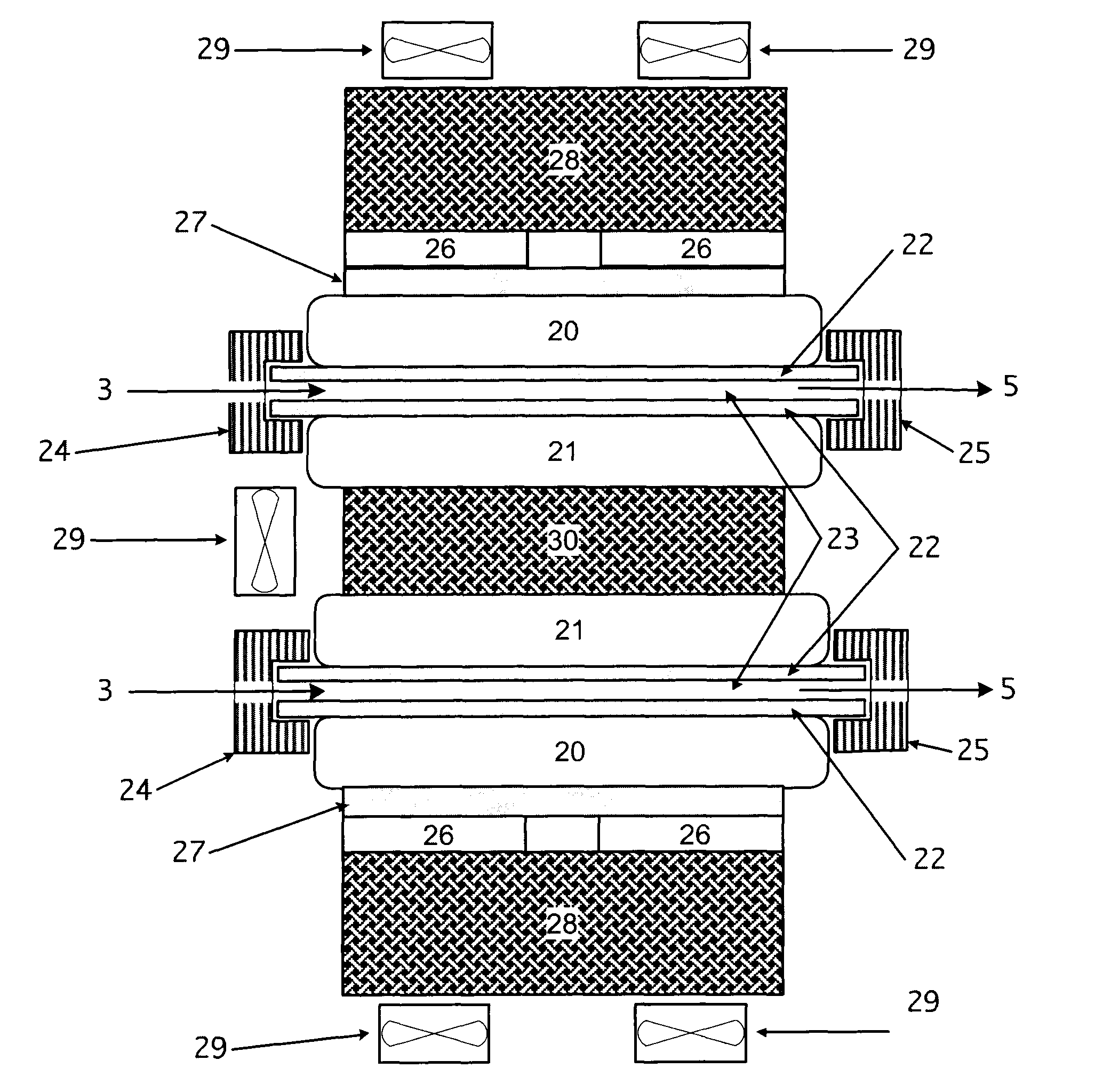
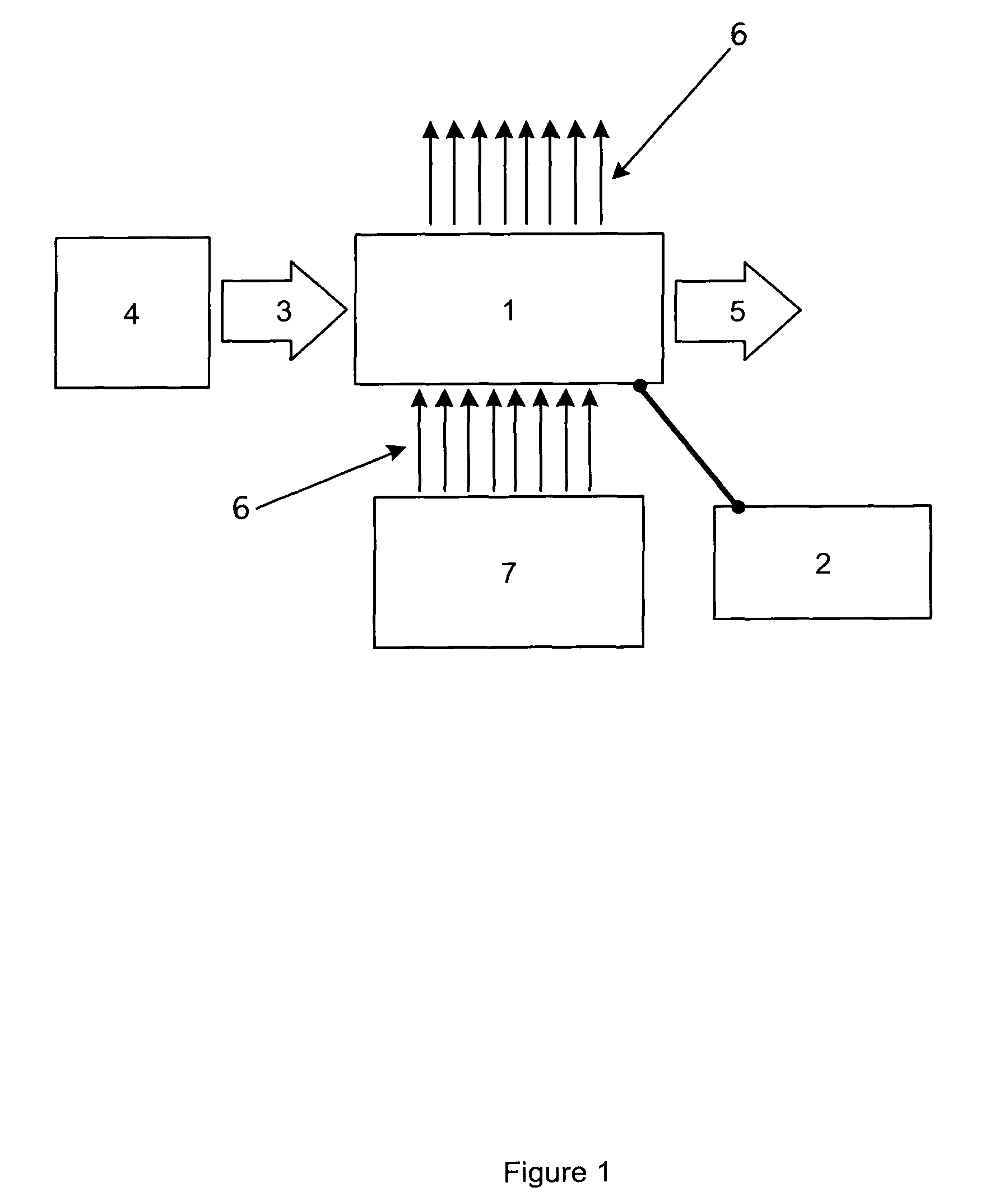
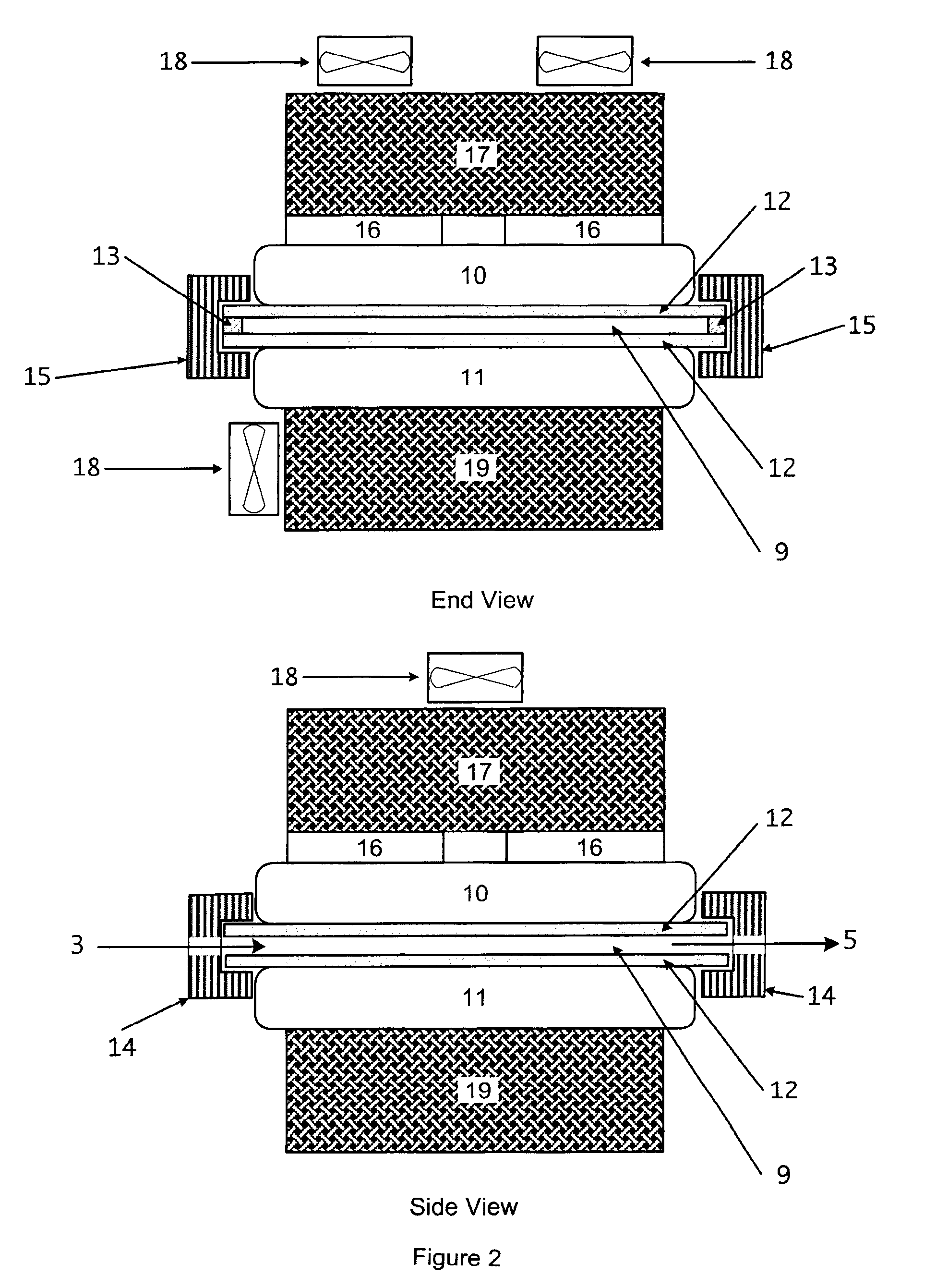
- A non-arcing, non-coronal-discharge cold-plasma ozone generator using ultra-short electrical pulses and a proprietary high-voltage pulse generator to create a uniform cold plasma at atmospheric pressure, eliminating arcs and UV radiation, and employing thick electrodes with dielectric layers and high-thermal conductivity alumina insulators for efficient ozone production.

Ozone generating system
PatentPendingIN202317003281A
Innovation
- An ozone generating system with a dielectric barrier tube made of quartz, using a plasma electrode and chaotically modulated sine wave voltage to establish resonance with plasma frequencies, allowing efficient ozone production from air without metal contamination and reducing power consumption.


Environmental Regulations for Ozone Applications
Environmental regulations governing ozone applications represent a complex framework that significantly impacts the selection between plasma and UV catalysis technologies for ozone production. The regulatory landscape varies considerably across different jurisdictions, with stringent controls established due to ozone's dual nature as both a beneficial industrial agent and a potential environmental hazard.
The United States Environmental Protection Agency (EPA) maintains strict ambient air quality standards for ground-level ozone, setting the National Ambient Air Quality Standard at 0.070 parts per million averaged over eight hours. This regulation directly influences industrial ozone production facilities, requiring comprehensive monitoring systems and emission controls regardless of the production method employed. Similar standards exist in the European Union under the Ambient Air Quality Directive, which establishes information and alert thresholds for ozone concentrations.
Occupational safety regulations present another critical consideration for ozone production technologies. The Occupational Safety and Health Administration (OSHA) sets permissible exposure limits of 0.1 ppm for an eight-hour time-weighted average, while the American Conference of Governmental Industrial Hygienists recommends even lower threshold limit values. These requirements necessitate robust containment systems and worker protection measures that may favor certain production technologies based on their operational characteristics and safety profiles.
Water treatment applications face distinct regulatory frameworks, particularly under the Safe Drinking Water Act in the United States and similar legislation globally. These regulations specify maximum residual disinfectant levels and disinfection byproduct formation rules that influence the choice between plasma and UV catalysis methods. The formation of bromate and other oxidation byproducts under different ozone production scenarios requires careful consideration of regulatory compliance costs.
International standards organizations, including the International Ozone Association and various national bodies, have established technical guidelines that affect equipment design and operational parameters. These standards often specify minimum ozone concentrations, purity requirements, and measurement protocols that may favor particular production technologies based on their inherent characteristics and controllability.
Emerging regulations addressing energy efficiency and carbon footprint considerations are increasingly influencing technology selection decisions. As governments implement stricter environmental performance standards, the energy consumption profiles of plasma versus UV catalysis systems become critical factors in regulatory compliance and long-term operational viability.
The United States Environmental Protection Agency (EPA) maintains strict ambient air quality standards for ground-level ozone, setting the National Ambient Air Quality Standard at 0.070 parts per million averaged over eight hours. This regulation directly influences industrial ozone production facilities, requiring comprehensive monitoring systems and emission controls regardless of the production method employed. Similar standards exist in the European Union under the Ambient Air Quality Directive, which establishes information and alert thresholds for ozone concentrations.
Occupational safety regulations present another critical consideration for ozone production technologies. The Occupational Safety and Health Administration (OSHA) sets permissible exposure limits of 0.1 ppm for an eight-hour time-weighted average, while the American Conference of Governmental Industrial Hygienists recommends even lower threshold limit values. These requirements necessitate robust containment systems and worker protection measures that may favor certain production technologies based on their operational characteristics and safety profiles.
Water treatment applications face distinct regulatory frameworks, particularly under the Safe Drinking Water Act in the United States and similar legislation globally. These regulations specify maximum residual disinfectant levels and disinfection byproduct formation rules that influence the choice between plasma and UV catalysis methods. The formation of bromate and other oxidation byproducts under different ozone production scenarios requires careful consideration of regulatory compliance costs.
International standards organizations, including the International Ozone Association and various national bodies, have established technical guidelines that affect equipment design and operational parameters. These standards often specify minimum ozone concentrations, purity requirements, and measurement protocols that may favor particular production technologies based on their inherent characteristics and controllability.
Emerging regulations addressing energy efficiency and carbon footprint considerations are increasingly influencing technology selection decisions. As governments implement stricter environmental performance standards, the energy consumption profiles of plasma versus UV catalysis systems become critical factors in regulatory compliance and long-term operational viability.
Energy Efficiency Comparison Framework
Energy efficiency represents a critical evaluation criterion when comparing plasma-based and UV catalysis technologies for ozone production. The framework for assessing energy efficiency must encompass multiple dimensions including power consumption per unit of ozone generated, system operational requirements, and overall energy conversion effectiveness. This comparative analysis requires standardized metrics that account for the fundamental differences in energy utilization patterns between these two distinct technological approaches.
Plasma-based ozone generation systems typically demonstrate energy efficiency ranging from 8-15 kWh per kilogram of ozone produced, depending on the specific plasma configuration and operational parameters. Corona discharge systems, the most prevalent plasma technology, achieve optimal efficiency at specific voltage and frequency combinations. The energy conversion process involves direct electrical discharge through oxygen-containing gas streams, with efficiency heavily influenced by electrode design, gap spacing, and cooling mechanisms.
UV catalysis systems present a different energy profile, with efficiency measurements ranging from 12-25 kWh per kilogram of ozone generated. These systems require energy for both UV lamp operation and auxiliary components including cooling systems, air circulation, and catalyst maintenance. The photocatalytic process efficiency depends on UV light intensity, wavelength optimization, catalyst surface area, and residence time of reactant gases within the reaction chamber.
The energy efficiency comparison framework must incorporate dynamic operational factors that significantly impact real-world performance. Plasma systems exhibit rapid startup capabilities and instantaneous ozone production response, while UV catalysis systems require warm-up periods and steady-state operation for optimal efficiency. Load variation tolerance differs substantially between technologies, with plasma systems maintaining relatively stable efficiency across varying production demands.
Temperature management represents a crucial energy consideration in both technologies. Plasma systems generate significant heat during operation, requiring active cooling that can consume 15-25% of total system energy. UV catalysis systems also produce thermal energy, but the heat distribution patterns and cooling requirements differ, affecting overall energy balance calculations.
System longevity and maintenance energy requirements form integral components of the efficiency framework. Plasma electrode degradation necessitates periodic replacement and system recalibration, while UV lamp aging and catalyst deactivation impact long-term energy performance in photocatalytic systems. These factors must be incorporated into lifecycle energy efficiency assessments to provide comprehensive comparative analysis.
Plasma-based ozone generation systems typically demonstrate energy efficiency ranging from 8-15 kWh per kilogram of ozone produced, depending on the specific plasma configuration and operational parameters. Corona discharge systems, the most prevalent plasma technology, achieve optimal efficiency at specific voltage and frequency combinations. The energy conversion process involves direct electrical discharge through oxygen-containing gas streams, with efficiency heavily influenced by electrode design, gap spacing, and cooling mechanisms.
UV catalysis systems present a different energy profile, with efficiency measurements ranging from 12-25 kWh per kilogram of ozone generated. These systems require energy for both UV lamp operation and auxiliary components including cooling systems, air circulation, and catalyst maintenance. The photocatalytic process efficiency depends on UV light intensity, wavelength optimization, catalyst surface area, and residence time of reactant gases within the reaction chamber.
The energy efficiency comparison framework must incorporate dynamic operational factors that significantly impact real-world performance. Plasma systems exhibit rapid startup capabilities and instantaneous ozone production response, while UV catalysis systems require warm-up periods and steady-state operation for optimal efficiency. Load variation tolerance differs substantially between technologies, with plasma systems maintaining relatively stable efficiency across varying production demands.
Temperature management represents a crucial energy consideration in both technologies. Plasma systems generate significant heat during operation, requiring active cooling that can consume 15-25% of total system energy. UV catalysis systems also produce thermal energy, but the heat distribution patterns and cooling requirements differ, affecting overall energy balance calculations.
System longevity and maintenance energy requirements form integral components of the efficiency framework. Plasma electrode degradation necessitates periodic replacement and system recalibration, while UV lamp aging and catalyst deactivation impact long-term energy performance in photocatalytic systems. These factors must be incorporated into lifecycle energy efficiency assessments to provide comprehensive comparative analysis.
Unlock deeper insights with Patsnap Eureka Quick Research — get a full tech report to explore trends and direct your research. Try now!
Generate Your Research Report Instantly with AI Agent
Supercharge your innovation with Patsnap Eureka AI Agent Platform!