

Comparing Efficiency: Plasma Catalysis vs Conventional Steam Reforming
APR 14, 20269 MIN READ
Generate Your Research Report Instantly with AI Agent
PatSnap Eureka helps you evaluate technical feasibility & market potential.
Plasma Catalysis and Steam Reforming Background and Objectives
Hydrogen production has emerged as a critical technology in the global transition toward sustainable energy systems, driven by increasing demands for clean fuel alternatives and industrial decarbonization initiatives. Traditional steam reforming processes have dominated hydrogen production for decades, utilizing high-temperature steam to convert hydrocarbons into hydrogen and carbon monoxide. However, this conventional approach faces significant challenges including high energy consumption, substantial carbon emissions, and operational complexity requiring extensive infrastructure.
The evolution of hydrogen production technologies has witnessed remarkable developments over the past century. Steam reforming technology matured in the 1930s and became the industrial standard by the 1950s, establishing itself as the primary method for large-scale hydrogen generation. The process typically operates at temperatures between 700-1000°C with steam-to-carbon ratios of 2.5-3.0, achieving hydrogen yields of approximately 65-75% on a lower heating value basis.
Plasma catalysis represents a revolutionary advancement in this field, emerging from fundamental plasma physics research in the 1960s and gaining industrial attention in the 1990s. This technology combines the unique properties of plasma-generated reactive species with catalytic processes, enabling hydrogen production at significantly lower temperatures ranging from 200-600°C. The plasma environment creates highly energetic electrons, ions, and radicals that can break molecular bonds more efficiently than conventional thermal processes.
The primary objective of comparing these technologies centers on evaluating their respective energy efficiencies, environmental impacts, and economic viability. Steam reforming efficiency is fundamentally limited by thermodynamic constraints and heat transfer limitations, while plasma catalysis offers potential advantages through non-equilibrium reaction pathways and selective energy delivery to specific molecular bonds.
Key performance metrics for this comparison include energy conversion efficiency, carbon footprint per unit of hydrogen produced, capital and operational expenditures, process scalability, and technological maturity. Steam reforming typically achieves overall thermal efficiencies of 70-80%, while plasma catalysis systems demonstrate varying efficiencies depending on plasma generation methods and catalyst integration strategies.
The strategic importance of this comparison extends beyond technical performance, encompassing broader implications for industrial hydrogen supply chains, renewable energy integration, and climate change mitigation strategies. Understanding the relative merits of these approaches is essential for guiding future research investments and industrial deployment decisions in the rapidly evolving hydrogen economy.
The evolution of hydrogen production technologies has witnessed remarkable developments over the past century. Steam reforming technology matured in the 1930s and became the industrial standard by the 1950s, establishing itself as the primary method for large-scale hydrogen generation. The process typically operates at temperatures between 700-1000°C with steam-to-carbon ratios of 2.5-3.0, achieving hydrogen yields of approximately 65-75% on a lower heating value basis.
Plasma catalysis represents a revolutionary advancement in this field, emerging from fundamental plasma physics research in the 1960s and gaining industrial attention in the 1990s. This technology combines the unique properties of plasma-generated reactive species with catalytic processes, enabling hydrogen production at significantly lower temperatures ranging from 200-600°C. The plasma environment creates highly energetic electrons, ions, and radicals that can break molecular bonds more efficiently than conventional thermal processes.
The primary objective of comparing these technologies centers on evaluating their respective energy efficiencies, environmental impacts, and economic viability. Steam reforming efficiency is fundamentally limited by thermodynamic constraints and heat transfer limitations, while plasma catalysis offers potential advantages through non-equilibrium reaction pathways and selective energy delivery to specific molecular bonds.
Key performance metrics for this comparison include energy conversion efficiency, carbon footprint per unit of hydrogen produced, capital and operational expenditures, process scalability, and technological maturity. Steam reforming typically achieves overall thermal efficiencies of 70-80%, while plasma catalysis systems demonstrate varying efficiencies depending on plasma generation methods and catalyst integration strategies.
The strategic importance of this comparison extends beyond technical performance, encompassing broader implications for industrial hydrogen supply chains, renewable energy integration, and climate change mitigation strategies. Understanding the relative merits of these approaches is essential for guiding future research investments and industrial deployment decisions in the rapidly evolving hydrogen economy.
Market Demand for Advanced Hydrogen Production Technologies
The global hydrogen market is experiencing unprecedented growth driven by the urgent need for decarbonization across multiple industrial sectors. Traditional hydrogen production methods, primarily steam methane reforming, face increasing scrutiny due to their substantial carbon footprint and energy intensity. This has created a compelling market opportunity for advanced hydrogen production technologies that can deliver superior efficiency, reduced environmental impact, and enhanced economic viability.
Industrial applications represent the largest segment of hydrogen demand, with refineries, ammonia production, and steel manufacturing requiring substantial volumes of high-purity hydrogen. These sectors are increasingly pressured by environmental regulations and corporate sustainability commitments to adopt cleaner production methods. The automotive industry's transition toward fuel cell vehicles has further amplified demand for cost-effective hydrogen production solutions, particularly in regions with aggressive zero-emission vehicle mandates.
Energy storage applications are emerging as a significant growth driver, with hydrogen serving as a critical component in grid-scale energy storage systems and power-to-gas technologies. Utilities and renewable energy developers are actively seeking efficient hydrogen production methods that can effectively utilize excess renewable electricity during peak generation periods. This application requires production technologies capable of rapid response times and high conversion efficiencies to maximize economic returns.
The chemical industry presents substantial opportunities for advanced hydrogen production technologies, particularly in processes requiring precise control over production parameters and product quality. Plasma catalysis technologies are gaining attention for their ability to operate at lower temperatures while maintaining high conversion rates, potentially offering significant advantages over conventional steam reforming in specific chemical synthesis applications.
Government policies and regulatory frameworks are creating favorable market conditions for advanced hydrogen production technologies. Carbon pricing mechanisms, renewable energy incentives, and hydrogen economy development programs are shifting the economic balance toward more efficient and environmentally friendly production methods. These policy drivers are particularly strong in regions with ambitious climate targets and established industrial hydrogen consumption.
Market demand is increasingly focused on production technologies that can demonstrate clear advantages in energy efficiency, operational flexibility, and total cost of ownership compared to conventional methods. The ability to integrate with renewable energy sources and provide rapid startup capabilities has become a critical differentiator in technology selection processes across various industrial applications.
Industrial applications represent the largest segment of hydrogen demand, with refineries, ammonia production, and steel manufacturing requiring substantial volumes of high-purity hydrogen. These sectors are increasingly pressured by environmental regulations and corporate sustainability commitments to adopt cleaner production methods. The automotive industry's transition toward fuel cell vehicles has further amplified demand for cost-effective hydrogen production solutions, particularly in regions with aggressive zero-emission vehicle mandates.
Energy storage applications are emerging as a significant growth driver, with hydrogen serving as a critical component in grid-scale energy storage systems and power-to-gas technologies. Utilities and renewable energy developers are actively seeking efficient hydrogen production methods that can effectively utilize excess renewable electricity during peak generation periods. This application requires production technologies capable of rapid response times and high conversion efficiencies to maximize economic returns.
The chemical industry presents substantial opportunities for advanced hydrogen production technologies, particularly in processes requiring precise control over production parameters and product quality. Plasma catalysis technologies are gaining attention for their ability to operate at lower temperatures while maintaining high conversion rates, potentially offering significant advantages over conventional steam reforming in specific chemical synthesis applications.
Government policies and regulatory frameworks are creating favorable market conditions for advanced hydrogen production technologies. Carbon pricing mechanisms, renewable energy incentives, and hydrogen economy development programs are shifting the economic balance toward more efficient and environmentally friendly production methods. These policy drivers are particularly strong in regions with ambitious climate targets and established industrial hydrogen consumption.
Market demand is increasingly focused on production technologies that can demonstrate clear advantages in energy efficiency, operational flexibility, and total cost of ownership compared to conventional methods. The ability to integrate with renewable energy sources and provide rapid startup capabilities has become a critical differentiator in technology selection processes across various industrial applications.
Current State and Challenges in Plasma vs Steam Reforming
Conventional steam reforming has dominated hydrogen production for decades, representing approximately 95% of global hydrogen manufacturing capacity. This mature technology operates at temperatures between 800-1000°C with pressures ranging from 15-30 bar, utilizing nickel-based catalysts to convert hydrocarbons into hydrogen and carbon monoxide. The process demonstrates high conversion efficiency rates of 70-85% and benefits from well-established infrastructure and operational expertise across industrial facilities worldwide.
Plasma catalysis has emerged as a promising alternative technology, operating at significantly lower temperatures of 200-600°C while maintaining comparable conversion rates. Non-thermal plasma systems generate reactive species through electrical discharge, enabling hydrocarbon reformation under milder conditions. Current plasma-assisted reforming systems achieve energy efficiencies of 60-75%, with recent laboratory demonstrations showing potential for improvement through optimized reactor designs and plasma generation methods.
The primary challenge facing conventional steam reforming lies in its substantial energy requirements and carbon footprint. The high-temperature operation demands significant thermal input, typically accounting for 60-70% of total operational costs. Additionally, the process generates substantial CO2 emissions, producing approximately 9-12 kg of CO2 per kg of hydrogen, creating environmental sustainability concerns amid increasing carbon regulation pressures.
Plasma catalysis confronts distinct technical obstacles, particularly in scaling from laboratory to industrial applications. Power consumption efficiency remains a critical concern, as plasma generation requires substantial electrical energy input. Current plasma systems exhibit energy conversion efficiencies of 15-25% for plasma generation itself, significantly impacting overall process economics. Electrode durability and plasma stability under continuous operation present additional engineering challenges.
Catalyst deactivation affects both technologies but manifests differently. Steam reforming catalysts suffer from carbon deposition, sulfur poisoning, and sintering at high temperatures, requiring periodic regeneration cycles. Plasma systems experience catalyst degradation through plasma bombardment and reactive species interaction, though lower operating temperatures reduce thermal sintering effects.
Economic viability varies significantly between the technologies. Steam reforming benefits from mature supply chains and established manufacturing processes, resulting in lower capital expenditure requirements of $1,000-1,500 per kW capacity. Plasma systems currently demand higher initial investments of $2,000-3,500 per kW due to specialized equipment and power electronics requirements, though operational flexibility and reduced thermal infrastructure needs offer potential cost advantages.
Process control complexity differs substantially between approaches. Steam reforming relies on well-understood thermodynamic principles with established control strategies, while plasma systems require sophisticated electrical parameter management and real-time plasma monitoring capabilities that are still under development for industrial applications.
Plasma catalysis has emerged as a promising alternative technology, operating at significantly lower temperatures of 200-600°C while maintaining comparable conversion rates. Non-thermal plasma systems generate reactive species through electrical discharge, enabling hydrocarbon reformation under milder conditions. Current plasma-assisted reforming systems achieve energy efficiencies of 60-75%, with recent laboratory demonstrations showing potential for improvement through optimized reactor designs and plasma generation methods.
The primary challenge facing conventional steam reforming lies in its substantial energy requirements and carbon footprint. The high-temperature operation demands significant thermal input, typically accounting for 60-70% of total operational costs. Additionally, the process generates substantial CO2 emissions, producing approximately 9-12 kg of CO2 per kg of hydrogen, creating environmental sustainability concerns amid increasing carbon regulation pressures.
Plasma catalysis confronts distinct technical obstacles, particularly in scaling from laboratory to industrial applications. Power consumption efficiency remains a critical concern, as plasma generation requires substantial electrical energy input. Current plasma systems exhibit energy conversion efficiencies of 15-25% for plasma generation itself, significantly impacting overall process economics. Electrode durability and plasma stability under continuous operation present additional engineering challenges.
Catalyst deactivation affects both technologies but manifests differently. Steam reforming catalysts suffer from carbon deposition, sulfur poisoning, and sintering at high temperatures, requiring periodic regeneration cycles. Plasma systems experience catalyst degradation through plasma bombardment and reactive species interaction, though lower operating temperatures reduce thermal sintering effects.
Economic viability varies significantly between the technologies. Steam reforming benefits from mature supply chains and established manufacturing processes, resulting in lower capital expenditure requirements of $1,000-1,500 per kW capacity. Plasma systems currently demand higher initial investments of $2,000-3,500 per kW due to specialized equipment and power electronics requirements, though operational flexibility and reduced thermal infrastructure needs offer potential cost advantages.
Process control complexity differs substantially between approaches. Steam reforming relies on well-understood thermodynamic principles with established control strategies, while plasma systems require sophisticated electrical parameter management and real-time plasma monitoring capabilities that are still under development for industrial applications.
Current Technical Solutions for Plasma and Steam Reforming
01 Plasma-assisted catalytic reforming systems
Integration of plasma technology with catalytic processes enhances steam reforming efficiency by activating reactant molecules and reducing reaction temperatures. Plasma discharge creates reactive species that facilitate hydrocarbon conversion and improve catalyst performance. This approach enables lower operating temperatures while maintaining high conversion rates and reduces energy consumption in reforming processes.- Plasma-assisted catalytic steam reforming systems: Integration of plasma technology with catalytic processes enhances steam reforming efficiency by activating reactants and reducing reaction temperatures. Plasma discharge creates highly reactive species that facilitate the breaking of chemical bonds in hydrocarbons, improving conversion rates and reducing energy consumption. The synergistic effect between plasma and catalysts enables more efficient hydrogen production from various feedstocks including methane and other hydrocarbons.
- Catalyst design and composition for plasma-enhanced reforming: Specialized catalyst formulations are developed to work synergistically with plasma conditions, incorporating metals and support materials that enhance activity under plasma exposure. The catalyst composition is optimized to withstand plasma environments while maintaining high activity and selectivity. Noble metals and transition metal catalysts are designed with specific surface properties to maximize interaction with plasma-generated species and improve overall reforming efficiency.
- Reactor configuration and plasma generation methods: Various reactor designs integrate plasma generation systems with reforming chambers to optimize contact between plasma, catalyst, and reactants. Different plasma generation techniques including dielectric barrier discharge, corona discharge, and microwave plasma are employed to achieve optimal energy transfer and reaction conditions. The reactor geometry and electrode configuration are designed to ensure uniform plasma distribution and maximize catalytic surface exposure to activated species.
- Process parameters optimization for enhanced efficiency: Operating conditions such as temperature, pressure, steam-to-carbon ratio, and plasma power are systematically optimized to maximize reforming efficiency and hydrogen yield. The balance between thermal catalytic reactions and plasma-induced reactions is controlled to achieve optimal conversion while minimizing energy input. Process control strategies are implemented to maintain stable operation and prevent catalyst deactivation under plasma conditions.
- Energy efficiency and carbon conversion improvements: Methods to enhance overall energy efficiency focus on reducing specific energy requirements while maintaining high conversion rates and product selectivity. Techniques include heat integration, plasma power optimization, and catalyst regeneration strategies to improve carbon conversion efficiency. The combination of plasma activation and catalytic processes enables lower operating temperatures compared to conventional steam reforming, resulting in improved energy economics and reduced carbon footprint.
02 Catalyst design for plasma-enhanced reforming
Specialized catalyst formulations optimized for plasma-assisted reforming processes improve hydrogen production and conversion efficiency. These catalysts are designed to work synergistically with plasma discharge, featuring enhanced surface properties and active sites that respond to plasma-generated species. The catalyst compositions demonstrate improved resistance to coking and extended operational lifetime under plasma conditions.Expand Specific Solutions03 Steam-to-carbon ratio optimization in plasma reforming
Control of steam-to-carbon ratios in plasma-assisted reforming systems significantly affects conversion efficiency and product selectivity. Optimized steam injection methods combined with plasma activation enhance reforming reactions while minimizing carbon deposition. This approach balances energy input, reactant utilization, and product yield to maximize overall process efficiency.Expand Specific Solutions04 Reactor configuration for plasma catalytic reforming
Novel reactor designs integrate plasma generation zones with catalytic beds to optimize contact between plasma-activated species and catalyst surfaces. These configurations include dielectric barrier discharge reactors, gliding arc reactors, and hybrid systems that enhance mass transfer and reaction kinetics. The reactor geometry and electrode arrangements are optimized to maximize plasma-catalyst interaction and improve energy efficiency.Expand Specific Solutions05 Process parameter control for enhanced reforming efficiency
Systematic control of operating parameters including plasma power, gas flow rates, temperature, and pressure optimizes steam reforming performance. Advanced monitoring and control systems adjust these parameters in real-time to maintain optimal conditions for hydrogen production and hydrocarbon conversion. This integrated approach maximizes energy efficiency while ensuring stable operation and high product quality.Expand Specific Solutions
Key Players in Plasma Catalysis and Steam Reforming Industry
The plasma catalysis versus conventional steam reforming technology landscape represents an emerging sector transitioning from research-intensive development to early commercialization phases. The market remains relatively nascent with significant growth potential as industries seek more efficient hydrogen production methods. Technology maturity varies considerably across market participants, with established industrial giants like Air Products & Chemicals, ExxonMobil Technology & Engineering, and Topsoe A/S leveraging decades of conventional steam reforming expertise while exploring plasma catalysis innovations. Research institutions including Beihang University, South China University of Technology, and Industrial Technology Research Institute are advancing fundamental plasma catalysis science. Specialized technology companies such as InEnTec and H2 PowerTech are developing commercial plasma-based solutions, while automotive manufacturers like Nissan and Volvo are investigating applications for sustainable fuel production. The competitive landscape suggests a technology in transition, where conventional methods dominate current markets but plasma catalysis offers promising efficiency advantages driving substantial R&D investment across academic, industrial, and startup ecosystems.
Air Products & Chemicals, Inc.
Technical Solution: Air Products has developed advanced plasma-assisted catalytic reforming technology that integrates non-thermal plasma with traditional steam reforming catalysts. Their system operates at lower temperatures (400-600°C) compared to conventional steam reforming (800-900°C), achieving 85-90% hydrogen conversion efficiency. The plasma activation enhances catalyst performance by creating reactive species and reducing coking formation. Their technology demonstrates 30% energy savings compared to traditional methods while maintaining high hydrogen purity levels above 99.9%. The company has implemented pilot-scale demonstrations showing improved catalyst longevity and reduced maintenance requirements.
Strengths: Significant energy reduction, lower operating temperatures, reduced coking issues. Weaknesses: Higher initial capital investment, plasma equipment complexity, limited large-scale commercial deployment.
Topsoe A/S
Technical Solution: Topsoe has developed proprietary plasma-enhanced steam reforming catalysts that combine their traditional reforming expertise with plasma technology. Their SPARG (Steam Plasma Assisted Reforming of Gas) process utilizes microwave plasma to activate methane at temperatures 200°C lower than conventional processes. The technology achieves comparable conversion rates (92-95%) while reducing energy consumption by 25%. Their catalyst formulations are specifically designed to work synergistically with plasma activation, featuring enhanced metal dispersion and improved resistance to sintering. The system demonstrates superior performance in handling sulfur-containing feedstocks and shows 40% longer catalyst life compared to traditional steam reforming.
Strengths: Proven catalyst expertise, reduced energy consumption, improved sulfur tolerance. Weaknesses: Technology still in development phase, requires specialized plasma equipment, higher operational complexity.
Core Patents in Plasma Catalysis Efficiency Enhancement
Plasma-assisted catalytic reforming apparatus and method
PatentInactiveUS20120167464A1
Innovation
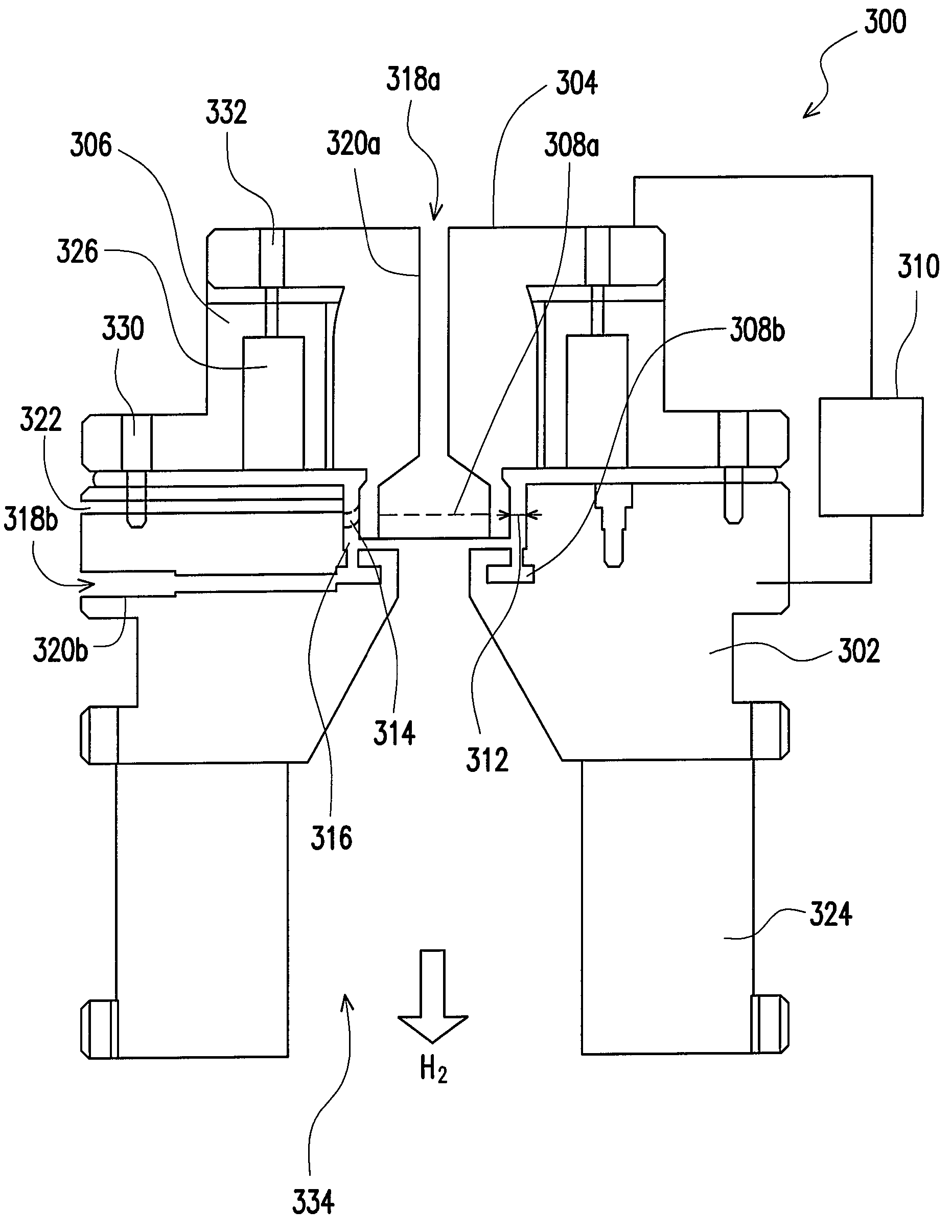
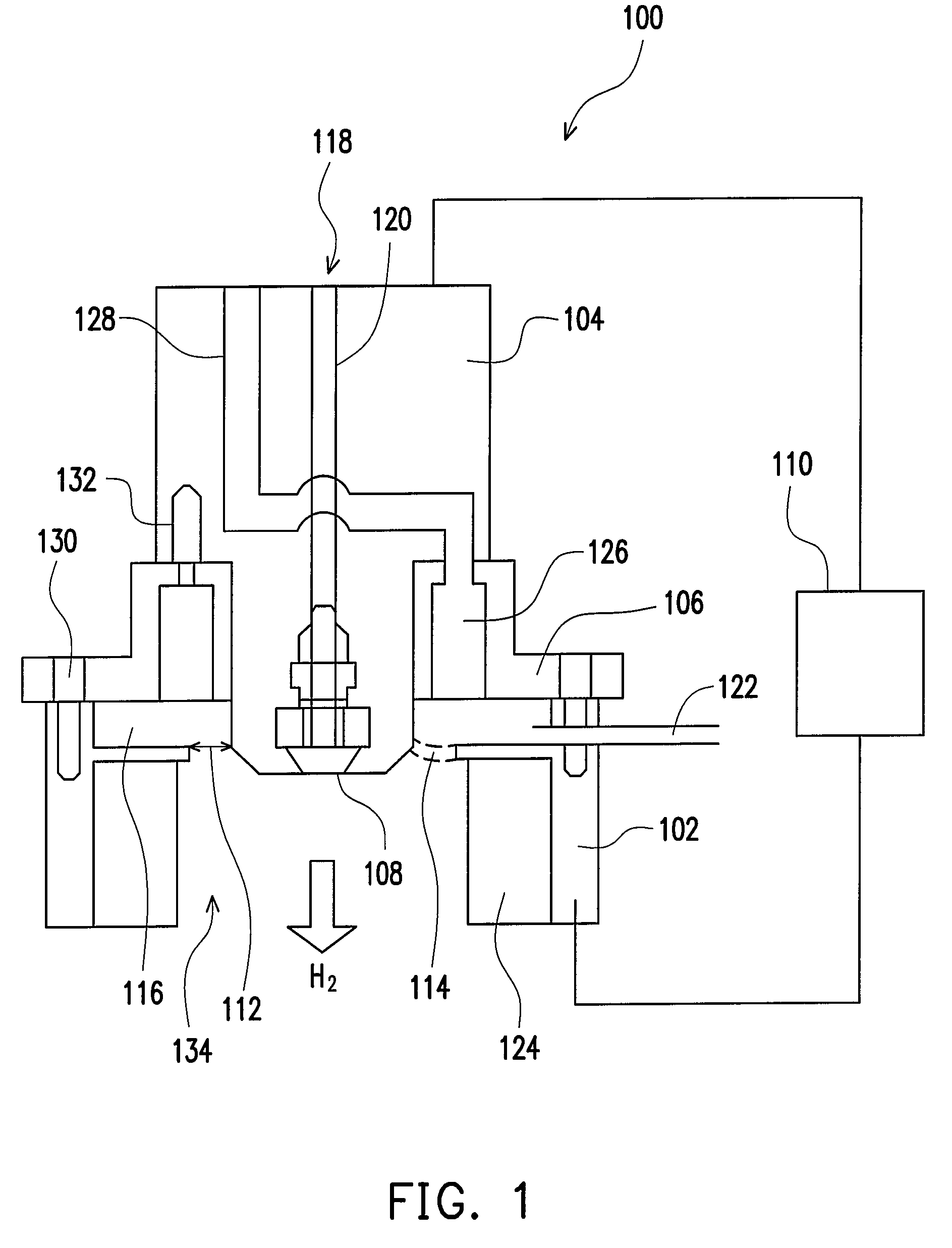
- A plasma-assisted catalytic reforming apparatus with a high-temperature reactor enclosed in a pre-heater and a recirculation pipe to effectively utilize heat sources, reducing the apparatus' volume and improving heating efficiency by atomizing hydrocarbon liquids and using a plasma reactor to generate quasi-neutral mixed gases for reforming reactions.


Plasma reformer and internal combustion engine system having the same
PatentActiveUS7591242B2
Innovation
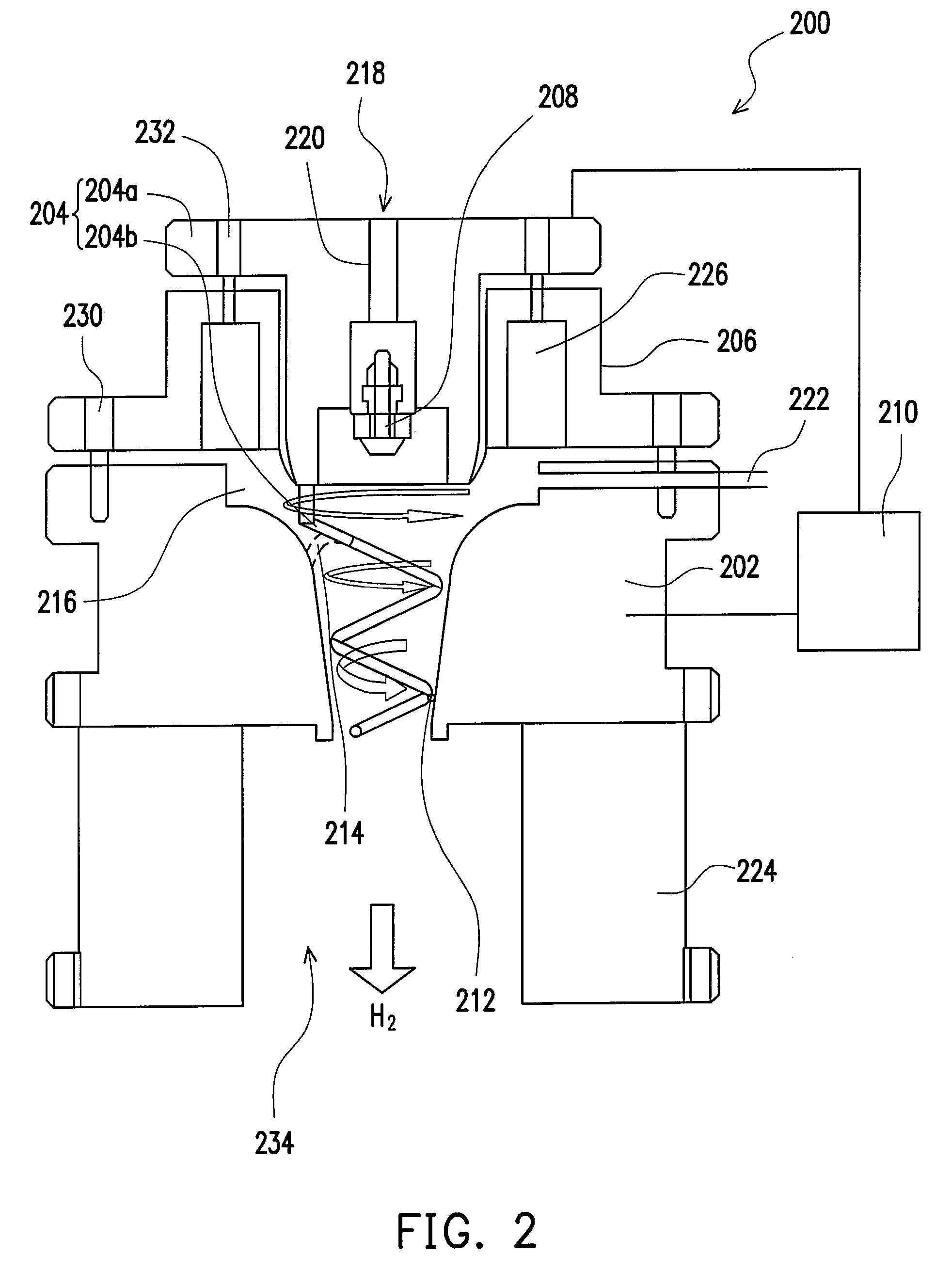
- A plasma reformer design utilizing a high voltage, low current output to create a dynamic arc that slips along a vortex gas flow, increasing the uniformity and efficiency of plasma formation, thereby reducing electrode erosion and increasing the lifetime of electrode materials while achieving a large-scale atmospheric pressure plasma region with lower power consumption.

Energy Policy Impact on Hydrogen Production Technologies
Energy policies worldwide are increasingly shaping the trajectory of hydrogen production technologies, with governments implementing strategic frameworks that directly influence the competitive landscape between plasma catalysis and conventional steam reforming. The European Union's Hydrogen Strategy for a Climate-Neutral Europe has allocated substantial funding toward innovative production methods, creating regulatory incentives that favor technologies with lower carbon footprints and higher energy efficiency ratios.
Carbon pricing mechanisms established through policies such as the EU Emissions Trading System and California's Cap-and-Trade Program are fundamentally altering the economic viability calculations for hydrogen production technologies. These frameworks impose significant costs on CO2-intensive processes, making conventional steam reforming increasingly expensive while providing economic advantages to plasma catalysis systems that demonstrate superior energy conversion efficiency and reduced greenhouse gas emissions.
Government research and development funding priorities are heavily influencing technological advancement trajectories. The United States Department of Energy's Hydrogen Program Plan 2020 specifically targets breakthrough technologies that can achieve production costs below $2 per kilogram, driving substantial investments toward plasma-based systems that show promise for meeting these efficiency benchmarks. Similarly, Japan's Strategic Innovation Program has designated plasma catalysis as a priority technology area, accelerating development timelines through targeted financial support.
Renewable energy integration mandates are creating policy environments that favor hydrogen production technologies capable of operating efficiently with intermittent power sources. Plasma catalysis systems, with their rapid startup capabilities and flexible operational parameters, align more effectively with these policy requirements compared to conventional steam reforming processes that require consistent thermal input and longer stabilization periods.
International trade policies and technology transfer regulations are also shaping the competitive dynamics between these production methods. Export control restrictions on advanced plasma technologies in certain jurisdictions are influencing global deployment patterns, while bilateral cooperation agreements are facilitating knowledge sharing and joint development initiatives that accelerate the maturation of more efficient hydrogen production approaches.
Carbon pricing mechanisms established through policies such as the EU Emissions Trading System and California's Cap-and-Trade Program are fundamentally altering the economic viability calculations for hydrogen production technologies. These frameworks impose significant costs on CO2-intensive processes, making conventional steam reforming increasingly expensive while providing economic advantages to plasma catalysis systems that demonstrate superior energy conversion efficiency and reduced greenhouse gas emissions.
Government research and development funding priorities are heavily influencing technological advancement trajectories. The United States Department of Energy's Hydrogen Program Plan 2020 specifically targets breakthrough technologies that can achieve production costs below $2 per kilogram, driving substantial investments toward plasma-based systems that show promise for meeting these efficiency benchmarks. Similarly, Japan's Strategic Innovation Program has designated plasma catalysis as a priority technology area, accelerating development timelines through targeted financial support.
Renewable energy integration mandates are creating policy environments that favor hydrogen production technologies capable of operating efficiently with intermittent power sources. Plasma catalysis systems, with their rapid startup capabilities and flexible operational parameters, align more effectively with these policy requirements compared to conventional steam reforming processes that require consistent thermal input and longer stabilization periods.
International trade policies and technology transfer regulations are also shaping the competitive dynamics between these production methods. Export control restrictions on advanced plasma technologies in certain jurisdictions are influencing global deployment patterns, while bilateral cooperation agreements are facilitating knowledge sharing and joint development initiatives that accelerate the maturation of more efficient hydrogen production approaches.
Environmental Assessment of Plasma vs Steam Reforming
The environmental implications of plasma catalysis versus conventional steam reforming present distinct profiles across multiple assessment dimensions. Conventional steam reforming operates at temperatures between 800-900°C with significant energy requirements, typically sourced from fossil fuel combustion, resulting in substantial direct CO2 emissions. The process generates approximately 9-10 kg of CO2 per kg of hydrogen produced, including both process emissions and energy-related emissions from heating requirements.
Plasma catalysis demonstrates superior environmental performance through reduced operating temperatures of 300-600°C, enabling integration with renewable electricity sources. This technology can achieve carbon neutrality when powered by clean energy, with CO2 emissions potentially reduced by 60-80% compared to conventional methods. The lower thermal requirements translate to decreased overall energy consumption and reduced thermal pollution.
Water consumption patterns differ significantly between technologies. Steam reforming requires substantial water input for steam generation and cooling systems, with typical consumption rates of 15-20 liters per kg of hydrogen. Plasma processes utilize water more efficiently, reducing consumption by approximately 40-50% through optimized reaction pathways and reduced cooling requirements.
Air quality impacts favor plasma technology due to elimination of combustion-based heating. Conventional steam reforming generates nitrogen oxides, sulfur compounds, and particulate matter from furnace operations. Plasma systems produce minimal air pollutants, particularly when integrated with renewable energy infrastructure.
Waste heat management presents opportunities in both technologies. Steam reforming generates significant waste heat requiring extensive cooling systems, while plasma processes produce lower-grade waste heat more suitable for integration with industrial heating applications. Life cycle assessments indicate plasma catalysis achieves 25-35% lower environmental impact scores across most categories, including climate change potential, acidification, and resource depletion metrics.
Plasma catalysis demonstrates superior environmental performance through reduced operating temperatures of 300-600°C, enabling integration with renewable electricity sources. This technology can achieve carbon neutrality when powered by clean energy, with CO2 emissions potentially reduced by 60-80% compared to conventional methods. The lower thermal requirements translate to decreased overall energy consumption and reduced thermal pollution.
Water consumption patterns differ significantly between technologies. Steam reforming requires substantial water input for steam generation and cooling systems, with typical consumption rates of 15-20 liters per kg of hydrogen. Plasma processes utilize water more efficiently, reducing consumption by approximately 40-50% through optimized reaction pathways and reduced cooling requirements.
Air quality impacts favor plasma technology due to elimination of combustion-based heating. Conventional steam reforming generates nitrogen oxides, sulfur compounds, and particulate matter from furnace operations. Plasma systems produce minimal air pollutants, particularly when integrated with renewable energy infrastructure.
Waste heat management presents opportunities in both technologies. Steam reforming generates significant waste heat requiring extensive cooling systems, while plasma processes produce lower-grade waste heat more suitable for integration with industrial heating applications. Life cycle assessments indicate plasma catalysis achieves 25-35% lower environmental impact scores across most categories, including climate change potential, acidification, and resource depletion metrics.
Unlock deeper insights with PatSnap Eureka Quick Research — get a full tech report to explore trends and direct your research. Try now!
Generate Your Research Report Instantly with AI Agent
Supercharge your innovation with PatSnap Eureka AI Agent Platform!