

Optimize Wafer Level Packaging for 3D Stacking Reliability
JUN 3, 20269 MIN READ
Generate Your Research Report Instantly with AI Agent
PatSnap Eureka helps you evaluate technical feasibility & market potential.
Wafer Level 3D Stacking Background and Objectives
Wafer level packaging (WLP) has emerged as a critical technology in the semiconductor industry, representing a paradigm shift from traditional packaging approaches to more compact and efficient solutions. This technology enables the packaging of integrated circuits directly at the wafer level before individual die separation, significantly reducing package size and improving electrical performance. The evolution from 2D to 3D stacking architectures has been driven by the relentless demand for higher functionality, increased performance, and miniaturization in electronic devices.
The historical development of WLP technology began in the late 1990s with simple redistribution layer implementations and has progressively advanced to sophisticated 3D stacking configurations. Early implementations focused on single-layer redistribution and basic bump technologies, while modern approaches incorporate multiple metal layers, advanced through-silicon via (TSV) structures, and complex interconnect schemes. This evolution has been particularly accelerated by the limitations of Moore's Law scaling and the industry's need for alternative approaches to achieve performance improvements.
3D stacking technology represents the natural progression of WLP, enabling vertical integration of multiple functional dies within a single package. This approach offers significant advantages including reduced footprint, shorter interconnect lengths, improved signal integrity, and enhanced system performance. However, the transition to 3D architectures introduces unprecedented challenges in thermal management, mechanical stress distribution, and reliability assurance that were not present in traditional 2D packaging solutions.
The primary objective of optimizing wafer level packaging for 3D stacking reliability centers on addressing the fundamental reliability challenges inherent in vertical integration. These challenges include thermal-mechanical stress management across multiple stacked layers, ensuring robust electrical interconnections under various operating conditions, and maintaining long-term reliability under accelerated aging scenarios. The optimization efforts must balance performance requirements with manufacturability constraints while ensuring cost-effective production scalability.
Current industry trends indicate a strong push toward heterogeneous integration, where different technologies and materials are combined within 3D stacked configurations. This trend necessitates comprehensive reliability optimization strategies that account for material property mismatches, coefficient of thermal expansion differences, and varying stress distributions across the stacked structure. The ultimate goal is to achieve reliable 3D stacked packages that can withstand demanding operational environments while maintaining electrical performance and mechanical integrity throughout their intended service life.
The historical development of WLP technology began in the late 1990s with simple redistribution layer implementations and has progressively advanced to sophisticated 3D stacking configurations. Early implementations focused on single-layer redistribution and basic bump technologies, while modern approaches incorporate multiple metal layers, advanced through-silicon via (TSV) structures, and complex interconnect schemes. This evolution has been particularly accelerated by the limitations of Moore's Law scaling and the industry's need for alternative approaches to achieve performance improvements.
3D stacking technology represents the natural progression of WLP, enabling vertical integration of multiple functional dies within a single package. This approach offers significant advantages including reduced footprint, shorter interconnect lengths, improved signal integrity, and enhanced system performance. However, the transition to 3D architectures introduces unprecedented challenges in thermal management, mechanical stress distribution, and reliability assurance that were not present in traditional 2D packaging solutions.
The primary objective of optimizing wafer level packaging for 3D stacking reliability centers on addressing the fundamental reliability challenges inherent in vertical integration. These challenges include thermal-mechanical stress management across multiple stacked layers, ensuring robust electrical interconnections under various operating conditions, and maintaining long-term reliability under accelerated aging scenarios. The optimization efforts must balance performance requirements with manufacturability constraints while ensuring cost-effective production scalability.
Current industry trends indicate a strong push toward heterogeneous integration, where different technologies and materials are combined within 3D stacked configurations. This trend necessitates comprehensive reliability optimization strategies that account for material property mismatches, coefficient of thermal expansion differences, and varying stress distributions across the stacked structure. The ultimate goal is to achieve reliable 3D stacked packages that can withstand demanding operational environments while maintaining electrical performance and mechanical integrity throughout their intended service life.
Market Demand for Advanced 3D Packaging Solutions
The semiconductor industry is experiencing unprecedented demand for advanced 3D packaging solutions, driven by the relentless pursuit of higher performance, increased functionality, and miniaturization across multiple technology sectors. Consumer electronics manufacturers are pushing the boundaries of device capabilities while maintaining compact form factors, creating substantial market pressure for innovative packaging technologies that can accommodate complex multi-chip architectures.
Data centers and cloud computing infrastructure represent one of the most significant growth drivers for advanced 3D packaging solutions. The exponential increase in data processing requirements, artificial intelligence workloads, and machine learning applications demands packaging technologies that can efficiently integrate high-performance processors, memory modules, and specialized accelerators within space-constrained environments. These applications require exceptional thermal management and electrical performance characteristics that traditional packaging approaches cannot adequately address.
The automotive industry's rapid transformation toward electrification and autonomous driving capabilities has created substantial demand for reliable 3D packaging solutions. Advanced driver assistance systems, electric vehicle power management units, and autonomous driving processors require packaging technologies that can withstand harsh operating environments while delivering consistent performance. The automotive sector's stringent reliability requirements and long product lifecycles make wafer-level 3D packaging optimization particularly critical for market acceptance.
Mobile device manufacturers continue to drive demand for advanced packaging solutions as they integrate increasingly sophisticated features into smartphones, tablets, and wearable devices. The convergence of high-resolution cameras, advanced sensors, wireless communication modules, and powerful processors within ultra-thin profiles necessitates packaging innovations that can maintain signal integrity while minimizing electromagnetic interference and thermal issues.
Emerging applications in Internet of Things devices, edge computing nodes, and 5G infrastructure equipment are creating new market segments that require cost-effective yet reliable 3D packaging solutions. These applications often operate in challenging environmental conditions and require long-term reliability, making packaging optimization essential for market viability.
The market demand is further intensified by the semiconductor industry's transition toward heterogeneous integration, where different chip technologies and materials must be combined within single packages. This trend requires advanced packaging solutions that can accommodate diverse thermal expansion coefficients, electrical characteristics, and manufacturing processes while maintaining overall system reliability and performance standards.
Data centers and cloud computing infrastructure represent one of the most significant growth drivers for advanced 3D packaging solutions. The exponential increase in data processing requirements, artificial intelligence workloads, and machine learning applications demands packaging technologies that can efficiently integrate high-performance processors, memory modules, and specialized accelerators within space-constrained environments. These applications require exceptional thermal management and electrical performance characteristics that traditional packaging approaches cannot adequately address.
The automotive industry's rapid transformation toward electrification and autonomous driving capabilities has created substantial demand for reliable 3D packaging solutions. Advanced driver assistance systems, electric vehicle power management units, and autonomous driving processors require packaging technologies that can withstand harsh operating environments while delivering consistent performance. The automotive sector's stringent reliability requirements and long product lifecycles make wafer-level 3D packaging optimization particularly critical for market acceptance.
Mobile device manufacturers continue to drive demand for advanced packaging solutions as they integrate increasingly sophisticated features into smartphones, tablets, and wearable devices. The convergence of high-resolution cameras, advanced sensors, wireless communication modules, and powerful processors within ultra-thin profiles necessitates packaging innovations that can maintain signal integrity while minimizing electromagnetic interference and thermal issues.
Emerging applications in Internet of Things devices, edge computing nodes, and 5G infrastructure equipment are creating new market segments that require cost-effective yet reliable 3D packaging solutions. These applications often operate in challenging environmental conditions and require long-term reliability, making packaging optimization essential for market viability.
The market demand is further intensified by the semiconductor industry's transition toward heterogeneous integration, where different chip technologies and materials must be combined within single packages. This trend requires advanced packaging solutions that can accommodate diverse thermal expansion coefficients, electrical characteristics, and manufacturing processes while maintaining overall system reliability and performance standards.
Current WLP 3D Stacking Reliability Challenges
Wafer Level Packaging (WLP) for 3D stacking faces significant reliability challenges that stem from the complex interplay of thermal, mechanical, and electrical stresses inherent in vertically integrated semiconductor architectures. The primary constraint lies in managing thermal dissipation across multiple stacked dies, where heat generation from lower layers creates cascading thermal effects that can compromise the performance and longevity of upper layers.
Thermal management represents the most critical challenge, as conventional heat dissipation pathways become severely limited in 3D configurations. The thermal resistance increases exponentially with each additional layer, leading to hotspot formation and thermal gradients that can exceed 50°C between bottom and top dies. This thermal accumulation not only affects device performance but also accelerates electromigration and creates differential thermal expansion that stresses interconnect structures.
Mechanical stress concentration at Through-Silicon Via (TSV) interfaces poses another fundamental reliability concern. The coefficient of thermal expansion mismatch between silicon, copper TSVs, and various dielectric materials creates significant mechanical stress during thermal cycling. These stresses manifest as keep-out zones around TSVs, limiting routing density and potentially causing delamination or cracking in the surrounding silicon substrate.
Electrical reliability challenges emerge from the increased complexity of power delivery networks and signal integrity issues in 3D architectures. Voltage drop across multiple stacking levels becomes more pronounced, while electromagnetic interference between adjacent layers can degrade signal quality. The extended current paths through TSVs introduce additional resistance and inductance that complicate power distribution design.
Manufacturing yield degradation represents a compounding reliability challenge, as defects in any single layer can compromise the entire 3D stack. The cumulative effect of individual die yields results in exponentially decreasing overall stack yields, making cost-effective production increasingly difficult as stack height increases.
Interconnect reliability at micro-bump and TSV junctions faces accelerated failure modes due to current crowding effects and thermomechanical fatigue. The small feature sizes and high current densities in these critical interfaces make them particularly susceptible to electromigration and stress-induced voiding, limiting the operational lifetime of 3D stacked devices.
Thermal management represents the most critical challenge, as conventional heat dissipation pathways become severely limited in 3D configurations. The thermal resistance increases exponentially with each additional layer, leading to hotspot formation and thermal gradients that can exceed 50°C between bottom and top dies. This thermal accumulation not only affects device performance but also accelerates electromigration and creates differential thermal expansion that stresses interconnect structures.
Mechanical stress concentration at Through-Silicon Via (TSV) interfaces poses another fundamental reliability concern. The coefficient of thermal expansion mismatch between silicon, copper TSVs, and various dielectric materials creates significant mechanical stress during thermal cycling. These stresses manifest as keep-out zones around TSVs, limiting routing density and potentially causing delamination or cracking in the surrounding silicon substrate.
Electrical reliability challenges emerge from the increased complexity of power delivery networks and signal integrity issues in 3D architectures. Voltage drop across multiple stacking levels becomes more pronounced, while electromagnetic interference between adjacent layers can degrade signal quality. The extended current paths through TSVs introduce additional resistance and inductance that complicate power distribution design.
Manufacturing yield degradation represents a compounding reliability challenge, as defects in any single layer can compromise the entire 3D stack. The cumulative effect of individual die yields results in exponentially decreasing overall stack yields, making cost-effective production increasingly difficult as stack height increases.
Interconnect reliability at micro-bump and TSV junctions faces accelerated failure modes due to current crowding effects and thermomechanical fatigue. The small feature sizes and high current densities in these critical interfaces make them particularly susceptible to electromigration and stress-induced voiding, limiting the operational lifetime of 3D stacked devices.
Existing WLP Reliability Enhancement Solutions
01 Thermal stress management and heat dissipation techniques
Wafer level packaging reliability can be enhanced through advanced thermal management solutions that address heat dissipation challenges. These techniques include the use of thermal interface materials, heat spreaders, and optimized thermal pathways to prevent thermal-induced failures. Proper thermal design helps maintain device performance and extends operational lifetime by managing temperature gradients and thermal cycling effects.- Thermal stress management and temperature cycling reliability: Wafer level packaging reliability can be enhanced through improved thermal stress management techniques and materials that withstand temperature cycling. This involves optimizing coefficient of thermal expansion matching between different materials, implementing thermal interface materials, and designing structures that accommodate thermal expansion and contraction during operation and testing cycles.
- Mechanical stress reduction and structural integrity: Reliability improvements focus on reducing mechanical stress concentrations and enhancing structural integrity of wafer level packages. This includes optimizing die attach materials, implementing stress buffer layers, designing flexible interconnect structures, and improving the mechanical properties of encapsulation materials to prevent cracking and delamination.
- Moisture protection and environmental sealing: Environmental reliability is achieved through advanced moisture barrier technologies and hermetic sealing techniques. This involves developing low-permeability encapsulation materials, implementing getter materials for moisture absorption, optimizing seal ring designs, and creating protective coatings that prevent moisture ingress and corrosion.
- Interconnect reliability and electrical performance: Electrical reliability focuses on maintaining stable interconnect performance through improved solder joint reliability, enhanced wire bonding techniques, and optimized through-silicon via structures. This includes developing fatigue-resistant interconnect materials, implementing redundant electrical paths, and designing robust contact interfaces that maintain conductivity over extended operational periods.
- Testing methodologies and reliability assessment: Comprehensive reliability assessment involves advanced testing methodologies including accelerated life testing, burn-in procedures, and real-time monitoring systems. This encompasses developing standardized test protocols, implementing in-situ stress monitoring, creating predictive failure models, and establishing quality control measures that ensure long-term package reliability under various operating conditions.
02 Mechanical stress reduction and structural reinforcement
Reliability improvements focus on minimizing mechanical stress through optimized package structures and reinforcement techniques. This includes the development of stress-relief designs, improved die attach methods, and enhanced structural integrity to withstand mechanical loads during assembly and operation. These approaches help prevent cracking, delamination, and other mechanical failure modes.Expand Specific Solutions03 Interconnect reliability and solder joint optimization
Critical aspects of wafer level packaging reliability involve ensuring robust electrical connections through advanced interconnect technologies. This encompasses solder joint reliability, bump structure optimization, and connection interface improvements to maintain electrical performance over extended periods. These solutions address issues such as electromigration, thermal fatigue, and connection degradation.Expand Specific Solutions04 Environmental protection and moisture resistance
Wafer level packages require protection against environmental factors including moisture, contamination, and corrosive elements. This involves the development of barrier coatings, encapsulation materials, and sealing techniques that prevent environmental degradation. These protective measures ensure long-term reliability in various operating conditions and harsh environments.Expand Specific Solutions05 Testing methodologies and reliability assessment
Comprehensive reliability evaluation requires advanced testing methods and assessment techniques to predict and validate package performance. This includes accelerated life testing, failure analysis methods, and reliability modeling approaches that help identify potential failure modes and establish reliability metrics. These methodologies enable proactive reliability improvements and quality assurance.Expand Specific Solutions
Key Players in WLP and 3D Stacking Industry
The wafer level packaging for 3D stacking reliability market represents a rapidly evolving segment within the advanced semiconductor packaging industry, currently in its growth phase with significant expansion driven by increasing demand for high-performance computing and mobile applications. The market demonstrates substantial scale potential as major players including TSMC, Samsung Electronics, Intel, and SK Hynix invest heavily in advanced packaging capabilities. Technology maturity varies significantly across the competitive landscape, with established foundries like TSMC and Samsung leading in production-ready solutions, while specialized packaging companies such as ASE Group, ChipMOS Technologies, and UTAC focus on innovative assembly techniques. Chinese players including SMIC, SJ Semiconductor, and Jiangyin Changdian Advanced Packaging are rapidly advancing their capabilities, though generally trailing in the most cutting-edge technologies. The competitive dynamics reflect a mix of integrated device manufacturers, pure-play foundries, and dedicated assembly and test service providers, each contributing distinct technological approaches to address 3D stacking reliability challenges in this increasingly critical market segment.
Samsung Electronics Co., Ltd.
Technical Solution: Samsung employs wafer-level chip scale packaging (WLCSP) with advanced redistribution layer (RDL) technology for 3D memory stacking. Their approach utilizes hybrid bonding techniques combining copper-to-copper and dielectric-to-dielectric bonding for improved electrical and mechanical reliability. The company has developed proprietary stress management techniques using optimized polymer materials and controlled coefficient of thermal expansion (CTE) matching between layers. Samsung's 3D stacking solutions incorporate real-time thermal monitoring and adaptive power management to prevent reliability degradation due to thermal stress concentration in multi-layer structures.
Strengths: Strong vertical integration capabilities and extensive memory technology expertise. Weaknesses: Limited third-party foundry services and focus primarily on internal product requirements.
Intel Corp.
Technical Solution: Intel has developed Foveros 3D packaging technology that enables heterogeneous integration of different process nodes in a single package. Their wafer-level approach uses face-to-face and face-to-back bonding with micro-bump interconnects achieving 36μm pitch for high-density connections. The technology incorporates advanced power delivery networks with dedicated power and ground TSVs to maintain signal integrity across multiple stacked dies. Intel implements comprehensive design-for-reliability methodologies including finite element analysis for stress simulation and accelerated aging tests to predict long-term reliability performance under various operating conditions and environmental stresses.
Strengths: Advanced heterogeneous integration capabilities and strong design-for-reliability methodologies. Weaknesses: Complex manufacturing processes leading to higher costs and longer development cycles.
Core Innovations in 3D Stacking Reliability
Wafer-to-wafer stack with supporting pedestal
PatentActiveUS8164165B2
Innovation
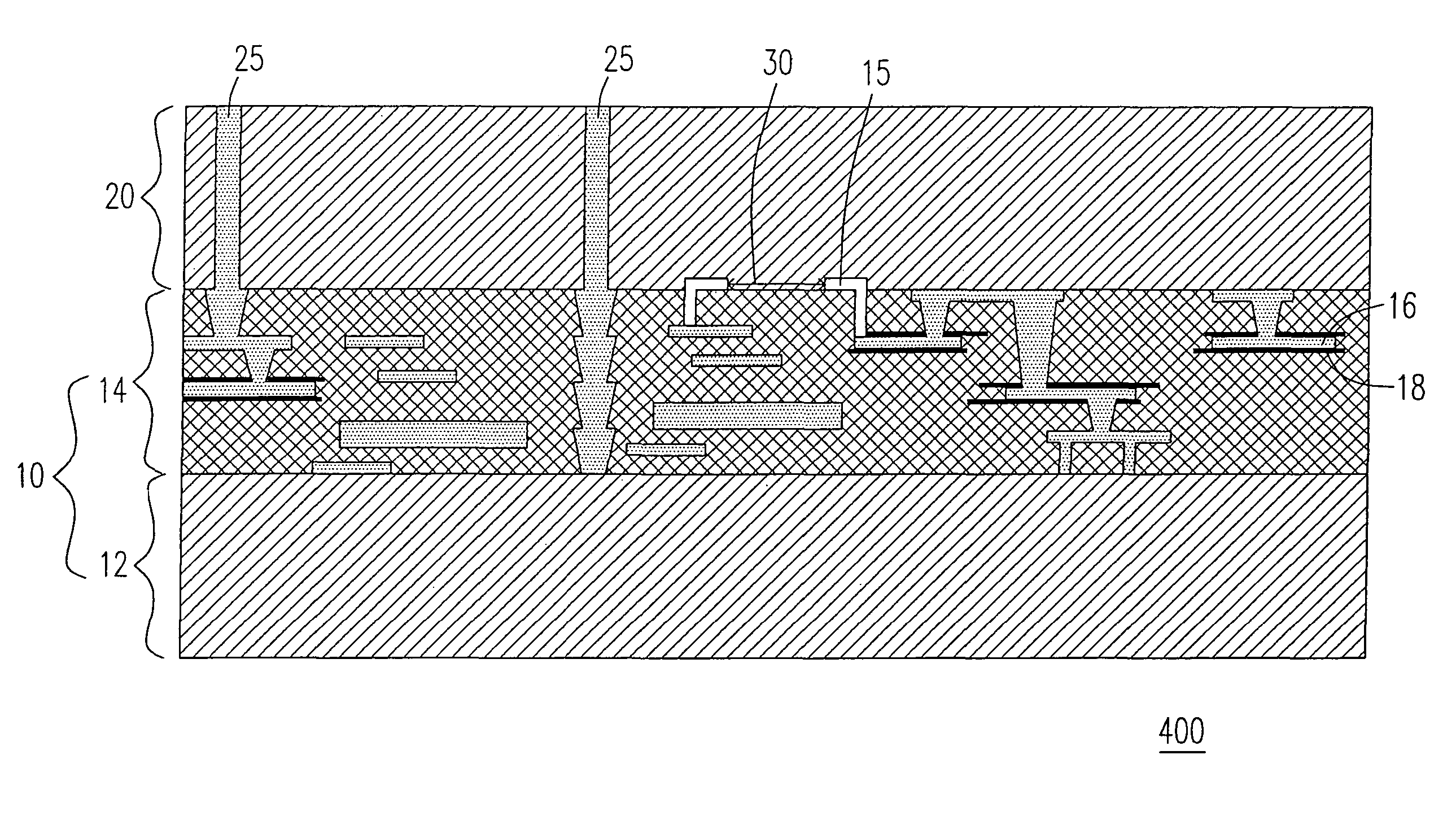
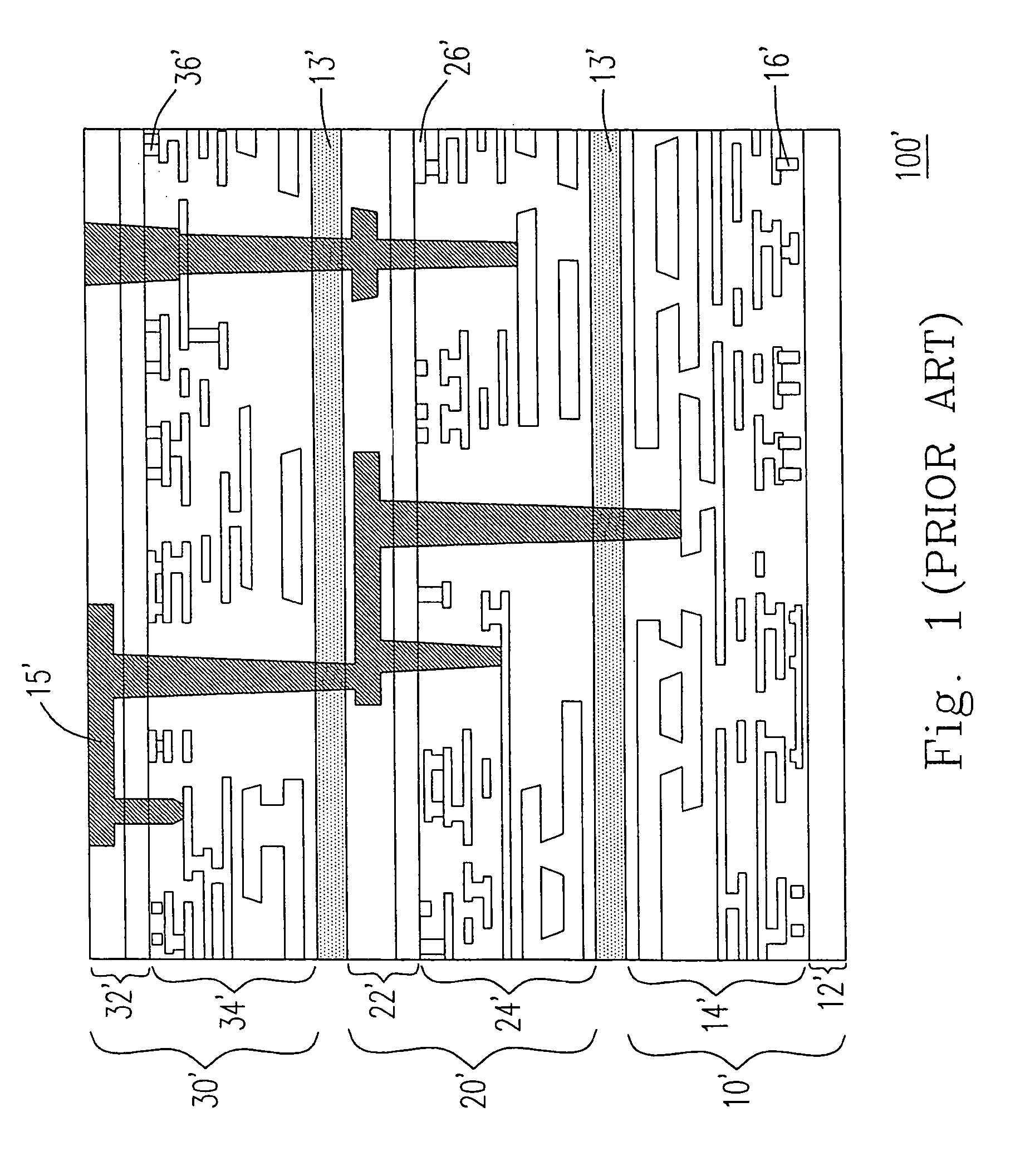
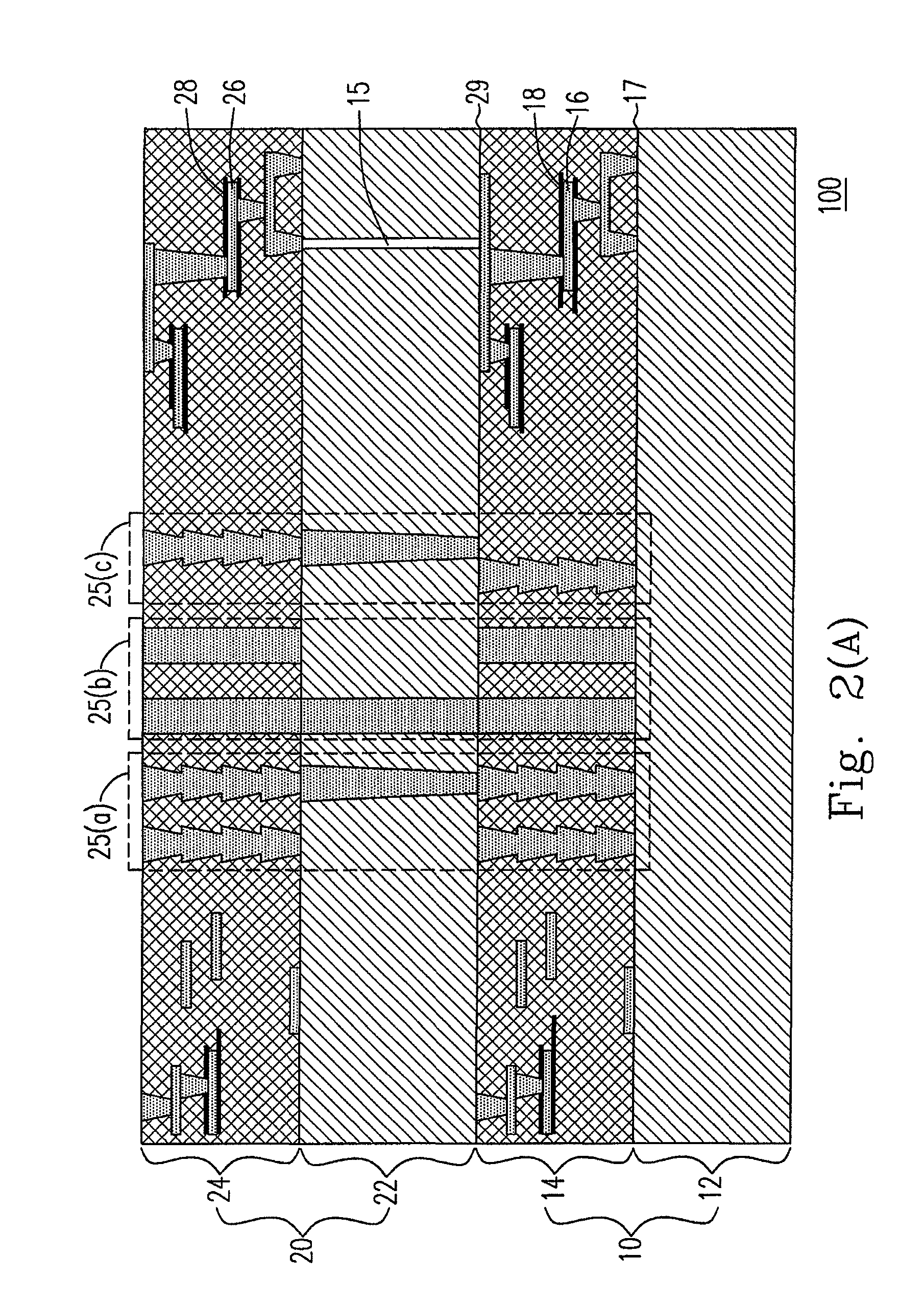
- A three-dimensional wafer stack structure incorporating at least one supporting pedestal, typically made of a high thermal conductivity metal material, is introduced to mitigate compression and thermal stresses. The pedestals are arranged between substrates and can run through them, providing structural support and heat dissipation.

Three dimensional packaging with wafer-level bonding and chip-level repair
PatentInactiveUS20090130821A1
Innovation
- A method and system for wafer-level bonding with selective chip-level removal and chip-to-wafer alignment, which involves mapping and removing bad chips from one wafer while retaining the relative positions of good chips, allowing for high-throughput bonding of known good chips from both wafers, followed by chip-level filling to optimize yield.


Thermal Management in High-Density 3D Stacks
Thermal management represents one of the most critical challenges in high-density 3D stacked wafer level packaging, where multiple dies are vertically integrated to achieve superior performance density. The concentrated heat generation from multiple active layers creates thermal hotspots that can significantly impact device reliability, performance degradation, and long-term operational stability.
The fundamental thermal challenge stems from the inherently limited heat dissipation pathways in 3D architectures. Unlike traditional 2D packaging where heat can be efficiently conducted through the substrate and heat spreaders, 3D stacks create thermal bottlenecks due to the vertical integration of multiple heat-generating layers. The thermal resistance increases exponentially with stack height, leading to temperature gradients that can exceed 50°C between bottom and top dies in high-performance applications.
Advanced thermal interface materials play a pivotal role in addressing these challenges. Next-generation TIMs incorporating graphene-enhanced polymers, carbon nanotube composites, and phase-change materials demonstrate thermal conductivities exceeding 10 W/mK, representing significant improvements over conventional materials. These materials must maintain their thermal properties while accommodating the mechanical stresses inherent in 3D stacking processes.
Through-silicon via thermal management has emerged as a critical design consideration. Strategic placement of thermal TSVs alongside signal TSVs creates dedicated heat conduction pathways, effectively distributing thermal loads across the stack. Optimized TSV thermal designs can reduce peak temperatures by 15-25% while maintaining signal integrity requirements.
Innovative cooling architectures are being developed specifically for 3D applications. Embedded microfluidic cooling channels, integrated heat pipes, and vapor chamber technologies enable active thermal management within the package itself. These solutions require careful integration with the wafer-level packaging process to maintain manufacturing feasibility and cost effectiveness.
Thermal-aware design methodologies are becoming essential for reliable 3D stacking. Advanced thermal simulation tools coupled with machine learning algorithms enable predictive thermal modeling during the design phase, allowing engineers to optimize die placement, power distribution, and thermal pathway design before physical prototyping.
The fundamental thermal challenge stems from the inherently limited heat dissipation pathways in 3D architectures. Unlike traditional 2D packaging where heat can be efficiently conducted through the substrate and heat spreaders, 3D stacks create thermal bottlenecks due to the vertical integration of multiple heat-generating layers. The thermal resistance increases exponentially with stack height, leading to temperature gradients that can exceed 50°C between bottom and top dies in high-performance applications.
Advanced thermal interface materials play a pivotal role in addressing these challenges. Next-generation TIMs incorporating graphene-enhanced polymers, carbon nanotube composites, and phase-change materials demonstrate thermal conductivities exceeding 10 W/mK, representing significant improvements over conventional materials. These materials must maintain their thermal properties while accommodating the mechanical stresses inherent in 3D stacking processes.
Through-silicon via thermal management has emerged as a critical design consideration. Strategic placement of thermal TSVs alongside signal TSVs creates dedicated heat conduction pathways, effectively distributing thermal loads across the stack. Optimized TSV thermal designs can reduce peak temperatures by 15-25% while maintaining signal integrity requirements.
Innovative cooling architectures are being developed specifically for 3D applications. Embedded microfluidic cooling channels, integrated heat pipes, and vapor chamber technologies enable active thermal management within the package itself. These solutions require careful integration with the wafer-level packaging process to maintain manufacturing feasibility and cost effectiveness.
Thermal-aware design methodologies are becoming essential for reliable 3D stacking. Advanced thermal simulation tools coupled with machine learning algorithms enable predictive thermal modeling during the design phase, allowing engineers to optimize die placement, power distribution, and thermal pathway design before physical prototyping.
Quality Standards for Advanced Packaging Reliability
The establishment of comprehensive quality standards for advanced packaging reliability in 3D stacking applications represents a critical foundation for ensuring consistent performance and long-term durability. These standards must address the unique challenges posed by vertical integration of multiple die layers, where traditional packaging reliability metrics require significant adaptation and enhancement.
Current industry standards such as JEDEC JESD22 series and IPC specifications provide baseline requirements for conventional packaging, but fall short in addressing the complex failure modes inherent in 3D stacked architectures. The multi-layered nature of these structures introduces new stress distributions, thermal gradients, and interconnect vulnerabilities that demand specialized testing protocols and acceptance criteria.
Thermal cycling standards must be redefined to account for the differential expansion coefficients between stacked layers and the increased thermal resistance in vertical configurations. Temperature gradient specifications should consider the heat dissipation challenges in dense 3D arrangements, where internal layers experience significantly different thermal environments compared to surface layers.
Mechanical reliability standards require expansion to encompass warpage control across multiple die levels, with specific limits on cumulative stress accumulation through the stack height. Interconnect reliability metrics must address the increased aspect ratios of through-silicon vias and the mechanical coupling effects between adjacent layers during thermal and mechanical stress conditions.
Electrical performance standards need enhancement to cover signal integrity degradation through multiple interconnect levels, power delivery network stability across stacked domains, and electromagnetic interference considerations unique to 3D configurations. These standards should establish acceptable limits for voltage drop, signal delay variations, and crosstalk between vertically adjacent circuits.
Quality assurance protocols must incorporate advanced inspection techniques capable of detecting internal defects within stacked structures, including X-ray tomography requirements, acoustic microscopy standards, and electrical test coverage metrics for embedded interconnects. Sampling strategies should account for the increased complexity and potential failure modes specific to 3D architectures.
Reliability qualification procedures require extended test durations and accelerated aging protocols that reflect the compounded stress effects in multi-layer configurations. Statistical analysis methods must be adapted to handle the interdependent failure mechanisms between stacked components, ensuring accurate lifetime predictions for the complete 3D assembly.
Current industry standards such as JEDEC JESD22 series and IPC specifications provide baseline requirements for conventional packaging, but fall short in addressing the complex failure modes inherent in 3D stacked architectures. The multi-layered nature of these structures introduces new stress distributions, thermal gradients, and interconnect vulnerabilities that demand specialized testing protocols and acceptance criteria.
Thermal cycling standards must be redefined to account for the differential expansion coefficients between stacked layers and the increased thermal resistance in vertical configurations. Temperature gradient specifications should consider the heat dissipation challenges in dense 3D arrangements, where internal layers experience significantly different thermal environments compared to surface layers.
Mechanical reliability standards require expansion to encompass warpage control across multiple die levels, with specific limits on cumulative stress accumulation through the stack height. Interconnect reliability metrics must address the increased aspect ratios of through-silicon vias and the mechanical coupling effects between adjacent layers during thermal and mechanical stress conditions.
Electrical performance standards need enhancement to cover signal integrity degradation through multiple interconnect levels, power delivery network stability across stacked domains, and electromagnetic interference considerations unique to 3D configurations. These standards should establish acceptable limits for voltage drop, signal delay variations, and crosstalk between vertically adjacent circuits.
Quality assurance protocols must incorporate advanced inspection techniques capable of detecting internal defects within stacked structures, including X-ray tomography requirements, acoustic microscopy standards, and electrical test coverage metrics for embedded interconnects. Sampling strategies should account for the increased complexity and potential failure modes specific to 3D architectures.
Reliability qualification procedures require extended test durations and accelerated aging protocols that reflect the compounded stress effects in multi-layer configurations. Statistical analysis methods must be adapted to handle the interdependent failure mechanisms between stacked components, ensuring accurate lifetime predictions for the complete 3D assembly.
Unlock deeper insights with PatSnap Eureka Quick Research — get a full tech report to explore trends and direct your research. Try now!
Generate Your Research Report Instantly with AI Agent
Supercharge your innovation with PatSnap Eureka AI Agent Platform!