

Optimizing Carbon Coating Thickness for Silicon Oxide Anode Capacity
MAY 26, 20269 MIN READ
Generate Your Research Report Instantly with AI Agent
PatSnap Eureka helps you evaluate technical feasibility & market potential.
Silicon Oxide Anode Carbon Coating Background and Objectives
Silicon oxide (SiOx) anodes have emerged as a promising alternative to traditional graphite anodes in lithium-ion batteries due to their significantly higher theoretical capacity. While graphite anodes offer approximately 372 mAh/g, silicon oxide anodes can deliver capacities exceeding 1000 mAh/g, representing a substantial advancement in energy storage density. This enhanced capacity stems from silicon's ability to form lithium silicides during the lithiation process, allowing for greater lithium storage per unit mass.
The evolution of silicon-based anode materials has progressed through several distinct phases over the past two decades. Initial research focused on pure silicon anodes, which demonstrated exceptional theoretical capacities but suffered from severe volume expansion issues during charge-discharge cycles. This led to the development of silicon oxide variants, where the oxygen content helps buffer the mechanical stress while maintaining high capacity retention.
Carbon coating technology has become a critical enablement strategy for silicon oxide anodes, addressing fundamental challenges related to electrical conductivity and structural stability. The coating serves multiple functions: enhancing electronic conductivity of the inherently semiconducting silicon oxide, providing mechanical support to accommodate volume changes, and forming a stable solid electrolyte interphase layer that improves cycling performance.
The primary objective of optimizing carbon coating thickness centers on achieving the optimal balance between electrochemical performance and material efficiency. Too thin coatings fail to provide adequate conductivity enhancement and mechanical protection, resulting in rapid capacity degradation and poor rate capability. Conversely, excessive coating thickness reduces the overall energy density by adding inactive mass while potentially impeding lithium ion transport.
Current research aims to establish precise thickness parameters that maximize capacity retention while maintaining high rate performance and extended cycle life. This optimization requires understanding the relationship between coating morphology, thickness uniformity, and electrochemical behavior under various operating conditions. The ultimate goal is developing scalable coating processes that can consistently produce silicon oxide anodes with optimized carbon layers for commercial battery applications.
The evolution of silicon-based anode materials has progressed through several distinct phases over the past two decades. Initial research focused on pure silicon anodes, which demonstrated exceptional theoretical capacities but suffered from severe volume expansion issues during charge-discharge cycles. This led to the development of silicon oxide variants, where the oxygen content helps buffer the mechanical stress while maintaining high capacity retention.
Carbon coating technology has become a critical enablement strategy for silicon oxide anodes, addressing fundamental challenges related to electrical conductivity and structural stability. The coating serves multiple functions: enhancing electronic conductivity of the inherently semiconducting silicon oxide, providing mechanical support to accommodate volume changes, and forming a stable solid electrolyte interphase layer that improves cycling performance.
The primary objective of optimizing carbon coating thickness centers on achieving the optimal balance between electrochemical performance and material efficiency. Too thin coatings fail to provide adequate conductivity enhancement and mechanical protection, resulting in rapid capacity degradation and poor rate capability. Conversely, excessive coating thickness reduces the overall energy density by adding inactive mass while potentially impeding lithium ion transport.
Current research aims to establish precise thickness parameters that maximize capacity retention while maintaining high rate performance and extended cycle life. This optimization requires understanding the relationship between coating morphology, thickness uniformity, and electrochemical behavior under various operating conditions. The ultimate goal is developing scalable coating processes that can consistently produce silicon oxide anodes with optimized carbon layers for commercial battery applications.
Market Demand for High-Capacity Silicon Oxide Anodes
The global lithium-ion battery market is experiencing unprecedented growth, driven primarily by the rapid expansion of electric vehicles and energy storage systems. This surge has created substantial demand for advanced anode materials that can deliver higher energy densities while maintaining safety and cycle life performance. Silicon oxide anodes have emerged as a critical technology to meet these demanding requirements, offering significantly higher theoretical capacity compared to conventional graphite anodes.
Electric vehicle manufacturers are increasingly seeking battery technologies that can extend driving range while reducing weight and volume constraints. Current graphite anodes, with their theoretical capacity limitation, present a bottleneck in achieving next-generation battery performance targets. Silicon oxide anodes can potentially deliver two to three times higher capacity, making them highly attractive for automotive applications where energy density directly translates to vehicle range and consumer acceptance.
The consumer electronics sector continues to drive demand for thinner, lighter devices with longer battery life. Smartphones, laptops, and wearable devices require batteries that can pack more energy into increasingly compact form factors. High-capacity silicon oxide anodes enable manufacturers to meet these design constraints while improving user experience through extended operational time between charges.
Energy storage systems for renewable energy integration represent another significant market driver. Grid-scale storage applications require cost-effective, high-capacity solutions to manage intermittent renewable energy sources effectively. Silicon oxide anodes can contribute to improved energy density in stationary storage systems, potentially reducing overall system costs and footprint requirements.
Market research indicates strong growth trajectories across all application segments, with electric vehicles representing the largest opportunity. Battery manufacturers are actively investing in silicon-based anode technologies to capture market share in this expanding landscape. The optimization of carbon coating thickness for silicon oxide anodes directly addresses key technical challenges including volume expansion management and cycle life enhancement, making it a critical enabler for commercial viability.
Supply chain considerations also influence market demand, as manufacturers seek to reduce dependence on traditional anode materials while establishing more diversified sourcing strategies. Silicon oxide anodes offer potential advantages in raw material availability and processing scalability compared to alternative high-capacity anode technologies.
Electric vehicle manufacturers are increasingly seeking battery technologies that can extend driving range while reducing weight and volume constraints. Current graphite anodes, with their theoretical capacity limitation, present a bottleneck in achieving next-generation battery performance targets. Silicon oxide anodes can potentially deliver two to three times higher capacity, making them highly attractive for automotive applications where energy density directly translates to vehicle range and consumer acceptance.
The consumer electronics sector continues to drive demand for thinner, lighter devices with longer battery life. Smartphones, laptops, and wearable devices require batteries that can pack more energy into increasingly compact form factors. High-capacity silicon oxide anodes enable manufacturers to meet these design constraints while improving user experience through extended operational time between charges.
Energy storage systems for renewable energy integration represent another significant market driver. Grid-scale storage applications require cost-effective, high-capacity solutions to manage intermittent renewable energy sources effectively. Silicon oxide anodes can contribute to improved energy density in stationary storage systems, potentially reducing overall system costs and footprint requirements.
Market research indicates strong growth trajectories across all application segments, with electric vehicles representing the largest opportunity. Battery manufacturers are actively investing in silicon-based anode technologies to capture market share in this expanding landscape. The optimization of carbon coating thickness for silicon oxide anodes directly addresses key technical challenges including volume expansion management and cycle life enhancement, making it a critical enabler for commercial viability.
Supply chain considerations also influence market demand, as manufacturers seek to reduce dependence on traditional anode materials while establishing more diversified sourcing strategies. Silicon oxide anodes offer potential advantages in raw material availability and processing scalability compared to alternative high-capacity anode technologies.
Current Carbon Coating Challenges and Technical Barriers
Carbon coating on silicon oxide anodes faces significant uniformity challenges that directly impact electrochemical performance. Achieving consistent coating thickness across particle surfaces remains problematic due to the irregular morphology and size distribution of silicon oxide materials. Non-uniform coating leads to localized stress concentrations during lithiation and delithiation cycles, resulting in premature coating failure and capacity degradation. The heterogeneous nature of silicon oxide particles, with varying surface roughness and porosity, creates preferential coating sites that exacerbate thickness variations.
Adhesion between carbon layers and silicon oxide substrates presents another critical barrier. The weak interfacial bonding often results from insufficient surface activation or incompatible coating methodologies. Poor adhesion manifests as coating delamination during volume expansion, exposing the underlying silicon oxide to direct electrolyte contact and accelerating capacity fade. Traditional coating approaches struggle to establish strong chemical bonds with the oxide surface, particularly when surface hydroxyl groups are inadequately functionalized.
Scalability constraints significantly limit industrial implementation of optimal carbon coating processes. Laboratory-scale techniques such as chemical vapor deposition and plasma-enhanced coating methods demonstrate excellent control over thickness uniformity but face substantial challenges in large-scale production. The precise temperature and atmosphere control required for uniform coating becomes increasingly difficult and economically prohibitive as batch sizes increase. Process parameter variations across larger reaction volumes lead to coating inconsistencies that compromise battery performance.
Cost considerations create additional barriers to implementing advanced coating technologies. High-temperature processing requirements and specialized equipment for achieving optimal coating thickness substantially increase manufacturing expenses. The trade-off between coating quality and production costs often forces manufacturers to accept suboptimal coating parameters, resulting in compromised anode performance. Energy-intensive coating processes further elevate operational costs, making it challenging to maintain competitive pricing while achieving desired technical specifications.
Process control complexity represents a fundamental technical barrier in carbon coating optimization. Multiple interdependent variables including temperature profiles, precursor flow rates, residence times, and atmospheric conditions must be precisely coordinated to achieve target coating thickness. Real-time monitoring and feedback control systems for coating thickness remain underdeveloped, making it difficult to detect and correct deviations during production. The lack of robust in-situ measurement techniques for coating thickness verification compounds these control challenges, often requiring post-process characterization that cannot prevent defective material production.
Adhesion between carbon layers and silicon oxide substrates presents another critical barrier. The weak interfacial bonding often results from insufficient surface activation or incompatible coating methodologies. Poor adhesion manifests as coating delamination during volume expansion, exposing the underlying silicon oxide to direct electrolyte contact and accelerating capacity fade. Traditional coating approaches struggle to establish strong chemical bonds with the oxide surface, particularly when surface hydroxyl groups are inadequately functionalized.
Scalability constraints significantly limit industrial implementation of optimal carbon coating processes. Laboratory-scale techniques such as chemical vapor deposition and plasma-enhanced coating methods demonstrate excellent control over thickness uniformity but face substantial challenges in large-scale production. The precise temperature and atmosphere control required for uniform coating becomes increasingly difficult and economically prohibitive as batch sizes increase. Process parameter variations across larger reaction volumes lead to coating inconsistencies that compromise battery performance.
Cost considerations create additional barriers to implementing advanced coating technologies. High-temperature processing requirements and specialized equipment for achieving optimal coating thickness substantially increase manufacturing expenses. The trade-off between coating quality and production costs often forces manufacturers to accept suboptimal coating parameters, resulting in compromised anode performance. Energy-intensive coating processes further elevate operational costs, making it challenging to maintain competitive pricing while achieving desired technical specifications.
Process control complexity represents a fundamental technical barrier in carbon coating optimization. Multiple interdependent variables including temperature profiles, precursor flow rates, residence times, and atmospheric conditions must be precisely coordinated to achieve target coating thickness. Real-time monitoring and feedback control systems for coating thickness remain underdeveloped, making it difficult to detect and correct deviations during production. The lack of robust in-situ measurement techniques for coating thickness verification compounds these control challenges, often requiring post-process characterization that cannot prevent defective material production.
Existing Carbon Coating Thickness Optimization Solutions
01 Silicon oxide nanostructure design for enhanced capacity
Silicon oxide anodes can achieve enhanced capacity through optimized nanostructure design, including nanowires, nanoparticles, and porous structures. These nanostructures provide better accommodation for volume expansion during lithiation and delithiation processes, leading to improved electrochemical performance and higher specific capacity retention.- Silicon oxide nanostructure design for enhanced capacity: Silicon oxide anodes can achieve enhanced capacity through optimized nanostructure design, including nanoparticles, nanowires, and porous structures. These nanostructures provide better accommodation for volume expansion during lithiation/delithiation cycles while maintaining structural integrity. The nanoscale architecture allows for improved ion transport and electron conduction pathways, leading to higher specific capacity and better cycling performance.
- Composite materials with carbon matrix integration: Integration of silicon oxide with carbon-based matrices significantly improves anode capacity and cycling stability. The carbon matrix provides structural support and enhanced electrical conductivity while buffering the volume changes of silicon oxide during charge-discharge cycles. Various carbon materials including graphene, carbon nanotubes, and amorphous carbon can be used to create effective composite structures that maintain high capacity retention over extended cycling.
- Surface modification and coating strategies: Surface modification techniques and protective coatings play crucial roles in enhancing silicon oxide anode capacity and performance. These approaches include applying thin layers of conductive materials, forming stable solid electrolyte interfaces, and creating barrier layers that prevent electrolyte decomposition. Surface treatments help maintain particle integrity, reduce irreversible capacity loss, and improve the overall electrochemical performance of the anode material.
- Doping and alloying for capacity optimization: Incorporation of dopants and alloying elements into silicon oxide structures can significantly enhance anode capacity and electrochemical properties. Various metallic and non-metallic elements can be introduced to modify the electronic structure, improve conductivity, and stabilize the material during cycling. These modifications help achieve higher theoretical capacities while maintaining structural stability and reducing capacity fade over multiple charge-discharge cycles.
- Electrolyte compatibility and interface engineering: Optimizing the interface between silicon oxide anodes and electrolytes is essential for maximizing capacity performance. This involves developing compatible electrolyte formulations, additives, and interface engineering techniques that promote stable solid electrolyte interface formation. Proper interface management reduces side reactions, minimizes capacity loss, and enhances the long-term cycling stability of silicon oxide anodes while maintaining high specific capacity values.
02 Composite materials with carbon matrix integration
Integration of silicon oxide with carbon-based materials such as graphene, carbon nanotubes, or carbon black creates composite anodes with improved electrical conductivity and structural stability. The carbon matrix helps maintain electrical contact during cycling and provides mechanical support to accommodate volume changes.Expand Specific Solutions03 Surface coating and modification techniques
Surface modification through various coating materials and techniques enhances the electrochemical stability and capacity retention of silicon oxide anodes. These modifications include protective layers, functional coatings, and surface treatments that improve the solid electrolyte interphase formation and reduce capacity fade.Expand Specific Solutions04 Particle size optimization and morphology control
Controlling the particle size and morphology of silicon oxide materials significantly impacts anode capacity and cycling performance. Optimized particle dimensions and shapes reduce mechanical stress, improve electrolyte penetration, and enhance lithium ion diffusion kinetics, resulting in better capacity utilization.Expand Specific Solutions05 Electrolyte compatibility and interface engineering
Engineering the interface between silicon oxide anodes and electrolytes through specialized electrolyte formulations, additives, and interface modifications improves capacity performance. These approaches focus on stabilizing the electrode-electrolyte interface, reducing side reactions, and maintaining high capacity over extended cycling.Expand Specific Solutions
Key Players in Silicon Oxide Anode and Carbon Coating Industry
The carbon coating thickness optimization for silicon oxide anodes represents a rapidly evolving segment within the advanced battery materials industry, currently in a growth phase driven by increasing demand for high-capacity lithium-ion batteries in electric vehicles and energy storage systems. The market demonstrates significant expansion potential, with established players like BTR New Material Group, SK On, and CATL leading commercialization efforts alongside specialized companies such as Liyang Tianmu and S-Graphene developing innovative silicon-carbon composite solutions. Technology maturity varies considerably across the competitive landscape, where companies like Shin-Etsu Chemical and Johnson Matthey leverage established materials expertise, while emerging specialists like pH Matter and research-backed entities including Northwestern University and Max Planck Society drive fundamental breakthroughs in coating methodologies and nanostructure optimization, creating a dynamic ecosystem spanning from laboratory research to industrial-scale production capabilities.
BTR New Material Group Co., Ltd.
Technical Solution: BTR has developed advanced carbon coating technologies for silicon oxide anodes, utilizing chemical vapor deposition (CVD) and pyrolysis methods to achieve optimal coating thickness between 5-15 nanometers. Their proprietary coating process involves precise temperature control at 800-900°C and controlled carbon precursor flow rates to ensure uniform distribution. The company has demonstrated that their optimized carbon coating can improve the initial coulombic efficiency of SiOx anodes from 65% to over 85%, while maintaining capacity retention above 80% after 500 cycles. Their coating technology also incorporates gradient thickness design, with thicker coatings at particle surfaces and thinner layers in micropores to balance conductivity and ion transport.
Strengths: Leading market position in anode materials with proven industrial-scale production capabilities and strong R&D infrastructure. Weaknesses: High production costs and complex manufacturing processes that require precise control parameters.
SK INNOVATION CO LTD
Technical Solution: SK Innovation has developed an innovative carbon coating solution for silicon oxide anodes utilizing a combination of petroleum pitch and polymer-derived carbon sources to achieve optimal coating thickness of 6-18 nanometers. Their multi-stage coating process involves initial surface treatment with oxygen plasma followed by controlled carbonization at temperatures ranging from 700-900°C under inert atmosphere. The company has demonstrated that their optimized coating thickness significantly improves the electrochemical performance, achieving specific capacity of 1200-1400 mAh/g with excellent cycling stability. SK Innovation's coating technology incorporates real-time thickness monitoring using advanced characterization techniques to ensure uniform distribution across different particle sizes. Their research shows that the optimal coating thickness correlates with SiOx composition ratio, with higher silicon content requiring thicker carbon layers for effective volume expansion accommodation.
Strengths: Strong integration with battery manufacturing and automotive partnerships, robust R&D capabilities with focus on commercial viability. Weaknesses: Relatively newer entrant in silicon oxide anode technology compared to specialized material companies, dependency on petroleum-based precursors.
Core Patents in Carbon Coating Thickness Control Methods
Ordered nano-porous carbon coating on silicon or silicon/graphene composites as lithium ion battery anode materials
PatentInactiveUS20170222219A1
Innovation
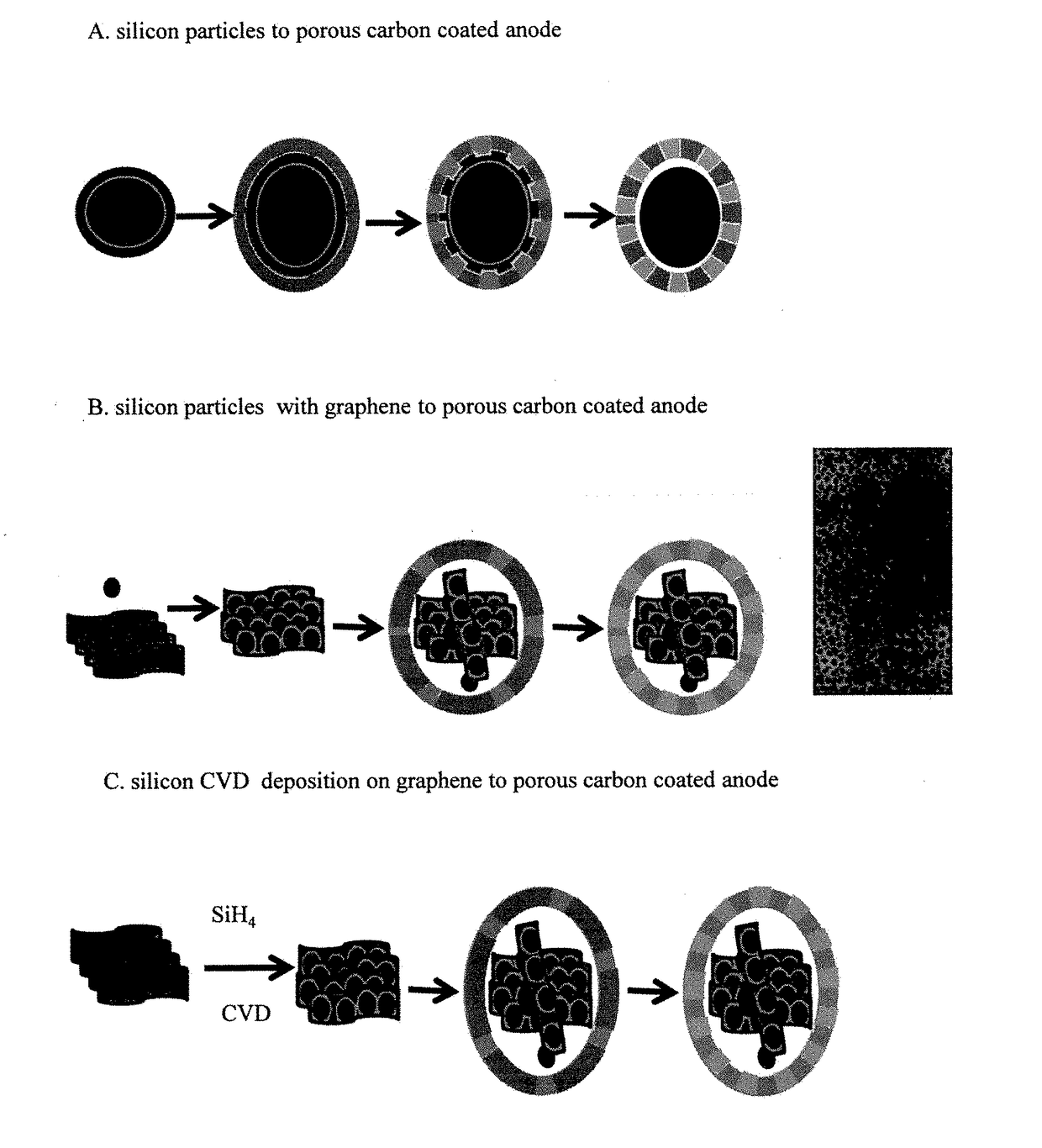
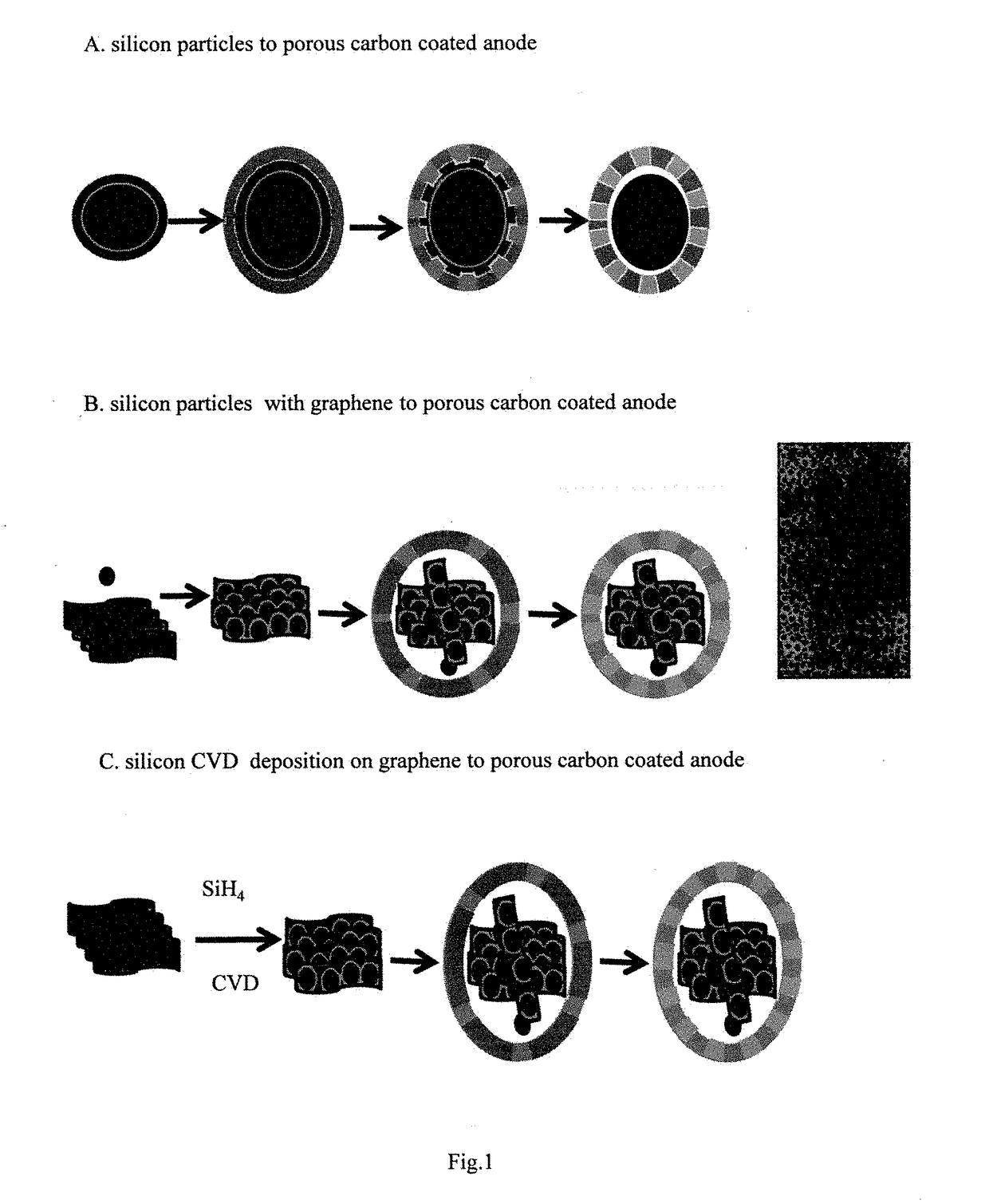
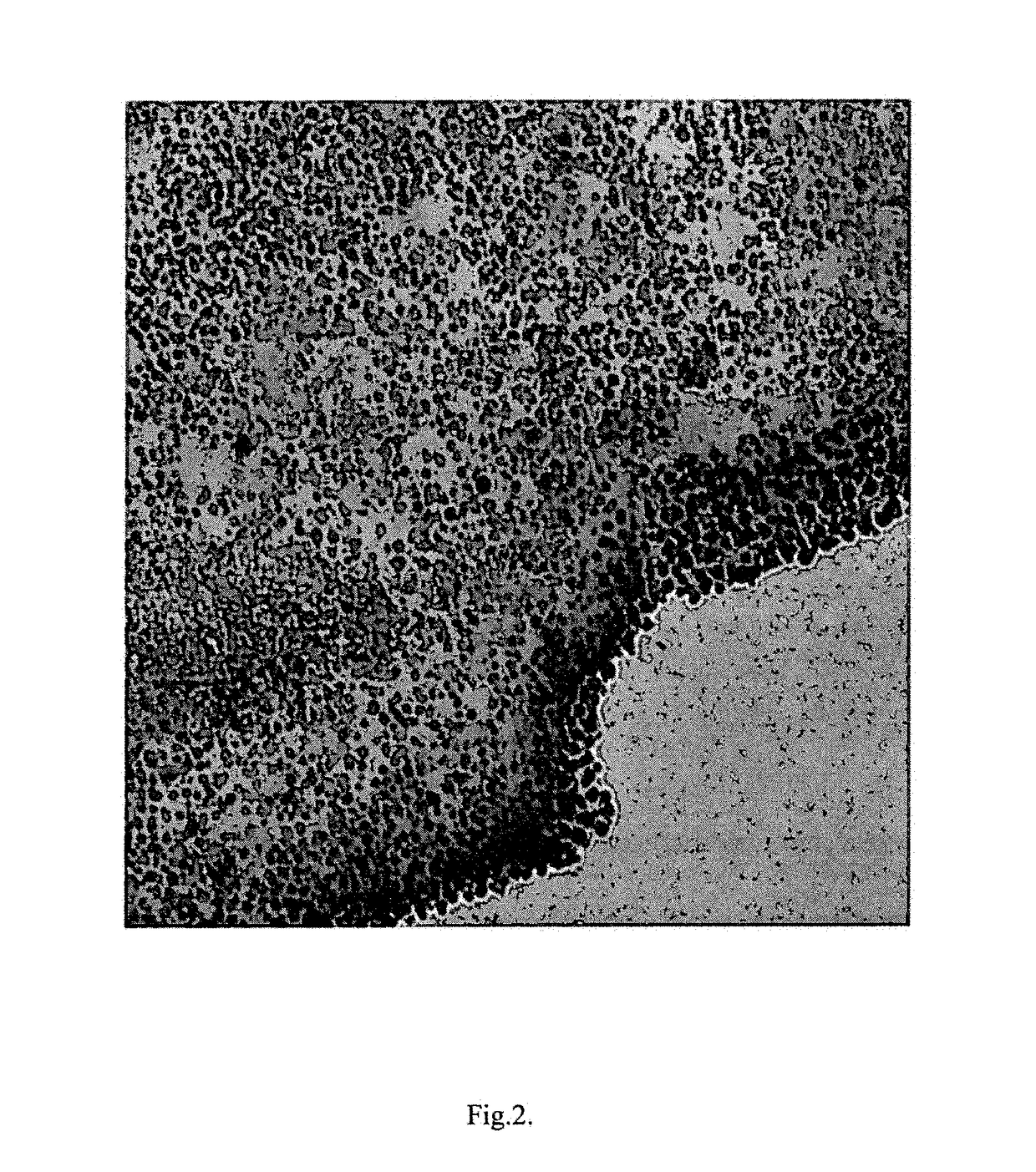
- A high-energy density composite anode material is developed using a silicon core with a porous carbon shell, where the carbon coating layer includes well-ordered nano-pores to accommodate volume expansion and ensure fast lithium ion transfer, optionally incorporating graphene for additional structural support.

Anode containing diatom frustules
PatentWO2017103272A1
Innovation
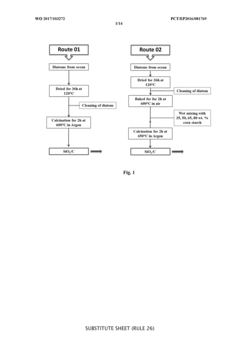
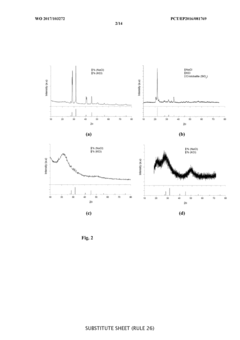
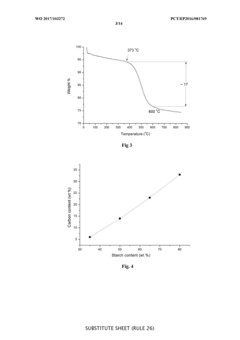
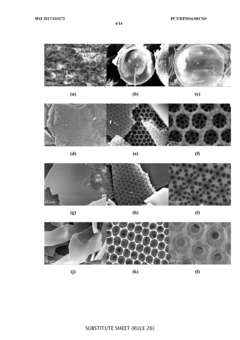
- The use of calcined diatoms coated in carbon with an electrically conducting filler and a water-soluble binder, such as alginate, creates a porous silicon dioxide network that mitigates expansion issues and enhances electrochemical performance.
Battery Safety Standards for Silicon Oxide Anodes
Battery safety standards for silicon oxide anodes represent a critical regulatory framework that addresses the unique challenges posed by this advanced anode material. Unlike conventional graphite anodes, silicon oxide anodes exhibit significant volume expansion during lithiation cycles, which can lead to mechanical stress, electrolyte decomposition, and potential thermal runaway scenarios. Current safety standards are evolving to accommodate these characteristics while ensuring consumer protection and market acceptance.
The International Electrotechnical Commission (IEC) and Underwriters Laboratories (UL) have established foundational safety protocols that silicon oxide anode batteries must meet. These standards encompass thermal abuse testing, overcharge protection, short circuit resistance, and mechanical integrity assessments. Specifically, IEC 62133 and UL 2054 provide comprehensive testing methodologies that evaluate battery performance under extreme conditions, including temperature cycling between -40°C and 85°C, nail penetration tests, and crush resistance evaluations.
Thermal management requirements for silicon oxide anodes are particularly stringent due to their higher heat generation during charging cycles. Safety standards mandate advanced thermal monitoring systems and require batteries to maintain stable operation within defined temperature ranges. The standards also specify maximum allowable temperature rise rates and establish protocols for thermal runaway prevention, including automatic shutdown mechanisms when predetermined thermal thresholds are exceeded.
Electrochemical safety parameters focus on voltage stability and gas generation control. Silicon oxide anodes can produce hydrogen and other gases during operation, necessitating specialized venting systems and pressure relief mechanisms. Safety standards define maximum allowable gas generation rates and require comprehensive testing of electrolyte compatibility to prevent hazardous chemical reactions.
Manufacturing quality control standards for silicon oxide anode production emphasize contamination prevention and structural integrity verification. These protocols include particle size distribution analysis, moisture content monitoring, and coating uniformity assessments to ensure consistent performance and safety characteristics across production batches.
Emerging safety standards are incorporating artificial intelligence-based monitoring systems that can predict potential failure modes specific to silicon oxide anodes. These advanced safety frameworks utilize real-time data analytics to identify early warning signs of degradation or malfunction, enabling proactive intervention before safety-critical situations develop.
The International Electrotechnical Commission (IEC) and Underwriters Laboratories (UL) have established foundational safety protocols that silicon oxide anode batteries must meet. These standards encompass thermal abuse testing, overcharge protection, short circuit resistance, and mechanical integrity assessments. Specifically, IEC 62133 and UL 2054 provide comprehensive testing methodologies that evaluate battery performance under extreme conditions, including temperature cycling between -40°C and 85°C, nail penetration tests, and crush resistance evaluations.
Thermal management requirements for silicon oxide anodes are particularly stringent due to their higher heat generation during charging cycles. Safety standards mandate advanced thermal monitoring systems and require batteries to maintain stable operation within defined temperature ranges. The standards also specify maximum allowable temperature rise rates and establish protocols for thermal runaway prevention, including automatic shutdown mechanisms when predetermined thermal thresholds are exceeded.
Electrochemical safety parameters focus on voltage stability and gas generation control. Silicon oxide anodes can produce hydrogen and other gases during operation, necessitating specialized venting systems and pressure relief mechanisms. Safety standards define maximum allowable gas generation rates and require comprehensive testing of electrolyte compatibility to prevent hazardous chemical reactions.
Manufacturing quality control standards for silicon oxide anode production emphasize contamination prevention and structural integrity verification. These protocols include particle size distribution analysis, moisture content monitoring, and coating uniformity assessments to ensure consistent performance and safety characteristics across production batches.
Emerging safety standards are incorporating artificial intelligence-based monitoring systems that can predict potential failure modes specific to silicon oxide anodes. These advanced safety frameworks utilize real-time data analytics to identify early warning signs of degradation or malfunction, enabling proactive intervention before safety-critical situations develop.
Environmental Impact of Carbon Coating Manufacturing
The manufacturing of carbon coatings for silicon oxide anodes presents significant environmental challenges that require comprehensive assessment and mitigation strategies. The production process typically involves high-temperature carbonization procedures, often exceeding 800°C, which consume substantial amounts of energy and generate considerable carbon dioxide emissions. Traditional carbon coating methods, including chemical vapor deposition and pyrolysis of organic precursors, contribute to greenhouse gas emissions through both direct combustion processes and indirect energy consumption from fossil fuel-powered electricity generation.
Precursor material selection plays a crucial role in determining the environmental footprint of carbon coating manufacturing. Petroleum-based precursors such as pitch and petroleum coke generate higher emissions compared to bio-based alternatives like glucose, sucrose, or cellulose derivatives. The shift toward renewable carbon sources has shown promise in reducing lifecycle carbon emissions by approximately 30-40%, though challenges remain in achieving consistent coating quality and thickness control with these sustainable materials.
Waste generation during carbon coating processes poses additional environmental concerns. Volatile organic compounds released during pyrolysis require sophisticated capture and treatment systems to prevent atmospheric pollution. Solvent-based coating methods generate hazardous waste streams that demand proper disposal or recycling protocols. The implementation of closed-loop systems and solvent recovery technologies has emerged as a critical strategy for minimizing environmental impact while maintaining production efficiency.
Water consumption and contamination represent another significant environmental consideration. Wet coating processes and subsequent washing steps can generate contaminated wastewater containing organic solvents and carbon particles. Advanced treatment technologies, including membrane filtration and activated carbon adsorption, are increasingly employed to ensure compliance with environmental regulations and minimize ecological impact on local water systems.
The industry is actively pursuing green manufacturing initiatives to address these environmental challenges. Emerging approaches include plasma-enhanced coating techniques that operate at lower temperatures, reducing energy consumption by up to 25%. Additionally, the development of water-based coating formulations eliminates organic solvent usage, significantly reducing volatile organic compound emissions and simplifying waste management protocols while maintaining optimal carbon layer uniformity and electrochemical performance.
Precursor material selection plays a crucial role in determining the environmental footprint of carbon coating manufacturing. Petroleum-based precursors such as pitch and petroleum coke generate higher emissions compared to bio-based alternatives like glucose, sucrose, or cellulose derivatives. The shift toward renewable carbon sources has shown promise in reducing lifecycle carbon emissions by approximately 30-40%, though challenges remain in achieving consistent coating quality and thickness control with these sustainable materials.
Waste generation during carbon coating processes poses additional environmental concerns. Volatile organic compounds released during pyrolysis require sophisticated capture and treatment systems to prevent atmospheric pollution. Solvent-based coating methods generate hazardous waste streams that demand proper disposal or recycling protocols. The implementation of closed-loop systems and solvent recovery technologies has emerged as a critical strategy for minimizing environmental impact while maintaining production efficiency.
Water consumption and contamination represent another significant environmental consideration. Wet coating processes and subsequent washing steps can generate contaminated wastewater containing organic solvents and carbon particles. Advanced treatment technologies, including membrane filtration and activated carbon adsorption, are increasingly employed to ensure compliance with environmental regulations and minimize ecological impact on local water systems.
The industry is actively pursuing green manufacturing initiatives to address these environmental challenges. Emerging approaches include plasma-enhanced coating techniques that operate at lower temperatures, reducing energy consumption by up to 25%. Additionally, the development of water-based coating formulations eliminates organic solvent usage, significantly reducing volatile organic compound emissions and simplifying waste management protocols while maintaining optimal carbon layer uniformity and electrochemical performance.
Unlock deeper insights with PatSnap Eureka Quick Research — get a full tech report to explore trends and direct your research. Try now!
Generate Your Research Report Instantly with AI Agent
Supercharge your innovation with PatSnap Eureka AI Agent Platform!