

Optimizing Multi-Phase Coolant in Large-Scale Jet Impingement Cooling Systems
MAY 5, 20269 MIN READ
Generate Your Research Report Instantly with AI Agent
PatSnap Eureka helps you evaluate technical feasibility & market potential.
Multi-Phase Coolant Jet Impingement Background and Objectives
Multi-phase coolant jet impingement cooling systems have emerged as a critical thermal management technology in response to the escalating heat dissipation challenges faced by modern industrial applications. The evolution of this technology traces back to the early development of single-phase jet impingement cooling in the 1960s, which was primarily utilized in aerospace applications for turbine blade cooling. As electronic devices became more powerful and compact, traditional air cooling and single-phase liquid cooling methods proved insufficient to handle the exponentially increasing heat flux densities.
The transition from single-phase to multi-phase coolant systems represents a paradigm shift in thermal management philosophy. Multi-phase systems leverage the latent heat of vaporization during phase change processes, providing significantly enhanced heat transfer coefficients compared to conventional cooling methods. This technology has gained particular prominence in data centers, high-performance computing systems, power electronics, and advanced manufacturing processes where thermal loads can exceed 1000 W/cm².
The fundamental principle underlying multi-phase jet impingement cooling involves the controlled introduction of coolant in liquid form through precisely engineered nozzles, creating high-velocity jets that impinge directly onto heated surfaces. Upon contact, the coolant undergoes rapid phase transition from liquid to vapor, absorbing substantial amounts of thermal energy and maintaining relatively uniform surface temperatures even under extreme heat flux conditions.
Current technological objectives focus on optimizing the complex interplay between fluid dynamics, heat transfer mechanisms, and system reliability in large-scale implementations. Key performance targets include achieving heat transfer coefficients exceeding 50,000 W/m²K while maintaining system pressure drops below 50 kPa, ensuring uniform temperature distribution across large surface areas, and minimizing coolant consumption through enhanced vapor recovery and condensation systems.
The primary technical challenges driving current research efforts encompass the optimization of nozzle geometries and spacing configurations, development of advanced coolant formulations with tailored thermophysical properties, and implementation of intelligent flow control systems that can dynamically respond to varying thermal loads. Additionally, addressing issues related to surface fouling, corrosion resistance, and long-term system reliability remains paramount for successful commercial deployment in mission-critical applications.
The transition from single-phase to multi-phase coolant systems represents a paradigm shift in thermal management philosophy. Multi-phase systems leverage the latent heat of vaporization during phase change processes, providing significantly enhanced heat transfer coefficients compared to conventional cooling methods. This technology has gained particular prominence in data centers, high-performance computing systems, power electronics, and advanced manufacturing processes where thermal loads can exceed 1000 W/cm².
The fundamental principle underlying multi-phase jet impingement cooling involves the controlled introduction of coolant in liquid form through precisely engineered nozzles, creating high-velocity jets that impinge directly onto heated surfaces. Upon contact, the coolant undergoes rapid phase transition from liquid to vapor, absorbing substantial amounts of thermal energy and maintaining relatively uniform surface temperatures even under extreme heat flux conditions.
Current technological objectives focus on optimizing the complex interplay between fluid dynamics, heat transfer mechanisms, and system reliability in large-scale implementations. Key performance targets include achieving heat transfer coefficients exceeding 50,000 W/m²K while maintaining system pressure drops below 50 kPa, ensuring uniform temperature distribution across large surface areas, and minimizing coolant consumption through enhanced vapor recovery and condensation systems.
The primary technical challenges driving current research efforts encompass the optimization of nozzle geometries and spacing configurations, development of advanced coolant formulations with tailored thermophysical properties, and implementation of intelligent flow control systems that can dynamically respond to varying thermal loads. Additionally, addressing issues related to surface fouling, corrosion resistance, and long-term system reliability remains paramount for successful commercial deployment in mission-critical applications.
Market Demand for Advanced Thermal Management Solutions
The global thermal management market is experiencing unprecedented growth driven by the escalating heat dissipation challenges across multiple industries. Data centers, which consume substantial energy and generate significant heat loads, represent one of the most critical application areas. The exponential growth in cloud computing, artificial intelligence, and edge computing has intensified the demand for efficient cooling solutions capable of handling increasingly dense server configurations.
Aerospace and defense sectors present another substantial market segment where advanced thermal management solutions are essential. Modern aircraft engines, electronic warfare systems, and high-performance military equipment generate extreme heat loads that conventional cooling methods cannot adequately address. The push toward more efficient jet engines and compact electronic systems has created urgent requirements for innovative cooling technologies that can operate reliably under harsh conditions.
The automotive industry's transition toward electric vehicles has fundamentally altered thermal management requirements. Electric powertrains, battery systems, and power electronics demand sophisticated cooling solutions to maintain optimal performance and safety standards. High-performance internal combustion engines also require advanced thermal management to meet stringent emissions regulations while maximizing power output.
Industrial manufacturing processes increasingly rely on high-power equipment that generates substantial heat loads. Laser cutting systems, induction heating equipment, and high-frequency power electronics require precise temperature control to maintain operational efficiency and prevent equipment failure. The trend toward automation and Industry 4.0 has further intensified these thermal management challenges.
Power generation facilities, particularly renewable energy systems, face unique thermal management challenges. Solar inverters, wind turbine generators, and energy storage systems require reliable cooling solutions to maximize efficiency and operational lifespan. The global shift toward sustainable energy has amplified demand for thermal management solutions that can operate efficiently across diverse environmental conditions.
The semiconductor industry represents a rapidly expanding market segment where thermal management directly impacts product performance and reliability. Advanced chip manufacturing processes and high-performance computing applications generate concentrated heat loads that require innovative cooling approaches to prevent thermal throttling and ensure consistent performance.
Market drivers include regulatory pressures for energy efficiency, increasing power densities across applications, and the growing emphasis on system reliability and operational lifespan. The convergence of these factors has created substantial opportunities for advanced thermal management technologies that can deliver superior performance compared to traditional cooling methods.
Aerospace and defense sectors present another substantial market segment where advanced thermal management solutions are essential. Modern aircraft engines, electronic warfare systems, and high-performance military equipment generate extreme heat loads that conventional cooling methods cannot adequately address. The push toward more efficient jet engines and compact electronic systems has created urgent requirements for innovative cooling technologies that can operate reliably under harsh conditions.
The automotive industry's transition toward electric vehicles has fundamentally altered thermal management requirements. Electric powertrains, battery systems, and power electronics demand sophisticated cooling solutions to maintain optimal performance and safety standards. High-performance internal combustion engines also require advanced thermal management to meet stringent emissions regulations while maximizing power output.
Industrial manufacturing processes increasingly rely on high-power equipment that generates substantial heat loads. Laser cutting systems, induction heating equipment, and high-frequency power electronics require precise temperature control to maintain operational efficiency and prevent equipment failure. The trend toward automation and Industry 4.0 has further intensified these thermal management challenges.
Power generation facilities, particularly renewable energy systems, face unique thermal management challenges. Solar inverters, wind turbine generators, and energy storage systems require reliable cooling solutions to maximize efficiency and operational lifespan. The global shift toward sustainable energy has amplified demand for thermal management solutions that can operate efficiently across diverse environmental conditions.
The semiconductor industry represents a rapidly expanding market segment where thermal management directly impacts product performance and reliability. Advanced chip manufacturing processes and high-performance computing applications generate concentrated heat loads that require innovative cooling approaches to prevent thermal throttling and ensure consistent performance.
Market drivers include regulatory pressures for energy efficiency, increasing power densities across applications, and the growing emphasis on system reliability and operational lifespan. The convergence of these factors has created substantial opportunities for advanced thermal management technologies that can deliver superior performance compared to traditional cooling methods.
Current State of Large-Scale Jet Impingement Cooling
Large-scale jet impingement cooling systems have emerged as critical thermal management solutions across multiple industrial sectors, with applications spanning from gas turbine blade cooling to high-power electronics thermal control. The technology leverages high-velocity fluid jets directed perpendicular to heated surfaces, creating localized regions of intense heat transfer through boundary layer disruption and enhanced convective mechanisms.
Current implementations predominantly utilize single-phase coolants, with water and specialized synthetic fluids being the most common choices. Water-based systems dominate due to their favorable thermophysical properties, including high specific heat capacity and thermal conductivity. However, these systems face significant limitations when operating under extreme thermal loads, where phase change phenomena can lead to critical heat flux conditions and potential system failure.
The integration of multi-phase coolants represents an evolving frontier in large-scale applications. Contemporary systems incorporating phase change materials demonstrate enhanced heat transfer coefficients through latent heat absorption during liquid-to-vapor transitions. Refrigerant-based solutions, particularly those utilizing R-134a and newer low-GWP alternatives, have shown promising results in controlled industrial environments, achieving heat transfer rates 2-3 times higher than conventional single-phase systems.
Existing large-scale installations face several operational constraints that limit optimal performance. Pressure drop management across extensive jet arrays remains a persistent challenge, often requiring complex pump systems and energy-intensive circulation mechanisms. Flow distribution uniformity becomes increasingly difficult to maintain as system scale increases, leading to thermal hot spots and reduced overall cooling effectiveness.
Manufacturing and aerospace industries currently represent the primary deployment sectors for advanced jet impingement cooling systems. Gas turbine manufacturers have implemented sophisticated multi-jet configurations for turbine blade internal cooling, while data center operators are exploring large-scale implementations for high-density server cooling applications. These installations typically operate within temperature ranges of 50-200°C, with heat flux requirements reaching 100-500 W/cm².
Recent technological developments have focused on hybrid cooling approaches that combine jet impingement with other thermal management strategies. Micro-channel integration and surface enhancement techniques are being incorporated to maximize heat transfer efficiency while minimizing coolant flow requirements. Advanced control systems utilizing real-time thermal monitoring and adaptive flow regulation are becoming standard features in next-generation installations.
Despite these advances, current large-scale systems still struggle with coolant optimization challenges, particularly in maintaining stable multi-phase flow characteristics across varying operational conditions and achieving uniform thermal performance throughout extensive cooling arrays.
Current implementations predominantly utilize single-phase coolants, with water and specialized synthetic fluids being the most common choices. Water-based systems dominate due to their favorable thermophysical properties, including high specific heat capacity and thermal conductivity. However, these systems face significant limitations when operating under extreme thermal loads, where phase change phenomena can lead to critical heat flux conditions and potential system failure.
The integration of multi-phase coolants represents an evolving frontier in large-scale applications. Contemporary systems incorporating phase change materials demonstrate enhanced heat transfer coefficients through latent heat absorption during liquid-to-vapor transitions. Refrigerant-based solutions, particularly those utilizing R-134a and newer low-GWP alternatives, have shown promising results in controlled industrial environments, achieving heat transfer rates 2-3 times higher than conventional single-phase systems.
Existing large-scale installations face several operational constraints that limit optimal performance. Pressure drop management across extensive jet arrays remains a persistent challenge, often requiring complex pump systems and energy-intensive circulation mechanisms. Flow distribution uniformity becomes increasingly difficult to maintain as system scale increases, leading to thermal hot spots and reduced overall cooling effectiveness.
Manufacturing and aerospace industries currently represent the primary deployment sectors for advanced jet impingement cooling systems. Gas turbine manufacturers have implemented sophisticated multi-jet configurations for turbine blade internal cooling, while data center operators are exploring large-scale implementations for high-density server cooling applications. These installations typically operate within temperature ranges of 50-200°C, with heat flux requirements reaching 100-500 W/cm².
Recent technological developments have focused on hybrid cooling approaches that combine jet impingement with other thermal management strategies. Micro-channel integration and surface enhancement techniques are being incorporated to maximize heat transfer efficiency while minimizing coolant flow requirements. Advanced control systems utilizing real-time thermal monitoring and adaptive flow regulation are becoming standard features in next-generation installations.
Despite these advances, current large-scale systems still struggle with coolant optimization challenges, particularly in maintaining stable multi-phase flow characteristics across varying operational conditions and achieving uniform thermal performance throughout extensive cooling arrays.
Existing Multi-Phase Jet Impingement Solutions
01 Multi-phase flow heat transfer enhancement
Multi-phase coolant systems utilize the phase change properties of coolants to enhance heat transfer efficiency. The transition between liquid and vapor phases allows for superior heat absorption and dissipation compared to single-phase systems. This approach leverages latent heat of vaporization to achieve more effective thermal management in various applications.- Multi-phase flow heat transfer enhancement: Multi-phase coolant systems utilize the phase change properties of working fluids to enhance heat transfer efficiency. The transition between liquid and vapor phases allows for superior heat absorption and dissipation compared to single-phase systems. This approach leverages latent heat of vaporization to achieve higher cooling performance with reduced coolant flow rates.
- Coolant composition and additive optimization: The efficiency of multi-phase cooling systems can be significantly improved through careful selection of coolant compositions and specialized additives. These formulations enhance thermal conductivity, reduce surface tension, and improve wetting characteristics to facilitate better heat transfer. Advanced coolant mixtures also provide corrosion protection and extended operational life.
- System design and flow optimization: Optimized system architecture and flow management are critical for maximizing multi-phase coolant efficiency. This includes strategic placement of heat exchangers, proper channel design, and flow distribution mechanisms that ensure uniform cooling across target surfaces. Advanced designs incorporate feedback control systems to maintain optimal operating conditions.
- Micro-channel and surface enhancement technologies: Micro-scale cooling channels and enhanced surface structures significantly improve heat transfer coefficients in multi-phase systems. These technologies increase surface area and promote nucleate boiling, leading to enhanced cooling performance. Surface modifications and micro-fabrication techniques enable more efficient phase change processes at the heat transfer interface.
- Thermal management and control systems: Advanced thermal management strategies incorporate intelligent control algorithms and monitoring systems to optimize multi-phase coolant performance. These systems dynamically adjust operating parameters such as flow rates, pressure, and temperature to maintain peak efficiency under varying thermal loads. Integration of sensors and feedback mechanisms ensures reliable and consistent cooling performance.
02 Coolant flow optimization and circulation systems
Advanced circulation systems and flow optimization techniques are employed to maximize cooling efficiency in multi-phase coolant applications. These systems focus on optimizing flow patterns, reducing pressure drops, and ensuring uniform coolant distribution to enhance overall thermal performance and system reliability.Expand Specific Solutions03 Heat exchanger design for multi-phase cooling
Specialized heat exchanger configurations are designed to accommodate multi-phase coolant systems and maximize heat transfer rates. These designs incorporate features that facilitate phase transitions and optimize surface area contact between the coolant and heat-generating components for improved cooling performance.Expand Specific Solutions04 Coolant composition and additive formulations
The development of specialized coolant formulations and additives enhances the thermal properties and performance characteristics of multi-phase cooling systems. These formulations are designed to improve heat transfer coefficients, reduce corrosion, and maintain system stability across various operating conditions.Expand Specific Solutions05 System control and monitoring technologies
Advanced control systems and monitoring technologies are implemented to optimize multi-phase coolant performance and maintain system efficiency. These technologies include sensors, feedback mechanisms, and automated control strategies that ensure optimal operating conditions and prevent system failures.Expand Specific Solutions
Key Players in Industrial Cooling Systems Market
The multi-phase coolant optimization in large-scale jet impingement cooling systems represents an emerging technology sector in its early growth phase, driven by increasing thermal management demands in high-performance electronics and industrial applications. The market demonstrates significant expansion potential, particularly in semiconductor manufacturing and aerospace sectors, with companies like Taiwan Semiconductor Manufacturing Co., Intel Corp., and Rolls-Royce Plc leading adoption. Technology maturity varies considerably across players, with specialized firms like JETCOOL Technologies pioneering advanced microjet cooling solutions, while established manufacturers such as ABB Ltd., Siemens AG, and Carrier Corp. integrate these systems into broader thermal management portfolios. Academic institutions including Xi'an Jiaotong University and Colorado State University contribute fundamental research, while industrial giants like Toyota Motor Corp. and Magna International explore automotive applications, creating a competitive landscape characterized by both innovation-focused startups and diversified technology conglomerates pursuing market opportunities.
JETCOOL Technologies, Inc.
Technical Solution: JETCOOL specializes in advanced microfluidic cooling solutions that utilize multi-phase coolant systems for high-performance applications. Their technology employs precision-engineered microchannels that enable efficient phase change cooling directly at heat sources. The company's jet impingement cooling systems integrate liquid-to-vapor phase transitions within compact form factors, achieving thermal resistance reductions of up to 10x compared to traditional air cooling methods. Their multi-phase approach optimizes heat transfer coefficients through controlled nucleate boiling and vapor management, particularly effective in large-scale data center and high-power electronics cooling applications.
Strengths: Specialized expertise in microfluidic cooling, proven phase change optimization, compact design integration. Weaknesses: Limited scalability for very large industrial systems, higher initial implementation costs.
Rolls-Royce Plc
Technical Solution: Rolls-Royce has developed sophisticated multi-phase cooling systems for aerospace and power generation applications, particularly focusing on gas turbine engine cooling. Their jet impingement technology utilizes advanced coolant formulations that maintain optimal phase change characteristics under extreme temperature and pressure conditions. The system incorporates precision-engineered nozzle arrays that deliver controlled coolant jets to critical engine components, with multi-phase heat transfer enabling efficient thermal management in turbine blades and combustor sections. Rolls-Royce's large-scale implementation includes integrated thermal barrier coatings and advanced materials that work synergistically with the cooling system, achieving temperature reductions of 100-150°C in critical engine components while maintaining structural integrity.
Strengths: Extensive aerospace thermal management expertise, proven high-temperature applications, advanced materials integration. Weaknesses: High complexity and cost, primarily focused on aerospace applications with limited commercial scalability.
Core Innovations in Multi-Phase Coolant Optimization
Cooling device
PatentInactiveUS20070119565A1
Innovation
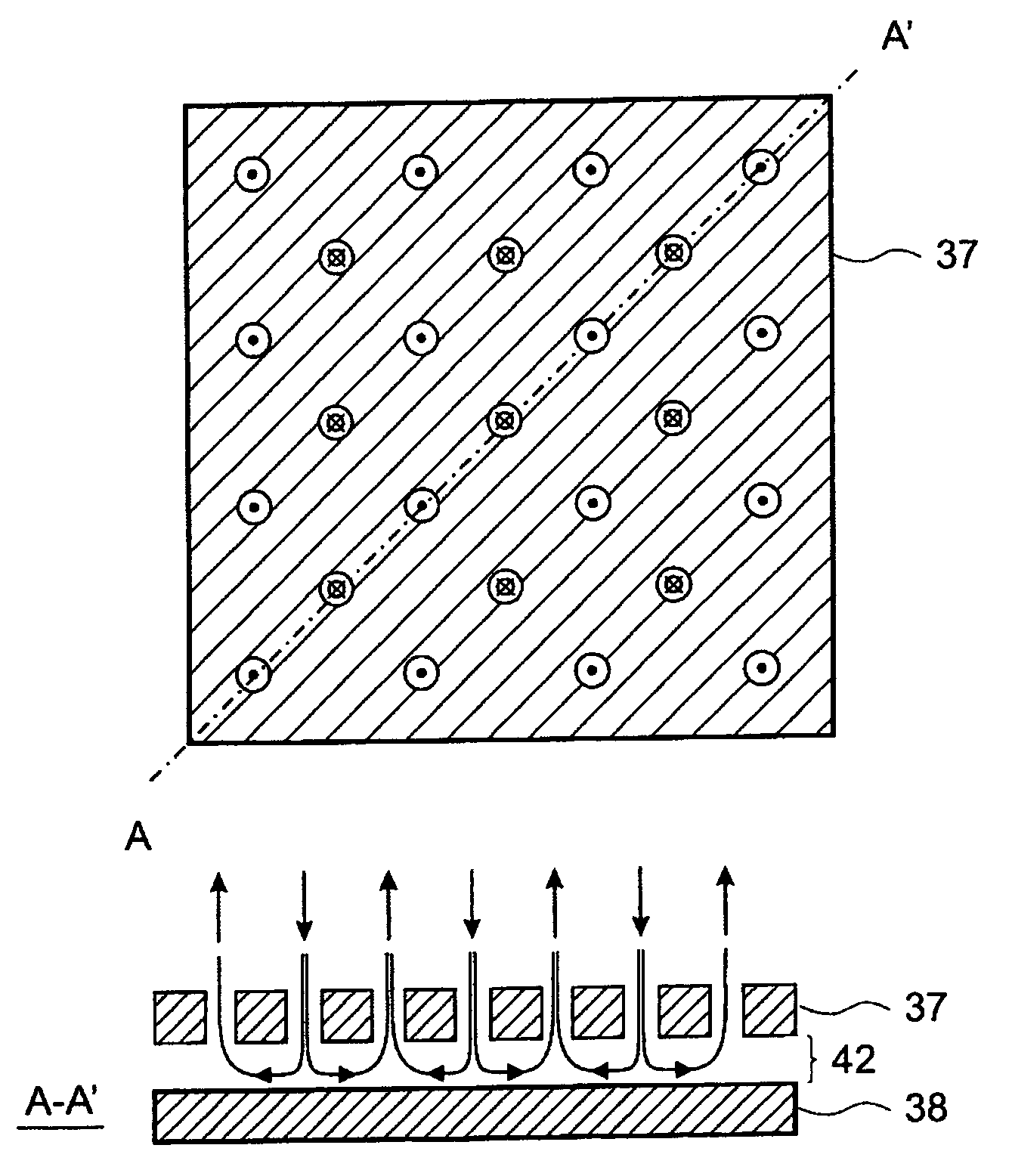
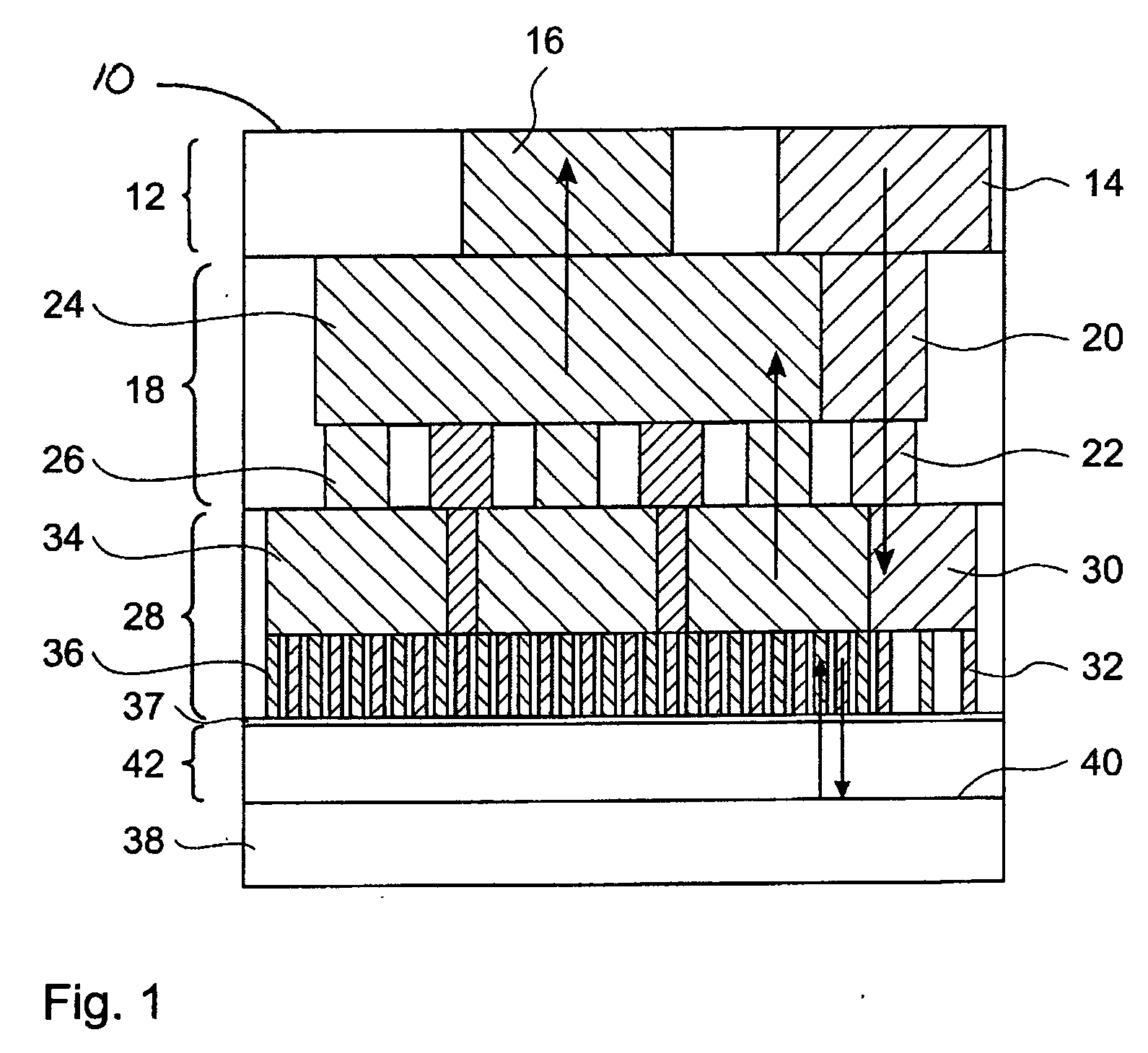
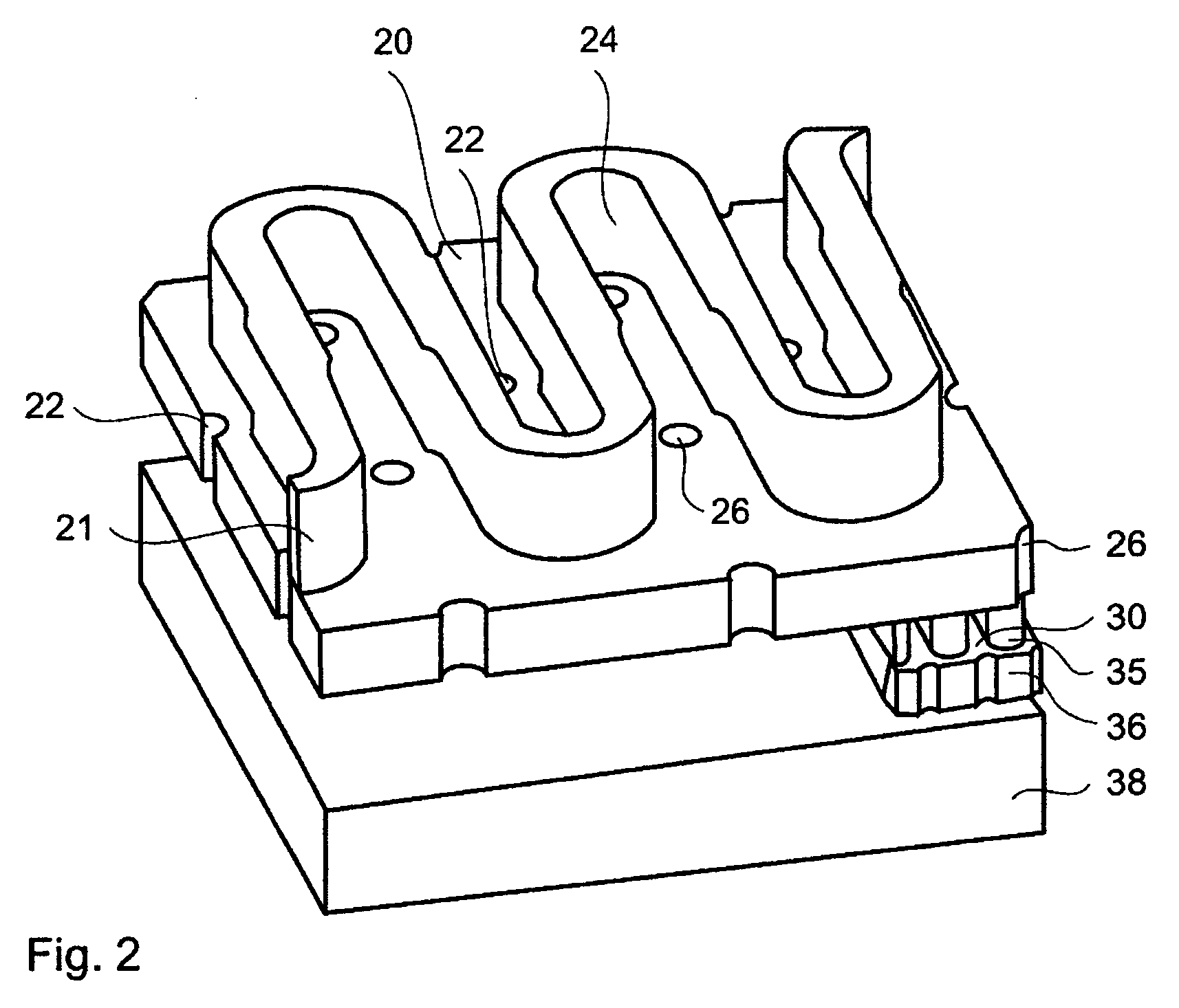
- The design incorporates a hierarchical structure with interdigitated branched channels and surface enhancement features to minimize pressure accumulation and flow distribution issues, featuring a distributed array of inlets and outlets with a face-centered square pattern, and protrusions to eliminate stagnation points and enhance heat exchange.

Two-phase jet impingement cooling devices and electronic device assemblies incorporating the same
PatentActiveUS20170094837A1
Innovation
- The cooling device features a manifold with symmetrical jet regions and surface features that optimize fluid flow through jet orifices, combined with heat sinks that promote phase change of the cooling fluid from liquid to vapor, including porous surfaces to enhance nucleation, ensuring uniform fluid distribution and efficient heat transfer.


Energy Efficiency Standards for Industrial Cooling
The optimization of multi-phase coolant systems in large-scale jet impingement cooling applications must align with increasingly stringent energy efficiency standards established by regulatory bodies worldwide. Current industrial cooling standards, including ASHRAE 90.1 and ISO 50001, mandate specific energy performance metrics that directly impact the design and operation of advanced cooling systems.
Energy efficiency requirements for industrial cooling systems typically focus on coefficient of performance (COP) values, with modern standards requiring minimum COP ratings of 3.5 to 4.2 for large-scale applications. Multi-phase coolant systems in jet impingement configurations must demonstrate superior heat transfer coefficients while maintaining these efficiency thresholds, creating a complex optimization challenge that balances thermal performance with energy consumption.
Regulatory frameworks increasingly emphasize lifecycle energy assessment, requiring cooling systems to demonstrate sustained efficiency over extended operational periods. For multi-phase jet impingement systems, this translates to maintaining optimal phase transition characteristics and flow distribution patterns while minimizing pumping power requirements and auxiliary system energy consumption.
Emerging standards also incorporate dynamic efficiency metrics that account for variable load conditions and transient thermal demands. Multi-phase coolant optimization must therefore consider part-load performance characteristics, where traditional single-phase systems often experience significant efficiency degradation. The ability of multi-phase systems to maintain effective heat transfer across varying operational conditions positions them favorably within evolving regulatory landscapes.
Compliance with energy efficiency standards also drives innovation in system monitoring and control technologies. Advanced multi-phase coolant systems must integrate real-time performance tracking capabilities to demonstrate continuous adherence to efficiency requirements, necessitating sophisticated sensor networks and predictive control algorithms that optimize phase distribution and jet impingement parameters based on instantaneous thermal loads and efficiency targets.
Future regulatory trends indicate movement toward carbon intensity metrics and renewable energy integration requirements, positioning optimized multi-phase coolant systems as critical enablers for meeting next-generation industrial cooling efficiency mandates while supporting broader sustainability objectives in large-scale thermal management applications.
Energy efficiency requirements for industrial cooling systems typically focus on coefficient of performance (COP) values, with modern standards requiring minimum COP ratings of 3.5 to 4.2 for large-scale applications. Multi-phase coolant systems in jet impingement configurations must demonstrate superior heat transfer coefficients while maintaining these efficiency thresholds, creating a complex optimization challenge that balances thermal performance with energy consumption.
Regulatory frameworks increasingly emphasize lifecycle energy assessment, requiring cooling systems to demonstrate sustained efficiency over extended operational periods. For multi-phase jet impingement systems, this translates to maintaining optimal phase transition characteristics and flow distribution patterns while minimizing pumping power requirements and auxiliary system energy consumption.
Emerging standards also incorporate dynamic efficiency metrics that account for variable load conditions and transient thermal demands. Multi-phase coolant optimization must therefore consider part-load performance characteristics, where traditional single-phase systems often experience significant efficiency degradation. The ability of multi-phase systems to maintain effective heat transfer across varying operational conditions positions them favorably within evolving regulatory landscapes.
Compliance with energy efficiency standards also drives innovation in system monitoring and control technologies. Advanced multi-phase coolant systems must integrate real-time performance tracking capabilities to demonstrate continuous adherence to efficiency requirements, necessitating sophisticated sensor networks and predictive control algorithms that optimize phase distribution and jet impingement parameters based on instantaneous thermal loads and efficiency targets.
Future regulatory trends indicate movement toward carbon intensity metrics and renewable energy integration requirements, positioning optimized multi-phase coolant systems as critical enablers for meeting next-generation industrial cooling efficiency mandates while supporting broader sustainability objectives in large-scale thermal management applications.
Environmental Impact of Advanced Coolant Systems
The environmental implications of advanced coolant systems in large-scale jet impingement applications represent a critical consideration for sustainable industrial development. Multi-phase coolant technologies, while offering superior thermal management capabilities, introduce complex environmental challenges that extend beyond traditional single-phase cooling approaches. The lifecycle environmental impact encompasses coolant production, operational emissions, energy consumption patterns, and end-of-life disposal considerations.
Advanced coolant formulations often incorporate synthetic compounds, phase change materials, and specialized additives that enhance heat transfer performance but may pose environmental risks. Hydrofluorocarbon-based coolants, commonly used in high-performance applications, contribute to greenhouse gas emissions with global warming potentials significantly higher than carbon dioxide. The manufacturing processes for these specialized coolants typically involve energy-intensive chemical synthesis, resulting in substantial carbon footprints during production phases.
Operational environmental impacts manifest through energy consumption patterns and potential coolant leakage scenarios. Multi-phase systems generally demonstrate improved thermal efficiency, potentially reducing overall energy requirements for cooling applications. However, the complexity of these systems may increase pumping power requirements and necessitate additional monitoring equipment, partially offsetting efficiency gains. Coolant leakage presents particular environmental concerns, as advanced formulations may persist in environmental systems and bioaccumulate in food chains.
The disposal and recycling challenges associated with advanced coolants require specialized treatment facilities and processes. Many synthetic coolants cannot be processed through conventional waste management systems, necessitating dedicated recovery and reclamation infrastructure. This limitation often results in higher disposal costs and potential for improper handling, leading to environmental contamination.
Regulatory frameworks increasingly scrutinize coolant environmental impacts, with emerging restrictions on high global warming potential substances driving industry toward more sustainable alternatives. Bio-based coolants and natural refrigerants are gaining attention as environmentally preferable options, though they may require system modifications to achieve comparable performance levels.
The development of closed-loop systems and advanced leak detection technologies represents promising approaches to minimize environmental impact while maintaining cooling performance. These innovations focus on preventing coolant release and maximizing system efficiency, addressing both operational and environmental objectives simultaneously.
Advanced coolant formulations often incorporate synthetic compounds, phase change materials, and specialized additives that enhance heat transfer performance but may pose environmental risks. Hydrofluorocarbon-based coolants, commonly used in high-performance applications, contribute to greenhouse gas emissions with global warming potentials significantly higher than carbon dioxide. The manufacturing processes for these specialized coolants typically involve energy-intensive chemical synthesis, resulting in substantial carbon footprints during production phases.
Operational environmental impacts manifest through energy consumption patterns and potential coolant leakage scenarios. Multi-phase systems generally demonstrate improved thermal efficiency, potentially reducing overall energy requirements for cooling applications. However, the complexity of these systems may increase pumping power requirements and necessitate additional monitoring equipment, partially offsetting efficiency gains. Coolant leakage presents particular environmental concerns, as advanced formulations may persist in environmental systems and bioaccumulate in food chains.
The disposal and recycling challenges associated with advanced coolants require specialized treatment facilities and processes. Many synthetic coolants cannot be processed through conventional waste management systems, necessitating dedicated recovery and reclamation infrastructure. This limitation often results in higher disposal costs and potential for improper handling, leading to environmental contamination.
Regulatory frameworks increasingly scrutinize coolant environmental impacts, with emerging restrictions on high global warming potential substances driving industry toward more sustainable alternatives. Bio-based coolants and natural refrigerants are gaining attention as environmentally preferable options, though they may require system modifications to achieve comparable performance levels.
The development of closed-loop systems and advanced leak detection technologies represents promising approaches to minimize environmental impact while maintaining cooling performance. These innovations focus on preventing coolant release and maximizing system efficiency, addressing both operational and environmental objectives simultaneously.
Unlock deeper insights with PatSnap Eureka Quick Research — get a full tech report to explore trends and direct your research. Try now!
Generate Your Research Report Instantly with AI Agent
Supercharge your innovation with PatSnap Eureka AI Agent Platform!