

Quantifying Impingement Cooling Effects in High-Precision CNC Processes
MAY 5, 202610 MIN READ
Generate Your Research Report Instantly with AI Agent
PatSnap Eureka helps you evaluate technical feasibility & market potential.
Impingement Cooling in CNC Background and Objectives
Impingement cooling has emerged as a critical thermal management technique in modern manufacturing, particularly within the realm of high-precision Computer Numerical Control (CNC) machining processes. This cooling methodology involves directing high-velocity fluid jets directly onto heated surfaces, creating localized cooling zones that effectively dissipate thermal energy through enhanced convective heat transfer mechanisms.
The evolution of CNC machining has consistently pushed the boundaries of precision, speed, and material removal rates, leading to increasingly challenging thermal management requirements. Traditional flood cooling and mist cooling systems, while effective for general applications, often prove inadequate for high-precision operations where thermal distortions can compromise dimensional accuracy and surface finish quality. The concentrated heat generation at tool-workpiece interfaces during aggressive machining operations creates localized hot spots that can exceed material thermal limits, resulting in tool wear, workpiece distortion, and reduced machining accuracy.
Historical development of impingement cooling in manufacturing contexts traces back to aerospace and automotive industries, where the need for precise thermal control drove innovation in cooling technologies. Early implementations focused primarily on turbine blade cooling and engine component manufacturing, where the ability to control local temperatures with high precision was paramount for component performance and longevity.
The primary technical objectives of implementing impingement cooling in high-precision CNC processes center on achieving superior thermal control compared to conventional cooling methods. These objectives include maintaining consistent workpiece temperatures throughout machining cycles, minimizing thermal gradients that cause dimensional instabilities, and enabling higher cutting parameters without compromising quality standards. Additionally, the technology aims to extend tool life by preventing excessive temperature buildup at cutting edges while simultaneously improving surface finish quality through better chip evacuation and reduced thermal damage.
Contemporary research efforts focus on quantifying the precise cooling effects achievable through impingement systems, as traditional cooling performance metrics often fail to capture the localized nature of impingement cooling benefits. Understanding heat transfer coefficients, temperature distribution patterns, and cooling efficiency under various operating conditions becomes essential for optimizing system design and implementation strategies.
The strategic importance of mastering impingement cooling quantification extends beyond immediate manufacturing benefits, positioning organizations to address future challenges in advanced materials processing, additive manufacturing post-processing, and next-generation precision manufacturing applications where thermal management will play an increasingly critical role in determining process success and product quality outcomes.
The evolution of CNC machining has consistently pushed the boundaries of precision, speed, and material removal rates, leading to increasingly challenging thermal management requirements. Traditional flood cooling and mist cooling systems, while effective for general applications, often prove inadequate for high-precision operations where thermal distortions can compromise dimensional accuracy and surface finish quality. The concentrated heat generation at tool-workpiece interfaces during aggressive machining operations creates localized hot spots that can exceed material thermal limits, resulting in tool wear, workpiece distortion, and reduced machining accuracy.
Historical development of impingement cooling in manufacturing contexts traces back to aerospace and automotive industries, where the need for precise thermal control drove innovation in cooling technologies. Early implementations focused primarily on turbine blade cooling and engine component manufacturing, where the ability to control local temperatures with high precision was paramount for component performance and longevity.
The primary technical objectives of implementing impingement cooling in high-precision CNC processes center on achieving superior thermal control compared to conventional cooling methods. These objectives include maintaining consistent workpiece temperatures throughout machining cycles, minimizing thermal gradients that cause dimensional instabilities, and enabling higher cutting parameters without compromising quality standards. Additionally, the technology aims to extend tool life by preventing excessive temperature buildup at cutting edges while simultaneously improving surface finish quality through better chip evacuation and reduced thermal damage.
Contemporary research efforts focus on quantifying the precise cooling effects achievable through impingement systems, as traditional cooling performance metrics often fail to capture the localized nature of impingement cooling benefits. Understanding heat transfer coefficients, temperature distribution patterns, and cooling efficiency under various operating conditions becomes essential for optimizing system design and implementation strategies.
The strategic importance of mastering impingement cooling quantification extends beyond immediate manufacturing benefits, positioning organizations to address future challenges in advanced materials processing, additive manufacturing post-processing, and next-generation precision manufacturing applications where thermal management will play an increasingly critical role in determining process success and product quality outcomes.
Market Demand for High-Precision CNC Cooling Solutions
The global precision manufacturing industry is experiencing unprecedented demand for advanced cooling solutions, driven by the increasing complexity of high-precision CNC machining operations. Industries such as aerospace, automotive, medical devices, and electronics manufacturing require components with tolerances measured in micrometers, creating substantial market pressure for cooling technologies that can maintain thermal stability during critical machining processes.
Aerospace manufacturers represent a particularly significant market segment, where components like turbine blades, engine casings, and structural elements demand exceptional dimensional accuracy. The stringent quality requirements in this sector have established a strong willingness to invest in advanced cooling solutions that can prevent thermal distortion and maintain consistent material properties throughout the machining process.
The automotive industry's shift toward electric vehicles and lightweight materials has intensified the need for precision cooling solutions. Battery housing components, electric motor parts, and advanced composite materials require specialized thermal management during CNC processing to achieve the tight tolerances necessary for optimal performance and safety compliance.
Medical device manufacturing presents another high-value market opportunity, where implants, surgical instruments, and diagnostic equipment components must meet extremely strict dimensional and surface finish requirements. The regulatory environment in this sector creates additional demand for cooling solutions that can provide consistent, documentable thermal control throughout the manufacturing process.
Current market trends indicate growing adoption of intelligent cooling systems that can adapt to varying machining conditions in real-time. Manufacturers are increasingly seeking solutions that integrate with existing CNC control systems and provide comprehensive thermal monitoring capabilities. This integration requirement has created opportunities for cooling solution providers who can offer complete thermal management ecosystems rather than standalone cooling equipment.
The semiconductor and electronics manufacturing sectors continue to drive demand for ultra-precise cooling solutions as component miniaturization pushes dimensional tolerance requirements to new extremes. The production of micro-components and precision optical elements requires cooling systems capable of maintaining thermal stability within fractions of a degree throughout extended machining cycles.
Regional market dynamics show particularly strong growth in Asia-Pacific manufacturing hubs, where expanding precision manufacturing capabilities are creating substantial demand for advanced cooling technologies. European markets demonstrate strong preference for energy-efficient cooling solutions that align with sustainability initiatives, while North American markets emphasize integration capabilities and real-time monitoring features.
Aerospace manufacturers represent a particularly significant market segment, where components like turbine blades, engine casings, and structural elements demand exceptional dimensional accuracy. The stringent quality requirements in this sector have established a strong willingness to invest in advanced cooling solutions that can prevent thermal distortion and maintain consistent material properties throughout the machining process.
The automotive industry's shift toward electric vehicles and lightweight materials has intensified the need for precision cooling solutions. Battery housing components, electric motor parts, and advanced composite materials require specialized thermal management during CNC processing to achieve the tight tolerances necessary for optimal performance and safety compliance.
Medical device manufacturing presents another high-value market opportunity, where implants, surgical instruments, and diagnostic equipment components must meet extremely strict dimensional and surface finish requirements. The regulatory environment in this sector creates additional demand for cooling solutions that can provide consistent, documentable thermal control throughout the manufacturing process.
Current market trends indicate growing adoption of intelligent cooling systems that can adapt to varying machining conditions in real-time. Manufacturers are increasingly seeking solutions that integrate with existing CNC control systems and provide comprehensive thermal monitoring capabilities. This integration requirement has created opportunities for cooling solution providers who can offer complete thermal management ecosystems rather than standalone cooling equipment.
The semiconductor and electronics manufacturing sectors continue to drive demand for ultra-precise cooling solutions as component miniaturization pushes dimensional tolerance requirements to new extremes. The production of micro-components and precision optical elements requires cooling systems capable of maintaining thermal stability within fractions of a degree throughout extended machining cycles.
Regional market dynamics show particularly strong growth in Asia-Pacific manufacturing hubs, where expanding precision manufacturing capabilities are creating substantial demand for advanced cooling technologies. European markets demonstrate strong preference for energy-efficient cooling solutions that align with sustainability initiatives, while North American markets emphasize integration capabilities and real-time monitoring features.
Current State of CNC Impingement Cooling Technologies
The current landscape of CNC impingement cooling technologies represents a convergence of traditional machining practices with advanced thermal management systems. Contemporary implementations primarily utilize high-pressure coolant jets directed at specific cutting zones to achieve localized temperature control during precision machining operations. These systems typically operate at pressures ranging from 50 to 300 bar, delivering coolant through precisely engineered nozzles positioned strategically around the cutting tool interface.
Modern impingement cooling systems integrate multiple delivery mechanisms, including flood cooling, mist cooling, and targeted jet impingement. The most prevalent approach combines conventional flood cooling with supplementary high-pressure jets that create localized cooling zones at critical heat generation points. This hybrid methodology addresses both chip evacuation and thermal control simultaneously, though optimization remains challenging due to complex fluid dynamics interactions.
Current technological implementations face significant limitations in quantification capabilities. Most existing systems rely on empirical temperature measurements using infrared thermography or embedded thermocouples, which provide limited real-time feedback for dynamic cooling adjustments. The lack of comprehensive heat transfer coefficient mapping across varying impingement angles and flow rates represents a critical gap in current technology deployment.
Industrial applications demonstrate varying degrees of sophistication, with aerospace and automotive sectors leading adoption of advanced impingement cooling systems. These implementations typically feature programmable coolant delivery systems that adjust flow rates and pressure based on predetermined machining parameters. However, adaptive control systems that respond to real-time thermal conditions remain largely experimental and have not achieved widespread commercial deployment.
The integration challenges primarily stem from the complexity of correlating impingement parameters with actual cooling effectiveness. Current systems often operate with fixed parameters determined through trial-and-error optimization rather than physics-based predictive models. This limitation restricts the ability to achieve optimal cooling performance across diverse machining scenarios and workpiece geometries.
Emerging developments focus on sensor integration and data analytics capabilities to enhance cooling system responsiveness. Recent implementations incorporate multiple temperature sensors, flow rate monitors, and pressure transducers to create more comprehensive thermal management feedback loops. However, the translation of sensor data into actionable cooling adjustments remains a significant technological challenge requiring further development.
Modern impingement cooling systems integrate multiple delivery mechanisms, including flood cooling, mist cooling, and targeted jet impingement. The most prevalent approach combines conventional flood cooling with supplementary high-pressure jets that create localized cooling zones at critical heat generation points. This hybrid methodology addresses both chip evacuation and thermal control simultaneously, though optimization remains challenging due to complex fluid dynamics interactions.
Current technological implementations face significant limitations in quantification capabilities. Most existing systems rely on empirical temperature measurements using infrared thermography or embedded thermocouples, which provide limited real-time feedback for dynamic cooling adjustments. The lack of comprehensive heat transfer coefficient mapping across varying impingement angles and flow rates represents a critical gap in current technology deployment.
Industrial applications demonstrate varying degrees of sophistication, with aerospace and automotive sectors leading adoption of advanced impingement cooling systems. These implementations typically feature programmable coolant delivery systems that adjust flow rates and pressure based on predetermined machining parameters. However, adaptive control systems that respond to real-time thermal conditions remain largely experimental and have not achieved widespread commercial deployment.
The integration challenges primarily stem from the complexity of correlating impingement parameters with actual cooling effectiveness. Current systems often operate with fixed parameters determined through trial-and-error optimization rather than physics-based predictive models. This limitation restricts the ability to achieve optimal cooling performance across diverse machining scenarios and workpiece geometries.
Emerging developments focus on sensor integration and data analytics capabilities to enhance cooling system responsiveness. Recent implementations incorporate multiple temperature sensors, flow rate monitors, and pressure transducers to create more comprehensive thermal management feedback loops. However, the translation of sensor data into actionable cooling adjustments remains a significant technological challenge requiring further development.
Existing Impingement Cooling Solutions for CNC
01 Jet impingement cooling configurations and geometries
Various jet impingement cooling configurations focus on optimizing the geometric arrangement of cooling jets to maximize heat transfer efficiency. These configurations include different nozzle shapes, jet spacing, and impingement angles that enhance the cooling effectiveness by creating optimal flow patterns and heat transfer coefficients on target surfaces.- Jet impingement cooling configurations and geometries: Various jet impingement cooling configurations focus on optimizing the geometric arrangement of cooling jets to maximize heat transfer efficiency. These configurations include different nozzle shapes, jet spacing, and impingement angles that enhance the cooling effectiveness by creating optimal flow patterns and heat transfer coefficients on target surfaces.
- Multi-stage impingement cooling systems: Advanced cooling systems employ multiple stages of impingement cooling to achieve enhanced thermal management. These systems utilize sequential cooling stages with different jet velocities and flow rates to progressively reduce temperatures while maintaining efficient coolant usage and minimizing pressure losses.
- Impingement cooling with enhanced surface features: Surface enhancement techniques are integrated with impingement cooling to improve heat transfer performance. These approaches include textured surfaces, micro-channels, and specialized surface coatings that work synergistically with impinging jets to increase heat transfer rates and cooling uniformity across the target surface.
- Crossflow effects and spent air management: Management of crossflow effects and spent cooling air is crucial for maintaining impingement cooling effectiveness. These systems address the interaction between fresh impinging jets and previously used cooling air, implementing design features that minimize adverse crossflow effects while ensuring proper evacuation of heated coolant.
- Impingement cooling for high-temperature applications: Specialized impingement cooling solutions are designed for extreme high-temperature environments, particularly in gas turbine applications. These systems incorporate advanced materials, cooling hole designs, and flow distribution methods to maintain effective cooling performance under severe thermal conditions while ensuring structural integrity.
02 Multi-stage impingement cooling systems
Advanced cooling systems employ multiple stages of impingement cooling to achieve enhanced thermal management. These systems utilize sequential cooling stages with different jet velocities, temperatures, or configurations to progressively remove heat from components, providing superior cooling performance compared to single-stage systems.Expand Specific Solutions03 Impingement cooling for turbine blade applications
Specialized impingement cooling techniques are designed specifically for gas turbine blade cooling applications. These methods focus on internal cooling passages and jet arrangements that effectively cool turbine blades under extreme operating conditions, ensuring component longevity and performance in high-temperature environments.Expand Specific Solutions04 Heat transfer enhancement through surface modifications
Surface modification techniques are employed in conjunction with impingement cooling to enhance heat transfer rates. These modifications include surface texturing, fin structures, or specialized coatings that increase the effective heat transfer area and improve the interaction between impinging jets and target surfaces.Expand Specific Solutions05 Computational modeling and optimization of impingement cooling
Advanced computational methods and modeling techniques are used to optimize impingement cooling systems. These approaches involve numerical simulations, flow analysis, and heat transfer calculations to predict cooling performance, optimize design parameters, and validate experimental results for improved cooling effectiveness.Expand Specific Solutions
Key Players in CNC Cooling System Industry
The impingement cooling technology in high-precision CNC processes represents an emerging market segment within the broader thermal management industry, currently in its early development stage with significant growth potential driven by increasing demands for precision manufacturing. The market demonstrates moderate technical maturity, with established players like Siemens Energy, RTX Corp., and Pratt & Whitney Canada leveraging their aerospace and industrial expertise to advance cooling solutions. Technology leaders including Intel Corp., Taiwan Semiconductor Manufacturing, and Semiconductor Components Industries are driving innovation through semiconductor applications, while specialized firms like JETCOOL Technologies focus on microjet cooling modules. Academic institutions such as Dalian University of Technology, Harbin Engineering University, and Colorado State University contribute fundamental research. Industrial manufacturers including Magna International, IHI Corp., and ALD Vacuum Technologies integrate these cooling technologies into manufacturing systems, indicating a maturing ecosystem with diverse stakeholder involvement across aerospace, semiconductor, and precision manufacturing sectors.
JETCOOL Technologies, Inc.
Technical Solution: JETCOOL has developed advanced microconvective cooling technology that utilizes precision-engineered microchannels to deliver targeted cooling directly to heat sources in CNC machining processes. Their patented cooling system enables precise temperature control through optimized fluid flow patterns and heat transfer coefficients, allowing for real-time monitoring and quantification of cooling effectiveness. The technology integrates sensors and control algorithms to measure temperature gradients, flow rates, and heat removal efficiency, providing quantitative data on impingement cooling performance in high-precision manufacturing environments.
Strengths: Specialized microconvective technology with proven heat transfer efficiency and real-time monitoring capabilities. Weaknesses: Limited market presence and higher implementation costs compared to conventional cooling systems.
Siemens Energy Global GmbH & Co. KG
Technical Solution: Siemens Energy has developed comprehensive thermal management solutions for industrial applications, including advanced impingement cooling systems for precision manufacturing. Their approach combines computational fluid dynamics modeling with experimental validation to quantify cooling effectiveness in CNC processes. The technology incorporates digital twin capabilities and IoT sensors to monitor cooling performance parameters such as heat transfer coefficients, temperature distributions, and cooling uniformity. Their solutions integrate with existing manufacturing execution systems to provide real-time feedback and optimization of cooling parameters for enhanced machining precision.
Strengths: Strong industrial automation expertise with comprehensive digital integration capabilities and proven thermal management solutions. Weaknesses: Focus primarily on large-scale industrial applications may limit customization for specific CNC cooling requirements.
Core Technologies in CNC Thermal Quantification
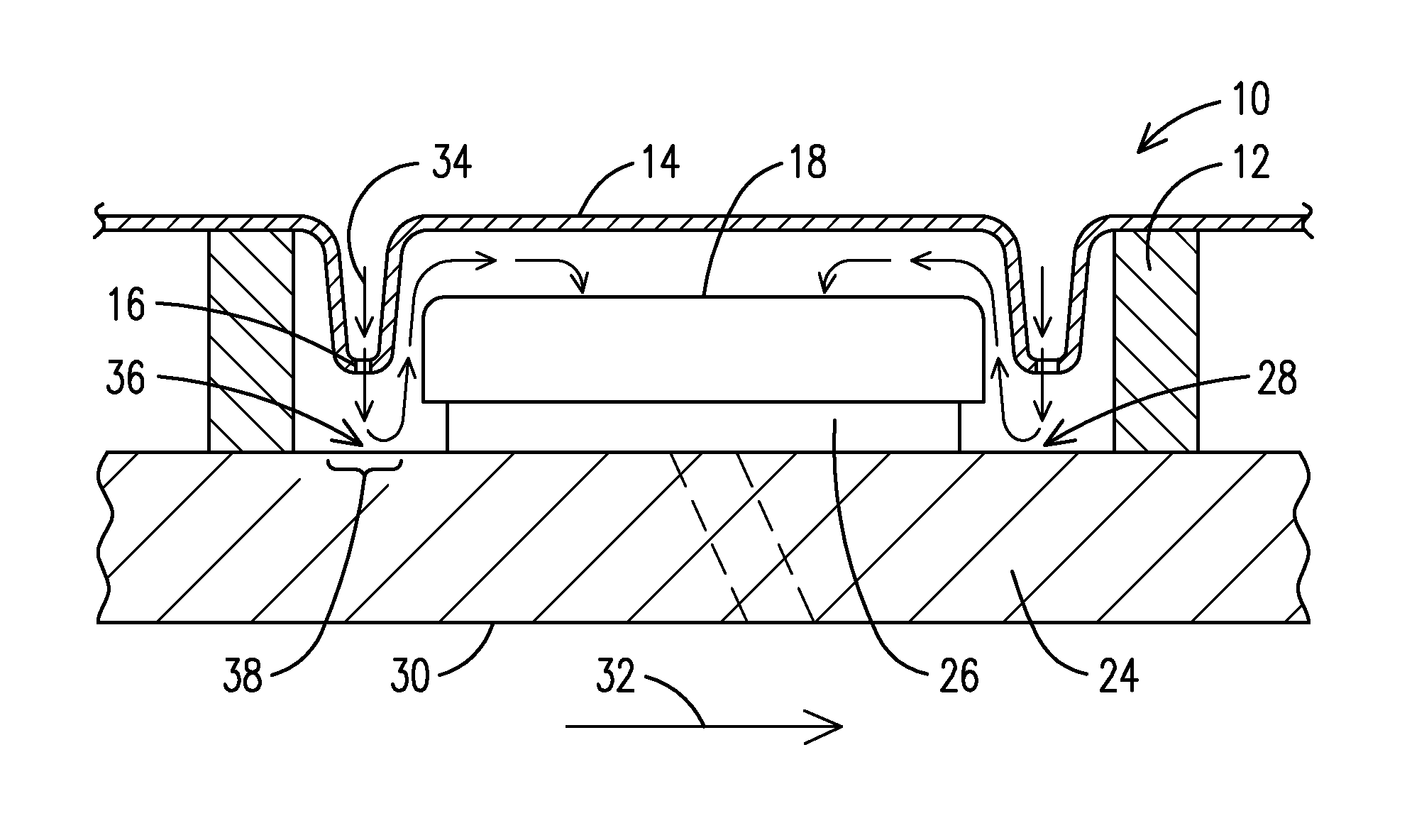
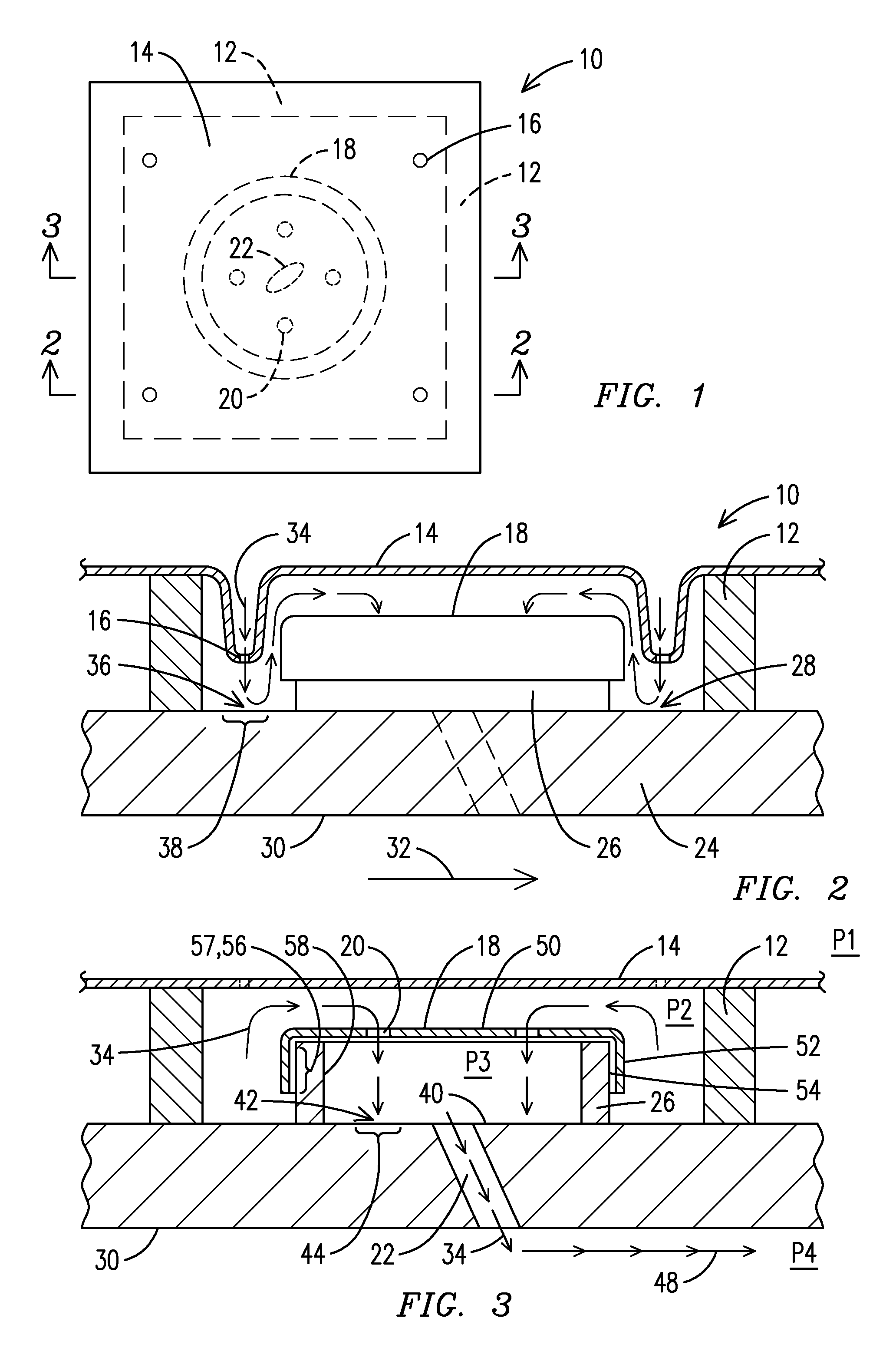
Impingement cooling arrangement with guided cooling air flow for cross-flow reduction in a gas turbine
PatentInactiveEP3425174A1
Innovation
- The proposed impingement cooling arrangement features linearly arranged impingement holes and corresponding ridge-shaped target regions with adjacent trenches that guide cooling air, minimizing cross-flow interference and ensuring consistent cooling efficiency across the target surface by directing impingement jets into trenches, thereby reducing cross-flow effects.


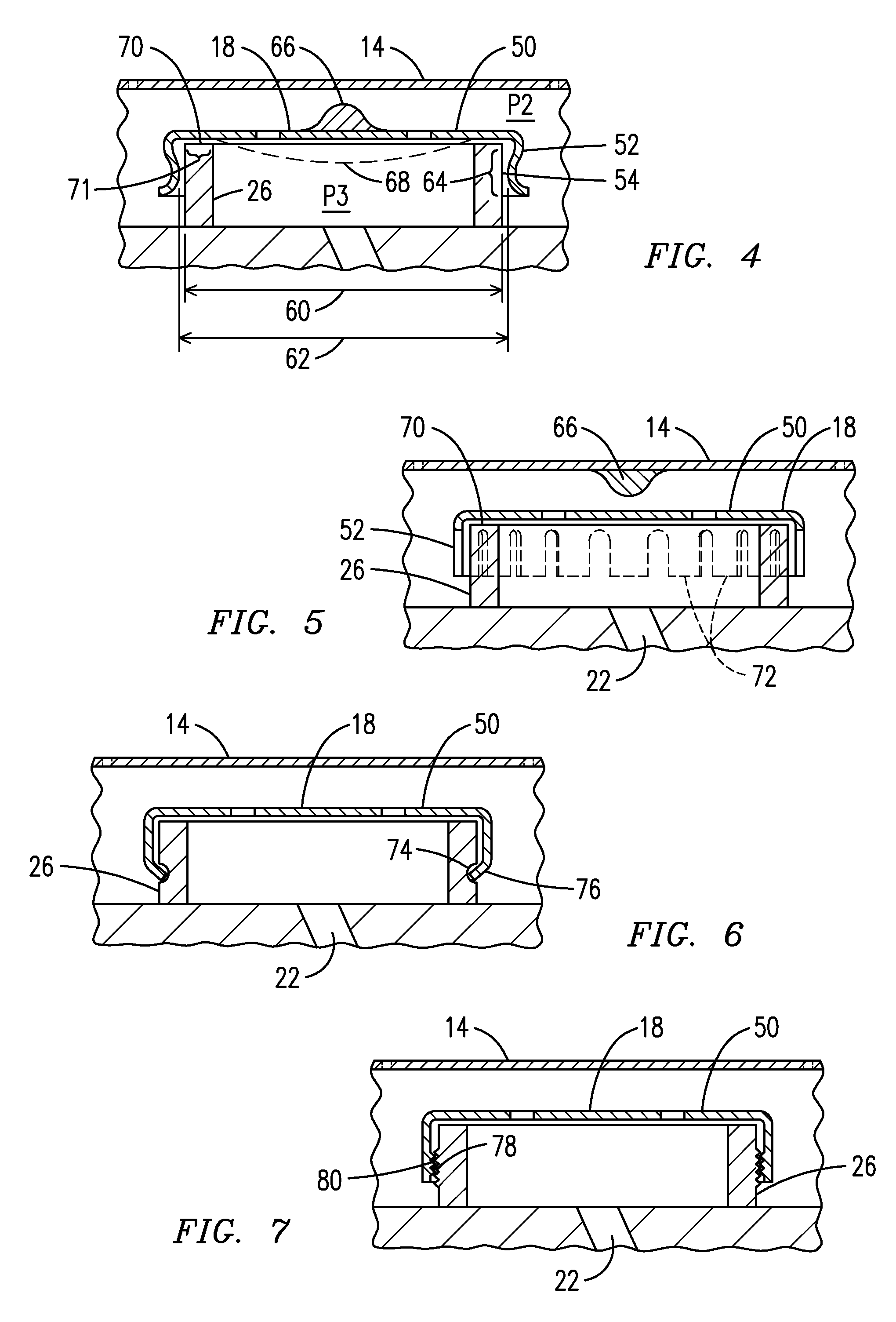
Two stage serial impingement cooling for isogrid structures
PatentInactiveUS8826668B2
Innovation
- A staged cooling system that separates the outer surface into regions with a series pathway for cooling air, using larger holes to distribute pressure drops effectively across multiple stages, minimizing thermal stress through mechanical and thermal decoupling of cooling components and optimizing air flow.

Environmental Standards for CNC Coolant Systems
Environmental standards for CNC coolant systems have evolved significantly to address the growing concerns about workplace safety, environmental protection, and sustainable manufacturing practices. These standards encompass multiple regulatory frameworks that govern the composition, application, disposal, and monitoring of coolant fluids used in precision machining operations.
The primary regulatory bodies establishing these standards include the Environmental Protection Agency (EPA), Occupational Safety and Health Administration (OSHA), and international organizations such as ISO and REACH. These agencies have developed comprehensive guidelines that specifically address the environmental impact of metalworking fluids, including those used in impingement cooling applications for high-precision CNC processes.
Current environmental standards mandate strict limits on volatile organic compounds (VOCs) emissions from coolant systems. The EPA's National Emission Standards for Hazardous Air Pollutants (NESHAP) requires CNC facilities to maintain VOC emissions below 0.02 pounds per gallon of coolant consumed. This regulation directly impacts impingement cooling systems, which typically operate at higher flow rates and may generate increased aerosol formation compared to conventional flood cooling methods.
Water quality standards represent another critical aspect of environmental compliance. The Clean Water Act establishes discharge limits for metalworking fluid constituents, including oil and grease concentrations not exceeding 15 mg/L for direct discharge and 100 mg/L for indirect discharge. Impingement cooling systems must incorporate advanced filtration and separation technologies to meet these stringent requirements while maintaining optimal cooling performance.
Biodegradability requirements have become increasingly important in coolant formulation standards. Modern environmental regulations favor synthetic and semi-synthetic coolants with biodegradation rates exceeding 60% within 28 days, as measured by OECD test methods. These requirements influence the selection of coolant additives and base fluids used in impingement cooling applications, potentially affecting heat transfer characteristics and cooling efficiency.
Workplace exposure limits for coolant mist and aerosols are governed by OSHA standards, which establish permissible exposure limits (PELs) for various coolant components. The current PEL for mineral oil mist stands at 5 mg/m³ as an 8-hour time-weighted average. Impingement cooling systems, due to their high-velocity fluid delivery mechanisms, require enhanced mist collection and ventilation systems to maintain compliance with these exposure standards.
Recent developments in environmental standards have introduced lifecycle assessment requirements for coolant systems. These standards evaluate the environmental impact from coolant production through disposal, encouraging the adoption of closed-loop systems and advanced recycling technologies. This trend particularly affects impingement cooling implementations, where precise fluid management and contamination control become essential for both performance optimization and environmental compliance.
The primary regulatory bodies establishing these standards include the Environmental Protection Agency (EPA), Occupational Safety and Health Administration (OSHA), and international organizations such as ISO and REACH. These agencies have developed comprehensive guidelines that specifically address the environmental impact of metalworking fluids, including those used in impingement cooling applications for high-precision CNC processes.
Current environmental standards mandate strict limits on volatile organic compounds (VOCs) emissions from coolant systems. The EPA's National Emission Standards for Hazardous Air Pollutants (NESHAP) requires CNC facilities to maintain VOC emissions below 0.02 pounds per gallon of coolant consumed. This regulation directly impacts impingement cooling systems, which typically operate at higher flow rates and may generate increased aerosol formation compared to conventional flood cooling methods.
Water quality standards represent another critical aspect of environmental compliance. The Clean Water Act establishes discharge limits for metalworking fluid constituents, including oil and grease concentrations not exceeding 15 mg/L for direct discharge and 100 mg/L for indirect discharge. Impingement cooling systems must incorporate advanced filtration and separation technologies to meet these stringent requirements while maintaining optimal cooling performance.
Biodegradability requirements have become increasingly important in coolant formulation standards. Modern environmental regulations favor synthetic and semi-synthetic coolants with biodegradation rates exceeding 60% within 28 days, as measured by OECD test methods. These requirements influence the selection of coolant additives and base fluids used in impingement cooling applications, potentially affecting heat transfer characteristics and cooling efficiency.
Workplace exposure limits for coolant mist and aerosols are governed by OSHA standards, which establish permissible exposure limits (PELs) for various coolant components. The current PEL for mineral oil mist stands at 5 mg/m³ as an 8-hour time-weighted average. Impingement cooling systems, due to their high-velocity fluid delivery mechanisms, require enhanced mist collection and ventilation systems to maintain compliance with these exposure standards.
Recent developments in environmental standards have introduced lifecycle assessment requirements for coolant systems. These standards evaluate the environmental impact from coolant production through disposal, encouraging the adoption of closed-loop systems and advanced recycling technologies. This trend particularly affects impingement cooling implementations, where precise fluid management and contamination control become essential for both performance optimization and environmental compliance.
Energy Efficiency Optimization in CNC Cooling
Energy efficiency optimization in CNC cooling systems represents a critical intersection of thermal management and sustainable manufacturing practices. The integration of impingement cooling technologies offers substantial opportunities for reducing energy consumption while maintaining or enhancing cooling performance in high-precision machining operations.
Traditional CNC cooling systems often operate with excessive energy overhead due to inefficient heat transfer mechanisms and oversized cooling capacities. Impingement cooling addresses these inefficiencies by delivering targeted, high-velocity coolant streams directly to heat-generating zones, thereby maximizing heat transfer coefficients while minimizing coolant flow rates. This targeted approach can reduce overall energy consumption by 25-40% compared to conventional flood cooling methods.
The energy optimization potential of impingement cooling stems from its ability to achieve superior heat removal rates at lower coolant volumes and pressures. By precisely controlling jet velocity, nozzle positioning, and flow patterns, manufacturers can maintain optimal cutting temperatures while significantly reducing pump power requirements and coolant circulation energy. Advanced control algorithms enable real-time adjustment of cooling parameters based on thermal feedback, further enhancing energy efficiency.
Variable-speed pump systems integrated with impingement cooling networks demonstrate remarkable energy savings through demand-responsive operation. These systems automatically adjust coolant flow rates and pressures according to instantaneous thermal loads, eliminating the energy waste associated with constant-flow cooling systems. Smart sensors monitor temperature gradients and automatically optimize jet configurations to maintain thermal stability with minimal energy input.
Heat recovery systems represent an emerging frontier in CNC cooling energy optimization. By capturing and redirecting waste heat from machining operations, these systems can preheat incoming coolant or provide supplementary heating for facility operations. When combined with impingement cooling's enhanced heat transfer capabilities, integrated heat recovery can improve overall system energy efficiency by up to 60%.
The implementation of energy-efficient impingement cooling requires careful consideration of system design parameters, including nozzle geometry, jet spacing, and coolant recirculation strategies. Computational fluid dynamics modeling enables optimization of these parameters to achieve maximum energy efficiency while maintaining precise thermal control throughout the machining process.
Traditional CNC cooling systems often operate with excessive energy overhead due to inefficient heat transfer mechanisms and oversized cooling capacities. Impingement cooling addresses these inefficiencies by delivering targeted, high-velocity coolant streams directly to heat-generating zones, thereby maximizing heat transfer coefficients while minimizing coolant flow rates. This targeted approach can reduce overall energy consumption by 25-40% compared to conventional flood cooling methods.
The energy optimization potential of impingement cooling stems from its ability to achieve superior heat removal rates at lower coolant volumes and pressures. By precisely controlling jet velocity, nozzle positioning, and flow patterns, manufacturers can maintain optimal cutting temperatures while significantly reducing pump power requirements and coolant circulation energy. Advanced control algorithms enable real-time adjustment of cooling parameters based on thermal feedback, further enhancing energy efficiency.
Variable-speed pump systems integrated with impingement cooling networks demonstrate remarkable energy savings through demand-responsive operation. These systems automatically adjust coolant flow rates and pressures according to instantaneous thermal loads, eliminating the energy waste associated with constant-flow cooling systems. Smart sensors monitor temperature gradients and automatically optimize jet configurations to maintain thermal stability with minimal energy input.
Heat recovery systems represent an emerging frontier in CNC cooling energy optimization. By capturing and redirecting waste heat from machining operations, these systems can preheat incoming coolant or provide supplementary heating for facility operations. When combined with impingement cooling's enhanced heat transfer capabilities, integrated heat recovery can improve overall system energy efficiency by up to 60%.
The implementation of energy-efficient impingement cooling requires careful consideration of system design parameters, including nozzle geometry, jet spacing, and coolant recirculation strategies. Computational fluid dynamics modeling enables optimization of these parameters to achieve maximum energy efficiency while maintaining precise thermal control throughout the machining process.
Unlock deeper insights with PatSnap Eureka Quick Research — get a full tech report to explore trends and direct your research. Try now!
Generate Your Research Report Instantly with AI Agent
Supercharge your innovation with PatSnap Eureka AI Agent Platform!