

Optimizing Sustainability in Battery Pack Frame Manufacturing
JUN 1, 20269 MIN READ
Generate Your Research Report Instantly with AI Agent
Patsnap Eureka helps you evaluate technical feasibility & market potential.
Battery Frame Sustainability Background and Objectives
The global shift toward electrification has positioned battery technology as a cornerstone of sustainable transportation and energy storage solutions. Within this ecosystem, battery pack frames serve as critical structural components that house and protect battery cells while ensuring thermal management, mechanical integrity, and electrical safety. However, traditional manufacturing approaches for these frames often rely on energy-intensive processes and materials with significant environmental footprints, creating a paradox where sustainable energy storage solutions are produced through unsustainable means.
The manufacturing of battery pack frames typically involves aluminum extrusion, steel stamping, or composite molding processes that consume substantial energy and generate considerable waste. Current production methods often prioritize cost efficiency and mechanical performance over environmental considerations, resulting in high carbon emissions, material waste, and limited end-of-life recyclability. This approach contradicts the fundamental sustainability goals that drive electric vehicle adoption and renewable energy storage deployment.
The urgency for sustainable battery frame manufacturing has intensified due to exponential growth in battery demand. Industry projections indicate that global battery production capacity will increase tenfold by 2030, making the environmental impact of manufacturing processes increasingly significant. Regulatory frameworks worldwide are implementing stricter environmental standards, while consumers and stakeholders demand greater transparency in supply chain sustainability metrics.
The primary objective of optimizing sustainability in battery pack frame manufacturing centers on developing production methodologies that minimize environmental impact while maintaining or enhancing performance characteristics. This encompasses reducing energy consumption during manufacturing, implementing circular economy principles through material selection and design for recyclability, and establishing closed-loop production systems that eliminate waste streams.
Secondary objectives include achieving carbon neutrality in manufacturing operations through renewable energy integration and process optimization. The development of bio-based or recycled materials for frame construction represents another critical goal, alongside the implementation of digital manufacturing technologies that enable precise material usage and reduce overproduction.
Long-term strategic objectives focus on creating industry-wide standards for sustainable battery frame manufacturing that can be adopted across different market segments. This includes establishing lifecycle assessment frameworks that accurately measure environmental impact from raw material extraction through end-of-life processing, enabling manufacturers to make data-driven decisions about process improvements and material selections.
The manufacturing of battery pack frames typically involves aluminum extrusion, steel stamping, or composite molding processes that consume substantial energy and generate considerable waste. Current production methods often prioritize cost efficiency and mechanical performance over environmental considerations, resulting in high carbon emissions, material waste, and limited end-of-life recyclability. This approach contradicts the fundamental sustainability goals that drive electric vehicle adoption and renewable energy storage deployment.
The urgency for sustainable battery frame manufacturing has intensified due to exponential growth in battery demand. Industry projections indicate that global battery production capacity will increase tenfold by 2030, making the environmental impact of manufacturing processes increasingly significant. Regulatory frameworks worldwide are implementing stricter environmental standards, while consumers and stakeholders demand greater transparency in supply chain sustainability metrics.
The primary objective of optimizing sustainability in battery pack frame manufacturing centers on developing production methodologies that minimize environmental impact while maintaining or enhancing performance characteristics. This encompasses reducing energy consumption during manufacturing, implementing circular economy principles through material selection and design for recyclability, and establishing closed-loop production systems that eliminate waste streams.
Secondary objectives include achieving carbon neutrality in manufacturing operations through renewable energy integration and process optimization. The development of bio-based or recycled materials for frame construction represents another critical goal, alongside the implementation of digital manufacturing technologies that enable precise material usage and reduce overproduction.
Long-term strategic objectives focus on creating industry-wide standards for sustainable battery frame manufacturing that can be adopted across different market segments. This includes establishing lifecycle assessment frameworks that accurately measure environmental impact from raw material extraction through end-of-life processing, enabling manufacturers to make data-driven decisions about process improvements and material selections.
Market Demand for Sustainable Battery Manufacturing
The global shift toward electrification has created unprecedented demand for sustainable battery manufacturing practices, driven by environmental regulations, consumer awareness, and corporate sustainability commitments. Battery pack frame manufacturing represents a critical component in this ecosystem, as frames constitute a significant portion of battery pack weight and material consumption. The automotive industry's transition to electric vehicles has intensified focus on reducing the environmental footprint of battery production processes.
Regulatory frameworks across major markets are establishing stringent requirements for sustainable manufacturing. The European Union's Battery Regulation mandates carbon footprint declarations and recycled content minimums, while similar initiatives in North America and Asia are creating compliance pressures. These regulations directly impact frame manufacturing, requiring companies to demonstrate measurable improvements in material sourcing, production efficiency, and end-of-life recyclability.
Consumer electronics manufacturers are increasingly prioritizing sustainability credentials in their supply chain decisions. Major technology companies have established carbon neutrality targets that extend to component suppliers, creating cascading demand for sustainable battery frame solutions. This trend is particularly pronounced in premium device segments where environmental responsibility has become a key differentiator.
The energy storage sector presents substantial growth opportunities for sustainable frame manufacturing. Grid-scale battery installations require massive quantities of frames, and project developers are increasingly evaluating lifecycle environmental impacts in procurement decisions. Utility companies and renewable energy developers are incorporating sustainability metrics into their vendor selection criteria, creating competitive advantages for manufacturers with optimized processes.
Material cost volatility has made sustainability economically attractive beyond regulatory compliance. Aluminum and steel price fluctuations have driven manufacturers to explore recycled content integration and material efficiency improvements. Lightweight frame designs that maintain structural integrity while reducing material consumption address both cost pressures and environmental objectives.
Supply chain resilience concerns have accelerated demand for localized, sustainable manufacturing capabilities. Recent disruptions have highlighted vulnerabilities in global supply networks, prompting battery manufacturers to prioritize suppliers with robust environmental and social governance practices. This shift creates opportunities for frame manufacturers who can demonstrate sustainable operations while maintaining supply security.
The circular economy model is gaining traction in battery manufacturing, with frame recyclability becoming a key specification requirement. Battery manufacturers are designing products with end-of-life considerations, necessitating frame designs that facilitate material recovery and reuse. This trend is creating new market segments focused on design-for-recycling approaches and closed-loop material systems.
Regulatory frameworks across major markets are establishing stringent requirements for sustainable manufacturing. The European Union's Battery Regulation mandates carbon footprint declarations and recycled content minimums, while similar initiatives in North America and Asia are creating compliance pressures. These regulations directly impact frame manufacturing, requiring companies to demonstrate measurable improvements in material sourcing, production efficiency, and end-of-life recyclability.
Consumer electronics manufacturers are increasingly prioritizing sustainability credentials in their supply chain decisions. Major technology companies have established carbon neutrality targets that extend to component suppliers, creating cascading demand for sustainable battery frame solutions. This trend is particularly pronounced in premium device segments where environmental responsibility has become a key differentiator.
The energy storage sector presents substantial growth opportunities for sustainable frame manufacturing. Grid-scale battery installations require massive quantities of frames, and project developers are increasingly evaluating lifecycle environmental impacts in procurement decisions. Utility companies and renewable energy developers are incorporating sustainability metrics into their vendor selection criteria, creating competitive advantages for manufacturers with optimized processes.
Material cost volatility has made sustainability economically attractive beyond regulatory compliance. Aluminum and steel price fluctuations have driven manufacturers to explore recycled content integration and material efficiency improvements. Lightweight frame designs that maintain structural integrity while reducing material consumption address both cost pressures and environmental objectives.
Supply chain resilience concerns have accelerated demand for localized, sustainable manufacturing capabilities. Recent disruptions have highlighted vulnerabilities in global supply networks, prompting battery manufacturers to prioritize suppliers with robust environmental and social governance practices. This shift creates opportunities for frame manufacturers who can demonstrate sustainable operations while maintaining supply security.
The circular economy model is gaining traction in battery manufacturing, with frame recyclability becoming a key specification requirement. Battery manufacturers are designing products with end-of-life considerations, necessitating frame designs that facilitate material recovery and reuse. This trend is creating new market segments focused on design-for-recycling approaches and closed-loop material systems.
Current Sustainability Challenges in Frame Production
Battery pack frame manufacturing faces significant sustainability challenges that stem from material selection, production processes, and end-of-life management. Traditional frame materials, primarily aluminum and steel, require energy-intensive extraction and processing methods that contribute substantially to carbon emissions. The aluminum smelting process alone accounts for approximately 3% of global greenhouse gas emissions, while steel production generates roughly 1.85 tons of CO2 per ton of steel produced.
Manufacturing processes present another critical sustainability bottleneck. Conventional welding techniques consume substantial electrical energy and often require protective atmospheres using inert gases, increasing the overall environmental footprint. Machining operations generate significant material waste, with typical waste rates ranging from 15-30% of raw materials. Additionally, surface treatment processes frequently involve chemical coatings and primers that contain volatile organic compounds and heavy metals, posing environmental and health risks.
Supply chain sustainability represents a complex challenge in frame production. Raw material sourcing often involves long transportation distances, contributing to carbon emissions and supply chain vulnerabilities. The lack of transparency in supplier networks makes it difficult to ensure sustainable practices throughout the value chain. Many suppliers still rely on fossil fuel-powered equipment and lack comprehensive environmental management systems.
Waste management and recycling present ongoing difficulties in current production systems. Mixed material compositions in frame assemblies complicate recycling processes, as different metals require separate processing streams. Adhesives and joining compounds used in frame construction often prevent effective material separation during recycling. Current recycling rates for battery pack frames remain below 60%, indicating substantial room for improvement.
Energy consumption during manufacturing operations continues to be a major sustainability concern. Traditional production facilities often lack energy-efficient equipment and rely heavily on grid electricity from non-renewable sources. Heat treatment processes, essential for achieving required mechanical properties, consume significant thermal energy and often operate at suboptimal efficiency levels.
Quality control and rework processes add additional sustainability burdens. Defective frames require reprocessing or disposal, multiplying the environmental impact per functional unit. Current quality systems often detect issues late in the production process, maximizing waste and energy consumption. The lack of real-time monitoring systems prevents optimization of resource utilization during manufacturing operations.
Manufacturing processes present another critical sustainability bottleneck. Conventional welding techniques consume substantial electrical energy and often require protective atmospheres using inert gases, increasing the overall environmental footprint. Machining operations generate significant material waste, with typical waste rates ranging from 15-30% of raw materials. Additionally, surface treatment processes frequently involve chemical coatings and primers that contain volatile organic compounds and heavy metals, posing environmental and health risks.
Supply chain sustainability represents a complex challenge in frame production. Raw material sourcing often involves long transportation distances, contributing to carbon emissions and supply chain vulnerabilities. The lack of transparency in supplier networks makes it difficult to ensure sustainable practices throughout the value chain. Many suppliers still rely on fossil fuel-powered equipment and lack comprehensive environmental management systems.
Waste management and recycling present ongoing difficulties in current production systems. Mixed material compositions in frame assemblies complicate recycling processes, as different metals require separate processing streams. Adhesives and joining compounds used in frame construction often prevent effective material separation during recycling. Current recycling rates for battery pack frames remain below 60%, indicating substantial room for improvement.
Energy consumption during manufacturing operations continues to be a major sustainability concern. Traditional production facilities often lack energy-efficient equipment and rely heavily on grid electricity from non-renewable sources. Heat treatment processes, essential for achieving required mechanical properties, consume significant thermal energy and often operate at suboptimal efficiency levels.
Quality control and rework processes add additional sustainability burdens. Defective frames require reprocessing or disposal, multiplying the environmental impact per functional unit. Current quality systems often detect issues late in the production process, maximizing waste and energy consumption. The lack of real-time monitoring systems prevents optimization of resource utilization during manufacturing operations.
Current Sustainable Manufacturing Solutions
01 Lightweight and structural optimization of battery pack frames
Battery pack frames can be designed with optimized structural configurations to reduce weight while maintaining mechanical strength and durability. This includes the use of advanced geometric designs, hollow structures, and reinforcement patterns that minimize material usage without compromising safety and performance. Such optimization contributes to overall sustainability by reducing material consumption and improving energy efficiency.- Lightweight and structural optimization of battery pack frames: Battery pack frames can be designed with optimized structural configurations to reduce weight while maintaining mechanical strength and durability. This includes the use of advanced geometric designs, hollow structures, and reinforcement patterns that minimize material usage without compromising safety requirements. Such optimization contributes to overall vehicle efficiency and reduces environmental impact through material conservation.
- Use of recyclable and eco-friendly materials: Sustainable battery pack frames incorporate recyclable materials such as aluminum alloys, recycled plastics, and bio-based composites. These materials can be processed and reused at the end of the battery pack's lifecycle, reducing waste generation and environmental impact. The selection of materials also considers their carbon footprint during production and their ability to be efficiently separated during recycling processes.
- Modular design for enhanced repairability and reusability: Modular battery pack frame designs enable easy disassembly and component replacement, extending the overall lifespan of the system. This approach allows for selective replacement of damaged parts rather than complete frame replacement, reducing material waste and maintenance costs. Modular designs also facilitate upgrades and adaptations for different applications, maximizing the utility of existing components.
- Integration of thermal management systems for longevity: Sustainable battery pack frames incorporate integrated thermal management features that help maintain optimal operating temperatures, thereby extending battery life and reducing the frequency of replacements. These systems include heat dissipation channels, thermal interface materials, and cooling pathways that are built into the frame structure. Effective thermal management reduces degradation rates and improves overall system sustainability.
- End-of-life design considerations and circular economy principles: Battery pack frames designed with end-of-life considerations incorporate features that facilitate disassembly, material separation, and component recovery. This includes the use of reversible joining methods, material identification markings, and design strategies that enable efficient recycling processes. Such approaches support circular economy principles by ensuring that materials can be effectively recovered and reintroduced into new manufacturing cycles.
02 Recyclable and eco-friendly materials for frame construction
The incorporation of recyclable materials and environmentally friendly composites in battery pack frame manufacturing enhances sustainability. These materials can include recycled metals, bio-based polymers, and sustainable composite materials that reduce environmental impact throughout the product lifecycle. The selection of such materials supports circular economy principles and reduces carbon footprint.Expand Specific Solutions03 Modular and repairable frame designs
Modular frame architectures enable easy disassembly, repair, and component replacement, extending the overall lifespan of battery packs. These designs facilitate maintenance operations and allow for selective replacement of damaged sections rather than complete frame replacement. This approach significantly reduces waste generation and supports sustainable product lifecycle management.Expand Specific Solutions04 Manufacturing process optimization for sustainability
Advanced manufacturing techniques and processes that minimize energy consumption, reduce waste generation, and optimize material utilization during frame production. This includes innovative joining methods, efficient forming processes, and manufacturing approaches that reduce environmental impact while maintaining product quality and performance standards.Expand Specific Solutions05 End-of-life considerations and circular design principles
Frame designs that incorporate end-of-life planning, including easy material separation for recycling, component recovery systems, and design features that facilitate proper disposal or reuse. These approaches ensure that battery pack frames can be effectively processed at the end of their service life, supporting circular economy objectives and minimizing environmental impact.Expand Specific Solutions
Key Players in Sustainable Battery Frame Industry
The battery pack frame manufacturing sustainability sector represents a rapidly evolving market driven by the global electric vehicle transition and energy storage demands. The industry is in a growth phase, with market expansion fueled by increasing EV adoption and regulatory sustainability mandates. Technology maturity varies significantly across players, with established battery manufacturers like LG Energy Solution, Samsung SDI, and BYD demonstrating advanced sustainable manufacturing capabilities through integrated production systems and circular economy approaches. Chinese companies including EVE Energy, Svolt Energy, and Hubei Yiwei Power are rapidly scaling sustainable production technologies, while automotive giants Toyota and Honda are implementing lean manufacturing principles for battery frame sustainability. Traditional suppliers like Bosch and Magna International are leveraging their manufacturing expertise to develop eco-friendly frame solutions, indicating a competitive landscape where technological innovation in sustainable materials, recycling processes, and energy-efficient production methods will determine market leadership positions.
LG Energy Solution Ltd.
Technical Solution: LG Energy Solution has developed an integrated approach to sustainable battery pack frame manufacturing through their advanced aluminum extrusion and welding technologies. Their manufacturing process incorporates recycled aluminum content up to 75% in frame structures while maintaining structural integrity through proprietary heat treatment processes. The company has implemented closed-loop manufacturing systems that reduce material waste by 40% and energy consumption by 25% compared to traditional methods. Their modular frame design allows for easier disassembly and component recycling at end-of-life, supporting circular economy principles in battery manufacturing.
Strengths: Industry-leading recycling integration, proven scalability in mass production, strong R&D capabilities. Weaknesses: High initial capital investment requirements, dependency on aluminum supply chain stability.
Samsung SDI Co., Ltd.
Technical Solution: Samsung SDI has developed an innovative approach to sustainable battery pack frame manufacturing through their advanced materials engineering and precision manufacturing technologies. The company utilizes a hybrid aluminum-steel construction methodology that optimizes material properties while reducing overall environmental impact. Their manufacturing process incorporates laser welding technology that reduces energy consumption by 35% compared to traditional welding methods, while achieving superior joint quality and structural integrity. Samsung SDI has implemented a closed-loop water recycling system in their manufacturing facilities, reducing water consumption by 50% and eliminating wastewater discharge. The company's frame design features standardized connection interfaces that facilitate easier battery module replacement and extend overall system lifecycle.
Strengths: Advanced laser welding technology, comprehensive resource recycling systems, standardized design approach for serviceability. Weaknesses: Limited experience in automotive-grade manufacturing volumes, higher production costs due to precision manufacturing requirements.
Core Innovations in Eco-Friendly Frame Technologies
Battery pack and frame for battery pack
PatentWO2020135154A1
Innovation
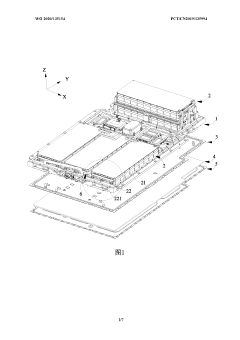
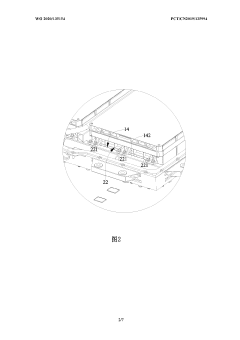
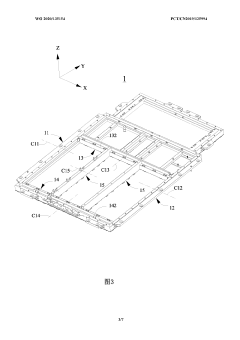
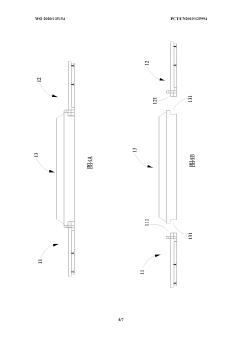
- The frame design includes the first beam, the second beam, the third beam and the fourth beam. The battery module is supported by the step overlap method, which reduces the support strength requirements for the heat exchange plate and improves the stiffness and strength of the battery pack. Design simplicity.
Battery pack frame assemblies
PatentPendingUS20240258623A1
Innovation
- A battery pack frame assembly featuring a reinforcing insert with a plurality of ridges and valleys within a cavity, combined with foam material to enhance rigidity and secure the insert, allowing for even load distribution and minimizing deformations.


Environmental Regulations for Battery Manufacturing
The regulatory landscape for battery manufacturing has evolved significantly in response to growing environmental concerns and the rapid expansion of the electric vehicle market. Global environmental regulations now encompass comprehensive frameworks addressing the entire lifecycle of battery production, from raw material extraction to end-of-life disposal. These regulations are becoming increasingly stringent, with particular emphasis on reducing carbon footprints, minimizing toxic emissions, and ensuring responsible sourcing of critical materials.
In the European Union, the Battery Regulation (EU) 2023/1542 represents one of the most comprehensive regulatory frameworks, establishing mandatory carbon footprint declarations for electric vehicle batteries and industrial batteries above 2kWh. This regulation requires manufacturers to provide detailed lifecycle assessments and implement due diligence measures for responsible sourcing. The regulation also mandates minimum recycled content requirements, with specific targets for cobalt, lithium, nickel, and lead recovery from waste batteries.
The United States follows a more fragmented approach through various federal and state-level regulations. The Environmental Protection Agency (EPA) oversees air quality standards under the Clean Air Act, while the Resource Conservation and Recovery Act (RCRA) governs hazardous waste management in battery manufacturing facilities. California's Advanced Clean Cars II regulation and similar state-level initiatives are driving additional compliance requirements for battery manufacturers serving the North American market.
China has implemented the Administrative Measures for the Recycling and Utilization of New Energy Vehicle Power Batteries, establishing a comprehensive traceability system for battery lifecycle management. The regulation requires manufacturers to establish recycling networks and meet specific recovery rate targets. Additionally, China's carbon neutrality commitments have led to stricter emissions standards for manufacturing facilities.
Emerging regulatory trends focus on supply chain transparency, with increasing requirements for conflict mineral reporting and environmental impact assessments of mining operations. The concept of "battery passports" is gaining traction, requiring digital documentation of each battery's environmental footprint, material composition, and recycling information throughout its lifecycle.
Compliance challenges for battery pack frame manufacturers include adapting production processes to meet evolving emissions standards, implementing comprehensive material tracking systems, and ensuring supplier compliance across global supply chains. Non-compliance risks include substantial financial penalties, market access restrictions, and reputational damage in an increasingly environmentally conscious marketplace.
In the European Union, the Battery Regulation (EU) 2023/1542 represents one of the most comprehensive regulatory frameworks, establishing mandatory carbon footprint declarations for electric vehicle batteries and industrial batteries above 2kWh. This regulation requires manufacturers to provide detailed lifecycle assessments and implement due diligence measures for responsible sourcing. The regulation also mandates minimum recycled content requirements, with specific targets for cobalt, lithium, nickel, and lead recovery from waste batteries.
The United States follows a more fragmented approach through various federal and state-level regulations. The Environmental Protection Agency (EPA) oversees air quality standards under the Clean Air Act, while the Resource Conservation and Recovery Act (RCRA) governs hazardous waste management in battery manufacturing facilities. California's Advanced Clean Cars II regulation and similar state-level initiatives are driving additional compliance requirements for battery manufacturers serving the North American market.
China has implemented the Administrative Measures for the Recycling and Utilization of New Energy Vehicle Power Batteries, establishing a comprehensive traceability system for battery lifecycle management. The regulation requires manufacturers to establish recycling networks and meet specific recovery rate targets. Additionally, China's carbon neutrality commitments have led to stricter emissions standards for manufacturing facilities.
Emerging regulatory trends focus on supply chain transparency, with increasing requirements for conflict mineral reporting and environmental impact assessments of mining operations. The concept of "battery passports" is gaining traction, requiring digital documentation of each battery's environmental footprint, material composition, and recycling information throughout its lifecycle.
Compliance challenges for battery pack frame manufacturers include adapting production processes to meet evolving emissions standards, implementing comprehensive material tracking systems, and ensuring supplier compliance across global supply chains. Non-compliance risks include substantial financial penalties, market access restrictions, and reputational damage in an increasingly environmentally conscious marketplace.
Circular Economy in Battery Frame Lifecycle
The circular economy framework represents a paradigm shift in battery pack frame manufacturing, moving away from the traditional linear "take-make-dispose" model toward a regenerative system that maximizes resource utilization and minimizes waste. This approach encompasses the entire lifecycle of battery frames, from raw material extraction through end-of-life recovery, creating closed-loop systems that continuously circulate materials and components within the manufacturing ecosystem.
Design for circularity principles are fundamental to implementing circular economy strategies in battery frame manufacturing. This involves incorporating modularity, repairability, and material recoverability considerations from the initial design phase. Manufacturers are increasingly adopting design methodologies that prioritize material selection based on recyclability potential, joint mechanisms that facilitate disassembly, and standardized components that enable cross-platform compatibility and reuse.
Material flow optimization within circular systems focuses on establishing efficient reverse logistics networks and material recovery processes. Advanced sorting technologies, including AI-powered material identification systems and automated disassembly equipment, enable precise separation of aluminum, steel, and composite materials from end-of-life battery frames. These recovered materials can achieve quality levels suitable for reintegration into new frame production, reducing dependency on virgin material inputs by up to 60%.
Industrial symbiosis networks are emerging as critical enablers of circular economy implementation, where waste outputs from battery frame manufacturing become valuable inputs for other industrial processes. Aluminum shavings and offcuts from frame machining operations can be directly supplied to casting facilities, while polymer waste from composite frame production serves as feedstock for chemical recycling processes that regenerate high-quality raw materials.
Digital technologies play an increasingly important role in enabling circular economy practices through comprehensive lifecycle tracking and optimization. Blockchain-based material passports provide detailed provenance information for recycled materials, while IoT sensors embedded in battery frames enable real-time monitoring of structural integrity and performance degradation, facilitating predictive maintenance and optimal end-of-life timing decisions.
Economic viability of circular approaches is enhanced through innovative business models that capture value from extended product lifecycles. Service-based models, where manufacturers retain ownership of frames and provide performance guarantees, incentivize durability and repairability while creating revenue streams from refurbishment and component recovery operations.
Design for circularity principles are fundamental to implementing circular economy strategies in battery frame manufacturing. This involves incorporating modularity, repairability, and material recoverability considerations from the initial design phase. Manufacturers are increasingly adopting design methodologies that prioritize material selection based on recyclability potential, joint mechanisms that facilitate disassembly, and standardized components that enable cross-platform compatibility and reuse.
Material flow optimization within circular systems focuses on establishing efficient reverse logistics networks and material recovery processes. Advanced sorting technologies, including AI-powered material identification systems and automated disassembly equipment, enable precise separation of aluminum, steel, and composite materials from end-of-life battery frames. These recovered materials can achieve quality levels suitable for reintegration into new frame production, reducing dependency on virgin material inputs by up to 60%.
Industrial symbiosis networks are emerging as critical enablers of circular economy implementation, where waste outputs from battery frame manufacturing become valuable inputs for other industrial processes. Aluminum shavings and offcuts from frame machining operations can be directly supplied to casting facilities, while polymer waste from composite frame production serves as feedstock for chemical recycling processes that regenerate high-quality raw materials.
Digital technologies play an increasingly important role in enabling circular economy practices through comprehensive lifecycle tracking and optimization. Blockchain-based material passports provide detailed provenance information for recycled materials, while IoT sensors embedded in battery frames enable real-time monitoring of structural integrity and performance degradation, facilitating predictive maintenance and optimal end-of-life timing decisions.
Economic viability of circular approaches is enhanced through innovative business models that capture value from extended product lifecycles. Service-based models, where manufacturers retain ownership of frames and provide performance guarantees, incentivize durability and repairability while creating revenue streams from refurbishment and component recovery operations.
Unlock deeper insights with Patsnap Eureka Quick Research — get a full tech report to explore trends and direct your research. Try now!
Generate Your Research Report Instantly with AI Agent
Supercharge your innovation with Patsnap Eureka AI Agent Platform!