Osmotic Power and Renewable Integration: Enhancing Yield
APR 20, 20269 MIN READ
Generate Your Research Report Instantly with AI Agent
PatSnap Eureka helps you evaluate technical feasibility & market potential.
Osmotic Power Technology Background and Integration Goals
Osmotic power, also known as salinity gradient power or blue energy, represents a promising renewable energy technology that harnesses the chemical potential difference between solutions of varying salt concentrations. This phenomenon occurs naturally where freshwater rivers meet seawater, creating an osmotic pressure differential that can be converted into electrical energy through specialized membrane technologies. The fundamental principle relies on the natural tendency of water molecules to move across semi-permeable membranes from areas of low solute concentration to high solute concentration, generating measurable pressure that can drive turbines or other energy conversion systems.
The historical development of osmotic power technology traces back to the 1970s when researchers first recognized the theoretical potential of salinity gradients as an energy source. Early investigations focused on understanding the thermodynamic principles governing osmotic processes and identifying suitable membrane materials. The technology gained renewed attention during the global energy crisis, as scientists sought alternative renewable energy sources beyond traditional solar, wind, and hydroelectric systems.
Current technological evolution demonstrates significant progress in membrane efficiency and system design optimization. Modern osmotic power systems primarily utilize two distinct approaches: pressure retarded osmosis and reverse electrodialysis. These methodologies have evolved from laboratory-scale experiments to pilot-scale demonstrations, with several countries investing in research facilities to explore commercial viability. The technology has progressed through multiple generations of membrane materials, from early cellulose-based systems to advanced thin-film composite membranes designed specifically for osmotic applications.
The integration goals for osmotic power technology center on achieving seamless compatibility with existing renewable energy infrastructure while maximizing overall system yield. Primary objectives include developing hybrid systems that combine osmotic power with solar, wind, or tidal energy sources to create more stable and predictable power generation profiles. These integration strategies aim to address the intermittency challenges commonly associated with renewable energy systems by providing continuous baseload power generation capabilities.
Enhanced yield optimization represents a critical technological target, focusing on improving membrane performance, reducing fouling effects, and maximizing energy extraction efficiency from available salinity gradients. Advanced integration goals encompass the development of smart grid compatibility, energy storage integration, and scalable modular designs that can adapt to various geographical and environmental conditions while maintaining economic viability for widespread commercial deployment.
The historical development of osmotic power technology traces back to the 1970s when researchers first recognized the theoretical potential of salinity gradients as an energy source. Early investigations focused on understanding the thermodynamic principles governing osmotic processes and identifying suitable membrane materials. The technology gained renewed attention during the global energy crisis, as scientists sought alternative renewable energy sources beyond traditional solar, wind, and hydroelectric systems.
Current technological evolution demonstrates significant progress in membrane efficiency and system design optimization. Modern osmotic power systems primarily utilize two distinct approaches: pressure retarded osmosis and reverse electrodialysis. These methodologies have evolved from laboratory-scale experiments to pilot-scale demonstrations, with several countries investing in research facilities to explore commercial viability. The technology has progressed through multiple generations of membrane materials, from early cellulose-based systems to advanced thin-film composite membranes designed specifically for osmotic applications.
The integration goals for osmotic power technology center on achieving seamless compatibility with existing renewable energy infrastructure while maximizing overall system yield. Primary objectives include developing hybrid systems that combine osmotic power with solar, wind, or tidal energy sources to create more stable and predictable power generation profiles. These integration strategies aim to address the intermittency challenges commonly associated with renewable energy systems by providing continuous baseload power generation capabilities.
Enhanced yield optimization represents a critical technological target, focusing on improving membrane performance, reducing fouling effects, and maximizing energy extraction efficiency from available salinity gradients. Advanced integration goals encompass the development of smart grid compatibility, energy storage integration, and scalable modular designs that can adapt to various geographical and environmental conditions while maintaining economic viability for widespread commercial deployment.
Market Demand for Osmotic Power in Renewable Energy Mix
The global energy transition toward renewable sources has created unprecedented demand for innovative technologies that can enhance grid stability and energy security. Osmotic power, leveraging salinity gradients to generate electricity, represents a compelling addition to the renewable energy portfolio due to its unique characteristics of continuous baseload generation and predictable output patterns. Unlike solar and wind resources that exhibit intermittent generation profiles, osmotic power systems can provide steady electricity production, addressing one of the most critical challenges in renewable energy integration.
Market drivers for osmotic power integration stem from increasing renewable energy mandates worldwide and the growing recognition of energy storage limitations. Grid operators face mounting pressure to maintain system reliability while incorporating higher percentages of variable renewable sources. Osmotic power technology offers a natural complement to existing renewable infrastructure by providing consistent power output that can help balance grid fluctuations without requiring extensive battery storage systems or backup fossil fuel generation.
The coastal regions with substantial renewable energy installations present the most immediate market opportunities for osmotic power deployment. These areas typically feature established transmission infrastructure, proximity to seawater sources, and existing renewable energy development frameworks. European markets, particularly in Norway, the Netherlands, and Denmark, demonstrate strong policy support for innovative renewable technologies and have allocated significant funding for osmotic power research and demonstration projects.
Industrial sectors with high energy intensity and sustainability commitments represent another significant demand segment. Data centers, manufacturing facilities, and desalination plants located in coastal areas increasingly seek reliable renewable energy sources to meet corporate sustainability targets while ensuring operational continuity. Osmotic power systems can provide these facilities with consistent clean energy that complements their existing renewable energy procurement strategies.
The emerging concept of hybrid renewable energy systems has further amplified market interest in osmotic power technology. Energy developers recognize the potential for combining osmotic power with offshore wind farms, coastal solar installations, and tidal energy systems to create more robust and economically viable renewable energy projects. This integrated approach can optimize land use, share infrastructure costs, and provide more stable revenue streams for project investors.
Regulatory frameworks supporting renewable energy diversification continue to evolve, creating favorable market conditions for osmotic power adoption. Feed-in tariffs, renewable energy certificates, and carbon pricing mechanisms increasingly recognize the value of baseload renewable generation, positioning osmotic power as an attractive investment opportunity for utilities and independent power producers seeking to expand their clean energy portfolios.
Market drivers for osmotic power integration stem from increasing renewable energy mandates worldwide and the growing recognition of energy storage limitations. Grid operators face mounting pressure to maintain system reliability while incorporating higher percentages of variable renewable sources. Osmotic power technology offers a natural complement to existing renewable infrastructure by providing consistent power output that can help balance grid fluctuations without requiring extensive battery storage systems or backup fossil fuel generation.
The coastal regions with substantial renewable energy installations present the most immediate market opportunities for osmotic power deployment. These areas typically feature established transmission infrastructure, proximity to seawater sources, and existing renewable energy development frameworks. European markets, particularly in Norway, the Netherlands, and Denmark, demonstrate strong policy support for innovative renewable technologies and have allocated significant funding for osmotic power research and demonstration projects.
Industrial sectors with high energy intensity and sustainability commitments represent another significant demand segment. Data centers, manufacturing facilities, and desalination plants located in coastal areas increasingly seek reliable renewable energy sources to meet corporate sustainability targets while ensuring operational continuity. Osmotic power systems can provide these facilities with consistent clean energy that complements their existing renewable energy procurement strategies.
The emerging concept of hybrid renewable energy systems has further amplified market interest in osmotic power technology. Energy developers recognize the potential for combining osmotic power with offshore wind farms, coastal solar installations, and tidal energy systems to create more robust and economically viable renewable energy projects. This integrated approach can optimize land use, share infrastructure costs, and provide more stable revenue streams for project investors.
Regulatory frameworks supporting renewable energy diversification continue to evolve, creating favorable market conditions for osmotic power adoption. Feed-in tariffs, renewable energy certificates, and carbon pricing mechanisms increasingly recognize the value of baseload renewable generation, positioning osmotic power as an attractive investment opportunity for utilities and independent power producers seeking to expand their clean energy portfolios.
Current State and Challenges of Osmotic Power Systems
Osmotic power technology has reached a critical juncture in its development trajectory, with several demonstration plants worldwide providing valuable insights into both the potential and limitations of this renewable energy source. The current global capacity remains modest, with Norway's Statkraft prototype facility and the Netherlands' REDstack pilot project representing the most advanced implementations. These installations typically generate power outputs ranging from 2-5 kW, significantly below the theoretical potential calculated from laboratory conditions.
The fundamental challenge lies in the substantial gap between theoretical energy density and practical energy conversion efficiency. While osmotic gradients between seawater and freshwater theoretically offer energy densities of approximately 2.2 kWh per cubic meter of freshwater, current membrane technologies achieve conversion efficiencies of only 1-3%. This dramatic shortfall stems primarily from membrane performance limitations, including insufficient selectivity, low water permeability, and rapid fouling under real-world operating conditions.
Membrane fouling represents the most persistent operational challenge, with organic matter, suspended particles, and biological growth significantly degrading system performance within weeks of operation. Current cleaning protocols require frequent maintenance cycles, substantially increasing operational costs and reducing system availability. The economic viability threshold remains elusive, with current levelized cost of electricity estimates ranging from $0.50 to $1.20 per kWh, far exceeding competitive renewable energy sources.
Technological constraints extend beyond membrane performance to encompass system-level integration challenges. Pressure exchanger efficiency, pumping energy requirements, and heat management systems collectively consume 40-60% of generated power in existing installations. The scaling behavior of osmotic power systems presents additional complexity, as larger installations face exponentially increasing challenges in maintaining uniform flow distribution and membrane performance across extensive membrane arrays.
Geographic distribution of osmotic power development reflects both resource availability and technological capabilities. Northern European countries, particularly Norway and the Netherlands, lead in practical implementation due to favorable salinity gradients and advanced membrane research capabilities. However, regions with the highest theoretical potential, including river deltas in Asia and South America, lack the technological infrastructure for large-scale deployment.
Integration with existing renewable energy infrastructure presents both opportunities and challenges. While osmotic power offers consistent baseload generation potential, current power output variability and maintenance requirements complicate grid integration strategies. The technology's dependence on freshwater resources also creates potential conflicts with water supply systems, particularly in water-stressed regions where osmotic gradients are often most pronounced.
The fundamental challenge lies in the substantial gap between theoretical energy density and practical energy conversion efficiency. While osmotic gradients between seawater and freshwater theoretically offer energy densities of approximately 2.2 kWh per cubic meter of freshwater, current membrane technologies achieve conversion efficiencies of only 1-3%. This dramatic shortfall stems primarily from membrane performance limitations, including insufficient selectivity, low water permeability, and rapid fouling under real-world operating conditions.
Membrane fouling represents the most persistent operational challenge, with organic matter, suspended particles, and biological growth significantly degrading system performance within weeks of operation. Current cleaning protocols require frequent maintenance cycles, substantially increasing operational costs and reducing system availability. The economic viability threshold remains elusive, with current levelized cost of electricity estimates ranging from $0.50 to $1.20 per kWh, far exceeding competitive renewable energy sources.
Technological constraints extend beyond membrane performance to encompass system-level integration challenges. Pressure exchanger efficiency, pumping energy requirements, and heat management systems collectively consume 40-60% of generated power in existing installations. The scaling behavior of osmotic power systems presents additional complexity, as larger installations face exponentially increasing challenges in maintaining uniform flow distribution and membrane performance across extensive membrane arrays.
Geographic distribution of osmotic power development reflects both resource availability and technological capabilities. Northern European countries, particularly Norway and the Netherlands, lead in practical implementation due to favorable salinity gradients and advanced membrane research capabilities. However, regions with the highest theoretical potential, including river deltas in Asia and South America, lack the technological infrastructure for large-scale deployment.
Integration with existing renewable energy infrastructure presents both opportunities and challenges. While osmotic power offers consistent baseload generation potential, current power output variability and maintenance requirements complicate grid integration strategies. The technology's dependence on freshwater resources also creates potential conflicts with water supply systems, particularly in water-stressed regions where osmotic gradients are often most pronounced.
Current Solutions for Osmotic Power Yield Enhancement
01 Pressure retarded osmosis (PRO) systems for power generation
Osmotic power generation utilizes pressure retarded osmosis technology where solutions with different salt concentrations are separated by semi-permeable membranes. The osmotic pressure difference drives water flow from low to high concentration side, generating hydraulic pressure that can be converted to electrical energy through turbines. This technology enables renewable energy production from salinity gradients between seawater and freshwater sources.- Pressure retarded osmosis (PRO) systems for power generation: Osmotic power generation utilizes pressure retarded osmosis technology where solutions of different salinity are separated by a semi-permeable membrane. The osmotic pressure difference drives water flow from low to high concentration, which can be converted to mechanical energy through turbines. System optimization focuses on membrane selection, pressure management, and flow control to maximize energy extraction efficiency.
- Membrane materials and configurations for enhanced osmotic power: Advanced membrane technologies are critical for improving osmotic power yield. Specialized semi-permeable membranes with optimized porosity, thickness, and chemical composition enable higher water flux and better salt rejection. Membrane module designs including spiral wound, hollow fiber, and plate-and-frame configurations are employed to increase active surface area and reduce concentration polarization effects.
- Salinity gradient optimization and solution management: Maximizing power output requires careful management of salinity gradients between feed solutions. Techniques include pre-treatment of seawater and freshwater sources, concentration adjustment, temperature control, and recycling strategies. The selection of appropriate salt concentrations and flow rates directly impacts the osmotic pressure differential and overall system efficiency.
- Hybrid systems integrating osmotic power with other energy technologies: Integration of osmotic power generation with desalination plants, wastewater treatment facilities, or renewable energy systems creates synergistic benefits. Hybrid configurations allow for energy recovery from brine discharge, utilization of waste heat, and improved overall energy efficiency. These combined approaches enhance economic viability and environmental sustainability of osmotic power installations.
- System design and operational parameters for power yield optimization: Comprehensive system design considerations include hydraulic pressure management, flow distribution, fouling prevention, and energy recovery mechanisms. Operational parameters such as membrane replacement schedules, cleaning protocols, and monitoring systems are essential for maintaining consistent power output. Mathematical modeling and simulation tools aid in predicting performance and optimizing design configurations for specific site conditions.
02 Membrane materials and configurations for enhanced osmotic power
Advanced membrane technologies are critical for improving osmotic power yield. Specialized semi-permeable membranes with optimized pore structures, surface properties, and material compositions enhance water flux while maintaining salt rejection. Membrane module designs including spiral wound, hollow fiber, and plate-and-frame configurations are employed to maximize active surface area and minimize concentration polarization effects.Expand Specific Solutions03 Salinity gradient optimization and draw solution management
Maximizing osmotic power output requires careful management of salinity gradients and draw solutions. Techniques include selecting appropriate salt concentrations, utilizing engineered draw solutes with high osmotic pressure, implementing solution pretreatment processes, and optimizing flow rates. Recovery and regeneration systems for draw solutions improve overall system efficiency and economic viability.Expand Specific Solutions04 Hybrid systems integrating osmotic power with desalination
Integration of osmotic power generation with desalination processes creates synergistic systems that simultaneously produce freshwater and electricity. These hybrid configurations utilize waste brine from reverse osmosis or other desalination methods as high-concentration draw solutions, recovering energy while reducing environmental impact. The combined approach improves overall energy efficiency and reduces operational costs.Expand Specific Solutions05 System design and operational parameters for power yield optimization
Optimizing osmotic power yield involves comprehensive system design considerations including hydraulic pressure management, temperature control, flow dynamics, and fouling mitigation strategies. Operational parameters such as membrane cleaning protocols, pressure regulation, and monitoring systems are implemented to maintain consistent performance. Mathematical modeling and simulation tools aid in predicting and maximizing energy output under varying conditions.Expand Specific Solutions
Key Players in Osmotic Power and Renewable Integration
The osmotic power and renewable integration sector represents an emerging technology field in its early development stage, characterized by significant research activity but limited commercial deployment. The global market remains nascent with substantial growth potential as energy storage and grid integration challenges intensify. Technology maturity varies considerably across stakeholders, with leading research institutions like Nanyang Technological University, King Abdullah University of Science & Technology, and Columbia University driving fundamental research breakthroughs. Industrial players including State Grid Corp. of China and EnBW Energie Baden Württemberg AG are exploring grid integration applications, while specialized companies such as Saltpower Holding ApS and Saltkraft ApS focus on osmotic power commercialization. Traditional energy giants like PetroChina and equipment manufacturers including Texas Instruments and Renesas Electronics are contributing complementary technologies for system optimization and control infrastructure development.
Nanyang Technological University
Technical Solution: NTU has developed innovative membrane materials using layer-by-layer assembly techniques and advanced polymer chemistry for osmotic power generation. Their research includes development of anti-fouling membrane surfaces and smart membrane systems that can adapt to varying salinity conditions. The university has demonstrated integration of osmotic power with microbial fuel cells and other bio-renewable systems, creating hybrid energy harvesting platforms that can operate in diverse aquatic environments while maintaining consistent power output.
Strengths: Strong materials science expertise, innovative hybrid system approaches. Weaknesses: Laboratory-scale development, complex manufacturing processes for advanced membranes.
Saltpower Holding ApS
Technical Solution: Saltpower has developed advanced reverse electrodialysis (RED) technology for osmotic power generation, focusing on optimizing membrane performance and stack design to enhance energy yield from salinity gradients. Their approach integrates specialized ion-exchange membranes with improved selectivity ratios and reduced internal resistance. The company has demonstrated pilot-scale systems capable of generating continuous power from natural and artificial salinity differences, with particular emphasis on integrating osmotic power with existing renewable energy infrastructure to provide baseload power complementing intermittent solar and wind sources.
Strengths: Specialized focus on osmotic power commercialization, proven pilot-scale demonstrations. Weaknesses: Limited scale compared to traditional renewable technologies, high membrane replacement costs.
Core Innovations in Membrane and System Optimization
Osmotic power generation system
PatentWO2021038588A1
Innovation
- An osmotic power generation system utilizing a scalable porous membrane with a SiNx or Cu membrane and a monolayer graphene membrane, creating a concentration gradient to generate power through ion passage between saltwater and freshwater chambers, with pore sizes ranging from 0.5mm to 2mm and a thickness of 16-20 pm, achieving efficient power generation.


Osmotic power generator
PatentActiveUS20190226463A1
Innovation
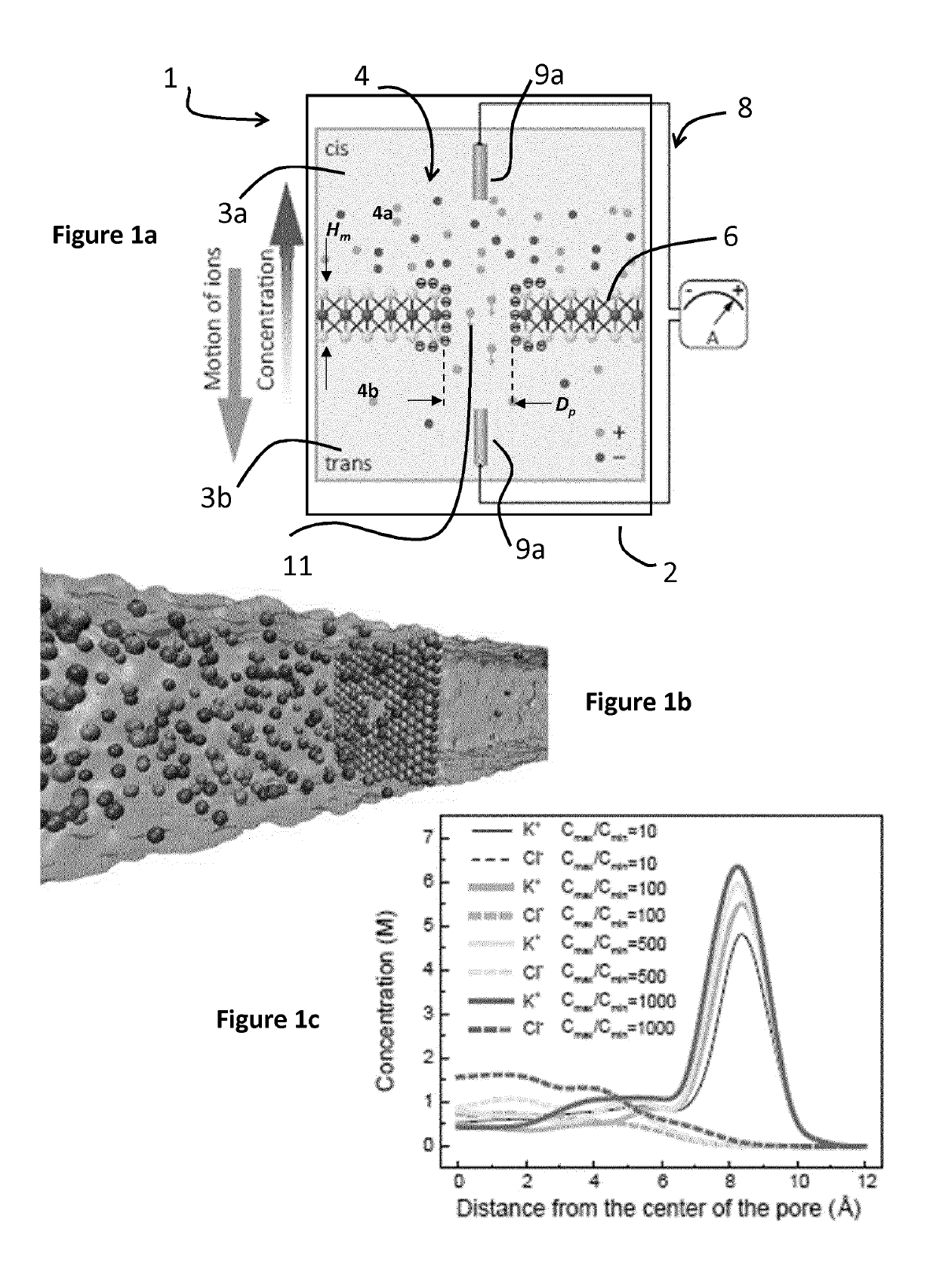
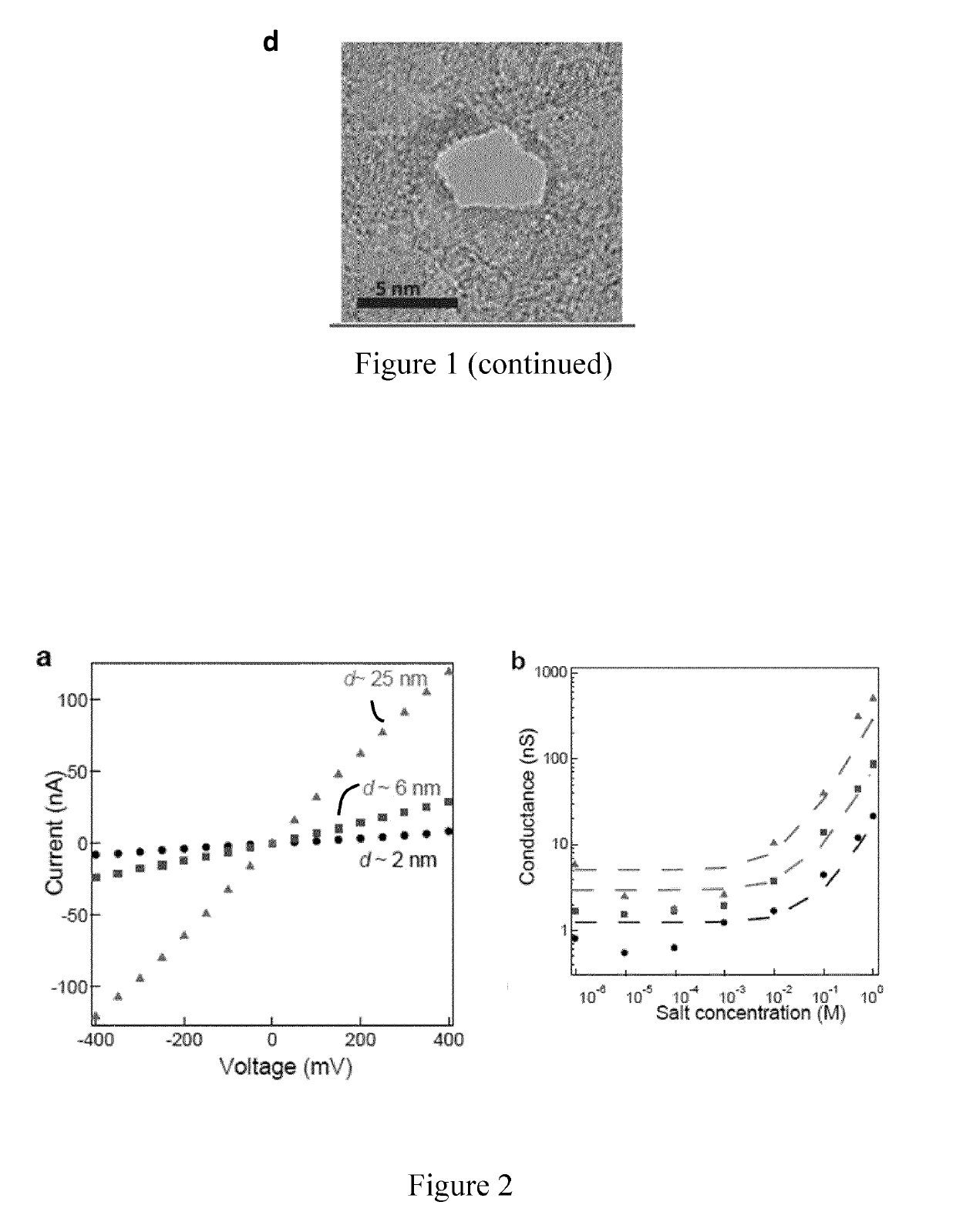
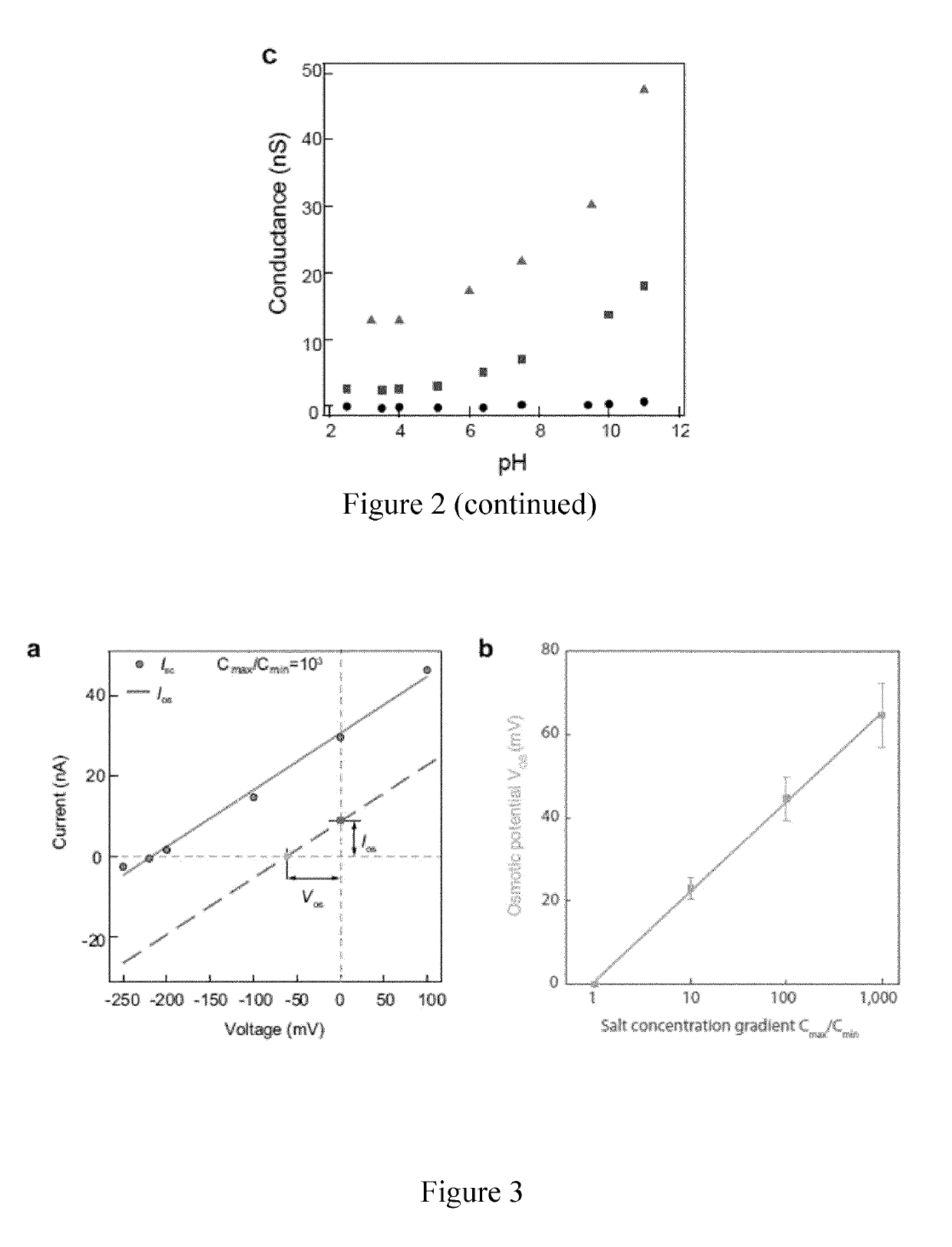
- The development of an osmotic power generator utilizing a thin layer of 2D materials with controlled pore sizes between 2 nm to 25 nm, made from materials like transition metal dichalcogenides (TMDCs) and supported by structures such as SiNx, to facilitate efficient ion passage and generate a high osmotic potential and ionic current.

Environmental Impact Assessment of Osmotic Power Systems
Osmotic power systems represent a promising renewable energy technology that harnesses the chemical potential difference between freshwater and seawater through selective membranes. However, comprehensive environmental impact assessment remains crucial for understanding the ecological implications of large-scale deployment. The environmental footprint of osmotic power installations encompasses multiple dimensions, including marine ecosystem disruption, water quality alterations, and potential effects on local biodiversity.
Marine ecosystem impacts constitute the primary environmental concern for osmotic power systems. The continuous intake of seawater and discharge of brackish water can alter local salinity gradients, potentially affecting marine organisms adapted to specific salinity ranges. Fish migration patterns, spawning grounds, and feeding behaviors may experience disruption due to changes in water chemistry and flow dynamics around intake and discharge points.
Water quality considerations extend beyond salinity modifications to include temperature variations and chemical composition changes. The osmotic process generates brackish discharge water with intermediate salinity levels that may not naturally occur in the deployment environment. This artificial water composition could introduce stress factors for marine life and alter the chemical balance of coastal ecosystems.
Membrane fouling and cleaning processes introduce additional environmental considerations. Anti-fouling treatments and periodic membrane cleaning require chemical agents that must be carefully managed to prevent marine contamination. The disposal or treatment of spent cleaning solutions and replaced membrane materials presents waste management challenges that require sustainable solutions.
Positive environmental impacts include the reduction of carbon emissions compared to fossil fuel alternatives and minimal land use requirements. Osmotic power systems operate without combustion processes, eliminating direct greenhouse gas emissions during operation. The technology's compatibility with existing coastal infrastructure reduces the need for extensive land development, preserving terrestrial ecosystems.
Long-term ecological monitoring protocols are essential for validating environmental impact predictions and ensuring sustainable operation. Continuous assessment of water quality parameters, marine biodiversity indicators, and ecosystem health metrics enables adaptive management strategies that minimize negative environmental consequences while maximizing renewable energy benefits.
Marine ecosystem impacts constitute the primary environmental concern for osmotic power systems. The continuous intake of seawater and discharge of brackish water can alter local salinity gradients, potentially affecting marine organisms adapted to specific salinity ranges. Fish migration patterns, spawning grounds, and feeding behaviors may experience disruption due to changes in water chemistry and flow dynamics around intake and discharge points.
Water quality considerations extend beyond salinity modifications to include temperature variations and chemical composition changes. The osmotic process generates brackish discharge water with intermediate salinity levels that may not naturally occur in the deployment environment. This artificial water composition could introduce stress factors for marine life and alter the chemical balance of coastal ecosystems.
Membrane fouling and cleaning processes introduce additional environmental considerations. Anti-fouling treatments and periodic membrane cleaning require chemical agents that must be carefully managed to prevent marine contamination. The disposal or treatment of spent cleaning solutions and replaced membrane materials presents waste management challenges that require sustainable solutions.
Positive environmental impacts include the reduction of carbon emissions compared to fossil fuel alternatives and minimal land use requirements. Osmotic power systems operate without combustion processes, eliminating direct greenhouse gas emissions during operation. The technology's compatibility with existing coastal infrastructure reduces the need for extensive land development, preserving terrestrial ecosystems.
Long-term ecological monitoring protocols are essential for validating environmental impact predictions and ensuring sustainable operation. Continuous assessment of water quality parameters, marine biodiversity indicators, and ecosystem health metrics enables adaptive management strategies that minimize negative environmental consequences while maximizing renewable energy benefits.
Grid Integration Strategies for Osmotic Power Plants
Grid integration of osmotic power plants presents unique challenges and opportunities that require specialized strategies to maximize energy yield and system reliability. Unlike conventional renewable sources, osmotic power generation offers continuous baseload capacity, making it an attractive complement to intermittent renewables within integrated energy systems.
The primary integration strategy involves implementing advanced power conditioning systems that can handle the variable salinity gradients and corresponding power output fluctuations. Modern osmotic plants utilize sophisticated membrane technologies that require precise electrical interfaces, typically incorporating multi-stage power conversion systems with maximum power point tracking capabilities similar to those used in photovoltaic installations.
Hybrid integration approaches have emerged as particularly promising, where osmotic power plants are co-located with offshore wind farms or coastal solar installations. This configuration allows for shared transmission infrastructure and complementary generation profiles, with osmotic systems providing stable output during periods of low wind or solar irradiance. The integration benefits extend to grid stability services, where osmotic plants can provide frequency regulation and voltage support due to their controllable output characteristics.
Smart grid integration protocols specifically designed for osmotic power involve real-time monitoring of salinity differentials and membrane performance parameters. These systems enable predictive power output forecasting and optimal dispatch scheduling, allowing grid operators to effectively incorporate osmotic generation into their energy management systems. Advanced control algorithms can adjust membrane flow rates and pressure differentials to match grid demand patterns while maintaining optimal efficiency.
Energy storage integration represents another critical strategy, where osmotic plants are paired with battery systems or pumped hydro storage to enhance grid services capability. This combination allows for peak shaving, load following, and ancillary services provision, significantly improving the economic viability of osmotic power installations.
Transmission infrastructure considerations for osmotic power integration focus on submarine cable systems for offshore installations and specialized grid connection points that can accommodate the unique electrical characteristics of membrane-based power generation. These systems require robust protection schemes and monitoring capabilities to ensure reliable operation in marine environments.
The primary integration strategy involves implementing advanced power conditioning systems that can handle the variable salinity gradients and corresponding power output fluctuations. Modern osmotic plants utilize sophisticated membrane technologies that require precise electrical interfaces, typically incorporating multi-stage power conversion systems with maximum power point tracking capabilities similar to those used in photovoltaic installations.
Hybrid integration approaches have emerged as particularly promising, where osmotic power plants are co-located with offshore wind farms or coastal solar installations. This configuration allows for shared transmission infrastructure and complementary generation profiles, with osmotic systems providing stable output during periods of low wind or solar irradiance. The integration benefits extend to grid stability services, where osmotic plants can provide frequency regulation and voltage support due to their controllable output characteristics.
Smart grid integration protocols specifically designed for osmotic power involve real-time monitoring of salinity differentials and membrane performance parameters. These systems enable predictive power output forecasting and optimal dispatch scheduling, allowing grid operators to effectively incorporate osmotic generation into their energy management systems. Advanced control algorithms can adjust membrane flow rates and pressure differentials to match grid demand patterns while maintaining optimal efficiency.
Energy storage integration represents another critical strategy, where osmotic plants are paired with battery systems or pumped hydro storage to enhance grid services capability. This combination allows for peak shaving, load following, and ancillary services provision, significantly improving the economic viability of osmotic power installations.
Transmission infrastructure considerations for osmotic power integration focus on submarine cable systems for offshore installations and specialized grid connection points that can accommodate the unique electrical characteristics of membrane-based power generation. These systems require robust protection schemes and monitoring capabilities to ensure reliable operation in marine environments.
Unlock deeper insights with PatSnap Eureka Quick Research — get a full tech report to explore trends and direct your research. Try now!
Generate Your Research Report Instantly with AI Agent
Supercharge your innovation with PatSnap Eureka AI Agent Platform!