
Oxidation in Fuel Cells: Performance Impact
FEB 26, 20268 MIN READ
Generate Your Research Report Instantly with AI Agent
Patsnap Eureka helps you evaluate technical feasibility & market potential.
Fuel Cell Oxidation Background and Technical Objectives
Fuel cells have emerged as a critical clean energy technology since their initial development in the 1830s by Sir William Grove. The fundamental principle involves the electrochemical conversion of hydrogen and oxygen into electricity, water, and heat without combustion. However, oxidation processes within fuel cell systems present significant challenges that directly impact performance, durability, and commercial viability.
The oxidation phenomenon in fuel cells manifests in multiple forms, each contributing to performance degradation through different mechanisms. Carbon support oxidation occurs when carbon-based catalyst supports react with oxygen or water, leading to structural deterioration and catalyst particle migration. Simultaneously, catalyst oxidation affects the active metal particles, particularly platinum-based catalysts, reducing their electrochemical activity and surface area over time.
Membrane oxidation represents another critical concern, where polymer electrolyte membranes undergo chemical degradation due to radical attack, resulting in reduced ionic conductivity and mechanical integrity. These oxidative processes are accelerated under operational conditions involving elevated temperatures, humidity variations, and potential cycling, creating a complex interplay of degradation mechanisms.
The technical objectives for addressing fuel cell oxidation focus on developing comprehensive mitigation strategies that enhance system longevity while maintaining optimal performance. Primary goals include establishing advanced catalyst support materials with superior oxidation resistance, implementing protective coating technologies, and optimizing operational parameters to minimize oxidative stress.
Research efforts aim to achieve specific performance targets including extending fuel cell stack lifetime beyond 5,000 hours for automotive applications and 40,000 hours for stationary systems. Additionally, maintaining catalyst activity retention above 80% throughout operational life cycles represents a crucial benchmark for commercial success.
Understanding oxidation kinetics and developing predictive models for degradation behavior constitute essential technical objectives. These models enable proactive system management and inform design optimization strategies. Furthermore, establishing standardized testing protocols for oxidation resistance evaluation ensures consistent performance assessment across different fuel cell technologies and applications, supporting the advancement of this critical clean energy solution.
The oxidation phenomenon in fuel cells manifests in multiple forms, each contributing to performance degradation through different mechanisms. Carbon support oxidation occurs when carbon-based catalyst supports react with oxygen or water, leading to structural deterioration and catalyst particle migration. Simultaneously, catalyst oxidation affects the active metal particles, particularly platinum-based catalysts, reducing their electrochemical activity and surface area over time.
Membrane oxidation represents another critical concern, where polymer electrolyte membranes undergo chemical degradation due to radical attack, resulting in reduced ionic conductivity and mechanical integrity. These oxidative processes are accelerated under operational conditions involving elevated temperatures, humidity variations, and potential cycling, creating a complex interplay of degradation mechanisms.
The technical objectives for addressing fuel cell oxidation focus on developing comprehensive mitigation strategies that enhance system longevity while maintaining optimal performance. Primary goals include establishing advanced catalyst support materials with superior oxidation resistance, implementing protective coating technologies, and optimizing operational parameters to minimize oxidative stress.
Research efforts aim to achieve specific performance targets including extending fuel cell stack lifetime beyond 5,000 hours for automotive applications and 40,000 hours for stationary systems. Additionally, maintaining catalyst activity retention above 80% throughout operational life cycles represents a crucial benchmark for commercial success.
Understanding oxidation kinetics and developing predictive models for degradation behavior constitute essential technical objectives. These models enable proactive system management and inform design optimization strategies. Furthermore, establishing standardized testing protocols for oxidation resistance evaluation ensures consistent performance assessment across different fuel cell technologies and applications, supporting the advancement of this critical clean energy solution.
Market Demand for High-Performance Fuel Cell Systems
The global fuel cell market is experiencing unprecedented growth driven by the urgent need for clean energy solutions and decarbonization initiatives across multiple sectors. Transportation applications, particularly in heavy-duty vehicles, buses, and maritime vessels, represent the largest demand segment for high-performance fuel cell systems. These applications require fuel cells that can maintain consistent power output and efficiency over extended operational periods, making oxidation resistance a critical performance parameter.
Industrial and stationary power applications constitute another significant market driver, where fuel cell systems serve as backup power sources, distributed generation units, and grid stabilization solutions. Data centers, telecommunications infrastructure, and critical facilities increasingly rely on fuel cell technology to ensure uninterrupted power supply while meeting stringent environmental regulations and sustainability targets.
The automotive sector's transition toward hydrogen fuel cell electric vehicles has created substantial demand for compact, lightweight, and highly efficient fuel cell stacks. Original equipment manufacturers require systems that can deliver consistent performance across varying operating conditions while maintaining durability standards comparable to conventional powertrains. Oxidation-related degradation directly impacts vehicle range, refueling frequency, and total cost of ownership, making it a primary concern for automotive applications.
Government policies and regulatory frameworks worldwide are accelerating market adoption through subsidies, tax incentives, and emission reduction mandates. The European Union's Green Deal, China's carbon neutrality commitments, and various national hydrogen strategies have established clear market signals favoring high-performance fuel cell technologies. These policy drivers create sustained demand for systems that can demonstrate superior longevity and efficiency metrics.
Emerging applications in aerospace, marine propulsion, and portable power systems are expanding market opportunities for specialized high-performance fuel cell solutions. These sectors demand exceptional reliability and performance consistency, where oxidation-induced degradation can compromise mission-critical operations and safety requirements.
Market research indicates that performance degradation issues, particularly those related to oxidation phenomena, represent primary barriers to widespread commercial adoption. End users consistently prioritize system reliability, maintenance intervals, and total lifecycle costs when evaluating fuel cell solutions, directly linking oxidation resistance to market competitiveness and commercial viability.
Industrial and stationary power applications constitute another significant market driver, where fuel cell systems serve as backup power sources, distributed generation units, and grid stabilization solutions. Data centers, telecommunications infrastructure, and critical facilities increasingly rely on fuel cell technology to ensure uninterrupted power supply while meeting stringent environmental regulations and sustainability targets.
The automotive sector's transition toward hydrogen fuel cell electric vehicles has created substantial demand for compact, lightweight, and highly efficient fuel cell stacks. Original equipment manufacturers require systems that can deliver consistent performance across varying operating conditions while maintaining durability standards comparable to conventional powertrains. Oxidation-related degradation directly impacts vehicle range, refueling frequency, and total cost of ownership, making it a primary concern for automotive applications.
Government policies and regulatory frameworks worldwide are accelerating market adoption through subsidies, tax incentives, and emission reduction mandates. The European Union's Green Deal, China's carbon neutrality commitments, and various national hydrogen strategies have established clear market signals favoring high-performance fuel cell technologies. These policy drivers create sustained demand for systems that can demonstrate superior longevity and efficiency metrics.
Emerging applications in aerospace, marine propulsion, and portable power systems are expanding market opportunities for specialized high-performance fuel cell solutions. These sectors demand exceptional reliability and performance consistency, where oxidation-induced degradation can compromise mission-critical operations and safety requirements.
Market research indicates that performance degradation issues, particularly those related to oxidation phenomena, represent primary barriers to widespread commercial adoption. End users consistently prioritize system reliability, maintenance intervals, and total lifecycle costs when evaluating fuel cell solutions, directly linking oxidation resistance to market competitiveness and commercial viability.
Current Oxidation Challenges in Fuel Cell Technologies
Fuel cell technologies face significant oxidation-related challenges that fundamentally impact their commercial viability and long-term performance. The most critical challenge involves catalyst degradation, particularly at the cathode where platinum-based catalysts undergo dissolution and particle growth under high potential conditions. This electrochemical corrosion accelerates during start-stop cycles and fuel starvation events, leading to irreversible performance losses that can reduce fuel cell lifetime by 30-50%.
Carbon support oxidation represents another major technical hurdle, especially in proton exchange membrane fuel cells (PEMFCs). The carbon black supports used to disperse platinum nanoparticles are thermodynamically unstable under fuel cell operating conditions. When exposed to potentials above 0.8V versus the reversible hydrogen electrode, carbon supports undergo electrochemical oxidation to form CO2, causing catalyst detachment and significant performance degradation.
Membrane degradation through oxidative attack poses substantial challenges for fuel cell durability. Hydrogen peroxide and hydroxyl radicals formed through incomplete oxygen reduction reactions attack the polymer electrolyte membrane, causing chain scission and fluoride ion release. This chemical degradation is particularly severe at elevated temperatures and low humidity conditions, leading to membrane thinning and eventual failure.
Metal component corrosion within fuel cell systems creates additional oxidation challenges. Bipolar plates, particularly those made from stainless steel, undergo corrosion that releases metal ions into the membrane electrode assembly. These contaminants poison the catalyst and reduce ionic conductivity, while corrosion products can block gas flow channels and increase contact resistance.
The challenge of managing oxidative stress during transient operations remains largely unsolved. Rapid load changes, thermal cycling, and freeze-thaw events create localized high-potential conditions that accelerate all oxidation mechanisms simultaneously. Current mitigation strategies, including potential cycling protocols and antioxidant additives, provide only partial protection and often compromise other performance aspects.
Sealing material degradation under oxidative conditions presents ongoing challenges for system integration. Elastomeric seals and gaskets undergo oxidative aging that leads to hardening, cracking, and loss of sealing effectiveness, potentially causing catastrophic system failures and safety concerns in automotive and stationary applications.
Carbon support oxidation represents another major technical hurdle, especially in proton exchange membrane fuel cells (PEMFCs). The carbon black supports used to disperse platinum nanoparticles are thermodynamically unstable under fuel cell operating conditions. When exposed to potentials above 0.8V versus the reversible hydrogen electrode, carbon supports undergo electrochemical oxidation to form CO2, causing catalyst detachment and significant performance degradation.
Membrane degradation through oxidative attack poses substantial challenges for fuel cell durability. Hydrogen peroxide and hydroxyl radicals formed through incomplete oxygen reduction reactions attack the polymer electrolyte membrane, causing chain scission and fluoride ion release. This chemical degradation is particularly severe at elevated temperatures and low humidity conditions, leading to membrane thinning and eventual failure.
Metal component corrosion within fuel cell systems creates additional oxidation challenges. Bipolar plates, particularly those made from stainless steel, undergo corrosion that releases metal ions into the membrane electrode assembly. These contaminants poison the catalyst and reduce ionic conductivity, while corrosion products can block gas flow channels and increase contact resistance.
The challenge of managing oxidative stress during transient operations remains largely unsolved. Rapid load changes, thermal cycling, and freeze-thaw events create localized high-potential conditions that accelerate all oxidation mechanisms simultaneously. Current mitigation strategies, including potential cycling protocols and antioxidant additives, provide only partial protection and often compromise other performance aspects.
Sealing material degradation under oxidative conditions presents ongoing challenges for system integration. Elastomeric seals and gaskets undergo oxidative aging that leads to hardening, cracking, and loss of sealing effectiveness, potentially causing catastrophic system failures and safety concerns in automotive and stationary applications.
Current Anti-Oxidation Solutions for Fuel Cells
01 Catalyst layer optimization for enhanced fuel cell performance
Improving the catalyst layer composition and structure is critical for enhancing fuel cell performance. This includes optimizing the catalyst material, loading, and distribution to increase electrochemical activity and reduce activation losses. Advanced catalyst formulations and manufacturing techniques can improve the triple-phase boundary where electrochemical reactions occur, leading to higher power density and efficiency.- Catalyst layer optimization for enhanced fuel cell performance: Improving the catalyst layer composition and structure is critical for enhancing fuel cell performance. This includes optimizing the catalyst material, loading, and distribution to increase electrochemical activity and reduce activation losses. Advanced catalyst formulations and manufacturing techniques can improve the efficiency of electrochemical reactions at both the anode and cathode, leading to higher power density and better overall performance.
- Membrane electrode assembly design and materials: The membrane electrode assembly is a key component affecting fuel cell performance. Innovations in membrane materials, thickness, and ionic conductivity can significantly impact proton transport efficiency and reduce ohmic losses. Advanced membrane materials with improved durability, water management properties, and chemical stability contribute to enhanced performance and longer operational life. The integration of the membrane with electrode layers through optimized bonding techniques also plays a crucial role.
- Water and thermal management systems: Effective water and thermal management is essential for maintaining optimal fuel cell performance. This includes controlling humidity levels to ensure proper membrane hydration while preventing flooding, as well as managing heat generation and distribution to maintain uniform temperature across the cell. Advanced cooling systems, humidification strategies, and flow field designs help optimize these parameters, reducing performance degradation and improving efficiency under various operating conditions.
- Bipolar plate and flow field configuration: The design of bipolar plates and flow field patterns significantly influences fuel cell performance by affecting reactant distribution, water removal, and current collection. Optimized flow field geometries, including serpentine, parallel, and interdigitated patterns, can enhance mass transport and reduce concentration losses. Material selection for bipolar plates, considering factors such as electrical conductivity, corrosion resistance, and manufacturing cost, also impacts overall system performance and durability.
- Stack assembly and operational control strategies: Fuel cell stack assembly techniques and operational control strategies are crucial for achieving high performance. This includes optimizing compression pressure, sealing methods, and electrical connections to minimize contact resistance and ensure uniform current distribution. Advanced control algorithms for managing fuel and oxidant flow rates, operating temperature, and pressure conditions help maintain optimal performance across varying load demands. System-level integration and monitoring technologies enable real-time performance optimization and fault detection.
02 Membrane electrode assembly design and materials
The membrane electrode assembly is a key component affecting fuel cell performance. Innovations in membrane materials with improved proton conductivity, mechanical strength, and durability can significantly enhance overall performance. Design modifications to optimize the interface between membrane and electrodes, reduce contact resistance, and improve water management contribute to better efficiency and longevity.Expand Specific Solutions03 Water and thermal management systems
Effective water and thermal management is essential for maintaining optimal fuel cell performance. Systems that control humidity levels, prevent flooding or drying of the membrane, and maintain uniform temperature distribution help sustain stable operation. Advanced cooling systems and water transport mechanisms can prevent performance degradation and extend operational lifetime.Expand Specific Solutions04 Gas diffusion layer improvements
The gas diffusion layer plays a crucial role in distributing reactant gases uniformly across the catalyst layer and removing product water. Enhancements in porosity, hydrophobicity, and electrical conductivity of the gas diffusion layer can improve mass transport, reduce concentration losses, and increase overall fuel cell efficiency. Novel materials and surface treatments contribute to better performance under various operating conditions.Expand Specific Solutions05 Bipolar plate design and materials
Bipolar plates serve multiple functions including reactant distribution, current collection, and heat removal. Innovations in bipolar plate materials such as advanced composites or coated metals can reduce weight, improve corrosion resistance, and enhance electrical conductivity. Optimized flow field designs ensure uniform reactant distribution and efficient water removal, contributing to improved fuel cell performance and durability.Expand Specific Solutions
Key Players in Fuel Cell and Materials Industry
The fuel cell oxidation performance landscape represents a mature yet rapidly evolving market driven by automotive electrification and clean energy transitions. Major automotive manufacturers including Toyota, Honda, Nissan, Mercedes-Benz, Audi, and Volkswagen are leading technological advancement through extensive R&D investments in fuel cell durability and oxidation mitigation strategies. Technology maturity varies significantly across applications, with companies like Plug Power and Intelligent Energy demonstrating commercial viability in stationary and portable applications, while automotive integration remains in advanced development phases. Research institutions like CEA and Fraunhofer-Gesellschaft are pioneering next-generation materials and system designs to address oxidation challenges. Component manufacturers such as Panasonic, Samsung SDI, and Murata are developing specialized materials and manufacturing processes to enhance fuel cell longevity and performance under oxidative stress conditions.
GM Global Technology Operations LLC
Technical Solution: General Motors has developed comprehensive oxidation mitigation strategies focusing on advanced catalyst support materials and novel alloy compositions that resist oxidative degradation. Their fuel cell systems incorporate carbon-resistant catalyst supports and optimized cell operating protocols that minimize exposure to high-potential conditions that accelerate oxidation. GM's technology includes sophisticated start-stop protocols and purging strategies that reduce catalyst oxidation during system cycling. The company has also developed advanced diagnostic tools for real-time monitoring of fuel cell health and oxidation-related performance losses.
Strengths: Strong automotive integration expertise, robust system-level solutions for oxidation control. Weaknesses: Limited commercial deployment compared to competitors, dependency on automotive market cycles.
Toyota Motor Corp.
Technical Solution: Toyota has developed advanced fuel cell stack designs with enhanced corrosion-resistant materials and protective coatings to mitigate oxidation effects. Their MIRAI fuel cell vehicle incorporates proprietary membrane electrode assemblies (MEAs) with platinum-based catalysts that demonstrate improved durability against oxidative degradation. The company employs sophisticated water management systems and optimized operating conditions to minimize catalyst oxidation and maintain performance over extended operational periods. Toyota's approach includes real-time monitoring systems that detect early signs of oxidation-related performance degradation and adjust operational parameters accordingly.
Strengths: Extensive commercial experience with fuel cell vehicles, proven durability in real-world conditions. Weaknesses: High platinum catalyst costs, complex system integration requirements.
Core Patents in Fuel Cell Oxidation Mitigation
Adaptive purge control to prevent electrode redox cycles in fuel cell systems
PatentActiveUS7846600B2
Innovation
- A method is implemented to detect the open circuit voltage (OCV) of the fuel cell system and provide a reducing purge gas flow to the anode electrodes when the OCV approaches or falls below a threshold value, using a control system to manage the purge gas flow and prevent anode oxidation, thereby maintaining the oxygen partial pressure below the critical threshold.


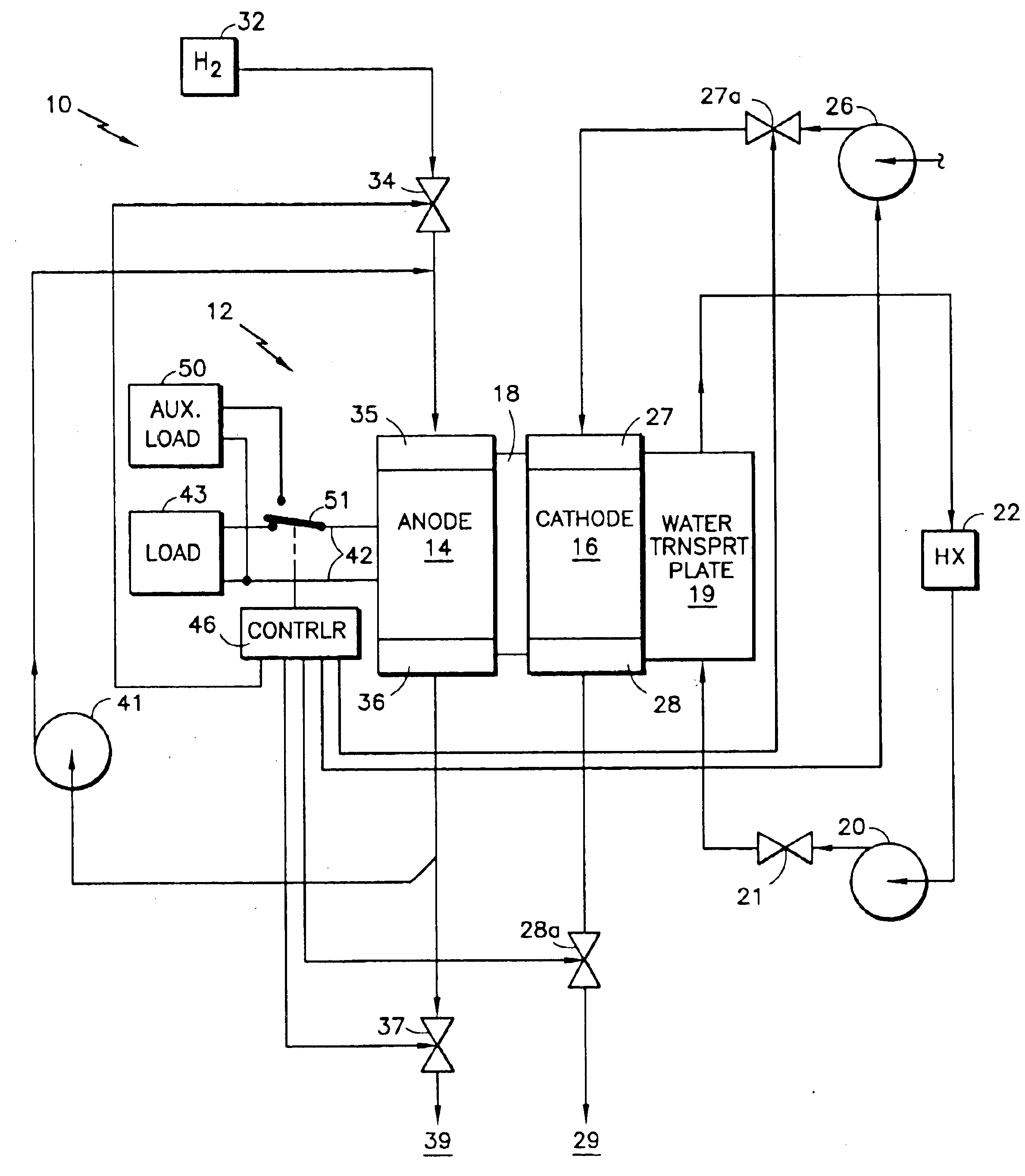
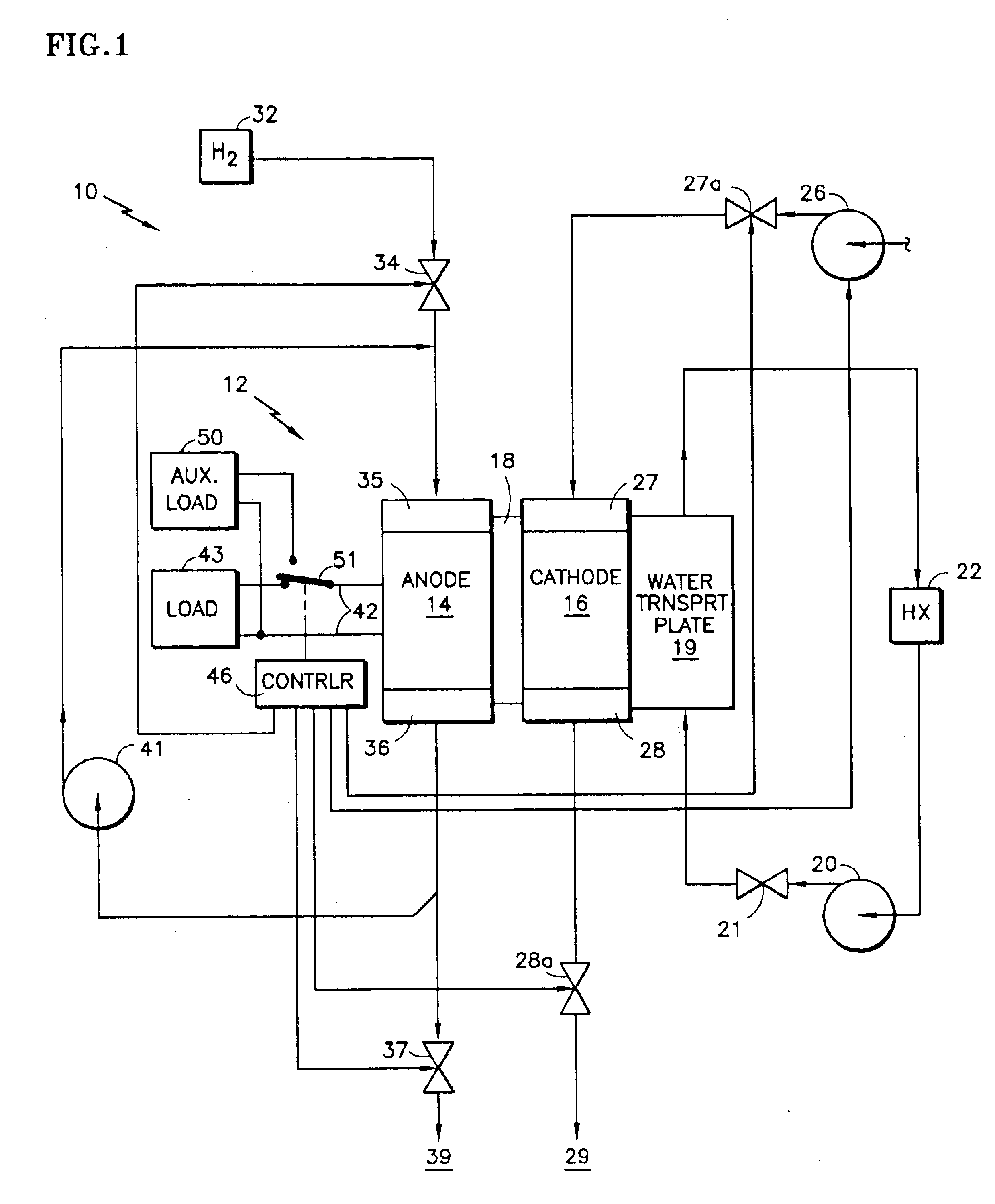
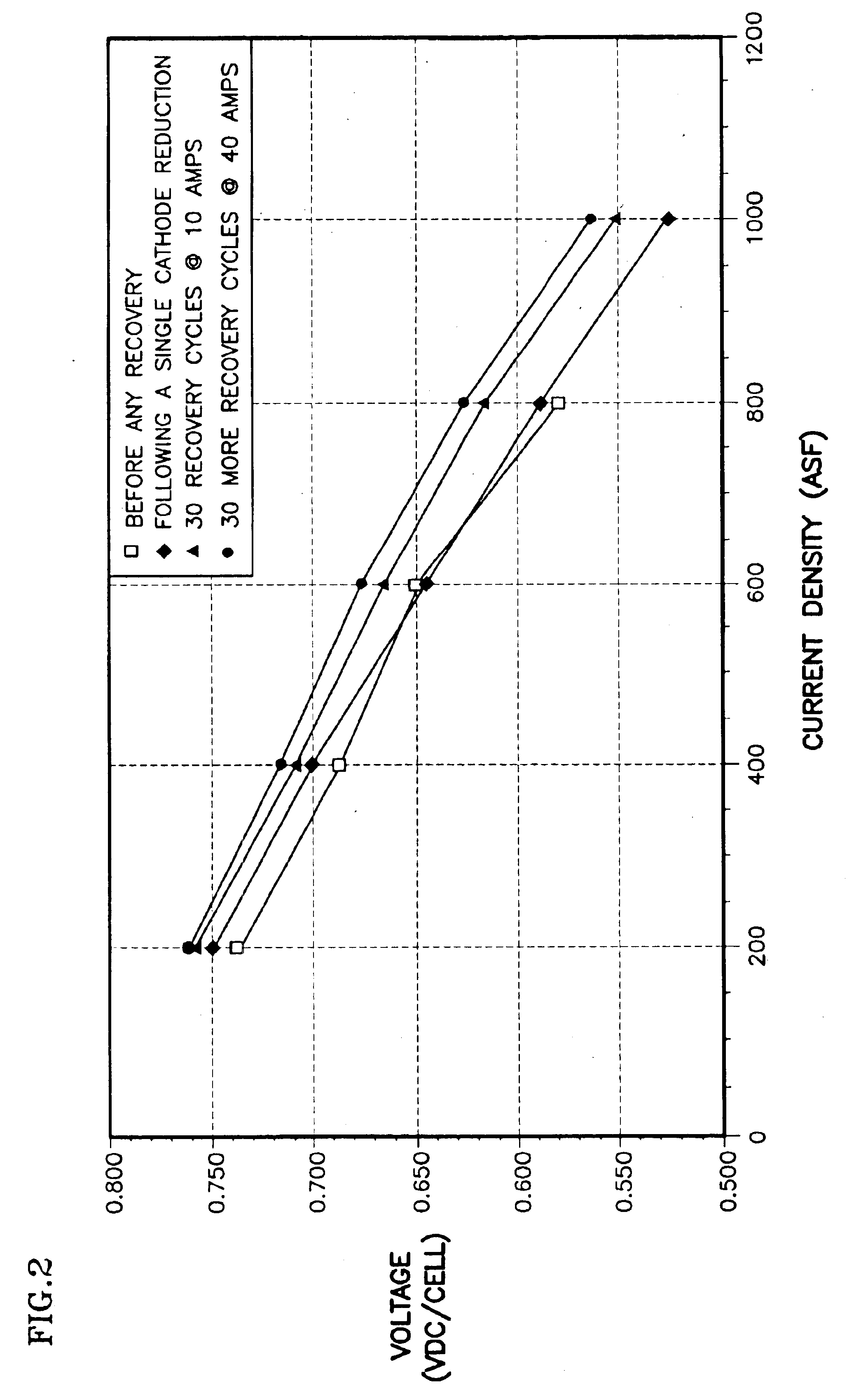
Fuel cell performance recovery by cyclic oxidant starvation
PatentInactiveUS6841278B2
Innovation
- Rejuvenating PEM fuel cells by cycling the cathode between stochiometric oxidant flow and no oxidant flow using an auxiliary load, with oxidant flow occurring 20-80% of the time and no flow for 80% of the time, reducing cell voltage to less than 0.100 volts, and performing cycles of tens of seconds to regenerate performance without increasing future decay.

Environmental Regulations for Fuel Cell Applications
Environmental regulations governing fuel cell applications have become increasingly stringent as governments worldwide recognize both the potential benefits and risks associated with this emerging technology. The regulatory landscape encompasses multiple dimensions including air quality standards, safety protocols, material handling requirements, and end-of-life disposal mandates that directly influence how oxidation-related performance issues are addressed in commercial fuel cell systems.
Air quality regulations represent the primary driver for fuel cell adoption, with agencies like the EPA, European Environment Agency, and similar bodies establishing increasingly strict emission standards for transportation and stationary power applications. These regulations typically mandate near-zero emissions for criteria pollutants, creating favorable conditions for fuel cell deployment while simultaneously requiring robust oxidation management to maintain compliance throughout operational lifecycles.
Safety regulations specifically address oxidation-related risks in fuel cell systems, particularly concerning hydrogen handling and storage. Standards such as ISO 14687 for hydrogen fuel quality and SAE J2719 for hydrogen fuel cell vehicle safety establish maximum allowable contaminant levels that can accelerate oxidation processes. These regulations mandate sophisticated filtration and monitoring systems to prevent oxidation-inducing impurities from entering fuel cell stacks.
Material certification requirements under regulations like REACH in Europe and TSCA in the United States directly impact component selection for oxidation-resistant fuel cell designs. These frameworks require comprehensive testing and documentation of materials used in fuel cell construction, influencing the development of advanced catalyst supports and membrane materials that can withstand oxidative environments while meeting regulatory approval timelines.
Emerging regulations addressing fuel cell recycling and circular economy principles are reshaping design approaches to oxidation management. Extended producer responsibility frameworks increasingly require manufacturers to consider end-of-life material recovery, driving innovation in oxidation-resistant materials that maintain recyclability and reduce environmental impact throughout the product lifecycle.
Regional variations in environmental regulations create complex compliance landscapes that influence global fuel cell development strategies. While some jurisdictions prioritize rapid deployment through streamlined approval processes, others emphasize comprehensive environmental impact assessments that require detailed oxidation performance documentation and long-term durability validation under various operating conditions.
Air quality regulations represent the primary driver for fuel cell adoption, with agencies like the EPA, European Environment Agency, and similar bodies establishing increasingly strict emission standards for transportation and stationary power applications. These regulations typically mandate near-zero emissions for criteria pollutants, creating favorable conditions for fuel cell deployment while simultaneously requiring robust oxidation management to maintain compliance throughout operational lifecycles.
Safety regulations specifically address oxidation-related risks in fuel cell systems, particularly concerning hydrogen handling and storage. Standards such as ISO 14687 for hydrogen fuel quality and SAE J2719 for hydrogen fuel cell vehicle safety establish maximum allowable contaminant levels that can accelerate oxidation processes. These regulations mandate sophisticated filtration and monitoring systems to prevent oxidation-inducing impurities from entering fuel cell stacks.
Material certification requirements under regulations like REACH in Europe and TSCA in the United States directly impact component selection for oxidation-resistant fuel cell designs. These frameworks require comprehensive testing and documentation of materials used in fuel cell construction, influencing the development of advanced catalyst supports and membrane materials that can withstand oxidative environments while meeting regulatory approval timelines.
Emerging regulations addressing fuel cell recycling and circular economy principles are reshaping design approaches to oxidation management. Extended producer responsibility frameworks increasingly require manufacturers to consider end-of-life material recovery, driving innovation in oxidation-resistant materials that maintain recyclability and reduce environmental impact throughout the product lifecycle.
Regional variations in environmental regulations create complex compliance landscapes that influence global fuel cell development strategies. While some jurisdictions prioritize rapid deployment through streamlined approval processes, others emphasize comprehensive environmental impact assessments that require detailed oxidation performance documentation and long-term durability validation under various operating conditions.
Cost-Performance Analysis of Oxidation Solutions
The economic evaluation of oxidation mitigation strategies in fuel cells requires a comprehensive assessment of both implementation costs and performance benefits. Current market analysis indicates that oxidation-related degradation accounts for approximately 15-25% of total fuel cell system replacement costs over operational lifetimes, making cost-effective solutions critical for commercial viability.
Material-based oxidation solutions present varying cost structures depending on the approach selected. Advanced catalyst formulations incorporating platinum-group metal alternatives typically require initial investments of $200-400 per kilowatt of capacity, but demonstrate 20-30% improvement in oxidation resistance. Carbon support modifications using graphitized or doped carbon materials add approximately $50-80 per kilowatt while extending operational life by 15-20%.
Protective coating technologies offer moderate cost increases with substantial performance gains. Atomic layer deposition coatings for catalyst protection require equipment investments of $2-5 million for manufacturing facilities, but reduce material costs by $30-50 per kilowatt in high-volume production. These coatings demonstrate 40-60% reduction in oxidation-induced performance degradation over 5000-hour operational cycles.
System-level oxidation management approaches present different economic profiles. Advanced control algorithms for oxidation prevention require software development investments of $500,000-1.5 million but impose minimal per-unit costs while achieving 10-15% performance retention improvements. Integrated monitoring systems add $100-200 per kilowatt but enable predictive maintenance strategies that reduce unexpected failure costs by 25-35%.
The total cost of ownership analysis reveals that comprehensive oxidation solutions requiring 15-20% higher initial investments typically achieve break-even points within 18-24 months through improved efficiency and extended operational life. Performance-to-cost ratios favor integrated approaches combining material improvements with system-level management, delivering optimal economic returns while maintaining technical effectiveness across diverse operating conditions and applications.
Material-based oxidation solutions present varying cost structures depending on the approach selected. Advanced catalyst formulations incorporating platinum-group metal alternatives typically require initial investments of $200-400 per kilowatt of capacity, but demonstrate 20-30% improvement in oxidation resistance. Carbon support modifications using graphitized or doped carbon materials add approximately $50-80 per kilowatt while extending operational life by 15-20%.
Protective coating technologies offer moderate cost increases with substantial performance gains. Atomic layer deposition coatings for catalyst protection require equipment investments of $2-5 million for manufacturing facilities, but reduce material costs by $30-50 per kilowatt in high-volume production. These coatings demonstrate 40-60% reduction in oxidation-induced performance degradation over 5000-hour operational cycles.
System-level oxidation management approaches present different economic profiles. Advanced control algorithms for oxidation prevention require software development investments of $500,000-1.5 million but impose minimal per-unit costs while achieving 10-15% performance retention improvements. Integrated monitoring systems add $100-200 per kilowatt but enable predictive maintenance strategies that reduce unexpected failure costs by 25-35%.
The total cost of ownership analysis reveals that comprehensive oxidation solutions requiring 15-20% higher initial investments typically achieve break-even points within 18-24 months through improved efficiency and extended operational life. Performance-to-cost ratios favor integrated approaches combining material improvements with system-level management, delivering optimal economic returns while maintaining technical effectiveness across diverse operating conditions and applications.
Unlock deeper insights with Patsnap Eureka Quick Research — get a full tech report to explore trends and direct your research. Try now!
Generate Your Research Report Instantly with AI Agent
Supercharge your innovation with Patsnap Eureka AI Agent Platform!