

Oxidation Management in Organic Electronics
FEB 26, 20269 MIN READ
Generate Your Research Report Instantly with AI Agent
PatSnap Eureka helps you evaluate technical feasibility & market potential.
Organic Electronics Oxidation Background and Objectives
Organic electronics represents a transformative technology paradigm that has evolved from fundamental polymer science research in the 1970s to commercial applications spanning displays, lighting, photovoltaics, and flexible electronics. The field emerged from pioneering work on conductive polymers, which demonstrated that organic materials could exhibit semiconductor properties previously exclusive to inorganic materials. This breakthrough opened pathways for lightweight, flexible, and cost-effective electronic devices manufactured through solution-based processing techniques.
The historical development trajectory shows distinct phases of advancement. Initial discoveries focused on basic charge transport mechanisms in organic materials, followed by device optimization periods that established organic light-emitting diodes and organic photovoltaics as viable technologies. Recent decades have witnessed rapid commercialization, with organic displays becoming ubiquitous in consumer electronics and emerging applications in bioelectronics and wearable devices.
However, oxidation degradation represents the most critical challenge limiting the widespread adoption and long-term viability of organic electronic devices. Unlike inorganic semiconductors, organic materials exhibit inherent vulnerability to atmospheric oxygen and moisture, leading to irreversible chemical modifications that compromise device performance. This degradation manifests through various mechanisms including photo-oxidation, thermal oxidation, and electrochemical oxidation, each contributing to device failure through different pathways.
The oxidation challenge becomes particularly acute as the industry pushes toward larger-scale manufacturing and longer device lifetimes. Current organic electronic devices often require sophisticated encapsulation strategies and controlled atmospheric processing, significantly increasing manufacturing complexity and costs. These limitations have constrained market penetration in applications demanding extended operational lifetimes, such as architectural lighting and automotive electronics.
The primary objective of oxidation management research centers on developing comprehensive strategies that address both intrinsic material stability and extrinsic protection mechanisms. This encompasses molecular-level design approaches that enhance inherent oxidation resistance of organic semiconductors, advanced encapsulation technologies that provide robust barriers against environmental degradation, and innovative device architectures that minimize oxidation-sensitive interfaces.
Furthermore, the field aims to establish predictive models for oxidation kinetics that enable accelerated lifetime testing and reliability assessment. Understanding the fundamental mechanisms governing oxidation processes will facilitate the development of targeted stabilization strategies and enable the design of organic electronic systems with predictable, extended operational lifetimes comparable to conventional silicon-based technologies.
The historical development trajectory shows distinct phases of advancement. Initial discoveries focused on basic charge transport mechanisms in organic materials, followed by device optimization periods that established organic light-emitting diodes and organic photovoltaics as viable technologies. Recent decades have witnessed rapid commercialization, with organic displays becoming ubiquitous in consumer electronics and emerging applications in bioelectronics and wearable devices.
However, oxidation degradation represents the most critical challenge limiting the widespread adoption and long-term viability of organic electronic devices. Unlike inorganic semiconductors, organic materials exhibit inherent vulnerability to atmospheric oxygen and moisture, leading to irreversible chemical modifications that compromise device performance. This degradation manifests through various mechanisms including photo-oxidation, thermal oxidation, and electrochemical oxidation, each contributing to device failure through different pathways.
The oxidation challenge becomes particularly acute as the industry pushes toward larger-scale manufacturing and longer device lifetimes. Current organic electronic devices often require sophisticated encapsulation strategies and controlled atmospheric processing, significantly increasing manufacturing complexity and costs. These limitations have constrained market penetration in applications demanding extended operational lifetimes, such as architectural lighting and automotive electronics.
The primary objective of oxidation management research centers on developing comprehensive strategies that address both intrinsic material stability and extrinsic protection mechanisms. This encompasses molecular-level design approaches that enhance inherent oxidation resistance of organic semiconductors, advanced encapsulation technologies that provide robust barriers against environmental degradation, and innovative device architectures that minimize oxidation-sensitive interfaces.
Furthermore, the field aims to establish predictive models for oxidation kinetics that enable accelerated lifetime testing and reliability assessment. Understanding the fundamental mechanisms governing oxidation processes will facilitate the development of targeted stabilization strategies and enable the design of organic electronic systems with predictable, extended operational lifetimes comparable to conventional silicon-based technologies.
Market Demand for Stable Organic Electronic Devices
The global organic electronics market is experiencing unprecedented growth driven by increasing demand for flexible, lightweight, and cost-effective electronic devices. Consumer electronics manufacturers are actively seeking alternatives to traditional silicon-based technologies, particularly for applications requiring bendable displays, wearable sensors, and ultra-thin form factors. However, the widespread adoption of organic electronic devices faces significant barriers due to their inherent susceptibility to oxidative degradation, which severely limits device lifespan and reliability.
Market research indicates that device stability represents the primary concern for potential adopters across multiple sectors. In the display industry, manufacturers require organic light-emitting diode panels to maintain consistent performance for extended periods, yet current oxidation-related failures often result in premature device degradation. This reliability gap has created substantial market pressure for improved oxidation management solutions.
The photovoltaic sector demonstrates particularly strong demand for stable organic solar cells. Commercial viability depends heavily on achieving operational lifespans comparable to conventional silicon panels. Current organic photovoltaic devices suffer from rapid efficiency degradation when exposed to atmospheric oxygen, limiting their market penetration despite advantages in manufacturing cost and flexibility.
Healthcare and biomedical applications represent emerging high-value markets where device stability is critical. Implantable organic electronics and long-term monitoring systems require exceptional resistance to oxidative environments. The potential market value for stable organic bioelectronics continues expanding as medical device manufacturers recognize the benefits of biocompatible organic materials.
Industrial automation and Internet of Things applications are driving demand for durable organic sensors and transistors. These applications often involve harsh environmental conditions where oxidation resistance becomes essential for maintaining operational reliability. Manufacturing sectors increasingly require organic electronic components that can withstand prolonged exposure to varying atmospheric conditions without performance degradation.
The automotive industry presents substantial opportunities for stable organic electronics in lighting systems, dashboard displays, and sensor applications. Vehicle manufacturers demand components with extended operational lifespans under diverse environmental stresses, making oxidation management a crucial factor for market acceptance.
Current market dynamics reveal that companies successfully addressing oxidation challenges gain significant competitive advantages. The development of effective encapsulation technologies, barrier materials, and intrinsically stable organic semiconductors directly correlates with market success and customer adoption rates.
Market research indicates that device stability represents the primary concern for potential adopters across multiple sectors. In the display industry, manufacturers require organic light-emitting diode panels to maintain consistent performance for extended periods, yet current oxidation-related failures often result in premature device degradation. This reliability gap has created substantial market pressure for improved oxidation management solutions.
The photovoltaic sector demonstrates particularly strong demand for stable organic solar cells. Commercial viability depends heavily on achieving operational lifespans comparable to conventional silicon panels. Current organic photovoltaic devices suffer from rapid efficiency degradation when exposed to atmospheric oxygen, limiting their market penetration despite advantages in manufacturing cost and flexibility.
Healthcare and biomedical applications represent emerging high-value markets where device stability is critical. Implantable organic electronics and long-term monitoring systems require exceptional resistance to oxidative environments. The potential market value for stable organic bioelectronics continues expanding as medical device manufacturers recognize the benefits of biocompatible organic materials.
Industrial automation and Internet of Things applications are driving demand for durable organic sensors and transistors. These applications often involve harsh environmental conditions where oxidation resistance becomes essential for maintaining operational reliability. Manufacturing sectors increasingly require organic electronic components that can withstand prolonged exposure to varying atmospheric conditions without performance degradation.
The automotive industry presents substantial opportunities for stable organic electronics in lighting systems, dashboard displays, and sensor applications. Vehicle manufacturers demand components with extended operational lifespans under diverse environmental stresses, making oxidation management a crucial factor for market acceptance.
Current market dynamics reveal that companies successfully addressing oxidation challenges gain significant competitive advantages. The development of effective encapsulation technologies, barrier materials, and intrinsically stable organic semiconductors directly correlates with market success and customer adoption rates.
Current Oxidation Challenges in Organic Electronics
Organic electronic devices face significant oxidation challenges that fundamentally limit their performance, stability, and commercial viability. The inherent susceptibility of organic semiconductors to atmospheric oxygen represents one of the most critical technical barriers in the field, affecting everything from organic light-emitting diodes (OLEDs) to organic photovoltaics (OPVs) and organic field-effect transistors (OFETs).
The primary oxidation challenge stems from the chemical structure of organic semiconductors, which typically contain conjugated π-electron systems that are highly reactive toward oxygen molecules. When exposed to ambient conditions, these materials undergo irreversible chemical reactions that disrupt their electronic properties. The oxidation process creates trap states within the bandgap, leading to reduced charge carrier mobility, increased recombination losses, and ultimately device degradation.
Moisture-assisted oxidation presents an even more severe challenge, as water molecules act as catalysts that accelerate the degradation process. The combination of oxygen and water vapor creates a synergistic effect that can rapidly compromise device performance. This is particularly problematic for flexible organic electronics, where achieving perfect hermetic sealing is technically challenging and economically prohibitive.
Interface oxidation represents another critical challenge, particularly at electrode-organic material boundaries. Metal electrodes, especially those containing aluminum or other reactive metals, are prone to oxidation that creates insulating oxide layers. These interfacial oxides increase contact resistance and create barriers to efficient charge injection and extraction, significantly impacting device efficiency.
Thermal-induced oxidation poses additional complications, as elevated operating temperatures accelerate oxidation kinetics. Many organic electronic devices generate heat during operation, creating a self-reinforcing degradation cycle where thermal effects promote oxidation, which in turn reduces efficiency and generates more heat.
The challenge is further complicated by the diverse range of organic materials used in different applications, each with unique oxidation sensitivities and degradation pathways. Small molecule semiconductors, conjugated polymers, and hybrid organic-inorganic materials all exhibit different oxidation behaviors, requiring tailored protection strategies.
Current oxidation challenges also extend to manufacturing and processing environments, where exposure to oxygen during device fabrication can pre-compromise material properties before devices even begin operation. This necessitates expensive inert atmosphere processing, adding significant manufacturing complexity and cost.
The primary oxidation challenge stems from the chemical structure of organic semiconductors, which typically contain conjugated π-electron systems that are highly reactive toward oxygen molecules. When exposed to ambient conditions, these materials undergo irreversible chemical reactions that disrupt their electronic properties. The oxidation process creates trap states within the bandgap, leading to reduced charge carrier mobility, increased recombination losses, and ultimately device degradation.
Moisture-assisted oxidation presents an even more severe challenge, as water molecules act as catalysts that accelerate the degradation process. The combination of oxygen and water vapor creates a synergistic effect that can rapidly compromise device performance. This is particularly problematic for flexible organic electronics, where achieving perfect hermetic sealing is technically challenging and economically prohibitive.
Interface oxidation represents another critical challenge, particularly at electrode-organic material boundaries. Metal electrodes, especially those containing aluminum or other reactive metals, are prone to oxidation that creates insulating oxide layers. These interfacial oxides increase contact resistance and create barriers to efficient charge injection and extraction, significantly impacting device efficiency.
Thermal-induced oxidation poses additional complications, as elevated operating temperatures accelerate oxidation kinetics. Many organic electronic devices generate heat during operation, creating a self-reinforcing degradation cycle where thermal effects promote oxidation, which in turn reduces efficiency and generates more heat.
The challenge is further complicated by the diverse range of organic materials used in different applications, each with unique oxidation sensitivities and degradation pathways. Small molecule semiconductors, conjugated polymers, and hybrid organic-inorganic materials all exhibit different oxidation behaviors, requiring tailored protection strategies.
Current oxidation challenges also extend to manufacturing and processing environments, where exposure to oxygen during device fabrication can pre-compromise material properties before devices even begin operation. This necessitates expensive inert atmosphere processing, adding significant manufacturing complexity and cost.
Existing Oxidation Management Solutions
01 Oxidation-resistant organic semiconductor materials
Development of organic semiconductor materials with enhanced resistance to oxidation through molecular design and chemical modifications. These materials incorporate specific functional groups or structural features that prevent or minimize oxidative degradation, thereby improving the stability and longevity of organic electronic devices. The oxidation resistance can be achieved through the use of electron-donating groups, steric hindrance, or incorporation of antioxidant moieties into the molecular structure.- Oxidation-resistant organic semiconductor materials: Development of organic semiconductor materials with enhanced resistance to oxidation through molecular design and chemical modification. These materials incorporate specific functional groups or structural features that prevent or minimize oxidative degradation, thereby improving the stability and longevity of organic electronic devices. The materials may include conjugated polymers, small molecules, or hybrid structures designed to maintain their electronic properties even under oxidative conditions.
- Protective encapsulation and barrier layers: Implementation of protective encapsulation techniques and barrier layers to prevent oxygen and moisture ingress into organic electronic devices. These protective measures include the use of inorganic or organic barrier films, multilayer structures, and hermetic sealing methods that effectively isolate the active organic materials from environmental oxidants. The encapsulation strategies help maintain device performance by preventing oxidative degradation of the organic components.
- Antioxidant additives and stabilizers: Incorporation of antioxidant compounds and stabilizers into organic electronic materials to inhibit oxidation processes. These additives act as radical scavengers or oxygen quenchers that protect the organic semiconductors from oxidative damage. The stabilizers can be blended into the active layer or applied as separate protective coatings to extend device lifetime and maintain electrical performance under ambient conditions.
- Electrode interface modification for oxidation prevention: Modification of electrode interfaces and contact layers to reduce oxidation at critical junctions in organic electronic devices. This includes the use of buffer layers, interfacial materials, and surface treatments that prevent oxidative reactions at the electrode-organic material interface. These modifications improve charge injection and extraction while simultaneously protecting the organic layers from oxidation-induced degradation.
- Processing methods to minimize oxidation exposure: Development of manufacturing and processing techniques that minimize exposure of organic electronic materials to oxidizing conditions during device fabrication. These methods include inert atmosphere processing, vacuum deposition techniques, and rapid encapsulation procedures that reduce the time organic materials are exposed to oxygen. The processing approaches also encompass post-treatment methods that remove or neutralize oxidative species introduced during manufacturing.
02 Protective encapsulation and barrier layers
Implementation of protective encapsulation techniques and barrier layers to prevent oxygen and moisture ingress into organic electronic devices. These protective measures include the use of multilayer barrier films, inorganic-organic hybrid coatings, and hermetic sealing methods that effectively isolate the sensitive organic materials from environmental oxidants. The barrier layers can be applied through various deposition techniques and are designed to maintain device performance over extended operational periods.Expand Specific Solutions03 Antioxidant additives and stabilizers
Incorporation of antioxidant additives and stabilizers into organic electronic materials to scavenge reactive oxygen species and prevent oxidative degradation. These additives work by interrupting oxidation chain reactions, neutralizing free radicals, or forming protective complexes with the organic semiconductors. The stabilizers can be blended into the active layer or incorporated into adjacent layers to provide comprehensive oxidation protection throughout the device structure.Expand Specific Solutions04 Oxidation detection and monitoring systems
Development of systems and methods for detecting and monitoring oxidation in organic electronic devices. These systems employ various sensing techniques to identify early signs of oxidative degradation, enabling preventive maintenance or device replacement before significant performance loss occurs. The monitoring approaches may include optical spectroscopy, electrical characterization, or chemical sensing methods that can track oxidation-related changes in real-time or through periodic assessments.Expand Specific Solutions05 Self-healing and regenerative mechanisms
Implementation of self-healing and regenerative mechanisms in organic electronic materials to recover from oxidation-induced damage. These approaches involve the use of reversible chemical bonds, dynamic molecular systems, or encapsulated healing agents that can repair oxidative defects autonomously or upon external stimulation. The self-healing capability extends device lifetime by continuously restoring the integrity of the organic materials and maintaining their electronic properties despite exposure to oxidative conditions.Expand Specific Solutions
Key Players in Organic Electronics Industry
The oxidation management in organic electronics field represents a rapidly evolving market driven by the growing demand for stable OLED displays and organic photovoltaic devices. The industry is transitioning from early commercialization to mature deployment, with market expansion fueled by consumer electronics and automotive applications. Technology maturity varies significantly across players, with established chemical giants like BASF Corp., DuPont de Nemours, and LG Chem Ltd. leading in advanced barrier materials and encapsulation solutions. Specialized OLED companies including Novaled GmbH, cynora GmbH, and OLEDWorks GmbH demonstrate high technical sophistication in organic material stability. Meanwhile, semiconductor equipment manufacturers like Tokyo Electron Ltd. and research institutions such as Max Planck Gesellschaft contribute cutting-edge oxidation prevention technologies, creating a competitive landscape where material science expertise and manufacturing scalability determine market leadership.
DuPont de Nemours, Inc.
Technical Solution: DuPont has developed advanced barrier coating technologies and encapsulation materials specifically designed to prevent oxygen and moisture ingress in organic electronic devices. Their multilayer barrier films combine inorganic and organic layers to create tortuous pathways that significantly reduce permeation rates. The company's proprietary polymer chemistry enables the creation of high-performance encapsulants that maintain flexibility while providing superior protection against environmental degradation. Their materials are engineered to work synergistically with device architectures, offering both primary and secondary protection layers that can extend device lifetime by several orders of magnitude under accelerated aging conditions.
Strengths: Extensive materials science expertise and proven barrier technology solutions. Weaknesses: Higher material costs compared to conventional protection methods.
BASF Corp.
Technical Solution: BASF has developed comprehensive oxidation management solutions through their advanced polymer stabilizer systems and antioxidant additives specifically formulated for organic electronics applications. Their approach focuses on incorporating molecular-level protection directly into the active materials and substrate layers. The company's proprietary hindered amine light stabilizers (HALS) and phenolic antioxidants are designed to scavenge free radicals and prevent chain reactions that lead to material degradation. Their stabilizer packages can be tailored to specific device requirements, providing both thermal and photo-oxidative stability while maintaining the electronic properties of the host materials.
Strengths: Deep chemical expertise in stabilizer technology and customizable solutions. Weaknesses: Potential interference with electronic properties requiring careful optimization.
Core Innovations in Anti-Oxidation Technologies
Organic/inorganic hybrid thin film passivation layer for blocking moisture/oxygen transmission and improving gas barrier property
PatentActiveUS20090215279A1
Innovation
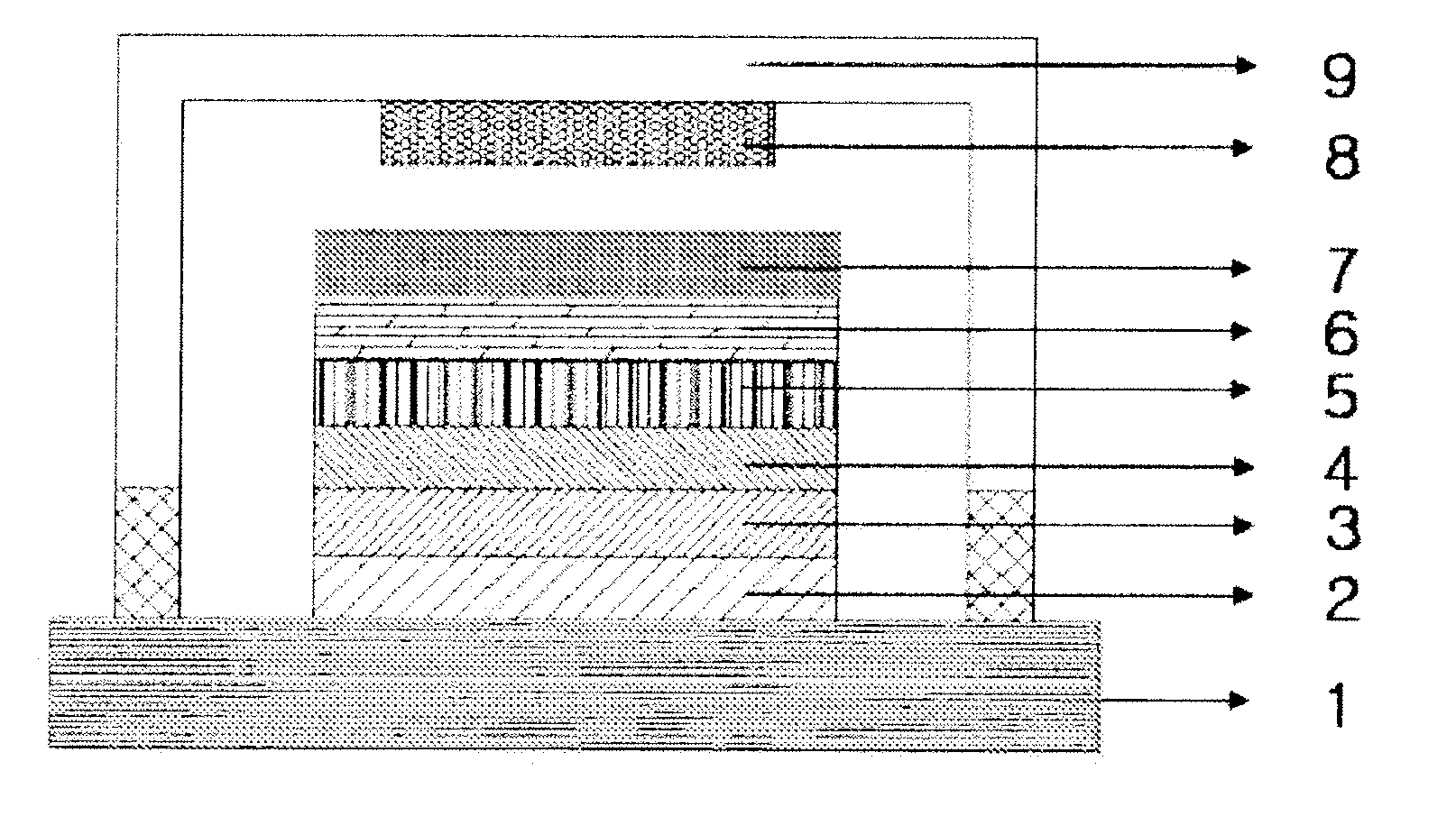
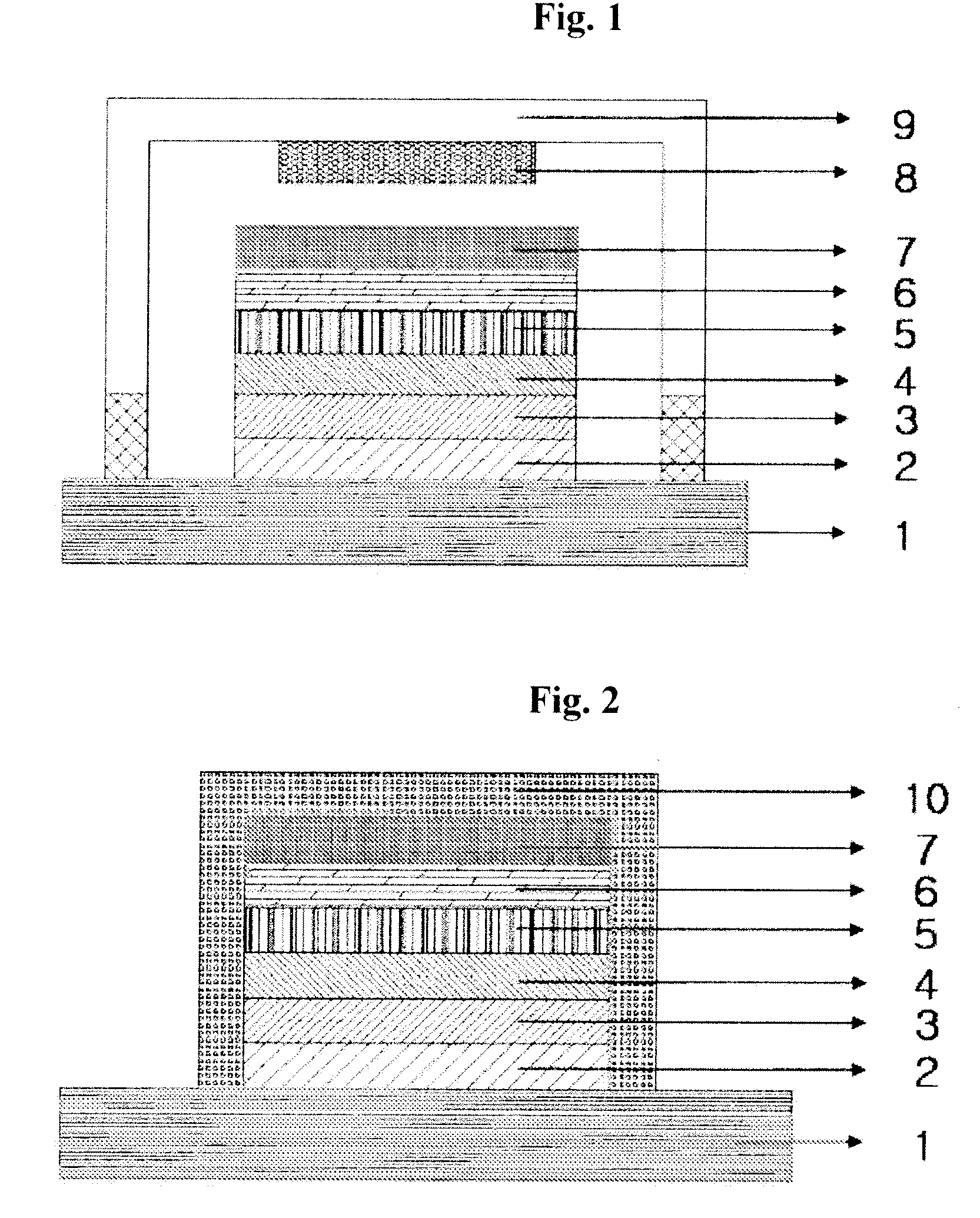
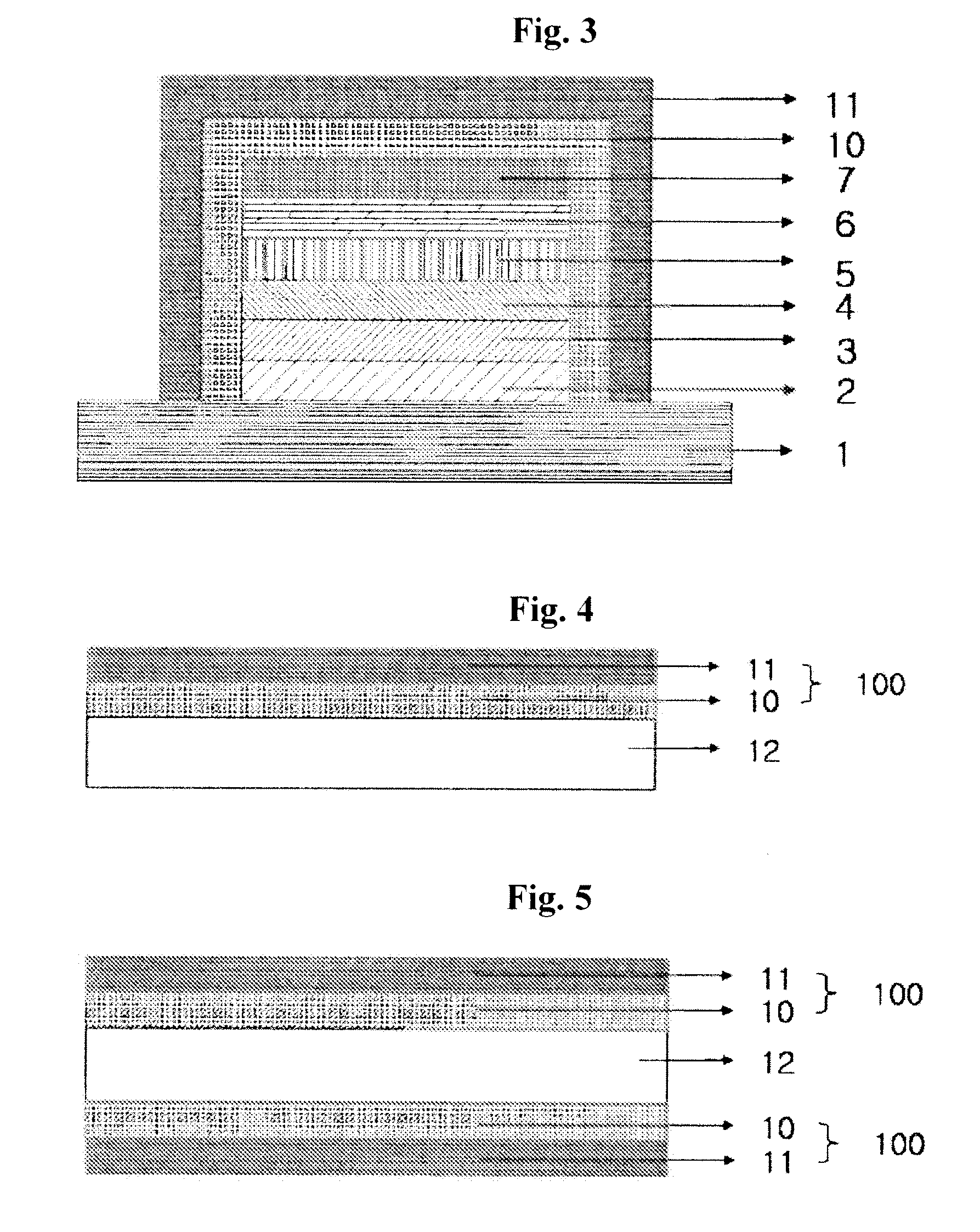
- An organic/inorganic hybrid thin film passivation layer is developed, comprising a photocurable polymer organic polymer passivation layer formed via UV/ozone curing and an inorganic thin film passivation layer made from a nanocomposite material, applied in an up-and-down laminated structure to effectively block moisture and oxygen transmission.

Device with electronic component
PatentWO2015128335A1
Innovation
- The device employs a dual-electrode structure with a first electrode portion made of a transparent conductive oxide or metal and a second electrode portion made of a doped conductive or semiconductive polymer, with a specific overlap zone and encapsulation design to prevent oxidation and migration, ensuring better adhesion and encapsulation, and using materials like graphene or carbon nanowires for improved conductivity and stability.


Environmental Impact Assessment of Organic Electronics
The environmental implications of organic electronics present a complex landscape of both opportunities and challenges that require comprehensive assessment across multiple dimensions. Unlike traditional silicon-based electronics, organic electronic devices introduce novel environmental considerations due to their unique material compositions, manufacturing processes, and end-of-life characteristics.
Manufacturing phase environmental impacts represent a significant departure from conventional semiconductor production. Organic electronics typically require lower processing temperatures and can utilize solution-based deposition techniques, potentially reducing energy consumption during fabrication. However, the extensive use of organic solvents in processing raises concerns about volatile organic compound emissions and solvent waste management. The carbon footprint associated with synthesizing complex organic semiconductors and conducting polymers must also be evaluated against the reduced thermal budget of device fabrication.
Material sourcing and composition analysis reveals both advantages and drawbacks. While organic electronics can potentially utilize more abundant carbon-based materials compared to rare earth elements in traditional electronics, many high-performance organic semiconductors require sophisticated synthetic routes with multiple purification steps. The environmental cost of producing ultra-pure organic materials often involves energy-intensive processes and generates chemical waste streams that require careful management.
Operational environmental performance demonstrates notable benefits in specific applications. The potential for flexible, lightweight organic photovoltaic cells to enable distributed solar energy generation could significantly reduce transportation and installation environmental costs. Similarly, the low-power operation characteristics of organic light-emitting diodes and organic field-effect transistors can contribute to reduced operational energy consumption in certain applications.
End-of-life considerations present unique challenges requiring specialized assessment frameworks. The biodegradability potential of organic electronic materials offers promising pathways for sustainable disposal, yet the presence of metal electrodes and encapsulation materials complicates recycling processes. The relatively shorter operational lifespans of current organic electronic devices compared to silicon counterparts raise questions about waste generation rates and replacement frequency impacts.
Lifecycle assessment methodologies for organic electronics must account for the rapid evolution of material systems and processing technologies. The environmental impact profile varies significantly across different organic electronic applications, from short-term disposable sensors to long-term energy harvesting systems, necessitating application-specific evaluation approaches that consider both immediate and cumulative environmental effects.
Manufacturing phase environmental impacts represent a significant departure from conventional semiconductor production. Organic electronics typically require lower processing temperatures and can utilize solution-based deposition techniques, potentially reducing energy consumption during fabrication. However, the extensive use of organic solvents in processing raises concerns about volatile organic compound emissions and solvent waste management. The carbon footprint associated with synthesizing complex organic semiconductors and conducting polymers must also be evaluated against the reduced thermal budget of device fabrication.
Material sourcing and composition analysis reveals both advantages and drawbacks. While organic electronics can potentially utilize more abundant carbon-based materials compared to rare earth elements in traditional electronics, many high-performance organic semiconductors require sophisticated synthetic routes with multiple purification steps. The environmental cost of producing ultra-pure organic materials often involves energy-intensive processes and generates chemical waste streams that require careful management.
Operational environmental performance demonstrates notable benefits in specific applications. The potential for flexible, lightweight organic photovoltaic cells to enable distributed solar energy generation could significantly reduce transportation and installation environmental costs. Similarly, the low-power operation characteristics of organic light-emitting diodes and organic field-effect transistors can contribute to reduced operational energy consumption in certain applications.
End-of-life considerations present unique challenges requiring specialized assessment frameworks. The biodegradability potential of organic electronic materials offers promising pathways for sustainable disposal, yet the presence of metal electrodes and encapsulation materials complicates recycling processes. The relatively shorter operational lifespans of current organic electronic devices compared to silicon counterparts raise questions about waste generation rates and replacement frequency impacts.
Lifecycle assessment methodologies for organic electronics must account for the rapid evolution of material systems and processing technologies. The environmental impact profile varies significantly across different organic electronic applications, from short-term disposable sensors to long-term energy harvesting systems, necessitating application-specific evaluation approaches that consider both immediate and cumulative environmental effects.
Standardization and Testing Protocols for Oxidation Resistance
The establishment of standardized testing protocols for oxidation resistance in organic electronics represents a critical gap in current industry practices. While numerous research institutions and manufacturers have developed proprietary testing methods, the lack of universally accepted standards creates significant challenges for device comparison, quality assurance, and market adoption. Current testing approaches vary widely in environmental conditions, measurement parameters, and evaluation criteria, leading to inconsistent and often incomparable results across different laboratories and production facilities.
International standardization organizations, including the International Electrotechnical Commission (IEC) and ASTM International, have begun preliminary discussions on developing comprehensive testing frameworks specifically for organic electronic devices. These efforts focus on establishing uniform protocols that address accelerated aging tests, real-time stability assessments, and environmental stress evaluations. The proposed standards aim to incorporate standardized atmospheric conditions, controlled oxygen and moisture exposure levels, and systematic measurement intervals to ensure reproducible results across different testing environments.
Key testing parameters under consideration for standardization include temperature cycling protocols, humidity exposure limits, UV radiation intensity specifications, and oxygen concentration thresholds. Advanced characterization techniques such as impedance spectroscopy, photoluminescence quantum yield measurements, and surface analysis methods are being evaluated for inclusion in standard testing procedures. These protocols must balance accelerated testing requirements with realistic operational conditions to provide meaningful predictions of long-term device performance.
The development of standardized testing protocols faces several technical challenges, particularly in correlating accelerated test results with real-world performance degradation patterns. Different organic materials exhibit varying oxidation kinetics and failure mechanisms, requiring flexible testing frameworks that can accommodate diverse device architectures and material systems. Additionally, the integration of emerging encapsulation technologies and barrier materials necessitates continuous updates to testing methodologies to remain relevant for next-generation organic electronic devices.
Industry collaboration initiatives are driving the establishment of round-robin testing programs and inter-laboratory comparison studies to validate proposed standardization protocols. These collaborative efforts involve major manufacturers, research institutions, and testing laboratories working together to refine measurement procedures and establish acceptable tolerance ranges for oxidation resistance metrics, ultimately facilitating broader market acceptance and regulatory compliance for organic electronic products.
International standardization organizations, including the International Electrotechnical Commission (IEC) and ASTM International, have begun preliminary discussions on developing comprehensive testing frameworks specifically for organic electronic devices. These efforts focus on establishing uniform protocols that address accelerated aging tests, real-time stability assessments, and environmental stress evaluations. The proposed standards aim to incorporate standardized atmospheric conditions, controlled oxygen and moisture exposure levels, and systematic measurement intervals to ensure reproducible results across different testing environments.
Key testing parameters under consideration for standardization include temperature cycling protocols, humidity exposure limits, UV radiation intensity specifications, and oxygen concentration thresholds. Advanced characterization techniques such as impedance spectroscopy, photoluminescence quantum yield measurements, and surface analysis methods are being evaluated for inclusion in standard testing procedures. These protocols must balance accelerated testing requirements with realistic operational conditions to provide meaningful predictions of long-term device performance.
The development of standardized testing protocols faces several technical challenges, particularly in correlating accelerated test results with real-world performance degradation patterns. Different organic materials exhibit varying oxidation kinetics and failure mechanisms, requiring flexible testing frameworks that can accommodate diverse device architectures and material systems. Additionally, the integration of emerging encapsulation technologies and barrier materials necessitates continuous updates to testing methodologies to remain relevant for next-generation organic electronic devices.
Industry collaboration initiatives are driving the establishment of round-robin testing programs and inter-laboratory comparison studies to validate proposed standardization protocols. These collaborative efforts involve major manufacturers, research institutions, and testing laboratories working together to refine measurement procedures and establish acceptable tolerance ranges for oxidation resistance metrics, ultimately facilitating broader market acceptance and regulatory compliance for organic electronic products.
Unlock deeper insights with PatSnap Eureka Quick Research — get a full tech report to explore trends and direct your research. Try now!
Generate Your Research Report Instantly with AI Agent
Supercharge your innovation with PatSnap Eureka AI Agent Platform!