

PCM Reliability vs Application Conditions
MAR 27, 20269 MIN READ
Generate Your Research Report Instantly with AI Agent
Patsnap Eureka helps you evaluate technical feasibility & market potential.
PCM Reliability Challenges and Application Goals
Phase Change Memory (PCM) technology has emerged as a promising non-volatile memory solution, offering unique advantages in data retention, endurance, and scalability. However, the reliability of PCM devices remains critically dependent on specific application conditions, creating a complex landscape of technical challenges that must be addressed for widespread commercial adoption.
The fundamental reliability challenge stems from the inherent physics of phase change materials, particularly chalcogenide compounds like Ge2Sb2Te5 (GST). These materials undergo repeated structural transformations between crystalline and amorphous states during write operations, leading to gradual material degradation over cycling. The reliability degradation manifests through multiple mechanisms including elemental segregation, void formation, and thermal stress accumulation, all of which are highly sensitive to operating conditions.
Temperature represents the most critical application parameter affecting PCM reliability. Elevated operating temperatures accelerate atomic diffusion processes, leading to faster degradation of the phase change material and surrounding interfaces. High-temperature environments can cause premature crystallization of amorphous regions, resulting in data retention failures and reduced programming window margins. Conversely, extremely low temperatures may impair switching kinetics and increase programming energy requirements.
Current density and pulse characteristics during programming operations significantly impact device longevity. High current densities necessary for rapid switching can cause electromigration effects and localized heating beyond optimal thresholds. The temporal characteristics of programming pulses, including rise time, duration, and cooling rates, directly influence the structural quality of programmed states and subsequent reliability performance.
The primary technical goal focuses on achieving endurance levels exceeding 10^8 cycles while maintaining data retention capabilities of 10 years at operating temperatures up to 85°C. This target necessitates fundamental advances in material engineering, device architecture optimization, and programming algorithm development. Additionally, achieving write latencies below 100 nanoseconds while preserving reliability metrics remains a critical objective for competitive positioning against alternative memory technologies.
Addressing these reliability challenges requires comprehensive understanding of failure mechanisms across diverse application scenarios, from automotive environments with extreme temperature variations to data center applications demanding high-frequency access patterns. The development of predictive reliability models that accurately correlate application conditions with device lifetime represents a crucial milestone for enabling confident deployment of PCM technology in mission-critical applications.
The fundamental reliability challenge stems from the inherent physics of phase change materials, particularly chalcogenide compounds like Ge2Sb2Te5 (GST). These materials undergo repeated structural transformations between crystalline and amorphous states during write operations, leading to gradual material degradation over cycling. The reliability degradation manifests through multiple mechanisms including elemental segregation, void formation, and thermal stress accumulation, all of which are highly sensitive to operating conditions.
Temperature represents the most critical application parameter affecting PCM reliability. Elevated operating temperatures accelerate atomic diffusion processes, leading to faster degradation of the phase change material and surrounding interfaces. High-temperature environments can cause premature crystallization of amorphous regions, resulting in data retention failures and reduced programming window margins. Conversely, extremely low temperatures may impair switching kinetics and increase programming energy requirements.
Current density and pulse characteristics during programming operations significantly impact device longevity. High current densities necessary for rapid switching can cause electromigration effects and localized heating beyond optimal thresholds. The temporal characteristics of programming pulses, including rise time, duration, and cooling rates, directly influence the structural quality of programmed states and subsequent reliability performance.
The primary technical goal focuses on achieving endurance levels exceeding 10^8 cycles while maintaining data retention capabilities of 10 years at operating temperatures up to 85°C. This target necessitates fundamental advances in material engineering, device architecture optimization, and programming algorithm development. Additionally, achieving write latencies below 100 nanoseconds while preserving reliability metrics remains a critical objective for competitive positioning against alternative memory technologies.
Addressing these reliability challenges requires comprehensive understanding of failure mechanisms across diverse application scenarios, from automotive environments with extreme temperature variations to data center applications demanding high-frequency access patterns. The development of predictive reliability models that accurately correlate application conditions with device lifetime represents a crucial milestone for enabling confident deployment of PCM technology in mission-critical applications.
Market Demand for Reliable PCM Solutions
The global demand for reliable Phase Change Material (PCM) solutions has experienced substantial growth across multiple industrial sectors, driven by increasing energy efficiency requirements and thermal management challenges. Data centers represent one of the most significant market segments, where PCM reliability directly impacts operational continuity and equipment protection. The exponential growth in cloud computing and edge computing infrastructure has created an urgent need for thermal management solutions that can maintain consistent performance under varying load conditions and ambient temperatures.
Automotive applications constitute another rapidly expanding market segment, particularly with the proliferation of electric vehicles and advanced driver assistance systems. Battery thermal management systems require PCM solutions that can withstand thousands of charge-discharge cycles while maintaining thermal properties across extreme temperature ranges. The automotive industry's stringent reliability standards have pushed manufacturers to develop PCM formulations that demonstrate consistent performance over extended operational periods.
Building and construction sectors increasingly demand PCM solutions for passive thermal regulation in both residential and commercial applications. The growing emphasis on sustainable building practices and energy-efficient design has created market opportunities for PCM products that can reliably function across seasonal temperature variations. These applications require PCM materials that maintain structural integrity and thermal properties over decades of operation without significant degradation.
Industrial process applications present unique market demands where PCM reliability must be evaluated against harsh operating environments including chemical exposure, mechanical stress, and extreme temperature fluctuations. Manufacturing facilities, particularly in semiconductor and pharmaceutical industries, require thermal management solutions that can provide consistent temperature control while withstanding contamination and maintaining purity standards.
The renewable energy sector has emerged as a significant market driver, with solar thermal systems and energy storage applications requiring PCM solutions that can endure thousands of thermal cycles while maintaining heat transfer efficiency. Grid-scale energy storage projects demand PCM materials with proven long-term reliability data to justify investment decisions and ensure operational viability.
Market research indicates that reliability concerns remain the primary barrier to broader PCM adoption across these sectors. End-users consistently prioritize proven performance data over theoretical thermal properties when selecting PCM solutions. This market dynamic has created opportunities for manufacturers who can demonstrate superior reliability through comprehensive testing protocols and real-world performance validation.
The increasing sophistication of application requirements has led to market segmentation based on reliability specifications rather than purely thermal performance metrics. Premium market segments are willing to accept higher costs for PCM solutions that offer enhanced reliability guarantees and extended operational lifespans.
Automotive applications constitute another rapidly expanding market segment, particularly with the proliferation of electric vehicles and advanced driver assistance systems. Battery thermal management systems require PCM solutions that can withstand thousands of charge-discharge cycles while maintaining thermal properties across extreme temperature ranges. The automotive industry's stringent reliability standards have pushed manufacturers to develop PCM formulations that demonstrate consistent performance over extended operational periods.
Building and construction sectors increasingly demand PCM solutions for passive thermal regulation in both residential and commercial applications. The growing emphasis on sustainable building practices and energy-efficient design has created market opportunities for PCM products that can reliably function across seasonal temperature variations. These applications require PCM materials that maintain structural integrity and thermal properties over decades of operation without significant degradation.
Industrial process applications present unique market demands where PCM reliability must be evaluated against harsh operating environments including chemical exposure, mechanical stress, and extreme temperature fluctuations. Manufacturing facilities, particularly in semiconductor and pharmaceutical industries, require thermal management solutions that can provide consistent temperature control while withstanding contamination and maintaining purity standards.
The renewable energy sector has emerged as a significant market driver, with solar thermal systems and energy storage applications requiring PCM solutions that can endure thousands of thermal cycles while maintaining heat transfer efficiency. Grid-scale energy storage projects demand PCM materials with proven long-term reliability data to justify investment decisions and ensure operational viability.
Market research indicates that reliability concerns remain the primary barrier to broader PCM adoption across these sectors. End-users consistently prioritize proven performance data over theoretical thermal properties when selecting PCM solutions. This market dynamic has created opportunities for manufacturers who can demonstrate superior reliability through comprehensive testing protocols and real-world performance validation.
The increasing sophistication of application requirements has led to market segmentation based on reliability specifications rather than purely thermal performance metrics. Premium market segments are willing to accept higher costs for PCM solutions that offer enhanced reliability guarantees and extended operational lifespans.
Current PCM Reliability Issues Under Varying Conditions
Phase Change Memory (PCM) technology faces significant reliability challenges when deployed across diverse application environments. The fundamental issue stems from the material's sensitivity to thermal cycling, electrical stress, and environmental conditions that vary dramatically between consumer electronics, automotive systems, and industrial applications.
Temperature fluctuations represent the most critical reliability concern for PCM devices. The amorphous-to-crystalline phase transitions that enable data storage are inherently temperature-dependent processes. In automotive applications, where operating temperatures can range from -40°C to 125°C, PCM cells experience accelerated degradation due to uncontrolled crystallization at high temperatures and increased switching voltages at low temperatures. This thermal stress leads to compositional segregation within the chalcogenide material, ultimately causing device failure.
Endurance limitations become particularly pronounced under high-frequency write operations. Current PCM technologies typically demonstrate 10^6 to 10^8 write cycles under laboratory conditions, but real-world applications often experience significantly reduced endurance due to cumulative thermal and electrical stress. The repeated heating and cooling cycles cause atomic migration and void formation, leading to increased resistance drift and eventual cell failure.
Resistance drift poses another fundamental challenge, where the resistance of amorphous cells increases over time even without external stimulation. This phenomenon is particularly problematic in applications requiring long-term data retention, as the resistance values can shift beyond acceptable margins for reliable data retrieval. The drift rate is exponentially dependent on temperature, making it especially severe in high-temperature environments.
Cross-talk effects between adjacent cells become more pronounced under varying voltage and temperature conditions. As PCM arrays scale to higher densities, thermal interference during programming operations can cause unintended phase changes in neighboring cells, compromising data integrity. This issue is exacerbated in applications with non-uniform thermal environments.
Manufacturing variability compounds these reliability issues, as slight variations in material composition, cell geometry, and thermal properties lead to inconsistent performance across different operating conditions. The interaction between these manufacturing tolerances and varying application environments creates unpredictable failure modes that are difficult to characterize and mitigate through conventional testing protocols.
Temperature fluctuations represent the most critical reliability concern for PCM devices. The amorphous-to-crystalline phase transitions that enable data storage are inherently temperature-dependent processes. In automotive applications, where operating temperatures can range from -40°C to 125°C, PCM cells experience accelerated degradation due to uncontrolled crystallization at high temperatures and increased switching voltages at low temperatures. This thermal stress leads to compositional segregation within the chalcogenide material, ultimately causing device failure.
Endurance limitations become particularly pronounced under high-frequency write operations. Current PCM technologies typically demonstrate 10^6 to 10^8 write cycles under laboratory conditions, but real-world applications often experience significantly reduced endurance due to cumulative thermal and electrical stress. The repeated heating and cooling cycles cause atomic migration and void formation, leading to increased resistance drift and eventual cell failure.
Resistance drift poses another fundamental challenge, where the resistance of amorphous cells increases over time even without external stimulation. This phenomenon is particularly problematic in applications requiring long-term data retention, as the resistance values can shift beyond acceptable margins for reliable data retrieval. The drift rate is exponentially dependent on temperature, making it especially severe in high-temperature environments.
Cross-talk effects between adjacent cells become more pronounced under varying voltage and temperature conditions. As PCM arrays scale to higher densities, thermal interference during programming operations can cause unintended phase changes in neighboring cells, compromising data integrity. This issue is exacerbated in applications with non-uniform thermal environments.
Manufacturing variability compounds these reliability issues, as slight variations in material composition, cell geometry, and thermal properties lead to inconsistent performance across different operating conditions. The interaction between these manufacturing tolerances and varying application environments creates unpredictable failure modes that are difficult to characterize and mitigate through conventional testing protocols.
Existing Solutions for PCM Reliability Optimization
01 PCM material composition and encapsulation techniques
Phase change materials require specific encapsulation methods to prevent leakage and maintain structural integrity during thermal cycling. Various encapsulation techniques including microencapsulation, macroencapsulation, and polymer matrix embedding are employed to enhance the reliability and longevity of PCM systems. The selection of appropriate shell materials and encapsulation processes is critical for ensuring long-term stability and preventing degradation of the phase change material.- Phase change material composition and thermal stability enhancement: Improving PCM reliability through optimized material compositions that enhance thermal stability and cycling performance. This includes the use of additives, encapsulation techniques, and composite materials to prevent degradation during repeated phase transitions. The formulations focus on maintaining consistent thermal properties over extended operational cycles.
- Encapsulation methods for PCM protection: Development of encapsulation technologies to protect phase change materials from environmental factors and mechanical stress. These methods involve creating protective shells or matrices around PCM particles to prevent leakage, improve structural integrity, and enhance long-term reliability. Various encapsulation materials and processes are employed to ensure stable performance.
- Testing and quality control methods for PCM systems: Establishment of standardized testing protocols and quality control measures to evaluate PCM reliability under various operating conditions. This includes accelerated aging tests, thermal cycling assessments, and performance monitoring techniques to predict long-term behavior and identify potential failure modes before deployment.
- Container and packaging design for PCM applications: Development of specialized containers and packaging solutions that maintain PCM integrity during storage, transportation, and use. These designs address issues such as thermal expansion, pressure management, and material compatibility to prevent container failure and ensure consistent PCM performance throughout the product lifecycle.
- PCM integration in electronic and semiconductor applications: Techniques for incorporating phase change materials into electronic devices and semiconductor systems for thermal management. Focus on ensuring reliable operation under varying thermal loads, preventing hotspots, and maintaining device performance. Special attention is given to material compatibility with electronic components and long-term stability in high-tech applications.
02 Thermal cycling stability and durability testing
Reliability assessment of phase change materials involves extensive thermal cycling tests to evaluate material stability over repeated phase transitions. Testing protocols examine the consistency of melting and solidification temperatures, latent heat capacity retention, and physical integrity after numerous cycles. Long-term durability studies help predict service life and identify potential failure modes such as phase separation, supercooling, or thermal degradation.Expand Specific Solutions03 PCM integration in thermal management systems
Integration of phase change materials into thermal management applications requires careful consideration of heat transfer enhancement, container design, and system compatibility. Reliability concerns include maintaining consistent thermal performance, preventing material migration, and ensuring proper heat exchange between the PCM and the surrounding environment. Design strategies focus on optimizing thermal conductivity and minimizing thermal resistance while maintaining structural reliability.Expand Specific Solutions04 Quality control and performance monitoring
Ensuring PCM reliability requires comprehensive quality control measures including material characterization, purity analysis, and performance verification. Monitoring techniques assess key parameters such as phase transition temperatures, enthalpy values, thermal conductivity, and chemical stability. Advanced diagnostic methods enable early detection of degradation or contamination that could compromise system reliability.Expand Specific Solutions05 Failure prevention and mitigation strategies
Reliability enhancement strategies address common failure modes including material leakage, corrosion, phase separation, and thermal property degradation. Protective measures involve the use of compatible container materials, corrosion inhibitors, nucleating agents to control supercooling, and stabilizing additives. Design considerations include expansion accommodation, pressure relief mechanisms, and redundancy features to maintain system functionality even under adverse conditions.Expand Specific Solutions
Key Players in PCM and Thermal Management Industry
The PCM reliability versus application conditions technology landscape represents a rapidly evolving market driven by increasing demand for thermal management solutions across electronics, automotive, and energy storage sectors. The industry is experiencing significant growth with market expansion fueled by electrification trends and thermal efficiency requirements. Technology maturity varies considerably among key players, with established companies like Huawei Technologies, Robert Bosch GmbH, and Taiwan Semiconductor Manufacturing demonstrating advanced PCM integration capabilities, while specialized firms such as PureTemp.com focus on bio-based PCM innovations. Research institutions including Wuhan University, Chongqing University, and University of Washington contribute fundamental reliability research, while industrial giants like State Grid Corp. of China and NIO Technology drive practical applications. The competitive landscape shows a mix of mature semiconductor companies, emerging material specialists, and academic institutions collaborating to address PCM performance challenges under diverse operating conditions.
Taiwan Semiconductor Manufacturing Co., Ltd.
Technical Solution: TSMC has developed advanced PCM reliability testing methodologies focusing on thermal cycling endurance and data retention characteristics. Their approach involves comprehensive stress testing under various temperature conditions ranging from -40°C to 125°C, with endurance cycles exceeding 10^8 write/erase operations. The company implements multi-level cell (MLC) and single-level cell (SLC) configurations to optimize reliability based on application requirements. TSMC's PCM solutions incorporate error correction codes (ECC) and wear leveling algorithms to enhance data integrity and extend device lifetime in automotive, industrial IoT, and consumer electronics applications.
Strengths: Industry-leading manufacturing process technology and extensive reliability validation infrastructure. Weaknesses: High development costs and complex integration requirements for specialized applications.
Robert Bosch GmbH
Technical Solution: Bosch has developed PCM reliability solutions specifically tailored for automotive applications, focusing on functional safety requirements and extreme temperature operation. Their approach includes comprehensive reliability modeling that correlates PCM performance with real-world automotive conditions including vibration, humidity, and temperature cycling from -40°C to 150°C. Bosch implements advanced failure prediction algorithms and redundancy mechanisms to ensure PCM reliability meets ISO 26262 functional safety standards. The company's PCM solutions are integrated into engine control units, advanced driver assistance systems, and electric vehicle battery management systems where data integrity is mission-critical.
Strengths: Deep automotive domain expertise and comprehensive functional safety validation capabilities. Weaknesses: Limited focus on consumer electronics applications and higher cost structure.
Core Innovations in PCM Durability Technologies
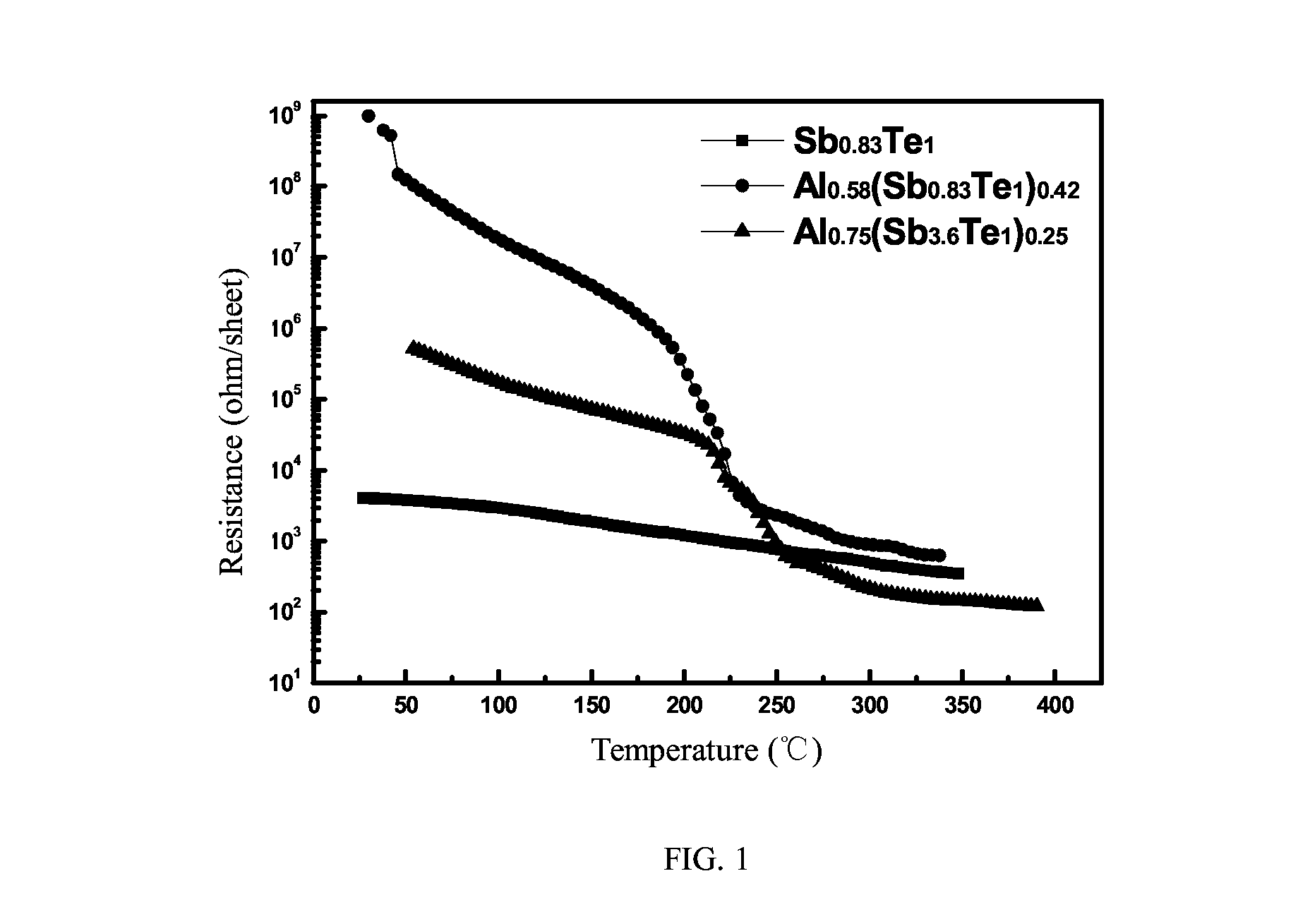
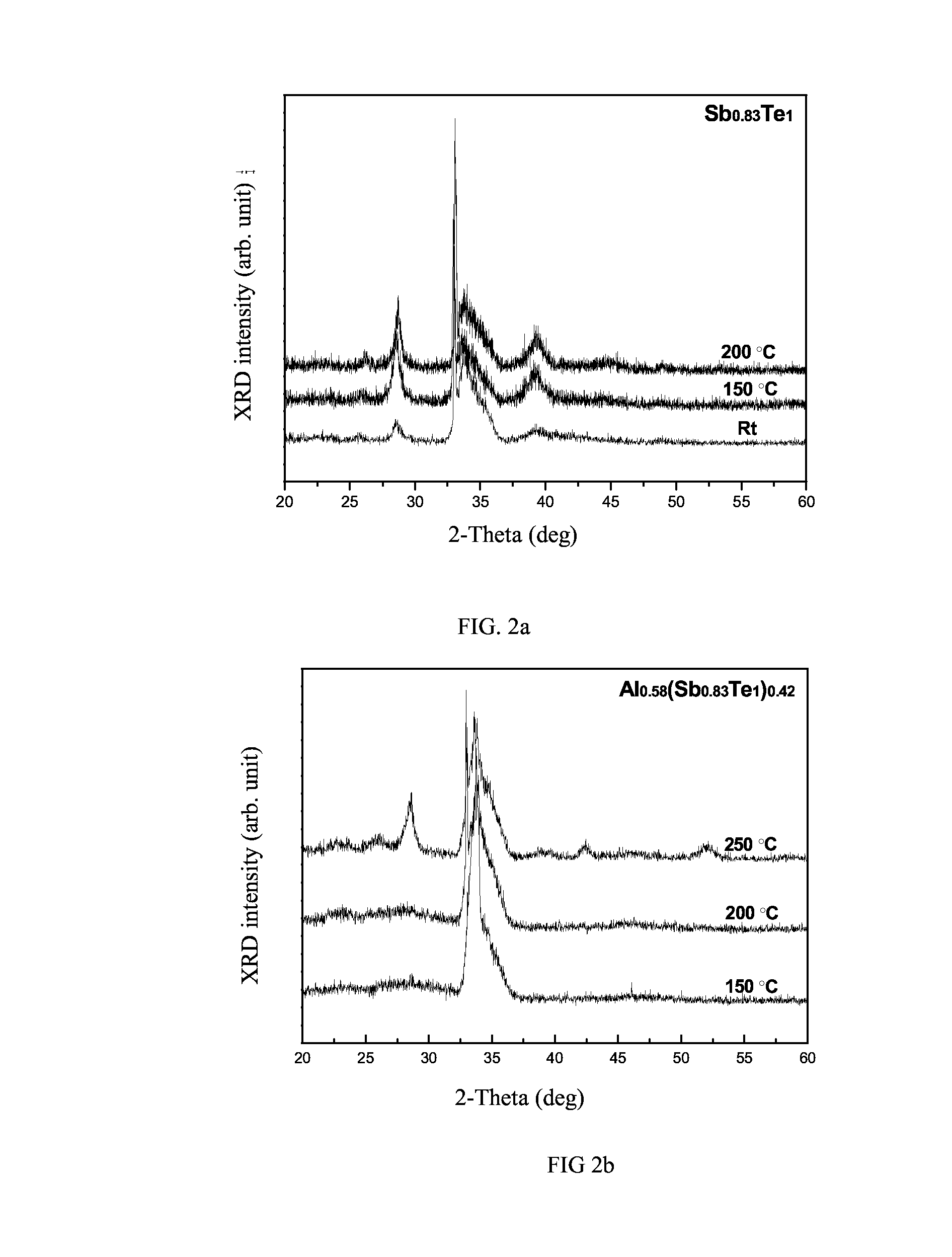
Al-sb-te phase change material used for phase change memory and fabrication method thereof
PatentActiveUS20130334469A1
Innovation
- A phase change material composed of a mixture of aluminum (Al), antimony (Sb), and tellurium (Te) with a general formula Alx(SbyTe1)1-x, which exhibits high crystallization speed, thermal stability, and low power consumption, and is fabricated using magnetron sputtering, allowing for reversible resistivity changes and compatibility with CMOS processes.
Electrode for phase change memory device and method
PatentActiveUS7456420B2
Innovation
- A multi-layer electrode structure is introduced, comprising a first layer with a nitride (ANx) where A is titanium or tungsten and x is greater than zero but less than 1.0, and a second layer with a nitride (ANy) where y is greater than or equal to 1.0, enhancing adhesion to chalcogenide materials and reducing delamination.


Testing Standards for PCM Reliability Assessment
The establishment of comprehensive testing standards for PCM reliability assessment has become increasingly critical as phase change materials find broader applications across diverse operating environments. Current standardization efforts focus on developing unified protocols that can accurately predict PCM performance under various stress conditions while ensuring reproducibility across different testing facilities.
International standardization bodies, including ASTM International and ISO, have been actively developing specific test methods for PCM characterization. ASTM E793 provides guidelines for differential scanning calorimetry measurements, while ISO 11357 series addresses thermal analysis procedures. However, these existing standards primarily focus on basic thermal properties rather than long-term reliability assessment under realistic application conditions.
The development of accelerated aging test protocols represents a significant advancement in PCM reliability evaluation. These methodologies employ elevated temperatures, extended thermal cycling, and controlled atmospheric conditions to simulate years of operation within compressed timeframes. The Arrhenius equation serves as the theoretical foundation for extrapolating accelerated test results to predict real-world performance over extended periods.
Thermal cycling standards have evolved to incorporate variable heating and cooling rates that better reflect actual application scenarios. Modern protocols specify precise temperature ramp rates, dwell times, and cycle counts based on specific application requirements. For building applications, standards typically mandate 1000-10000 thermal cycles, while electronics cooling applications may require up to 100000 cycles due to more frequent temperature fluctuations.
Standardized measurement techniques for key performance indicators have been established to ensure consistent evaluation across different laboratories. These include protocols for measuring phase change temperature stability, latent heat retention, thermal conductivity degradation, and physical property changes. Advanced characterization methods such as thermogravimetric analysis and X-ray diffraction have been integrated into standard procedures to detect molecular-level degradation mechanisms.
Quality assurance frameworks within testing standards emphasize statistical significance and uncertainty quantification. Modern standards require multiple sample testing, statistical analysis of results, and clear reporting of measurement uncertainties. This approach ensures that reliability assessments provide meaningful confidence intervals for performance predictions rather than single-point estimates.
International standardization bodies, including ASTM International and ISO, have been actively developing specific test methods for PCM characterization. ASTM E793 provides guidelines for differential scanning calorimetry measurements, while ISO 11357 series addresses thermal analysis procedures. However, these existing standards primarily focus on basic thermal properties rather than long-term reliability assessment under realistic application conditions.
The development of accelerated aging test protocols represents a significant advancement in PCM reliability evaluation. These methodologies employ elevated temperatures, extended thermal cycling, and controlled atmospheric conditions to simulate years of operation within compressed timeframes. The Arrhenius equation serves as the theoretical foundation for extrapolating accelerated test results to predict real-world performance over extended periods.
Thermal cycling standards have evolved to incorporate variable heating and cooling rates that better reflect actual application scenarios. Modern protocols specify precise temperature ramp rates, dwell times, and cycle counts based on specific application requirements. For building applications, standards typically mandate 1000-10000 thermal cycles, while electronics cooling applications may require up to 100000 cycles due to more frequent temperature fluctuations.
Standardized measurement techniques for key performance indicators have been established to ensure consistent evaluation across different laboratories. These include protocols for measuring phase change temperature stability, latent heat retention, thermal conductivity degradation, and physical property changes. Advanced characterization methods such as thermogravimetric analysis and X-ray diffraction have been integrated into standard procedures to detect molecular-level degradation mechanisms.
Quality assurance frameworks within testing standards emphasize statistical significance and uncertainty quantification. Modern standards require multiple sample testing, statistical analysis of results, and clear reporting of measurement uncertainties. This approach ensures that reliability assessments provide meaningful confidence intervals for performance predictions rather than single-point estimates.
Environmental Impact of PCM Degradation
Phase Change Materials (PCMs) degradation presents significant environmental implications that extend beyond immediate performance concerns. The deterioration of PCM systems can lead to the release of chemical compounds into surrounding environments, particularly when organic PCMs undergo thermal cycling stress or chemical breakdown. Salt hydrate PCMs may experience leaching of ionic compounds, while paraffin-based materials can emit volatile organic compounds during degradation processes.
The environmental footprint of PCM degradation varies substantially based on material composition and containment strategies. Organic PCMs typically exhibit lower toxicity profiles compared to inorganic alternatives, yet their degradation byproducts can still pose ecological risks. Microencapsulated PCMs present unique challenges, as capsule wall failure can result in widespread contamination that is difficult to remediate due to the microscopic scale of release.
Lifecycle environmental assessments reveal that PCM degradation impacts encompass both direct material losses and indirect consequences through reduced system efficiency. When PCMs lose their phase change properties due to chemical decomposition or physical separation, thermal energy storage systems require increased energy input to maintain performance levels, thereby increasing overall carbon footprint and resource consumption.
Disposal and end-of-life management of degraded PCMs pose additional environmental challenges. Many PCM formulations contain additives such as nucleating agents, stabilizers, or corrosion inhibitors that complicate recycling processes. The heterogeneous nature of degraded PCM materials often necessitates specialized treatment methods, increasing disposal costs and environmental burden.
Contamination pathways from PCM degradation include soil infiltration, groundwater pollution, and atmospheric emissions. The persistence of certain PCM degradation products in environmental matrices raises concerns about bioaccumulation and long-term ecological effects. Proper containment design and regular monitoring protocols are essential for minimizing these environmental risks while maintaining the sustainability benefits that PCM technologies are intended to provide.
The environmental footprint of PCM degradation varies substantially based on material composition and containment strategies. Organic PCMs typically exhibit lower toxicity profiles compared to inorganic alternatives, yet their degradation byproducts can still pose ecological risks. Microencapsulated PCMs present unique challenges, as capsule wall failure can result in widespread contamination that is difficult to remediate due to the microscopic scale of release.
Lifecycle environmental assessments reveal that PCM degradation impacts encompass both direct material losses and indirect consequences through reduced system efficiency. When PCMs lose their phase change properties due to chemical decomposition or physical separation, thermal energy storage systems require increased energy input to maintain performance levels, thereby increasing overall carbon footprint and resource consumption.
Disposal and end-of-life management of degraded PCMs pose additional environmental challenges. Many PCM formulations contain additives such as nucleating agents, stabilizers, or corrosion inhibitors that complicate recycling processes. The heterogeneous nature of degraded PCM materials often necessitates specialized treatment methods, increasing disposal costs and environmental burden.
Contamination pathways from PCM degradation include soil infiltration, groundwater pollution, and atmospheric emissions. The persistence of certain PCM degradation products in environmental matrices raises concerns about bioaccumulation and long-term ecological effects. Proper containment design and regular monitoring protocols are essential for minimizing these environmental risks while maintaining the sustainability benefits that PCM technologies are intended to provide.
Unlock deeper insights with Patsnap Eureka Quick Research — get a full tech report to explore trends and direct your research. Try now!
Generate Your Research Report Instantly with AI Agent
Supercharge your innovation with Patsnap Eureka AI Agent Platform!