

PCM Reliability vs Thermal Management
MAR 27, 20269 MIN READ
Generate Your Research Report Instantly with AI Agent
PatSnap Eureka helps you evaluate technical feasibility & market potential.
PCM Thermal Management Background and Research Objectives
Phase Change Materials (PCMs) have emerged as a critical technology in thermal management systems, representing a paradigm shift from traditional cooling methods to more efficient, passive thermal regulation solutions. These materials leverage latent heat storage during phase transitions, typically solid-liquid transformations, to absorb and release substantial amounts of thermal energy at relatively constant temperatures. The evolution of PCM technology spans several decades, initially finding applications in building energy storage and gradually expanding into electronics cooling, battery thermal management, and aerospace applications.
The historical development of PCM thermal management began in the 1970s with simple paraffin-based systems for solar energy storage. Subsequent decades witnessed significant advancements in material science, leading to the development of salt hydrates, fatty acids, and more recently, advanced organic and inorganic compounds with tailored thermal properties. The integration of PCMs into electronic systems gained momentum in the 2000s as device miniaturization and power density increases created unprecedented thermal challenges.
Current technological trends indicate a convergence toward hybrid thermal management systems that combine PCMs with active cooling mechanisms, enhanced heat transfer surfaces, and smart thermal interface materials. The emergence of nanoenhanced PCMs, incorporating carbon nanotubes, graphene, and metallic nanoparticles, represents a significant leap in thermal conductivity enhancement while maintaining phase change characteristics.
The primary technical objectives driving PCM thermal management research center on achieving optimal balance between thermal performance and long-term reliability. Key targets include developing PCMs with enhanced thermal conductivity exceeding 10 W/mK, maintaining phase change stability over 10,000+ cycles, and achieving precise temperature control within ±2°C tolerance ranges. Additionally, research aims to minimize material degradation, prevent phase separation, and ensure consistent thermal properties throughout operational lifecycles.
Strategic research goals encompass the development of predictive reliability models that correlate thermal cycling frequency, temperature ranges, and material composition with performance degradation patterns. Understanding the fundamental relationship between thermal management effectiveness and reliability degradation mechanisms remains paramount for advancing PCM technology toward commercial viability in critical applications where both thermal performance and long-term operational stability are essential requirements.
The historical development of PCM thermal management began in the 1970s with simple paraffin-based systems for solar energy storage. Subsequent decades witnessed significant advancements in material science, leading to the development of salt hydrates, fatty acids, and more recently, advanced organic and inorganic compounds with tailored thermal properties. The integration of PCMs into electronic systems gained momentum in the 2000s as device miniaturization and power density increases created unprecedented thermal challenges.
Current technological trends indicate a convergence toward hybrid thermal management systems that combine PCMs with active cooling mechanisms, enhanced heat transfer surfaces, and smart thermal interface materials. The emergence of nanoenhanced PCMs, incorporating carbon nanotubes, graphene, and metallic nanoparticles, represents a significant leap in thermal conductivity enhancement while maintaining phase change characteristics.
The primary technical objectives driving PCM thermal management research center on achieving optimal balance between thermal performance and long-term reliability. Key targets include developing PCMs with enhanced thermal conductivity exceeding 10 W/mK, maintaining phase change stability over 10,000+ cycles, and achieving precise temperature control within ±2°C tolerance ranges. Additionally, research aims to minimize material degradation, prevent phase separation, and ensure consistent thermal properties throughout operational lifecycles.
Strategic research goals encompass the development of predictive reliability models that correlate thermal cycling frequency, temperature ranges, and material composition with performance degradation patterns. Understanding the fundamental relationship between thermal management effectiveness and reliability degradation mechanisms remains paramount for advancing PCM technology toward commercial viability in critical applications where both thermal performance and long-term operational stability are essential requirements.
Market Demand Analysis for PCM Thermal Solutions
The global thermal management market is experiencing unprecedented growth driven by the increasing demand for efficient heat dissipation solutions across multiple industries. Electronics miniaturization trends have created critical thermal challenges, particularly in high-performance computing, data centers, and consumer electronics where traditional cooling methods are reaching their physical limitations. Phase Change Materials emerge as a promising solution to address these thermal bottlenecks while offering enhanced reliability characteristics.
Automotive electrification represents one of the most significant growth drivers for PCM thermal solutions. Electric vehicle battery systems require sophisticated thermal management to maintain optimal operating temperatures, extend battery life, and ensure safety. The automotive sector's stringent reliability requirements align perfectly with PCM's inherent thermal stability and passive cooling capabilities, creating substantial market opportunities for advanced thermal interface materials and battery thermal management systems.
Data center infrastructure modernization is generating substantial demand for innovative cooling technologies. As server densities increase and computational loads intensify, traditional air cooling systems are becoming inadequate. PCM-based solutions offer advantages in peak load management, energy efficiency, and system reliability, making them attractive for hyperscale data centers and edge computing facilities where thermal reliability directly impacts operational continuity.
The telecommunications industry's 5G network deployment is creating new thermal management challenges. Base station equipment generates significant heat loads while requiring high reliability standards for continuous operation. PCM thermal solutions provide passive cooling capabilities that reduce dependency on active cooling systems, thereby improving overall system reliability and reducing maintenance requirements in remote installations.
Consumer electronics manufacturers are increasingly adopting PCM solutions for smartphones, laptops, and gaming devices. The demand for thinner form factors combined with higher performance requirements creates thermal design constraints that PCM materials can effectively address. Market adoption is accelerated by consumer expectations for device reliability and performance consistency under varying thermal conditions.
Industrial applications including power electronics, LED lighting, and renewable energy systems represent emerging market segments. These applications often operate in harsh environments where thermal reliability is paramount. PCM solutions offer passive thermal regulation that enhances component longevity and system dependability, driving adoption in mission-critical industrial applications where thermal failure can result in significant operational disruptions.
Automotive electrification represents one of the most significant growth drivers for PCM thermal solutions. Electric vehicle battery systems require sophisticated thermal management to maintain optimal operating temperatures, extend battery life, and ensure safety. The automotive sector's stringent reliability requirements align perfectly with PCM's inherent thermal stability and passive cooling capabilities, creating substantial market opportunities for advanced thermal interface materials and battery thermal management systems.
Data center infrastructure modernization is generating substantial demand for innovative cooling technologies. As server densities increase and computational loads intensify, traditional air cooling systems are becoming inadequate. PCM-based solutions offer advantages in peak load management, energy efficiency, and system reliability, making them attractive for hyperscale data centers and edge computing facilities where thermal reliability directly impacts operational continuity.
The telecommunications industry's 5G network deployment is creating new thermal management challenges. Base station equipment generates significant heat loads while requiring high reliability standards for continuous operation. PCM thermal solutions provide passive cooling capabilities that reduce dependency on active cooling systems, thereby improving overall system reliability and reducing maintenance requirements in remote installations.
Consumer electronics manufacturers are increasingly adopting PCM solutions for smartphones, laptops, and gaming devices. The demand for thinner form factors combined with higher performance requirements creates thermal design constraints that PCM materials can effectively address. Market adoption is accelerated by consumer expectations for device reliability and performance consistency under varying thermal conditions.
Industrial applications including power electronics, LED lighting, and renewable energy systems represent emerging market segments. These applications often operate in harsh environments where thermal reliability is paramount. PCM solutions offer passive thermal regulation that enhances component longevity and system dependability, driving adoption in mission-critical industrial applications where thermal failure can result in significant operational disruptions.
Current PCM Reliability Challenges and Technical Barriers
Phase Change Materials face significant reliability challenges that directly impact their effectiveness in thermal management applications. The primary concern centers around thermal cycling degradation, where repeated melting and solidification processes gradually compromise the material's structural integrity and thermal properties. This degradation manifests as reduced latent heat capacity, altered phase transition temperatures, and decreased thermal conductivity over extended operational cycles.
Supercooling represents another critical reliability barrier, particularly affecting organic PCMs. This phenomenon occurs when materials fail to crystallize at their designated melting point during cooling, leading to unpredictable thermal behavior and reduced energy storage efficiency. The degree of supercooling varies significantly based on material purity, nucleation agents, and thermal history, making consistent performance difficult to achieve in real-world applications.
Material segregation poses substantial challenges for composite PCMs and encapsulated systems. During thermal cycling, different components may separate or redistribute unevenly, creating localized variations in thermal properties and potentially compromising the overall system performance. This segregation is particularly problematic in salt hydrate PCMs, where incongruent melting can lead to permanent property changes.
Encapsulation integrity remains a persistent technical barrier across various PCM implementations. Container materials must withstand thermal expansion and contraction cycles while maintaining chemical compatibility with the PCM. Micro-encapsulation systems face additional challenges related to shell material durability, permeability, and mechanical stress resistance during phase transitions.
Corrosion and chemical compatibility issues significantly limit material selection and system longevity. Many high-performance PCMs exhibit corrosive properties toward common container materials, particularly metallic enclosures. Salt-based PCMs are especially problematic, requiring specialized containment solutions that often compromise thermal conductivity or increase system complexity.
Thermal property stability over extended operational periods represents a fundamental reliability concern. Gradual changes in melting point, latent heat capacity, and thermal conductivity can occur due to chemical decomposition, oxidation, or molecular restructuring. These changes are often irreversible and can lead to system performance degradation that falls below acceptable operational thresholds.
Temperature uniformity and heat transfer limitations create additional technical barriers. Non-uniform temperature distribution within PCM volumes can result in incomplete phase transitions, reduced effective thermal capacity, and localized overheating. Poor thermal conductivity in many organic PCMs exacerbates these issues, requiring complex enhancement strategies that may introduce additional reliability concerns.
Supercooling represents another critical reliability barrier, particularly affecting organic PCMs. This phenomenon occurs when materials fail to crystallize at their designated melting point during cooling, leading to unpredictable thermal behavior and reduced energy storage efficiency. The degree of supercooling varies significantly based on material purity, nucleation agents, and thermal history, making consistent performance difficult to achieve in real-world applications.
Material segregation poses substantial challenges for composite PCMs and encapsulated systems. During thermal cycling, different components may separate or redistribute unevenly, creating localized variations in thermal properties and potentially compromising the overall system performance. This segregation is particularly problematic in salt hydrate PCMs, where incongruent melting can lead to permanent property changes.
Encapsulation integrity remains a persistent technical barrier across various PCM implementations. Container materials must withstand thermal expansion and contraction cycles while maintaining chemical compatibility with the PCM. Micro-encapsulation systems face additional challenges related to shell material durability, permeability, and mechanical stress resistance during phase transitions.
Corrosion and chemical compatibility issues significantly limit material selection and system longevity. Many high-performance PCMs exhibit corrosive properties toward common container materials, particularly metallic enclosures. Salt-based PCMs are especially problematic, requiring specialized containment solutions that often compromise thermal conductivity or increase system complexity.
Thermal property stability over extended operational periods represents a fundamental reliability concern. Gradual changes in melting point, latent heat capacity, and thermal conductivity can occur due to chemical decomposition, oxidation, or molecular restructuring. These changes are often irreversible and can lead to system performance degradation that falls below acceptable operational thresholds.
Temperature uniformity and heat transfer limitations create additional technical barriers. Non-uniform temperature distribution within PCM volumes can result in incomplete phase transitions, reduced effective thermal capacity, and localized overheating. Poor thermal conductivity in many organic PCMs exacerbates these issues, requiring complex enhancement strategies that may introduce additional reliability concerns.
Existing PCM Reliability Enhancement Solutions
01 Phase Change Material Selection and Composition
The selection and composition of phase change materials (PCM) is critical for thermal management applications. This involves choosing materials with appropriate melting points, thermal conductivity, and latent heat capacity to effectively absorb and release thermal energy. The composition may include organic compounds, inorganic salts, or hybrid materials that are optimized for specific temperature ranges and thermal cycling requirements. Material purity and chemical stability are key factors in ensuring long-term reliability.- Phase Change Material Selection and Composition: The selection and composition of phase change materials (PCM) is critical for thermal management applications. This involves choosing materials with appropriate melting points, thermal conductivity, and latent heat capacity to effectively absorb and release thermal energy. The composition may include organic compounds, inorganic salts, or hybrid materials that are optimized for specific temperature ranges and thermal cycling requirements. Material purity and chemical stability are key factors in ensuring long-term reliability.
- PCM Encapsulation and Containment Structures: Encapsulation techniques are employed to contain phase change materials and prevent leakage during phase transitions. This includes the development of micro-encapsulation methods, shell materials, and containment structures that maintain PCM integrity while allowing efficient heat transfer. The encapsulation approach addresses issues related to volume expansion, material compatibility, and mechanical stability during repeated thermal cycles. Various encapsulation geometries and materials are designed to enhance durability and thermal performance.
- Thermal Conductivity Enhancement Methods: Enhancement of thermal conductivity in PCM systems is achieved through the incorporation of conductive additives and structural modifications. This involves integrating materials such as metal foams, carbon-based materials, or thermally conductive particles into the PCM matrix to improve heat transfer rates. The enhancement methods address the inherently low thermal conductivity of many phase change materials, enabling faster charging and discharging cycles. Design considerations include maintaining the latent heat capacity while significantly improving thermal response.
- PCM System Integration and Packaging: Integration of PCM into thermal management systems requires specialized packaging and interface designs. This encompasses the development of heat exchangers, thermal interface materials, and system architectures that optimize PCM performance within electronic devices, battery systems, or building applications. The integration approach considers space constraints, thermal resistance minimization, and compatibility with existing cooling systems. Packaging solutions are designed to facilitate maintenance, replacement, and scalability.
- Reliability Testing and Performance Monitoring: Reliability assessment of PCM systems involves comprehensive testing protocols and monitoring mechanisms to evaluate long-term performance. This includes thermal cycling tests, degradation analysis, and the development of sensors or diagnostic tools to track PCM condition over time. Testing methodologies assess parameters such as phase transition consistency, thermal storage capacity retention, and structural integrity after extended use. Performance monitoring systems enable predictive maintenance and ensure consistent thermal management effectiveness throughout the operational lifetime.
02 PCM Encapsulation and Containment Structures
Encapsulation techniques are employed to contain phase change materials and prevent leakage during phase transitions. This includes the development of micro-encapsulation methods, macro-encapsulation containers, and composite structures that integrate PCM with supporting matrices. The encapsulation design must address mechanical strength, thermal conductivity enhancement, and compatibility with the PCM to maintain structural integrity over repeated thermal cycles. Various shell materials and geometries are utilized to optimize heat transfer while ensuring containment reliability.Expand Specific Solutions03 Thermal Conductivity Enhancement Methods
Enhancement of thermal conductivity in PCM systems is achieved through the incorporation of high-conductivity additives and structural modifications. This includes the addition of metallic particles, carbon-based materials such as graphene or carbon nanotubes, and the creation of composite structures with enhanced heat transfer pathways. These methods address the inherently low thermal conductivity of many phase change materials, improving heat absorption and dissipation rates for more effective thermal management in high-performance applications.Expand Specific Solutions04 PCM Degradation Prevention and Cycle Life Extension
Ensuring long-term reliability of PCM systems requires addressing degradation mechanisms that occur during thermal cycling. This involves the use of stabilizing additives, protective coatings, and material formulations that resist phase separation, supercooling, and chemical decomposition. Techniques to extend cycle life include the optimization of operating temperature ranges, the prevention of corrosion in containment materials, and the development of self-healing mechanisms. These approaches maintain consistent thermal performance over extended operational periods.Expand Specific Solutions05 Integrated Thermal Management System Design
Integration of PCM into comprehensive thermal management systems involves the design of heat exchangers, cooling modules, and thermal interface materials that work synergistically with phase change materials. This includes the development of hybrid systems combining PCM with active cooling methods, the optimization of PCM placement within electronic devices or battery packs, and the implementation of thermal monitoring and control strategies. System-level design considerations address heat distribution, temperature uniformity, and overall thermal performance to meet reliability requirements in various applications.Expand Specific Solutions
Major Players in PCM and Thermal Management Industry
The PCM reliability versus thermal management research field represents an emerging technology sector in the early-to-mid development stage, with significant growth potential driven by increasing demand for efficient thermal solutions across electronics, automotive, and energy storage applications. The market demonstrates substantial expansion opportunities, particularly in electric vehicles and data centers, where thermal management is critical. Technology maturity varies significantly among key players, with established corporations like Microsoft Technology Licensing LLC, QUALCOMM Inc., and Robert Bosch GmbH leading advanced development, while specialized firms such as Phase Change Solutions Inc. and Stiesdal Storage A/S focus on innovative PCM applications. Research institutions including King Fahd University of Petroleum & Minerals, Monash University, and CEA contribute fundamental research, creating a robust ecosystem. The competitive landscape shows convergence between traditional thermal management companies and emerging PCM specialists, indicating technology transition toward more sophisticated phase change solutions for next-generation thermal challenges.
Microsoft Technology Licensing LLC
Technical Solution: Microsoft has developed innovative PCM-based thermal management solutions for data center applications, focusing on reliability through advanced materials science and predictive analytics. Their approach combines machine learning algorithms with IoT sensors to monitor PCM thermal performance and predict failure modes before they occur. The technology includes novel PCM formulations with enhanced thermal stability and reduced degradation rates under repeated thermal cycling. Microsoft's system architecture integrates PCM thermal management with cloud-based monitoring platforms that analyze thermal patterns and optimize cooling efficiency while maintaining long-term material reliability through intelligent thermal load balancing.
Strengths: Strong AI/ML capabilities for predictive maintenance and extensive cloud infrastructure for monitoring. Weaknesses: Primary focus on data center applications may limit broader PCM market penetration.
QUALCOMM, Inc.
Technical Solution: Qualcomm has developed advanced PCM thermal management solutions for mobile and semiconductor applications, focusing on miniaturized systems with high reliability requirements. Their technology integrates micro-encapsulated PCMs with advanced thermal interface materials to provide efficient heat dissipation in compact electronic devices. The company's approach includes novel PCM formulations optimized for repeated thermal cycling in mobile environments, with enhanced thermal stability and reduced degradation over extended use cycles. Qualcomm's thermal management system features real-time temperature monitoring and dynamic thermal throttling capabilities that work in conjunction with PCM cooling to maintain optimal device performance while ensuring long-term material reliability.
Strengths: Leading semiconductor expertise and proven mobile device thermal management experience. Weaknesses: Solutions primarily optimized for small-scale applications, potentially limiting scalability to larger thermal management systems.
Core Patents in PCM Durability and Performance
Memory system, memory device, and method for read reference voltage management
PatentWO2023221021A1
Innovation
- Dynamic read reference voltage management based on real-time parameter monitoring to compensate for threshold voltage drift in PCM devices.
- Integration of memory controller with parameter-based feedback system to actively manage PCM reliability issues caused by temperature-activated crystallization and structural relaxation.
- Adaptive voltage management approach that addresses both amorphous phase stability and resistance drift simultaneously through controller-level intervention.


Phase change memory thermal management with electrocaloric effect materials
PatentInactiveUS9318192B2
Innovation
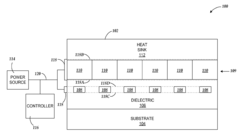
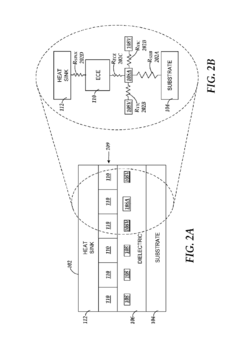
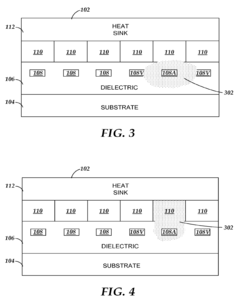
- A PCM thermal management system that incorporates electrocaloric effect material segments thermally coupled with PCM cells, allowing for controlled heat transfer by applying an electric field to redirect excess heat away from neighboring cells, thereby reducing thermal interference.
Safety Standards and Regulations for PCM Applications
The regulatory landscape for Phase Change Materials (PCM) applications encompasses multiple international and regional standards that address thermal safety, material compatibility, and performance requirements. The International Electrotechnical Commission (IEC) 62133 series provides fundamental safety standards for secondary cells and batteries containing alkaline or other non-acid electrolytes, which directly impacts PCM integration in battery thermal management systems. Additionally, UL 2089 standard specifically addresses health and safety requirements for stationary energy storage systems, establishing critical guidelines for PCM-based thermal regulation components.
Fire safety regulations represent a paramount concern in PCM applications, particularly governed by NFPA 855 standards for stationary energy storage system installations. These regulations mandate specific fire suppression systems, thermal runaway detection mechanisms, and containment protocols that directly influence PCM system design parameters. The European EN 54 series fire detection and alarm systems standards further complement these requirements, establishing detection sensitivity thresholds and response protocols for PCM-integrated systems.
Material safety standards under REACH (Registration, Evaluation, Authorization and Restriction of Chemicals) regulation in Europe and similar frameworks globally impose stringent requirements on PCM chemical composition and environmental impact assessment. These regulations necessitate comprehensive toxicological evaluations, biodegradability assessments, and lifecycle impact analyses for organic and inorganic PCM materials used in commercial applications.
Building and construction applications of PCM systems must comply with International Building Code (IBC) requirements and local building standards that address structural integration, ventilation requirements, and occupancy safety protocols. ASHRAE 90.1 energy efficiency standards also influence PCM implementation strategies in HVAC applications, establishing performance benchmarks and installation guidelines.
Automotive PCM applications fall under ISO 26262 functional safety standards and UN ECE R100 regulations for electric vehicle battery systems. These standards mandate fault tolerance mechanisms, thermal monitoring protocols, and emergency response procedures that significantly impact PCM system architecture and control strategies in vehicular thermal management applications.
Fire safety regulations represent a paramount concern in PCM applications, particularly governed by NFPA 855 standards for stationary energy storage system installations. These regulations mandate specific fire suppression systems, thermal runaway detection mechanisms, and containment protocols that directly influence PCM system design parameters. The European EN 54 series fire detection and alarm systems standards further complement these requirements, establishing detection sensitivity thresholds and response protocols for PCM-integrated systems.
Material safety standards under REACH (Registration, Evaluation, Authorization and Restriction of Chemicals) regulation in Europe and similar frameworks globally impose stringent requirements on PCM chemical composition and environmental impact assessment. These regulations necessitate comprehensive toxicological evaluations, biodegradability assessments, and lifecycle impact analyses for organic and inorganic PCM materials used in commercial applications.
Building and construction applications of PCM systems must comply with International Building Code (IBC) requirements and local building standards that address structural integration, ventilation requirements, and occupancy safety protocols. ASHRAE 90.1 energy efficiency standards also influence PCM implementation strategies in HVAC applications, establishing performance benchmarks and installation guidelines.
Automotive PCM applications fall under ISO 26262 functional safety standards and UN ECE R100 regulations for electric vehicle battery systems. These standards mandate fault tolerance mechanisms, thermal monitoring protocols, and emergency response procedures that significantly impact PCM system architecture and control strategies in vehicular thermal management applications.
Lifecycle Assessment of PCM Thermal Systems
The lifecycle assessment of PCM thermal systems represents a comprehensive evaluation framework that examines environmental impacts, economic viability, and performance sustainability throughout the entire operational lifespan of phase change material applications. This assessment methodology provides critical insights into the long-term feasibility of PCM-based thermal management solutions across various industrial sectors.
Environmental impact evaluation constitutes a fundamental component of PCM system lifecycle assessment. The analysis encompasses raw material extraction, manufacturing processes, transportation, installation, operational energy consumption, and end-of-life disposal or recycling. PCM systems typically demonstrate favorable environmental profiles due to their passive thermal regulation capabilities, which significantly reduce energy consumption compared to conventional active cooling systems. Carbon footprint assessments reveal that PCM thermal systems can achieve 30-50% reduction in greenhouse gas emissions over their operational lifetime.
Economic lifecycle analysis examines total cost of ownership, including initial capital investment, maintenance expenses, energy savings, and replacement costs. PCM systems often exhibit higher upfront costs but generate substantial operational savings through reduced energy consumption and extended equipment lifespan. The payback period typically ranges from 3-7 years depending on application specificity and local energy costs. Long-term economic benefits become particularly pronounced in applications requiring continuous thermal management.
Performance degradation assessment tracks thermal efficiency, heat storage capacity, and cycling stability over extended operational periods. PCM materials experience gradual property changes through repeated phase transitions, affecting their thermal management effectiveness. Comprehensive lifecycle studies indicate that high-quality PCM formulations maintain 85-95% of their initial thermal performance after 10,000 thermal cycles, with proper system design and material selection being crucial factors.
Maintenance and replacement scheduling forms an integral aspect of lifecycle assessment, determining optimal intervention points to maintain system performance. Predictive maintenance strategies based on thermal performance monitoring enable proactive component replacement before significant efficiency degradation occurs. This approach maximizes system reliability while minimizing operational disruptions and maintenance costs throughout the assessment period.
Environmental impact evaluation constitutes a fundamental component of PCM system lifecycle assessment. The analysis encompasses raw material extraction, manufacturing processes, transportation, installation, operational energy consumption, and end-of-life disposal or recycling. PCM systems typically demonstrate favorable environmental profiles due to their passive thermal regulation capabilities, which significantly reduce energy consumption compared to conventional active cooling systems. Carbon footprint assessments reveal that PCM thermal systems can achieve 30-50% reduction in greenhouse gas emissions over their operational lifetime.
Economic lifecycle analysis examines total cost of ownership, including initial capital investment, maintenance expenses, energy savings, and replacement costs. PCM systems often exhibit higher upfront costs but generate substantial operational savings through reduced energy consumption and extended equipment lifespan. The payback period typically ranges from 3-7 years depending on application specificity and local energy costs. Long-term economic benefits become particularly pronounced in applications requiring continuous thermal management.
Performance degradation assessment tracks thermal efficiency, heat storage capacity, and cycling stability over extended operational periods. PCM materials experience gradual property changes through repeated phase transitions, affecting their thermal management effectiveness. Comprehensive lifecycle studies indicate that high-quality PCM formulations maintain 85-95% of their initial thermal performance after 10,000 thermal cycles, with proper system design and material selection being crucial factors.
Maintenance and replacement scheduling forms an integral aspect of lifecycle assessment, determining optimal intervention points to maintain system performance. Predictive maintenance strategies based on thermal performance monitoring enable proactive component replacement before significant efficiency degradation occurs. This approach maximizes system reliability while minimizing operational disruptions and maintenance costs throughout the assessment period.
Unlock deeper insights with PatSnap Eureka Quick Research — get a full tech report to explore trends and direct your research. Try now!
Generate Your Research Report Instantly with AI Agent
Supercharge your innovation with PatSnap Eureka AI Agent Platform!