

Persistent Memory for Low-Latency Key-Value Store Implementation
MAY 13, 20268 MIN READ
Generate Your Research Report Instantly with AI Agent
PatSnap Eureka helps you evaluate technical feasibility & market potential.
Persistent Memory Technology Background and Objectives
Persistent memory represents a revolutionary storage technology that bridges the traditional gap between volatile memory and non-volatile storage, fundamentally transforming how data-intensive applications approach storage architecture. This technology combines the speed characteristics of DRAM with the persistence properties of traditional storage devices, creating a new tier in the memory hierarchy that enables unprecedented performance improvements for latency-sensitive applications.
The evolution of persistent memory technology stems from decades of research into non-volatile memory materials and architectures. Early developments focused on phase-change memory, resistive RAM, and magnetic RAM technologies, each offering different approaches to achieving byte-addressable non-volatile storage. The breakthrough came with Intel's 3D XPoint technology, commercialized as Intel Optane, which demonstrated practical persistent memory capabilities at scale.
Key-value stores have emerged as critical infrastructure components in modern distributed systems, powering everything from web-scale databases to real-time analytics platforms. Traditional key-value implementations face inherent limitations due to the performance gap between memory and storage, requiring complex caching strategies and write-ahead logging mechanisms that introduce latency overhead and complicate recovery procedures.
The primary objective of integrating persistent memory into key-value store implementations centers on eliminating the traditional storage bottleneck while maintaining data durability guarantees. This integration aims to achieve sub-microsecond access latencies for both read and write operations, dramatically reducing the complexity of data persistence mechanisms and enabling new architectural patterns that were previously impractical.
Technical objectives include developing efficient memory management algorithms that leverage persistent memory's unique characteristics, implementing crash-consistent data structures that can survive system failures without traditional logging overhead, and optimizing memory access patterns to maximize the performance benefits of byte-addressable persistent storage.
The strategic goal extends beyond mere performance improvements to enable entirely new application architectures where the distinction between memory and storage becomes increasingly blurred, allowing for simplified system designs with improved reliability and reduced operational complexity.
The evolution of persistent memory technology stems from decades of research into non-volatile memory materials and architectures. Early developments focused on phase-change memory, resistive RAM, and magnetic RAM technologies, each offering different approaches to achieving byte-addressable non-volatile storage. The breakthrough came with Intel's 3D XPoint technology, commercialized as Intel Optane, which demonstrated practical persistent memory capabilities at scale.
Key-value stores have emerged as critical infrastructure components in modern distributed systems, powering everything from web-scale databases to real-time analytics platforms. Traditional key-value implementations face inherent limitations due to the performance gap between memory and storage, requiring complex caching strategies and write-ahead logging mechanisms that introduce latency overhead and complicate recovery procedures.
The primary objective of integrating persistent memory into key-value store implementations centers on eliminating the traditional storage bottleneck while maintaining data durability guarantees. This integration aims to achieve sub-microsecond access latencies for both read and write operations, dramatically reducing the complexity of data persistence mechanisms and enabling new architectural patterns that were previously impractical.
Technical objectives include developing efficient memory management algorithms that leverage persistent memory's unique characteristics, implementing crash-consistent data structures that can survive system failures without traditional logging overhead, and optimizing memory access patterns to maximize the performance benefits of byte-addressable persistent storage.
The strategic goal extends beyond mere performance improvements to enable entirely new application architectures where the distinction between memory and storage becomes increasingly blurred, allowing for simplified system designs with improved reliability and reduced operational complexity.
Market Demand for Low-Latency Key-Value Storage Solutions
The global demand for low-latency key-value storage solutions has experienced unprecedented growth driven by the proliferation of real-time applications and data-intensive workloads. Modern enterprises across various sectors are increasingly relying on applications that require sub-millisecond response times, creating a substantial market opportunity for advanced storage technologies that can deliver consistent performance at scale.
Cloud computing platforms represent one of the largest demand drivers, as major providers seek to enhance their database-as-a-service offerings and support latency-sensitive applications. The rise of edge computing has further amplified this demand, where distributed systems require fast local data access to minimize network latency and improve user experience. Gaming platforms, financial trading systems, and real-time analytics applications constitute critical market segments that cannot tolerate traditional storage latencies.
The Internet of Things ecosystem has emerged as a significant growth catalyst, with billions of connected devices generating continuous streams of data that require immediate processing and storage. Autonomous vehicles, industrial automation systems, and smart city infrastructure all depend on ultra-low latency data access patterns that traditional storage architectures struggle to accommodate effectively.
Enterprise adoption patterns indicate a strong preference for solutions that can seamlessly integrate with existing infrastructure while providing measurable performance improvements. Organizations are particularly interested in technologies that can reduce total cost of ownership by eliminating the need for complex caching layers and reducing hardware footprint requirements.
Market research indicates that latency requirements continue to tighten across industries, with many applications now demanding response times measured in microseconds rather than milliseconds. This trend has created a technology gap that persistent memory-based solutions are uniquely positioned to address, offering the durability of traditional storage with performance characteristics approaching volatile memory.
The competitive landscape shows increasing investment in next-generation storage technologies, with both established storage vendors and emerging startups developing solutions specifically targeting ultra-low latency use cases. This market activity demonstrates strong confidence in the commercial viability and long-term growth potential of advanced key-value storage implementations.
Cloud computing platforms represent one of the largest demand drivers, as major providers seek to enhance their database-as-a-service offerings and support latency-sensitive applications. The rise of edge computing has further amplified this demand, where distributed systems require fast local data access to minimize network latency and improve user experience. Gaming platforms, financial trading systems, and real-time analytics applications constitute critical market segments that cannot tolerate traditional storage latencies.
The Internet of Things ecosystem has emerged as a significant growth catalyst, with billions of connected devices generating continuous streams of data that require immediate processing and storage. Autonomous vehicles, industrial automation systems, and smart city infrastructure all depend on ultra-low latency data access patterns that traditional storage architectures struggle to accommodate effectively.
Enterprise adoption patterns indicate a strong preference for solutions that can seamlessly integrate with existing infrastructure while providing measurable performance improvements. Organizations are particularly interested in technologies that can reduce total cost of ownership by eliminating the need for complex caching layers and reducing hardware footprint requirements.
Market research indicates that latency requirements continue to tighten across industries, with many applications now demanding response times measured in microseconds rather than milliseconds. This trend has created a technology gap that persistent memory-based solutions are uniquely positioned to address, offering the durability of traditional storage with performance characteristics approaching volatile memory.
The competitive landscape shows increasing investment in next-generation storage technologies, with both established storage vendors and emerging startups developing solutions specifically targeting ultra-low latency use cases. This market activity demonstrates strong confidence in the commercial viability and long-term growth potential of advanced key-value storage implementations.
Current State and Challenges of Persistent Memory KV Stores
Persistent memory key-value stores represent a rapidly evolving segment within the data storage landscape, driven by the emergence of non-volatile memory technologies such as Intel Optane DC Persistent Memory and emerging storage-class memory solutions. Current implementations leverage byte-addressable persistent memory to bridge the performance gap between volatile DRAM and traditional block-based storage devices, enabling direct manipulation of persistent data structures without conventional serialization overhead.
The technological maturity varies significantly across different implementation approaches. Hardware-based solutions utilizing Intel's 3D XPoint technology have demonstrated substantial deployment in enterprise environments, while software-defined persistent memory systems using NVDIMM and battery-backed DRAM configurations show increasing adoption rates. However, the discontinuation of Intel Optane products has created uncertainty in the hardware ecosystem, prompting renewed focus on alternative technologies including phase-change memory and resistive RAM implementations.
Contemporary persistent memory KV stores face several critical technical challenges that limit widespread adoption. Memory consistency and crash recovery mechanisms remain complex, requiring sophisticated logging and checkpointing strategies to ensure data integrity across system failures. The programming model complexity introduces significant development overhead, as applications must carefully manage cache line flushes, memory ordering constraints, and persistent pointer management to maintain correctness.
Performance optimization presents another substantial challenge, particularly in achieving consistent low-latency operations under varying workload conditions. Current systems struggle with write amplification issues, where small updates trigger disproportionate metadata modifications and persistence operations. Additionally, garbage collection and space reclamation in persistent memory environments introduce unpredictable latency spikes that compromise real-time performance guarantees.
Scalability limitations emerge prominently in multi-threaded environments, where concurrent access patterns create bottlenecks in persistent memory allocation and deallocation mechanisms. Lock contention around critical data structures and the overhead of maintaining consistency across multiple persistent memory modules significantly impact system throughput under high-concurrency scenarios.
The geographical distribution of persistent memory KV store development shows concentration in North American and European research institutions and technology companies, with notable contributions from Asian semiconductor manufacturers focusing on next-generation memory technologies. This distribution reflects the current hardware availability constraints and the specialized expertise required for persistent memory system development.
The technological maturity varies significantly across different implementation approaches. Hardware-based solutions utilizing Intel's 3D XPoint technology have demonstrated substantial deployment in enterprise environments, while software-defined persistent memory systems using NVDIMM and battery-backed DRAM configurations show increasing adoption rates. However, the discontinuation of Intel Optane products has created uncertainty in the hardware ecosystem, prompting renewed focus on alternative technologies including phase-change memory and resistive RAM implementations.
Contemporary persistent memory KV stores face several critical technical challenges that limit widespread adoption. Memory consistency and crash recovery mechanisms remain complex, requiring sophisticated logging and checkpointing strategies to ensure data integrity across system failures. The programming model complexity introduces significant development overhead, as applications must carefully manage cache line flushes, memory ordering constraints, and persistent pointer management to maintain correctness.
Performance optimization presents another substantial challenge, particularly in achieving consistent low-latency operations under varying workload conditions. Current systems struggle with write amplification issues, where small updates trigger disproportionate metadata modifications and persistence operations. Additionally, garbage collection and space reclamation in persistent memory environments introduce unpredictable latency spikes that compromise real-time performance guarantees.
Scalability limitations emerge prominently in multi-threaded environments, where concurrent access patterns create bottlenecks in persistent memory allocation and deallocation mechanisms. Lock contention around critical data structures and the overhead of maintaining consistency across multiple persistent memory modules significantly impact system throughput under high-concurrency scenarios.
The geographical distribution of persistent memory KV store development shows concentration in North American and European research institutions and technology companies, with notable contributions from Asian semiconductor manufacturers focusing on next-generation memory technologies. This distribution reflects the current hardware availability constraints and the specialized expertise required for persistent memory system development.
Existing Persistent Memory KV Store Implementations
01 Memory access optimization techniques
Various techniques are employed to optimize memory access patterns and reduce latency in persistent memory systems. These methods focus on improving data retrieval efficiency through advanced caching mechanisms, prefetching strategies, and intelligent memory management algorithms that minimize access delays and enhance overall system performance.- Memory access optimization techniques: Various techniques are employed to optimize memory access patterns and reduce latency in persistent memory systems. These methods focus on improving data locality, prefetching strategies, and cache management to minimize the time required for memory operations. Advanced algorithms and hardware optimizations work together to enhance overall system performance by reducing the delay between memory requests and data retrieval.
- Latency reduction through hardware architecture improvements: Hardware-level architectural enhancements are implemented to minimize persistent memory latency. These improvements include specialized memory controllers, optimized data pathways, and enhanced interface designs that reduce the physical and logical delays in memory operations. The focus is on creating more efficient communication channels between processors and memory modules.
- Software-based latency management and scheduling: Software solutions are developed to manage and reduce memory latency through intelligent scheduling algorithms and memory management techniques. These approaches involve optimizing memory allocation strategies, implementing efficient garbage collection mechanisms, and developing smart caching policies that predict and prepare for future memory access patterns.
- Error correction and reliability mechanisms: Comprehensive error detection and correction systems are integrated into persistent memory architectures to maintain data integrity while minimizing latency overhead. These mechanisms ensure reliable data storage and retrieval operations without significantly impacting system performance, balancing the need for data protection with speed requirements.
- Power management and thermal optimization: Advanced power management strategies and thermal control mechanisms are implemented to maintain optimal persistent memory performance while managing latency. These solutions address the relationship between power consumption, heat generation, and memory access speeds, ensuring consistent performance across varying operational conditions and power states.
02 Latency reduction through hardware acceleration
Hardware-based solutions are implemented to accelerate persistent memory operations and reduce latency. These approaches involve specialized controllers, dedicated processing units, and optimized memory interfaces that provide faster data access paths and minimize the time required for read and write operations in persistent storage systems.Expand Specific Solutions03 Cache management and buffering strategies
Advanced cache management techniques and buffering strategies are utilized to improve persistent memory performance. These methods involve intelligent data placement, multi-level caching hierarchies, and dynamic buffer allocation schemes that help bridge the latency gap between volatile and non-volatile memory technologies.Expand Specific Solutions04 Memory controller optimization
Specialized memory controllers are designed to minimize latency in persistent memory systems. These controllers implement advanced scheduling algorithms, command queuing mechanisms, and optimized data pathways that reduce the overhead associated with persistent memory operations and improve overall system responsiveness.Expand Specific Solutions05 Software-level latency mitigation
Software-based approaches are developed to address persistent memory latency issues at the application and system level. These solutions include optimized drivers, middleware components, and programming models that provide efficient interfaces for persistent memory access while hiding latency through asynchronous operations and intelligent data management.Expand Specific Solutions
Key Players in Persistent Memory and Database Industry
The persistent memory for low-latency key-value store implementation market represents a rapidly evolving sector driven by increasing demand for high-performance data processing and real-time analytics. The industry is currently in a growth phase, with market expansion fueled by cloud computing adoption and big data requirements. Technology maturity varies significantly across players, with established semiconductor giants like Intel Corp., Samsung Electronics, and Micron Technology leading in hardware innovation, while companies like MemVerge specialize in memory-converged infrastructure solutions. Cloud providers including Alibaba Group, Huawei Cloud, and Tencent Technology are integrating persistent memory technologies into their platforms. Academic institutions such as Tsinghua University and Shanghai Jiao Tong University contribute fundamental research, while enterprise solution providers like IBM, Oracle, and VMware focus on software optimization and integration capabilities for production deployments.
Intel Corp.
Technical Solution: Intel developed Intel Optane DC Persistent Memory, a revolutionary memory technology that bridges the gap between DRAM and storage for key-value stores. Their solution provides byte-addressable persistent memory with DRAM-like performance characteristics, enabling direct access to data structures without traditional I/O operations. Intel's persistent memory programming model includes Memory Mode and App Direct Mode, allowing applications to leverage persistent memory either as volatile memory or as persistent storage. The technology supports atomic operations and provides crash consistency guarantees essential for key-value store implementations. Intel also provides optimized libraries like PMDK (Persistent Memory Development Kit) that offer programming primitives for building efficient persistent data structures, including hash tables and B+ trees commonly used in key-value stores.
Strengths: Industry-leading hardware solution with comprehensive software stack and development tools. Weaknesses: High cost and limited availability compared to traditional DRAM and storage solutions.
Samsung Electronics Co., Ltd.
Technical Solution: Samsung has developed Z-NAND and Storage Class Memory (SCM) solutions specifically designed for low-latency persistent storage applications. Their approach combines 3D NAND flash technology with enhanced controllers to achieve microsecond-level latencies suitable for key-value store implementations. Samsung's persistent memory solutions feature advanced wear leveling algorithms and error correction mechanisms to ensure data reliability and longevity. The company's key-value store optimizations include specialized firmware that understands key-value access patterns, enabling more efficient data placement and garbage collection. Samsung also provides NVMe-based interfaces with reduced software stack overhead, allowing direct access to persistent memory with minimal latency penalties. Their solutions support atomic write operations and provide power-fail protection mechanisms essential for maintaining data consistency in persistent key-value stores.
Strengths: Strong NAND flash expertise with optimized controllers for low-latency access and proven scalability in enterprise environments. Weaknesses: Still relies on block-based access patterns rather than true byte-addressability, limiting some optimization opportunities.
Core Innovations in PM-based Key-Value Architecture
Persistent memory storage engine device based on log structure and control method thereof
PatentActiveUS20210019257A1
Innovation
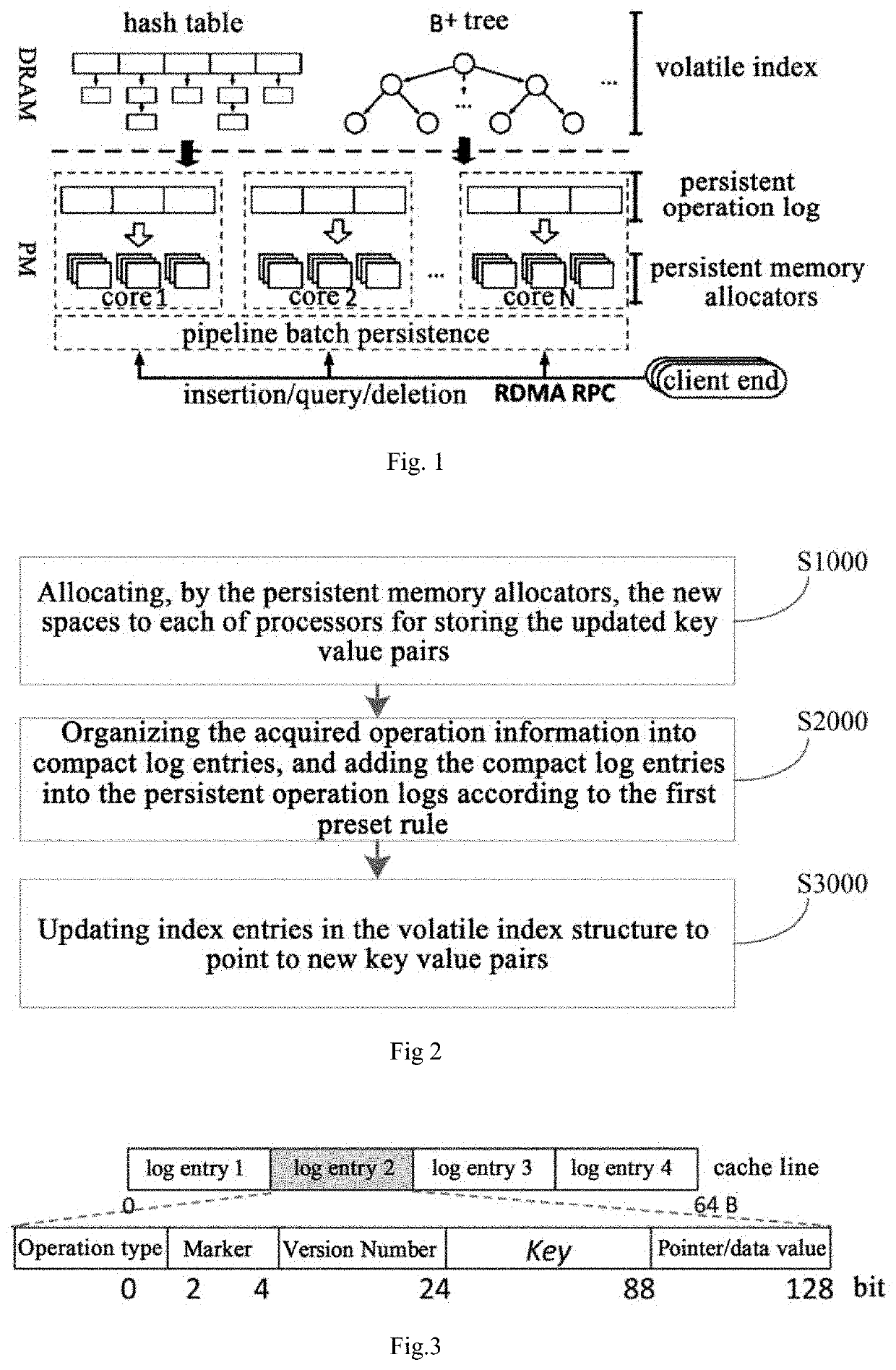
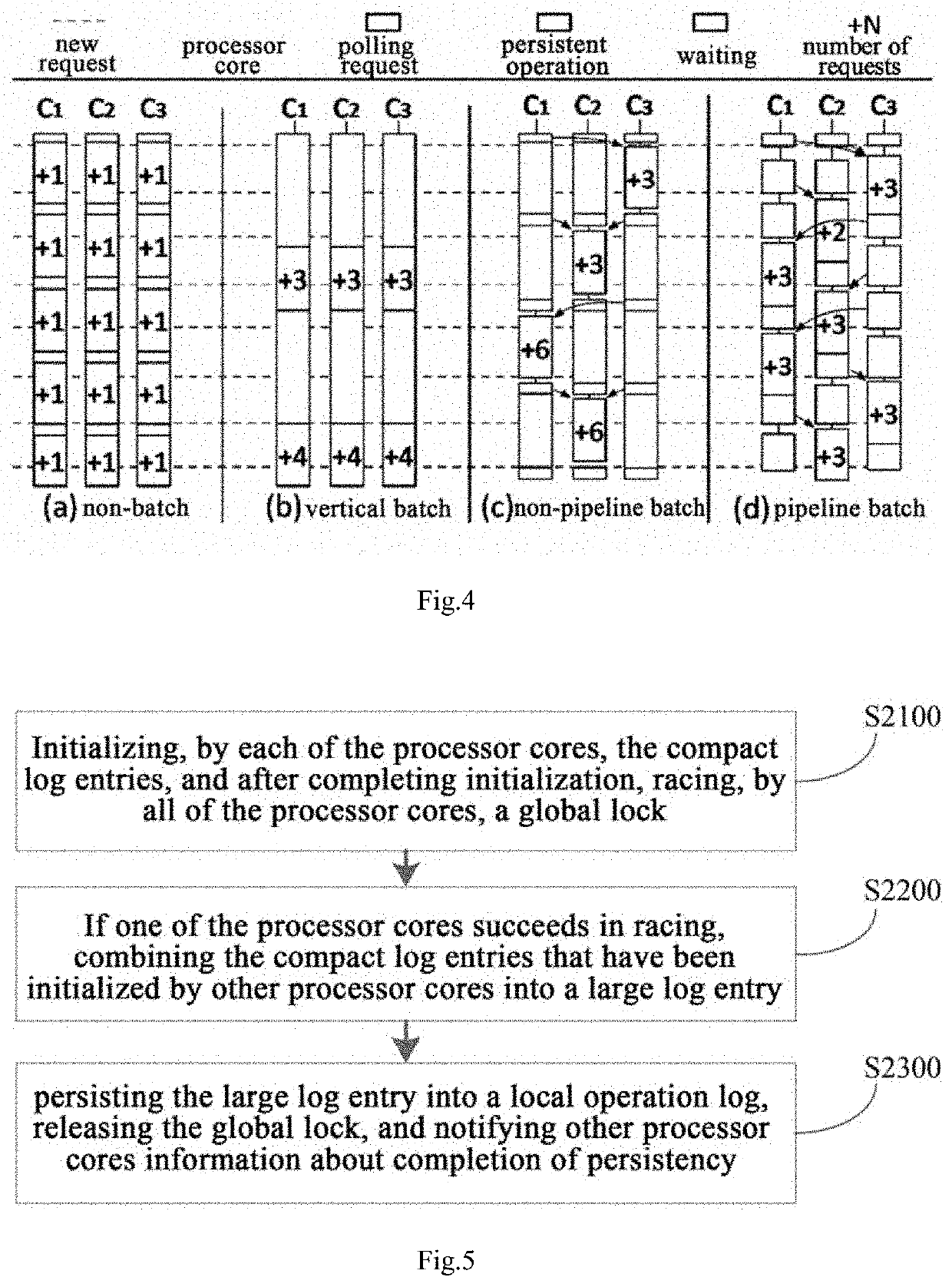
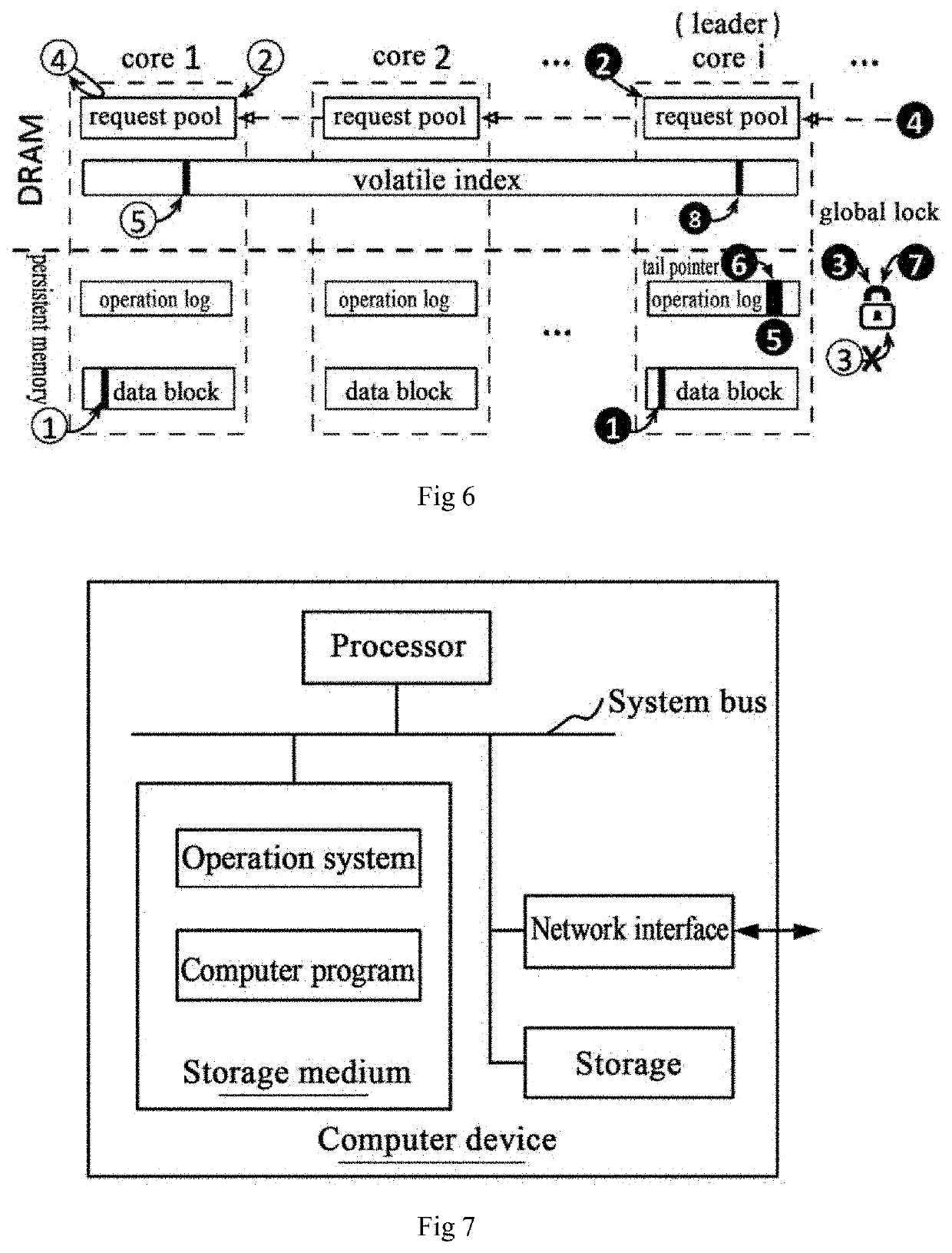
- A redesigned log-structured persistent memory key-value storage engine that includes persistent memory allocators, operation logs, and a volatile index structure, utilizing batch persistency and pipeline batch persistence technology to reduce latency while maintaining high system throughput, with global locking and memory region management to synchronize processor cores and optimize memory allocation.
Persistent Memory Key-Value Store in a Distributed Memory Architecture
PatentActiveUS20200311015A1
Innovation
- The implementation of a global log within a persistent memory space to record key-value store operations, allowing for efficient creation, management, and recovery of key-value stores across multiple memory spaces, enabling multiple key-value stores to be stored within a single memory space and exceeding the storage capacity of a single node by distributing them across multiple memory spaces.


Performance Benchmarking Standards for PM Storage
The establishment of standardized performance benchmarking frameworks for persistent memory storage systems represents a critical foundation for evaluating and comparing different PM-based key-value store implementations. Current benchmarking approaches often lack consistency across different hardware platforms and software configurations, making it challenging to assess the true performance characteristics of PM storage solutions in real-world scenarios.
Industry-standard benchmarking suites such as YCSB (Yahoo! Cloud Serving Benchmark) have been adapted to accommodate persistent memory workloads, incorporating specific test patterns that leverage PM's unique characteristics. These adaptations include mixed read-write workloads with varying data persistence requirements, latency-sensitive operations that bypass traditional storage hierarchies, and crash-consistency validation tests that ensure data integrity across system failures.
Key performance metrics for PM storage benchmarking encompass multiple dimensions beyond traditional throughput and latency measurements. Critical indicators include write amplification factors specific to PM media, endurance characteristics under sustained workloads, and power consumption profiles during different operational phases. Additionally, benchmarks must account for NUMA topology effects and memory bandwidth utilization patterns that significantly impact PM performance in multi-socket systems.
Standardization efforts focus on establishing reproducible test environments that account for PM-specific configuration parameters such as memory mapping modes, persistence domain boundaries, and cache flush strategies. These standards define baseline hardware configurations, software stack requirements, and measurement methodologies that enable fair comparisons across different PM technologies including Intel Optane DC Persistent Memory and emerging storage-class memory solutions.
The benchmarking framework also addresses workload characterization for key-value stores, defining representative access patterns that reflect real application behaviors. This includes skewed key distributions following Zipfian patterns, temporal locality considerations, and mixed operational scenarios combining transactional and analytical workloads that stress different aspects of PM performance capabilities.
Industry-standard benchmarking suites such as YCSB (Yahoo! Cloud Serving Benchmark) have been adapted to accommodate persistent memory workloads, incorporating specific test patterns that leverage PM's unique characteristics. These adaptations include mixed read-write workloads with varying data persistence requirements, latency-sensitive operations that bypass traditional storage hierarchies, and crash-consistency validation tests that ensure data integrity across system failures.
Key performance metrics for PM storage benchmarking encompass multiple dimensions beyond traditional throughput and latency measurements. Critical indicators include write amplification factors specific to PM media, endurance characteristics under sustained workloads, and power consumption profiles during different operational phases. Additionally, benchmarks must account for NUMA topology effects and memory bandwidth utilization patterns that significantly impact PM performance in multi-socket systems.
Standardization efforts focus on establishing reproducible test environments that account for PM-specific configuration parameters such as memory mapping modes, persistence domain boundaries, and cache flush strategies. These standards define baseline hardware configurations, software stack requirements, and measurement methodologies that enable fair comparisons across different PM technologies including Intel Optane DC Persistent Memory and emerging storage-class memory solutions.
The benchmarking framework also addresses workload characterization for key-value stores, defining representative access patterns that reflect real application behaviors. This includes skewed key distributions following Zipfian patterns, temporal locality considerations, and mixed operational scenarios combining transactional and analytical workloads that stress different aspects of PM performance capabilities.
Data Consistency and Durability in Persistent Memory
Data consistency and durability represent fundamental challenges in persistent memory environments for key-value store implementations. Unlike traditional storage systems that rely on explicit write operations to ensure data persistence, persistent memory operates in a hybrid model where data can exist simultaneously in volatile and non-volatile states. This duality creates complex scenarios where system failures may occur at any point during data manipulation, potentially leaving the storage system in an inconsistent state.
The primary consistency challenge stems from the byte-addressable nature of persistent memory, which allows fine-grained access patterns that can bypass traditional block-based consistency mechanisms. When implementing key-value operations, developers must ensure that partial writes do not corrupt data structures, particularly during complex operations like B-tree node splits or hash table resizing. The absence of atomic guarantees for operations spanning multiple cache lines necessitates careful ordering of memory operations and strategic placement of memory barriers.
Durability concerns in persistent memory environments extend beyond simple data persistence to encompass ordering guarantees and failure atomicity. The CPU cache hierarchy introduces additional complexity, as modified data may reside in volatile caches for extended periods before reaching persistent storage. Memory controllers and persistent memory modules may reorder operations for performance optimization, potentially violating application-level durability expectations.
Write ordering protocols become critical in maintaining consistency across system failures. Techniques such as epoch-based persistence, where operations are grouped into atomic units, help ensure that the persistent state reflects a consistent snapshot of the key-value store. Additionally, the implementation of undo and redo logging mechanisms specifically adapted for persistent memory's characteristics enables recovery from partial operations while minimizing performance overhead.
The integration of hardware features like Intel's persistent memory programming model, including instructions such as CLWB and SFENCE, provides developers with tools to control data visibility and ordering. However, the effective utilization of these mechanisms requires deep understanding of both hardware behavior and application-specific consistency requirements, making the design of robust persistent memory-based key-value stores a sophisticated engineering challenge.
The primary consistency challenge stems from the byte-addressable nature of persistent memory, which allows fine-grained access patterns that can bypass traditional block-based consistency mechanisms. When implementing key-value operations, developers must ensure that partial writes do not corrupt data structures, particularly during complex operations like B-tree node splits or hash table resizing. The absence of atomic guarantees for operations spanning multiple cache lines necessitates careful ordering of memory operations and strategic placement of memory barriers.
Durability concerns in persistent memory environments extend beyond simple data persistence to encompass ordering guarantees and failure atomicity. The CPU cache hierarchy introduces additional complexity, as modified data may reside in volatile caches for extended periods before reaching persistent storage. Memory controllers and persistent memory modules may reorder operations for performance optimization, potentially violating application-level durability expectations.
Write ordering protocols become critical in maintaining consistency across system failures. Techniques such as epoch-based persistence, where operations are grouped into atomic units, help ensure that the persistent state reflects a consistent snapshot of the key-value store. Additionally, the implementation of undo and redo logging mechanisms specifically adapted for persistent memory's characteristics enables recovery from partial operations while minimizing performance overhead.
The integration of hardware features like Intel's persistent memory programming model, including instructions such as CLWB and SFENCE, provides developers with tools to control data visibility and ordering. However, the effective utilization of these mechanisms requires deep understanding of both hardware behavior and application-specific consistency requirements, making the design of robust persistent memory-based key-value stores a sophisticated engineering challenge.
Unlock deeper insights with PatSnap Eureka Quick Research — get a full tech report to explore trends and direct your research. Try now!
Generate Your Research Report Instantly with AI Agent
Supercharge your innovation with PatSnap Eureka AI Agent Platform!