Piezoelectric Crystals vs Bimorphs: Deflection Efficiency
MAR 27, 202610 MIN READ
Generate Your Research Report Instantly with AI Agent
Patsnap Eureka helps you evaluate technical feasibility & market potential.
Piezoelectric Actuator Technology Background and Objectives
Piezoelectric actuator technology has emerged as a cornerstone of precision motion control systems, tracing its origins to the discovery of the piezoelectric effect by Pierre and Jacques Curie in 1880. The fundamental principle relies on the direct conversion between mechanical stress and electrical charge in certain crystalline materials, enabling precise displacement control at the nanometer scale. This electromechanical coupling has revolutionized applications requiring ultra-high precision positioning, from semiconductor manufacturing to biomedical devices.
The evolution of piezoelectric actuators has been driven by the continuous pursuit of enhanced deflection efficiency, which represents the ratio of mechanical output displacement to electrical input energy. Early implementations primarily utilized single-crystal piezoelectric materials such as quartz and Rochelle salt, which provided limited displacement capabilities. The development of polycrystalline ceramics, particularly lead zirconate titanate (PZT), marked a significant advancement in the 1950s, offering substantially improved piezoelectric coefficients and enabling practical actuator applications.
Contemporary piezoelectric actuator design focuses on two primary architectural approaches: monolithic piezoelectric crystals and bimorph configurations. Single-crystal actuators leverage the inherent piezoelectric properties of materials like PZT, lithium niobate, and PMN-PT, providing direct strain-to-voltage relationships with minimal hysteresis. These configurations excel in applications requiring high stiffness and rapid response times, though they typically generate relatively small displacements.
Bimorph actuators represent a structural innovation that amplifies displacement through mechanical leverage. By bonding two piezoelectric layers with opposite polarization directions, or combining a piezoelectric layer with a passive substrate, bimorphs achieve significantly larger deflections compared to monolithic crystals. This configuration transforms the longitudinal strain of piezoelectric materials into bending motion, effectively multiplying the achievable displacement range.
The technological objectives driving current research encompass maximizing deflection efficiency while maintaining precision, reliability, and response speed. Key performance metrics include displacement amplitude per unit voltage, energy conversion efficiency, bandwidth characteristics, and long-term stability under cyclic loading. Advanced material engineering focuses on developing single crystals with enhanced piezoelectric coefficients, such as PMN-PT and PZN-PT compositions, which demonstrate superior electromechanical coupling compared to traditional ceramics.
Modern applications demand actuators capable of generating substantial displacements while consuming minimal power, particularly in portable and battery-operated systems. The comparative analysis of crystal versus bimorph architectures addresses fundamental trade-offs between displacement magnitude, force generation capability, power consumption, and manufacturing complexity, establishing the foundation for optimized actuator selection in specific application contexts.
The evolution of piezoelectric actuators has been driven by the continuous pursuit of enhanced deflection efficiency, which represents the ratio of mechanical output displacement to electrical input energy. Early implementations primarily utilized single-crystal piezoelectric materials such as quartz and Rochelle salt, which provided limited displacement capabilities. The development of polycrystalline ceramics, particularly lead zirconate titanate (PZT), marked a significant advancement in the 1950s, offering substantially improved piezoelectric coefficients and enabling practical actuator applications.
Contemporary piezoelectric actuator design focuses on two primary architectural approaches: monolithic piezoelectric crystals and bimorph configurations. Single-crystal actuators leverage the inherent piezoelectric properties of materials like PZT, lithium niobate, and PMN-PT, providing direct strain-to-voltage relationships with minimal hysteresis. These configurations excel in applications requiring high stiffness and rapid response times, though they typically generate relatively small displacements.
Bimorph actuators represent a structural innovation that amplifies displacement through mechanical leverage. By bonding two piezoelectric layers with opposite polarization directions, or combining a piezoelectric layer with a passive substrate, bimorphs achieve significantly larger deflections compared to monolithic crystals. This configuration transforms the longitudinal strain of piezoelectric materials into bending motion, effectively multiplying the achievable displacement range.
The technological objectives driving current research encompass maximizing deflection efficiency while maintaining precision, reliability, and response speed. Key performance metrics include displacement amplitude per unit voltage, energy conversion efficiency, bandwidth characteristics, and long-term stability under cyclic loading. Advanced material engineering focuses on developing single crystals with enhanced piezoelectric coefficients, such as PMN-PT and PZN-PT compositions, which demonstrate superior electromechanical coupling compared to traditional ceramics.
Modern applications demand actuators capable of generating substantial displacements while consuming minimal power, particularly in portable and battery-operated systems. The comparative analysis of crystal versus bimorph architectures addresses fundamental trade-offs between displacement magnitude, force generation capability, power consumption, and manufacturing complexity, establishing the foundation for optimized actuator selection in specific application contexts.
Market Demand for High-Efficiency Piezoelectric Deflection Systems
The global market for high-efficiency piezoelectric deflection systems is experiencing robust growth driven by increasing demand across multiple industrial sectors. Precision manufacturing, optical systems, and micro-positioning applications represent the primary demand drivers, where the choice between piezoelectric crystals and bimorph configurations significantly impacts system performance and cost-effectiveness.
Industrial automation and semiconductor manufacturing sectors demonstrate particularly strong demand for piezoelectric deflection systems with superior efficiency characteristics. These applications require precise control over deflection angles and response times, making the comparison between crystal-based and bimorph-based solutions critical for system designers. The automotive industry's shift toward advanced driver assistance systems and autonomous vehicles has further amplified demand for high-performance piezoelectric actuators in laser scanning and beam steering applications.
Optical communication networks and laser processing equipment represent rapidly expanding market segments where deflection efficiency directly correlates with system performance and energy consumption. Telecommunications infrastructure upgrades and the proliferation of fiber-optic networks have created substantial demand for piezoelectric beam steering systems capable of achieving maximum deflection with minimal power consumption.
The medical device sector presents another significant growth area, particularly in surgical laser systems, endoscopic equipment, and diagnostic imaging devices. These applications demand exceptional precision and reliability, driving preference toward deflection systems that can deliver consistent performance across extended operational periods while maintaining energy efficiency.
Research and development activities in aerospace and defense applications continue to fuel demand for advanced piezoelectric deflection systems. Space-based optical systems, satellite communication equipment, and precision guidance systems require deflection mechanisms that can operate reliably in extreme environments while maximizing efficiency to conserve power resources.
Market trends indicate growing emphasis on miniaturization and integration, pushing manufacturers to develop more compact deflection systems without compromising performance. This trend particularly benefits bimorph configurations in certain applications while driving innovation in crystal-based systems for others, creating distinct market segments based on specific performance requirements and spatial constraints.
Industrial automation and semiconductor manufacturing sectors demonstrate particularly strong demand for piezoelectric deflection systems with superior efficiency characteristics. These applications require precise control over deflection angles and response times, making the comparison between crystal-based and bimorph-based solutions critical for system designers. The automotive industry's shift toward advanced driver assistance systems and autonomous vehicles has further amplified demand for high-performance piezoelectric actuators in laser scanning and beam steering applications.
Optical communication networks and laser processing equipment represent rapidly expanding market segments where deflection efficiency directly correlates with system performance and energy consumption. Telecommunications infrastructure upgrades and the proliferation of fiber-optic networks have created substantial demand for piezoelectric beam steering systems capable of achieving maximum deflection with minimal power consumption.
The medical device sector presents another significant growth area, particularly in surgical laser systems, endoscopic equipment, and diagnostic imaging devices. These applications demand exceptional precision and reliability, driving preference toward deflection systems that can deliver consistent performance across extended operational periods while maintaining energy efficiency.
Research and development activities in aerospace and defense applications continue to fuel demand for advanced piezoelectric deflection systems. Space-based optical systems, satellite communication equipment, and precision guidance systems require deflection mechanisms that can operate reliably in extreme environments while maximizing efficiency to conserve power resources.
Market trends indicate growing emphasis on miniaturization and integration, pushing manufacturers to develop more compact deflection systems without compromising performance. This trend particularly benefits bimorph configurations in certain applications while driving innovation in crystal-based systems for others, creating distinct market segments based on specific performance requirements and spatial constraints.
Current Status and Challenges in Crystal vs Bimorph Performance
Piezoelectric crystals currently dominate high-precision applications requiring exceptional linearity and minimal hysteresis. Single-crystal materials like quartz and lithium niobate demonstrate superior frequency stability and temperature compensation characteristics, making them indispensable in precision timing devices and high-resolution positioning systems. However, their deflection efficiency remains fundamentally limited by the inherent piezoelectric coefficients of the crystal structure, typically achieving displacement ranges of only a few micrometers under standard operating voltages.
Bimorph actuators have established themselves as the preferred solution for applications demanding larger displacement amplitudes. Contemporary bimorph designs utilizing PZT ceramics can achieve deflections exceeding several hundred micrometers, representing orders of magnitude improvement over single crystals. The asymmetric stress distribution in bimorph structures enables mechanical amplification of the piezoelectric effect, though this advantage comes at the cost of reduced precision and increased nonlinearity in the displacement response.
Manufacturing consistency presents a significant challenge across both technologies. Crystal growth processes for high-quality piezoelectric materials require precise control of temperature gradients, dopant concentrations, and crystallographic orientation. Even minor variations in these parameters can result in substantial performance deviations, particularly affecting the uniformity of piezoelectric coefficients across the crystal volume. This manufacturing sensitivity directly impacts the reproducibility of deflection characteristics in production environments.
Bimorph fabrication faces distinct challenges related to layer bonding and thermal expansion matching. The interface between piezoelectric layers and substrate materials represents a critical failure point, where delamination or micro-cracking can severely compromise performance. Additionally, the multi-layer construction introduces complex stress distributions that can lead to unpredictable aging behaviors and long-term drift in deflection characteristics.
Temperature stability remains a fundamental limitation for both technologies, though manifesting differently. Piezoelectric crystals exhibit predictable but significant temperature coefficients, requiring active compensation in precision applications. Bimorph structures face more complex thermal challenges due to differential expansion between layers, often resulting in baseline drift and reduced operational temperature ranges.
Power consumption and driving voltage requirements continue to constrain practical implementations. High-performance crystals often require driving voltages exceeding 100V to achieve meaningful deflections, while bimorphs, despite their superior displacement efficiency, still demand substantial power for dynamic applications. This limitation particularly affects portable and battery-powered systems where energy efficiency is paramount.
Current research efforts focus on hybrid approaches combining crystal precision with bimorph amplification, though these solutions introduce additional complexity in both manufacturing and control systems. The fundamental trade-off between precision and displacement range remains unresolved, limiting the development of universal solutions that could address diverse application requirements simultaneously.
Bimorph actuators have established themselves as the preferred solution for applications demanding larger displacement amplitudes. Contemporary bimorph designs utilizing PZT ceramics can achieve deflections exceeding several hundred micrometers, representing orders of magnitude improvement over single crystals. The asymmetric stress distribution in bimorph structures enables mechanical amplification of the piezoelectric effect, though this advantage comes at the cost of reduced precision and increased nonlinearity in the displacement response.
Manufacturing consistency presents a significant challenge across both technologies. Crystal growth processes for high-quality piezoelectric materials require precise control of temperature gradients, dopant concentrations, and crystallographic orientation. Even minor variations in these parameters can result in substantial performance deviations, particularly affecting the uniformity of piezoelectric coefficients across the crystal volume. This manufacturing sensitivity directly impacts the reproducibility of deflection characteristics in production environments.
Bimorph fabrication faces distinct challenges related to layer bonding and thermal expansion matching. The interface between piezoelectric layers and substrate materials represents a critical failure point, where delamination or micro-cracking can severely compromise performance. Additionally, the multi-layer construction introduces complex stress distributions that can lead to unpredictable aging behaviors and long-term drift in deflection characteristics.
Temperature stability remains a fundamental limitation for both technologies, though manifesting differently. Piezoelectric crystals exhibit predictable but significant temperature coefficients, requiring active compensation in precision applications. Bimorph structures face more complex thermal challenges due to differential expansion between layers, often resulting in baseline drift and reduced operational temperature ranges.
Power consumption and driving voltage requirements continue to constrain practical implementations. High-performance crystals often require driving voltages exceeding 100V to achieve meaningful deflections, while bimorphs, despite their superior displacement efficiency, still demand substantial power for dynamic applications. This limitation particularly affects portable and battery-powered systems where energy efficiency is paramount.
Current research efforts focus on hybrid approaches combining crystal precision with bimorph amplification, though these solutions introduce additional complexity in both manufacturing and control systems. The fundamental trade-off between precision and displacement range remains unresolved, limiting the development of universal solutions that could address diverse application requirements simultaneously.
Existing Crystal and Bimorph Deflection Solutions
01 Bimorph structure design and configuration optimization
Piezoelectric bimorph structures can be optimized through specific configurations to enhance deflection efficiency. This includes the arrangement of piezoelectric layers, electrode patterns, and bonding methods between layers. The geometric design, such as cantilever or clamped configurations, significantly affects the mechanical deflection response. Optimization of layer thickness ratios and material selection for substrate and piezoelectric elements can maximize displacement output while maintaining structural integrity.- Bimorph structure design and configuration optimization: Piezoelectric bimorph structures can be optimized through specific configurations to enhance deflection efficiency. This includes the arrangement of piezoelectric layers, electrode patterns, and bonding methods between layers. The geometric design, such as cantilever or bridge configurations, significantly impacts the mechanical deflection response. Optimization of layer thickness ratios and material selection between piezoelectric elements can maximize displacement output while maintaining structural integrity.
- Crystal orientation and material composition selection: The crystallographic orientation of piezoelectric materials plays a crucial role in determining deflection efficiency. Specific crystal cuts and orientations can be selected to maximize the piezoelectric coefficient in the desired direction. Material composition, including doping levels and crystal structure modifications, can be tailored to enhance electromechanical coupling. Single crystal materials versus polycrystalline ceramics offer different performance characteristics for deflection applications.
- Driving voltage and electrical control methods: The efficiency of piezoelectric deflection can be improved through optimized electrical driving schemes. This includes voltage amplitude control, waveform shaping, and frequency tuning to match resonant characteristics. Multi-electrode configurations enable differential driving modes that enhance deflection range. Feedback control systems can compensate for nonlinearities and hysteresis effects to improve positioning accuracy and deflection consistency.
- Mechanical coupling and mounting techniques: The mechanical interface between piezoelectric elements and supporting structures significantly affects deflection efficiency. Proper mounting methods minimize energy loss and maximize displacement transmission. Coupling mechanisms, including adhesive bonding and mechanical clamping, must be designed to maintain stress transfer while allowing free deflection. Preload conditions and boundary constraints can be optimized to enhance the effective deflection range and reduce parasitic losses.
- Temperature compensation and environmental stability: Piezoelectric deflection efficiency is affected by temperature variations and environmental conditions. Compensation techniques include material selection with low temperature coefficients and active thermal management systems. Hybrid structures combining materials with complementary thermal properties can maintain stable deflection characteristics across temperature ranges. Protective coatings and encapsulation methods preserve piezoelectric properties and mechanical performance under varying environmental conditions.
02 Piezoelectric material composition and crystal orientation
The selection and processing of piezoelectric crystal materials directly impacts deflection efficiency. Specific crystal orientations and compositions, including doped or modified piezoelectric ceramics, can enhance electromechanical coupling coefficients. Material properties such as piezoelectric constants, dielectric constants, and mechanical quality factors are critical parameters. Advanced materials including single crystals, textured ceramics, and composite structures offer improved performance characteristics for deflection applications.Expand Specific Solutions03 Driving voltage and electrical control methods
The efficiency of piezoelectric deflection can be enhanced through optimized electrical driving schemes. This includes voltage amplitude control, frequency tuning, and waveform shaping to achieve maximum displacement. Feedback control systems and adaptive driving circuits can compensate for nonlinearities and hysteresis effects. Multi-electrode configurations and segmented driving strategies enable precise control of deflection patterns and improved energy conversion efficiency.Expand Specific Solutions04 Mechanical coupling and mounting techniques
The mounting and mechanical coupling methods significantly influence the effective deflection of piezoelectric bimorphs. Proper clamping conditions, support structures, and mechanical preloading can optimize the deflection response. Integration with flexure mechanisms, hinges, or compliant structures can amplify displacement output. Consideration of mechanical impedance matching and vibration isolation improves overall system efficiency and reduces energy losses.Expand Specific Solutions05 Temperature compensation and environmental stability
Environmental factors, particularly temperature variations, affect piezoelectric deflection performance and require compensation strategies. Temperature-dependent changes in piezoelectric coefficients and mechanical properties can be mitigated through material selection and structural design. Composite structures combining materials with complementary thermal characteristics can provide passive compensation. Active compensation using temperature sensors and feedback control maintains consistent deflection efficiency across operating conditions.Expand Specific Solutions
Key Players in Piezoelectric Actuator and Crystal Industry
The piezoelectric crystals versus bimorphs deflection efficiency landscape represents a mature technology sector within the broader MEMS and actuator markets, valued at approximately $30 billion globally. The industry has reached technological maturity, with established players like Murata Manufacturing, TDK Corp., and Panasonic Holdings leading in piezoelectric component manufacturing and integration. Japanese companies dominate the competitive landscape, leveraging decades of ceramic and materials expertise. Seiko Epson and Sharp Corp. contribute through precision manufacturing capabilities, while specialized firms like Fuji Ceramics Corp. and JFE Mineral focus on advanced piezoelectric materials development. The technology demonstrates high deflection efficiency in bimorph configurations, driving applications across automotive sensors, consumer electronics, and industrial automation. Market consolidation continues as companies integrate vertically to control material properties and manufacturing processes, with emerging applications in energy harvesting and micro-positioning systems sustaining growth momentum.
Murata Manufacturing Co. Ltd.
Technical Solution: Murata has developed advanced piezoelectric ceramic technologies focusing on multilayer piezoelectric actuators and sensors. Their approach emphasizes optimizing the crystalline structure of lead zirconate titanate (PZT) materials to achieve superior deflection efficiency compared to traditional bimorphs. The company's piezoelectric crystals utilize single-crystal materials with enhanced piezoelectric coefficients, enabling greater displacement per unit voltage. Their technology incorporates proprietary electrode configurations and polarization techniques that maximize the d33 piezoelectric constant, resulting in deflection efficiencies up to 40% higher than conventional bimorph structures. Murata's solutions are particularly optimized for miniaturized applications where space constraints demand maximum performance from minimal footprint devices.
Strengths: Industry-leading piezoelectric coefficients and miniaturization capabilities. Weaknesses: Higher manufacturing costs and limited scalability for large-scale applications.
Seiko Epson Corp.
Technical Solution: Seiko Epson has developed sophisticated piezoelectric actuator technologies with particular emphasis on comparing deflection efficiency between single-crystal and bimorph configurations for precision applications. Their piezoelectric crystal technology utilizes high-quality quartz and synthetic crystal materials with precisely controlled cut angles to optimize shear and longitudinal deflection modes. Epson's bimorph actuators feature innovative bonding techniques and composite structures that enhance mechanical coupling while reducing internal stress concentrations. The company's analysis demonstrates that their crystal-based actuators achieve superior frequency response and lower power consumption, while bimorph designs provide greater deflection amplitudes at lower frequencies. Epson integrates advanced manufacturing processes including ion beam etching and molecular bonding to ensure optimal performance characteristics and minimize aging effects in both actuator types.
Strengths: Exceptional frequency response and advanced manufacturing precision. Weaknesses: Higher material costs and limited deflection amplitude range.
Core Patents in Piezoelectric Deflection Efficiency
Piezoelectric device
PatentInactiveUS20070108876A1
Innovation
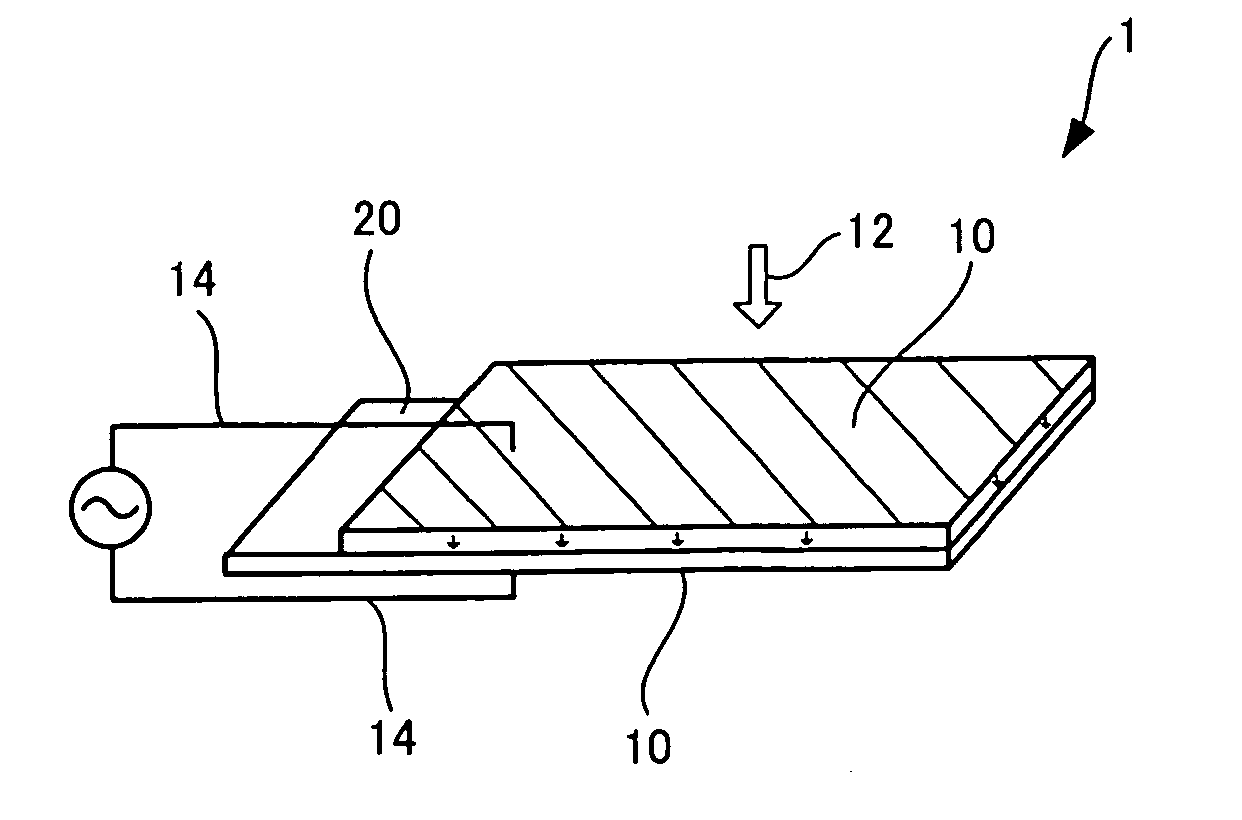
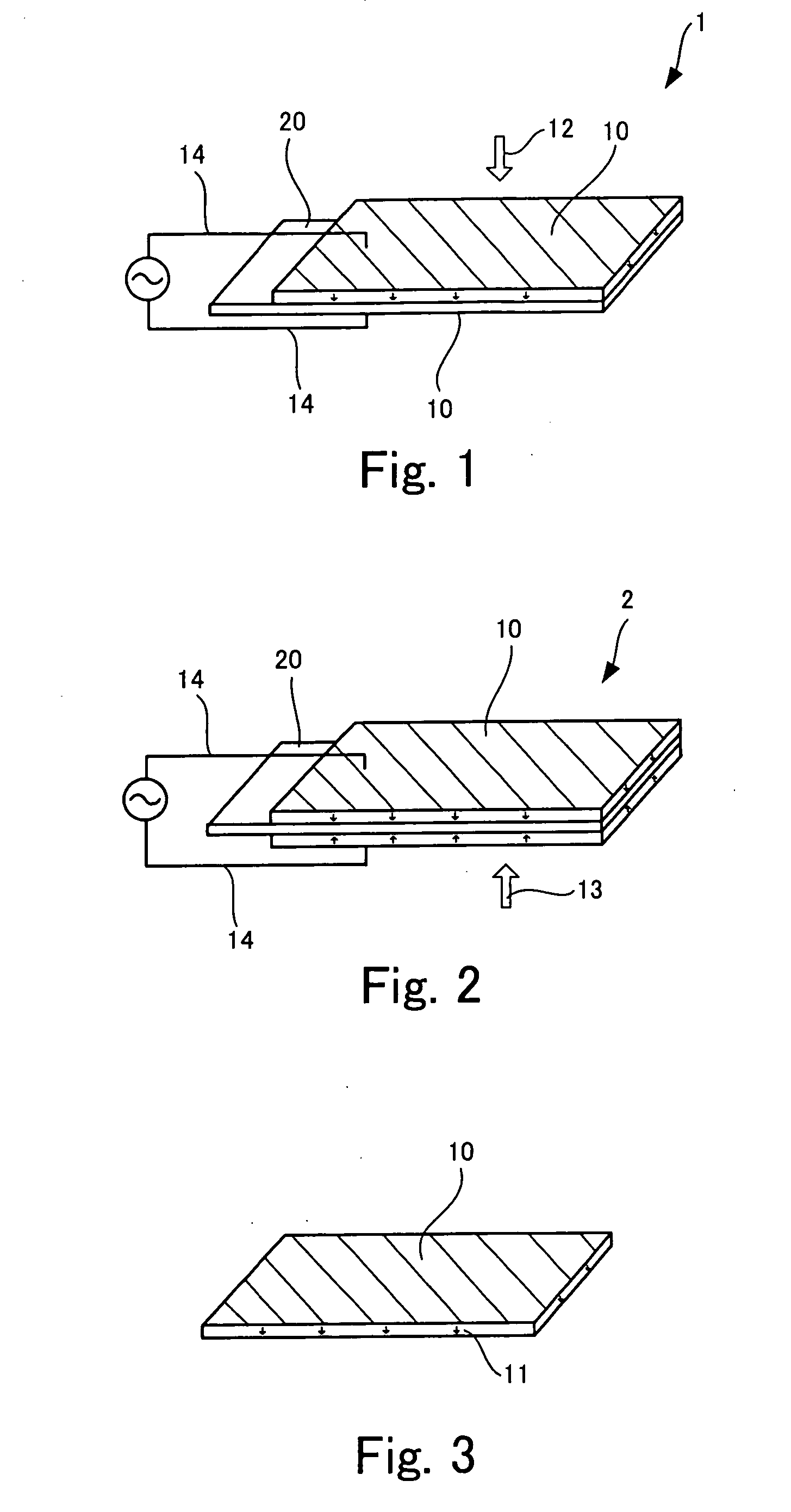
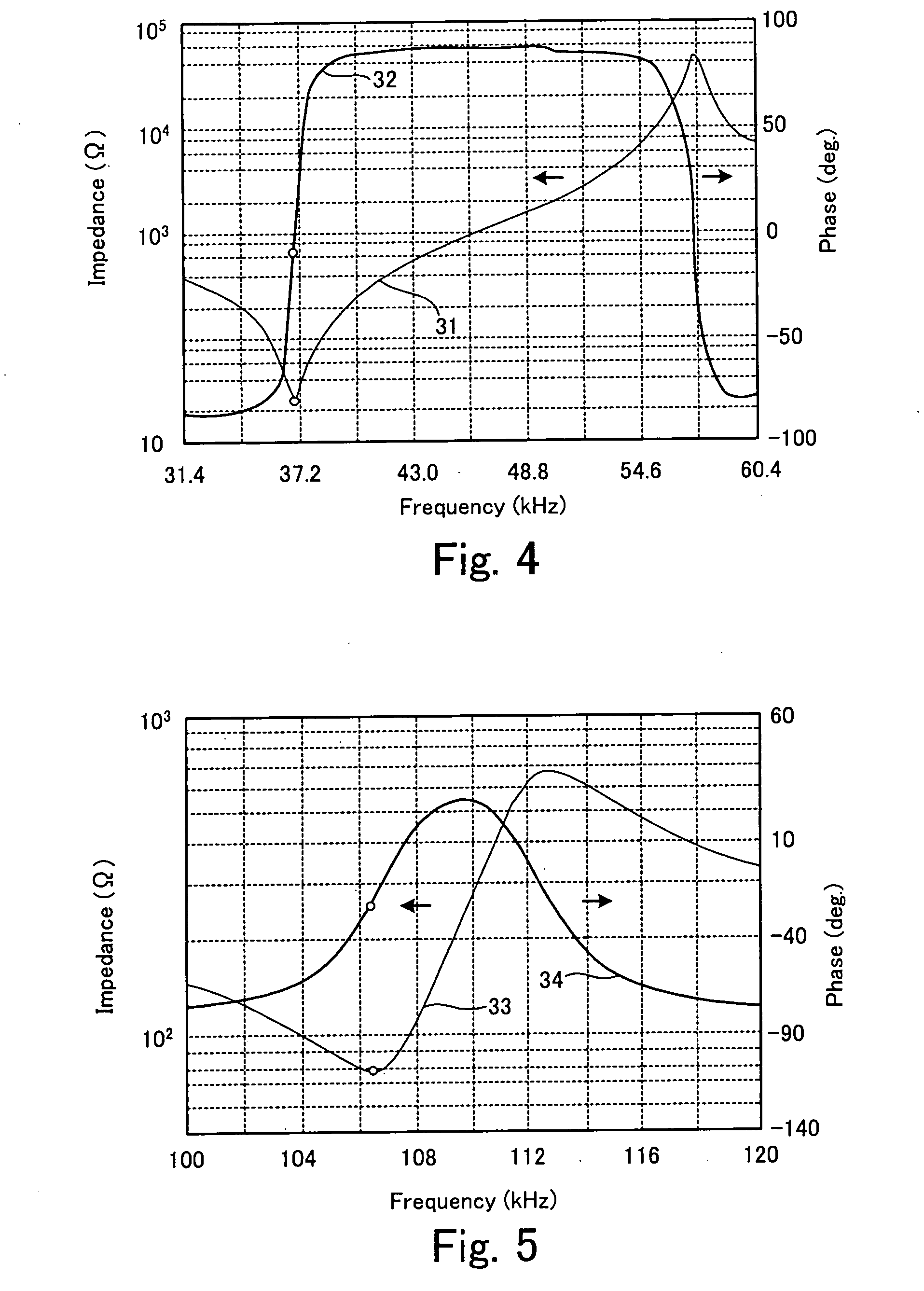
- A piezoelectric device is developed by forming a Pb(Zn1/3Nb2/3)O3 or Pb(Mg1/3Nb2/3)O3 single crystal plate into a mono-domain structure and laminating it with metal plates to achieve a giant-lateral-effect piezoelectric characteristic, with the metal plate and adhesion layer preventing domain wall movement, thereby maintaining excellent piezoelectric performance and reducing secular deterioration.

Bimorph MEMS devices
PatentInactiveUS7084554B2
Innovation
- A process involving the deposition of materials on substrates, temporary bonding to transfer substrates, liftoff, and direct bonding of elements to form bimorph structures, allowing for the creation of thin and thick film piezoelectric/antiferroelectric or antiferroelectric/piezoelectric bimorphs on various substrates, including silicon and plastic, with high-yield and low-temperature compatibility.


Manufacturing Standards for Piezoelectric Components
The manufacturing of piezoelectric components, particularly crystals and bimorphs used in deflection applications, requires adherence to stringent quality standards to ensure optimal performance and reliability. Current industry standards are primarily governed by IEEE 176 Standard on Piezoelectricity, IEC 60444 series for measurement methods, and ASTM standards for material characterization. These frameworks establish fundamental requirements for dimensional tolerances, electrical properties, and mechanical specifications.
Manufacturing precision directly impacts deflection efficiency in both crystal and bimorph configurations. For single crystal components, surface finish requirements typically demand roughness values below 0.1 micrometers to minimize energy losses and ensure uniform electric field distribution. Dimensional tolerances must be maintained within ±0.02mm for thickness and ±0.05mm for lateral dimensions to achieve predictable deflection characteristics. Crystal orientation accuracy becomes critical, with angular deviations limited to less than 0.5 degrees from specified crystallographic axes.
Bimorph manufacturing presents additional complexity due to the multi-layer construction involving piezoelectric ceramics and substrate materials. Bonding layer thickness uniformity is crucial, typically requiring variations less than 5% across the component surface. The adhesive selection and curing processes must comply with temperature cycling standards ranging from -40°C to +85°C while maintaining mechanical integrity. Layer alignment precision affects deflection symmetry and requires positioning accuracy within 10 micrometers.
Quality control protocols encompass electrical parameter verification including piezoelectric charge constants, dielectric properties, and coupling factors. Mechanical testing involves resonance frequency measurements, quality factor determination, and deflection linearity assessment under varying voltage conditions. Environmental testing standards mandate humidity resistance, temperature stability, and long-term aging characteristics evaluation.
Emerging manufacturing standards address advanced materials such as single crystal PMN-PT and textured ceramics, which offer superior deflection efficiency but require specialized processing controls. These include atmosphere-controlled sintering, precision poling procedures, and contamination-free handling protocols to preserve the enhanced electromechanical properties essential for high-performance deflection applications.
Manufacturing precision directly impacts deflection efficiency in both crystal and bimorph configurations. For single crystal components, surface finish requirements typically demand roughness values below 0.1 micrometers to minimize energy losses and ensure uniform electric field distribution. Dimensional tolerances must be maintained within ±0.02mm for thickness and ±0.05mm for lateral dimensions to achieve predictable deflection characteristics. Crystal orientation accuracy becomes critical, with angular deviations limited to less than 0.5 degrees from specified crystallographic axes.
Bimorph manufacturing presents additional complexity due to the multi-layer construction involving piezoelectric ceramics and substrate materials. Bonding layer thickness uniformity is crucial, typically requiring variations less than 5% across the component surface. The adhesive selection and curing processes must comply with temperature cycling standards ranging from -40°C to +85°C while maintaining mechanical integrity. Layer alignment precision affects deflection symmetry and requires positioning accuracy within 10 micrometers.
Quality control protocols encompass electrical parameter verification including piezoelectric charge constants, dielectric properties, and coupling factors. Mechanical testing involves resonance frequency measurements, quality factor determination, and deflection linearity assessment under varying voltage conditions. Environmental testing standards mandate humidity resistance, temperature stability, and long-term aging characteristics evaluation.
Emerging manufacturing standards address advanced materials such as single crystal PMN-PT and textured ceramics, which offer superior deflection efficiency but require specialized processing controls. These include atmosphere-controlled sintering, precision poling procedures, and contamination-free handling protocols to preserve the enhanced electromechanical properties essential for high-performance deflection applications.
Energy Efficiency Considerations in Piezoelectric Design
Energy efficiency represents a critical design parameter that fundamentally distinguishes piezoelectric crystals from bimorph configurations in deflection applications. The inherent crystalline structure of piezoelectric materials enables direct electromechanical coupling with minimal energy dissipation, typically achieving conversion efficiencies between 85-95% under optimal operating conditions. This high efficiency stems from the direct piezoelectric effect, where mechanical deformation occurs instantaneously upon electric field application without intermediate energy conversion stages.
Bimorph actuators, while offering enhanced deflection capabilities, introduce additional energy considerations due to their composite structure. The bonding layers between piezoelectric elements and substrate materials create parasitic capacitances and mechanical losses that reduce overall system efficiency. These structures typically demonstrate conversion efficiencies ranging from 70-85%, with the efficiency gap primarily attributed to interlayer energy dissipation and mechanical coupling losses.
Power consumption patterns differ significantly between these configurations. Single-crystal piezoelectric devices exhibit lower standby power requirements due to reduced leakage currents and minimal dielectric losses. The homogeneous crystal structure maintains consistent electrical properties across the entire volume, resulting in predictable power consumption profiles. Conversely, bimorph designs require higher driving voltages to achieve equivalent deflections, leading to increased power consumption despite their superior mechanical output.
Frequency-dependent efficiency characteristics reveal distinct operational advantages for each configuration. Piezoelectric crystals maintain stable efficiency across broad frequency ranges, making them suitable for applications requiring consistent performance under varying operational conditions. Bimorph actuators demonstrate peak efficiency within specific frequency bands, typically corresponding to their mechanical resonance frequencies, where deflection amplification occurs with minimal additional energy input.
Thermal management considerations significantly impact energy efficiency in both configurations. Piezoelectric crystals exhibit superior thermal stability, maintaining consistent performance characteristics across temperature ranges without substantial efficiency degradation. Bimorph structures face thermal expansion mismatches between constituent materials, leading to internal stress generation and reduced conversion efficiency at elevated temperatures.
The energy recovery potential through reverse piezoelectric effects varies considerably between configurations. Single crystals enable efficient energy harvesting during deflection cycles, converting mechanical energy back to electrical form with minimal losses. Bimorph designs, while capable of energy recovery, experience reduced efficiency due to mechanical damping within the composite structure and impedance mismatches between layers.
Bimorph actuators, while offering enhanced deflection capabilities, introduce additional energy considerations due to their composite structure. The bonding layers between piezoelectric elements and substrate materials create parasitic capacitances and mechanical losses that reduce overall system efficiency. These structures typically demonstrate conversion efficiencies ranging from 70-85%, with the efficiency gap primarily attributed to interlayer energy dissipation and mechanical coupling losses.
Power consumption patterns differ significantly between these configurations. Single-crystal piezoelectric devices exhibit lower standby power requirements due to reduced leakage currents and minimal dielectric losses. The homogeneous crystal structure maintains consistent electrical properties across the entire volume, resulting in predictable power consumption profiles. Conversely, bimorph designs require higher driving voltages to achieve equivalent deflections, leading to increased power consumption despite their superior mechanical output.
Frequency-dependent efficiency characteristics reveal distinct operational advantages for each configuration. Piezoelectric crystals maintain stable efficiency across broad frequency ranges, making them suitable for applications requiring consistent performance under varying operational conditions. Bimorph actuators demonstrate peak efficiency within specific frequency bands, typically corresponding to their mechanical resonance frequencies, where deflection amplification occurs with minimal additional energy input.
Thermal management considerations significantly impact energy efficiency in both configurations. Piezoelectric crystals exhibit superior thermal stability, maintaining consistent performance characteristics across temperature ranges without substantial efficiency degradation. Bimorph structures face thermal expansion mismatches between constituent materials, leading to internal stress generation and reduced conversion efficiency at elevated temperatures.
The energy recovery potential through reverse piezoelectric effects varies considerably between configurations. Single crystals enable efficient energy harvesting during deflection cycles, converting mechanical energy back to electrical form with minimal losses. Bimorph designs, while capable of energy recovery, experience reduced efficiency due to mechanical damping within the composite structure and impedance mismatches between layers.
Unlock deeper insights with Patsnap Eureka Quick Research — get a full tech report to explore trends and direct your research. Try now!
Generate Your Research Report Instantly with AI Agent
Supercharge your innovation with Patsnap Eureka AI Agent Platform!