

Pipe Lining vs Trenchless Repair: Effectiveness Evaluation
MAR 8, 20269 MIN READ
Generate Your Research Report Instantly with AI Agent
PatSnap Eureka helps you evaluate technical feasibility & market potential.
Pipe Repair Technology Background and Objectives
Pipeline infrastructure represents one of the most critical components of modern urban systems, facilitating the transportation of water, wastewater, gas, and other essential utilities across vast networks. The aging of these systems worldwide has created an unprecedented challenge, with millions of miles of pipelines approaching or exceeding their designed service life. Traditional excavation-based repair methods, while effective, have become increasingly problematic due to their disruptive nature, high costs, and environmental impact.
The evolution of pipe repair technology has been driven by the urgent need to address deteriorating infrastructure while minimizing surface disruption. Conventional open-cut methods require extensive excavation, traffic rerouting, and restoration activities that can paralyze urban areas for extended periods. This has catalyzed the development of innovative trenchless repair technologies that promise to revolutionize how pipeline maintenance and rehabilitation are conducted.
Pipe lining technology emerged as a groundbreaking solution, utilizing various materials and installation methods to create new pipe structures within existing deteriorated pipelines. This approach encompasses multiple techniques including cured-in-place pipe (CIPP) lining, slip lining, and spray-applied pipe lining. Each method offers distinct advantages in terms of structural integrity, chemical resistance, and installation efficiency.
Trenchless repair technologies extend beyond lining to include pipe bursting, directional drilling, and localized repair methods such as robotic cutting and joint sealing. These technologies have transformed the industry by enabling repairs with minimal surface disruption, reduced project timelines, and lower overall lifecycle costs.
The primary objective of evaluating pipe lining versus broader trenchless repair methodologies centers on establishing comprehensive effectiveness criteria that encompass technical performance, economic viability, and operational sustainability. This evaluation seeks to determine optimal application scenarios for each technology based on pipe condition, material compatibility, soil conditions, and service requirements.
Furthermore, the assessment aims to quantify long-term performance characteristics including structural durability, flow capacity retention, and resistance to future deterioration. Understanding these factors is crucial for infrastructure managers making strategic decisions about repair investments and asset management priorities.
The ultimate goal involves developing evidence-based guidelines that enable practitioners to select the most appropriate repair technology for specific pipeline conditions, ensuring maximum return on investment while maintaining service reliability and extending asset lifespan in an era of constrained municipal budgets and increasing performance expectations.
The evolution of pipe repair technology has been driven by the urgent need to address deteriorating infrastructure while minimizing surface disruption. Conventional open-cut methods require extensive excavation, traffic rerouting, and restoration activities that can paralyze urban areas for extended periods. This has catalyzed the development of innovative trenchless repair technologies that promise to revolutionize how pipeline maintenance and rehabilitation are conducted.
Pipe lining technology emerged as a groundbreaking solution, utilizing various materials and installation methods to create new pipe structures within existing deteriorated pipelines. This approach encompasses multiple techniques including cured-in-place pipe (CIPP) lining, slip lining, and spray-applied pipe lining. Each method offers distinct advantages in terms of structural integrity, chemical resistance, and installation efficiency.
Trenchless repair technologies extend beyond lining to include pipe bursting, directional drilling, and localized repair methods such as robotic cutting and joint sealing. These technologies have transformed the industry by enabling repairs with minimal surface disruption, reduced project timelines, and lower overall lifecycle costs.
The primary objective of evaluating pipe lining versus broader trenchless repair methodologies centers on establishing comprehensive effectiveness criteria that encompass technical performance, economic viability, and operational sustainability. This evaluation seeks to determine optimal application scenarios for each technology based on pipe condition, material compatibility, soil conditions, and service requirements.
Furthermore, the assessment aims to quantify long-term performance characteristics including structural durability, flow capacity retention, and resistance to future deterioration. Understanding these factors is crucial for infrastructure managers making strategic decisions about repair investments and asset management priorities.
The ultimate goal involves developing evidence-based guidelines that enable practitioners to select the most appropriate repair technology for specific pipeline conditions, ensuring maximum return on investment while maintaining service reliability and extending asset lifespan in an era of constrained municipal budgets and increasing performance expectations.
Market Demand for Trenchless Pipeline Rehabilitation
The global pipeline infrastructure faces unprecedented challenges as aging systems require comprehensive rehabilitation solutions. Water distribution networks, sewer systems, and industrial pipelines worldwide are experiencing deterioration due to decades of service, corrosion, and environmental factors. This deterioration creates urgent demand for effective rehabilitation technologies that can restore pipeline functionality without the extensive disruption associated with traditional excavation methods.
Municipal water authorities represent the largest segment driving demand for trenchless pipeline rehabilitation. Urban areas with dense infrastructure networks particularly require solutions that minimize surface disruption, traffic interruption, and business impact. The growing emphasis on water conservation and system efficiency has intensified the need for rehabilitation methods that can address leakage issues while maintaining continuous service delivery.
The wastewater management sector demonstrates equally strong demand patterns, driven by regulatory compliance requirements and environmental protection mandates. Aging sewer systems in metropolitan areas face increasing pressure to prevent groundwater contamination and surface water pollution. Trenchless rehabilitation technologies offer attractive solutions for addressing these concerns while avoiding the significant costs and community disruption associated with traditional replacement methods.
Industrial pipeline operators across sectors including oil and gas, chemical processing, and manufacturing are increasingly adopting trenchless rehabilitation approaches. These industries require solutions that can address pipeline integrity issues while maintaining operational continuity and meeting stringent safety standards. The ability to rehabilitate pipelines without shutting down entire production systems creates substantial value propositions for industrial applications.
Emerging markets present significant growth opportunities as developing economies invest in modern infrastructure systems. These regions often prioritize cost-effective solutions that can extend the service life of existing pipeline networks while supporting economic development objectives. The scalability and adaptability of trenchless rehabilitation technologies align well with the resource constraints and infrastructure priorities common in these markets.
Regulatory frameworks increasingly favor rehabilitation approaches that minimize environmental impact and reduce construction-related emissions. Government policies promoting sustainable infrastructure development and circular economy principles create favorable conditions for trenchless rehabilitation adoption. These regulatory trends are expected to accelerate market demand as compliance requirements become more stringent and comprehensive across different jurisdictions.
Municipal water authorities represent the largest segment driving demand for trenchless pipeline rehabilitation. Urban areas with dense infrastructure networks particularly require solutions that minimize surface disruption, traffic interruption, and business impact. The growing emphasis on water conservation and system efficiency has intensified the need for rehabilitation methods that can address leakage issues while maintaining continuous service delivery.
The wastewater management sector demonstrates equally strong demand patterns, driven by regulatory compliance requirements and environmental protection mandates. Aging sewer systems in metropolitan areas face increasing pressure to prevent groundwater contamination and surface water pollution. Trenchless rehabilitation technologies offer attractive solutions for addressing these concerns while avoiding the significant costs and community disruption associated with traditional replacement methods.
Industrial pipeline operators across sectors including oil and gas, chemical processing, and manufacturing are increasingly adopting trenchless rehabilitation approaches. These industries require solutions that can address pipeline integrity issues while maintaining operational continuity and meeting stringent safety standards. The ability to rehabilitate pipelines without shutting down entire production systems creates substantial value propositions for industrial applications.
Emerging markets present significant growth opportunities as developing economies invest in modern infrastructure systems. These regions often prioritize cost-effective solutions that can extend the service life of existing pipeline networks while supporting economic development objectives. The scalability and adaptability of trenchless rehabilitation technologies align well with the resource constraints and infrastructure priorities common in these markets.
Regulatory frameworks increasingly favor rehabilitation approaches that minimize environmental impact and reduce construction-related emissions. Government policies promoting sustainable infrastructure development and circular economy principles create favorable conditions for trenchless rehabilitation adoption. These regulatory trends are expected to accelerate market demand as compliance requirements become more stringent and comprehensive across different jurisdictions.
Current State of Pipe Lining and Trenchless Technologies
The current landscape of pipe lining and trenchless repair technologies represents a mature yet rapidly evolving sector within the infrastructure rehabilitation industry. These technologies have gained significant traction globally as municipalities and utilities seek cost-effective alternatives to traditional open-cut excavation methods for pipeline repair and replacement.
Pipe lining technologies currently encompass several established methodologies, with Cured-in-Place Pipe (CIPP) lining dominating the market share at approximately 60% of trenchless rehabilitation projects worldwide. This technology utilizes resin-saturated felt tubes that are inverted or pulled into existing pipelines and cured using hot water, steam, or UV light. The process creates a seamless, jointless pipe within the existing infrastructure, effectively extending service life by 50-100 years.
Spray-applied pipe lining represents another significant segment, particularly effective for larger diameter pipes and complex geometries. This technology involves applying structural coatings or cement mortars to pipe interiors, addressing corrosion and structural deficiencies while maintaining flow capacity. Recent advancements have introduced epoxy-based spray linings that provide superior chemical resistance and faster curing times.
Trenchless repair technologies have expanded beyond traditional lining methods to include point repairs, sectional repairs, and robotic cutting systems. Mechanical spot repair solutions, such as compression repair sleeves and inflatable packers, offer targeted solutions for localized damage without full-length rehabilitation. These methods are particularly valuable for addressing specific joint failures, cracks, or service connection issues.
The geographic distribution of these technologies shows concentrated adoption in developed markets, with North America and Europe leading in implementation rates. Asia-Pacific regions are experiencing rapid growth, driven by aging infrastructure and urbanization pressures. Current market penetration indicates that approximately 15-20% of eligible pipeline networks globally have undergone some form of trenchless rehabilitation.
However, significant technical challenges persist across both technology categories. CIPP installations face ongoing issues with resin chemistry optimization, particularly regarding styrene emissions and curing consistency in varying environmental conditions. Dimensional accuracy and thickness uniformity remain critical concerns affecting long-term performance predictions.
Trenchless repair methods encounter limitations related to pipe material compatibility, joint sealing effectiveness, and structural load transfer capabilities. The inability to address severe pipe deformation or complete structural collapse represents a fundamental constraint requiring careful pre-assessment and technology selection protocols.
Quality assurance and performance verification continue to challenge the industry, with limited standardized testing protocols for long-term durability assessment. Current inspection technologies, while advanced, struggle to provide comprehensive evaluation of installation quality and predict service life accurately across diverse operating conditions and pipe materials.
Pipe lining technologies currently encompass several established methodologies, with Cured-in-Place Pipe (CIPP) lining dominating the market share at approximately 60% of trenchless rehabilitation projects worldwide. This technology utilizes resin-saturated felt tubes that are inverted or pulled into existing pipelines and cured using hot water, steam, or UV light. The process creates a seamless, jointless pipe within the existing infrastructure, effectively extending service life by 50-100 years.
Spray-applied pipe lining represents another significant segment, particularly effective for larger diameter pipes and complex geometries. This technology involves applying structural coatings or cement mortars to pipe interiors, addressing corrosion and structural deficiencies while maintaining flow capacity. Recent advancements have introduced epoxy-based spray linings that provide superior chemical resistance and faster curing times.
Trenchless repair technologies have expanded beyond traditional lining methods to include point repairs, sectional repairs, and robotic cutting systems. Mechanical spot repair solutions, such as compression repair sleeves and inflatable packers, offer targeted solutions for localized damage without full-length rehabilitation. These methods are particularly valuable for addressing specific joint failures, cracks, or service connection issues.
The geographic distribution of these technologies shows concentrated adoption in developed markets, with North America and Europe leading in implementation rates. Asia-Pacific regions are experiencing rapid growth, driven by aging infrastructure and urbanization pressures. Current market penetration indicates that approximately 15-20% of eligible pipeline networks globally have undergone some form of trenchless rehabilitation.
However, significant technical challenges persist across both technology categories. CIPP installations face ongoing issues with resin chemistry optimization, particularly regarding styrene emissions and curing consistency in varying environmental conditions. Dimensional accuracy and thickness uniformity remain critical concerns affecting long-term performance predictions.
Trenchless repair methods encounter limitations related to pipe material compatibility, joint sealing effectiveness, and structural load transfer capabilities. The inability to address severe pipe deformation or complete structural collapse represents a fundamental constraint requiring careful pre-assessment and technology selection protocols.
Quality assurance and performance verification continue to challenge the industry, with limited standardized testing protocols for long-term durability assessment. Current inspection technologies, while advanced, struggle to provide comprehensive evaluation of installation quality and predict service life accurately across diverse operating conditions and pipe materials.
Current Pipe Lining and Trenchless Solutions
01 Cured-in-place pipe (CIPP) lining technology
This technology involves inserting a resin-impregnated liner into the damaged pipe, which is then cured in place to form a new pipe within the old one. The liner can be cured using hot water, steam, or UV light, creating a seamless, corrosion-resistant pipe that restores structural integrity without excavation. This method is effective for repairing pipes with cracks, leaks, and corrosion while maintaining flow capacity.- CIPP (Cured-In-Place Pipe) lining technology for pipe rehabilitation: This technology involves inserting a resin-impregnated liner into the existing damaged pipe, which is then cured in place to form a new pipe within the old one. The method eliminates the need for excavation and provides structural reinforcement to deteriorated pipes. The cured liner creates a seamless, corrosion-resistant inner surface that restores the pipe's integrity and extends its service life. This trenchless approach significantly reduces construction time, minimizes surface disruption, and lowers overall repair costs.
- Spray coating and robotic application systems for internal pipe repair: Advanced spray coating techniques utilize specialized equipment to apply protective coatings to the interior surfaces of pipes without excavation. Robotic systems can navigate through pipes and apply uniform coating layers to repair localized damage or provide comprehensive protection. These systems often incorporate real-time monitoring and positioning technology to ensure complete coverage and proper thickness. The method is particularly effective for pipes with complex geometries or limited access points, providing corrosion protection and structural enhancement.
- Pipe expansion and mechanical lining installation devices: Specialized mechanical devices are designed to expand and install liner materials within existing pipes through trenchless methods. These devices use hydraulic or pneumatic pressure to ensure proper contact between the liner and the host pipe wall. The equipment includes positioning mechanisms, pressure control systems, and sealing components that facilitate accurate installation. This approach is effective for various pipe diameters and materials, providing a reliable rehabilitation solution with minimal surface disruption.
- Localized repair patches and sectional rehabilitation methods: Targeted repair solutions focus on addressing specific damaged sections of pipes rather than full-length rehabilitation. These methods employ flexible patches, segmented liners, or modular repair systems that can be positioned precisely at defect locations. The technology includes anchoring mechanisms and sealing systems to ensure long-term performance. This approach is cost-effective for pipes with isolated damage points and allows for rapid repairs with minimal material usage and reduced downtime.
- Quality inspection and monitoring systems for trenchless repairs: Advanced inspection technologies are employed to assess the effectiveness of trenchless pipe repairs and ensure quality standards. These systems include robotic cameras, ultrasonic testing equipment, and pressure monitoring devices that evaluate liner installation quality, adhesion, and structural integrity. Real-time data collection and analysis capabilities enable immediate detection of installation defects or incomplete coverage. Post-repair verification ensures that the rehabilitated pipe meets performance specifications and provides documentation for long-term asset management.
02 Spray lining and coating application methods
This approach involves applying protective coatings or linings to the interior pipe surface through spray application techniques. The coating materials can include epoxy resins, polyurethane, or other polymer-based substances that adhere to the pipe wall, providing corrosion resistance and structural reinforcement. This method is particularly effective for pipes with irregular surfaces or complex geometries.Expand Specific Solutions03 Robotic and automated pipe repair equipment
Specialized robotic systems and automated equipment are designed to navigate through pipes and perform repair operations remotely. These devices can carry cameras, sensors, and repair tools to locate damage, clean surfaces, and apply repair materials without requiring human entry into confined spaces. The equipment enhances repair precision and safety while reducing labor costs and time.Expand Specific Solutions04 Pipe expansion and mechanical lining installation
This technique involves mechanically expanding a new liner or sleeve inside the existing pipe to create a tight fit against the host pipe wall. The expansion can be achieved through hydraulic pressure, mechanical rollers, or other expansion devices. This method provides structural reinforcement and seals leaks while minimizing disruption to the surrounding infrastructure.Expand Specific Solutions05 Quality inspection and monitoring systems for repaired pipes
Advanced inspection technologies including CCTV cameras, ultrasonic testing, and pressure monitoring systems are employed to assess the effectiveness of trenchless repairs. These systems can detect defects, measure liner thickness, verify proper adhesion, and monitor long-term performance of the repaired pipe. Real-time monitoring capabilities enable early detection of potential failures and validation of repair quality.Expand Specific Solutions
Major Players in Trenchless Repair Industry
The pipe lining versus trenchless repair technology sector represents a mature yet evolving industry experiencing steady growth driven by aging infrastructure demands globally. The market demonstrates significant scale with established players like 3M Innovative Properties Co. and Per Aarsleff Holding A/S leading through comprehensive solution portfolios, while specialized firms such as Picote Solutions, Sipp Technologies LLC, and Link-Pipe Inc. drive innovation in robotic systems and UV-curing technologies. Technology maturity varies across segments, with companies like Relineeurope GmbH and ProKASRO Mechatronik GmbH advancing UV light-curing and robotic rehabilitation systems, while emerging players including Zhengzhou Weilin Engineering Technology and Sanexen Environmental Services focus on next-generation trenchless restoration methods. The competitive landscape shows geographic diversification with strong presence in North America, Europe, and Asia, indicating widespread adoption and technological standardization across different markets and regulatory environments.
Abwasser-Service Volkner GmbH
Technical Solution: Abwasser-Service Volkner specializes in UV-cured glass fiber reinforced plastic (GRP) lining systems for sewer rehabilitation. Their technology involves installing pre-manufactured GRP liners that are cured using UV light, providing structural reinforcement to deteriorated pipes. The system can handle pipe diameters from 150mm to 3000mm and offers corrosion resistance superior to traditional materials. The UV curing process takes only 15-30 minutes compared to hours required for thermal curing methods. Their liners provide Class IV structural rating and can withstand groundwater pressure up to 10 meters head. The technology includes quality control systems that monitor curing temperature and ensure uniform liner thickness.
Strengths: Fast curing time, excellent corrosion resistance, high structural integrity. Weaknesses: Requires UV-transparent conditions, higher material costs, limited to accessible pipe sections.
Insituform Holdings (UK) Ltd.
Technical Solution: Insituform specializes in cured-in-place pipe (CIPP) lining technology, which involves inserting a resin-saturated liner into existing pipes and curing it to form a new structural pipe within the old one. Their technology covers various pipe diameters from 100mm to 2400mm and can handle different pipe materials including concrete, clay, and cast iron. The CIPP process requires minimal excavation, reduces installation time by 60-80% compared to traditional replacement methods, and provides a 50-year design life. The company has developed advanced resin formulations that cure faster and provide enhanced chemical resistance for different environmental conditions.
Strengths: Minimal excavation required, faster installation, proven long-term durability. Weaknesses: Limited to certain pipe conditions, requires specialized equipment and trained personnel.
Core Technologies in Pipeline Rehabilitation Methods
Inverted filament winder for pipeline rehabilitation
PatentWO2018209084A1
Innovation
- An inverted filament winder apparatus applies a spirally or helically wound reinforcement filament between elastomeric and rigid lining layers, using UV-curable or heat-curable resin, to reduce stress on the rigid liner and enhance hoop strength, thereby increasing the lining's resistance to creep failure.


Trenchless lining device and method for performing multi-directional conduit lining
PatentInactiveUS20060237083A1
Innovation
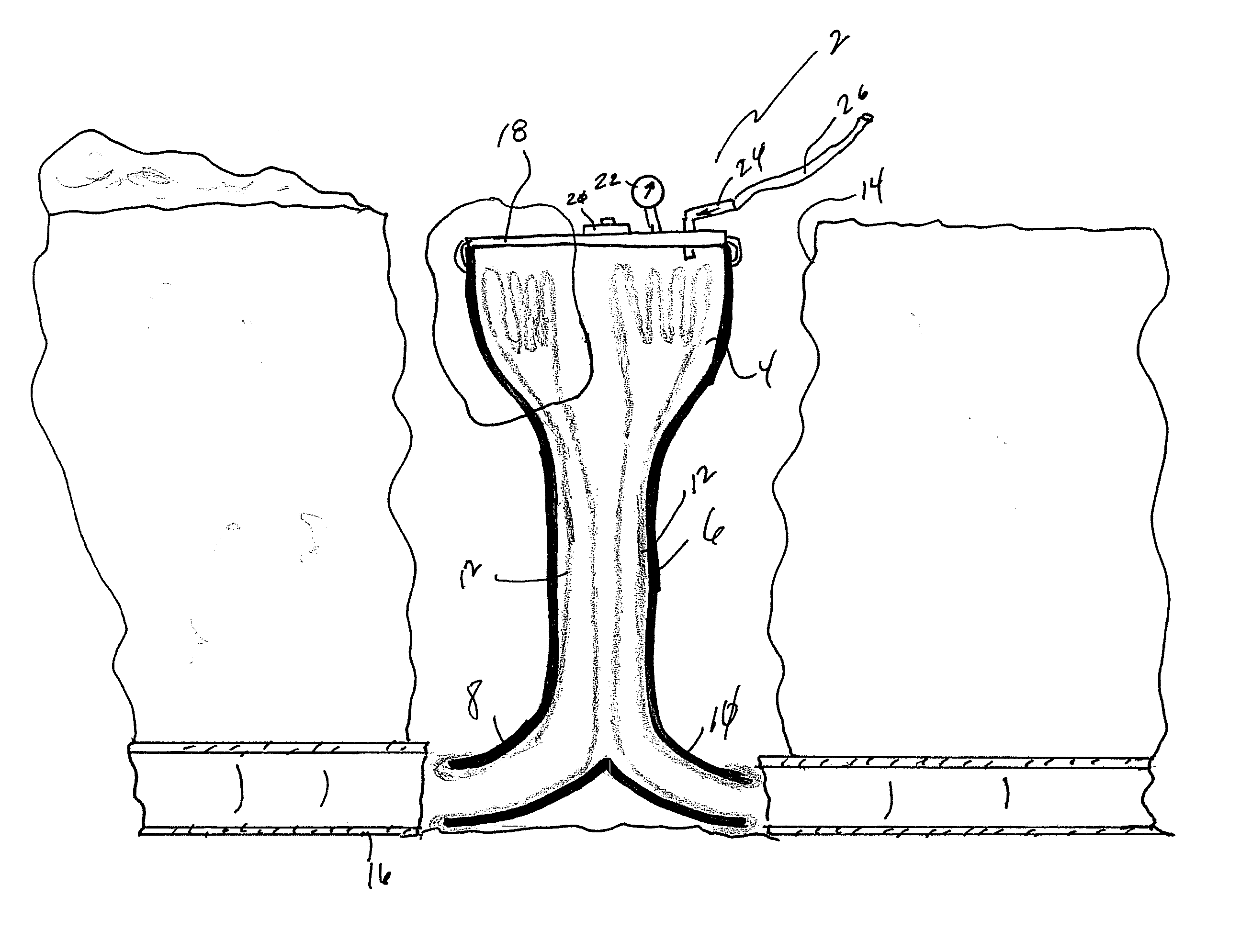
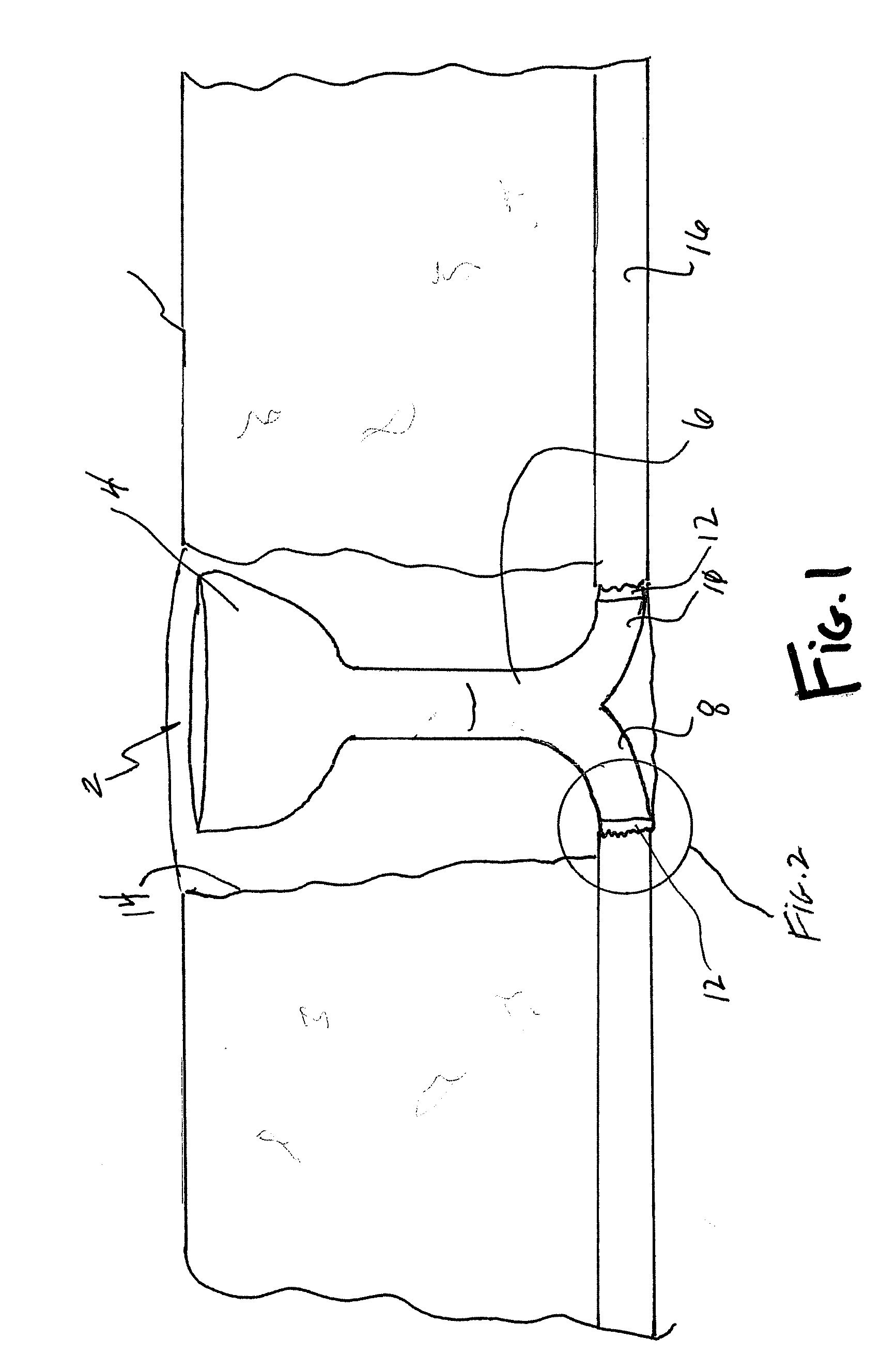
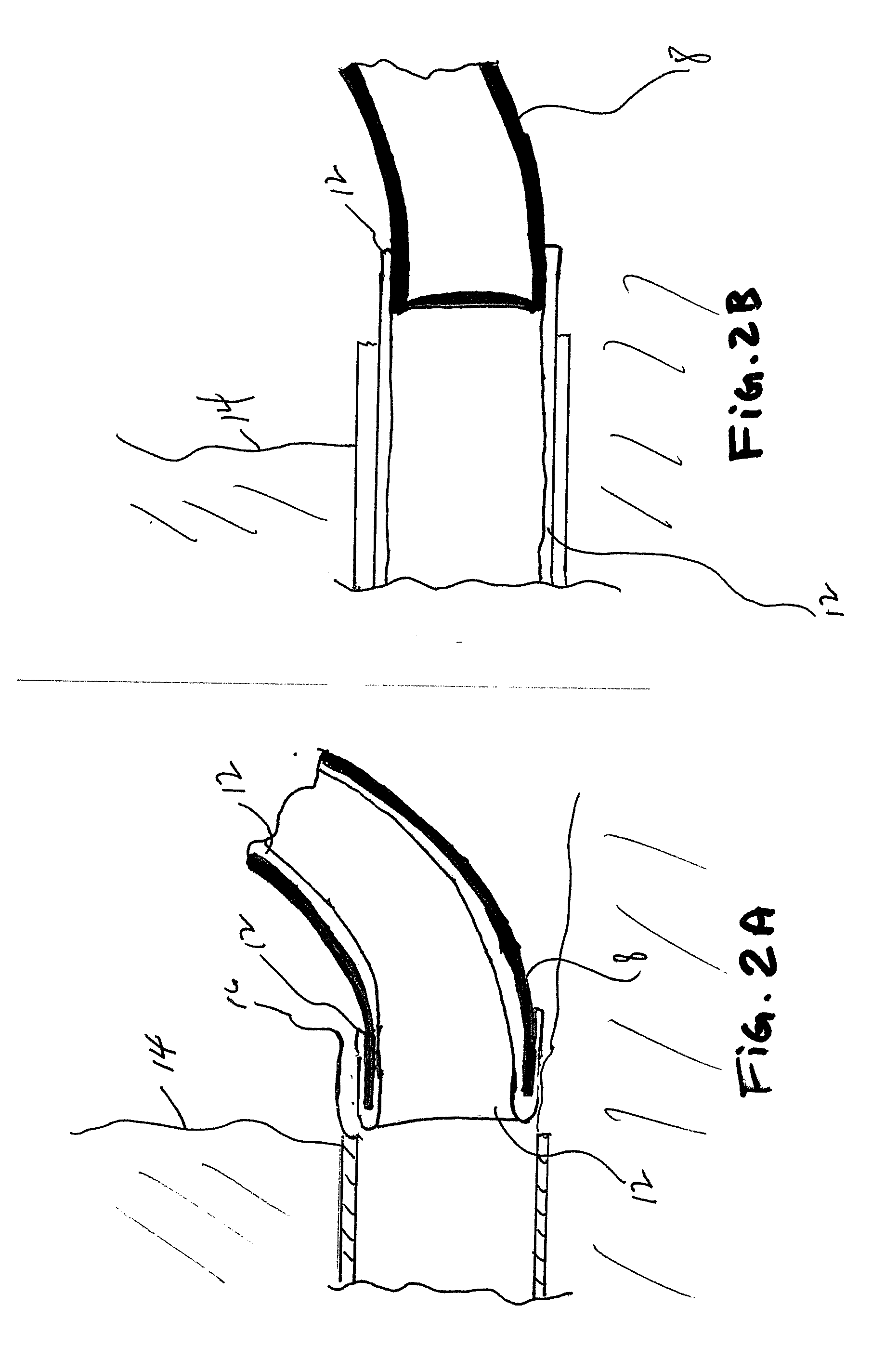
- A trenchless lining device with a chamber interconnected to a main tube branching into two auxiliary tubes, allowing for the deployment of liners in multiple directions from a single access location, reducing excavation needs and maintaining an access point for future repairs, by using pressure to deploy liners and heated fluid for curing.

Environmental Impact Assessment of Repair Methods
The environmental implications of pipe repair methodologies represent a critical consideration in infrastructure maintenance decision-making processes. Traditional open-cut excavation methods generate substantial environmental disruption through soil displacement, vegetation removal, and ecosystem fragmentation. In contrast, trenchless repair technologies, including pipe lining and other minimally invasive approaches, demonstrate significantly reduced surface-level environmental impact profiles.
Carbon footprint analysis reveals distinct differences between repair methodologies. Pipe lining operations typically require fewer heavy machinery deployments and reduced transportation of excavated materials, resulting in lower greenhouse gas emissions. The cured-in-place pipe (CIPP) lining process generates localized emissions during resin curing, yet these remain substantially lower than emissions associated with extensive excavation equipment operation and material hauling required in traditional repair approaches.
Soil and groundwater protection considerations favor trenchless methodologies. Open excavation creates potential contamination pathways and disrupts natural soil stratification, potentially affecting groundwater flow patterns. Pipe lining maintains existing soil integrity while preventing future leakage that could contaminate surrounding environmental media. However, certain lining materials and installation chemicals require careful handling to prevent inadvertent environmental release during application processes.
Waste generation patterns differ significantly between methodologies. Traditional excavation produces substantial volumes of displaced soil, removed pipe materials, and construction debris requiring disposal or remediation. Trenchless repair generates minimal waste streams, primarily consisting of preparation debris and packaging materials. The longevity of lining materials influences long-term environmental impact, as extended service life reduces frequency of future interventions and associated environmental disturbance.
Ecosystem disruption assessment demonstrates clear advantages for trenchless approaches. Surface vegetation preservation, wildlife habitat continuity, and reduced noise pollution characterize pipe lining operations. Urban environments particularly benefit from minimized traffic disruption and reduced air quality impacts. However, installation processes may require temporary utility interruptions and localized access point establishment, creating limited but concentrated environmental effects during implementation phases.
Carbon footprint analysis reveals distinct differences between repair methodologies. Pipe lining operations typically require fewer heavy machinery deployments and reduced transportation of excavated materials, resulting in lower greenhouse gas emissions. The cured-in-place pipe (CIPP) lining process generates localized emissions during resin curing, yet these remain substantially lower than emissions associated with extensive excavation equipment operation and material hauling required in traditional repair approaches.
Soil and groundwater protection considerations favor trenchless methodologies. Open excavation creates potential contamination pathways and disrupts natural soil stratification, potentially affecting groundwater flow patterns. Pipe lining maintains existing soil integrity while preventing future leakage that could contaminate surrounding environmental media. However, certain lining materials and installation chemicals require careful handling to prevent inadvertent environmental release during application processes.
Waste generation patterns differ significantly between methodologies. Traditional excavation produces substantial volumes of displaced soil, removed pipe materials, and construction debris requiring disposal or remediation. Trenchless repair generates minimal waste streams, primarily consisting of preparation debris and packaging materials. The longevity of lining materials influences long-term environmental impact, as extended service life reduces frequency of future interventions and associated environmental disturbance.
Ecosystem disruption assessment demonstrates clear advantages for trenchless approaches. Surface vegetation preservation, wildlife habitat continuity, and reduced noise pollution characterize pipe lining operations. Urban environments particularly benefit from minimized traffic disruption and reduced air quality impacts. However, installation processes may require temporary utility interruptions and localized access point establishment, creating limited but concentrated environmental effects during implementation phases.
Cost-Effectiveness Analysis of Pipeline Repair Options
The economic evaluation of pipeline repair methodologies requires comprehensive analysis of both direct and indirect cost factors associated with pipe lining and trenchless repair technologies. Initial capital expenditure varies significantly between these approaches, with pipe lining typically requiring lower upfront investment due to reduced excavation requirements and minimal surface disruption. However, the total cost assessment must incorporate equipment mobilization, material procurement, labor allocation, and project duration considerations.
Operational cost analysis reveals distinct patterns between the two repair strategies. Pipe lining operations demonstrate cost advantages in urban environments where excavation permits, traffic management, and surface restoration expenses can escalate rapidly. The technology's ability to operate within existing infrastructure corridors eliminates substantial indirect costs related to business disruption, utility relocation, and environmental remediation. Conversely, traditional trenchless repair methods may present higher immediate operational costs but offer superior long-term durability in specific soil conditions and pipe configurations.
Labor cost differentials represent a critical economic factor, as pipe lining requires specialized technical expertise and certified operators, potentially increasing hourly rates. However, the reduced project timeline often compensates for higher labor costs through decreased overall man-hour requirements. Equipment utilization efficiency also impacts cost-effectiveness, with pipe lining systems offering higher throughput rates in suitable applications, thereby optimizing resource allocation across multiple project phases.
Long-term economic performance evaluation must consider maintenance frequency, service life extension, and failure probability reduction. Pipe lining solutions typically provide 50-75 year service life extensions with minimal maintenance requirements, generating favorable life-cycle cost ratios. The technology's ability to improve hydraulic capacity while reducing infiltration and exfiltration creates additional economic benefits through reduced pumping costs and environmental compliance improvements.
Risk-adjusted cost analysis incorporates potential failure scenarios, warranty provisions, and performance guarantees. Pipe lining technologies often include comprehensive warranty coverage, reducing long-term financial exposure for asset owners. The predictable performance characteristics and established installation protocols minimize cost overrun risks compared to excavation-dependent alternatives that face geological uncertainties and weather-related delays.
Operational cost analysis reveals distinct patterns between the two repair strategies. Pipe lining operations demonstrate cost advantages in urban environments where excavation permits, traffic management, and surface restoration expenses can escalate rapidly. The technology's ability to operate within existing infrastructure corridors eliminates substantial indirect costs related to business disruption, utility relocation, and environmental remediation. Conversely, traditional trenchless repair methods may present higher immediate operational costs but offer superior long-term durability in specific soil conditions and pipe configurations.
Labor cost differentials represent a critical economic factor, as pipe lining requires specialized technical expertise and certified operators, potentially increasing hourly rates. However, the reduced project timeline often compensates for higher labor costs through decreased overall man-hour requirements. Equipment utilization efficiency also impacts cost-effectiveness, with pipe lining systems offering higher throughput rates in suitable applications, thereby optimizing resource allocation across multiple project phases.
Long-term economic performance evaluation must consider maintenance frequency, service life extension, and failure probability reduction. Pipe lining solutions typically provide 50-75 year service life extensions with minimal maintenance requirements, generating favorable life-cycle cost ratios. The technology's ability to improve hydraulic capacity while reducing infiltration and exfiltration creates additional economic benefits through reduced pumping costs and environmental compliance improvements.
Risk-adjusted cost analysis incorporates potential failure scenarios, warranty provisions, and performance guarantees. Pipe lining technologies often include comprehensive warranty coverage, reducing long-term financial exposure for asset owners. The predictable performance characteristics and established installation protocols minimize cost overrun risks compared to excavation-dependent alternatives that face geological uncertainties and weather-related delays.
Unlock deeper insights with PatSnap Eureka Quick Research — get a full tech report to explore trends and direct your research. Try now!
Generate Your Research Report Instantly with AI Agent
Supercharge your innovation with PatSnap Eureka AI Agent Platform!