

Planetary Gearboxes Vs Direct Drive Systems: Space Constraints
MAY 25, 20269 MIN READ
Generate Your Research Report Instantly with AI Agent
PatSnap Eureka helps you evaluate technical feasibility & market potential.
Planetary Gearbox vs Direct Drive Background and Objectives
The evolution of mechanical power transmission systems has been fundamentally shaped by the perpetual tension between performance requirements and spatial limitations. In aerospace, robotics, and precision machinery applications, engineers have long grappled with the challenge of delivering high torque output while maintaining compact system architectures. This fundamental constraint has driven the development of two primary transmission paradigms: planetary gearbox systems and direct drive configurations.
Planetary gearboxes emerged as a solution to achieve high torque multiplication ratios within relatively constrained envelopes. These systems leverage multiple gear stages arranged in concentric configurations, enabling significant speed reduction and torque amplification while maintaining a compact footprint. The technology has evolved from simple single-stage configurations to sophisticated multi-stage systems capable of achieving reduction ratios exceeding 1000:1.
Conversely, direct drive systems represent a paradigm shift toward eliminating mechanical transmission components entirely. By directly coupling high-torque, low-speed motors to driven loads, these systems eliminate the inherent backlash, friction losses, and mechanical complexity associated with gear trains. The advancement of permanent magnet motor technologies and sophisticated control electronics has made direct drive solutions increasingly viable for applications previously dominated by geared systems.
The space constraint challenge has intensified with the miniaturization trends across multiple industries. Modern applications demand increasingly compact solutions without compromising performance parameters such as positioning accuracy, dynamic response, and load capacity. This has created a complex optimization problem where traditional design approaches must be reevaluated.
The primary objective of this technical investigation is to establish comprehensive performance benchmarks for both planetary gearbox and direct drive systems under severe space constraints. This includes quantifying the trade-offs between system compactness, torque density, efficiency, and dynamic performance characteristics. Additionally, the research aims to identify the critical threshold conditions where one technology becomes definitively advantageous over the other.
A secondary objective involves developing predictive models for space-constrained applications, enabling engineers to make informed technology selection decisions based on specific dimensional limitations and performance requirements. This framework will incorporate factors such as thermal management, maintenance accessibility, and long-term reliability considerations within confined spaces.
Planetary gearboxes emerged as a solution to achieve high torque multiplication ratios within relatively constrained envelopes. These systems leverage multiple gear stages arranged in concentric configurations, enabling significant speed reduction and torque amplification while maintaining a compact footprint. The technology has evolved from simple single-stage configurations to sophisticated multi-stage systems capable of achieving reduction ratios exceeding 1000:1.
Conversely, direct drive systems represent a paradigm shift toward eliminating mechanical transmission components entirely. By directly coupling high-torque, low-speed motors to driven loads, these systems eliminate the inherent backlash, friction losses, and mechanical complexity associated with gear trains. The advancement of permanent magnet motor technologies and sophisticated control electronics has made direct drive solutions increasingly viable for applications previously dominated by geared systems.
The space constraint challenge has intensified with the miniaturization trends across multiple industries. Modern applications demand increasingly compact solutions without compromising performance parameters such as positioning accuracy, dynamic response, and load capacity. This has created a complex optimization problem where traditional design approaches must be reevaluated.
The primary objective of this technical investigation is to establish comprehensive performance benchmarks for both planetary gearbox and direct drive systems under severe space constraints. This includes quantifying the trade-offs between system compactness, torque density, efficiency, and dynamic performance characteristics. Additionally, the research aims to identify the critical threshold conditions where one technology becomes definitively advantageous over the other.
A secondary objective involves developing predictive models for space-constrained applications, enabling engineers to make informed technology selection decisions based on specific dimensional limitations and performance requirements. This framework will incorporate factors such as thermal management, maintenance accessibility, and long-term reliability considerations within confined spaces.
Market Demand for Space-Constrained Drive Systems
The global market for space-constrained drive systems is experiencing unprecedented growth driven by the miniaturization trends across multiple industries. Aerospace applications, particularly in satellite technology and unmanned aerial vehicles, represent the largest segment demanding compact propulsion solutions. The increasing deployment of small satellites and CubeSats has created substantial demand for lightweight, space-efficient drive mechanisms that can operate reliably in harsh environments while maintaining precise positioning capabilities.
Industrial automation sectors are witnessing significant demand for compact drive systems, especially in robotics and precision manufacturing equipment. The proliferation of collaborative robots in manufacturing environments requires drive systems that can fit within increasingly smaller form factors without compromising performance. Medical device manufacturing has emerged as another critical market segment, where surgical robots and diagnostic equipment demand ultra-compact drive solutions that can deliver high precision within stringent space limitations.
The automotive industry's transition toward electric vehicles has intensified demand for space-optimized drive systems. Electric powertrains require efficient transmission solutions that maximize interior space while delivering optimal performance characteristics. Advanced driver assistance systems and autonomous vehicle technologies further amplify this demand, as multiple actuators and positioning systems must be integrated within limited vehicle architecture constraints.
Renewable energy applications, particularly in wind turbine technology and solar tracking systems, represent growing market opportunities for space-constrained drive solutions. These applications require robust systems capable of operating in outdoor environments while maintaining compact profiles for installation flexibility. The offshore wind sector specifically demands lightweight solutions that minimize structural loading requirements.
Market analysis indicates that direct drive systems are gaining preference in applications requiring high precision and minimal maintenance, despite their larger motor requirements. Conversely, planetary gearbox solutions continue to dominate markets where high torque density and compact overall system dimensions are prioritized. The selection between these technologies increasingly depends on specific space allocation constraints, with system integrators seeking customizable solutions that optimize the trade-offs between motor size, gearbox complexity, and overall system footprint.
Emerging applications in consumer electronics and portable devices are creating new market segments for miniaturized drive systems, further expanding the addressable market for space-constrained solutions.
Industrial automation sectors are witnessing significant demand for compact drive systems, especially in robotics and precision manufacturing equipment. The proliferation of collaborative robots in manufacturing environments requires drive systems that can fit within increasingly smaller form factors without compromising performance. Medical device manufacturing has emerged as another critical market segment, where surgical robots and diagnostic equipment demand ultra-compact drive solutions that can deliver high precision within stringent space limitations.
The automotive industry's transition toward electric vehicles has intensified demand for space-optimized drive systems. Electric powertrains require efficient transmission solutions that maximize interior space while delivering optimal performance characteristics. Advanced driver assistance systems and autonomous vehicle technologies further amplify this demand, as multiple actuators and positioning systems must be integrated within limited vehicle architecture constraints.
Renewable energy applications, particularly in wind turbine technology and solar tracking systems, represent growing market opportunities for space-constrained drive solutions. These applications require robust systems capable of operating in outdoor environments while maintaining compact profiles for installation flexibility. The offshore wind sector specifically demands lightweight solutions that minimize structural loading requirements.
Market analysis indicates that direct drive systems are gaining preference in applications requiring high precision and minimal maintenance, despite their larger motor requirements. Conversely, planetary gearbox solutions continue to dominate markets where high torque density and compact overall system dimensions are prioritized. The selection between these technologies increasingly depends on specific space allocation constraints, with system integrators seeking customizable solutions that optimize the trade-offs between motor size, gearbox complexity, and overall system footprint.
Emerging applications in consumer electronics and portable devices are creating new market segments for miniaturized drive systems, further expanding the addressable market for space-constrained solutions.
Current State and Space Limitation Challenges
The current landscape of power transmission systems in space-constrained applications presents a complex dichotomy between planetary gearboxes and direct drive systems, each facing distinct spatial limitations that significantly impact their deployment feasibility. Contemporary planetary gearbox designs have achieved remarkable compactness through advanced manufacturing techniques, with modern units achieving gear ratios up to 1000:1 while maintaining relatively small form factors. However, these systems still require substantial axial length due to their multi-stage configuration, typically ranging from 150mm to 400mm depending on the required reduction ratio and torque capacity.
Direct drive systems, conversely, eliminate the spatial requirements associated with gear trains but introduce different dimensional challenges. These systems necessitate larger diameter motors to generate equivalent torque output, often requiring 2-3 times the radial space compared to geared alternatives. The electromagnetic design constraints of direct drive motors create inherent limitations in achieving high torque density within compact envelopes, particularly challenging in applications requiring precise positioning or high holding torque.
Current space limitation challenges manifest differently across various industrial sectors. In robotics applications, joint space constraints favor planetary gearboxes despite their axial length penalties, as the radial compactness proves more critical for articulated mechanisms. Conversely, wheel hub applications in electric vehicles increasingly adopt direct drive solutions where radial space is available but axial constraints are severe.
The thermal management aspect compounds spatial challenges for both technologies. Planetary gearboxes generate heat through gear mesh friction and bearing losses, requiring adequate heat dissipation pathways that often demand additional spatial allocation for cooling fins or thermal management systems. Direct drive systems face similar thermal constraints but with heat generation concentrated in the motor windings, necessitating different cooling strategies that impact overall system dimensions.
Manufacturing tolerances and assembly requirements further constrain spatial optimization. Planetary gearboxes require precise gear alignment and backlash control, often necessitating larger housing dimensions to accommodate adjustment mechanisms. Direct drive systems eliminate these mechanical precision requirements but introduce electromagnetic air gap tolerances that can influence rotor-stator dimensional relationships and overall system compactness.
Emerging hybrid configurations attempt to address these spatial limitations by combining reduced gear ratios with optimized motor designs, achieving compromise solutions that balance axial and radial space constraints while maintaining performance requirements across diverse application scenarios.
Direct drive systems, conversely, eliminate the spatial requirements associated with gear trains but introduce different dimensional challenges. These systems necessitate larger diameter motors to generate equivalent torque output, often requiring 2-3 times the radial space compared to geared alternatives. The electromagnetic design constraints of direct drive motors create inherent limitations in achieving high torque density within compact envelopes, particularly challenging in applications requiring precise positioning or high holding torque.
Current space limitation challenges manifest differently across various industrial sectors. In robotics applications, joint space constraints favor planetary gearboxes despite their axial length penalties, as the radial compactness proves more critical for articulated mechanisms. Conversely, wheel hub applications in electric vehicles increasingly adopt direct drive solutions where radial space is available but axial constraints are severe.
The thermal management aspect compounds spatial challenges for both technologies. Planetary gearboxes generate heat through gear mesh friction and bearing losses, requiring adequate heat dissipation pathways that often demand additional spatial allocation for cooling fins or thermal management systems. Direct drive systems face similar thermal constraints but with heat generation concentrated in the motor windings, necessitating different cooling strategies that impact overall system dimensions.
Manufacturing tolerances and assembly requirements further constrain spatial optimization. Planetary gearboxes require precise gear alignment and backlash control, often necessitating larger housing dimensions to accommodate adjustment mechanisms. Direct drive systems eliminate these mechanical precision requirements but introduce electromagnetic air gap tolerances that can influence rotor-stator dimensional relationships and overall system compactness.
Emerging hybrid configurations attempt to address these spatial limitations by combining reduced gear ratios with optimized motor designs, achieving compromise solutions that balance axial and radial space constraints while maintaining performance requirements across diverse application scenarios.
Existing Space-Optimized Drive Solutions
01 Compact planetary gear arrangements for space-constrained applications
Planetary gear systems designed with optimized gear ratios and compact configurations to minimize overall system footprint while maintaining high torque transmission capabilities. These arrangements utilize multiple planet gears arranged around a central sun gear to achieve significant space savings compared to traditional gear systems.- Compact planetary gear arrangements for space-constrained applications: Planetary gear systems designed with optimized configurations to minimize overall footprint while maintaining high torque transmission capabilities. These arrangements focus on reducing radial and axial dimensions through innovative gear tooth profiles, bearing arrangements, and housing designs that allow for installation in limited space environments.
- Direct drive motor integration techniques: Methods for integrating direct drive motors that eliminate the need for intermediate gearing mechanisms, thereby reducing space requirements. These systems incorporate high-torque, low-speed motors directly coupled to the load, minimizing the mechanical transmission components and overall system envelope.
- Modular gearbox designs for flexible installation: Modular planetary gearbox configurations that allow for customizable arrangements based on available space constraints. These designs feature interchangeable components and scalable architectures that can be adapted to various installation requirements while maintaining performance specifications.
- Hybrid drive systems combining planetary and direct drive elements: Innovative drive systems that strategically combine planetary gear reduction with direct drive components to optimize space utilization. These hybrid configurations provide variable transmission ratios while minimizing the overall system size through selective use of each drive type based on operational requirements.
- Miniaturized bearing and support structures: Advanced bearing systems and support structures specifically designed for space-constrained planetary and direct drive applications. These solutions incorporate compact bearing arrangements, integrated lubrication systems, and optimized load distribution mechanisms that reduce the required installation envelope while ensuring reliable operation.
02 Direct drive motor integration with reduced space requirements
Direct drive systems that eliminate the need for intermediate gearing by integrating high-torque motors directly with the driven mechanism. These systems reduce mechanical complexity and space requirements while providing precise control and eliminating backlash issues commonly associated with traditional gear trains.Expand Specific Solutions03 Hybrid planetary-direct drive configurations for optimal space utilization
Combined systems that integrate both planetary gearing and direct drive elements to optimize space constraints while maintaining performance requirements. These hybrid approaches allow for selective engagement of different drive modes depending on operational needs and space limitations.Expand Specific Solutions04 Miniaturized gear components and bearing systems for compact designs
Advanced manufacturing techniques and materials that enable the production of smaller gear components and bearing systems without compromising strength or durability. These miniaturized components are specifically designed for applications where space is at a premium while maintaining operational reliability.Expand Specific Solutions05 Modular gearbox designs for flexible space accommodation
Modular planetary gearbox systems that can be configured in various arrangements to accommodate different space constraints and mounting requirements. These designs allow for customizable gear ratios and orientations while maintaining standardized interfaces for easy integration into space-limited applications.Expand Specific Solutions
Key Players in Planetary Gearbox and Direct Drive Industry
The planetary gearboxes versus direct drive systems competition in space-constrained applications represents a mature market experiencing technological convergence. The industry is in a consolidation phase with established players like General Electric, Siemens, ZF Friedrichshafen, and Schaeffler Technologies dominating through comprehensive portfolios spanning industrial automation, automotive, and aerospace sectors. Market size reflects significant demand across robotics, wind energy, and precision machinery applications. Technology maturity varies by application, with companies like Sumitomo Heavy Industries and Nanjing High-Speed Gear Manufacturing advancing planetary gear miniaturization, while direct drive solutions from Rolls-Royce and automotive manufacturers like BMW, Toyota, and Mercedes-Benz focus on eliminating mechanical complexity. Chinese manufacturers including Changzhou Nanpeng Machinery and Zhejiang Wanliyang are emerging as cost-competitive alternatives, particularly in high-precision planetary reducers for robotics applications.
ZF Friedrichshafen AG
Technical Solution: ZF develops advanced planetary gearbox systems optimized for space-constrained applications, particularly in automotive and industrial sectors. Their planetary gear technology achieves high torque density ratios of up to 100:1 while maintaining compact form factors. The company's modular design approach allows for flexible configuration in limited installation spaces, with gear units that can be integrated directly into wheel hubs or motor housings. ZF's planetary systems feature optimized gear tooth geometry and advanced materials to maximize power transmission efficiency while minimizing overall system volume, making them ideal for applications where space is at a premium.
Strengths: High torque density, proven reliability in automotive applications, modular design flexibility. Weaknesses: Higher complexity compared to direct drive, potential maintenance requirements for multiple gear stages.
Schaeffler Technologies AG & Co. KG
Technical Solution: Schaeffler specializes in compact planetary gearbox solutions that address space constraint challenges through innovative bearing and gear integration. Their technology combines planetary gear sets with integrated bearing systems, reducing overall system length by up to 30% compared to conventional designs. The company's approach focuses on optimizing the arrangement of planet gears and carriers to achieve maximum torque transmission in minimal space. Schaeffler's solutions incorporate advanced materials and surface treatments to enhance durability while maintaining compact dimensions, particularly suitable for robotic applications and electric vehicle drivetrains where space optimization is critical.
Strengths: Integrated bearing-gear design, significant space reduction capabilities, expertise in precision manufacturing. Weaknesses: Higher initial cost, specialized maintenance requirements for integrated systems.
Core Innovations in Compact Drive System Design
Planetary gearbox comprising a differential
PatentActiveUS20150038280A1
Innovation
- The outer bearing ring is fixedly connected to the planet carrier, and the inner bearing ring is connected to the stationary housing, allowing for a more compact and cost-effective design by using a firmly bonded or force-fit connection, such as welding, and employing roller bearings for enhanced durability and force distribution.
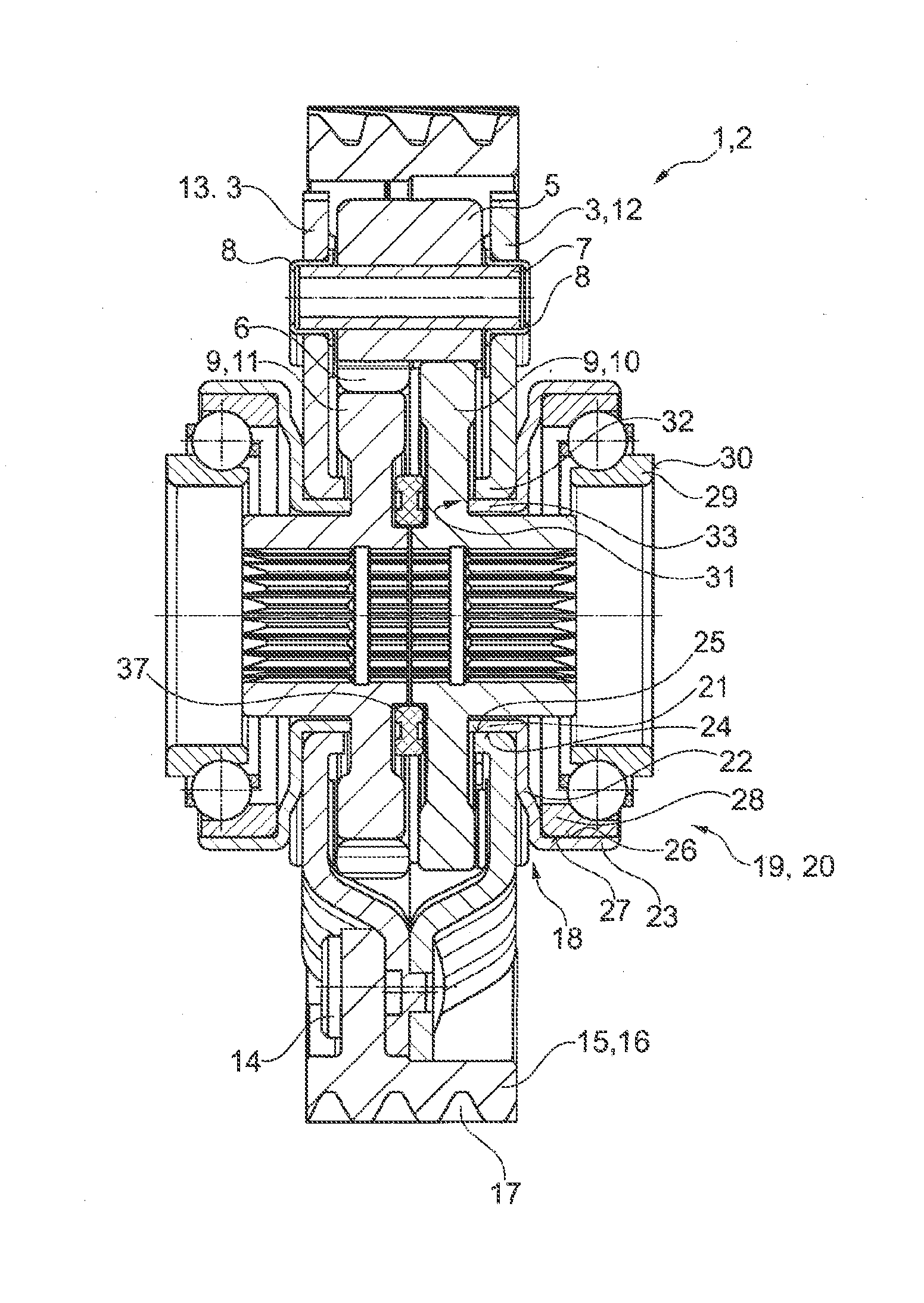
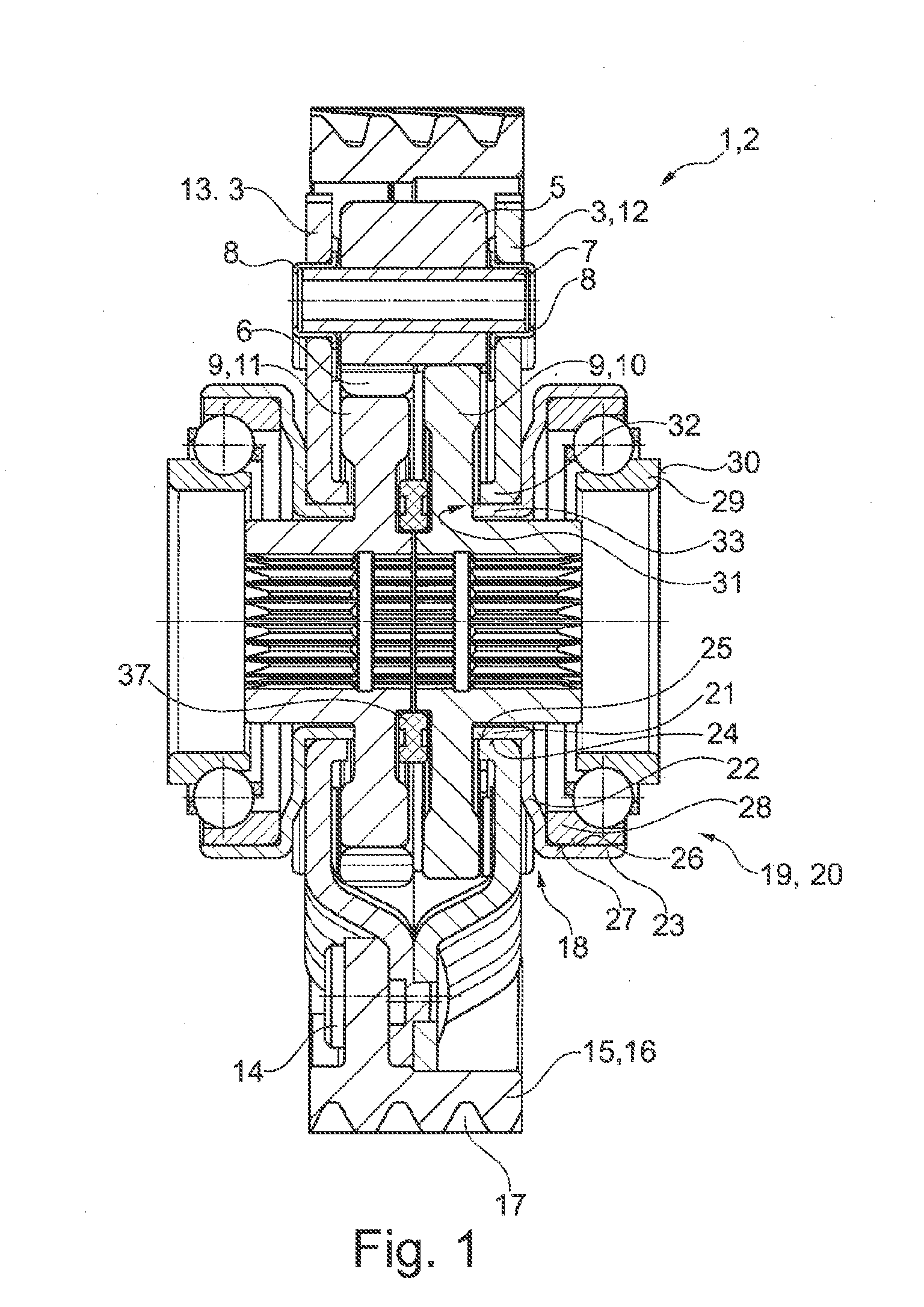
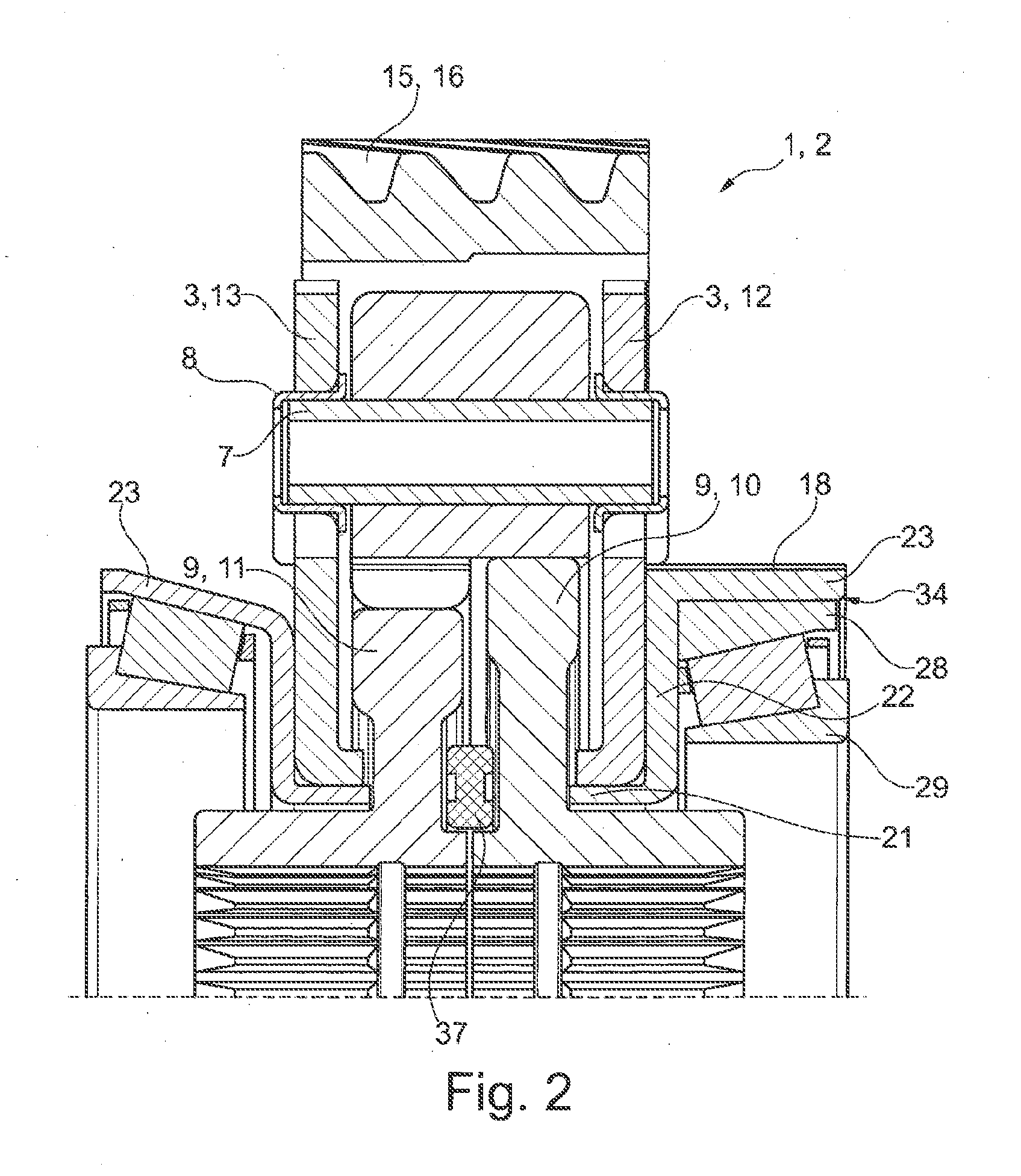

Planetary gearbox, in particular multi-planetary gearbox, for a wind turbine
PatentActiveUS20220372955A1
Innovation
- The design incorporates a planetary carrier spider that positions carrier cheeks at a defined spacing, with a radially outward outer side positioned inwardly from the internal toothing system, allowing for a stable and efficient lubrication system while avoiding contact with the internal toothing system, and features a multiple planetary gearbox configuration with a low static transmission ratio to enhance performance density.


Industry Standards for Space-Constrained Applications
The aerospace and automotive industries have established comprehensive standards frameworks to address the unique challenges posed by space-constrained applications when selecting between planetary gearboxes and direct drive systems. These standards serve as critical guidelines for engineers and manufacturers operating in environments where every cubic centimeter and gram matters significantly.
ISO 14179 series specifically addresses gear units for aerospace applications, establishing stringent requirements for power density, dimensional tolerances, and integration protocols. This standard mandates minimum power-to-volume ratios and defines standardized mounting interfaces that enable interchangeability between different transmission solutions. The standard particularly emphasizes the importance of envelope constraints in aircraft auxiliary power units and satellite mechanisms.
The SAE AS9100 quality management standard extends beyond traditional manufacturing requirements to encompass space optimization principles. It requires documented evidence of space utilization efficiency and mandates risk assessments for both planetary and direct drive configurations in confined installations. This standard has become instrumental in establishing baseline criteria for transmission selection in unmanned aerial vehicles and spacecraft applications.
Military specifications, particularly MIL-STD-1472, provide detailed human factors engineering guidelines that directly impact transmission system selection in cramped cockpit environments and vehicle compartments. These specifications establish maximum allowable dimensions for control mechanisms and maintenance access requirements, often favoring compact planetary solutions over bulkier direct drive alternatives.
The IEC 60034 series for rotating electrical machinery includes specific provisions for integrated motor-transmission assemblies, addressing thermal management and electromagnetic compatibility in space-limited installations. These standards define standardized frame sizes and mounting configurations that facilitate optimal space utilization while maintaining performance requirements.
Emerging standards from organizations like ASTM International are beginning to address additive manufacturing considerations for custom transmission housings, enabling more flexible geometric solutions for extreme space constraints. These developing standards promise to revolutionize how engineers approach the planetary versus direct drive decision in uniquely challenging spatial environments.
ISO 14179 series specifically addresses gear units for aerospace applications, establishing stringent requirements for power density, dimensional tolerances, and integration protocols. This standard mandates minimum power-to-volume ratios and defines standardized mounting interfaces that enable interchangeability between different transmission solutions. The standard particularly emphasizes the importance of envelope constraints in aircraft auxiliary power units and satellite mechanisms.
The SAE AS9100 quality management standard extends beyond traditional manufacturing requirements to encompass space optimization principles. It requires documented evidence of space utilization efficiency and mandates risk assessments for both planetary and direct drive configurations in confined installations. This standard has become instrumental in establishing baseline criteria for transmission selection in unmanned aerial vehicles and spacecraft applications.
Military specifications, particularly MIL-STD-1472, provide detailed human factors engineering guidelines that directly impact transmission system selection in cramped cockpit environments and vehicle compartments. These specifications establish maximum allowable dimensions for control mechanisms and maintenance access requirements, often favoring compact planetary solutions over bulkier direct drive alternatives.
The IEC 60034 series for rotating electrical machinery includes specific provisions for integrated motor-transmission assemblies, addressing thermal management and electromagnetic compatibility in space-limited installations. These standards define standardized frame sizes and mounting configurations that facilitate optimal space utilization while maintaining performance requirements.
Emerging standards from organizations like ASTM International are beginning to address additive manufacturing considerations for custom transmission housings, enabling more flexible geometric solutions for extreme space constraints. These developing standards promise to revolutionize how engineers approach the planetary versus direct drive decision in uniquely challenging spatial environments.
Cost-Performance Trade-offs in Compact Drive Selection
The selection of compact drive systems involves a complex balance between initial investment costs and long-term performance benefits. Planetary gearboxes typically present higher upfront costs due to their intricate multi-stage gear arrangements and precision manufacturing requirements. However, these systems often deliver superior torque density and efficiency ratios, making them cost-effective for applications requiring high power transmission in limited space.
Direct drive systems command premium pricing due to their advanced motor technologies and sophisticated control electronics. While the initial capital expenditure may exceed that of planetary systems, direct drives eliminate ongoing maintenance costs associated with gear wear, lubrication, and periodic replacements. This cost structure becomes particularly advantageous in applications where downtime penalties are substantial.
Performance metrics significantly influence the cost-benefit equation in space-constrained environments. Planetary gearboxes excel in applications requiring high reduction ratios and precise positioning, delivering exceptional torque multiplication within compact footprints. Their modular design allows for customization of gear ratios without proportional increases in system volume, optimizing performance per unit of occupied space.
Direct drive systems offer unmatched dynamic response and positioning accuracy, eliminating backlash and compliance issues inherent in gear-based systems. This performance advantage translates to improved product quality and reduced cycle times in precision applications, offsetting higher initial costs through enhanced productivity.
The total cost of ownership analysis reveals distinct patterns across different operational scenarios. In high-duty cycle applications, direct drives demonstrate superior long-term value through reduced maintenance requirements and extended operational life. Conversely, planetary systems prove more economical in applications with moderate duty cycles where their robust design and proven reliability justify the ongoing maintenance investments.
Space utilization efficiency directly impacts the economic viability of each solution. Planetary gearboxes achieve higher power density ratios, enabling more compact machine designs and reduced facility footprint requirements. This spatial efficiency can translate to significant cost savings in applications where floor space commands premium pricing, such as urban manufacturing facilities or mobile equipment installations.
Direct drive systems command premium pricing due to their advanced motor technologies and sophisticated control electronics. While the initial capital expenditure may exceed that of planetary systems, direct drives eliminate ongoing maintenance costs associated with gear wear, lubrication, and periodic replacements. This cost structure becomes particularly advantageous in applications where downtime penalties are substantial.
Performance metrics significantly influence the cost-benefit equation in space-constrained environments. Planetary gearboxes excel in applications requiring high reduction ratios and precise positioning, delivering exceptional torque multiplication within compact footprints. Their modular design allows for customization of gear ratios without proportional increases in system volume, optimizing performance per unit of occupied space.
Direct drive systems offer unmatched dynamic response and positioning accuracy, eliminating backlash and compliance issues inherent in gear-based systems. This performance advantage translates to improved product quality and reduced cycle times in precision applications, offsetting higher initial costs through enhanced productivity.
The total cost of ownership analysis reveals distinct patterns across different operational scenarios. In high-duty cycle applications, direct drives demonstrate superior long-term value through reduced maintenance requirements and extended operational life. Conversely, planetary systems prove more economical in applications with moderate duty cycles where their robust design and proven reliability justify the ongoing maintenance investments.
Space utilization efficiency directly impacts the economic viability of each solution. Planetary gearboxes achieve higher power density ratios, enabling more compact machine designs and reduced facility footprint requirements. This spatial efficiency can translate to significant cost savings in applications where floor space commands premium pricing, such as urban manufacturing facilities or mobile equipment installations.
Unlock deeper insights with PatSnap Eureka Quick Research — get a full tech report to explore trends and direct your research. Try now!
Generate Your Research Report Instantly with AI Agent
Supercharge your innovation with PatSnap Eureka AI Agent Platform!