Polyvinyl Acetate's Role in Transformative Environmental Solutions
JUL 30, 20258 MIN READ
Generate Your Research Report Instantly with AI Agent
Patsnap Eureka helps you evaluate technical feasibility & market potential.
PVAc Background and Objectives
Polyvinyl acetate (PVAc) has emerged as a significant player in the realm of environmental solutions, marking a transformative shift in various industries. This synthetic polymer, first discovered in the early 20th century, has evolved from a simple adhesive to a versatile material with far-reaching applications in sustainable technologies. The journey of PVAc began with its synthesis by Fritz Klatte in 1912, initially gaining prominence as a key component in adhesives and paints.
Over the decades, PVAc's unique properties, including its biodegradability and non-toxicity, have positioned it at the forefront of eco-friendly material development. The polymer's ability to form films, its water solubility, and its compatibility with various substrates have opened up new avenues for environmental applications. These characteristics have led to a surge in research and development efforts aimed at harnessing PVAc's potential in addressing pressing environmental challenges.
The primary objective in exploring PVAc's role in transformative environmental solutions is to leverage its inherent properties to develop sustainable alternatives to conventional materials. This includes its application in biodegradable packaging, water treatment processes, and soil stabilization techniques. The goal is to minimize environmental impact while maintaining or improving the performance of existing solutions.
Recent technological advancements have expanded the scope of PVAc applications, particularly in the field of environmental remediation. Researchers are exploring its use in creating advanced filtration membranes for water purification, developing eco-friendly coatings for construction materials, and even in carbon capture technologies. These developments align with global efforts to transition towards more sustainable and environmentally responsible practices across industries.
The evolution of PVAc technology is closely tied to the growing emphasis on circular economy principles. As such, a key objective is to optimize PVAc production processes to reduce energy consumption and minimize waste. This includes exploring bio-based precursors for PVAc synthesis and developing more efficient polymerization techniques.
Looking ahead, the trajectory of PVAc in environmental solutions is poised for significant growth. The polymer's versatility and eco-friendly attributes make it a prime candidate for addressing complex environmental challenges. From enhancing the biodegradability of plastics to improving the efficiency of renewable energy technologies, PVAc stands at the cusp of revolutionizing multiple sectors with its transformative potential.
Over the decades, PVAc's unique properties, including its biodegradability and non-toxicity, have positioned it at the forefront of eco-friendly material development. The polymer's ability to form films, its water solubility, and its compatibility with various substrates have opened up new avenues for environmental applications. These characteristics have led to a surge in research and development efforts aimed at harnessing PVAc's potential in addressing pressing environmental challenges.
The primary objective in exploring PVAc's role in transformative environmental solutions is to leverage its inherent properties to develop sustainable alternatives to conventional materials. This includes its application in biodegradable packaging, water treatment processes, and soil stabilization techniques. The goal is to minimize environmental impact while maintaining or improving the performance of existing solutions.
Recent technological advancements have expanded the scope of PVAc applications, particularly in the field of environmental remediation. Researchers are exploring its use in creating advanced filtration membranes for water purification, developing eco-friendly coatings for construction materials, and even in carbon capture technologies. These developments align with global efforts to transition towards more sustainable and environmentally responsible practices across industries.
The evolution of PVAc technology is closely tied to the growing emphasis on circular economy principles. As such, a key objective is to optimize PVAc production processes to reduce energy consumption and minimize waste. This includes exploring bio-based precursors for PVAc synthesis and developing more efficient polymerization techniques.
Looking ahead, the trajectory of PVAc in environmental solutions is poised for significant growth. The polymer's versatility and eco-friendly attributes make it a prime candidate for addressing complex environmental challenges. From enhancing the biodegradability of plastics to improving the efficiency of renewable energy technologies, PVAc stands at the cusp of revolutionizing multiple sectors with its transformative potential.
Market Demand Analysis
The market demand for polyvinyl acetate (PVA) in environmental solutions has been steadily growing, driven by increasing global awareness of environmental issues and the need for sustainable materials. PVA's unique properties, including its biodegradability, water solubility, and non-toxicity, have positioned it as a key player in various eco-friendly applications.
In the packaging industry, there is a significant demand for PVA-based materials as alternatives to traditional plastics. With many countries implementing strict regulations on single-use plastics, manufacturers are turning to PVA for creating biodegradable packaging solutions. This shift is particularly evident in the food and beverage sector, where PVA films and coatings are being used to extend shelf life while reducing environmental impact.
The construction industry has also shown increased interest in PVA-enhanced materials. PVA fibers are being incorporated into cement and concrete mixtures to improve strength and durability, reducing the overall carbon footprint of buildings. This application is gaining traction in regions focusing on green building practices and sustainable infrastructure development.
Water treatment is another sector where PVA is seeing growing demand. Its ability to form hydrogels makes it an excellent candidate for water purification systems, particularly in removing heavy metals and organic pollutants. As water scarcity becomes a global concern, the market for PVA-based water treatment solutions is expected to expand significantly.
In agriculture, PVA is finding applications in controlled-release fertilizers and pesticides. These products help reduce chemical runoff and improve soil health, aligning with the increasing demand for sustainable farming practices. The agricultural sector's shift towards environmentally friendly solutions is driving the adoption of PVA-based products.
The textile industry is also contributing to the market demand for PVA. As consumers become more environmentally conscious, there is a growing preference for eco-friendly fabrics. PVA's use in creating biodegradable fibers and as a sizing agent in textile manufacturing is gaining popularity, especially in regions with strict environmental regulations.
The healthcare sector presents another avenue for PVA market growth. Its biocompatibility makes it suitable for various medical applications, including drug delivery systems and wound dressings. As the healthcare industry seeks more sustainable and patient-friendly materials, PVA-based solutions are likely to see increased adoption.
Overall, the market demand for PVA in environmental solutions is multifaceted and spans several industries. The global push towards sustainability, coupled with PVA's versatile properties, suggests a positive growth trajectory for this material in the coming years. However, challenges such as production costs and competition from other biodegradable materials may influence market dynamics.
In the packaging industry, there is a significant demand for PVA-based materials as alternatives to traditional plastics. With many countries implementing strict regulations on single-use plastics, manufacturers are turning to PVA for creating biodegradable packaging solutions. This shift is particularly evident in the food and beverage sector, where PVA films and coatings are being used to extend shelf life while reducing environmental impact.
The construction industry has also shown increased interest in PVA-enhanced materials. PVA fibers are being incorporated into cement and concrete mixtures to improve strength and durability, reducing the overall carbon footprint of buildings. This application is gaining traction in regions focusing on green building practices and sustainable infrastructure development.
Water treatment is another sector where PVA is seeing growing demand. Its ability to form hydrogels makes it an excellent candidate for water purification systems, particularly in removing heavy metals and organic pollutants. As water scarcity becomes a global concern, the market for PVA-based water treatment solutions is expected to expand significantly.
In agriculture, PVA is finding applications in controlled-release fertilizers and pesticides. These products help reduce chemical runoff and improve soil health, aligning with the increasing demand for sustainable farming practices. The agricultural sector's shift towards environmentally friendly solutions is driving the adoption of PVA-based products.
The textile industry is also contributing to the market demand for PVA. As consumers become more environmentally conscious, there is a growing preference for eco-friendly fabrics. PVA's use in creating biodegradable fibers and as a sizing agent in textile manufacturing is gaining popularity, especially in regions with strict environmental regulations.
The healthcare sector presents another avenue for PVA market growth. Its biocompatibility makes it suitable for various medical applications, including drug delivery systems and wound dressings. As the healthcare industry seeks more sustainable and patient-friendly materials, PVA-based solutions are likely to see increased adoption.
Overall, the market demand for PVA in environmental solutions is multifaceted and spans several industries. The global push towards sustainability, coupled with PVA's versatile properties, suggests a positive growth trajectory for this material in the coming years. However, challenges such as production costs and competition from other biodegradable materials may influence market dynamics.
Technical Challenges
Polyvinyl acetate (PVA) faces several technical challenges in its role as a transformative environmental solution. One of the primary obstacles is its biodegradability. While PVA is often touted as biodegradable, the rate and extent of its decomposition in natural environments are highly variable and dependent on specific conditions. This inconsistency poses difficulties in predicting its long-term environmental impact and developing standardized disposal methods.
Another significant challenge lies in the production process of PVA. Traditional manufacturing methods rely heavily on petroleum-based raw materials and energy-intensive processes, which contradict the goal of environmental sustainability. The industry is grappling with the need to transition towards more eco-friendly production techniques that reduce carbon footprint and minimize the use of non-renewable resources.
The water solubility of PVA, while advantageous in certain applications, presents challenges in others. In aquatic environments, dissolved PVA can potentially alter water quality and affect ecosystems. Developing PVA formulations that maintain functionality while reducing water solubility or improving controlled release properties is a complex technical hurdle.
Recycling PVA-based products poses another set of challenges. The material's properties can change during use and disposal, making it difficult to recycle effectively. Current recycling infrastructure is often ill-equipped to handle PVA, leading to most PVA products ending up in landfills or incineration facilities. Developing efficient recycling technologies specific to PVA is crucial for closing the loop in its lifecycle.
The versatility of PVA in various applications also presents a challenge in terms of standardization. Different industries require PVA with specific properties, making it difficult to create a one-size-fits-all environmentally friendly solution. Balancing performance requirements with environmental considerations across diverse applications demands significant research and development efforts.
Lastly, the cost-effectiveness of environmentally friendly PVA solutions remains a hurdle. Developing and implementing new technologies and processes often come with higher costs, which can be a barrier to widespread adoption. Bridging the gap between environmental benefits and economic viability is a critical challenge that requires innovative approaches and potentially supportive policy frameworks.
Another significant challenge lies in the production process of PVA. Traditional manufacturing methods rely heavily on petroleum-based raw materials and energy-intensive processes, which contradict the goal of environmental sustainability. The industry is grappling with the need to transition towards more eco-friendly production techniques that reduce carbon footprint and minimize the use of non-renewable resources.
The water solubility of PVA, while advantageous in certain applications, presents challenges in others. In aquatic environments, dissolved PVA can potentially alter water quality and affect ecosystems. Developing PVA formulations that maintain functionality while reducing water solubility or improving controlled release properties is a complex technical hurdle.
Recycling PVA-based products poses another set of challenges. The material's properties can change during use and disposal, making it difficult to recycle effectively. Current recycling infrastructure is often ill-equipped to handle PVA, leading to most PVA products ending up in landfills or incineration facilities. Developing efficient recycling technologies specific to PVA is crucial for closing the loop in its lifecycle.
The versatility of PVA in various applications also presents a challenge in terms of standardization. Different industries require PVA with specific properties, making it difficult to create a one-size-fits-all environmentally friendly solution. Balancing performance requirements with environmental considerations across diverse applications demands significant research and development efforts.
Lastly, the cost-effectiveness of environmentally friendly PVA solutions remains a hurdle. Developing and implementing new technologies and processes often come with higher costs, which can be a barrier to widespread adoption. Bridging the gap between environmental benefits and economic viability is a critical challenge that requires innovative approaches and potentially supportive policy frameworks.
Current PVAc Solutions
01 Synthesis and polymerization of polyvinyl acetate
Various methods and processes for synthesizing and polymerizing polyvinyl acetate, including different catalysts, reaction conditions, and techniques to control molecular weight and properties of the resulting polymer.- Synthesis and polymerization of polyvinyl acetate: Various methods and processes for synthesizing and polymerizing polyvinyl acetate, including different catalysts, reaction conditions, and techniques to control molecular weight and properties of the resulting polymer.
- Polyvinyl acetate compositions and applications: Formulations and applications of polyvinyl acetate in various industries, such as adhesives, coatings, films, and construction materials. These compositions often include additives or modifications to enhance specific properties for targeted uses.
- Copolymers and blends with polyvinyl acetate: Development of copolymers and polymer blends incorporating polyvinyl acetate to achieve desired characteristics, such as improved adhesion, flexibility, or durability. These materials often combine the properties of multiple polymers for enhanced performance.
- Emulsion polymerization of vinyl acetate: Techniques and processes for emulsion polymerization of vinyl acetate, including the use of specific emulsifiers, stabilizers, and reaction conditions to produce polyvinyl acetate with controlled particle size and distribution.
- Modifications and derivatives of polyvinyl acetate: Methods for modifying polyvinyl acetate or creating derivatives to enhance its properties or create new materials. This includes processes such as hydrolysis, grafting, or chemical modifications to produce materials like polyvinyl alcohol or specialty polymers.
02 Polyvinyl acetate copolymers and blends
Development of copolymers and blends incorporating polyvinyl acetate to enhance specific properties such as adhesion, flexibility, or durability for various applications in coatings, adhesives, and materials science.Expand Specific Solutions03 Emulsion and dispersion techniques
Methods for creating stable emulsions and dispersions of polyvinyl acetate in aqueous or non-aqueous media, including surfactant selection, particle size control, and stabilization techniques for improved product performance.Expand Specific Solutions04 Modifications and functionalization of polyvinyl acetate
Techniques for modifying polyvinyl acetate through chemical reactions, grafting, or incorporation of functional groups to tailor its properties for specific applications such as improved adhesion or compatibility with other materials.Expand Specific Solutions05 Applications of polyvinyl acetate in various industries
Utilization of polyvinyl acetate in diverse industries such as adhesives, coatings, textiles, and construction materials, highlighting specific formulations and processing methods to achieve desired performance characteristics.Expand Specific Solutions
Key Industry Players
The polyvinyl acetate market is in a mature growth stage, with a global market size estimated to reach $11.4 billion by 2027. The technology has reached a high level of maturity, with established applications across various industries. Key players like Wacker Chemie AG, Kuraray Co., Ltd., and Celanese Corporation have developed advanced formulations and production processes. However, there is ongoing innovation focused on improving sustainability and performance characteristics. Emerging applications in environmental solutions are driving new research and development efforts among both established companies and newer entrants, indicating potential for further market expansion and technological advancements in this mature but evolving sector.
Mitsui Chemicals, Inc.
Technical Solution: Mitsui Chemicals has developed a range of PVAc-based products aimed at environmental solutions. Their COATOLENE™ series includes water-soluble and biodegradable PVAc resins designed for use in eco-friendly packaging and agricultural films[3]. These materials offer improved barrier properties and controlled degradation rates, helping to reduce plastic waste. Mitsui has also focused on PVAc copolymers that enhance the performance of water-based paints and coatings, reducing the need for harmful solvents[4]. Their research extends to PVAc-based adhesives for recyclable packaging, contributing to circular economy initiatives.
Strengths: Strong focus on biodegradable and water-soluble PVAc applications, diverse product portfolio. Weaknesses: May face competition in specialized markets, potential scalability challenges for some novel formulations.
Kuraray Co., Ltd.
Technical Solution: Kuraray has pioneered the development of PVOH (polyvinyl alcohol) derived from PVAc, which plays a crucial role in their environmental solutions. Their MOWIFLEX™ product line includes water-soluble PVOH films and resins that are biodegradable and compostable, ideal for sustainable packaging applications[5]. Kuraray has also developed EXCEVAL™, a modified PVOH with enhanced barrier properties, used in food packaging to extend shelf life and reduce food waste[6]. In water treatment, their PVAc-based flocculants aid in the removal of contaminants, improving water quality and reducing chemical usage in treatment processes.
Strengths: Leadership in PVOH technology, strong presence in packaging and water treatment sectors. Weaknesses: Reliance on PVAc as a precursor may be affected by raw material price fluctuations.
Core PVAc Innovations
Polyvinyl acetate production plant
PatentUndeterminedIES20180484A2
Innovation
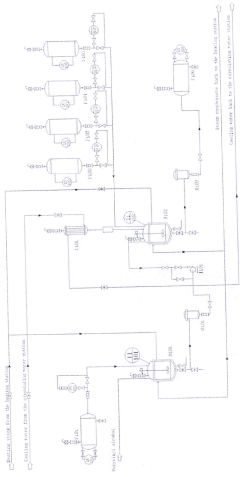
- A polyvinyl acetate production plant design incorporating specific tanks, a stirring vessel, filter, condenser, feedstock pump, polymerizer, and emulsion tank, with controlled temperature and chemical additions to optimize polymerization reaction conditions, including the use of deionized water, dibutyl phthalate, vinyl acetate, sodium bicarbonate, and ammonium persulfate, to streamline the production process and enhance reaction efficiency.
Environmental Impact Assessment
Polyvinyl acetate (PVA) has emerged as a significant player in environmental solutions, necessitating a comprehensive assessment of its environmental impact. The production and use of PVA have both positive and negative implications for ecosystems and human health. On the positive side, PVA-based adhesives and coatings are often water-based, reducing the emission of volatile organic compounds (VOCs) compared to solvent-based alternatives. This characteristic contributes to improved air quality and reduced respiratory risks for workers and consumers.
However, the manufacturing process of PVA involves the use of petrochemical feedstocks, which raises concerns about resource depletion and carbon footprint. The energy-intensive production methods contribute to greenhouse gas emissions, although advancements in green chemistry are gradually mitigating these effects. Additionally, the disposal of PVA-containing products presents challenges, as the polymer is not readily biodegradable in natural environments.
In aquatic ecosystems, PVA has shown mixed effects. While it is generally considered non-toxic to aquatic life, the accumulation of PVA in water bodies can alter water quality and potentially affect the habitat of various species. Research indicates that PVA can form complexes with heavy metals, which may have implications for bioaccumulation in the food chain.
The use of PVA in soil applications, such as in agricultural films or soil stabilizers, has demonstrated both benefits and risks. It can improve soil structure and water retention, potentially reducing erosion and water consumption. However, long-term accumulation of PVA in soil may affect microbial communities and nutrient cycling processes.
From a lifecycle perspective, PVA products often have a lower environmental impact compared to traditional petroleum-based plastics. The material's ability to be recycled and its potential for biodegradation under specific conditions contribute to its appeal in circular economy models. However, the current recycling infrastructure for PVA is limited, and improper disposal can lead to microplastic pollution.
Efforts to enhance the environmental profile of PVA are ongoing. Research into bio-based precursors for PVA synthesis shows promise in reducing its reliance on fossil fuels. Additionally, the development of more efficient degradation methods, including enzymatic approaches, could address end-of-life concerns. As regulations around plastic use tighten globally, PVA's role in environmental solutions will likely expand, provided that its lifecycle impacts are carefully managed and mitigated through continued innovation and responsible practices.
However, the manufacturing process of PVA involves the use of petrochemical feedstocks, which raises concerns about resource depletion and carbon footprint. The energy-intensive production methods contribute to greenhouse gas emissions, although advancements in green chemistry are gradually mitigating these effects. Additionally, the disposal of PVA-containing products presents challenges, as the polymer is not readily biodegradable in natural environments.
In aquatic ecosystems, PVA has shown mixed effects. While it is generally considered non-toxic to aquatic life, the accumulation of PVA in water bodies can alter water quality and potentially affect the habitat of various species. Research indicates that PVA can form complexes with heavy metals, which may have implications for bioaccumulation in the food chain.
The use of PVA in soil applications, such as in agricultural films or soil stabilizers, has demonstrated both benefits and risks. It can improve soil structure and water retention, potentially reducing erosion and water consumption. However, long-term accumulation of PVA in soil may affect microbial communities and nutrient cycling processes.
From a lifecycle perspective, PVA products often have a lower environmental impact compared to traditional petroleum-based plastics. The material's ability to be recycled and its potential for biodegradation under specific conditions contribute to its appeal in circular economy models. However, the current recycling infrastructure for PVA is limited, and improper disposal can lead to microplastic pollution.
Efforts to enhance the environmental profile of PVA are ongoing. Research into bio-based precursors for PVA synthesis shows promise in reducing its reliance on fossil fuels. Additionally, the development of more efficient degradation methods, including enzymatic approaches, could address end-of-life concerns. As regulations around plastic use tighten globally, PVA's role in environmental solutions will likely expand, provided that its lifecycle impacts are carefully managed and mitigated through continued innovation and responsible practices.
Regulatory Framework
The regulatory framework surrounding polyvinyl acetate (PVA) and its environmental applications is complex and evolving. As governments worldwide increasingly prioritize sustainability and environmental protection, the regulations governing PVA's use in transformative environmental solutions have become more stringent and comprehensive.
At the international level, several treaties and agreements influence the regulatory landscape for PVA. The Paris Agreement, for instance, indirectly impacts PVA applications by setting global targets for reducing greenhouse gas emissions. This has led to increased interest in PVA-based materials for carbon capture and sequestration technologies.
In the European Union, the REACH (Registration, Evaluation, Authorization, and Restriction of Chemicals) regulation plays a crucial role in governing PVA usage. REACH requires manufacturers and importers to register chemicals, including PVA, and provide safety data. This regulation has spurred innovation in developing more environmentally friendly PVA formulations and applications.
The United States Environmental Protection Agency (EPA) regulates PVA under the Toxic Substances Control Act (TSCA). The EPA has established guidelines for PVA's use in various environmental applications, including water treatment and soil remediation. These regulations ensure that PVA-based solutions meet strict safety and efficacy standards.
In Asia, countries like China and Japan have implemented their own regulatory frameworks for PVA. China's Ministry of Ecology and Environment has set standards for PVA use in environmental remediation projects, while Japan's Chemical Substances Control Law governs the manufacture and import of PVA-based products.
Regulatory bodies are increasingly focusing on the lifecycle assessment of PVA products. This approach considers the environmental impact of PVA from production to disposal, encouraging manufacturers to develop more sustainable production methods and end-of-life solutions for PVA-based materials.
The regulatory landscape also addresses the potential risks associated with PVA in environmental applications. For instance, regulations often require extensive testing to ensure that PVA-based solutions do not introduce harmful substances into ecosystems or interfere with natural processes.
As the field of environmental solutions continues to evolve, regulatory frameworks are adapting to keep pace. Many jurisdictions are implementing more flexible regulations that encourage innovation while maintaining environmental safeguards. This approach allows for the rapid development of new PVA-based technologies while ensuring their safety and efficacy.
At the international level, several treaties and agreements influence the regulatory landscape for PVA. The Paris Agreement, for instance, indirectly impacts PVA applications by setting global targets for reducing greenhouse gas emissions. This has led to increased interest in PVA-based materials for carbon capture and sequestration technologies.
In the European Union, the REACH (Registration, Evaluation, Authorization, and Restriction of Chemicals) regulation plays a crucial role in governing PVA usage. REACH requires manufacturers and importers to register chemicals, including PVA, and provide safety data. This regulation has spurred innovation in developing more environmentally friendly PVA formulations and applications.
The United States Environmental Protection Agency (EPA) regulates PVA under the Toxic Substances Control Act (TSCA). The EPA has established guidelines for PVA's use in various environmental applications, including water treatment and soil remediation. These regulations ensure that PVA-based solutions meet strict safety and efficacy standards.
In Asia, countries like China and Japan have implemented their own regulatory frameworks for PVA. China's Ministry of Ecology and Environment has set standards for PVA use in environmental remediation projects, while Japan's Chemical Substances Control Law governs the manufacture and import of PVA-based products.
Regulatory bodies are increasingly focusing on the lifecycle assessment of PVA products. This approach considers the environmental impact of PVA from production to disposal, encouraging manufacturers to develop more sustainable production methods and end-of-life solutions for PVA-based materials.
The regulatory landscape also addresses the potential risks associated with PVA in environmental applications. For instance, regulations often require extensive testing to ensure that PVA-based solutions do not introduce harmful substances into ecosystems or interfere with natural processes.
As the field of environmental solutions continues to evolve, regulatory frameworks are adapting to keep pace. Many jurisdictions are implementing more flexible regulations that encourage innovation while maintaining environmental safeguards. This approach allows for the rapid development of new PVA-based technologies while ensuring their safety and efficacy.
Unlock deeper insights with Patsnap Eureka Quick Research — get a full tech report to explore trends and direct your research. Try now!
Generate Your Research Report Instantly with AI Agent
Supercharge your innovation with Patsnap Eureka AI Agent Platform!