

Quantify Crankcase Gasket Performance Under Stress
MAR 13, 20269 MIN READ
Generate Your Research Report Instantly with AI Agent
PatSnap Eureka helps you evaluate technical feasibility & market potential.
Crankcase Gasket Technology Background and Performance Goals
Crankcase gaskets represent a critical sealing technology in internal combustion engines, serving as the primary barrier between the engine's crankcase and external environment. These components have evolved significantly since the early automotive era, transitioning from simple cork and paper materials to sophisticated multi-layer composite designs incorporating advanced elastomers, metal cores, and specialized coatings.
The fundamental challenge in crankcase gasket design lies in maintaining effective sealing performance under extreme operational conditions. Modern engines subject these gaskets to temperatures ranging from -40°C to 150°C, pressures up to 2 bar, and complex multi-directional stress patterns resulting from thermal expansion, vibration, and mechanical loading. The quantification of gasket performance under these stress conditions has become increasingly critical as engine designs push toward higher power densities and extended service intervals.
Historical development of crankcase gasket technology has been driven by the automotive industry's pursuit of improved reliability, reduced emissions, and enhanced fuel efficiency. Early gasket failures often resulted in oil leakage, leading to environmental concerns and maintenance issues. This drove the development of more robust sealing solutions and the establishment of standardized testing protocols to evaluate gasket performance under simulated operational stresses.
The primary performance goals for modern crankcase gaskets encompass multiple dimensions of functionality. Sealing integrity remains paramount, requiring gaskets to maintain leak-proof performance throughout their service life while accommodating differential thermal expansion between aluminum and cast iron components. Durability targets typically specify operational lifespans exceeding 150,000 miles under normal driving conditions, necessitating resistance to chemical degradation from engine oils, coolants, and combustion byproducts.
Stress quantification objectives focus on establishing measurable performance metrics that correlate with real-world operational reliability. Key parameters include compression set resistance, tensile strength retention, and dimensional stability under cyclic loading conditions. Advanced testing methodologies now incorporate finite element analysis to predict stress distribution patterns and identify potential failure modes before physical prototyping.
Contemporary performance goals also emphasize manufacturing consistency and cost optimization. Gasket designs must achieve repeatable sealing performance across production volumes while maintaining compatibility with automated assembly processes. Environmental considerations have introduced additional requirements for material recyclability and reduced volatile organic compound emissions during manufacturing and service life.
The fundamental challenge in crankcase gasket design lies in maintaining effective sealing performance under extreme operational conditions. Modern engines subject these gaskets to temperatures ranging from -40°C to 150°C, pressures up to 2 bar, and complex multi-directional stress patterns resulting from thermal expansion, vibration, and mechanical loading. The quantification of gasket performance under these stress conditions has become increasingly critical as engine designs push toward higher power densities and extended service intervals.
Historical development of crankcase gasket technology has been driven by the automotive industry's pursuit of improved reliability, reduced emissions, and enhanced fuel efficiency. Early gasket failures often resulted in oil leakage, leading to environmental concerns and maintenance issues. This drove the development of more robust sealing solutions and the establishment of standardized testing protocols to evaluate gasket performance under simulated operational stresses.
The primary performance goals for modern crankcase gaskets encompass multiple dimensions of functionality. Sealing integrity remains paramount, requiring gaskets to maintain leak-proof performance throughout their service life while accommodating differential thermal expansion between aluminum and cast iron components. Durability targets typically specify operational lifespans exceeding 150,000 miles under normal driving conditions, necessitating resistance to chemical degradation from engine oils, coolants, and combustion byproducts.
Stress quantification objectives focus on establishing measurable performance metrics that correlate with real-world operational reliability. Key parameters include compression set resistance, tensile strength retention, and dimensional stability under cyclic loading conditions. Advanced testing methodologies now incorporate finite element analysis to predict stress distribution patterns and identify potential failure modes before physical prototyping.
Contemporary performance goals also emphasize manufacturing consistency and cost optimization. Gasket designs must achieve repeatable sealing performance across production volumes while maintaining compatibility with automated assembly processes. Environmental considerations have introduced additional requirements for material recyclability and reduced volatile organic compound emissions during manufacturing and service life.
Market Demand for High-Performance Crankcase Sealing Solutions
The automotive industry's relentless pursuit of enhanced engine efficiency and durability has intensified market demand for advanced crankcase sealing solutions. Modern engines operate under increasingly severe conditions, with higher temperatures, pressures, and vibration levels that challenge traditional gasket materials and designs. This operational environment necessitates sealing solutions capable of maintaining integrity throughout extended service intervals while withstanding thermal cycling, chemical exposure, and mechanical stress.
Market drivers for high-performance crankcase gaskets stem from multiple industry trends. Stricter emission regulations worldwide compel manufacturers to develop engines with tighter tolerances and improved sealing capabilities to prevent oil leaks and maintain optimal combustion conditions. The growing adoption of turbocharged and direct-injection engines creates additional pressure differentials and thermal stresses that demand superior gasket performance. Fleet operators and consumers increasingly prioritize reduced maintenance costs and extended service intervals, creating demand for durable sealing solutions that minimize unplanned downtime.
The commercial vehicle segment represents a particularly robust market for advanced crankcase sealing technologies. Heavy-duty applications subject gaskets to extreme operational stresses, including prolonged high-temperature exposure, significant pressure variations, and continuous vibration. Fleet operators in this segment demonstrate willingness to invest in premium sealing solutions that deliver measurable improvements in reliability and total cost of ownership.
Emerging powertrain technologies further expand market opportunities for innovative sealing solutions. Hybrid powertrains introduce unique challenges with frequent engine start-stop cycles, creating thermal shock conditions that stress conventional gasket materials. Electric vehicle range extenders and hydrogen fuel cell applications require specialized sealing solutions adapted to their specific operational parameters and chemical environments.
The aftermarket segment continues to drive demand for high-performance replacement gaskets as vehicle populations age and maintenance requirements evolve. Professional service providers increasingly seek gasket solutions that offer installation advantages, such as improved handling characteristics and reduced sensitivity to surface preparation variations, while delivering enhanced long-term performance compared to original equipment specifications.
Regional market dynamics reflect varying regulatory environments and fleet composition patterns. Developed markets emphasize performance and durability characteristics, while emerging markets balance cost considerations with reliability requirements. This diversity creates opportunities for tiered product offerings that address specific regional needs while maintaining core performance advantages in critical sealing applications.
Market drivers for high-performance crankcase gaskets stem from multiple industry trends. Stricter emission regulations worldwide compel manufacturers to develop engines with tighter tolerances and improved sealing capabilities to prevent oil leaks and maintain optimal combustion conditions. The growing adoption of turbocharged and direct-injection engines creates additional pressure differentials and thermal stresses that demand superior gasket performance. Fleet operators and consumers increasingly prioritize reduced maintenance costs and extended service intervals, creating demand for durable sealing solutions that minimize unplanned downtime.
The commercial vehicle segment represents a particularly robust market for advanced crankcase sealing technologies. Heavy-duty applications subject gaskets to extreme operational stresses, including prolonged high-temperature exposure, significant pressure variations, and continuous vibration. Fleet operators in this segment demonstrate willingness to invest in premium sealing solutions that deliver measurable improvements in reliability and total cost of ownership.
Emerging powertrain technologies further expand market opportunities for innovative sealing solutions. Hybrid powertrains introduce unique challenges with frequent engine start-stop cycles, creating thermal shock conditions that stress conventional gasket materials. Electric vehicle range extenders and hydrogen fuel cell applications require specialized sealing solutions adapted to their specific operational parameters and chemical environments.
The aftermarket segment continues to drive demand for high-performance replacement gaskets as vehicle populations age and maintenance requirements evolve. Professional service providers increasingly seek gasket solutions that offer installation advantages, such as improved handling characteristics and reduced sensitivity to surface preparation variations, while delivering enhanced long-term performance compared to original equipment specifications.
Regional market dynamics reflect varying regulatory environments and fleet composition patterns. Developed markets emphasize performance and durability characteristics, while emerging markets balance cost considerations with reliability requirements. This diversity creates opportunities for tiered product offerings that address specific regional needs while maintaining core performance advantages in critical sealing applications.
Current State and Challenges in Gasket Stress Testing
The current landscape of crankcase gasket stress testing reveals significant technological gaps and methodological limitations that hinder accurate performance quantification. Traditional testing approaches primarily rely on static compression tests and basic leak detection methods, which fail to capture the complex multi-axial stress conditions experienced during actual engine operation. These conventional methods typically measure gasket performance under idealized laboratory conditions that do not adequately simulate real-world thermal cycling, vibration, and dynamic pressure variations.
Existing testing standards, including ASTM D5385 and SAE J1497, provide frameworks for gasket evaluation but lack comprehensive protocols for quantifying performance degradation under combined stress conditions. Current methodologies often focus on single-parameter assessments such as compression set or leak rate, without establishing correlations between multiple stress factors and long-term sealing effectiveness. This fragmented approach results in incomplete understanding of gasket behavior throughout its operational lifecycle.
The automotive industry faces mounting pressure to develop more durable and reliable sealing solutions as engine designs become increasingly complex and operating conditions more severe. Modern engines operate at higher temperatures, pressures, and rotational speeds, creating unprecedented stress environments for crankcase gaskets. However, existing testing capabilities have not evolved proportionally to match these demanding requirements, creating a critical knowledge gap in performance prediction and validation.
Measurement precision represents another significant challenge in current gasket testing methodologies. Traditional force measurement systems often lack the sensitivity required to detect subtle changes in gasket behavior under varying stress conditions. Additionally, the absence of standardized metrics for quantifying gasket performance under multi-dimensional stress creates inconsistencies in evaluation criteria across different manufacturers and testing facilities.
Temperature-related testing limitations further compound these challenges. While thermal cycling tests exist, they typically employ simplified heating and cooling profiles that do not accurately represent the complex thermal gradients and rapid temperature fluctuations encountered in actual engine environments. This disconnect between laboratory conditions and real-world applications undermines the predictive value of current testing protocols.
The integration of advanced sensor technologies and data acquisition systems into gasket testing remains limited, despite their potential to provide comprehensive performance insights. Current testing setups often rely on discrete measurement points rather than continuous monitoring, resulting in incomplete data sets that may miss critical performance transitions or failure precursors.
Existing testing standards, including ASTM D5385 and SAE J1497, provide frameworks for gasket evaluation but lack comprehensive protocols for quantifying performance degradation under combined stress conditions. Current methodologies often focus on single-parameter assessments such as compression set or leak rate, without establishing correlations between multiple stress factors and long-term sealing effectiveness. This fragmented approach results in incomplete understanding of gasket behavior throughout its operational lifecycle.
The automotive industry faces mounting pressure to develop more durable and reliable sealing solutions as engine designs become increasingly complex and operating conditions more severe. Modern engines operate at higher temperatures, pressures, and rotational speeds, creating unprecedented stress environments for crankcase gaskets. However, existing testing capabilities have not evolved proportionally to match these demanding requirements, creating a critical knowledge gap in performance prediction and validation.
Measurement precision represents another significant challenge in current gasket testing methodologies. Traditional force measurement systems often lack the sensitivity required to detect subtle changes in gasket behavior under varying stress conditions. Additionally, the absence of standardized metrics for quantifying gasket performance under multi-dimensional stress creates inconsistencies in evaluation criteria across different manufacturers and testing facilities.
Temperature-related testing limitations further compound these challenges. While thermal cycling tests exist, they typically employ simplified heating and cooling profiles that do not accurately represent the complex thermal gradients and rapid temperature fluctuations encountered in actual engine environments. This disconnect between laboratory conditions and real-world applications undermines the predictive value of current testing protocols.
The integration of advanced sensor technologies and data acquisition systems into gasket testing remains limited, despite their potential to provide comprehensive performance insights. Current testing setups often rely on discrete measurement points rather than continuous monitoring, resulting in incomplete data sets that may miss critical performance transitions or failure precursors.
Existing Solutions for Gasket Performance Quantification
01 Gasket material composition and structure
Crankcase gasket performance can be enhanced through the use of specific material compositions and structural designs. Multi-layer gaskets incorporating elastomeric materials, fiber-reinforced composites, or metal cores provide improved sealing capabilities. The selection of materials with appropriate hardness, compressibility, and chemical resistance ensures optimal performance under varying temperature and pressure conditions. Advanced material formulations can include synthetic rubbers, cork composites, or specialized polymers designed to withstand engine oil and thermal cycling.- Gasket material composition and structure: Crankcase gasket performance can be enhanced through the use of specific material compositions and structural designs. Multi-layer gaskets incorporating elastomeric materials, fiber-reinforced composites, or metal cores provide improved sealing capabilities. The selection of materials with appropriate hardness, compression characteristics, and chemical resistance ensures optimal performance under varying temperature and pressure conditions. Advanced material formulations may include synthetic rubbers, cork composites, or specialized polymers designed to withstand engine oil and thermal cycling.
- Sealing bead and surface geometry design: The geometric configuration of sealing surfaces and beads significantly impacts gasket performance. Optimized bead designs, including raised sealing ridges, embossed patterns, or strategically positioned compression limiters, ensure uniform pressure distribution across the sealing interface. Surface treatments and micro-texturing can enhance contact characteristics and prevent fluid leakage. The design must account for flange flatness variations and thermal expansion differences between mating components.
- Oil and chemical resistance properties: Crankcase gaskets must maintain sealing integrity when exposed to engine oils, coolants, and various automotive fluids. Material selection focuses on compounds that resist swelling, degradation, and hardening when in contact with petroleum-based products and additives. Enhanced chemical resistance is achieved through polymer modifications, protective coatings, or barrier layers that prevent fluid permeation while maintaining flexibility and compression set resistance over extended service life.
- Thermal stability and high-temperature performance: Gasket materials must withstand the elevated temperatures encountered in crankcase applications without losing sealing effectiveness. High-temperature resistant formulations incorporate heat-stable polymers, reinforcing fibers, or metal components that maintain mechanical properties under thermal stress. The design addresses thermal expansion mismatches between gasket and housing materials, preventing leakage paths that develop during heat cycling. Thermal aging resistance ensures long-term durability in demanding engine environments.
- Installation features and compression control: Gasket designs incorporate features that facilitate proper installation and ensure consistent compression across the sealing surface. Compression limiters, alignment tabs, or integrated spacers prevent over-compression that could damage the gasket or distort housing components. Controlled compression characteristics ensure adequate sealing force while accommodating surface irregularities. Design elements may include visual installation indicators, pre-applied adhesives, or positioning aids that reduce assembly errors and improve reliability.
02 Sealing bead and surface geometry design
The geometric configuration of sealing surfaces and beads significantly impacts gasket performance. Optimized bead designs with specific height, width, and compression characteristics ensure uniform pressure distribution across the sealing interface. Surface treatments and micro-texturing can enhance sealing effectiveness by controlling oil flow and preventing leakage paths. The integration of multiple sealing beads or zones provides redundant sealing capabilities for critical applications.Expand Specific Solutions03 Compression and recovery properties
Gasket performance relies heavily on controlled compression and recovery characteristics. Materials must maintain adequate sealing force throughout the service life while accommodating thermal expansion and mechanical vibrations. The compression set resistance ensures long-term sealing integrity even after repeated thermal cycles. Proper torque specifications and compression limits prevent over-compression while ensuring sufficient contact pressure for effective sealing.Expand Specific Solutions04 Oil and chemical resistance
Crankcase gaskets must withstand prolonged exposure to engine oils, fuels, and other automotive fluids without degradation. Material selection focuses on chemical compatibility to prevent swelling, hardening, or deterioration. Enhanced formulations incorporate additives or coatings that provide superior resistance to aggressive chemicals and high-temperature oxidation. The gasket material must maintain its mechanical properties and dimensional stability throughout the expected service interval.Expand Specific Solutions05 Installation and assembly features
Design features that facilitate proper installation and alignment improve overall gasket performance. Integrated positioning tabs, alignment holes, or molded-in locators ensure correct placement during assembly. Pre-applied adhesives or retention features prevent gasket movement during installation. Packaging and handling considerations protect gasket integrity prior to use. Clear installation instructions and torque specifications help ensure proper compression and sealing performance.Expand Specific Solutions
Key Players in Automotive Gasket and Sealing Industry
The crankcase gasket performance quantification field represents a mature automotive technology sector experiencing steady evolution driven by stringent emission regulations and engine efficiency demands. The market demonstrates significant scale with established automotive giants like Toyota, BMW, Volkswagen, Ford, and Hyundai leading development alongside specialized suppliers such as MAHLE, Bosch, and Schaeffler Technologies. Technology maturity varies across applications, with traditional sealing solutions well-established while advanced materials and smart monitoring systems remain emerging. Companies like Alfdex AB showcase innovation in crankcase emission control, while research institutions including Harbin Institute of Technology contribute to fundamental understanding. The competitive landscape spans from tier-one suppliers developing next-generation gasket materials to OEMs integrating performance monitoring systems, indicating a transitioning industry balancing proven reliability with advanced diagnostic capabilities for enhanced durability assessment.
MAHLE International GmbH
Technical Solution: MAHLE develops advanced crankcase gasket solutions using multi-layer steel (MLS) technology with specialized coatings for enhanced sealing performance under high stress conditions. Their gaskets incorporate elastomer beads and micro-sealing layers that maintain consistent sealing pressure across varying thermal and mechanical loads. The company employs finite element analysis (FEA) and advanced material testing protocols to quantify gasket performance parameters including compression set resistance, leak rates under cyclic loading, and durability metrics. MAHLE's testing methodology includes accelerated aging tests at elevated temperatures and pressures to simulate long-term stress conditions, providing quantitative data on gasket degradation patterns and failure modes.
Strengths: Extensive automotive OEM partnerships and proven MLS technology with superior high-temperature performance. Weaknesses: Higher manufacturing costs compared to conventional gasket materials and complex installation requirements.
Ford Global Technologies LLC
Technical Solution: Ford employs comprehensive durability testing protocols specifically designed to quantify crankcase gasket performance under various stress conditions encountered in automotive applications. Their methodology includes multi-axis fatigue testing, thermal shock analysis, and chemical compatibility assessments using standardized test procedures. Ford's approach incorporates advanced measurement techniques such as laser interferometry and digital image correlation to precisely quantify gasket deformation and stress distribution patterns. The company utilizes accelerated life testing with statistical analysis to predict long-term performance and establish reliability metrics. Their testing facilities feature specialized equipment for simulating real-world operating conditions including vibration, temperature cycling, and pressure variations to generate quantitative performance data for gasket optimization and validation.
Strengths: Extensive real-world testing experience and robust statistical analysis capabilities for performance prediction. Weaknesses: Testing protocols primarily focused on automotive applications with limited adaptability to other industries.
Core Technologies in Stress-Based Gasket Performance Analysis
Gasket for reducing stress concentration in fuel cell stack
PatentActiveUS8252480B2
Innovation
- A T-shaped or cross-shaped gasket joint with angled branches and strategically placed holes is designed to disperse stress concentration, with angles ranging from 5° to 65° and hole sizes optimized to prevent damage and position shifts, allowing for efficient airtightness maintenance without increasing non-reactive area.


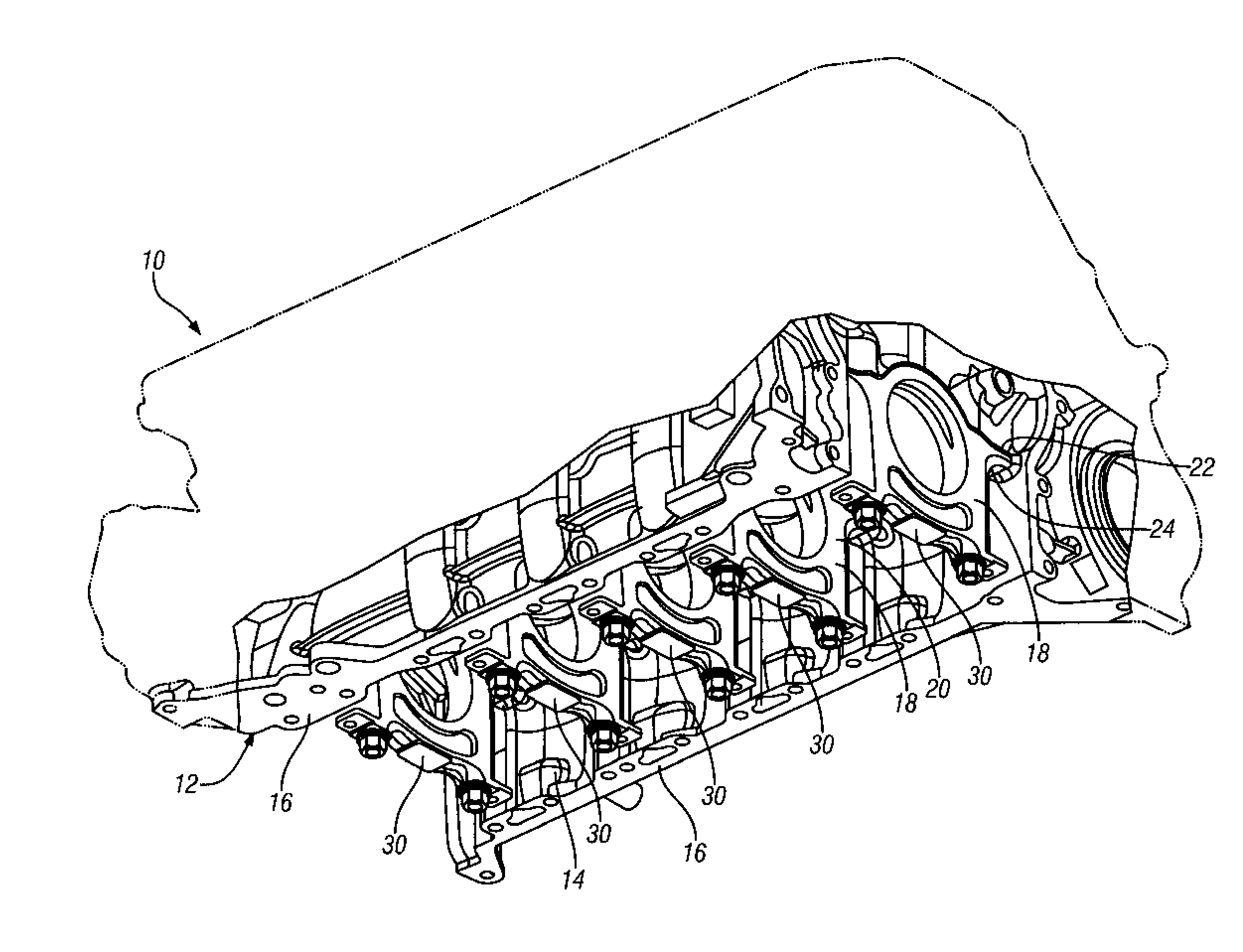
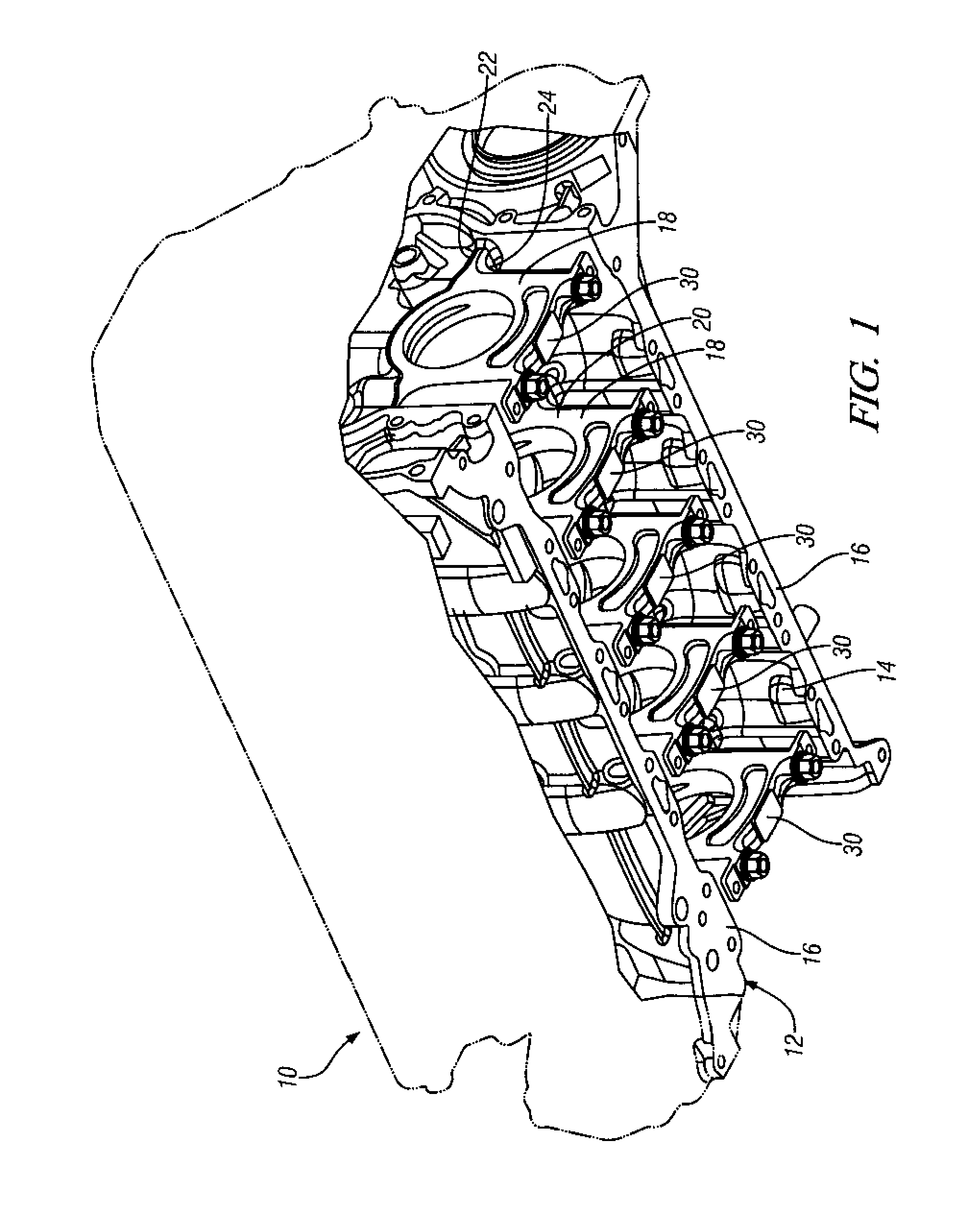
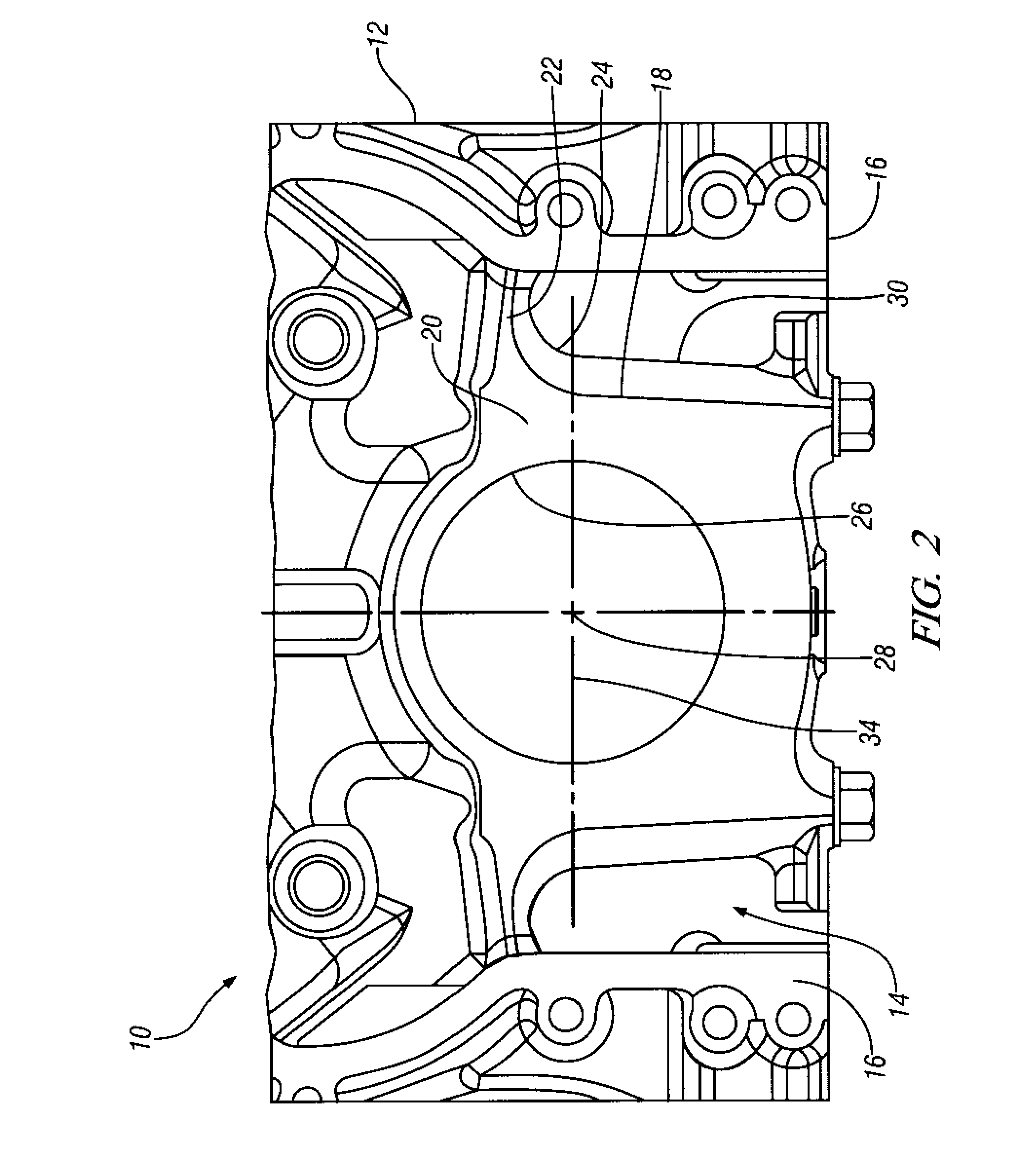
Engine and method for improved crankcase fatigue strength with fracture-split main bearing caps
PatentActiveUS20100011574A1
Innovation
- The crankshaft bearing cap split lines are angled downward from the horizontal plane to allow larger radii on the lateral connectors, achieved by controlling the shape and direction of the crack path using a precision mandrel during the fracture-splitting process.

Environmental Regulations Impact on Gasket Materials
Environmental regulations have fundamentally transformed the landscape of gasket material selection and development, particularly for crankcase applications where performance under stress is critical. The automotive industry faces increasingly stringent emissions standards, with regulations such as Euro 7, EPA Tier 3, and China VI driving unprecedented changes in material requirements. These regulatory frameworks directly impact how gasket materials must perform when subjected to mechanical stress, thermal cycling, and chemical exposure.
The shift toward low-emission vehicle technologies has necessitated the development of gasket materials that can withstand higher operating temperatures and pressures while maintaining seal integrity. Traditional elastomeric materials like nitrile rubber are being replaced or modified to meet new performance criteria. Fluoroelastomers and advanced silicone compounds have gained prominence due to their superior resistance to aggressive fluids and temperature extremes, though their stress-strain characteristics differ significantly from conventional materials.
Regulatory compliance has accelerated the adoption of halogen-free and heavy metal-free gasket formulations. The RoHS directive and REACH regulation in Europe have eliminated lead-based additives and certain flame retardants, forcing manufacturers to develop alternative formulations that maintain mechanical properties under stress. These material changes often result in different elastic modulus values and fatigue resistance characteristics, requiring comprehensive revalidation of stress performance metrics.
The push for extended service intervals, driven by environmental considerations, has elevated the importance of long-term stress relaxation properties in gasket materials. Regulations promoting reduced maintenance frequency demand materials that can maintain sealing force over extended periods despite continuous mechanical loading. This has led to increased focus on creep resistance and compression set characteristics in material specifications.
Furthermore, the integration of alternative fuel systems and hybrid powertrains, encouraged by environmental policies, introduces new chemical compatibility requirements. Gasket materials must now demonstrate stress performance in contact with biofuels, synthetic lubricants, and novel coolant formulations. These regulatory-driven changes in fluid chemistry can significantly affect material swelling, hardness variation, and ultimate tensile strength, necessitating comprehensive stress testing protocols that account for these environmental factors.
The shift toward low-emission vehicle technologies has necessitated the development of gasket materials that can withstand higher operating temperatures and pressures while maintaining seal integrity. Traditional elastomeric materials like nitrile rubber are being replaced or modified to meet new performance criteria. Fluoroelastomers and advanced silicone compounds have gained prominence due to their superior resistance to aggressive fluids and temperature extremes, though their stress-strain characteristics differ significantly from conventional materials.
Regulatory compliance has accelerated the adoption of halogen-free and heavy metal-free gasket formulations. The RoHS directive and REACH regulation in Europe have eliminated lead-based additives and certain flame retardants, forcing manufacturers to develop alternative formulations that maintain mechanical properties under stress. These material changes often result in different elastic modulus values and fatigue resistance characteristics, requiring comprehensive revalidation of stress performance metrics.
The push for extended service intervals, driven by environmental considerations, has elevated the importance of long-term stress relaxation properties in gasket materials. Regulations promoting reduced maintenance frequency demand materials that can maintain sealing force over extended periods despite continuous mechanical loading. This has led to increased focus on creep resistance and compression set characteristics in material specifications.
Furthermore, the integration of alternative fuel systems and hybrid powertrains, encouraged by environmental policies, introduces new chemical compatibility requirements. Gasket materials must now demonstrate stress performance in contact with biofuels, synthetic lubricants, and novel coolant formulations. These regulatory-driven changes in fluid chemistry can significantly affect material swelling, hardness variation, and ultimate tensile strength, necessitating comprehensive stress testing protocols that account for these environmental factors.
Digital Testing Standards for Automotive Sealing Components
The automotive industry has witnessed a significant transformation in testing methodologies for sealing components, driven by the need for more precise, repeatable, and cost-effective evaluation methods. Digital testing standards have emerged as a critical framework for assessing crankcase gasket performance under various stress conditions, replacing traditional analog measurement systems with sophisticated digital protocols that ensure consistent and accurate results across different testing environments.
Current digital testing standards for automotive sealing components encompass multiple standardization bodies, including ISO 16750 series for environmental conditions, ASTM D5385 for permeability testing, and SAE J1131 for gasket material specifications. These standards define precise digital measurement protocols for temperature cycling, pressure variations, chemical exposure, and mechanical stress testing. The integration of digital sensors, data acquisition systems, and automated testing equipment has enabled real-time monitoring of gasket deformation, leakage rates, and material degradation with unprecedented accuracy.
The implementation of digital testing protocols requires sophisticated instrumentation capable of measuring micro-level changes in gasket geometry and sealing performance. Modern testing systems utilize high-resolution pressure transducers, thermal imaging cameras, and laser displacement sensors to capture comprehensive performance data. Digital data logging systems record parameters at sampling rates exceeding 1000 Hz, enabling detailed analysis of dynamic sealing behavior during engine operation simulation.
Standardized digital testing procedures mandate specific environmental chambers with precise temperature control within ±1°C and pressure regulation accuracy of ±0.1% full scale. The protocols define standardized test sequences including preconditioning cycles, steady-state measurements, and accelerated aging procedures. Digital certification requirements ensure traceability of measurement equipment and validation of testing procedures through certified reference materials and inter-laboratory comparison programs.
Recent developments in digital testing standards emphasize the integration of artificial intelligence and machine learning algorithms for predictive analysis of gasket performance. These advanced digital frameworks enable correlation between laboratory test results and real-world field performance, supporting the development of more accurate service life predictions and optimized gasket designs for specific automotive applications.
Current digital testing standards for automotive sealing components encompass multiple standardization bodies, including ISO 16750 series for environmental conditions, ASTM D5385 for permeability testing, and SAE J1131 for gasket material specifications. These standards define precise digital measurement protocols for temperature cycling, pressure variations, chemical exposure, and mechanical stress testing. The integration of digital sensors, data acquisition systems, and automated testing equipment has enabled real-time monitoring of gasket deformation, leakage rates, and material degradation with unprecedented accuracy.
The implementation of digital testing protocols requires sophisticated instrumentation capable of measuring micro-level changes in gasket geometry and sealing performance. Modern testing systems utilize high-resolution pressure transducers, thermal imaging cameras, and laser displacement sensors to capture comprehensive performance data. Digital data logging systems record parameters at sampling rates exceeding 1000 Hz, enabling detailed analysis of dynamic sealing behavior during engine operation simulation.
Standardized digital testing procedures mandate specific environmental chambers with precise temperature control within ±1°C and pressure regulation accuracy of ±0.1% full scale. The protocols define standardized test sequences including preconditioning cycles, steady-state measurements, and accelerated aging procedures. Digital certification requirements ensure traceability of measurement equipment and validation of testing procedures through certified reference materials and inter-laboratory comparison programs.
Recent developments in digital testing standards emphasize the integration of artificial intelligence and machine learning algorithms for predictive analysis of gasket performance. These advanced digital frameworks enable correlation between laboratory test results and real-world field performance, supporting the development of more accurate service life predictions and optimized gasket designs for specific automotive applications.
Unlock deeper insights with PatSnap Eureka Quick Research — get a full tech report to explore trends and direct your research. Try now!
Generate Your Research Report Instantly with AI Agent
Supercharge your innovation with PatSnap Eureka AI Agent Platform!