

Quantify Electrostatic Painting Edge Coverage For Enclosures
AUG 13, 20269 MIN READ
Generate Your Research Report Instantly with AI Agent
Patsnap Eureka helps you evaluate technical feasibility & market potential.
Electrostatic Painting Technology Background and Objectives
Electrostatic painting has emerged as a pivotal surface coating technology since its commercial introduction in the 1960s, fundamentally transforming industrial finishing processes across multiple sectors. The technology leverages the principle of electrostatic attraction, where charged paint particles are drawn to grounded conductive substrates, creating uniform coating layers with minimal overspray and material waste. This method has become particularly critical in manufacturing industries requiring high-quality, durable finishes on metal enclosures, including automotive components, appliances, electronic housings, and industrial equipment cabinets.
The evolution of electrostatic painting technology has progressed through several distinct phases, from early manual spray systems to contemporary automated robotic applications. Modern systems incorporate sophisticated charging mechanisms, including corona charging and tribo-charging methods, enabling precise control over particle deposition. However, despite these advancements, achieving consistent edge coverage on complex enclosure geometries remains a persistent technical challenge that directly impacts coating quality, corrosion resistance, and product longevity.
Edge coverage quantification represents a critical yet underexplored dimension of electrostatic painting quality control. Edges and corners of metal enclosures experience unique electrostatic field distributions, often resulting in either excessive buildup or insufficient coating thickness. The Faraday cage effect, geometric shielding, and field intensity variations at sharp edges create unpredictable deposition patterns that compromise protective performance and aesthetic uniformity. Traditional quality assessment methods rely heavily on subjective visual inspection or destructive testing, lacking real-time quantitative metrics necessary for process optimization.
The primary objective of this technical investigation is to establish robust methodologies for quantifying edge coverage in electrostatic painting applications specifically for enclosure manufacturing. This encompasses developing measurement protocols that accurately capture coating thickness distribution at critical edge geometries, correlating electrostatic field parameters with deposition outcomes, and identifying process variables that enable predictable edge coverage control. Secondary objectives include creating standardized evaluation criteria for edge coating quality, establishing acceptable tolerance ranges for different enclosure applications, and providing actionable insights for equipment configuration and operational parameter optimization. Achieving these objectives will enable manufacturers to transition from reactive quality control to predictive process management, reducing defect rates while enhancing coating performance and material efficiency.
The evolution of electrostatic painting technology has progressed through several distinct phases, from early manual spray systems to contemporary automated robotic applications. Modern systems incorporate sophisticated charging mechanisms, including corona charging and tribo-charging methods, enabling precise control over particle deposition. However, despite these advancements, achieving consistent edge coverage on complex enclosure geometries remains a persistent technical challenge that directly impacts coating quality, corrosion resistance, and product longevity.
Edge coverage quantification represents a critical yet underexplored dimension of electrostatic painting quality control. Edges and corners of metal enclosures experience unique electrostatic field distributions, often resulting in either excessive buildup or insufficient coating thickness. The Faraday cage effect, geometric shielding, and field intensity variations at sharp edges create unpredictable deposition patterns that compromise protective performance and aesthetic uniformity. Traditional quality assessment methods rely heavily on subjective visual inspection or destructive testing, lacking real-time quantitative metrics necessary for process optimization.
The primary objective of this technical investigation is to establish robust methodologies for quantifying edge coverage in electrostatic painting applications specifically for enclosure manufacturing. This encompasses developing measurement protocols that accurately capture coating thickness distribution at critical edge geometries, correlating electrostatic field parameters with deposition outcomes, and identifying process variables that enable predictable edge coverage control. Secondary objectives include creating standardized evaluation criteria for edge coating quality, establishing acceptable tolerance ranges for different enclosure applications, and providing actionable insights for equipment configuration and operational parameter optimization. Achieving these objectives will enable manufacturers to transition from reactive quality control to predictive process management, reducing defect rates while enhancing coating performance and material efficiency.
Market Demand for Enclosure Coating Quality
The market demand for high-quality enclosure coatings has intensified significantly across multiple industrial sectors, driven by evolving customer expectations and stringent regulatory requirements. Industries such as electrical equipment manufacturing, telecommunications infrastructure, automotive components, and industrial machinery rely heavily on metal enclosures that require durable, aesthetically pleasing, and corrosion-resistant finishes. As product lifecycles extend and warranty periods lengthen, manufacturers face mounting pressure to deliver coatings that maintain integrity under harsh environmental conditions while meeting cost-efficiency targets.
Electrostatic painting has emerged as the dominant coating method for enclosures due to its superior transfer efficiency and environmental benefits compared to traditional spray techniques. However, edge coverage remains a critical quality concern that directly impacts product performance and customer satisfaction. Inadequate edge protection leads to premature corrosion, coating delamination, and aesthetic defects, resulting in warranty claims, product recalls, and brand reputation damage. Industries serving outdoor applications, marine environments, and chemical processing facilities particularly emphasize edge coverage quality as a non-negotiable specification.
The growing emphasis on quantifiable quality metrics reflects a broader industry shift toward data-driven manufacturing and Industry 4.0 principles. Customers increasingly demand documented evidence of coating quality through measurable parameters rather than subjective visual inspections. This trend is particularly pronounced in sectors with stringent compliance requirements, including medical equipment housings, food processing machinery, and defense applications, where coating failures can have serious safety and operational consequences.
Market research indicates that manufacturers capable of demonstrating superior and consistent edge coverage through quantitative measurement systems gain competitive advantages in contract negotiations and premium pricing opportunities. The ability to provide statistical process control data and predictive quality analytics has become a key differentiator in supplier selection processes. Additionally, sustainability initiatives are driving demand for coating processes that minimize material waste and rework, making precise edge coverage control economically attractive beyond quality considerations alone.
The convergence of quality demands, regulatory pressures, and competitive dynamics has created substantial market pull for technologies that can accurately quantify and optimize electrostatic painting edge coverage, establishing this capability as a strategic priority for enclosure manufacturers seeking market leadership.
Electrostatic painting has emerged as the dominant coating method for enclosures due to its superior transfer efficiency and environmental benefits compared to traditional spray techniques. However, edge coverage remains a critical quality concern that directly impacts product performance and customer satisfaction. Inadequate edge protection leads to premature corrosion, coating delamination, and aesthetic defects, resulting in warranty claims, product recalls, and brand reputation damage. Industries serving outdoor applications, marine environments, and chemical processing facilities particularly emphasize edge coverage quality as a non-negotiable specification.
The growing emphasis on quantifiable quality metrics reflects a broader industry shift toward data-driven manufacturing and Industry 4.0 principles. Customers increasingly demand documented evidence of coating quality through measurable parameters rather than subjective visual inspections. This trend is particularly pronounced in sectors with stringent compliance requirements, including medical equipment housings, food processing machinery, and defense applications, where coating failures can have serious safety and operational consequences.
Market research indicates that manufacturers capable of demonstrating superior and consistent edge coverage through quantitative measurement systems gain competitive advantages in contract negotiations and premium pricing opportunities. The ability to provide statistical process control data and predictive quality analytics has become a key differentiator in supplier selection processes. Additionally, sustainability initiatives are driving demand for coating processes that minimize material waste and rework, making precise edge coverage control economically attractive beyond quality considerations alone.
The convergence of quality demands, regulatory pressures, and competitive dynamics has created substantial market pull for technologies that can accurately quantify and optimize electrostatic painting edge coverage, establishing this capability as a strategic priority for enclosure manufacturers seeking market leadership.
Edge Coverage Challenges in Electrostatic Painting
Electrostatic painting has revolutionized industrial coating processes by leveraging electrostatic attraction between charged paint particles and grounded substrates. However, edge coverage remains one of the most persistent technical challenges in this application domain. The fundamental issue stems from the Faraday cage effect, where electric field lines concentrate at sharp edges and corners of enclosures, causing paint particles to either over-accumulate or deflect away from these critical areas. This phenomenon results in inconsistent coating thickness, reduced corrosion protection, and aesthetic defects that compromise product quality.
The complexity of quantifying edge coverage intensifies when dealing with three-dimensional enclosures featuring multiple geometric configurations. Sharp corners, recessed areas, and protruding features create localized electric field distortions that are difficult to predict and control. Traditional electrostatic painting systems struggle to maintain uniform film thickness within the 25-75 micrometer target range at edges, often producing variations exceeding 200% compared to flat surfaces. This inconsistency directly impacts coating performance, as thin coverage leads to premature corrosion while excessive buildup causes runs, sags, and material waste.
Current measurement methodologies face significant limitations in accurately quantifying edge coverage. Destructive testing methods such as cross-sectional microscopy provide precise thickness data but are time-consuming and impractical for production environments. Non-destructive techniques including ultrasonic gauges and eddy current sensors often lack the spatial resolution required for edge measurements, particularly on complex geometries with radii below 5 millimeters. The absence of real-time monitoring capabilities further complicates process optimization and quality control.
Environmental and operational variables add another layer of complexity to edge coverage challenges. Factors such as spray gun positioning, voltage settings, paint conductivity, substrate grounding quality, and air flow patterns collectively influence particle deposition behavior at edges. The interdependencies among these parameters create a multidimensional optimization problem that conventional trial-and-error approaches cannot efficiently solve. Moreover, the increasing demand for water-based and low-VOC coatings introduces additional rheological considerations that affect edge coverage performance compared to traditional solvent-based formulations.
The complexity of quantifying edge coverage intensifies when dealing with three-dimensional enclosures featuring multiple geometric configurations. Sharp corners, recessed areas, and protruding features create localized electric field distortions that are difficult to predict and control. Traditional electrostatic painting systems struggle to maintain uniform film thickness within the 25-75 micrometer target range at edges, often producing variations exceeding 200% compared to flat surfaces. This inconsistency directly impacts coating performance, as thin coverage leads to premature corrosion while excessive buildup causes runs, sags, and material waste.
Current measurement methodologies face significant limitations in accurately quantifying edge coverage. Destructive testing methods such as cross-sectional microscopy provide precise thickness data but are time-consuming and impractical for production environments. Non-destructive techniques including ultrasonic gauges and eddy current sensors often lack the spatial resolution required for edge measurements, particularly on complex geometries with radii below 5 millimeters. The absence of real-time monitoring capabilities further complicates process optimization and quality control.
Environmental and operational variables add another layer of complexity to edge coverage challenges. Factors such as spray gun positioning, voltage settings, paint conductivity, substrate grounding quality, and air flow patterns collectively influence particle deposition behavior at edges. The interdependencies among these parameters create a multidimensional optimization problem that conventional trial-and-error approaches cannot efficiently solve. Moreover, the increasing demand for water-based and low-VOC coatings introduces additional rheological considerations that affect edge coverage performance compared to traditional solvent-based formulations.
Current Edge Coverage Measurement Solutions
01 Electrode configuration and positioning for edge coverage
Optimizing the configuration and positioning of electrodes in electrostatic painting systems can significantly improve edge coverage. This includes using multiple electrodes at different angles, adjusting electrode distance from the workpiece, and employing specialized electrode shapes designed to direct paint particles toward edges and recessed areas. The electrode arrangement helps create uniform electric field distribution that guides charged paint particles to cover difficult-to-reach edge surfaces more effectively.- Electrode configuration and positioning for edge coverage: Optimizing the configuration and positioning of electrodes in electrostatic painting systems can significantly improve edge coverage. This includes using multiple electrodes at different angles, adjusting electrode distance from the workpiece, and employing specialized electrode shapes designed to direct paint particles toward edges and recessed areas. The electrode arrangement helps create uniform electric field distribution that guides charged paint particles to cover edges more effectively.
- Voltage control and electric field modulation: Controlling the applied voltage and modulating the electric field strength during the painting process enhances edge coverage. This involves adjusting voltage levels based on workpiece geometry, using pulsed or variable voltage systems, and implementing feedback mechanisms to maintain optimal charging conditions. Proper voltage control ensures adequate paint particle charging and deposition on edge surfaces while preventing issues like back ionization or excessive buildup.
- Workpiece rotation and movement systems: Implementing controlled rotation and movement of the workpiece during electrostatic painting improves edge coverage by ensuring all surfaces are properly exposed to the paint spray. This includes rotating the workpiece at specific speeds, using multi-axis positioning systems, and coordinating workpiece movement with spray gun operation. Dynamic positioning allows paint to reach edges from multiple angles and ensures uniform coating thickness on complex geometries.
- Spray pattern and nozzle design optimization: Specialized nozzle designs and spray pattern optimization techniques enhance paint deposition on edges. This includes using nozzles with adjustable spray angles, implementing multi-nozzle arrays, and controlling paint flow rates to create spray patterns that specifically target edge areas. The nozzle configuration affects particle trajectory and distribution, ensuring adequate coverage of difficult-to-reach edge surfaces while maintaining coating quality.
- Air flow and environmental control: Managing air flow patterns and environmental conditions in the painting booth improves edge coverage by controlling paint particle movement and deposition. This includes using directed air jets, controlling booth ventilation, adjusting air pressure and humidity levels, and minimizing turbulence near workpiece edges. Proper air flow management prevents paint particle deflection away from edges and ensures consistent coating application across all surfaces including corners and recessed areas.
02 Voltage control and electric field modulation
Controlling the applied voltage and modulating the electric field strength during the painting process enhances edge coverage. This involves adjusting voltage levels dynamically based on workpiece geometry, using pulsed voltage techniques, or implementing variable voltage zones to ensure adequate paint deposition on edges while preventing overcoating on flat surfaces. The electric field modulation helps achieve uniform coating thickness across complex geometries including sharp edges and corners.Expand Specific Solutions03 Spray nozzle design and paint atomization methods
Specialized spray nozzle designs and atomization techniques improve paint particle distribution for better edge coverage. This includes using rotating atomizers, air-assisted spray heads, or multi-nozzle configurations that create overlapping spray patterns. The atomization method affects particle size distribution and trajectory, which directly impacts the ability of charged particles to wrap around edges and coat recessed areas uniformly.Expand Specific Solutions04 Workpiece grounding and rotation mechanisms
Proper grounding of the workpiece and implementing rotation or movement mechanisms during painting enhances edge coverage. This involves using conductive fixtures, optimizing ground connection points, and rotating or translating the workpiece to expose all edges to the spray pattern. The movement ensures that edges receive adequate exposure to charged paint particles from multiple angles, resulting in more uniform coating thickness on complex three-dimensional surfaces.Expand Specific Solutions05 Paint formulation and particle charge optimization
Optimizing paint formulation properties and particle charging characteristics improves edge coverage in electrostatic painting. This includes adjusting paint viscosity, solids content, and conductivity to enhance particle charging efficiency and mobility. The formulation affects how well paint particles accept and retain electrostatic charge, their flight characteristics in the electric field, and their ability to wrap around edges before deposition on the substrate surface.Expand Specific Solutions
Major Players in Industrial Coating Systems
The electrostatic painting edge coverage technology for enclosures operates in a mature industrial market characterized by established automotive and coating equipment manufacturers. The competitive landscape spans from automotive OEMs like Toyota Motor Corp., Nissan Motor Co., and Mazda Motor Corp. to specialized coating equipment providers including Dürr Systems AG, Trinity Industrial Corp., and Carlisle Fluid Technologies LLC. Paint manufacturers such as Kansai Paint Co., BASF Shanghai Coatings, and Nippon Paint (China) Co. contribute material expertise, while enclosure specialists like Hoffman Enclosures address application-specific challenges. The technology has reached commercial maturity with proven industrial applications, though optimization opportunities remain in edge coverage uniformity and efficiency. Market growth is driven by automotive electrification demands and quality requirements, with Asia-Pacific manufacturers increasingly prominent alongside traditional European and North American players in this established multi-billion dollar coating equipment sector.
Trinity Industrial Corp.
Technical Solution: Trinity Industrial specializes in electrostatic painting systems with focus on automotive and industrial enclosure applications, featuring proprietary edge coverage measurement technologies. Their TRINITY COAT system integrates multi-angle spray guns with electrostatic charging systems optimized for edge penetration and wrap-around coverage. The company has developed optical measurement systems that use laser triangulation and structured light scanning to quantify coating thickness on edges with resolution down to 10 micrometers. Their process control software analyzes edge coverage data in real-time, automatically adjusting spray parameters including voltage (40-80kV), air pressure, and robot speed to maintain target thickness specifications. The system employs Faraday cage effect mitigation through optimized gun positioning and pulsed electrostatic charging sequences. Trinity's quality assurance module provides 3D visualization of coating distribution on enclosure edges with color-coded thickness mapping and automated defect detection for insufficient edge coverage.
Strengths: Specialized expertise in automotive enclosure coating, cost-effective solutions for mid-scale operations, strong technical support in Asian markets. Weaknesses: Limited global service network compared to larger competitors, less extensive software ecosystem, smaller R&D investment in emerging technologies.
Ransburg Industrial Finishing KK
Technical Solution: Ransburg, a pioneer in electrostatic coating technology, provides comprehensive solutions for quantifying edge coverage through their Aerobell and Optima applicator systems. Their electrostatic painting equipment features advanced cascade and tribo-charging technologies that enhance paint particle attraction to edges and recessed areas of enclosures. The company has developed the RansFlex control system which integrates with non-contact coating thickness measurement devices including eddy current and X-ray fluorescence sensors specifically calibrated for edge geometry measurements. Their EdgeGuard technology uses computational fluid dynamics modeling to predict and optimize electrostatic field distribution around enclosure edges, ensuring uniform coverage. The system provides real-time feedback control adjusting high voltage output (20-100kV), fluid flow rates, and shaping air to maintain consistent edge coverage within specified tolerances. Ransburg's quality management software generates detailed edge coverage reports with statistical process capability analysis and trend monitoring for continuous improvement.
Strengths: Deep historical expertise in electrostatic coating technology, robust and reliable equipment design, excellent paint transfer efficiency including edges. Weaknesses: Older technology platform compared to newer competitors, less emphasis on digital integration and Industry 4.0 connectivity, limited advanced simulation capabilities.
Key Technologies for Quantifying Edge Coating
Light colored conductive electrocoat paint
PatentInactiveUS5178736A
Innovation
- A two-dimensional network of antimony-containing tin oxide crystallites associated with amorphous silica or silica-containing materials is used to create electrically conductive pigments, allowing for higher pigment-to-binder ratios and a wide color range, including light colors, which can be incorporated into cathodic electrocoat compositions to achieve conductive and aesthetically acceptable films.
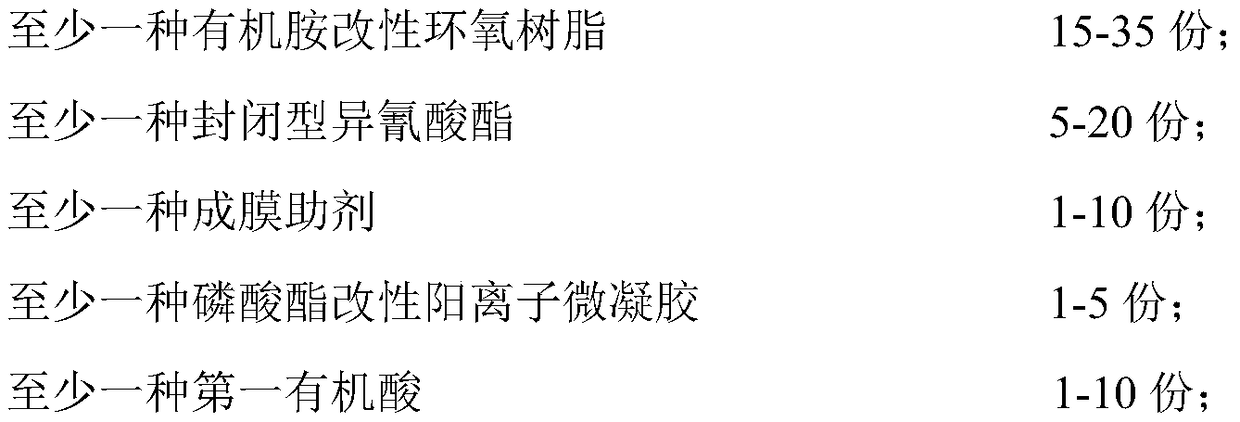
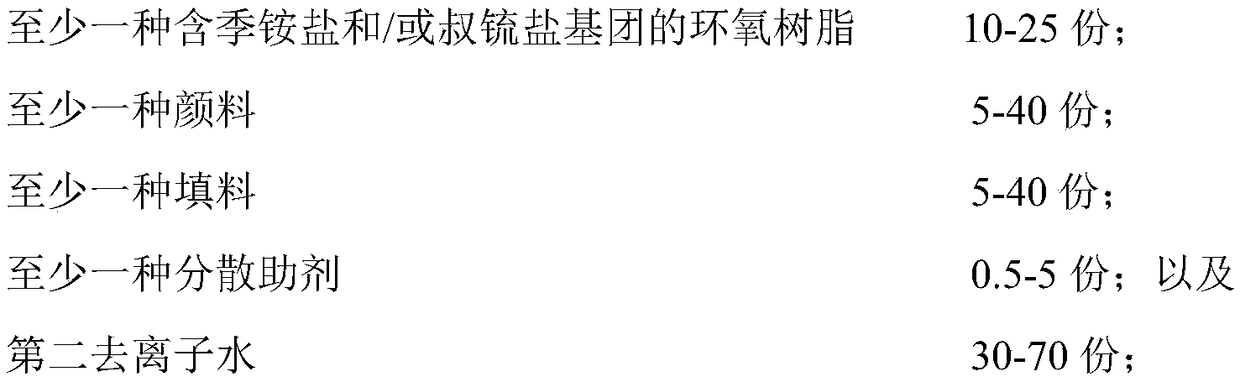
Edge anticorrosive electrophoretic coating composition, preparation method and application
PatentActiveCN109504264A
Innovation
- Phosphate ester modified cationic microgel is used as an auxiliary agent to reduce the shrinkage of the coating film by connecting the phosphate ester repeating unit to the cationic microgel molecular chain and add it to the electrophoretic coating to improve the coating on the edge of the workpiece. Membrane coverage and corrosion protection.


Environmental Regulations for Coating Processes
Environmental regulations governing coating processes have become increasingly stringent worldwide, directly impacting electrostatic painting operations for metal enclosures. These regulations primarily focus on volatile organic compound emissions, hazardous air pollutants, and waste management associated with painting facilities. The United States Environmental Protection Agency enforces National Emission Standards for Hazardous Air Pollutants, specifically targeting surface coating operations through regulations such as 40 CFR Part 63 Subpart MMMM for miscellaneous metal parts and products. European Union directives, particularly the Industrial Emissions Directive and the Solvent Emissions Directive, establish comparable frameworks that mandate emission reduction technologies and operational controls.
Transfer efficiency requirements have emerged as critical regulatory metrics, with authorities recognizing that improved edge coverage quantification directly correlates with reduced overspray and material waste. Facilities must demonstrate compliance through regular monitoring and reporting of transfer efficiency rates, typically requiring minimum thresholds of 65-75 percent for electrostatic application systems. This regulatory emphasis creates strong incentives for developing precise measurement methodologies for edge coverage, as improved quantification enables operators to optimize spray parameters and demonstrate regulatory compliance more effectively.
Waste minimization regulations further influence edge coverage practices by mandating source reduction strategies and encouraging closed-loop systems. The Resource Conservation and Recovery Act in the United States classifies many coating materials and associated waste streams as hazardous, imposing strict handling and disposal requirements. Facilities achieving superior edge coverage through optimized electrostatic parameters generate less overspray waste, thereby reducing regulatory burden and disposal costs. Environmental permits increasingly incorporate specific conditions related to coating efficiency, requiring facilities to implement best available control technologies and maintain detailed operational records.
Emerging regulations addressing hexavalent chromium and other heavy metals in coatings add complexity to compliance strategies, as alternative coating formulations may exhibit different electrostatic charging characteristics affecting edge coverage performance. Regulatory agencies are progressively adopting performance-based standards rather than prescriptive requirements, creating opportunities for facilities that can accurately quantify and document superior edge coverage as evidence of environmental stewardship and operational excellence.
Transfer efficiency requirements have emerged as critical regulatory metrics, with authorities recognizing that improved edge coverage quantification directly correlates with reduced overspray and material waste. Facilities must demonstrate compliance through regular monitoring and reporting of transfer efficiency rates, typically requiring minimum thresholds of 65-75 percent for electrostatic application systems. This regulatory emphasis creates strong incentives for developing precise measurement methodologies for edge coverage, as improved quantification enables operators to optimize spray parameters and demonstrate regulatory compliance more effectively.
Waste minimization regulations further influence edge coverage practices by mandating source reduction strategies and encouraging closed-loop systems. The Resource Conservation and Recovery Act in the United States classifies many coating materials and associated waste streams as hazardous, imposing strict handling and disposal requirements. Facilities achieving superior edge coverage through optimized electrostatic parameters generate less overspray waste, thereby reducing regulatory burden and disposal costs. Environmental permits increasingly incorporate specific conditions related to coating efficiency, requiring facilities to implement best available control technologies and maintain detailed operational records.
Emerging regulations addressing hexavalent chromium and other heavy metals in coatings add complexity to compliance strategies, as alternative coating formulations may exhibit different electrostatic charging characteristics affecting edge coverage performance. Regulatory agencies are progressively adopting performance-based standards rather than prescriptive requirements, creating opportunities for facilities that can accurately quantify and document superior edge coverage as evidence of environmental stewardship and operational excellence.
Quality Standards for Enclosure Surface Finishing
Establishing comprehensive quality standards for enclosure surface finishing in electrostatic painting applications requires a multi-dimensional framework that addresses both aesthetic and functional performance criteria. These standards must encompass coating thickness uniformity, adhesion strength, corrosion resistance, and critically, edge coverage metrics that directly impact long-term product durability. The quantification of edge coverage presents unique challenges due to the complex electromagnetic field distribution at sharp corners and recessed areas of enclosures, necessitating precise measurement protocols and acceptance thresholds.
Industry-recognized standards such as ASTM D3359 for adhesion testing and ISO 12944 for corrosion protection provide foundational benchmarks, yet specific requirements for edge coverage in electrostatic applications demand supplementary specifications. Minimum dry film thickness at edges typically ranges from 25 to 40 micrometers, representing 60-80% of flat surface coverage, though optimal values vary based on substrate material, environmental exposure classification, and intended service life. Advanced measurement techniques including ultrasonic thickness gauges and cross-sectional microscopy enable verification of these parameters with micron-level precision.
Quality assurance protocols must integrate both quantitative measurements and qualitative visual assessments to ensure comprehensive evaluation. Acceptable edge coverage standards should define specific criteria for corner radii, with tighter tolerances applied to external edges compared to internal angles where paint accumulation naturally occurs. Statistical process control methods, incorporating capability indices such as Cpk values above 1.33, ensure consistent achievement of specified edge coverage targets across production batches.
The implementation of these standards requires calibrated inspection equipment, trained personnel, and documented procedures that align with customer specifications and regulatory requirements. Periodic validation through accelerated weathering tests and salt spray exposure confirms that established edge coverage thresholds adequately predict field performance. This systematic approach to quality standardization enables manufacturers to balance coating efficiency with protective performance while maintaining competitive production economics.
Industry-recognized standards such as ASTM D3359 for adhesion testing and ISO 12944 for corrosion protection provide foundational benchmarks, yet specific requirements for edge coverage in electrostatic applications demand supplementary specifications. Minimum dry film thickness at edges typically ranges from 25 to 40 micrometers, representing 60-80% of flat surface coverage, though optimal values vary based on substrate material, environmental exposure classification, and intended service life. Advanced measurement techniques including ultrasonic thickness gauges and cross-sectional microscopy enable verification of these parameters with micron-level precision.
Quality assurance protocols must integrate both quantitative measurements and qualitative visual assessments to ensure comprehensive evaluation. Acceptable edge coverage standards should define specific criteria for corner radii, with tighter tolerances applied to external edges compared to internal angles where paint accumulation naturally occurs. Statistical process control methods, incorporating capability indices such as Cpk values above 1.33, ensure consistent achievement of specified edge coverage targets across production batches.
The implementation of these standards requires calibrated inspection equipment, trained personnel, and documented procedures that align with customer specifications and regulatory requirements. Periodic validation through accelerated weathering tests and salt spray exposure confirms that established edge coverage thresholds adequately predict field performance. This systematic approach to quality standardization enables manufacturers to balance coating efficiency with protective performance while maintaining competitive production economics.
Unlock deeper insights with Patsnap Eureka Quick Research — get a full tech report to explore trends and direct your research. Try now!
Generate Your Research Report Instantly with AI Agent
Supercharge your innovation with Patsnap Eureka AI Agent Platform!