Reducing Latency Bottlenecks with Persistent Memory in Edge Systems
MAY 13, 20269 MIN READ
Generate Your Research Report Instantly with AI Agent
PatSnap Eureka helps you evaluate technical feasibility & market potential.
Persistent Memory Edge Computing Background and Objectives
Edge computing has emerged as a critical paradigm shift in distributed computing architectures, driven by the exponential growth of Internet of Things (IoT) devices, autonomous systems, and real-time applications requiring ultra-low latency processing. Traditional cloud-centric models face inherent limitations when serving latency-sensitive workloads, as data transmission to distant data centers introduces unacceptable delays for applications such as autonomous vehicle navigation, industrial automation, and augmented reality systems.
The evolution of edge computing began in the early 2010s with content delivery networks and gradually expanded to encompass computational capabilities at network edges. This progression has been accelerated by advances in miniaturized hardware, 5G networks, and the increasing sophistication of edge devices. However, conventional edge systems predominantly rely on volatile memory architectures, creating significant performance bottlenecks during data persistence operations and system recovery processes.
Persistent memory technologies, including Intel Optane DC Persistent Memory and emerging storage-class memory solutions, represent a transformative approach to addressing these limitations. These technologies bridge the performance gap between traditional DRAM and storage devices, offering byte-addressable, non-volatile memory that maintains data integrity across power cycles while delivering near-DRAM performance characteristics.
The primary objective of integrating persistent memory into edge systems centers on eliminating latency bottlenecks that arise from frequent data synchronization between volatile memory and persistent storage. Current edge deployments experience significant performance degradation during checkpoint operations, log persistence, and recovery procedures, which can introduce millisecond-level delays that compromise real-time application requirements.
Key technical objectives include developing memory management frameworks that leverage persistent memory's unique characteristics, implementing efficient data placement strategies that minimize access latencies, and creating fault-tolerant architectures that reduce recovery times from seconds to microseconds. Additionally, the integration aims to enable new programming models that can directly manipulate persistent data structures without traditional serialization overhead.
The strategic goal encompasses establishing edge computing platforms capable of supporting mission-critical applications with sub-millisecond response requirements while maintaining data durability and system reliability. This technological advancement is expected to unlock new application domains and enhance the viability of edge computing for enterprise-grade deployments requiring both performance and persistence guarantees.
The evolution of edge computing began in the early 2010s with content delivery networks and gradually expanded to encompass computational capabilities at network edges. This progression has been accelerated by advances in miniaturized hardware, 5G networks, and the increasing sophistication of edge devices. However, conventional edge systems predominantly rely on volatile memory architectures, creating significant performance bottlenecks during data persistence operations and system recovery processes.
Persistent memory technologies, including Intel Optane DC Persistent Memory and emerging storage-class memory solutions, represent a transformative approach to addressing these limitations. These technologies bridge the performance gap between traditional DRAM and storage devices, offering byte-addressable, non-volatile memory that maintains data integrity across power cycles while delivering near-DRAM performance characteristics.
The primary objective of integrating persistent memory into edge systems centers on eliminating latency bottlenecks that arise from frequent data synchronization between volatile memory and persistent storage. Current edge deployments experience significant performance degradation during checkpoint operations, log persistence, and recovery procedures, which can introduce millisecond-level delays that compromise real-time application requirements.
Key technical objectives include developing memory management frameworks that leverage persistent memory's unique characteristics, implementing efficient data placement strategies that minimize access latencies, and creating fault-tolerant architectures that reduce recovery times from seconds to microseconds. Additionally, the integration aims to enable new programming models that can directly manipulate persistent data structures without traditional serialization overhead.
The strategic goal encompasses establishing edge computing platforms capable of supporting mission-critical applications with sub-millisecond response requirements while maintaining data durability and system reliability. This technological advancement is expected to unlock new application domains and enhance the viability of edge computing for enterprise-grade deployments requiring both performance and persistence guarantees.
Market Demand for Low-Latency Edge Computing Solutions
The global edge computing market is experiencing unprecedented growth driven by the proliferation of IoT devices, autonomous systems, and real-time applications that demand ultra-low latency processing. Industries ranging from autonomous vehicles to industrial automation, augmented reality, and smart city infrastructure require computational responses within microseconds to milliseconds, creating substantial market pressure for advanced edge computing solutions.
Financial services represent a particularly lucrative segment, where high-frequency trading algorithms and real-time fraud detection systems require latency reductions measured in microseconds. Manufacturing sectors implementing Industry 4.0 initiatives demand edge systems capable of processing sensor data and controlling robotic systems with minimal delay to maintain operational efficiency and safety standards.
The telecommunications industry faces mounting pressure to deliver 5G and future 6G services that promise ultra-reliable low-latency communications. Network function virtualization and mobile edge computing deployments require infrastructure capable of processing massive data volumes while maintaining strict latency requirements for applications like remote surgery, autonomous driving, and immersive gaming experiences.
Healthcare applications increasingly rely on real-time data processing for critical patient monitoring, surgical robotics, and diagnostic imaging systems. The COVID-19 pandemic accelerated adoption of remote healthcare technologies, further emphasizing the need for responsive edge computing infrastructure that can process medical data instantaneously without compromising patient safety.
Gaming and entertainment industries drive significant demand for low-latency edge solutions to support cloud gaming, virtual reality experiences, and live streaming platforms. Content delivery networks require edge nodes capable of serving multimedia content with minimal buffering and processing delays to maintain user engagement and competitive advantage.
Smart transportation systems, including traffic management, fleet optimization, and autonomous vehicle coordination, represent rapidly expanding market segments requiring real-time decision-making capabilities. These applications cannot tolerate traditional storage and processing delays, creating substantial opportunities for persistent memory-enhanced edge computing solutions.
The convergence of artificial intelligence and edge computing amplifies latency requirements, as machine learning inference at the edge must occur in real-time for applications like computer vision, natural language processing, and predictive maintenance systems across various industrial sectors.
Financial services represent a particularly lucrative segment, where high-frequency trading algorithms and real-time fraud detection systems require latency reductions measured in microseconds. Manufacturing sectors implementing Industry 4.0 initiatives demand edge systems capable of processing sensor data and controlling robotic systems with minimal delay to maintain operational efficiency and safety standards.
The telecommunications industry faces mounting pressure to deliver 5G and future 6G services that promise ultra-reliable low-latency communications. Network function virtualization and mobile edge computing deployments require infrastructure capable of processing massive data volumes while maintaining strict latency requirements for applications like remote surgery, autonomous driving, and immersive gaming experiences.
Healthcare applications increasingly rely on real-time data processing for critical patient monitoring, surgical robotics, and diagnostic imaging systems. The COVID-19 pandemic accelerated adoption of remote healthcare technologies, further emphasizing the need for responsive edge computing infrastructure that can process medical data instantaneously without compromising patient safety.
Gaming and entertainment industries drive significant demand for low-latency edge solutions to support cloud gaming, virtual reality experiences, and live streaming platforms. Content delivery networks require edge nodes capable of serving multimedia content with minimal buffering and processing delays to maintain user engagement and competitive advantage.
Smart transportation systems, including traffic management, fleet optimization, and autonomous vehicle coordination, represent rapidly expanding market segments requiring real-time decision-making capabilities. These applications cannot tolerate traditional storage and processing delays, creating substantial opportunities for persistent memory-enhanced edge computing solutions.
The convergence of artificial intelligence and edge computing amplifies latency requirements, as machine learning inference at the edge must occur in real-time for applications like computer vision, natural language processing, and predictive maintenance systems across various industrial sectors.
Current Latency Challenges in Edge Systems Architecture
Edge computing systems face significant latency challenges that fundamentally stem from their distributed architecture and resource constraints. Unlike traditional centralized cloud environments, edge systems must process data closer to end users while operating with limited computational resources, storage capacity, and network bandwidth. This architectural paradigm creates inherent bottlenecks that directly impact application performance and user experience.
Memory hierarchy represents one of the most critical latency sources in edge systems. Traditional storage architectures rely heavily on volatile DRAM for active data processing and non-volatile storage devices like SSDs or HDDs for persistence. The substantial performance gap between these storage tiers creates significant delays when applications require frequent data access patterns that span both volatile and persistent storage layers.
Network-induced latency poses another substantial challenge, particularly in scenarios where edge nodes must communicate with remote data centers or other edge locations. The physical distance between distributed edge nodes and the varying quality of network connections contribute to unpredictable latency patterns that can severely impact real-time applications such as autonomous vehicles, industrial automation, and augmented reality systems.
Resource contention within individual edge nodes further exacerbates latency issues. Multiple applications competing for limited CPU cycles, memory bandwidth, and I/O resources create scheduling delays and performance degradation. This challenge becomes particularly acute during peak usage periods when edge systems must handle sudden spikes in computational demand while maintaining consistent response times.
Data locality problems significantly impact edge system performance when applications cannot efficiently access required data sets. Traditional caching mechanisms often prove inadequate in edge environments due to limited cache sizes and complex data access patterns. Applications frequently experience cache misses that trigger expensive data retrieval operations from slower storage tiers or remote locations.
The persistence requirements of edge applications introduce additional complexity to latency management. Many edge use cases demand both high-performance data processing and reliable data persistence, creating conflicts between speed and durability requirements. Traditional approaches that separate volatile processing memory from persistent storage create unnecessary data movement overhead that directly translates to increased latency.
Context switching overhead in edge systems represents another significant latency contributor, particularly in environments running multiple containerized applications or virtual machines. The frequent switching between different execution contexts consumes valuable CPU cycles and introduces unpredictable delays that can accumulate to substantial performance impacts in latency-sensitive applications.
Memory hierarchy represents one of the most critical latency sources in edge systems. Traditional storage architectures rely heavily on volatile DRAM for active data processing and non-volatile storage devices like SSDs or HDDs for persistence. The substantial performance gap between these storage tiers creates significant delays when applications require frequent data access patterns that span both volatile and persistent storage layers.
Network-induced latency poses another substantial challenge, particularly in scenarios where edge nodes must communicate with remote data centers or other edge locations. The physical distance between distributed edge nodes and the varying quality of network connections contribute to unpredictable latency patterns that can severely impact real-time applications such as autonomous vehicles, industrial automation, and augmented reality systems.
Resource contention within individual edge nodes further exacerbates latency issues. Multiple applications competing for limited CPU cycles, memory bandwidth, and I/O resources create scheduling delays and performance degradation. This challenge becomes particularly acute during peak usage periods when edge systems must handle sudden spikes in computational demand while maintaining consistent response times.
Data locality problems significantly impact edge system performance when applications cannot efficiently access required data sets. Traditional caching mechanisms often prove inadequate in edge environments due to limited cache sizes and complex data access patterns. Applications frequently experience cache misses that trigger expensive data retrieval operations from slower storage tiers or remote locations.
The persistence requirements of edge applications introduce additional complexity to latency management. Many edge use cases demand both high-performance data processing and reliable data persistence, creating conflicts between speed and durability requirements. Traditional approaches that separate volatile processing memory from persistent storage create unnecessary data movement overhead that directly translates to increased latency.
Context switching overhead in edge systems represents another significant latency contributor, particularly in environments running multiple containerized applications or virtual machines. The frequent switching between different execution contexts consumes valuable CPU cycles and introduces unpredictable delays that can accumulate to substantial performance impacts in latency-sensitive applications.
Current Persistent Memory Integration Approaches
01 Memory access optimization techniques
Various techniques are employed to optimize memory access patterns and reduce latency in persistent memory systems. These methods focus on improving data retrieval efficiency through advanced caching mechanisms, prefetching strategies, and intelligent memory management algorithms that minimize access delays and enhance overall system performance.- Memory access optimization techniques: Various techniques are employed to optimize memory access patterns and reduce latency in persistent memory systems. These methods focus on improving data locality, prefetching strategies, and cache management to minimize the time required for memory operations. Advanced algorithms and hardware optimizations work together to enhance overall system performance by reducing the delay between memory requests and data retrieval.
- Latency measurement and monitoring systems: Specialized systems and methods are developed to accurately measure and monitor latency in persistent memory environments. These solutions provide real-time tracking of memory performance metrics, enabling system administrators and applications to identify bottlenecks and optimize performance. The monitoring capabilities include detailed analytics and reporting features that help in understanding memory behavior patterns.
- Hardware-based latency reduction mechanisms: Hardware implementations focus on reducing persistent memory latency through architectural improvements and specialized components. These mechanisms include enhanced memory controllers, optimized data pathways, and advanced buffering techniques. The hardware solutions are designed to work at the system level to provide consistent low-latency access to persistent storage while maintaining data integrity and reliability.
- Software-based latency management: Software approaches to managing persistent memory latency involve algorithmic optimizations, driver improvements, and application-level techniques. These solutions include intelligent scheduling algorithms, memory allocation strategies, and data structure optimizations specifically designed for persistent memory characteristics. The software methods work to minimize latency through better resource management and predictive caching mechanisms.
- Hybrid memory system architectures: Advanced architectures that combine different memory technologies to optimize latency performance in persistent memory systems. These hybrid approaches leverage the strengths of various memory types and implement intelligent data placement and migration strategies. The systems automatically manage data movement between different memory tiers based on access patterns and performance requirements to achieve optimal latency characteristics.
02 Latency reduction through hardware acceleration
Hardware-based solutions are implemented to accelerate persistent memory operations and reduce latency. These approaches utilize specialized controllers, dedicated processing units, and optimized memory interfaces that provide faster data access paths and minimize the time required for read and write operations in persistent storage systems.Expand Specific Solutions03 Cache management and buffering strategies
Advanced cache management techniques and buffering strategies are employed to minimize persistent memory latency. These methods involve intelligent data placement, multi-level caching hierarchies, and dynamic buffer allocation schemes that reduce the frequency of direct memory access and improve response times for frequently accessed data.Expand Specific Solutions04 Memory controller optimization
Specialized memory controllers are designed to optimize persistent memory performance and reduce access latency. These controllers implement advanced scheduling algorithms, command queuing mechanisms, and intelligent data path management to streamline memory operations and minimize delays in data transfer between the processor and persistent storage.Expand Specific Solutions05 Software-based latency mitigation
Software solutions are developed to address persistent memory latency issues through optimized drivers, middleware, and application-level techniques. These approaches include asynchronous processing methods, intelligent data organization schemes, and adaptive algorithms that work at the software layer to reduce the impact of memory access delays on system performance.Expand Specific Solutions
Major Players in Edge Computing and Memory Industry
The persistent memory technology for edge systems is experiencing rapid growth as the industry transitions from early adoption to mainstream deployment. Market expansion is driven by increasing edge computing demands and IoT proliferation, with the sector reaching significant scale as enterprises prioritize low-latency applications. Technology maturity varies considerably across key players: established memory leaders like Micron Technology, Samsung Electronics, and Intel demonstrate advanced persistent memory solutions with proven commercial deployments, while companies such as Rambus and NXP contribute specialized interface and controller technologies. Infrastructure giants including IBM, Microsoft, and Huawei are integrating these technologies into comprehensive edge platforms, whereas emerging players like Beijing Institute of Open Source Chip represent next-generation architectural approaches. The competitive landscape shows strong consolidation around proven technologies, with increasing focus on optimizing performance-per-watt ratios and seamless integration capabilities for diverse edge deployment scenarios.
Micron Technology, Inc.
Technical Solution: Micron has developed innovative persistent memory technologies including 3D XPoint-based solutions and emerging memory architectures like QuantX for edge computing applications. Their persistent memory approach focuses on delivering high-density, low-latency storage that can significantly reduce bottlenecks in edge systems by providing near-DRAM performance with storage-class persistence. Micron's solutions incorporate advanced memory controllers with intelligent caching algorithms and wear management systems optimized for edge workloads. The company has also developed specialized firmware and software interfaces that enable seamless integration with existing edge computing frameworks while providing direct access to persistent memory regions. Their technology stack includes development tools and performance optimization libraries specifically designed for edge applications requiring ultra-low latency data access and real-time processing capabilities.
Strengths: Strong focus on memory technology innovation, competitive pricing strategies, good compatibility with various hardware platforms. Weaknesses: Smaller market presence compared to Intel in persistent memory space, limited software ecosystem development, requires significant integration effort for optimal deployment.
Intel Corp.
Technical Solution: Intel has developed comprehensive persistent memory solutions with Intel Optane DC Persistent Memory, which bridges the gap between DRAM and storage in edge systems. Their technology provides byte-addressable non-volatile memory that maintains data persistence across power cycles while offering near-DRAM performance. Intel's approach integrates 3D XPoint technology with specialized memory controllers and software stack optimizations including PMEM-aware file systems and direct access programming models. The solution enables edge applications to reduce latency by eliminating traditional I/O bottlenecks, allowing direct memory access to persistent data structures. Intel also provides development tools and libraries like PMDK (Persistent Memory Development Kit) to help developers optimize applications for persistent memory architectures in edge computing environments.
Strengths: Mature ecosystem with comprehensive software tools and libraries, proven performance in enterprise deployments, strong integration with x86 architecture. Weaknesses: Higher cost compared to traditional storage solutions, limited to Intel-based systems, requires application modifications for optimal performance.
Core Patents in Edge Persistent Memory Optimization
Platform ambient data management schemes for tiered architectures
PatentActiveUS11994932B2
Innovation
- Implementing a dynamic memory configuration system that decomposes memory into fine-grained modules that can be turned on or off based on power availability, using hybrid DIMMs with multiple memory technologies and leveraging accelerators for data movement between tiers, and employing RDMA for remote memory access to optimize power consumption while meeting latency requirements.
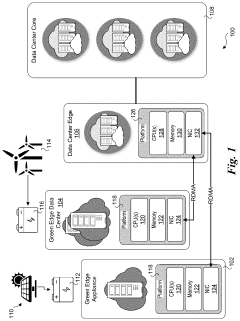
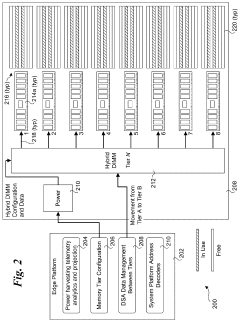
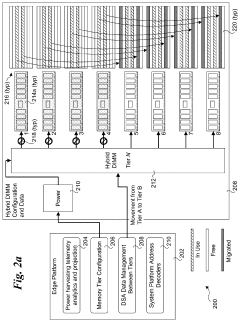
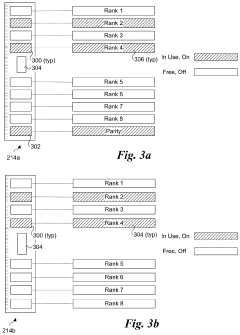
Memory management based on background eviction
PatentActiveEP4586099A1
Innovation
- Implementing a persistent memory controller with metadata generation, request management, and data controller processing to perform background eviction during device idle time, utilizing criteria such as priority, data pattern, and age to optimize data transfer to persistent memory.


Edge Computing Infrastructure Standards and Compliance
The integration of persistent memory technologies in edge computing systems necessitates adherence to evolving infrastructure standards and compliance frameworks. Current standardization efforts primarily focus on IEEE 802.11 wireless communication protocols, OpenFog Consortium specifications, and Industrial Internet Consortium reference architectures. These frameworks establish baseline requirements for edge device interoperability, data processing capabilities, and network connectivity standards that directly impact persistent memory implementation strategies.
Regulatory compliance in edge computing environments encompasses multiple jurisdictions and industry-specific requirements. The General Data Protection Regulation (GDPR) in Europe mandates strict data residency and processing controls that influence persistent memory deployment patterns. Similarly, sector-specific regulations such as HIPAA for healthcare and PCI-DSS for financial services impose additional constraints on memory persistence mechanisms and data retention policies at edge locations.
Emerging standards from organizations like ETSI Multi-access Edge Computing (MEC) and 3GPP are establishing technical specifications for edge infrastructure deployment. These standards define latency requirements, processing capabilities, and storage persistence characteristics that directly influence persistent memory architecture decisions. The ETSI MEC framework specifically addresses service continuity and state preservation requirements that align with persistent memory capabilities for maintaining application context across system failures.
Compliance challenges arise from the distributed nature of edge deployments, where traditional centralized security and audit mechanisms become insufficient. Standards such as ISO/IEC 27001 and NIST Cybersecurity Framework require adaptation for edge-specific scenarios involving persistent memory systems. These adaptations include enhanced encryption requirements for data-at-rest in persistent memory modules and specialized key management protocols for distributed edge environments.
Industry consortiums are developing certification programs for edge computing components, including persistent memory technologies. The Open Compute Project and Linux Foundation Edge initiatives are establishing hardware compatibility standards and software stack requirements that ensure consistent performance and security characteristics across different vendor implementations.
Future compliance frameworks will likely incorporate specific provisions for persistent memory technologies, addressing unique characteristics such as byte-addressability, non-volatility, and performance persistence across power cycles. These evolving standards will establish testing methodologies, performance benchmarks, and security validation procedures specifically tailored to persistent memory applications in edge computing environments.
Regulatory compliance in edge computing environments encompasses multiple jurisdictions and industry-specific requirements. The General Data Protection Regulation (GDPR) in Europe mandates strict data residency and processing controls that influence persistent memory deployment patterns. Similarly, sector-specific regulations such as HIPAA for healthcare and PCI-DSS for financial services impose additional constraints on memory persistence mechanisms and data retention policies at edge locations.
Emerging standards from organizations like ETSI Multi-access Edge Computing (MEC) and 3GPP are establishing technical specifications for edge infrastructure deployment. These standards define latency requirements, processing capabilities, and storage persistence characteristics that directly influence persistent memory architecture decisions. The ETSI MEC framework specifically addresses service continuity and state preservation requirements that align with persistent memory capabilities for maintaining application context across system failures.
Compliance challenges arise from the distributed nature of edge deployments, where traditional centralized security and audit mechanisms become insufficient. Standards such as ISO/IEC 27001 and NIST Cybersecurity Framework require adaptation for edge-specific scenarios involving persistent memory systems. These adaptations include enhanced encryption requirements for data-at-rest in persistent memory modules and specialized key management protocols for distributed edge environments.
Industry consortiums are developing certification programs for edge computing components, including persistent memory technologies. The Open Compute Project and Linux Foundation Edge initiatives are establishing hardware compatibility standards and software stack requirements that ensure consistent performance and security characteristics across different vendor implementations.
Future compliance frameworks will likely incorporate specific provisions for persistent memory technologies, addressing unique characteristics such as byte-addressability, non-volatility, and performance persistence across power cycles. These evolving standards will establish testing methodologies, performance benchmarks, and security validation procedures specifically tailored to persistent memory applications in edge computing environments.
Energy Efficiency Considerations in Persistent Memory Design
Energy efficiency represents a critical design consideration for persistent memory technologies deployed in edge computing environments, where power constraints and thermal management directly impact system performance and operational sustainability. The inherent characteristics of edge systems, including limited power budgets, restricted cooling capabilities, and battery-dependent operations, necessitate careful evaluation of energy consumption patterns across different persistent memory architectures.
Contemporary persistent memory technologies exhibit varying energy profiles that significantly influence their suitability for edge deployments. Phase-change memory (PCM) demonstrates relatively high write energy consumption due to the thermal processes required for crystalline state transitions, while offering competitive read energy characteristics. In contrast, resistive RAM (ReRAM) technologies typically consume lower write energy but may require more sophisticated control circuitry that introduces additional power overhead.
The energy efficiency of persistent memory in edge systems extends beyond individual memory cell operations to encompass system-level considerations. Memory controller design plays a pivotal role in optimizing power consumption through intelligent caching strategies, write coalescing mechanisms, and dynamic power management features. Advanced controllers can implement wear-leveling algorithms that minimize unnecessary write operations while maintaining data integrity and system performance.
Thermal management emerges as a particularly challenging aspect of energy-efficient persistent memory design in edge environments. Unlike traditional data center deployments with robust cooling infrastructure, edge systems must operate within constrained thermal envelopes. This limitation requires persistent memory technologies to maintain stable operation across wide temperature ranges while minimizing heat generation during intensive workloads.
Power scaling techniques specific to persistent memory architectures offer promising approaches for enhancing energy efficiency. Voltage scaling methodologies can reduce dynamic power consumption during memory operations, while advanced sleep modes enable significant static power reduction during idle periods. Multi-level cell technologies provide opportunities for energy optimization by allowing selective precision based on application requirements.
The integration of persistent memory with edge-specific workload patterns presents unique energy optimization opportunities. Applications characterized by frequent small writes and read-intensive operations can benefit from tailored memory hierarchies that leverage the non-volatile characteristics of persistent memory to reduce overall system energy consumption while maintaining low-latency access patterns essential for edge computing scenarios.
Contemporary persistent memory technologies exhibit varying energy profiles that significantly influence their suitability for edge deployments. Phase-change memory (PCM) demonstrates relatively high write energy consumption due to the thermal processes required for crystalline state transitions, while offering competitive read energy characteristics. In contrast, resistive RAM (ReRAM) technologies typically consume lower write energy but may require more sophisticated control circuitry that introduces additional power overhead.
The energy efficiency of persistent memory in edge systems extends beyond individual memory cell operations to encompass system-level considerations. Memory controller design plays a pivotal role in optimizing power consumption through intelligent caching strategies, write coalescing mechanisms, and dynamic power management features. Advanced controllers can implement wear-leveling algorithms that minimize unnecessary write operations while maintaining data integrity and system performance.
Thermal management emerges as a particularly challenging aspect of energy-efficient persistent memory design in edge environments. Unlike traditional data center deployments with robust cooling infrastructure, edge systems must operate within constrained thermal envelopes. This limitation requires persistent memory technologies to maintain stable operation across wide temperature ranges while minimizing heat generation during intensive workloads.
Power scaling techniques specific to persistent memory architectures offer promising approaches for enhancing energy efficiency. Voltage scaling methodologies can reduce dynamic power consumption during memory operations, while advanced sleep modes enable significant static power reduction during idle periods. Multi-level cell technologies provide opportunities for energy optimization by allowing selective precision based on application requirements.
The integration of persistent memory with edge-specific workload patterns presents unique energy optimization opportunities. Applications characterized by frequent small writes and read-intensive operations can benefit from tailored memory hierarchies that leverage the non-volatile characteristics of persistent memory to reduce overall system energy consumption while maintaining low-latency access patterns essential for edge computing scenarios.
Unlock deeper insights with PatSnap Eureka Quick Research — get a full tech report to explore trends and direct your research. Try now!
Generate Your Research Report Instantly with AI Agent
Supercharge your innovation with PatSnap Eureka AI Agent Platform!