
Calibration Drift vs Error Correction
MAR 27, 20269 MIN READ
Generate Your Research Report Instantly with AI Agent
Patsnap Eureka helps you evaluate technical feasibility & market potential.
Calibration Drift Background and Research Objectives
Calibration drift represents one of the most persistent challenges in precision measurement systems across industries ranging from aerospace to medical devices. This phenomenon occurs when measurement instruments gradually deviate from their original calibrated state over time, leading to systematic errors that compound and potentially compromise system reliability. The drift manifests through various mechanisms including component aging, environmental stress, thermal cycling, and material degradation, making it an inevitable concern for any long-term measurement application.
The evolution of calibration drift research has progressed through distinct phases, beginning with basic drift characterization in the 1960s for military applications, advancing to predictive modeling in the 1980s with the rise of computer-aided analysis, and culminating in today's intelligent correction systems. Early approaches focused primarily on periodic recalibration schedules, while modern methodologies emphasize real-time monitoring and adaptive compensation strategies.
Error correction techniques have emerged as a complementary approach to traditional calibration maintenance, offering dynamic solutions that can address drift effects without requiring physical recalibration. These methods range from simple offset corrections to sophisticated machine learning algorithms that can predict and compensate for complex drift patterns. The integration of sensor fusion, digital signal processing, and artificial intelligence has opened new possibilities for maintaining measurement accuracy in challenging operational environments.
Current research objectives center on developing hybrid approaches that combine the strengths of both preventive calibration strategies and reactive error correction methods. Key focus areas include establishing optimal recalibration intervals based on drift prediction models, developing self-calibrating sensor architectures, and creating robust error correction algorithms that can distinguish between drift-induced errors and actual signal variations.
The ultimate goal is to achieve measurement systems that maintain specified accuracy levels throughout their operational lifetime while minimizing maintenance costs and downtime. This requires advancing our understanding of drift mechanisms, improving prediction capabilities, and developing more sophisticated correction algorithms that can adapt to varying operational conditions and aging patterns.
The evolution of calibration drift research has progressed through distinct phases, beginning with basic drift characterization in the 1960s for military applications, advancing to predictive modeling in the 1980s with the rise of computer-aided analysis, and culminating in today's intelligent correction systems. Early approaches focused primarily on periodic recalibration schedules, while modern methodologies emphasize real-time monitoring and adaptive compensation strategies.
Error correction techniques have emerged as a complementary approach to traditional calibration maintenance, offering dynamic solutions that can address drift effects without requiring physical recalibration. These methods range from simple offset corrections to sophisticated machine learning algorithms that can predict and compensate for complex drift patterns. The integration of sensor fusion, digital signal processing, and artificial intelligence has opened new possibilities for maintaining measurement accuracy in challenging operational environments.
Current research objectives center on developing hybrid approaches that combine the strengths of both preventive calibration strategies and reactive error correction methods. Key focus areas include establishing optimal recalibration intervals based on drift prediction models, developing self-calibrating sensor architectures, and creating robust error correction algorithms that can distinguish between drift-induced errors and actual signal variations.
The ultimate goal is to achieve measurement systems that maintain specified accuracy levels throughout their operational lifetime while minimizing maintenance costs and downtime. This requires advancing our understanding of drift mechanisms, improving prediction capabilities, and developing more sophisticated correction algorithms that can adapt to varying operational conditions and aging patterns.
Market Demand for Drift-Resistant Calibration Systems
The global market for drift-resistant calibration systems is experiencing unprecedented growth driven by the increasing complexity of modern industrial processes and the stringent accuracy requirements across multiple sectors. Industries such as pharmaceuticals, aerospace, automotive manufacturing, and semiconductor production are demanding calibration solutions that maintain long-term stability while minimizing measurement uncertainties. The shift toward Industry 4.0 and smart manufacturing has amplified the need for autonomous calibration systems that can operate reliably without frequent manual intervention.
Healthcare and life sciences represent one of the most significant market drivers for drift-resistant calibration technologies. Medical device manufacturers require calibration systems that ensure consistent performance over extended periods, particularly for critical applications such as patient monitoring equipment, diagnostic instruments, and laboratory analyzers. Regulatory compliance in these sectors mandates rigorous calibration protocols, creating substantial demand for systems that can demonstrate traceability and stability over time.
The energy sector, including renewable energy installations and traditional power generation facilities, presents another major market opportunity. Wind turbines, solar panel monitoring systems, and grid infrastructure require calibration solutions that can withstand harsh environmental conditions while maintaining measurement accuracy. The growing emphasis on energy efficiency and carbon footprint reduction has intensified the focus on precise monitoring and control systems, driving demand for robust calibration technologies.
Emerging markets in developing economies are contributing significantly to the overall demand growth. As these regions expand their manufacturing capabilities and implement stricter quality standards, the adoption of advanced calibration systems becomes essential. The automotive industry's transition toward electric vehicles and autonomous driving technologies has created new calibration challenges, particularly for sensor fusion systems and battery management applications.
The Internet of Things and edge computing trends are reshaping market expectations, with customers increasingly seeking calibration systems that can integrate seamlessly with digital ecosystems. Remote monitoring capabilities, predictive maintenance features, and cloud-based calibration management are becoming standard requirements rather than optional features.
Market research indicates that end-users are prioritizing total cost of ownership over initial purchase price, recognizing that drift-resistant systems deliver long-term value through reduced maintenance requirements and improved operational efficiency. This shift in purchasing behavior is encouraging manufacturers to invest in advanced calibration technologies that offer superior stability and reliability characteristics.
Healthcare and life sciences represent one of the most significant market drivers for drift-resistant calibration technologies. Medical device manufacturers require calibration systems that ensure consistent performance over extended periods, particularly for critical applications such as patient monitoring equipment, diagnostic instruments, and laboratory analyzers. Regulatory compliance in these sectors mandates rigorous calibration protocols, creating substantial demand for systems that can demonstrate traceability and stability over time.
The energy sector, including renewable energy installations and traditional power generation facilities, presents another major market opportunity. Wind turbines, solar panel monitoring systems, and grid infrastructure require calibration solutions that can withstand harsh environmental conditions while maintaining measurement accuracy. The growing emphasis on energy efficiency and carbon footprint reduction has intensified the focus on precise monitoring and control systems, driving demand for robust calibration technologies.
Emerging markets in developing economies are contributing significantly to the overall demand growth. As these regions expand their manufacturing capabilities and implement stricter quality standards, the adoption of advanced calibration systems becomes essential. The automotive industry's transition toward electric vehicles and autonomous driving technologies has created new calibration challenges, particularly for sensor fusion systems and battery management applications.
The Internet of Things and edge computing trends are reshaping market expectations, with customers increasingly seeking calibration systems that can integrate seamlessly with digital ecosystems. Remote monitoring capabilities, predictive maintenance features, and cloud-based calibration management are becoming standard requirements rather than optional features.
Market research indicates that end-users are prioritizing total cost of ownership over initial purchase price, recognizing that drift-resistant systems deliver long-term value through reduced maintenance requirements and improved operational efficiency. This shift in purchasing behavior is encouraging manufacturers to invest in advanced calibration technologies that offer superior stability and reliability characteristics.
Current Calibration Drift Issues and Error Correction Challenges
Calibration drift represents one of the most persistent challenges in precision measurement systems across industries. This phenomenon occurs when sensor outputs gradually deviate from their original calibrated values over time, leading to systematic measurement errors that compound without intervention. The drift manifests through various mechanisms including component aging, environmental stress, thermal cycling, and material degradation within sensing elements.
Temperature fluctuations constitute a primary driver of calibration drift, particularly in electronic sensors where thermal expansion and contraction affect circuit parameters. Humidity exposure creates additional complications by altering material properties and introducing corrosion effects that progressively shift sensor characteristics. Mechanical stress from vibration, pressure changes, and physical handling accelerates drift rates in many sensor types, while chemical exposure can permanently alter sensing element properties.
Error correction methodologies currently employed in industry face significant limitations when addressing drift-related inaccuracies. Traditional static correction algorithms, designed for fixed offset and gain errors, prove inadequate for time-varying drift patterns. These approaches typically rely on predetermined correction factors that become obsolete as drift progresses, resulting in overcorrection or undercorrection scenarios that can worsen measurement accuracy.
Real-time drift compensation presents substantial technical challenges due to the difficulty in distinguishing between legitimate signal changes and drift-induced variations. Many systems lack sufficient reference standards or redundant measurement paths necessary for continuous drift monitoring. The computational overhead required for sophisticated drift detection algorithms often exceeds available processing resources in embedded measurement systems.
Predictive drift modeling faces obstacles from the complex, non-linear nature of drift mechanisms. Environmental factors interact in unpredictable ways, making accurate drift forecasting extremely challenging. Historical drift data often proves insufficient for reliable prediction models, particularly when operating conditions change or new environmental stressors emerge.
Current error correction strategies struggle with the trade-off between correction frequency and system availability. Frequent recalibration minimizes drift impact but increases downtime and operational costs. Conversely, extended calibration intervals risk significant accuracy degradation. This challenge becomes particularly acute in remote or inaccessible installations where manual intervention is costly or impractical.
The integration of multiple correction techniques creates additional complexity, as different methods may conflict or introduce new error sources. Determining optimal correction parameters requires extensive characterization studies that may not translate effectively across different operating environments or production units.
Temperature fluctuations constitute a primary driver of calibration drift, particularly in electronic sensors where thermal expansion and contraction affect circuit parameters. Humidity exposure creates additional complications by altering material properties and introducing corrosion effects that progressively shift sensor characteristics. Mechanical stress from vibration, pressure changes, and physical handling accelerates drift rates in many sensor types, while chemical exposure can permanently alter sensing element properties.
Error correction methodologies currently employed in industry face significant limitations when addressing drift-related inaccuracies. Traditional static correction algorithms, designed for fixed offset and gain errors, prove inadequate for time-varying drift patterns. These approaches typically rely on predetermined correction factors that become obsolete as drift progresses, resulting in overcorrection or undercorrection scenarios that can worsen measurement accuracy.
Real-time drift compensation presents substantial technical challenges due to the difficulty in distinguishing between legitimate signal changes and drift-induced variations. Many systems lack sufficient reference standards or redundant measurement paths necessary for continuous drift monitoring. The computational overhead required for sophisticated drift detection algorithms often exceeds available processing resources in embedded measurement systems.
Predictive drift modeling faces obstacles from the complex, non-linear nature of drift mechanisms. Environmental factors interact in unpredictable ways, making accurate drift forecasting extremely challenging. Historical drift data often proves insufficient for reliable prediction models, particularly when operating conditions change or new environmental stressors emerge.
Current error correction strategies struggle with the trade-off between correction frequency and system availability. Frequent recalibration minimizes drift impact but increases downtime and operational costs. Conversely, extended calibration intervals risk significant accuracy degradation. This challenge becomes particularly acute in remote or inaccessible installations where manual intervention is costly or impractical.
The integration of multiple correction techniques creates additional complexity, as different methods may conflict or introduce new error sources. Determining optimal correction parameters requires extensive characterization studies that may not translate effectively across different operating environments or production units.
Existing Drift Compensation and Error Correction Solutions
01 Automatic calibration drift compensation methods
Systems and methods for automatically detecting and compensating for calibration drift over time in measurement instruments. These approaches monitor sensor performance continuously and apply corrections when drift is detected, ensuring measurement accuracy is maintained without manual intervention. The techniques often involve comparing current measurements against reference standards or historical data to identify drift patterns.- Automatic calibration drift compensation methods: Systems and methods for automatically detecting and compensating for calibration drift in measurement instruments over time. These approaches monitor sensor performance continuously and apply correction factors to maintain accuracy without manual intervention. The techniques involve tracking measurement deviations from known reference values and adjusting calibration parameters dynamically to counteract drift effects caused by environmental factors, component aging, or operational conditions.
- Error correction algorithms for calibration accuracy improvement: Advanced computational methods for improving calibration accuracy through error correction algorithms that identify and compensate for systematic and random errors. These techniques analyze measurement data patterns, apply mathematical models to characterize error sources, and implement correction procedures that enhance overall measurement precision. The approaches include statistical analysis, machine learning algorithms, and adaptive filtering to distinguish between actual signal variations and measurement errors.
- Multi-point calibration and drift detection systems: Calibration systems utilizing multiple reference points to establish accurate measurement baselines and detect drift patterns. These methods involve periodic verification against multiple known standards, enabling more precise characterization of instrument behavior and drift trends. The systems can identify non-linear drift patterns and apply appropriate correction curves to maintain accuracy across the entire measurement range.
- Real-time calibration monitoring and adjustment: Technologies for continuous real-time monitoring of calibration status with immediate adjustment capabilities. These systems incorporate sensors and feedback mechanisms that constantly evaluate measurement accuracy and trigger recalibration or apply corrections as needed. The approaches minimize downtime and ensure consistent accuracy by detecting deviations early and implementing corrective actions automatically during operation.
- Temperature and environmental compensation for calibration stability: Methods for compensating calibration drift caused by temperature variations and environmental factors. These techniques incorporate temperature sensors and environmental monitoring to apply correction factors that account for thermal effects on measurement accuracy. The systems use mathematical models or lookup tables to adjust calibration parameters based on current environmental conditions, ensuring stable performance across varying operational environments.
02 Error correction algorithms for calibration accuracy
Advanced error correction algorithms that improve calibration accuracy by identifying and correcting systematic errors in measurement systems. These methods utilize mathematical models and computational techniques to analyze measurement data, detect error patterns, and apply appropriate corrections. The algorithms can handle multiple error sources simultaneously and adapt to changing conditions.Expand Specific Solutions03 Real-time calibration monitoring and adjustment
Technologies for continuous monitoring of calibration status during operation with real-time adjustment capabilities. These systems track calibration parameters dynamically and make immediate corrections when deviations are detected, preventing measurement errors before they occur. The approach enables maintaining high accuracy without interrupting normal operations.Expand Specific Solutions04 Multi-point calibration verification techniques
Methods employing multiple calibration points to verify and improve measurement accuracy across the entire operating range. These techniques use reference standards at various points to create comprehensive calibration curves and identify non-linear errors. The approach provides more robust error correction compared to single-point calibration methods.Expand Specific Solutions05 Temperature-compensated calibration systems
Calibration systems that account for temperature-induced drift and errors by incorporating temperature compensation mechanisms. These systems measure ambient or device temperature and apply corresponding corrections to maintain accuracy across varying thermal conditions. The methods are particularly important for precision instruments operating in environments with temperature fluctuations.Expand Specific Solutions
Key Players in Calibration and Metrology Industry
The calibration drift versus error correction technology landscape represents a mature yet evolving market driven by increasing precision demands across semiconductor manufacturing, aerospace, and industrial automation sectors. The industry demonstrates strong technical maturity with established players like Fluke Corp., Keysight Technologies, and Beamex Oy Ab leading traditional calibration solutions, while semiconductor giants including ASML Holding NV, Applied Materials, and Advanced Micro Devices drive advanced error correction methodologies. Market growth is fueled by Industry 4.0 requirements and stringent quality standards in automotive and aerospace applications, with companies like Robert Bosch GmbH, Safran Electronics & Defense, and Thales SA integrating sophisticated calibration systems. The competitive landscape shows consolidation around comprehensive solution providers, while emerging players like trinamiX GmbH and specialized firms focus on niche applications, indicating a market transitioning from standalone calibration tools toward integrated, AI-enhanced error correction platforms.
Fluke Corp.
Technical Solution: Fluke develops advanced calibration management systems that integrate real-time drift monitoring with predictive error correction algorithms. Their approach combines temperature compensation models with statistical process control to detect calibration drift patterns before they exceed acceptable limits. The system employs machine learning techniques to analyze historical calibration data and predict when instruments will require recalibration, reducing unnecessary calibration cycles by up to 30% while maintaining measurement accuracy within specified tolerances. Their solutions feature automated drift detection using multi-parameter analysis and adaptive correction algorithms that adjust for environmental factors.
Strengths: Industry-leading expertise in calibration standards, robust drift detection algorithms, comprehensive environmental compensation. Weaknesses: Higher cost implementation, requires extensive historical data for optimal performance.
Robert Bosch GmbH
Technical Solution: Bosch develops sensor calibration systems for automotive applications that address drift versus error correction through multi-sensor fusion and cross-validation techniques. Their approach uses redundant sensor arrays to detect calibration drift in real-time, comparing outputs from multiple sensors measuring the same parameter. The system implements adaptive calibration algorithms that can distinguish between temporary environmental effects and permanent sensor drift, applying appropriate correction strategies. Their technology includes self-learning capabilities that improve correction accuracy over time by analyzing driving patterns and environmental conditions, reducing false calibration triggers by 40% while maintaining safety-critical measurement accuracy.
Strengths: Robust automotive-grade solutions, proven reliability in harsh environments, cost-effective mass production capabilities. Weaknesses: Limited to specific sensor types, requires multiple sensors for cross-validation functionality.
Core Patents in Calibration Drift Mitigation Technologies
Method and system for tracking scattering parameter test system calibration
PatentActiveUS7777497B2
Innovation
- A method involving a tracking module with electrical standards to dynamically correct S-parameter measurements by tracking changes in calibration and calculating error adapters to account for drift, ensuring accurate measurements over time.


Method for compensating a spectrum drift in a spectrometer
PatentActiveUS20180128679A1
Innovation
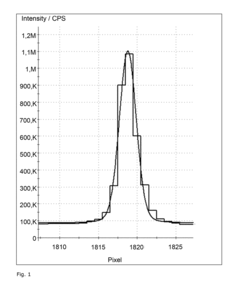
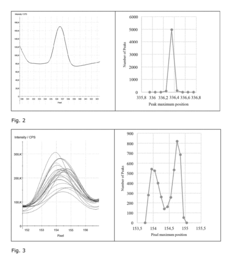
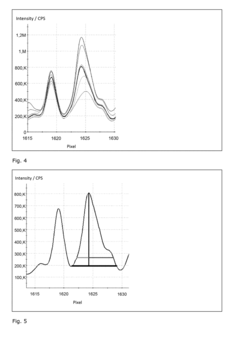
- A method that generates and uses a catalogue of correction lines to calculate a correction function for peak positions, allowing for real-time drift correction during measurements without additional hardware or separate calibrations, using existing data from base calibration and current sample measurements.

Metrological Standards and Calibration Regulations
The establishment of comprehensive metrological standards and calibration regulations forms the cornerstone of effective calibration drift management and error correction protocols. International organizations such as the International Organization for Standardization (ISO) and the International Electrotechnical Commission (IEC) have developed fundamental frameworks that govern calibration practices across industries. ISO/IEC 17025 specifically addresses the competence requirements for testing and calibration laboratories, establishing mandatory procedures for calibration interval determination and drift monitoring.
National metrology institutes worldwide have implemented region-specific regulations that complement international standards while addressing local industrial requirements. The National Institute of Standards and Technology (NIST) in the United States provides detailed guidelines for calibration uncertainty evaluation and traceability requirements. Similarly, the European Committee for Standardization has established EN standards that mandate specific drift tolerance limits for various measurement categories.
Regulatory frameworks distinguish between preventive calibration approaches and corrective error compensation methods. Standards typically require organizations to establish calibration intervals based on historical drift data, environmental conditions, and measurement criticality. The regulations emphasize that calibration drift monitoring must be documented through statistical process control methods, with clear trigger points for recalibration activities.
Industry-specific regulations further refine these general standards to address sector-unique requirements. Pharmaceutical manufacturing follows FDA 21 CFR Part 211 regulations, which mandate stringent calibration verification procedures and drift documentation. Aerospace industries adhere to AS9100 standards that require enhanced calibration control measures due to safety-critical applications.
Emerging regulatory trends focus on risk-based calibration approaches, allowing organizations to optimize calibration frequencies based on quantified drift patterns and measurement uncertainty requirements. These evolving standards promote the integration of automated drift detection systems and real-time error correction mechanisms, reflecting technological advancement in measurement instrumentation and data analytics capabilities.
National metrology institutes worldwide have implemented region-specific regulations that complement international standards while addressing local industrial requirements. The National Institute of Standards and Technology (NIST) in the United States provides detailed guidelines for calibration uncertainty evaluation and traceability requirements. Similarly, the European Committee for Standardization has established EN standards that mandate specific drift tolerance limits for various measurement categories.
Regulatory frameworks distinguish between preventive calibration approaches and corrective error compensation methods. Standards typically require organizations to establish calibration intervals based on historical drift data, environmental conditions, and measurement criticality. The regulations emphasize that calibration drift monitoring must be documented through statistical process control methods, with clear trigger points for recalibration activities.
Industry-specific regulations further refine these general standards to address sector-unique requirements. Pharmaceutical manufacturing follows FDA 21 CFR Part 211 regulations, which mandate stringent calibration verification procedures and drift documentation. Aerospace industries adhere to AS9100 standards that require enhanced calibration control measures due to safety-critical applications.
Emerging regulatory trends focus on risk-based calibration approaches, allowing organizations to optimize calibration frequencies based on quantified drift patterns and measurement uncertainty requirements. These evolving standards promote the integration of automated drift detection systems and real-time error correction mechanisms, reflecting technological advancement in measurement instrumentation and data analytics capabilities.
Cost-Benefit Analysis of Drift Prevention vs Correction
The economic evaluation of calibration drift prevention versus error correction strategies reveals significant differences in both upfront investments and long-term operational costs. Prevention-focused approaches typically require higher initial capital expenditure for advanced sensor technologies, environmental control systems, and robust calibration infrastructure. However, these investments often yield substantial returns through reduced maintenance cycles, minimized downtime, and enhanced measurement reliability over extended periods.
Correction-based strategies present lower initial costs but generate recurring expenses through frequent recalibration procedures, specialized personnel training, and potential production losses during correction cycles. The operational overhead includes not only direct calibration costs but also indirect expenses such as quality assurance verification, documentation compliance, and potential rework of affected measurements. These cumulative costs often exceed prevention investments within 2-3 years of operation.
Risk assessment demonstrates that prevention strategies offer superior protection against catastrophic measurement failures and associated liability costs. The financial impact of undetected drift can be substantial, particularly in regulated industries where compliance violations result in penalties, product recalls, or operational shutdowns. Prevention approaches significantly reduce these exposure risks through proactive monitoring and environmental stability maintenance.
Return on investment analysis indicates that prevention strategies typically achieve break-even points within 18-24 months for high-precision applications, while correction approaches may appear cost-effective short-term but demonstrate diminishing returns as system complexity increases. The total cost of ownership calculations consistently favor prevention methodologies for mission-critical applications requiring sustained accuracy over multi-year operational cycles.
Industry benchmarking reveals that organizations implementing comprehensive drift prevention programs report 40-60% reduction in calibration-related operational costs compared to reactive correction approaches. These savings stem from reduced calibration frequency, improved process stability, and enhanced measurement confidence levels that enable optimized operational parameters and reduced safety margins.
Correction-based strategies present lower initial costs but generate recurring expenses through frequent recalibration procedures, specialized personnel training, and potential production losses during correction cycles. The operational overhead includes not only direct calibration costs but also indirect expenses such as quality assurance verification, documentation compliance, and potential rework of affected measurements. These cumulative costs often exceed prevention investments within 2-3 years of operation.
Risk assessment demonstrates that prevention strategies offer superior protection against catastrophic measurement failures and associated liability costs. The financial impact of undetected drift can be substantial, particularly in regulated industries where compliance violations result in penalties, product recalls, or operational shutdowns. Prevention approaches significantly reduce these exposure risks through proactive monitoring and environmental stability maintenance.
Return on investment analysis indicates that prevention strategies typically achieve break-even points within 18-24 months for high-precision applications, while correction approaches may appear cost-effective short-term but demonstrate diminishing returns as system complexity increases. The total cost of ownership calculations consistently favor prevention methodologies for mission-critical applications requiring sustained accuracy over multi-year operational cycles.
Industry benchmarking reveals that organizations implementing comprehensive drift prevention programs report 40-60% reduction in calibration-related operational costs compared to reactive correction approaches. These savings stem from reduced calibration frequency, improved process stability, and enhanced measurement confidence levels that enable optimized operational parameters and reduced safety margins.
Unlock deeper insights with Patsnap Eureka Quick Research — get a full tech report to explore trends and direct your research. Try now!
Generate Your Research Report Instantly with AI Agent
Supercharge your innovation with Patsnap Eureka AI Agent Platform!