

Degradation mechanisms in solid polymer electrolytes
FEB 11, 20269 MIN READ
Generate Your Research Report Instantly with AI Agent
PatSnap Eureka helps you evaluate technical feasibility & market potential.
Solid Polymer Electrolyte Degradation Background and Objectives
Solid polymer electrolytes have emerged as a critical component in next-generation energy storage systems, particularly for all-solid-state lithium batteries. These materials offer significant advantages over conventional liquid electrolytes, including enhanced safety through elimination of flammable organic solvents, improved mechanical stability, and potential for higher energy density configurations. The transition from liquid to solid electrolytes represents a paradigm shift in battery technology, addressing long-standing safety concerns while enabling new device architectures.
Despite their promising attributes, solid polymer electrolytes face substantial challenges that impede their widespread commercial adoption. The degradation of these materials during battery operation remains a fundamental obstacle, manifesting through multiple interconnected mechanisms that compromise both ionic conductivity and mechanical integrity. Understanding these degradation pathways is essential for developing robust electrolyte systems capable of meeting the demanding requirements of modern energy storage applications.
The primary objective of this research domain is to systematically investigate the various degradation mechanisms affecting solid polymer electrolytes under realistic operating conditions. This encompasses electrochemical decomposition at electrode interfaces, mechanical failure due to volume changes during cycling, thermal degradation at elevated temperatures, and chemical reactions with electrode materials. Identifying the root causes and kinetics of these degradation processes enables the development of mitigation strategies and design principles for enhanced electrolyte stability.
A secondary objective focuses on establishing correlations between material composition, microstructure, and degradation resistance. By elucidating structure-property relationships, researchers aim to guide the rational design of next-generation polymer electrolytes with improved durability. This includes exploring novel polymer architectures, composite formulations, and interface engineering approaches that can extend operational lifetime while maintaining high ionic conductivity.
Ultimately, advancing the understanding of degradation mechanisms in solid polymer electrolytes is crucial for accelerating the commercialization of all-solid-state batteries. This research directly supports the development of safer, longer-lasting energy storage solutions for electric vehicles, grid-scale storage, and portable electronics, aligning with global sustainability goals and the transition toward electrified transportation systems.
Despite their promising attributes, solid polymer electrolytes face substantial challenges that impede their widespread commercial adoption. The degradation of these materials during battery operation remains a fundamental obstacle, manifesting through multiple interconnected mechanisms that compromise both ionic conductivity and mechanical integrity. Understanding these degradation pathways is essential for developing robust electrolyte systems capable of meeting the demanding requirements of modern energy storage applications.
The primary objective of this research domain is to systematically investigate the various degradation mechanisms affecting solid polymer electrolytes under realistic operating conditions. This encompasses electrochemical decomposition at electrode interfaces, mechanical failure due to volume changes during cycling, thermal degradation at elevated temperatures, and chemical reactions with electrode materials. Identifying the root causes and kinetics of these degradation processes enables the development of mitigation strategies and design principles for enhanced electrolyte stability.
A secondary objective focuses on establishing correlations between material composition, microstructure, and degradation resistance. By elucidating structure-property relationships, researchers aim to guide the rational design of next-generation polymer electrolytes with improved durability. This includes exploring novel polymer architectures, composite formulations, and interface engineering approaches that can extend operational lifetime while maintaining high ionic conductivity.
Ultimately, advancing the understanding of degradation mechanisms in solid polymer electrolytes is crucial for accelerating the commercialization of all-solid-state batteries. This research directly supports the development of safer, longer-lasting energy storage solutions for electric vehicles, grid-scale storage, and portable electronics, aligning with global sustainability goals and the transition toward electrified transportation systems.
Market Demand for Durable Solid-State Batteries
The global transition toward electrification in transportation and energy storage systems has created unprecedented demand for advanced battery technologies that surpass the performance limitations of conventional lithium-ion batteries. Solid-state batteries utilizing solid polymer electrolytes represent a transformative solution addressing critical safety concerns, energy density requirements, and operational longevity challenges that currently constrain market expansion. The automotive industry, particularly electric vehicle manufacturers, has emerged as the primary demand driver, seeking battery systems capable of delivering extended driving ranges beyond current benchmarks while eliminating flammability risks associated with liquid electrolytes.
Consumer electronics sectors continue demanding compact, high-capacity power sources for increasingly sophisticated devices, where solid-state architectures offer significant volumetric advantages. Grid-scale energy storage applications present another substantial market segment, requiring battery systems with multi-decade operational lifespans and minimal degradation profiles to ensure economic viability of renewable energy integration. However, premature degradation in solid polymer electrolytes remains the principal barrier preventing widespread commercialization, as performance deterioration directly undermines the value proposition these technologies promise.
Market research indicates that durability specifications have become non-negotiable requirements rather than competitive differentiators. Automotive manufacturers specifically demand battery systems maintaining operational capacity retention above critical thresholds throughout vehicle lifecycles, with degradation mechanisms in polymer electrolytes directly impacting warranty obligations and total cost of ownership calculations. The aerospace and defense sectors impose even more stringent reliability standards, where electrolyte degradation could compromise mission-critical systems.
Understanding degradation mechanisms has therefore transitioned from academic interest to commercial imperative. Stakeholders across the value chain recognize that addressing interfacial instability, mechanical failure propagation, and electrochemical decomposition pathways in solid polymer electrolytes will determine market entry timelines and competitive positioning. Investment patterns reflect this priority, with substantial capital flowing toward research initiatives focused on degradation mitigation strategies. The market fundamentally requires solid-state battery solutions demonstrating predictable, minimal degradation profiles to justify the transition from established lithium-ion technologies and unlock the substantial economic opportunities that durable, safe, high-performance energy storage systems represent.
Consumer electronics sectors continue demanding compact, high-capacity power sources for increasingly sophisticated devices, where solid-state architectures offer significant volumetric advantages. Grid-scale energy storage applications present another substantial market segment, requiring battery systems with multi-decade operational lifespans and minimal degradation profiles to ensure economic viability of renewable energy integration. However, premature degradation in solid polymer electrolytes remains the principal barrier preventing widespread commercialization, as performance deterioration directly undermines the value proposition these technologies promise.
Market research indicates that durability specifications have become non-negotiable requirements rather than competitive differentiators. Automotive manufacturers specifically demand battery systems maintaining operational capacity retention above critical thresholds throughout vehicle lifecycles, with degradation mechanisms in polymer electrolytes directly impacting warranty obligations and total cost of ownership calculations. The aerospace and defense sectors impose even more stringent reliability standards, where electrolyte degradation could compromise mission-critical systems.
Understanding degradation mechanisms has therefore transitioned from academic interest to commercial imperative. Stakeholders across the value chain recognize that addressing interfacial instability, mechanical failure propagation, and electrochemical decomposition pathways in solid polymer electrolytes will determine market entry timelines and competitive positioning. Investment patterns reflect this priority, with substantial capital flowing toward research initiatives focused on degradation mitigation strategies. The market fundamentally requires solid-state battery solutions demonstrating predictable, minimal degradation profiles to justify the transition from established lithium-ion technologies and unlock the substantial economic opportunities that durable, safe, high-performance energy storage systems represent.
Current Degradation Challenges in Polymer Electrolytes
Solid polymer electrolytes face multiple degradation challenges that significantly impede their practical implementation in energy storage devices. Chemical degradation represents a primary concern, manifesting through oxidative and reductive decomposition at electrode interfaces. The electrochemical stability window of polymer electrolytes typically ranges between 3.5 to 4.5 volts, which proves insufficient for high-voltage cathode materials. This limitation triggers parasitic reactions that generate insulating layers and compromise ionic conductivity over extended cycling periods.
Mechanical degradation emerges as another critical obstacle, particularly during battery operation. Volume changes in electrode materials during charge-discharge cycles induce mechanical stress at the electrolyte-electrode interface. Polymer electrolytes, despite their inherent flexibility, struggle to maintain intimate contact with electrodes under repeated dimensional fluctuations. This phenomenon leads to increased interfacial resistance and eventual delamination, severely affecting device performance and longevity.
Thermal stability issues present substantial challenges across operational temperature ranges. Many polymer electrolytes exhibit reduced ionic conductivity at low temperatures due to decreased polymer chain mobility and increased crystallinity. Conversely, elevated temperatures accelerate degradation reactions and may cause dimensional instability or even melting in certain polymer matrices. The narrow operational temperature window constrains application scenarios and necessitates additional thermal management systems.
Lithium dendrite formation constitutes a persistent safety and performance concern. Insufficient mechanical strength in polymer electrolytes fails to suppress dendrite growth during lithium plating processes. These metallic protrusions can penetrate through the electrolyte membrane, causing internal short circuits and catastrophic failure. The challenge intensifies at high current densities, where uneven lithium deposition becomes more pronounced.
Interfacial degradation mechanisms involve complex interactions between polymer chains, lithium salts, and electrode surfaces. Side reactions consume active lithium, forming resistive interphases that impede ion transport. Salt precipitation and phase separation within the polymer matrix further deteriorate conductivity. Additionally, moisture sensitivity in many polymer systems introduces hydrolysis reactions that degrade both the polymer backbone and lithium salt components, compromising electrochemical performance and structural integrity.
Mechanical degradation emerges as another critical obstacle, particularly during battery operation. Volume changes in electrode materials during charge-discharge cycles induce mechanical stress at the electrolyte-electrode interface. Polymer electrolytes, despite their inherent flexibility, struggle to maintain intimate contact with electrodes under repeated dimensional fluctuations. This phenomenon leads to increased interfacial resistance and eventual delamination, severely affecting device performance and longevity.
Thermal stability issues present substantial challenges across operational temperature ranges. Many polymer electrolytes exhibit reduced ionic conductivity at low temperatures due to decreased polymer chain mobility and increased crystallinity. Conversely, elevated temperatures accelerate degradation reactions and may cause dimensional instability or even melting in certain polymer matrices. The narrow operational temperature window constrains application scenarios and necessitates additional thermal management systems.
Lithium dendrite formation constitutes a persistent safety and performance concern. Insufficient mechanical strength in polymer electrolytes fails to suppress dendrite growth during lithium plating processes. These metallic protrusions can penetrate through the electrolyte membrane, causing internal short circuits and catastrophic failure. The challenge intensifies at high current densities, where uneven lithium deposition becomes more pronounced.
Interfacial degradation mechanisms involve complex interactions between polymer chains, lithium salts, and electrode surfaces. Side reactions consume active lithium, forming resistive interphases that impede ion transport. Salt precipitation and phase separation within the polymer matrix further deteriorate conductivity. Additionally, moisture sensitivity in many polymer systems introduces hydrolysis reactions that degrade both the polymer backbone and lithium salt components, compromising electrochemical performance and structural integrity.
Existing Degradation Mitigation Solutions
01 Chemical degradation mechanisms in solid polymer electrolytes
Solid polymer electrolytes can undergo chemical degradation through various mechanisms including oxidation, reduction reactions, and decomposition of polymer chains. These degradation processes can be triggered by electrochemical reactions at the electrode-electrolyte interface, exposure to reactive species, or thermal stress. The chemical stability of the polymer matrix and salt components is critical for long-term performance. Understanding these mechanisms helps in designing more stable electrolyte systems with improved resistance to chemical breakdown.- Chemical degradation of polymer electrolytes: Solid polymer electrolytes can undergo chemical degradation through various mechanisms including oxidation, reduction, and hydrolysis reactions. These degradation processes can be triggered by reactive species, impurities, or electrochemical reactions at the electrode-electrolyte interface. The chemical stability of the polymer matrix and salt components is critical for long-term performance. Degradation products can accumulate and further compromise electrolyte functionality.
- Thermal degradation mechanisms: Elevated temperatures can cause thermal decomposition of polymer electrolytes, leading to chain scission, cross-linking, and loss of ionic conductivity. Thermal stability is particularly important for applications requiring operation at high temperatures. The degradation rate typically increases exponentially with temperature, following Arrhenius behavior. Thermal degradation can also trigger secondary reactions that produce gaseous products and alter the electrolyte structure.
- Electrochemical degradation at interfaces: Degradation can occur at the electrode-electrolyte interface due to electrochemical reactions, including electrolyte decomposition at high voltages and lithium plating at low potentials. Interface instability leads to increased impedance and capacity fade. The formation of solid electrolyte interphase layers and their continuous growth contribute to performance degradation. Incompatibility between electrode materials and polymer electrolytes accelerates interfacial degradation.
- Mechanical degradation and structural changes: Mechanical stress from volume changes during cycling can cause cracking, delamination, and loss of contact in solid polymer electrolytes. Repeated expansion and contraction lead to mechanical fatigue and structural deterioration. Poor mechanical properties result in increased interfacial resistance and reduced cycle life. Dimensional instability and creep behavior also contribute to long-term degradation.
- Degradation from moisture and environmental factors: Exposure to moisture and atmospheric conditions can cause hydrolysis and swelling of polymer electrolytes, leading to reduced ionic conductivity and mechanical integrity. Water absorption promotes side reactions and accelerates degradation processes. Environmental factors such as oxygen and carbon dioxide can also react with electrolyte components. Proper encapsulation and moisture barriers are essential to prevent environmental degradation.
02 Thermal degradation and stability enhancement
Thermal degradation is a significant concern for solid polymer electrolytes, particularly at elevated operating temperatures. High temperatures can cause polymer chain scission, loss of plasticizers, and decomposition of lithium salts. Various approaches have been developed to enhance thermal stability, including the use of thermally stable polymer backbones, incorporation of ceramic fillers, and optimization of cross-linking density. Improved thermal stability extends the operational temperature range and enhances safety characteristics of the electrolyte system.Expand Specific Solutions03 Mechanical degradation and structural integrity
Mechanical degradation in solid polymer electrolytes occurs through processes such as crack formation, delamination, and loss of interfacial contact during battery cycling. Volume changes in electrodes during charge-discharge cycles can induce mechanical stress on the electrolyte. Strategies to mitigate mechanical degradation include optimizing polymer elasticity, incorporating flexible segments, and designing composite structures with enhanced mechanical properties. Maintaining structural integrity is essential for ensuring continuous ionic pathways and preventing short circuits.Expand Specific Solutions04 Interfacial degradation at electrode-electrolyte boundaries
The interface between solid polymer electrolytes and electrodes is particularly susceptible to degradation due to electrochemical reactions, formation of resistive layers, and poor contact. Interfacial degradation can lead to increased impedance, reduced ion transport, and capacity fade. Solutions include surface modification of electrodes, use of buffer layers, incorporation of interfacial stabilizing additives, and optimization of processing conditions to ensure intimate contact. Controlling interfacial degradation is crucial for achieving high performance and long cycle life.Expand Specific Solutions05 Electrochemical degradation and ion transport deterioration
Electrochemical degradation involves the breakdown of electrolyte components due to redox reactions, formation of decomposition products, and changes in ionic conductivity over time. Continuous electrochemical cycling can lead to accumulation of degradation products that block ion transport pathways and reduce overall conductivity. Mitigation strategies include selection of electrochemically stable materials, optimization of operating voltage windows, and incorporation of stabilizing additives. Preventing electrochemical degradation is essential for maintaining consistent battery performance throughout its lifetime.Expand Specific Solutions
Key Players in Solid-State Battery Industry
The solid polymer electrolyte degradation research field represents an emerging yet critical technology area within the broader energy storage and fuel cell sectors, currently in a growth phase driven by increasing demand for safer, high-performance batteries and clean energy systems. Major automotive manufacturers like Toyota Motor Corp. and BYD Co., Ltd. are actively advancing this technology for next-generation electric vehicles, while specialized materials companies including Resonac Holdings Corp., Nitto Denko Corp., and Murata Manufacturing Co. Ltd. focus on developing advanced polymer materials and components. The technology maturity varies across applications, with established players like Toray Industries and Panasonic demonstrating commercial-scale capabilities, while research institutions such as Sun Yat-Sen University, Central South University, and Beijing Institute of Technology contribute fundamental degradation mechanism studies. Chemical specialists like Shenzhen Capchem Technology and battery manufacturers including Tianjin Lishen Battery are bridging laboratory research with industrial implementation, indicating a competitive landscape transitioning from fundamental research toward commercial viability.
Toyota Motor Corp.
Technical Solution: Toyota has developed advanced solid polymer electrolyte systems focusing on understanding degradation mechanisms through multi-scale analysis approaches. Their research emphasizes the correlation between lithium dendrite formation, interfacial resistance growth, and polymer chain degradation under cycling conditions. They employ in-situ characterization techniques including impedance spectroscopy and microscopy to monitor degradation pathways in real-time. Toyota's approach integrates computational modeling with experimental validation to predict degradation rates under various operating conditions, particularly focusing on temperature-dependent degradation mechanisms and mechanical stress-induced failure modes at the electrode-electrolyte interface.
Strengths: Extensive industrial experience in solid-state battery development with strong integration capabilities between research and manufacturing. Weaknesses: Limited public disclosure of specific degradation mitigation strategies due to proprietary concerns.
Resonac Holdings Corp.
Technical Solution: Resonac (formerly Showa Denko) conducts research on degradation mechanisms in solid polymer electrolytes with focus on material chemistry and interfacial phenomena. Their technical approach examines the degradation of polymer backbone structures under electrochemical stress, including chain scission, cross-linking reactions, and side reactions with electrode materials. They investigate how electrolyte decomposition products accumulate at interfaces and contribute to impedance growth over cycling. Resonac's research methodology combines electrochemical analysis with advanced materials characterization to establish structure-property-degradation relationships, enabling the design of more stable polymer electrolyte formulations with improved resistance to oxidative and reductive degradation.
Strengths: Strong materials science expertise and chemical synthesis capabilities for developing degradation-resistant polymer structures. Weaknesses: Smaller scale compared to major automotive manufacturers may limit resources for extensive long-term degradation studies.
Core Mechanisms of Polymer Electrolyte Degradation
Anion exchange polymer electrolytes
PatentInactiveUS20140024728A1
Innovation
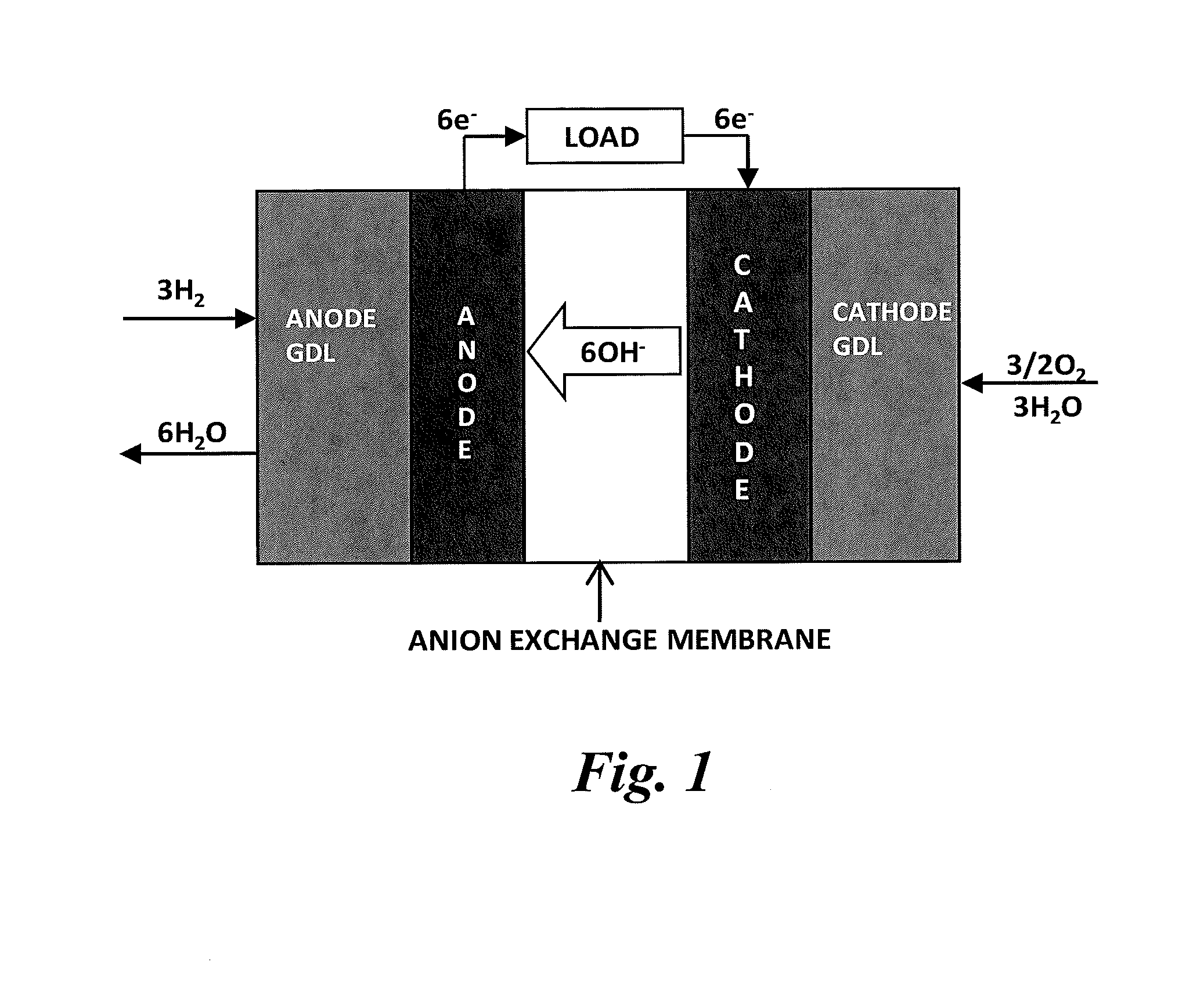
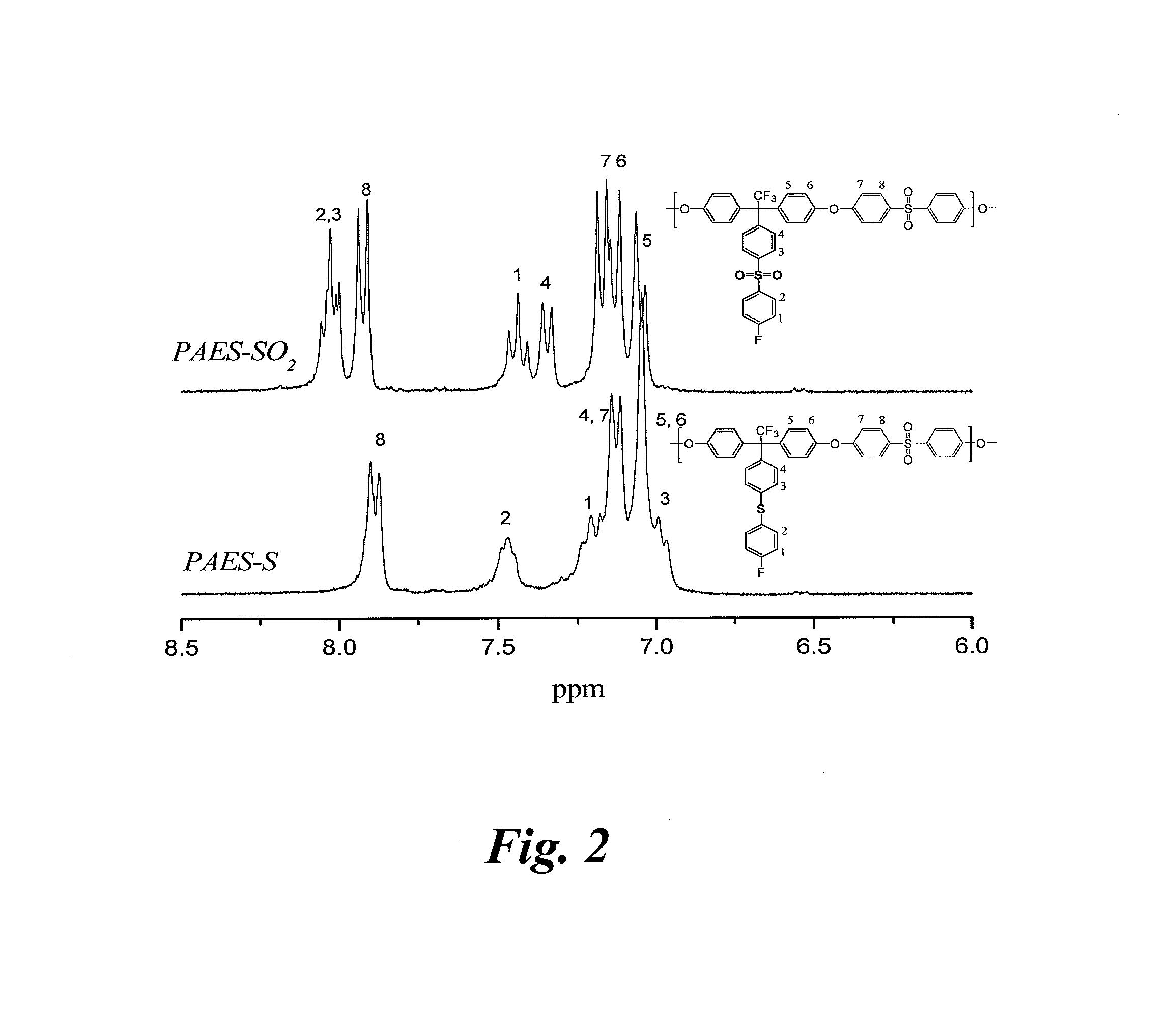
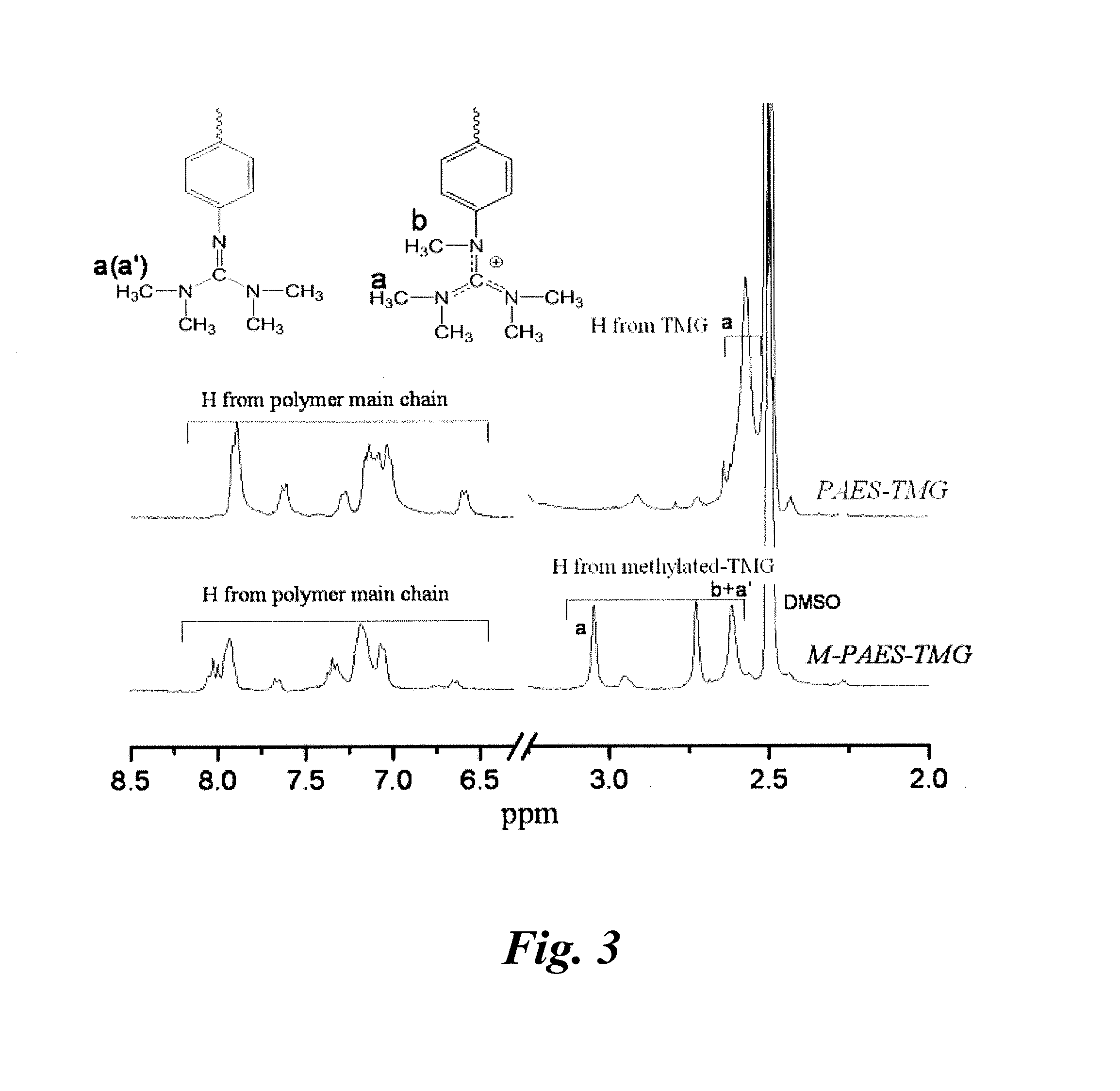
- Development of guanidinium-functionalized anion exchange polymer electrolytes via activated fluorophenyl-amine reaction, which enhances stability and conductivity by stabilizing the α-carbon-nitrogen bond and reducing cation absorption on electrocatalysts, using compositions like PAES-TMG with specific structural modifications and counterions.

Solid oxide electrolysis cell core
PatentWO2023117301A1
Innovation
- The design of a Solid Oxide Electrolysis Cell core with a plurality of stack modules, thermal insulation, and a recuperating space, allowing for isolated maintenance and thermal energy recuperation, reduces heat loss and improves efficiency by preheating process fluids within the core, and enables modular operation with flange connections for easy access and service.


Material Characterization and Testing Standards
Establishing robust material characterization and testing standards is fundamental to advancing research on degradation mechanisms in solid polymer electrolytes. The complexity of degradation processes necessitates a comprehensive framework that encompasses multiple analytical dimensions, from microscopic structural changes to macroscopic performance metrics. Current standardization efforts face challenges due to the diverse chemical compositions of polymer electrolytes and the multifaceted nature of degradation pathways, which include electrochemical decomposition, mechanical stress-induced failure, and thermal instability.
Electrochemical characterization protocols form the cornerstone of degradation assessment. Electrochemical impedance spectroscopy remains the primary technique for monitoring ionic conductivity evolution, requiring standardized frequency ranges, amplitude settings, and temperature control protocols. Cyclic voltammetry and linear sweep voltammetry provide critical insights into electrochemical stability windows, yet variations in scan rates and electrode configurations across laboratories hinder direct comparisons. Establishing unified testing parameters for transference number measurements through techniques such as the Bruce-Vincent method or potentiostatic polarization is essential for quantifying lithium-ion transport properties during degradation.
Structural and morphological characterization demands equally rigorous standardization. X-ray diffraction protocols must specify resolution requirements, sample preparation methods, and environmental controls to track crystallinity changes. Scanning electron microscopy and transmission electron microscopy standards should define accelerating voltages, magnification ranges, and sample handling procedures to ensure reproducible imaging of interfacial degradation and phase separation phenomena. Fourier-transform infrared spectroscopy and nuclear magnetic resonance spectroscopy require standardized sample thicknesses and measurement conditions to accurately monitor chemical bond evolution and polymer chain dynamics.
Mechanical testing standards are critical for understanding stress-related degradation. Tensile strength measurements, dynamic mechanical analysis, and nanoindentation protocols must specify strain rates, temperature profiles, and humidity conditions. Thermal analysis techniques including differential scanning calorimetry and thermogravimetric analysis require standardized heating rates and atmospheric controls to characterize thermal stability boundaries. Furthermore, accelerated aging protocols need consensus on stress factors such as elevated temperatures, voltage extremes, and cycling regimes to enable predictive lifetime modeling across different research groups and industrial applications.
Electrochemical characterization protocols form the cornerstone of degradation assessment. Electrochemical impedance spectroscopy remains the primary technique for monitoring ionic conductivity evolution, requiring standardized frequency ranges, amplitude settings, and temperature control protocols. Cyclic voltammetry and linear sweep voltammetry provide critical insights into electrochemical stability windows, yet variations in scan rates and electrode configurations across laboratories hinder direct comparisons. Establishing unified testing parameters for transference number measurements through techniques such as the Bruce-Vincent method or potentiostatic polarization is essential for quantifying lithium-ion transport properties during degradation.
Structural and morphological characterization demands equally rigorous standardization. X-ray diffraction protocols must specify resolution requirements, sample preparation methods, and environmental controls to track crystallinity changes. Scanning electron microscopy and transmission electron microscopy standards should define accelerating voltages, magnification ranges, and sample handling procedures to ensure reproducible imaging of interfacial degradation and phase separation phenomena. Fourier-transform infrared spectroscopy and nuclear magnetic resonance spectroscopy require standardized sample thicknesses and measurement conditions to accurately monitor chemical bond evolution and polymer chain dynamics.
Mechanical testing standards are critical for understanding stress-related degradation. Tensile strength measurements, dynamic mechanical analysis, and nanoindentation protocols must specify strain rates, temperature profiles, and humidity conditions. Thermal analysis techniques including differential scanning calorimetry and thermogravimetric analysis require standardized heating rates and atmospheric controls to characterize thermal stability boundaries. Furthermore, accelerated aging protocols need consensus on stress factors such as elevated temperatures, voltage extremes, and cycling regimes to enable predictive lifetime modeling across different research groups and industrial applications.
Interface Stability Enhancement Strategies
Interface stability between solid polymer electrolytes and electrode materials represents a critical factor determining the long-term performance and cycle life of solid-state batteries. The inherent chemical and electrochemical incompatibilities at these interfaces lead to progressive degradation, necessitating comprehensive enhancement strategies to mitigate interfacial resistance growth and maintain efficient ion transport pathways.
Surface modification techniques have emerged as primary approaches to improve interfacial contact and stability. Physical coating methods utilizing buffer layers of materials such as lithium phosphorus oxynitride or oxide ceramics create protective barriers that prevent direct contact between reactive components while maintaining ionic conductivity. Chemical surface treatments involving plasma exposure or controlled oxidation can modify surface chemistry to promote better adhesion and reduce interfacial impedance. These modifications must balance the competing requirements of mechanical compliance and electrochemical stability.
Compositional engineering of the electrolyte-electrode interface offers another strategic direction. Incorporating interfacial additives or plasticizers at boundary regions can enhance mechanical contact and accommodate volume changes during cycling. Gradient composition designs, where the electrolyte composition transitions gradually toward electrode-compatible chemistries, minimize abrupt property changes that contribute to delamination and resistance buildup. Such approaches require precise control over material distribution and interfacial architecture.
In-situ interface formation strategies leverage electrochemical or thermal processes to generate stable interphases during initial battery operation. Controlled pre-cycling protocols can establish favorable solid electrolyte interphase layers that subsequently protect against further degradation. Thermal annealing treatments promote interdiffusion and chemical bonding at interfaces, though temperature limitations of polymer electrolytes constrain processing windows.
Advanced manufacturing techniques including atomic layer deposition and molecular layer deposition enable precise control over interfacial layer thickness and composition at nanometer scales. These methods facilitate the creation of artificial protective layers with tailored properties that address specific degradation mechanisms. Integration of these strategies requires systematic understanding of degradation pathways and careful optimization of processing parameters to achieve durable, high-performance interfaces in solid polymer electrolyte systems.
Surface modification techniques have emerged as primary approaches to improve interfacial contact and stability. Physical coating methods utilizing buffer layers of materials such as lithium phosphorus oxynitride or oxide ceramics create protective barriers that prevent direct contact between reactive components while maintaining ionic conductivity. Chemical surface treatments involving plasma exposure or controlled oxidation can modify surface chemistry to promote better adhesion and reduce interfacial impedance. These modifications must balance the competing requirements of mechanical compliance and electrochemical stability.
Compositional engineering of the electrolyte-electrode interface offers another strategic direction. Incorporating interfacial additives or plasticizers at boundary regions can enhance mechanical contact and accommodate volume changes during cycling. Gradient composition designs, where the electrolyte composition transitions gradually toward electrode-compatible chemistries, minimize abrupt property changes that contribute to delamination and resistance buildup. Such approaches require precise control over material distribution and interfacial architecture.
In-situ interface formation strategies leverage electrochemical or thermal processes to generate stable interphases during initial battery operation. Controlled pre-cycling protocols can establish favorable solid electrolyte interphase layers that subsequently protect against further degradation. Thermal annealing treatments promote interdiffusion and chemical bonding at interfaces, though temperature limitations of polymer electrolytes constrain processing windows.
Advanced manufacturing techniques including atomic layer deposition and molecular layer deposition enable precise control over interfacial layer thickness and composition at nanometer scales. These methods facilitate the creation of artificial protective layers with tailored properties that address specific degradation mechanisms. Integration of these strategies requires systematic understanding of degradation pathways and careful optimization of processing parameters to achieve durable, high-performance interfaces in solid polymer electrolyte systems.
Unlock deeper insights with PatSnap Eureka Quick Research — get a full tech report to explore trends and direct your research. Try now!
Generate Your Research Report Instantly with AI Agent
Supercharge your innovation with PatSnap Eureka AI Agent Platform!