
Gradient Descent vs Pareto Optimization for Task Conflicts
OCT 9, 20269 MIN READ
Generate Your Research Report Instantly with AI Agent
Patsnap Eureka helps you evaluate technical feasibility & market potential.
Multi-Task Learning Optimization Background and Objectives
Multi-task learning has emerged as a fundamental paradigm in machine learning, enabling models to simultaneously learn multiple related tasks while leveraging shared representations and knowledge transfer. The core premise is that learning multiple tasks jointly can improve generalization performance compared to training separate models for each task. However, this approach introduces a critical challenge: task conflicts, where optimization directions beneficial for one task may be detrimental to others. This phenomenon becomes particularly pronounced when tasks have competing objectives or require different feature representations.
The evolution of multi-task learning optimization can be traced from early naive approaches that simply summed task losses with equal weights, to more sophisticated methods that recognize the inherent complexity of balancing multiple objectives. Traditional gradient descent methods, while computationally efficient and widely adopted, often struggle with task conflicts as they attempt to find a single descent direction that satisfies all tasks simultaneously. This limitation has motivated researchers to explore alternative optimization frameworks.
Pareto optimization has gained significant attention as a principled approach to address task conflicts by treating multi-task learning as a multi-objective optimization problem. Unlike gradient descent that seeks a compromise solution, Pareto optimization aims to find solutions where no task can be improved without degrading another, representing the optimal trade-off frontier. This perspective shift has opened new avenues for understanding and resolving task interference.
The primary objective of this research is to systematically compare gradient descent and Pareto optimization approaches in handling task conflicts within multi-task learning frameworks. This investigation aims to establish a comprehensive understanding of when and why each method excels, identify their respective limitations, and provide actionable insights for practitioners. Specifically, the research seeks to evaluate convergence properties, computational efficiency, solution quality, and scalability across diverse task configurations and conflict scenarios.
Furthermore, this study targets the development of hybrid strategies that potentially combine the computational advantages of gradient descent with the theoretical rigor of Pareto optimization, ultimately advancing the state-of-the-art in multi-task learning optimization and enabling more robust and efficient training of multi-task models in real-world applications.
The evolution of multi-task learning optimization can be traced from early naive approaches that simply summed task losses with equal weights, to more sophisticated methods that recognize the inherent complexity of balancing multiple objectives. Traditional gradient descent methods, while computationally efficient and widely adopted, often struggle with task conflicts as they attempt to find a single descent direction that satisfies all tasks simultaneously. This limitation has motivated researchers to explore alternative optimization frameworks.
Pareto optimization has gained significant attention as a principled approach to address task conflicts by treating multi-task learning as a multi-objective optimization problem. Unlike gradient descent that seeks a compromise solution, Pareto optimization aims to find solutions where no task can be improved without degrading another, representing the optimal trade-off frontier. This perspective shift has opened new avenues for understanding and resolving task interference.
The primary objective of this research is to systematically compare gradient descent and Pareto optimization approaches in handling task conflicts within multi-task learning frameworks. This investigation aims to establish a comprehensive understanding of when and why each method excels, identify their respective limitations, and provide actionable insights for practitioners. Specifically, the research seeks to evaluate convergence properties, computational efficiency, solution quality, and scalability across diverse task configurations and conflict scenarios.
Furthermore, this study targets the development of hybrid strategies that potentially combine the computational advantages of gradient descent with the theoretical rigor of Pareto optimization, ultimately advancing the state-of-the-art in multi-task learning optimization and enabling more robust and efficient training of multi-task models in real-world applications.
Market Demand for Multi-Task Model Solutions
The demand for multi-task learning solutions has experienced substantial growth across diverse industries as organizations seek to maximize computational efficiency and model performance. Multi-task models, which simultaneously address multiple related objectives, have become increasingly critical in scenarios where resource constraints and deployment complexity necessitate consolidated architectures rather than multiple specialized models.
In computer vision applications, multi-task models are extensively deployed for autonomous driving systems, where a single network must concurrently perform object detection, semantic segmentation, depth estimation, and lane detection. The automotive industry has demonstrated strong preference for unified architectures that reduce inference latency and hardware requirements while maintaining competitive accuracy across all tasks. Similar demand patterns emerge in robotics, where real-time decision-making requires simultaneous processing of multiple perceptual and control tasks.
The natural language processing domain exhibits growing adoption of multi-task frameworks, particularly in conversational AI and content moderation systems. Enterprise applications increasingly require models that can simultaneously handle sentiment analysis, entity recognition, intent classification, and language translation within unified architectures. This consolidation addresses both operational costs and system complexity challenges faced by organizations managing multiple AI services.
Healthcare and medical imaging sectors represent another significant demand driver, where diagnostic systems must simultaneously identify multiple pathological conditions, segment anatomical structures, and assess disease severity from single imaging inputs. Regulatory requirements and clinical workflow constraints favor integrated solutions that provide comprehensive analysis while minimizing computational overhead and deployment complexity.
The challenge of task conflicts, where optimization for one objective degrades performance on others, has emerged as a critical barrier to wider adoption. Organizations report that naive gradient descent approaches frequently result in suboptimal trade-offs, with dominant tasks overshadowing others during training. This technical limitation has created substantial demand for advanced optimization strategies, particularly Pareto-based methods that can systematically balance competing objectives without manual hyperparameter tuning.
Market research indicates that enterprises prioritize solutions offering transparent trade-off management, reproducible training outcomes, and adaptability to varying task importance hierarchies. The ability to dynamically adjust task priorities post-deployment without complete retraining represents a particularly valued capability in production environments where business requirements evolve continuously.
In computer vision applications, multi-task models are extensively deployed for autonomous driving systems, where a single network must concurrently perform object detection, semantic segmentation, depth estimation, and lane detection. The automotive industry has demonstrated strong preference for unified architectures that reduce inference latency and hardware requirements while maintaining competitive accuracy across all tasks. Similar demand patterns emerge in robotics, where real-time decision-making requires simultaneous processing of multiple perceptual and control tasks.
The natural language processing domain exhibits growing adoption of multi-task frameworks, particularly in conversational AI and content moderation systems. Enterprise applications increasingly require models that can simultaneously handle sentiment analysis, entity recognition, intent classification, and language translation within unified architectures. This consolidation addresses both operational costs and system complexity challenges faced by organizations managing multiple AI services.
Healthcare and medical imaging sectors represent another significant demand driver, where diagnostic systems must simultaneously identify multiple pathological conditions, segment anatomical structures, and assess disease severity from single imaging inputs. Regulatory requirements and clinical workflow constraints favor integrated solutions that provide comprehensive analysis while minimizing computational overhead and deployment complexity.
The challenge of task conflicts, where optimization for one objective degrades performance on others, has emerged as a critical barrier to wider adoption. Organizations report that naive gradient descent approaches frequently result in suboptimal trade-offs, with dominant tasks overshadowing others during training. This technical limitation has created substantial demand for advanced optimization strategies, particularly Pareto-based methods that can systematically balance competing objectives without manual hyperparameter tuning.
Market research indicates that enterprises prioritize solutions offering transparent trade-off management, reproducible training outcomes, and adaptability to varying task importance hierarchies. The ability to dynamically adjust task priorities post-deployment without complete retraining represents a particularly valued capability in production environments where business requirements evolve continuously.
Current Challenges in Task Conflict Resolution
Task conflict resolution in multi-task learning environments faces several critical challenges that significantly impact model performance and practical deployment. The fundamental issue stems from the competing nature of gradient updates when multiple objectives are optimized simultaneously. Traditional gradient descent methods often struggle to balance conflicting task requirements, leading to suboptimal solutions where improvements in one task come at the expense of others.
One primary challenge is the gradient interference phenomenon, where task-specific gradients point in opposing directions during backpropagation. This creates instability in the optimization process and can result in negative transfer, where joint training performs worse than training tasks independently. The magnitude and direction of gradient conflicts vary dynamically throughout training, making it difficult to establish consistent optimization strategies.
Another significant obstacle involves the scale imbalance problem across different tasks. Loss functions for various tasks often operate at different numerical scales, causing certain tasks to dominate the learning process while others receive insufficient attention. This imbalance is particularly problematic in applications where all tasks hold equal importance or when smaller-scale tasks represent critical functionalities.
The computational complexity of identifying and resolving conflicts presents practical implementation challenges. Real-time conflict detection requires continuous monitoring of gradient relationships, which introduces substantial overhead in large-scale systems. Many existing solutions demand additional memory for storing historical gradients or computing complex metrics, limiting their applicability in resource-constrained environments.
Furthermore, the lack of universal evaluation metrics for conflict resolution effectiveness complicates comparative analysis. Different approaches may excel under specific conditions but fail in others, and determining the optimal strategy often requires extensive empirical testing. The trade-off between convergence speed and solution quality remains poorly understood, particularly when dealing with more than two conflicting tasks.
The dynamic nature of task relationships throughout training adds another layer of complexity. Tasks that initially cooperate may develop conflicts as the model learns more sophisticated representations, requiring adaptive resolution strategies that can respond to evolving optimization landscapes. Current methods often lack the flexibility to handle such temporal variations effectively.
One primary challenge is the gradient interference phenomenon, where task-specific gradients point in opposing directions during backpropagation. This creates instability in the optimization process and can result in negative transfer, where joint training performs worse than training tasks independently. The magnitude and direction of gradient conflicts vary dynamically throughout training, making it difficult to establish consistent optimization strategies.
Another significant obstacle involves the scale imbalance problem across different tasks. Loss functions for various tasks often operate at different numerical scales, causing certain tasks to dominate the learning process while others receive insufficient attention. This imbalance is particularly problematic in applications where all tasks hold equal importance or when smaller-scale tasks represent critical functionalities.
The computational complexity of identifying and resolving conflicts presents practical implementation challenges. Real-time conflict detection requires continuous monitoring of gradient relationships, which introduces substantial overhead in large-scale systems. Many existing solutions demand additional memory for storing historical gradients or computing complex metrics, limiting their applicability in resource-constrained environments.
Furthermore, the lack of universal evaluation metrics for conflict resolution effectiveness complicates comparative analysis. Different approaches may excel under specific conditions but fail in others, and determining the optimal strategy often requires extensive empirical testing. The trade-off between convergence speed and solution quality remains poorly understood, particularly when dealing with more than two conflicting tasks.
The dynamic nature of task relationships throughout training adds another layer of complexity. Tasks that initially cooperate may develop conflicts as the model learns more sophisticated representations, requiring adaptive resolution strategies that can respond to evolving optimization landscapes. Current methods often lack the flexibility to handle such temporal variations effectively.
Gradient Descent and Pareto Solutions Comparison
01 Multi-objective and Multi-task Optimization Using Gradient Descent
Methods and systems utilize gradient descent algorithms, including alternating and multi-task variants, to simultaneously optimize multiple objectives or tasks and handle conflicting gradients during model training.- Multi-objective and Multi-task Gradient Optimization Methods: Methods and systems utilizing gradient descent techniques, such as alternating or shared gradient optimization, to resolve parameter conflicts and optimize multiple objectives or tasks simultaneously in complex models.
- Pareto Optimization for Conflict Resolution and Scheduling: Techniques utilizing Pareto fronts, Pareto alliance analysis, or Pareto evolutionary algorithms to manage trade-offs, resolve task or resource conflicts, and achieve multi-objective optimization in complex scheduling and decision-making scenarios.
- Advanced Stochastic Gradient Descent Algorithms for AI and Machine Learning: Variations of stochastic gradient descent algorithms designed to accelerate training convergence, reduce pattern or parameter deviations, and optimize model fine-tuning for complex artificial intelligence tasks.
- Conflict Analysis and Performance Optimization Frameworks: Frameworks, matrices, and neural transformer systems designed to detect, analyze, and resolve performance conflicts or task merge conflicts in automated optimization and scheduling systems.
- Application of Gradient Descent in Domain-Specific Physical and Engineering Systems: Application of gradient descent methods for parameters calibration, structural design optimization, and physical system adjustments in fields such as robotics, mechanical engineering, and image processing.
02 Pareto Optimization for Task Scheduling and Conflict Resolution
Techniques apply Pareto optimization, including Pareto frontiers and evolutionary algorithms, to resolve resource conflicts, perform multi-target scheduling, and achieve balanced performance across competing system goals.Expand Specific Solutions03 Matrix and Metric Analysis for Optimization Conflict Resolution
Frameworks incorporate conflict-performance optimization matrices and Pareto-based approximation methods to evaluate, quantify, and mitigate conflicts in complex system performance and route planning tasks.Expand Specific Solutions04 Stochastic Gradient Descent Enhancements and Convergence Acceleration
Advanced stochastic gradient descent algorithms optimize parameters, improve convergence speed, and reduce gradient deviations across distributed or parallel machine learning tasks.Expand Specific Solutions05 Privacy-Preserving and Secure Gradient Optimization
Gradient descent approaches are adapted for federated learning and differentially private settings, utilizing optimized correlation matrices to resolve data privacy and security constraints during optimization.Expand Specific Solutions
Key Players in Multi-Task Learning Frameworks
The research on gradient descent versus Pareto optimization for task conflicts represents an emerging area within multi-task learning and optimization theory, currently in its early-to-mid development stage with growing academic and industrial interest. The market potential spans autonomous systems, augmented reality, telecommunications, and AI-driven applications, driven by increasing demand for efficient multi-objective optimization solutions. Leading academic institutions including Beijing University of Posts & Telecommunications, Beijing Institute of Technology, Beihang University, Central South University, École Polytechnique Fédérale de Lausanne, and Zhejiang University are advancing theoretical foundations, while technology companies such as Google LLC, Huawei Technologies, IBM, Baidu, and Magic Leap are translating these concepts into practical applications. The technology maturity varies across domains, with foundational algorithms being refined in research settings while early commercial implementations emerge in neural architecture search, resource allocation systems, and adaptive AI platforms, indicating a transition from pure research toward applied innovation.
Google LLC
Technical Solution: Google has developed advanced multi-task learning frameworks that address task conflicts through sophisticated gradient manipulation techniques. Their approach combines gradient descent optimization with conflict detection mechanisms, where conflicting gradients between tasks are identified and resolved through projection methods. The system employs dynamic weighting strategies that adjust task priorities based on gradient magnitude and direction conflicts. Google's implementation includes automated conflict resolution algorithms that can detect when gradients from different tasks oppose each other and apply corrective measures such as gradient normalization and orthogonal projection to minimize interference while maintaining learning efficiency across all tasks.
Strengths: Highly scalable architecture with proven performance in production environments; robust conflict detection mechanisms with real-time adaptation capabilities. Weaknesses: Computationally intensive requiring significant hardware resources; complex implementation requiring specialized expertise in multi-objective optimization.
International Business Machines Corp.
Technical Solution: IBM has pioneered research in Pareto optimization approaches for multi-task learning scenarios with conflicting objectives. Their methodology focuses on finding Pareto-optimal solutions that represent optimal trade-offs between competing tasks rather than attempting to optimize all tasks simultaneously through traditional gradient descent. The system employs evolutionary algorithms combined with preference learning to navigate the Pareto frontier, allowing dynamic adjustment of task priorities based on application requirements. IBM's framework includes sophisticated conflict quantification metrics that measure the degree of task interference and automatically selects appropriate optimization strategies, switching between gradient-based methods for cooperative tasks and Pareto-based approaches for conflicting objectives.
Strengths: Provides mathematically rigorous solutions with guaranteed optimality properties; flexible framework adaptable to various conflict scenarios and application domains. Weaknesses: Higher computational complexity in finding Pareto frontiers; requires careful tuning of preference parameters for specific applications.
Core Algorithms for Conflict-Aware Optimization
Gradient based methods for multi-objective optimization
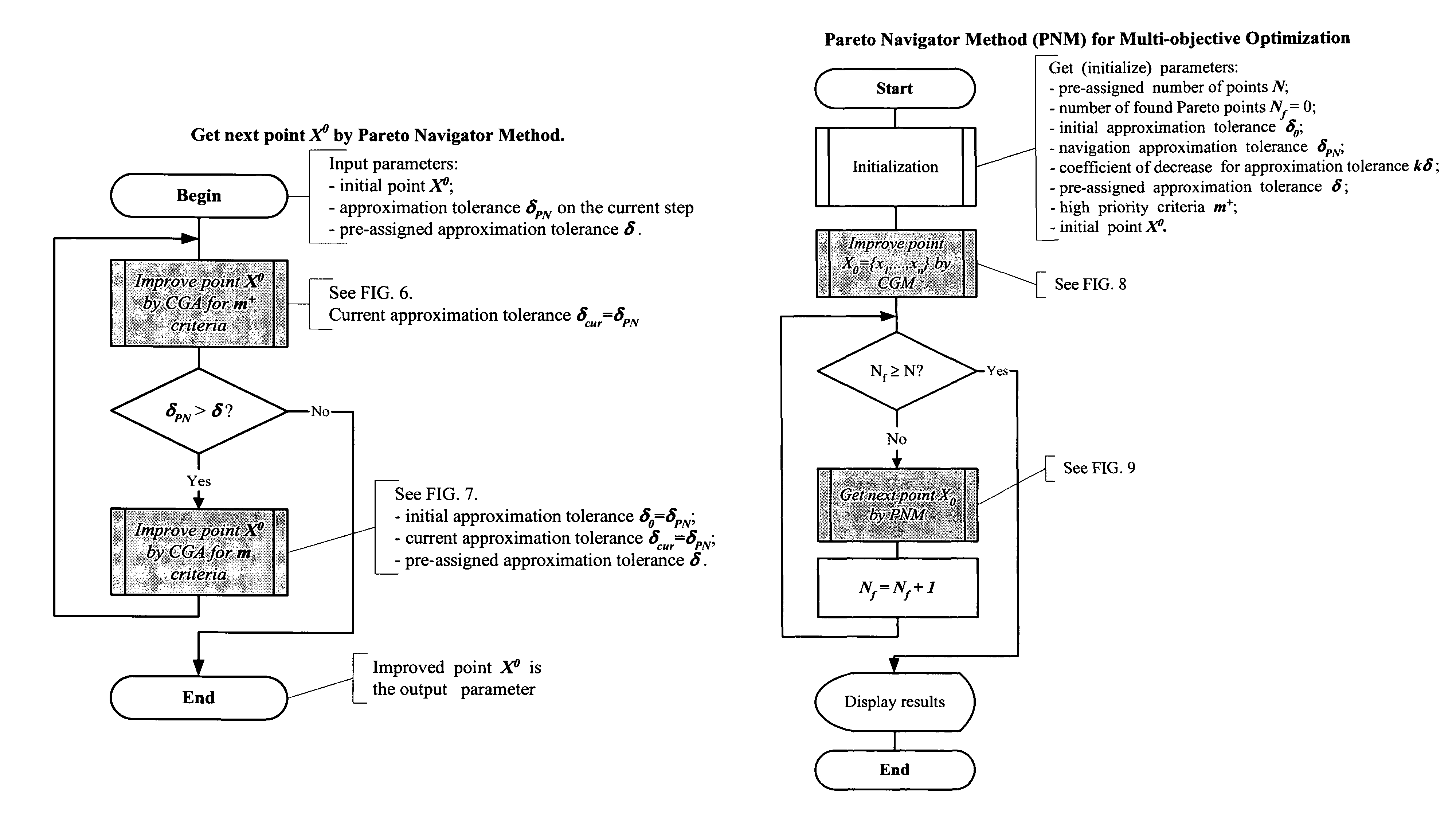
PatentInactiveUS8041545B2
Innovation
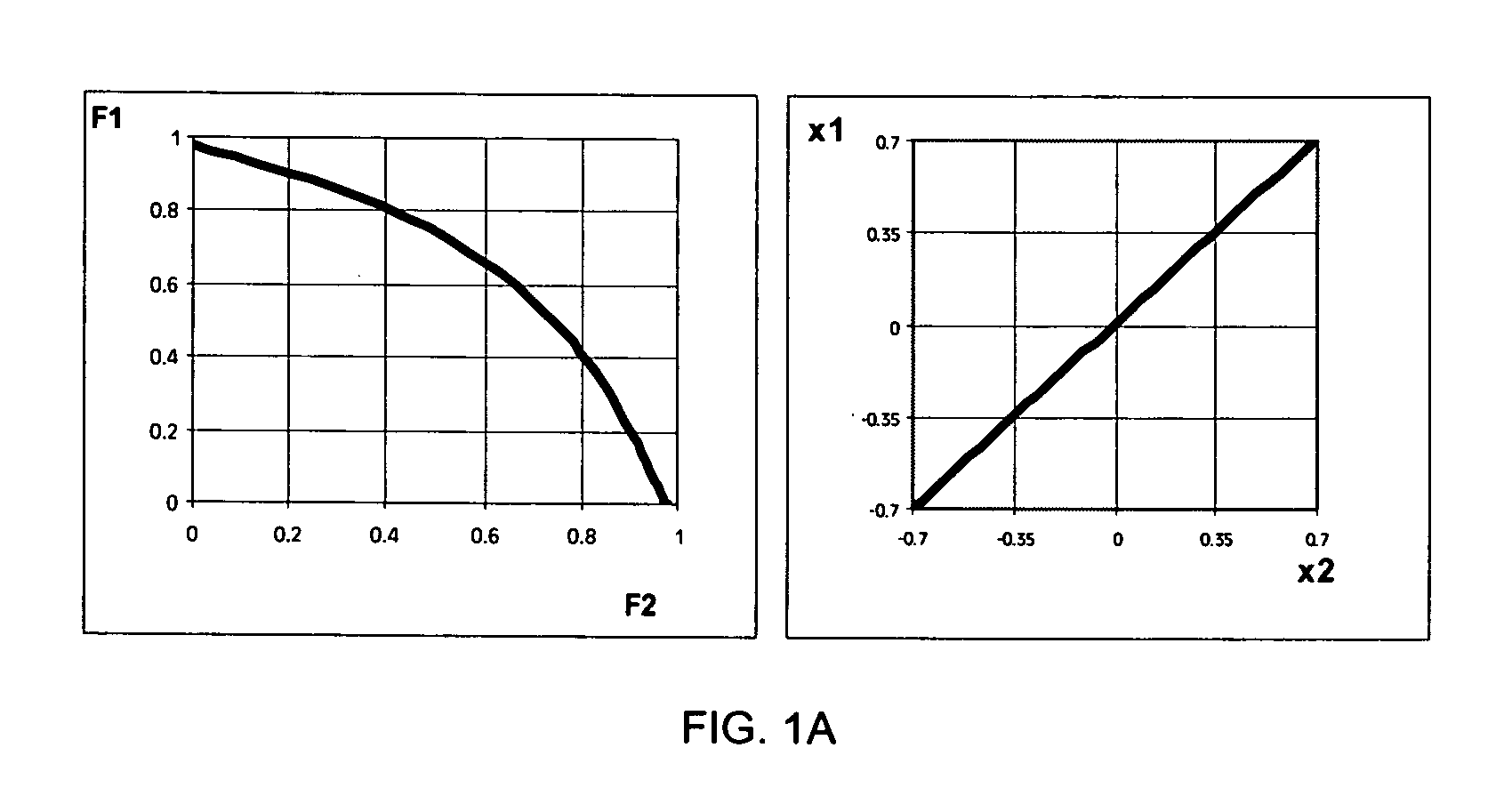
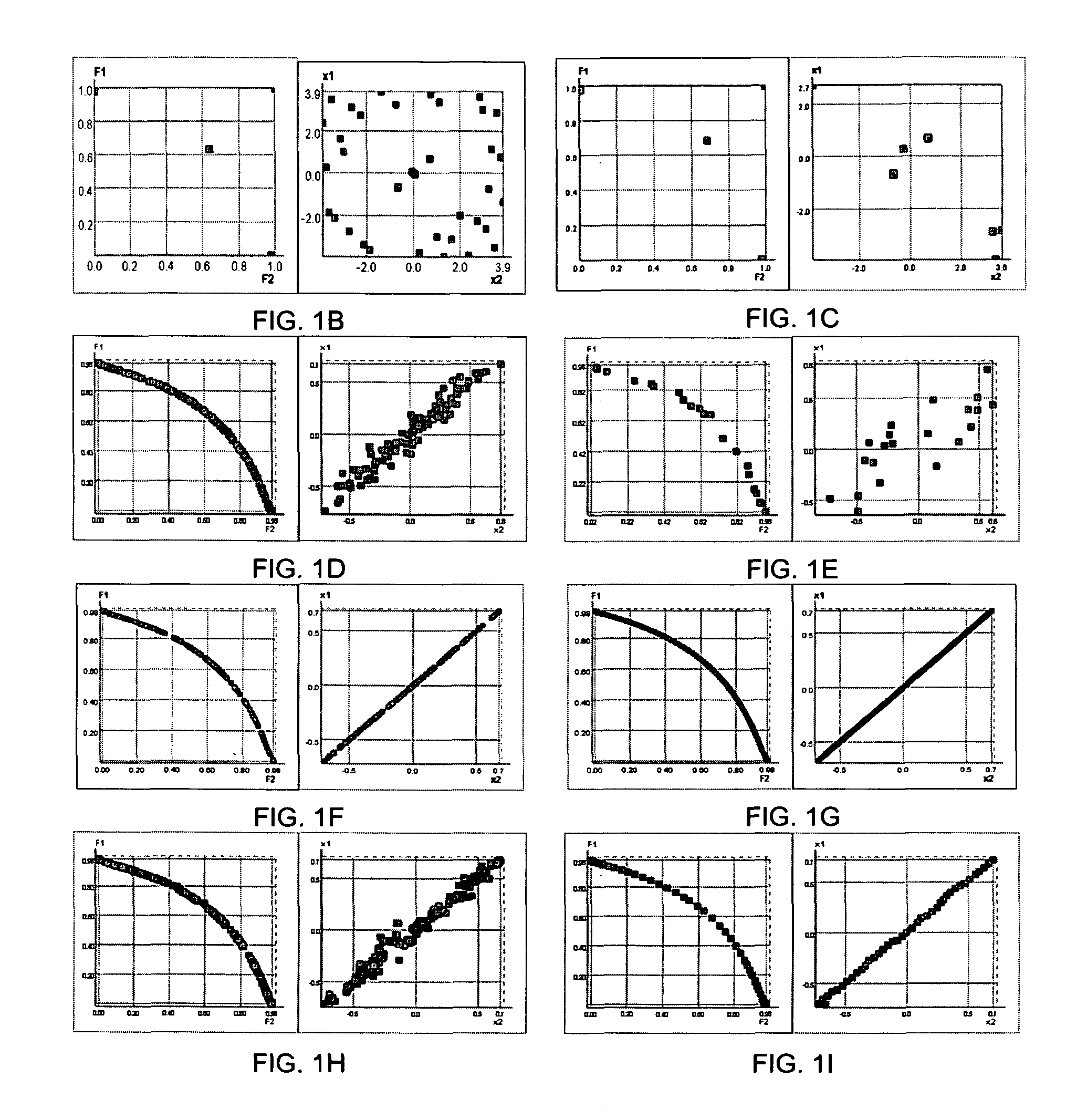
- The development of Concurrent Gradients Analysis (CGA) and associated methods like Concurrent Gradients Method (CGM) and Pareto Navigator Method (PNM), which analyze gradients to determine simultaneous improvement directions for multiple objective functions, along with Dimensionally Independent Response Surface Method (DIRSM) for efficient approximation modeling.

Multi-objective reinforcement learning method and device based on Pareto optimization
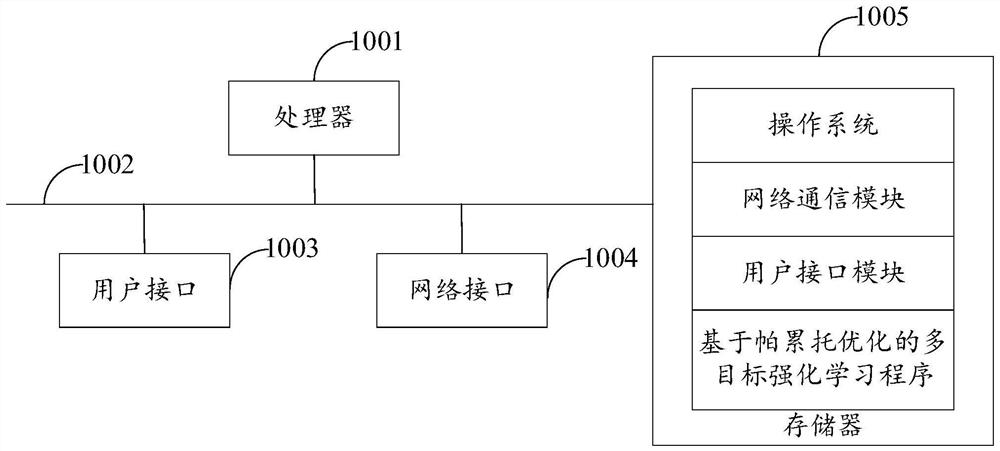
PatentInactiveCN114742231A
Innovation
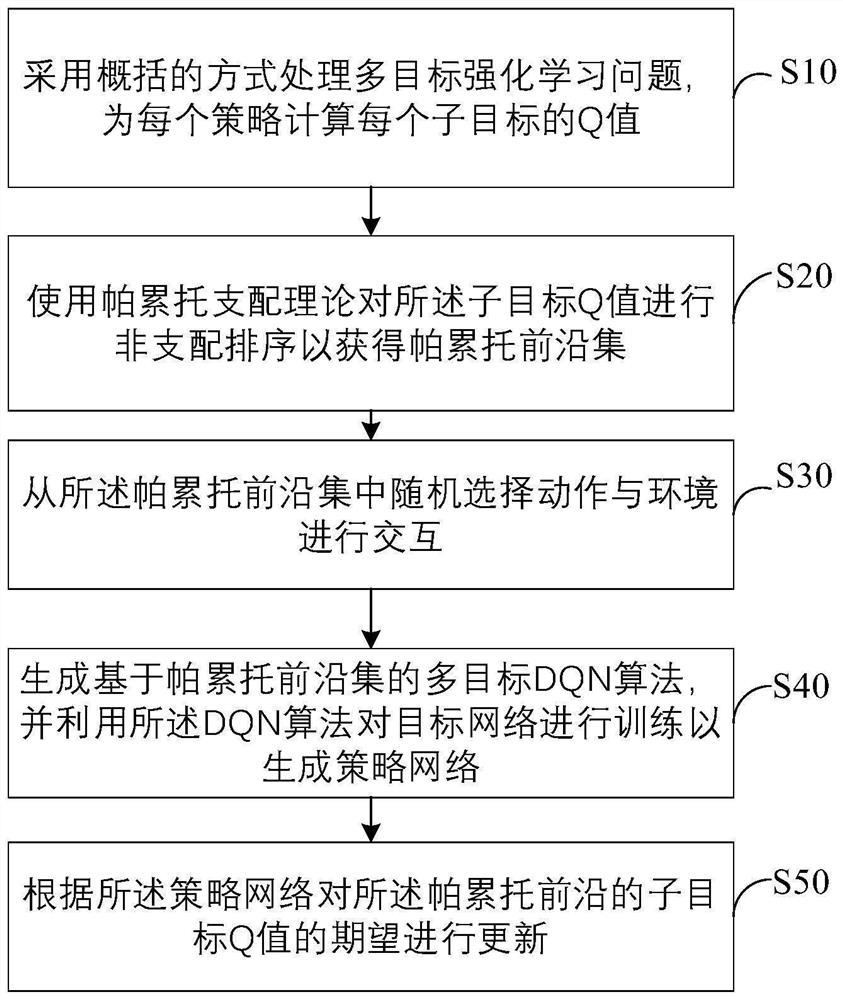
- A multi-objective reinforcement learning method based on Pareto optimization is adopted to handle multi-objective problems by generalizing, calculating the Q value of the sub-objective for each strategy, using Pareto dominance theory for non-dominated sorting, and generating a Pareto front set-based Multi-objective DQN algorithm, and use this algorithm to train the target network to generate a policy network.

Computational Efficiency and Scalability Considerations
When addressing task conflicts in multi-task learning scenarios, computational efficiency and scalability emerge as critical factors distinguishing gradient descent methods from Pareto optimization approaches. The computational complexity of these methodologies directly impacts their practical applicability in real-world systems, particularly as the number of tasks and model parameters increases.
Gradient descent-based conflict resolution methods typically demonstrate superior computational efficiency in terms of time complexity. Standard multi-task gradient descent operates with complexity proportional to the number of tasks multiplied by the cost of a single backward pass. Even sophisticated variants incorporating gradient manipulation techniques maintain relatively modest computational overhead, generally requiring only additional gradient computations and simple algebraic operations. This efficiency advantage becomes particularly pronounced in scenarios involving deep neural networks with millions of parameters, where the computational cost scales linearly with model size.
In contrast, Pareto optimization approaches often involve more computationally intensive procedures. Methods seeking to identify Pareto-optimal solutions frequently require solving constrained optimization problems or performing iterative searches across the Pareto frontier. The computational burden escalates significantly when employing exact Pareto optimization algorithms, which may necessitate quadratic programming solvers or multiple gradient evaluations per iteration. For systems with numerous conflicting tasks, the complexity can grow exponentially, rendering these approaches impractical for large-scale applications.
Scalability considerations extend beyond raw computational cost to encompass memory requirements and parallelization potential. Gradient descent methods generally exhibit favorable memory footprints, storing only gradients and optimizer states. Pareto optimization techniques, however, may require maintaining multiple solution candidates or historical trade-off information, substantially increasing memory consumption. Furthermore, the sequential nature of certain Pareto search algorithms limits parallelization opportunities, whereas gradient-based methods can leverage modern distributed computing frameworks more effectively.
Recent hybrid approaches attempt to balance these trade-offs by approximating Pareto optimization principles within gradient descent frameworks, offering promising directions for achieving both theoretical rigor and practical efficiency in resolving task conflicts at scale.
Gradient descent-based conflict resolution methods typically demonstrate superior computational efficiency in terms of time complexity. Standard multi-task gradient descent operates with complexity proportional to the number of tasks multiplied by the cost of a single backward pass. Even sophisticated variants incorporating gradient manipulation techniques maintain relatively modest computational overhead, generally requiring only additional gradient computations and simple algebraic operations. This efficiency advantage becomes particularly pronounced in scenarios involving deep neural networks with millions of parameters, where the computational cost scales linearly with model size.
In contrast, Pareto optimization approaches often involve more computationally intensive procedures. Methods seeking to identify Pareto-optimal solutions frequently require solving constrained optimization problems or performing iterative searches across the Pareto frontier. The computational burden escalates significantly when employing exact Pareto optimization algorithms, which may necessitate quadratic programming solvers or multiple gradient evaluations per iteration. For systems with numerous conflicting tasks, the complexity can grow exponentially, rendering these approaches impractical for large-scale applications.
Scalability considerations extend beyond raw computational cost to encompass memory requirements and parallelization potential. Gradient descent methods generally exhibit favorable memory footprints, storing only gradients and optimizer states. Pareto optimization techniques, however, may require maintaining multiple solution candidates or historical trade-off information, substantially increasing memory consumption. Furthermore, the sequential nature of certain Pareto search algorithms limits parallelization opportunities, whereas gradient-based methods can leverage modern distributed computing frameworks more effectively.
Recent hybrid approaches attempt to balance these trade-offs by approximating Pareto optimization principles within gradient descent frameworks, offering promising directions for achieving both theoretical rigor and practical efficiency in resolving task conflicts at scale.
Benchmark Standards for Multi-Task Performance Evaluation
Establishing robust benchmark standards for multi-task performance evaluation is essential for objectively comparing gradient descent and Pareto optimization approaches in resolving task conflicts. Current evaluation frameworks must address the inherent complexity of measuring performance across multiple objectives simultaneously, where traditional single-task metrics prove insufficient. The development of standardized benchmarks requires careful consideration of metric selection, dataset diversity, and evaluation protocols that capture both individual task performance and inter-task relationships.
Comprehensive benchmark standards should incorporate multiple dimensions of assessment. Primary metrics include per-task accuracy, overall system performance, and computational efficiency measured through training time and resource consumption. Additionally, conflict resolution effectiveness must be quantified through metrics such as gradient alignment scores, Pareto front coverage, and solution diversity. These metrics collectively provide insights into how different optimization strategies balance competing objectives and manage task interference.
Dataset standardization plays a crucial role in ensuring reproducible and comparable evaluations. Benchmark suites should encompass diverse multi-task scenarios spanning computer vision, natural language processing, and cross-domain applications. Each dataset must be accompanied by clearly defined task relationships, including positive transfer, negative transfer, and conflict scenarios. Standardized data splits and preprocessing protocols ensure consistency across different research implementations.
Evaluation protocols must specify experimental conditions including network architectures, hyperparameter ranges, and training procedures. Baseline comparisons should include both gradient descent variants and Pareto optimization methods under identical conditions. Statistical significance testing and multiple-run averaging requirements ensure reliability of reported results. Furthermore, benchmarks should mandate reporting of convergence behavior, stability metrics, and scalability characteristics across varying numbers of tasks.
The establishment of community-accepted benchmark standards facilitates meaningful progress tracking and enables fair comparison of novel approaches. Regular benchmark updates incorporating emerging task combinations and evaluation criteria ensure continued relevance as the field evolves.
Comprehensive benchmark standards should incorporate multiple dimensions of assessment. Primary metrics include per-task accuracy, overall system performance, and computational efficiency measured through training time and resource consumption. Additionally, conflict resolution effectiveness must be quantified through metrics such as gradient alignment scores, Pareto front coverage, and solution diversity. These metrics collectively provide insights into how different optimization strategies balance competing objectives and manage task interference.
Dataset standardization plays a crucial role in ensuring reproducible and comparable evaluations. Benchmark suites should encompass diverse multi-task scenarios spanning computer vision, natural language processing, and cross-domain applications. Each dataset must be accompanied by clearly defined task relationships, including positive transfer, negative transfer, and conflict scenarios. Standardized data splits and preprocessing protocols ensure consistency across different research implementations.
Evaluation protocols must specify experimental conditions including network architectures, hyperparameter ranges, and training procedures. Baseline comparisons should include both gradient descent variants and Pareto optimization methods under identical conditions. Statistical significance testing and multiple-run averaging requirements ensure reliability of reported results. Furthermore, benchmarks should mandate reporting of convergence behavior, stability metrics, and scalability characteristics across varying numbers of tasks.
The establishment of community-accepted benchmark standards facilitates meaningful progress tracking and enables fair comparison of novel approaches. Regular benchmark updates incorporating emerging task combinations and evaluation criteria ensure continued relevance as the field evolves.
Unlock deeper insights with Patsnap Eureka Quick Research — get a full tech report to explore trends and direct your research. Try now!
Generate Your Research Report Instantly with AI Agent
Supercharge your innovation with Patsnap Eureka AI Agent Platform!