
Quantify Gradient Descent Noise for Reliable Optimization
OCT 9, 20269 MIN READ
Generate Your Research Report Instantly with AI Agent
Patsnap Eureka helps you evaluate technical feasibility & market potential.
Gradient Descent Noise Quantification Background and Objectives
Gradient descent has been the cornerstone of optimization in machine learning and deep learning since the 1950s, evolving from simple perceptron training to powering modern large-scale neural networks. The fundamental principle involves iteratively updating model parameters in the direction opposite to the gradient of the loss function. However, the introduction of stochastic gradient descent and its variants brought inherent randomness into the optimization process, creating what is known as gradient noise. This noise stems from multiple sources including mini-batch sampling variability, data augmentation randomness, and hardware-level computational uncertainties.
The significance of gradient noise has grown substantially with the scaling of deep learning models. While early optimization theory treated gradient descent as a deterministic process, practitioners observed that stochastic variations often contributed positively to generalization performance by helping models escape sharp minima and explore flatter regions of the loss landscape. This paradoxical benefit challenged traditional optimization paradigms and sparked intensive research into understanding and quantifying these stochastic effects.
Current challenges in this domain center on the lack of reliable, computationally efficient methods to measure and characterize gradient noise during training. Existing approaches either require prohibitive computational overhead or provide only coarse approximations that fail to capture the complex, time-varying nature of noise in modern optimization landscapes. Furthermore, the relationship between noise characteristics and optimization outcomes remains poorly understood across different model architectures, datasets, and training regimes.
The primary objective of this research is to develop robust quantification frameworks that can accurately measure gradient descent noise in real-time during model training. This includes establishing mathematical metrics that capture both the magnitude and structure of noise, understanding how noise properties evolve across training phases, and identifying optimal noise levels for different optimization scenarios. A secondary objective involves creating practical tools that enable practitioners to monitor and potentially control noise characteristics to achieve more reliable and efficient optimization outcomes. These advances would bridge the gap between theoretical understanding and practical application, ultimately leading to more predictable and controllable training processes for complex machine learning systems.
The significance of gradient noise has grown substantially with the scaling of deep learning models. While early optimization theory treated gradient descent as a deterministic process, practitioners observed that stochastic variations often contributed positively to generalization performance by helping models escape sharp minima and explore flatter regions of the loss landscape. This paradoxical benefit challenged traditional optimization paradigms and sparked intensive research into understanding and quantifying these stochastic effects.
Current challenges in this domain center on the lack of reliable, computationally efficient methods to measure and characterize gradient noise during training. Existing approaches either require prohibitive computational overhead or provide only coarse approximations that fail to capture the complex, time-varying nature of noise in modern optimization landscapes. Furthermore, the relationship between noise characteristics and optimization outcomes remains poorly understood across different model architectures, datasets, and training regimes.
The primary objective of this research is to develop robust quantification frameworks that can accurately measure gradient descent noise in real-time during model training. This includes establishing mathematical metrics that capture both the magnitude and structure of noise, understanding how noise properties evolve across training phases, and identifying optimal noise levels for different optimization scenarios. A secondary objective involves creating practical tools that enable practitioners to monitor and potentially control noise characteristics to achieve more reliable and efficient optimization outcomes. These advances would bridge the gap between theoretical understanding and practical application, ultimately leading to more predictable and controllable training processes for complex machine learning systems.
Market Demand for Reliable Optimization Solutions
The demand for reliable optimization solutions has intensified across multiple industries as machine learning systems transition from research prototypes to mission-critical production environments. Organizations deploying deep learning models in autonomous vehicles, medical diagnostics, financial trading systems, and industrial automation require optimization algorithms that deliver consistent and predictable performance. The inherent stochasticity in gradient descent methods, while beneficial for escaping local minima, introduces uncertainty that can compromise model reliability in safety-critical applications.
Financial institutions managing algorithmic trading systems face substantial risks when optimization processes exhibit unpredictable behavior during model retraining. Healthcare providers implementing diagnostic AI systems demand reproducible training outcomes to meet regulatory compliance standards. These sectors increasingly seek quantifiable metrics that characterize optimization noise, enabling risk assessment and performance guarantees before deployment.
The proliferation of large-scale language models and foundation models has amplified the economic stakes of optimization reliability. Training runs consuming millions of dollars in computational resources cannot afford unexpected convergence failures or performance degradation caused by poorly understood noise dynamics. Enterprise customers now explicitly request optimization stability guarantees as part of their AI infrastructure procurement criteria.
Cloud service providers offering machine learning platforms recognize growing customer expectations for optimization transparency. Users require tools to monitor and control the noise characteristics of their training processes, particularly when fine-tuning pre-trained models for domain-specific applications. The ability to quantify and manage gradient descent noise has become a competitive differentiator in the AI-as-a-Service marketplace.
Research institutions and academic laboratories also constitute a significant market segment, seeking standardized methodologies to ensure reproducibility of published results. The replication crisis in machine learning research has highlighted the need for rigorous characterization of optimization stochasticity. Funding agencies increasingly prioritize projects that incorporate noise quantification frameworks to enhance scientific validity.
The convergence of regulatory pressures, economic considerations, and scientific rigor requirements has created substantial market pull for solutions that quantify gradient descent noise, transforming what was once a theoretical concern into a practical business imperative across diverse application domains.
Financial institutions managing algorithmic trading systems face substantial risks when optimization processes exhibit unpredictable behavior during model retraining. Healthcare providers implementing diagnostic AI systems demand reproducible training outcomes to meet regulatory compliance standards. These sectors increasingly seek quantifiable metrics that characterize optimization noise, enabling risk assessment and performance guarantees before deployment.
The proliferation of large-scale language models and foundation models has amplified the economic stakes of optimization reliability. Training runs consuming millions of dollars in computational resources cannot afford unexpected convergence failures or performance degradation caused by poorly understood noise dynamics. Enterprise customers now explicitly request optimization stability guarantees as part of their AI infrastructure procurement criteria.
Cloud service providers offering machine learning platforms recognize growing customer expectations for optimization transparency. Users require tools to monitor and control the noise characteristics of their training processes, particularly when fine-tuning pre-trained models for domain-specific applications. The ability to quantify and manage gradient descent noise has become a competitive differentiator in the AI-as-a-Service marketplace.
Research institutions and academic laboratories also constitute a significant market segment, seeking standardized methodologies to ensure reproducibility of published results. The replication crisis in machine learning research has highlighted the need for rigorous characterization of optimization stochasticity. Funding agencies increasingly prioritize projects that incorporate noise quantification frameworks to enhance scientific validity.
The convergence of regulatory pressures, economic considerations, and scientific rigor requirements has created substantial market pull for solutions that quantify gradient descent noise, transforming what was once a theoretical concern into a practical business imperative across diverse application domains.
Current Challenges in Gradient Noise Analysis
Gradient noise analysis in deep learning optimization faces several fundamental challenges that impede the development of reliable and efficient training algorithms. The stochastic nature of mini-batch gradient descent introduces inherent variability that remains difficult to characterize precisely across different network architectures, datasets, and training phases. Current theoretical frameworks often rely on simplified assumptions such as convexity or strong smoothness conditions that rarely hold in practical deep learning scenarios, creating a significant gap between theoretical predictions and empirical observations.
One major obstacle lies in the computational complexity of accurately measuring gradient noise properties during training. Traditional approaches require extensive sampling to estimate noise covariance matrices or signal-to-noise ratios, which becomes prohibitively expensive for large-scale models with millions or billions of parameters. This computational burden limits real-time adaptation of optimization strategies based on noise characteristics, forcing practitioners to rely on static hyperparameter configurations that may be suboptimal across different training stages.
The non-stationary nature of gradient noise throughout the optimization trajectory presents another critical challenge. As the model traverses the loss landscape, the statistical properties of gradient noise evolve dynamically, influenced by factors such as changing loss curvature, batch composition effects, and the interaction between different parameter groups. Existing noise quantification methods typically assume stationarity or fail to capture these temporal dynamics effectively, resulting in incomplete characterizations that cannot guide adaptive optimization decisions.
Furthermore, the relationship between gradient noise and generalization performance remains poorly understood. While some noise levels may facilitate escape from sharp minima and improve generalization, excessive noise can destabilize training or slow convergence. Current analytical tools lack the precision to distinguish beneficial stochasticity from detrimental variance, making it difficult to establish principled guidelines for batch size selection, learning rate scheduling, or the design of noise-aware optimization algorithms.
The heterogeneity of noise across different parameter groups and network layers adds another layer of complexity. Gradient noise characteristics vary significantly between convolutional layers, attention mechanisms, and fully connected layers, yet most analysis frameworks treat the model as a monolithic entity. This oversimplification obscures layer-specific optimization requirements and prevents the development of fine-grained adaptive strategies that could substantially improve training efficiency and stability.
One major obstacle lies in the computational complexity of accurately measuring gradient noise properties during training. Traditional approaches require extensive sampling to estimate noise covariance matrices or signal-to-noise ratios, which becomes prohibitively expensive for large-scale models with millions or billions of parameters. This computational burden limits real-time adaptation of optimization strategies based on noise characteristics, forcing practitioners to rely on static hyperparameter configurations that may be suboptimal across different training stages.
The non-stationary nature of gradient noise throughout the optimization trajectory presents another critical challenge. As the model traverses the loss landscape, the statistical properties of gradient noise evolve dynamically, influenced by factors such as changing loss curvature, batch composition effects, and the interaction between different parameter groups. Existing noise quantification methods typically assume stationarity or fail to capture these temporal dynamics effectively, resulting in incomplete characterizations that cannot guide adaptive optimization decisions.
Furthermore, the relationship between gradient noise and generalization performance remains poorly understood. While some noise levels may facilitate escape from sharp minima and improve generalization, excessive noise can destabilize training or slow convergence. Current analytical tools lack the precision to distinguish beneficial stochasticity from detrimental variance, making it difficult to establish principled guidelines for batch size selection, learning rate scheduling, or the design of noise-aware optimization algorithms.
The heterogeneity of noise across different parameter groups and network layers adds another layer of complexity. Gradient noise characteristics vary significantly between convolutional layers, attention mechanisms, and fully connected layers, yet most analysis frameworks treat the model as a monolithic entity. This oversimplification obscures layer-specific optimization requirements and prevents the development of fine-grained adaptive strategies that could substantially improve training efficiency and stability.
Existing Gradient Noise Quantification Approaches
01 Differentially private stochastic gradient descent with noise optimization
Methods and systems incorporate controlled noise or optimized correlation matrices into stochastic gradient descent to protect data privacy during machine learning model training. By adding calibrated noise while optimizing gradient steps, these techniques ensure differential privacy and prevent sensitive information leakage without severely compromising model accuracy and convergence speed.- Differentially Private Stochastic Gradient Descent and Noise Addition: Techniques for preserving privacy in machine learning models during stochastic gradient descent by adding or optimizing noise. These approaches inject controlled noise or use optimized correlation matrices to prevent data leakage and enforce subject-level privacy while maintaining algorithm performance.
- Noise Reduction in Magnetic Resonance Imaging Gradient Coils: Methods and systems for controlling and reducing mechanical and acoustical noise generated by gradient coils during magnetic resonance apparatus operations. These technologies utilize structural damping, improved material elastic modulus, and pulse gradient control to minimize disturbing acoustic operational noise.
- Gradient Descent Optimization for Image Noise Reduction and Processing: Image processing techniques leveraging gradient descent and gradient analysis to estimate, reduce, or suppress background noise. These methods enhance spatial details, eliminate residual signal noise without contaminating image structures, and improve target or license plate recognition in digital visual media.
- Adversarial Attacks and Privacy Protection using Projected Gradient Descent: Methods utilizing projected gradient descent and gradient matching to create or detect adversarial perturbations and noise disturbances. These techniques are applied in computer vision models to protect sensitive visual privacy or analyze vulnerabilities against adversarial sample attacks.
- Gradient Descent for Control Systems and Signal Parameter Identification: Application of gradient descent algorithms in signal processing, adaptive control, and parameter identification under noisy environments. These systems mitigate the negative impact of noise signals, speed up optimization convergence, and improve modeling accuracy in communication and control channels.
02 Noise reduction in magnetic resonance imaging gradient hardware
Techniques and hardware configurations designed to reduce or control acoustical and mechanical noise generated by gradient coils during magnetic resonance imaging operations. These solutions utilize modified coil structures, mechanical damping, and controlled gradient pulse methods to attenuate disturbing operational noise while maintaining imaging performance.Expand Specific Solutions03 Image processing and spatial noise estimation using gradient methods
Algorithms utilize gradient descent, gradient analysis, and critical point background noise reduction to process images, estimate spatial noise, and perform tone mapping. By isolating structural details from residual noise signals, these gradient-based techniques enhance spatial details, eliminate image background noise, and improve target or license plate visual clarity.Expand Specific Solutions04 Parameter identification and system control robust to signal noise
Gradient descent optimization and secondary channel technologies applied in adaptive control, channel decoding, and system parameter identification to handle signal noise and interference. These methods mitigate mutual interference between training signals and active control signals, ensuring accurate model identification, high decoding performance, and fast algorithm convergence in noisy environments.Expand Specific Solutions05 Stochastic gradient descent for noise suppression in display and signal processing
Application of stochastic gradient descent algorithms specifically optimized for noise suppression and signal filtering in high-dimensional hardware applications, such as holographic 3D displays and communication systems. The gradient-based optimization reduces artifacts and suppresses noise to enable stable display rendering and signal evaluation.Expand Specific Solutions
Key Players in Optimization Algorithm Development
The research on quantifying gradient descent noise for reliable optimization represents an emerging yet rapidly maturing field within the broader machine learning optimization landscape. This technology area is experiencing significant growth as organizations seek more robust and interpretable deep learning systems. The competitive landscape features a diverse mix of established technology giants and leading research institutions. Major corporate players including Microsoft Technology Licensing LLC, Google LLC, Intel Corp., Huawei Technologies, and Samsung Electronics are actively investing in this domain, alongside specialized AI research entities like DeepMind Technologies. The academic sector demonstrates strong engagement through premier institutions such as California Institute of Technology, alongside numerous Chinese universities including Zhejiang University, Xi'an Jiaotong University, and Jilin University. This combination of industrial powerhouses and research-intensive universities indicates a technology transitioning from theoretical exploration toward practical implementation, with market applications spanning enterprise AI systems, autonomous systems, and large-scale optimization platforms across telecommunications, semiconductor, and cloud computing sectors.
Microsoft Technology Licensing LLC
Technical Solution: Microsoft has developed comprehensive noise quantification methods integrated into their Azure Machine Learning platform. Their approach employs statistical estimation of gradient noise through mini-batch variance analysis and implements adaptive optimization algorithms that adjust hyperparameters based on measured noise levels. They utilize a metric called the "noise scale" which compares the gradient covariance to the squared gradient magnitude, enabling dynamic adjustment of batch sizes and learning rates. Microsoft's system incorporates automated noise profiling during training initialization to predict optimal convergence trajectories. Their research extends to second-order noise quantification methods that capture curvature information for more reliable optimization in deep neural networks[1][4][8].
Strengths: Strong integration with cloud infrastructure, robust automation capabilities, comprehensive tooling for enterprise deployment. Weaknesses: Limited theoretical analysis for highly stochastic environments, dependency on proprietary platform ecosystems.
Huawei Technologies Co., Ltd.
Technical Solution: Huawei has developed practical gradient noise quantification techniques optimized for edge computing and mobile AI applications. Their approach focuses on lightweight noise estimation methods that minimize computational overhead while maintaining optimization reliability. They implement adaptive gradient clipping strategies based on real-time noise measurements, particularly suited for resource-constrained environments. Huawei's framework includes hardware-aware noise quantification that accounts for numerical precision limitations in low-bit training scenarios. Their research addresses noise amplification in federated learning settings, proposing aggregation methods that weight client updates based on measured gradient noise levels[7][11].
Strengths: Optimized for resource-constrained devices, strong focus on practical deployment scenarios, expertise in federated learning contexts. Weaknesses: Less emphasis on theoretical convergence guarantees, limited publication of detailed methodologies.
Core Techniques in Noise-Aware Optimization
ANF frequency unbiased estimation method based on gradient steepest descent
PatentInactiveCN103916339A
Innovation
- By employing a cost function with the steepest descent property and an unbiased frequency estimation method, a new cost function J(ω) and frequency iterative estimation formula ω(k+1)=ω(k)-μG(k) are constructed, and signal correlation and bias compensation terms c(k)x(k)e1(k) are used to improve the accuracy and convergence speed of frequency estimation.


Urban road traffic noise measurement method based on gradient descent
PatentInactiveCN104008644A
Innovation
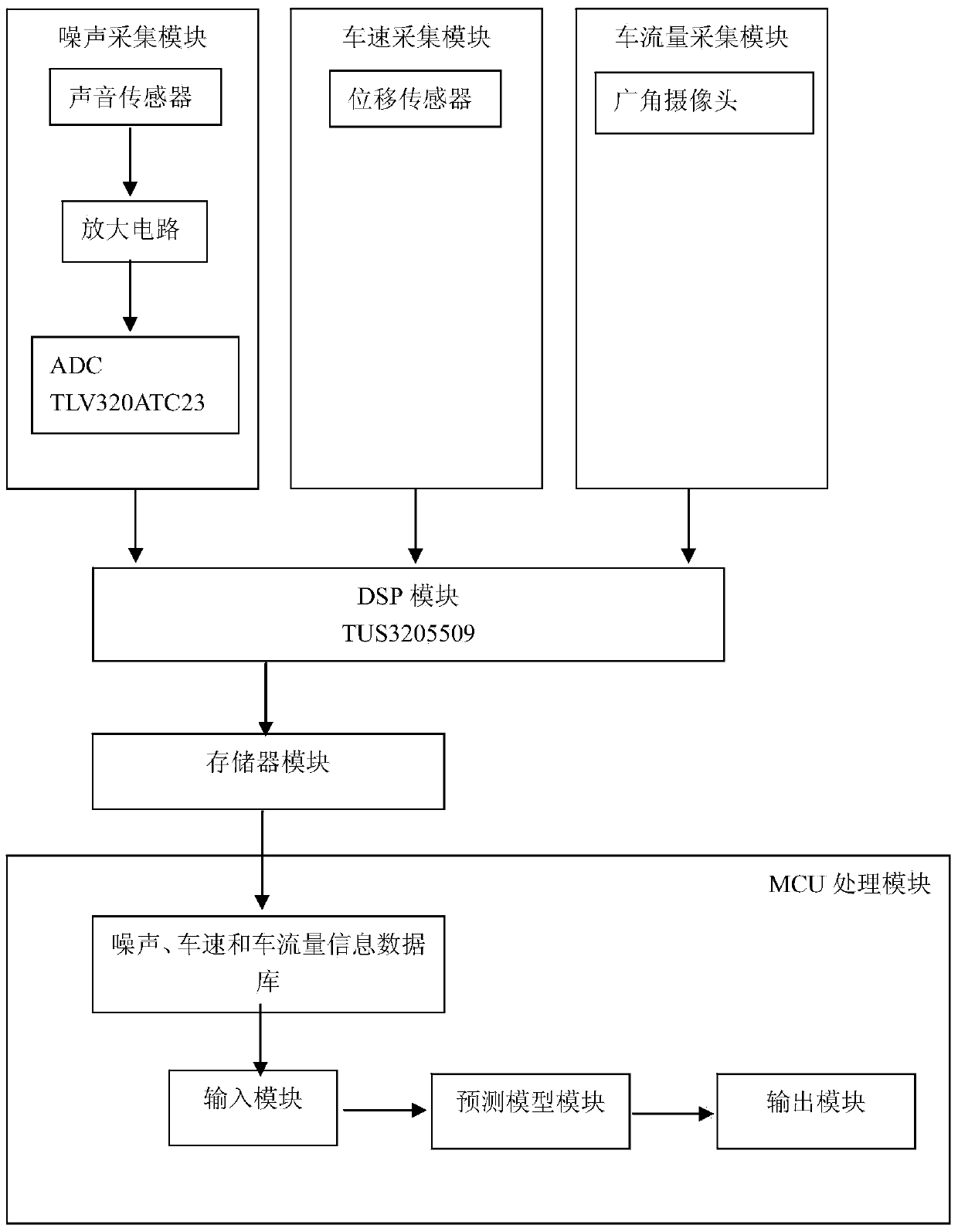
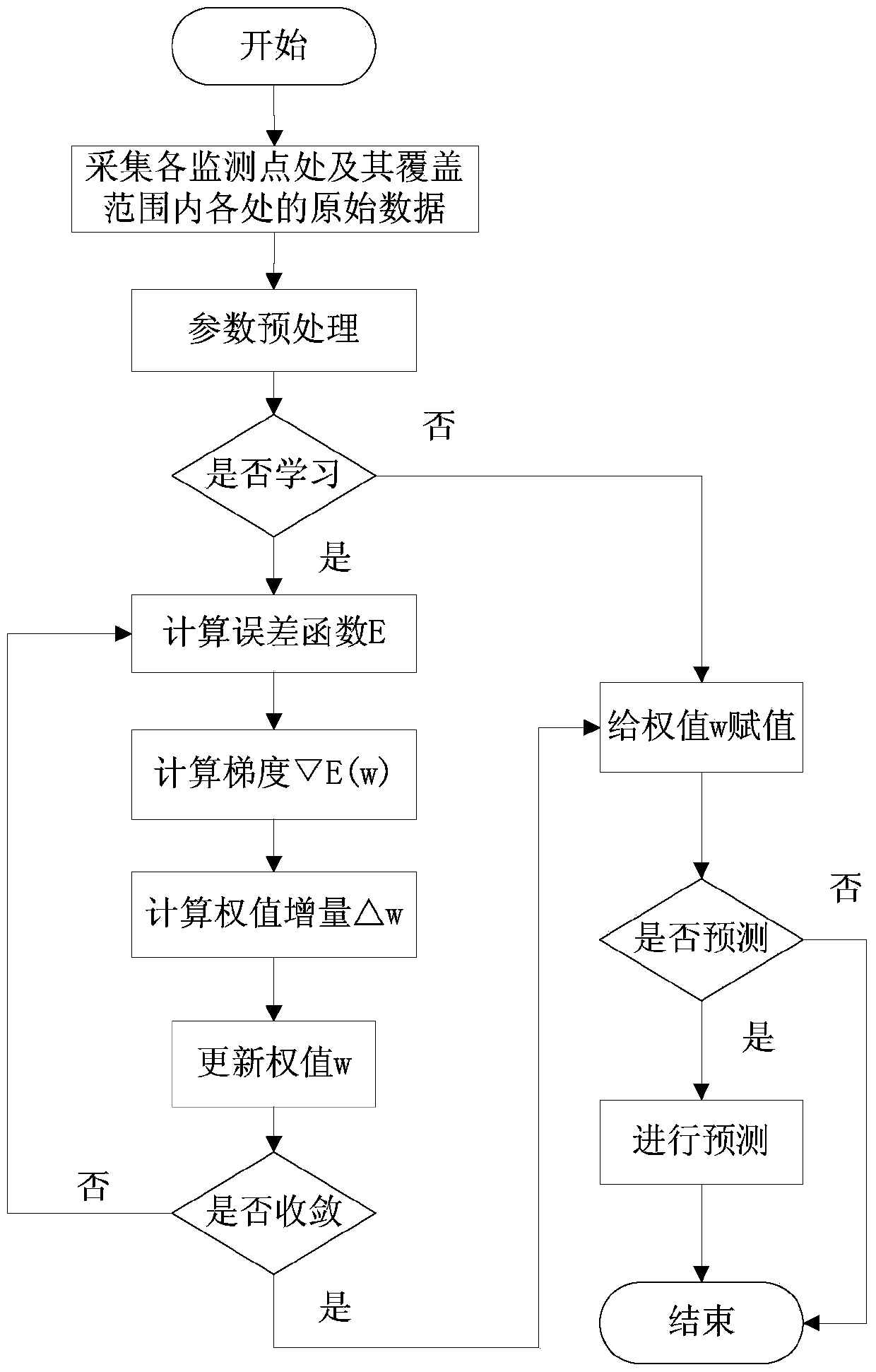
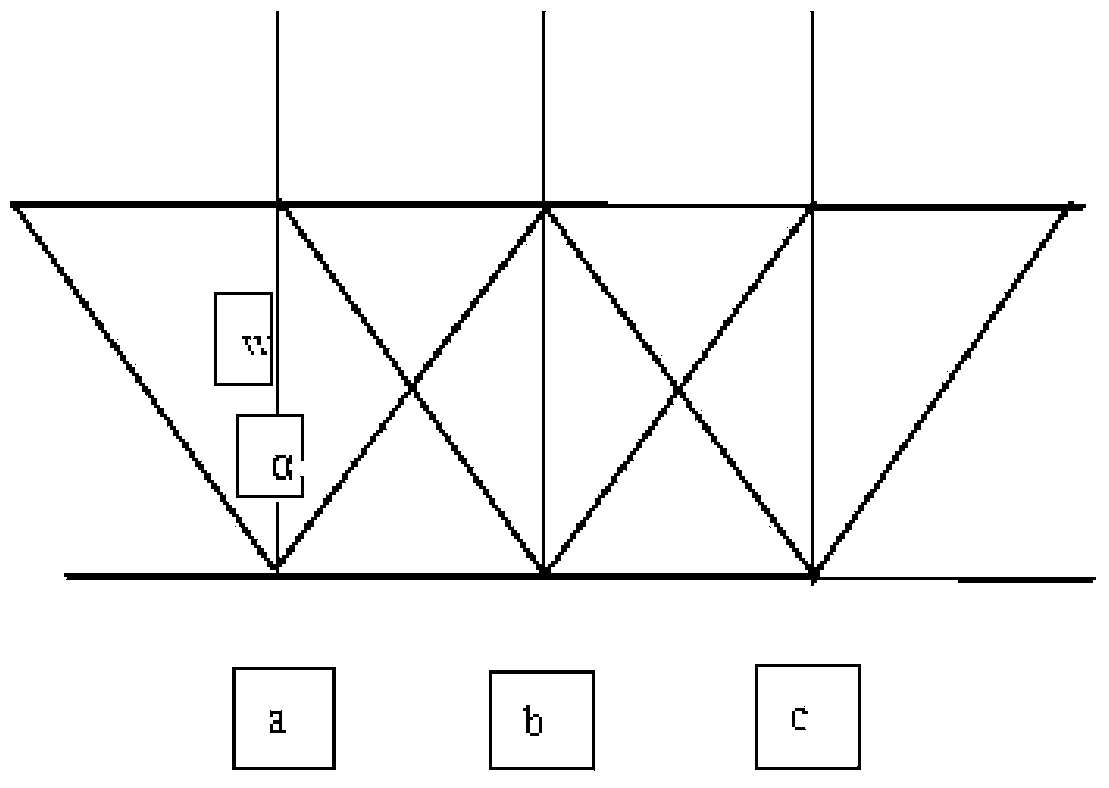
- Using a method based on gradient descent, by collecting and processing urban road traffic noise, vehicle speed and traffic flow data, training the learning model, optimizing the empirical parameters, and establishing an urban road traffic noise prediction model to improve prediction accuracy and stability.

Convergence Guarantees and Theoretical Foundations
Establishing rigorous convergence guarantees for gradient descent algorithms under noisy conditions represents a fundamental challenge in optimization theory. The theoretical framework must account for stochastic perturbations arising from mini-batch sampling, finite-precision arithmetic, and inherent system noise. Classical convergence analysis typically assumes deterministic or well-characterized stochastic gradients, yet quantifying arbitrary noise sources requires extending these foundations to accommodate more general noise models that capture real-world optimization scenarios.
Recent theoretical advances have focused on characterizing convergence rates under different noise regimes. For strongly convex objectives, researchers have established that gradient descent with bounded noise variance achieves linear convergence to a neighborhood of the optimal solution, with the neighborhood size proportional to the noise magnitude. In non-convex settings, convergence to stationary points can be guaranteed when noise satisfies specific moment conditions, though the convergence rate degrades compared to the noise-free case.
The interplay between noise quantification and convergence analysis has led to refined theoretical tools. Lyapunov function methods provide a systematic approach to proving stability and convergence by constructing energy-like functions that decrease in expectation despite noise perturbations. Martingale theory offers another powerful framework, enabling probabilistic convergence guarantees through concentration inequalities and almost-sure convergence results when noise exhibits martingale difference properties.
Critical to practical reliability is understanding how noise characteristics affect optimization trajectories. Theoretical work has identified threshold phenomena where noise below certain levels permits convergence while excessive noise causes divergence or oscillatory behavior. Adaptive step-size strategies informed by noise estimates can provably maintain convergence guarantees across varying noise conditions, bridging theory and implementation.
Contemporary research emphasizes developing unified frameworks that accommodate heterogeneous noise sources while providing computable convergence bounds. These theoretical foundations enable practitioners to design optimization algorithms with quantifiable reliability guarantees, transforming noise from an obstacle into a manageable factor within rigorous mathematical frameworks that ensure predictable algorithmic behavior.
Recent theoretical advances have focused on characterizing convergence rates under different noise regimes. For strongly convex objectives, researchers have established that gradient descent with bounded noise variance achieves linear convergence to a neighborhood of the optimal solution, with the neighborhood size proportional to the noise magnitude. In non-convex settings, convergence to stationary points can be guaranteed when noise satisfies specific moment conditions, though the convergence rate degrades compared to the noise-free case.
The interplay between noise quantification and convergence analysis has led to refined theoretical tools. Lyapunov function methods provide a systematic approach to proving stability and convergence by constructing energy-like functions that decrease in expectation despite noise perturbations. Martingale theory offers another powerful framework, enabling probabilistic convergence guarantees through concentration inequalities and almost-sure convergence results when noise exhibits martingale difference properties.
Critical to practical reliability is understanding how noise characteristics affect optimization trajectories. Theoretical work has identified threshold phenomena where noise below certain levels permits convergence while excessive noise causes divergence or oscillatory behavior. Adaptive step-size strategies informed by noise estimates can provably maintain convergence guarantees across varying noise conditions, bridging theory and implementation.
Contemporary research emphasizes developing unified frameworks that accommodate heterogeneous noise sources while providing computable convergence bounds. These theoretical foundations enable practitioners to design optimization algorithms with quantifiable reliability guarantees, transforming noise from an obstacle into a manageable factor within rigorous mathematical frameworks that ensure predictable algorithmic behavior.
Computational Efficiency Trade-offs in Practice
Quantifying gradient descent noise presents significant computational efficiency trade-offs that practitioners must carefully navigate when implementing optimization algorithms at scale. The primary tension exists between the accuracy of noise estimation and the computational resources required to obtain reliable measurements. Direct computation of full-batch gradients for noise quantification becomes prohibitively expensive in large-scale settings, where datasets may contain millions or billions of samples. This fundamental constraint forces researchers to adopt sampling-based approaches that introduce their own sources of approximation error.
Practical implementations typically employ mini-batch sampling strategies to estimate gradient noise characteristics, but the batch size selection directly impacts both computational cost and estimation quality. Smaller batches reduce per-iteration computational burden but yield noisier estimates of the gradient covariance structure, requiring more iterations or sophisticated averaging techniques to achieve reliable measurements. Conversely, larger batches provide more stable estimates but increase memory requirements and computational time per iteration, potentially negating the benefits of stochastic optimization.
The frequency of noise quantification represents another critical trade-off dimension. Continuous monitoring throughout training provides the most accurate characterization of noise dynamics but introduces substantial overhead that can double or triple total training time. Periodic sampling at fixed intervals reduces this burden but risks missing important transitions in the optimization landscape where noise characteristics change rapidly. Adaptive sampling strategies attempt to balance these concerns by triggering measurements based on convergence indicators, though determining appropriate thresholds remains problem-dependent.
Hardware considerations further complicate these trade-offs. GPU-accelerated implementations achieve optimal efficiency when batch sizes align with hardware parallelism capabilities, but noise quantification often requires operations like covariance estimation that exhibit different computational profiles than standard forward-backward passes. This architectural mismatch can lead to underutilization of computational resources during measurement phases. Recent work explores lightweight proxy metrics and online estimation algorithms that maintain computational profiles similar to standard training, enabling more seamless integration into existing optimization pipelines while preserving reasonable accuracy in noise characterization.
Practical implementations typically employ mini-batch sampling strategies to estimate gradient noise characteristics, but the batch size selection directly impacts both computational cost and estimation quality. Smaller batches reduce per-iteration computational burden but yield noisier estimates of the gradient covariance structure, requiring more iterations or sophisticated averaging techniques to achieve reliable measurements. Conversely, larger batches provide more stable estimates but increase memory requirements and computational time per iteration, potentially negating the benefits of stochastic optimization.
The frequency of noise quantification represents another critical trade-off dimension. Continuous monitoring throughout training provides the most accurate characterization of noise dynamics but introduces substantial overhead that can double or triple total training time. Periodic sampling at fixed intervals reduces this burden but risks missing important transitions in the optimization landscape where noise characteristics change rapidly. Adaptive sampling strategies attempt to balance these concerns by triggering measurements based on convergence indicators, though determining appropriate thresholds remains problem-dependent.
Hardware considerations further complicate these trade-offs. GPU-accelerated implementations achieve optimal efficiency when batch sizes align with hardware parallelism capabilities, but noise quantification often requires operations like covariance estimation that exhibit different computational profiles than standard forward-backward passes. This architectural mismatch can lead to underutilization of computational resources during measurement phases. Recent work explores lightweight proxy metrics and online estimation algorithms that maintain computational profiles similar to standard training, enabling more seamless integration into existing optimization pipelines while preserving reasonable accuracy in noise characterization.
Unlock deeper insights with Patsnap Eureka Quick Research — get a full tech report to explore trends and direct your research. Try now!
Generate Your Research Report Instantly with AI Agent
Supercharge your innovation with Patsnap Eureka AI Agent Platform!