

Seamless Rate vs Network Diversity: Comparative Insights
MAR 2, 20269 MIN READ
Generate Your Research Report Instantly with AI Agent
PatSnap Eureka helps you evaluate technical feasibility & market potential.
Seamless Rate and Network Diversity Background and Objectives
The evolution of wireless communication systems has consistently pursued two fundamental objectives: achieving seamless connectivity with optimal data transmission rates and maintaining robust network diversity to ensure reliable service delivery. These dual imperatives have shaped the technological landscape from early cellular networks to contemporary 5G deployments, establishing a complex relationship between performance optimization and network resilience.
Seamless rate optimization emerged as a critical research domain in the late 1990s, driven by increasing demand for high-bandwidth applications and real-time data services. This concept encompasses the ability to maintain consistent, high-quality data transmission across varying network conditions, user mobility patterns, and traffic loads. The pursuit of seamless rates has led to innovations in adaptive modulation schemes, dynamic resource allocation algorithms, and advanced signal processing techniques that collectively aim to minimize service interruptions while maximizing throughput efficiency.
Network diversity, conversely, represents a foundational principle in telecommunications engineering that emphasizes the strategic deployment of multiple transmission paths, frequency bands, and network architectures to mitigate single points of failure. This approach encompasses spatial diversity through multiple antenna systems, frequency diversity via multi-band operations, and temporal diversity through redundant transmission schemes. The integration of network diversity mechanisms has proven essential for maintaining service continuity in challenging propagation environments and during peak demand periods.
The intersection of these two technological paradigms presents both synergistic opportunities and inherent trade-offs that define contemporary research objectives. Modern wireless systems must balance the computational overhead and resource consumption associated with diversity schemes against the performance gains achieved through seamless rate optimization. This balance becomes particularly critical in emerging applications such as autonomous vehicle communications, industrial IoT deployments, and ultra-reliable low-latency communications where both high data rates and network resilience are non-negotiable requirements.
Current research objectives focus on developing unified frameworks that can dynamically optimize the relationship between seamless rate achievement and network diversity implementation. These frameworks aim to establish adaptive algorithms capable of real-time decision-making regarding resource allocation, diversity scheme activation, and rate adaptation based on instantaneous network conditions and application requirements. The ultimate goal involves creating intelligent network architectures that can seamlessly transition between different operational modes while maintaining optimal performance metrics across diverse deployment scenarios.
Seamless rate optimization emerged as a critical research domain in the late 1990s, driven by increasing demand for high-bandwidth applications and real-time data services. This concept encompasses the ability to maintain consistent, high-quality data transmission across varying network conditions, user mobility patterns, and traffic loads. The pursuit of seamless rates has led to innovations in adaptive modulation schemes, dynamic resource allocation algorithms, and advanced signal processing techniques that collectively aim to minimize service interruptions while maximizing throughput efficiency.
Network diversity, conversely, represents a foundational principle in telecommunications engineering that emphasizes the strategic deployment of multiple transmission paths, frequency bands, and network architectures to mitigate single points of failure. This approach encompasses spatial diversity through multiple antenna systems, frequency diversity via multi-band operations, and temporal diversity through redundant transmission schemes. The integration of network diversity mechanisms has proven essential for maintaining service continuity in challenging propagation environments and during peak demand periods.
The intersection of these two technological paradigms presents both synergistic opportunities and inherent trade-offs that define contemporary research objectives. Modern wireless systems must balance the computational overhead and resource consumption associated with diversity schemes against the performance gains achieved through seamless rate optimization. This balance becomes particularly critical in emerging applications such as autonomous vehicle communications, industrial IoT deployments, and ultra-reliable low-latency communications where both high data rates and network resilience are non-negotiable requirements.
Current research objectives focus on developing unified frameworks that can dynamically optimize the relationship between seamless rate achievement and network diversity implementation. These frameworks aim to establish adaptive algorithms capable of real-time decision-making regarding resource allocation, diversity scheme activation, and rate adaptation based on instantaneous network conditions and application requirements. The ultimate goal involves creating intelligent network architectures that can seamlessly transition between different operational modes while maintaining optimal performance metrics across diverse deployment scenarios.
Market Demand for Seamless Network Performance Solutions
The telecommunications industry is experiencing unprecedented demand for seamless network performance solutions as digital transformation accelerates across all sectors. Enterprise customers increasingly require uninterrupted connectivity that maintains consistent quality of service regardless of network conditions or traffic variations. This demand stems from the critical nature of real-time applications, cloud-based services, and mission-critical communications that cannot tolerate performance degradation.
Mobile network operators face mounting pressure to deliver consistent user experiences while managing diverse network topologies and varying traffic patterns. The proliferation of bandwidth-intensive applications, including video streaming, augmented reality, and IoT deployments, has created a market environment where seamless rate adaptation capabilities are no longer optional but essential for competitive positioning.
Enterprise segment demand is particularly robust, driven by organizations implementing hybrid work models and distributed computing architectures. These customers require network solutions that can dynamically balance performance optimization with network diversity utilization, ensuring business continuity across multiple connectivity paths and service providers.
The automotive industry represents an emerging high-growth segment, where connected vehicles and autonomous driving systems demand ultra-reliable network performance. These applications require seamless handoffs between different network types while maintaining consistent data rates, creating substantial market opportunities for advanced network performance solutions.
Cloud service providers constitute another significant demand driver, as they seek to optimize content delivery and reduce latency across geographically distributed networks. The need to maintain service level agreements while leveraging diverse network infrastructures has intensified demand for intelligent rate management and network diversity optimization technologies.
Market research indicates strong growth potential in vertical industries including healthcare, manufacturing, and financial services, where network performance directly impacts operational efficiency and regulatory compliance. These sectors increasingly prioritize solutions that can guarantee seamless performance while maximizing the benefits of network diversity for redundancy and cost optimization.
Mobile network operators face mounting pressure to deliver consistent user experiences while managing diverse network topologies and varying traffic patterns. The proliferation of bandwidth-intensive applications, including video streaming, augmented reality, and IoT deployments, has created a market environment where seamless rate adaptation capabilities are no longer optional but essential for competitive positioning.
Enterprise segment demand is particularly robust, driven by organizations implementing hybrid work models and distributed computing architectures. These customers require network solutions that can dynamically balance performance optimization with network diversity utilization, ensuring business continuity across multiple connectivity paths and service providers.
The automotive industry represents an emerging high-growth segment, where connected vehicles and autonomous driving systems demand ultra-reliable network performance. These applications require seamless handoffs between different network types while maintaining consistent data rates, creating substantial market opportunities for advanced network performance solutions.
Cloud service providers constitute another significant demand driver, as they seek to optimize content delivery and reduce latency across geographically distributed networks. The need to maintain service level agreements while leveraging diverse network infrastructures has intensified demand for intelligent rate management and network diversity optimization technologies.
Market research indicates strong growth potential in vertical industries including healthcare, manufacturing, and financial services, where network performance directly impacts operational efficiency and regulatory compliance. These sectors increasingly prioritize solutions that can guarantee seamless performance while maximizing the benefits of network diversity for redundancy and cost optimization.
Current State and Challenges in Rate-Diversity Trade-offs
The rate-diversity trade-off represents one of the most fundamental challenges in modern wireless communication systems, where achieving high data transmission rates while maintaining robust network diversity remains a complex balancing act. Current wireless networks face increasing pressure to deliver seamless connectivity across diverse environments, from dense urban areas to remote rural locations, while simultaneously supporting bandwidth-intensive applications and ensuring reliable service quality.
Contemporary wireless systems predominantly rely on multiple-input multiple-output (MIMO) technologies, beamforming techniques, and advanced modulation schemes to address rate-diversity challenges. However, these solutions often exhibit inherent limitations when attempting to optimize both parameters simultaneously. MIMO systems, while effective in increasing spectral efficiency, frequently sacrifice diversity gains when configured for maximum throughput, particularly in spatially correlated channel environments.
The deployment of 5G networks has highlighted significant technical constraints in achieving optimal rate-diversity balance. Network operators struggle with resource allocation algorithms that must dynamically adjust between maximizing individual user data rates and maintaining system-wide diversity benefits. This challenge becomes particularly acute in heterogeneous network environments where macro cells, small cells, and device-to-device communications coexist, each with distinct rate and diversity requirements.
Current beamforming implementations face substantial difficulties in environments with high mobility and rapidly changing channel conditions. Traditional precoding techniques often fail to maintain adequate diversity protection while pursuing aggressive spatial multiplexing gains. The temporal nature of wireless channels introduces additional complexity, as optimization strategies must account for both instantaneous channel state information and long-term statistical characteristics.
Interference management represents another critical bottleneck in rate-diversity optimization. Coordinated multipoint transmission and reception techniques, while theoretically promising, encounter practical implementation challenges related to backhaul limitations, synchronization requirements, and computational complexity. These constraints force network designers to make suboptimal compromises between achievable rates and diversity protection.
The emergence of massive MIMO systems has introduced new dimensions to the rate-diversity challenge. While offering unprecedented degrees of freedom for signal processing, these systems require sophisticated channel estimation and feedback mechanisms that often become performance bottlenecks. The pilot contamination problem in massive MIMO deployments particularly affects the ability to maintain both high rates and reliable diversity, especially in dense network scenarios.
Machine learning approaches are increasingly being explored to address rate-diversity optimization, yet current implementations face significant challenges related to training data requirements, computational overhead, and real-time adaptation capabilities. The dynamic nature of wireless environments demands adaptive algorithms that can rapidly respond to changing conditions while maintaining stable performance across diverse operational scenarios.
Contemporary wireless systems predominantly rely on multiple-input multiple-output (MIMO) technologies, beamforming techniques, and advanced modulation schemes to address rate-diversity challenges. However, these solutions often exhibit inherent limitations when attempting to optimize both parameters simultaneously. MIMO systems, while effective in increasing spectral efficiency, frequently sacrifice diversity gains when configured for maximum throughput, particularly in spatially correlated channel environments.
The deployment of 5G networks has highlighted significant technical constraints in achieving optimal rate-diversity balance. Network operators struggle with resource allocation algorithms that must dynamically adjust between maximizing individual user data rates and maintaining system-wide diversity benefits. This challenge becomes particularly acute in heterogeneous network environments where macro cells, small cells, and device-to-device communications coexist, each with distinct rate and diversity requirements.
Current beamforming implementations face substantial difficulties in environments with high mobility and rapidly changing channel conditions. Traditional precoding techniques often fail to maintain adequate diversity protection while pursuing aggressive spatial multiplexing gains. The temporal nature of wireless channels introduces additional complexity, as optimization strategies must account for both instantaneous channel state information and long-term statistical characteristics.
Interference management represents another critical bottleneck in rate-diversity optimization. Coordinated multipoint transmission and reception techniques, while theoretically promising, encounter practical implementation challenges related to backhaul limitations, synchronization requirements, and computational complexity. These constraints force network designers to make suboptimal compromises between achievable rates and diversity protection.
The emergence of massive MIMO systems has introduced new dimensions to the rate-diversity challenge. While offering unprecedented degrees of freedom for signal processing, these systems require sophisticated channel estimation and feedback mechanisms that often become performance bottlenecks. The pilot contamination problem in massive MIMO deployments particularly affects the ability to maintain both high rates and reliable diversity, especially in dense network scenarios.
Machine learning approaches are increasingly being explored to address rate-diversity optimization, yet current implementations face significant challenges related to training data requirements, computational overhead, and real-time adaptation capabilities. The dynamic nature of wireless environments demands adaptive algorithms that can rapidly respond to changing conditions while maintaining stable performance across diverse operational scenarios.
Existing Solutions for Rate-Diversity Balance
01 Handover mechanisms for seamless connectivity
Technologies that enable smooth transitions between different network access points or base stations without interrupting ongoing communications. These mechanisms involve coordination between network elements to maintain continuous service during mobility events, including pre-authentication, context transfer, and resource reservation to minimize service disruption during handovers.- Handover mechanisms for seamless connectivity: Technologies that enable smooth transitions between different network access points or base stations without interrupting ongoing communications. These mechanisms involve coordination between network elements to maintain continuous service during mobility events, including pre-authentication, context transfer, and resource reservation to minimize service disruption during handovers.
- Multi-radio access technology integration: Systems that support seamless switching between different radio access technologies such as cellular networks, WiFi, and other wireless standards. These solutions enable devices to maintain connectivity by intelligently selecting and transitioning between available networks based on signal quality, bandwidth requirements, and service continuity needs.
- Quality of Service management during transitions: Methods for maintaining service quality parameters during network transitions, including bandwidth allocation, latency control, and packet loss prevention. These techniques ensure that applications continue to function properly during handovers by managing network resources and prioritizing traffic flows to meet quality requirements.
- Session continuity and mobility management: Protocols and architectures that preserve active communication sessions when users move between network coverage areas. These solutions handle address management, routing updates, and state synchronization to ensure that data flows remain uninterrupted despite changes in network attachment points or access technologies.
- Network selection and optimization algorithms: Intelligent algorithms that evaluate available networks and make optimal selection decisions to maximize seamless connectivity. These methods consider factors such as signal strength, network load, user preferences, and application requirements to determine the best network for maintaining continuous service with minimal disruption.
02 Quality of Service (QoS) management for seamless transmission
Methods for maintaining consistent service quality during network transitions by managing bandwidth allocation, prioritizing traffic flows, and ensuring minimum performance thresholds. These approaches involve dynamic resource allocation and traffic management to preserve user experience across different network conditions and during mobility scenarios.Expand Specific Solutions03 Multi-network integration and interoperability
Techniques for enabling seamless operation across heterogeneous network technologies including cellular, WiFi, and other wireless systems. These solutions provide unified connectivity management, protocol translation, and session continuity mechanisms that allow devices to switch between different network types while maintaining active connections.Expand Specific Solutions04 Session continuity and connection management
Systems for preserving application sessions and data flows during network changes through state synchronization, buffer management, and packet forwarding techniques. These methods ensure that ongoing communications remain uninterrupted even when underlying network connections are modified or re-established.Expand Specific Solutions05 Rate adaptation and bandwidth optimization
Algorithms for dynamically adjusting transmission rates and optimizing bandwidth utilization to maintain seamless service delivery under varying network conditions. These techniques involve real-time monitoring of network parameters, adaptive coding schemes, and intelligent traffic shaping to ensure consistent performance during transitions.Expand Specific Solutions
Key Players in Network Optimization and Diversity Solutions
The seamless rate versus network diversity technology landscape represents a mature market in the growth phase, with substantial investment from major telecommunications and semiconductor players. The market demonstrates significant scale, driven by 5G deployment and IoT expansion requirements. Technology maturity varies considerably across the competitive landscape, with established leaders like Qualcomm, Huawei, and Samsung Electronics demonstrating advanced capabilities in seamless handover protocols and network optimization algorithms. Telecommunications infrastructure specialists including Ericsson, Nokia Technologies, and Cisco Technology have developed sophisticated solutions balancing connection reliability with network diversity. Research institutions like McGill University and Electronics & Telecommunications Research Institute contribute foundational innovations, while carriers such as SK Telecom and KT Corp provide real-world deployment insights. The competitive dynamics show convergence between hardware manufacturers like Texas Instruments and software-focused companies, indicating technology integration trends toward comprehensive seamless connectivity solutions.
QUALCOMM, Inc.
Technical Solution: Qualcomm has developed advanced adaptive rate control algorithms that dynamically adjust transmission rates based on network conditions and diversity metrics. Their Snapdragon X series modems implement sophisticated MIMO technology with up to 8x8 antenna configurations, enabling seamless rate adaptation across diverse network topologies. The company's rate vs diversity optimization framework utilizes machine learning algorithms to predict optimal transmission parameters, balancing throughput maximization with network resilience. Their solution incorporates real-time channel state information feedback mechanisms and advanced beamforming techniques to maintain consistent performance across varying network diversity scenarios.
Strengths: Industry-leading MIMO technology and extensive patent portfolio in wireless communications. Weaknesses: High power consumption in complex diversity scenarios and dependency on proprietary chipset ecosystem.
Cisco Technology, Inc.
Technical Solution: Cisco's approach focuses on software-defined networking solutions that optimize rate allocation across diverse network paths. Their Intent-Based Networking platform employs intelligent traffic engineering algorithms that continuously monitor network diversity metrics and adjust data rates accordingly. The system utilizes advanced analytics and AI-driven decision making to balance load distribution across multiple network segments while maintaining optimal throughput rates. Cisco's solution includes comprehensive network visibility tools that provide real-time insights into the trade-offs between transmission rates and network path diversity, enabling dynamic optimization based on application requirements and network conditions.
Strengths: Comprehensive enterprise networking ecosystem and robust software-defined networking capabilities. Weaknesses: Complex configuration requirements and higher implementation costs for small-scale deployments.
Core Innovations in Seamless Rate-Diversity Algorithms
Error free dynamic rate change in a digital subscriber line DSL with constant delay
PatentActiveUS7457993B2
Innovation
- The method involves changing the interleaver depth proportionally with data rate changes to maintain constant delay, pausing transmission for a duration equal to the interleaver delay, and coordinating transmitter and receiver to prevent errors by flushing and refilling the interleaver, ensuring no interruption in service.


Method for seamless bit rate adaptation for multicarrier DSL
PatentActiveUS7519124B2
Innovation
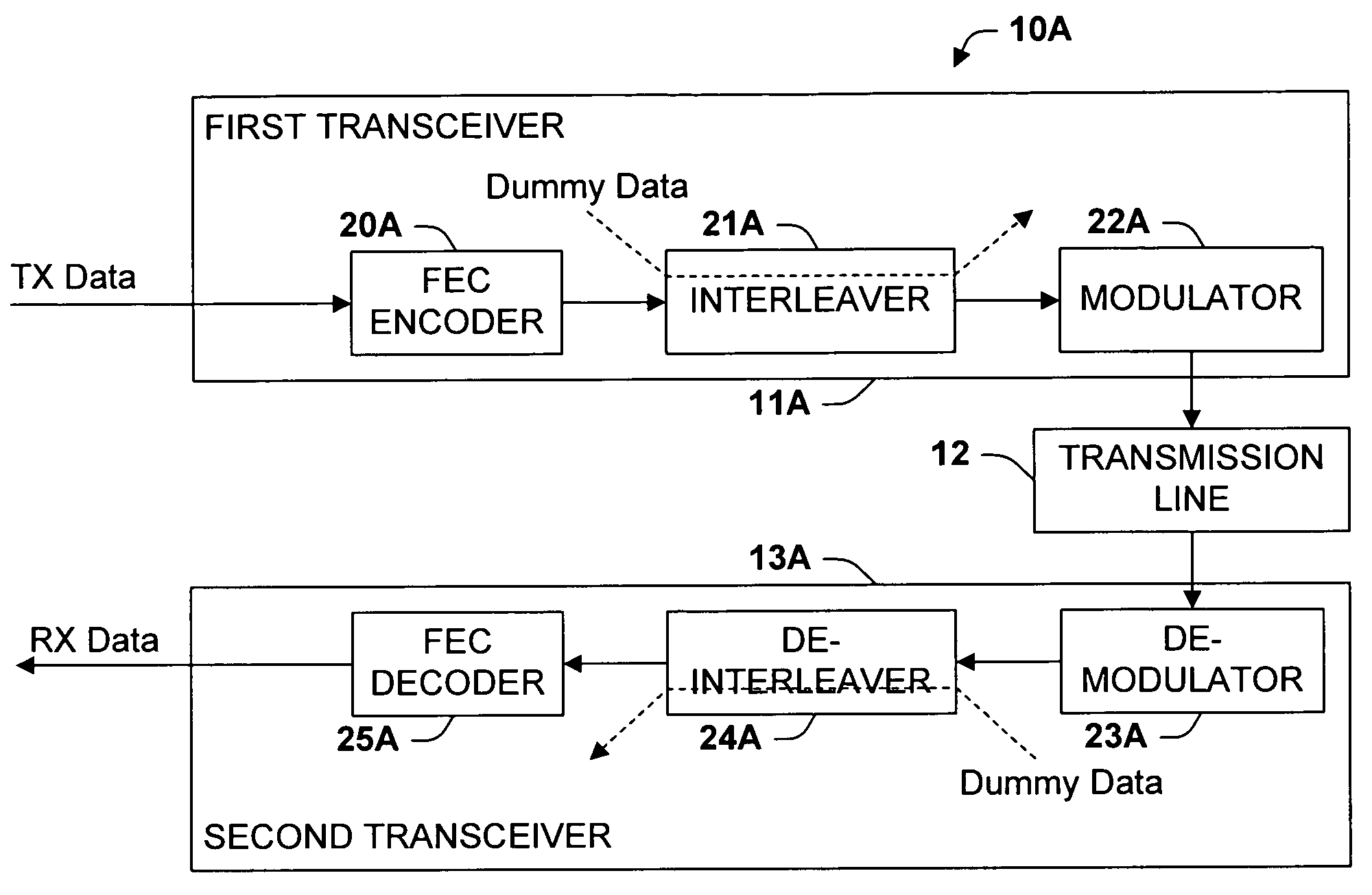
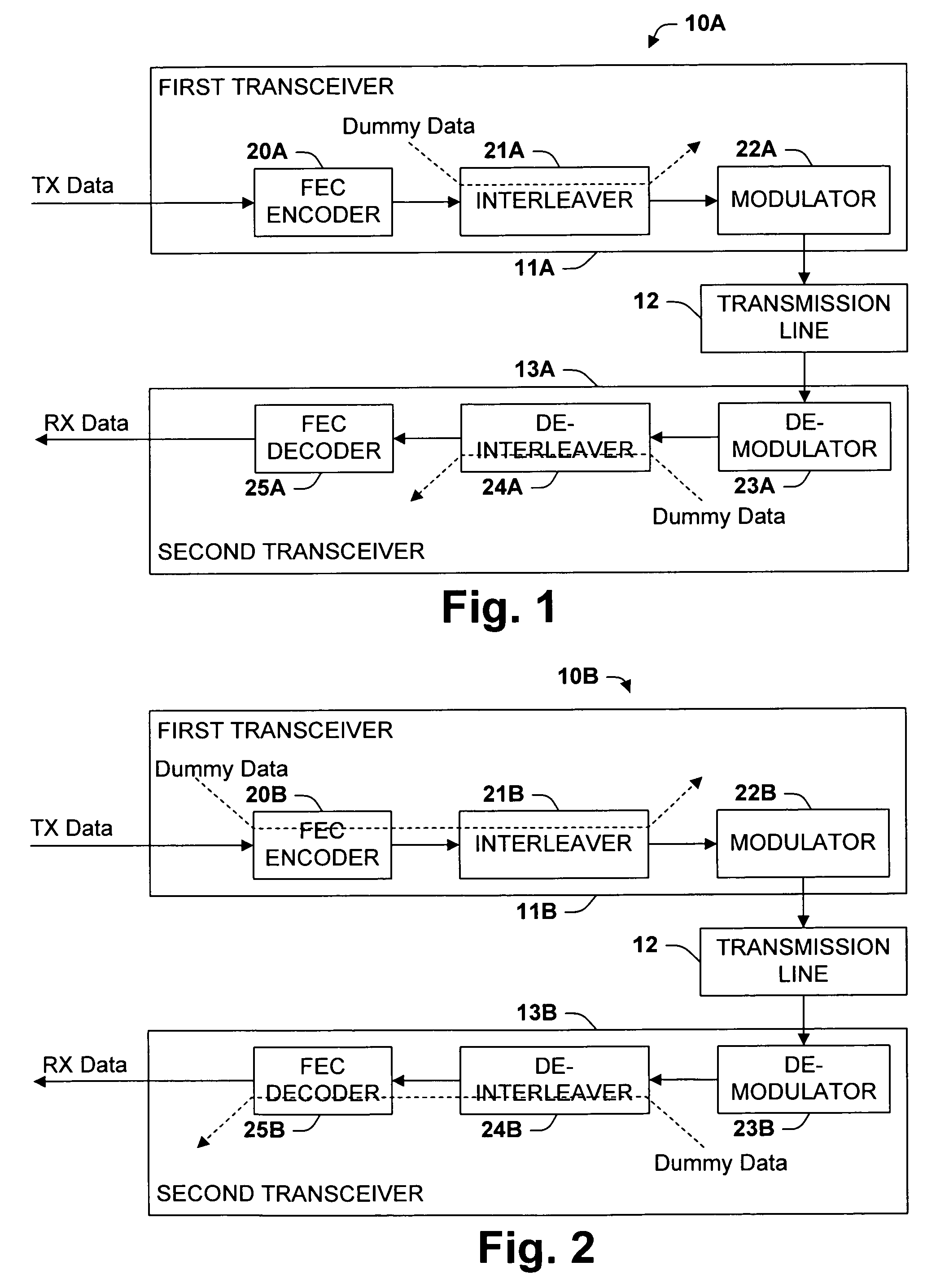
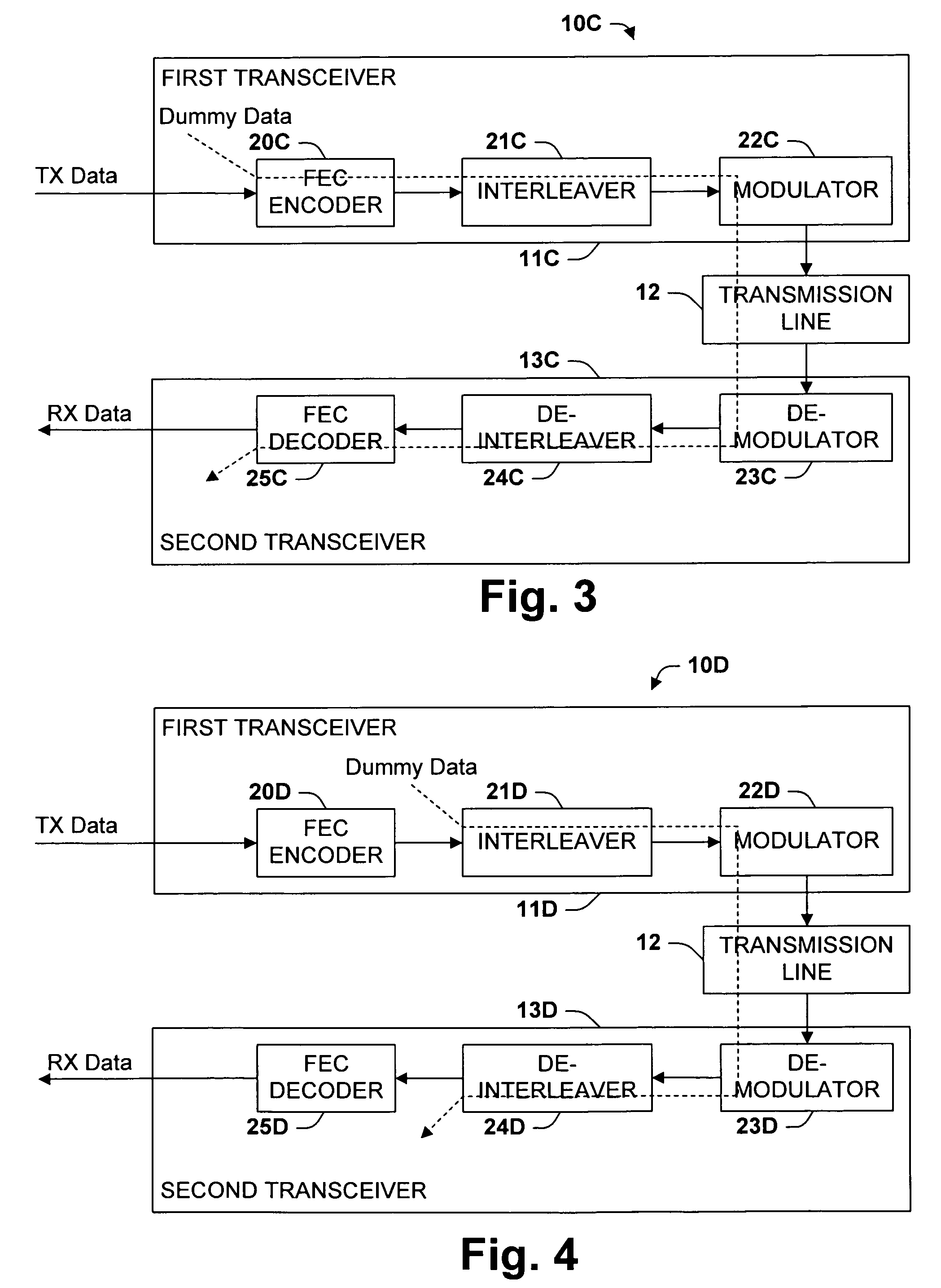
- The method involves interspersing dummy data with genuine data to form a combined data stream, which is processed through electronic subsystems like FEC encoders and interleavers, mitigating delay variations and impulse noise protection issues by adjusting the bit rate and power levels, while ensuring seamless rate adaptation without service disruption.
Standardization Framework for Network Diversity Protocols
The establishment of a comprehensive standardization framework for network diversity protocols represents a critical milestone in addressing the fundamental tension between seamless rate optimization and network diversity implementation. Current industry practices reveal significant fragmentation in protocol development, where proprietary solutions dominate the landscape, creating interoperability challenges that hinder widespread adoption of diversity-enhanced networking technologies.
The International Telecommunication Union (ITU) and Institute of Electrical and Electronics Engineers (IEEE) have initiated preliminary discussions regarding unified standards for network diversity protocols. These efforts focus on creating baseline specifications that accommodate various diversity techniques while maintaining compatibility across different vendor implementations. The proposed framework emphasizes modular architecture design, enabling selective implementation of diversity features based on specific network requirements and performance objectives.
Protocol standardization must address several key technical dimensions, including diversity metric definitions, performance measurement methodologies, and interoperability testing procedures. The framework establishes common terminology for diversity parameters such as path correlation coefficients, redundancy ratios, and failover latency thresholds. These standardized metrics enable consistent evaluation and comparison of different diversity implementations across heterogeneous network environments.
Backward compatibility considerations play a crucial role in the standardization process, ensuring that legacy systems can gradually integrate diversity capabilities without requiring complete infrastructure overhaul. The framework incorporates negotiation mechanisms that allow network nodes to dynamically discover and utilize available diversity features while maintaining seamless operation with non-diversity-aware equipment.
Implementation guidelines within the standardization framework provide detailed specifications for protocol message formats, state machine behaviors, and error handling procedures. These guidelines ensure consistent behavior across different vendor implementations while allowing sufficient flexibility for innovation and optimization. The framework also addresses security considerations, establishing authentication and encryption requirements for diversity control signaling.
Compliance testing and certification procedures form an integral component of the standardization framework, defining comprehensive test suites that validate protocol conformance and interoperability. These procedures include performance benchmarking methodologies that assess the trade-offs between seamless rate achievement and diversity effectiveness under various network conditions and traffic patterns.
The International Telecommunication Union (ITU) and Institute of Electrical and Electronics Engineers (IEEE) have initiated preliminary discussions regarding unified standards for network diversity protocols. These efforts focus on creating baseline specifications that accommodate various diversity techniques while maintaining compatibility across different vendor implementations. The proposed framework emphasizes modular architecture design, enabling selective implementation of diversity features based on specific network requirements and performance objectives.
Protocol standardization must address several key technical dimensions, including diversity metric definitions, performance measurement methodologies, and interoperability testing procedures. The framework establishes common terminology for diversity parameters such as path correlation coefficients, redundancy ratios, and failover latency thresholds. These standardized metrics enable consistent evaluation and comparison of different diversity implementations across heterogeneous network environments.
Backward compatibility considerations play a crucial role in the standardization process, ensuring that legacy systems can gradually integrate diversity capabilities without requiring complete infrastructure overhaul. The framework incorporates negotiation mechanisms that allow network nodes to dynamically discover and utilize available diversity features while maintaining seamless operation with non-diversity-aware equipment.
Implementation guidelines within the standardization framework provide detailed specifications for protocol message formats, state machine behaviors, and error handling procedures. These guidelines ensure consistent behavior across different vendor implementations while allowing sufficient flexibility for innovation and optimization. The framework also addresses security considerations, establishing authentication and encryption requirements for diversity control signaling.
Compliance testing and certification procedures form an integral component of the standardization framework, defining comprehensive test suites that validate protocol conformance and interoperability. These procedures include performance benchmarking methodologies that assess the trade-offs between seamless rate achievement and diversity effectiveness under various network conditions and traffic patterns.
Performance Metrics and Evaluation Methodologies
The evaluation of seamless rate versus network diversity requires a comprehensive framework of performance metrics that capture both quantitative and qualitative aspects of network behavior. Primary metrics include throughput efficiency, measured as the ratio of successfully transmitted data to total network capacity, and latency variance, which quantifies the consistency of data delivery times across diverse network paths. Connection establishment time serves as a critical indicator of seamless handover capabilities, while packet loss rates during transitions provide insights into network reliability under varying diversity conditions.
Standardized evaluation methodologies employ controlled testbed environments that simulate real-world network heterogeneity through software-defined networking platforms. These testbeds incorporate multiple access technologies including Wi-Fi, cellular, and satellite connections to replicate authentic diversity scenarios. Measurement protocols typically involve synthetic traffic generation with varying payload sizes and transmission patterns to stress-test seamless rate performance under different network configurations.
Statistical analysis frameworks utilize regression models to correlate network diversity parameters with seamless rate outcomes. Key variables include the number of available network paths, signal strength variations, and topology change frequencies. Monte Carlo simulations complement empirical testing by generating thousands of network scenarios to identify performance boundaries and failure modes that may not emerge in limited real-world testing.
Comparative benchmarking methodologies establish baseline performance metrics using traditional single-path networks as control groups. Multi-dimensional scoring systems weight different performance aspects according to application requirements, enabling objective comparison between seamless rate optimization strategies and network diversity enhancement approaches. These methodologies incorporate both peak performance measurements and sustained performance evaluation over extended operational periods.
Advanced evaluation techniques leverage machine learning algorithms to identify patterns in performance data that correlate with specific network diversity characteristics. Automated testing frameworks continuously monitor key performance indicators while systematically varying network parameters, generating comprehensive datasets for statistical analysis and predictive modeling of seamless rate behavior across diverse network environments.
Standardized evaluation methodologies employ controlled testbed environments that simulate real-world network heterogeneity through software-defined networking platforms. These testbeds incorporate multiple access technologies including Wi-Fi, cellular, and satellite connections to replicate authentic diversity scenarios. Measurement protocols typically involve synthetic traffic generation with varying payload sizes and transmission patterns to stress-test seamless rate performance under different network configurations.
Statistical analysis frameworks utilize regression models to correlate network diversity parameters with seamless rate outcomes. Key variables include the number of available network paths, signal strength variations, and topology change frequencies. Monte Carlo simulations complement empirical testing by generating thousands of network scenarios to identify performance boundaries and failure modes that may not emerge in limited real-world testing.
Comparative benchmarking methodologies establish baseline performance metrics using traditional single-path networks as control groups. Multi-dimensional scoring systems weight different performance aspects according to application requirements, enabling objective comparison between seamless rate optimization strategies and network diversity enhancement approaches. These methodologies incorporate both peak performance measurements and sustained performance evaluation over extended operational periods.
Advanced evaluation techniques leverage machine learning algorithms to identify patterns in performance data that correlate with specific network diversity characteristics. Automated testing frameworks continuously monitor key performance indicators while systematically varying network parameters, generating comprehensive datasets for statistical analysis and predictive modeling of seamless rate behavior across diverse network environments.
Unlock deeper insights with PatSnap Eureka Quick Research — get a full tech report to explore trends and direct your research. Try now!
Generate Your Research Report Instantly with AI Agent
Supercharge your innovation with PatSnap Eureka AI Agent Platform!