Semi-Solid vs. Thin-Film Batteries: Scalability
APR 11, 202610 MIN READ
Generate Your Research Report Instantly with AI Agent
Patsnap Eureka helps you evaluate technical feasibility & market potential.
Semi-Solid vs Thin-Film Battery Technology Background and Scalability Goals
The evolution of battery technology has been driven by the relentless pursuit of higher energy density, improved safety, and manufacturing scalability. Traditional liquid electrolyte lithium-ion batteries have dominated the market for decades, but their inherent limitations in energy density and safety concerns have spurred the development of next-generation battery technologies. Two promising approaches have emerged as potential game-changers: semi-solid batteries and thin-film batteries, each offering distinct advantages in addressing current technological bottlenecks.
Semi-solid battery technology represents an evolutionary step from conventional lithium-ion systems, incorporating a gel-like electrolyte that combines the benefits of liquid and solid electrolytes. This approach maintains the high ionic conductivity of liquid systems while providing enhanced safety through reduced flammability and improved thermal stability. The technology has gained significant traction since its conceptualization in the early 2010s, with major automotive manufacturers and battery companies investing heavily in its development.
Thin-film battery technology, conversely, represents a more radical departure from traditional battery architectures. These batteries utilize solid-state electrolytes deposited in extremely thin layers, typically measured in micrometers. The technology promises exceptional energy density, extended cycle life, and superior safety characteristics due to the elimination of liquid electrolytes entirely. However, the manufacturing complexity and associated costs have historically limited its commercial viability.
The scalability challenge for both technologies centers on achieving cost-effective mass production while maintaining performance characteristics. For semi-solid batteries, the primary scalability goals include optimizing the gel electrolyte formulation for high-volume manufacturing, developing automated production processes that can handle the unique rheological properties of semi-solid materials, and establishing supply chains for specialized materials.
Thin-film batteries face different scalability hurdles, primarily related to the precision manufacturing requirements and the need for specialized deposition equipment. The technology demands ultra-clean manufacturing environments and sophisticated process control systems, making the transition from laboratory-scale production to industrial manufacturing particularly challenging.
Both technologies aim to achieve commercial viability through different pathways: semi-solid batteries focus on leveraging existing lithium-ion manufacturing infrastructure with modifications, while thin-film batteries require entirely new production paradigms. The ultimate scalability success will depend on each technology's ability to overcome manufacturing constraints while delivering superior performance metrics compared to conventional battery systems.
Semi-solid battery technology represents an evolutionary step from conventional lithium-ion systems, incorporating a gel-like electrolyte that combines the benefits of liquid and solid electrolytes. This approach maintains the high ionic conductivity of liquid systems while providing enhanced safety through reduced flammability and improved thermal stability. The technology has gained significant traction since its conceptualization in the early 2010s, with major automotive manufacturers and battery companies investing heavily in its development.
Thin-film battery technology, conversely, represents a more radical departure from traditional battery architectures. These batteries utilize solid-state electrolytes deposited in extremely thin layers, typically measured in micrometers. The technology promises exceptional energy density, extended cycle life, and superior safety characteristics due to the elimination of liquid electrolytes entirely. However, the manufacturing complexity and associated costs have historically limited its commercial viability.
The scalability challenge for both technologies centers on achieving cost-effective mass production while maintaining performance characteristics. For semi-solid batteries, the primary scalability goals include optimizing the gel electrolyte formulation for high-volume manufacturing, developing automated production processes that can handle the unique rheological properties of semi-solid materials, and establishing supply chains for specialized materials.
Thin-film batteries face different scalability hurdles, primarily related to the precision manufacturing requirements and the need for specialized deposition equipment. The technology demands ultra-clean manufacturing environments and sophisticated process control systems, making the transition from laboratory-scale production to industrial manufacturing particularly challenging.
Both technologies aim to achieve commercial viability through different pathways: semi-solid batteries focus on leveraging existing lithium-ion manufacturing infrastructure with modifications, while thin-film batteries require entirely new production paradigms. The ultimate scalability success will depend on each technology's ability to overcome manufacturing constraints while delivering superior performance metrics compared to conventional battery systems.
Market Demand Analysis for Scalable Battery Manufacturing
The global battery manufacturing market is experiencing unprecedented growth driven by the rapid expansion of electric vehicles, renewable energy storage systems, and portable electronics. This surge in demand has created a critical need for scalable manufacturing technologies that can deliver high-performance batteries at competitive costs while maintaining quality consistency across large production volumes.
Electric vehicle adoption represents the primary growth driver, with automotive manufacturers committing to electrification strategies that require massive battery production capacity. The transition from internal combustion engines to electric powertrains demands manufacturing solutions capable of producing batteries with high energy density, fast charging capabilities, and extended cycle life. This automotive transformation has intensified the focus on manufacturing scalability as a key competitive differentiator.
Energy storage applications for grid-scale renewable integration present another significant market opportunity. As solar and wind power installations continue expanding globally, the demand for large-format battery systems capable of storing and dispatching renewable energy has grown substantially. These applications prioritize cost-effectiveness and manufacturing efficiency over the highest energy density, creating distinct scalability requirements compared to automotive applications.
Consumer electronics markets continue driving demand for compact, high-performance batteries in smartphones, laptops, wearables, and emerging device categories. While individual unit volumes may be smaller than automotive applications, the aggregate demand across diverse consumer products creates substantial manufacturing volume requirements with emphasis on miniaturization and production flexibility.
Manufacturing scalability challenges differ significantly between semi-solid and thin-film battery technologies. Semi-solid batteries leverage modified versions of conventional lithium-ion manufacturing equipment, potentially offering faster scaling through adaptation of existing production infrastructure. However, the technology requires precise control of semi-solid electrolyte properties and novel coating processes that may present yield and consistency challenges at high volumes.
Thin-film batteries demand entirely different manufacturing approaches based on vacuum deposition, sputtering, and other semiconductor-style processes. While these technologies can achieve superior performance characteristics, scaling production requires substantial capital investment in specialized equipment and cleanroom facilities. The manufacturing complexity may limit near-term scalability but offers potential advantages for high-value applications where performance justifies premium costs.
Regional manufacturing capacity distribution reflects both market proximity and supply chain considerations. Asian markets currently dominate battery manufacturing infrastructure, while North American and European regions are rapidly developing domestic production capabilities driven by supply security concerns and policy incentives supporting local manufacturing ecosystems.
Electric vehicle adoption represents the primary growth driver, with automotive manufacturers committing to electrification strategies that require massive battery production capacity. The transition from internal combustion engines to electric powertrains demands manufacturing solutions capable of producing batteries with high energy density, fast charging capabilities, and extended cycle life. This automotive transformation has intensified the focus on manufacturing scalability as a key competitive differentiator.
Energy storage applications for grid-scale renewable integration present another significant market opportunity. As solar and wind power installations continue expanding globally, the demand for large-format battery systems capable of storing and dispatching renewable energy has grown substantially. These applications prioritize cost-effectiveness and manufacturing efficiency over the highest energy density, creating distinct scalability requirements compared to automotive applications.
Consumer electronics markets continue driving demand for compact, high-performance batteries in smartphones, laptops, wearables, and emerging device categories. While individual unit volumes may be smaller than automotive applications, the aggregate demand across diverse consumer products creates substantial manufacturing volume requirements with emphasis on miniaturization and production flexibility.
Manufacturing scalability challenges differ significantly between semi-solid and thin-film battery technologies. Semi-solid batteries leverage modified versions of conventional lithium-ion manufacturing equipment, potentially offering faster scaling through adaptation of existing production infrastructure. However, the technology requires precise control of semi-solid electrolyte properties and novel coating processes that may present yield and consistency challenges at high volumes.
Thin-film batteries demand entirely different manufacturing approaches based on vacuum deposition, sputtering, and other semiconductor-style processes. While these technologies can achieve superior performance characteristics, scaling production requires substantial capital investment in specialized equipment and cleanroom facilities. The manufacturing complexity may limit near-term scalability but offers potential advantages for high-value applications where performance justifies premium costs.
Regional manufacturing capacity distribution reflects both market proximity and supply chain considerations. Asian markets currently dominate battery manufacturing infrastructure, while North American and European regions are rapidly developing domestic production capabilities driven by supply security concerns and policy incentives supporting local manufacturing ecosystems.
Current Scalability Challenges in Semi-Solid and Thin-Film Battery Production
Semi-solid battery production faces significant manufacturing complexity challenges that limit scalability. The slurry-based electrode architecture requires precise control of rheological properties during processing, making it difficult to maintain consistency across large-scale production lines. The semi-solid electrolyte must achieve optimal viscosity while ensuring uniform particle distribution, which becomes increasingly challenging as production volumes increase. Current manufacturing processes struggle with batch-to-batch variations in conductivity and mechanical properties.
Thin-film battery production encounters entirely different scalability obstacles centered around deposition precision and substrate handling. The vacuum-based sputtering and chemical vapor deposition processes required for thin-film layers are inherently slow and energy-intensive, creating bottlenecks in high-volume manufacturing. Maintaining uniform thickness across large substrate areas remains problematic, with thickness variations directly impacting battery performance and yield rates.
Quality control presents distinct challenges for each technology. Semi-solid batteries require real-time monitoring of slurry composition and flow characteristics, demanding sophisticated inline measurement systems that are expensive to implement at scale. The multi-phase nature of semi-solid electrodes makes defect detection more complex compared to conventional battery technologies.
Thin-film batteries face stringent requirements for defect-free deposition across entire substrate surfaces. Pinhole formation, contamination, and interface irregularities can render entire battery units unusable. Current inspection technologies struggle to detect microscopic defects at the production speeds required for commercial viability.
Equipment scalability represents another critical constraint. Semi-solid battery production requires specialized mixing and coating equipment capable of handling non-Newtonian fluids, with limited availability of proven large-scale systems. The transition from laboratory-scale to industrial-scale mixing presents significant technical hurdles in maintaining homogeneity.
Thin-film battery manufacturing depends on expensive vacuum deposition systems with limited throughput capacity. Scaling up chamber sizes while maintaining uniform deposition conditions requires substantial capital investment and technical expertise. The sequential nature of multi-layer deposition further constrains production rates.
Cost economics remain unfavorable for both technologies at current production scales. Semi-solid batteries face high material costs due to specialized additives and processing aids, while thin-film batteries struggle with low material utilization efficiency and high equipment depreciation costs. Neither technology has achieved the economies of scale necessary for cost-competitive mass production.
Thin-film battery production encounters entirely different scalability obstacles centered around deposition precision and substrate handling. The vacuum-based sputtering and chemical vapor deposition processes required for thin-film layers are inherently slow and energy-intensive, creating bottlenecks in high-volume manufacturing. Maintaining uniform thickness across large substrate areas remains problematic, with thickness variations directly impacting battery performance and yield rates.
Quality control presents distinct challenges for each technology. Semi-solid batteries require real-time monitoring of slurry composition and flow characteristics, demanding sophisticated inline measurement systems that are expensive to implement at scale. The multi-phase nature of semi-solid electrodes makes defect detection more complex compared to conventional battery technologies.
Thin-film batteries face stringent requirements for defect-free deposition across entire substrate surfaces. Pinhole formation, contamination, and interface irregularities can render entire battery units unusable. Current inspection technologies struggle to detect microscopic defects at the production speeds required for commercial viability.
Equipment scalability represents another critical constraint. Semi-solid battery production requires specialized mixing and coating equipment capable of handling non-Newtonian fluids, with limited availability of proven large-scale systems. The transition from laboratory-scale to industrial-scale mixing presents significant technical hurdles in maintaining homogeneity.
Thin-film battery manufacturing depends on expensive vacuum deposition systems with limited throughput capacity. Scaling up chamber sizes while maintaining uniform deposition conditions requires substantial capital investment and technical expertise. The sequential nature of multi-layer deposition further constrains production rates.
Cost economics remain unfavorable for both technologies at current production scales. Semi-solid batteries face high material costs due to specialized additives and processing aids, while thin-film batteries struggle with low material utilization efficiency and high equipment depreciation costs. Neither technology has achieved the economies of scale necessary for cost-competitive mass production.
Current Manufacturing Solutions for Battery Scalability
01 Manufacturing methods for scalable thin-film battery production
Various manufacturing techniques have been developed to enable scalable production of thin-film batteries, including roll-to-roll processing, vapor deposition methods, and automated assembly processes. These methods allow for continuous production and reduced manufacturing costs while maintaining consistent quality across large production volumes. The techniques focus on achieving uniform film thickness, proper layer alignment, and efficient material utilization to support commercial-scale manufacturing.- Manufacturing processes for scalable thin-film battery production: Advanced manufacturing techniques enable mass production of thin-film batteries through continuous processing methods, roll-to-roll fabrication, and automated deposition systems. These processes allow for high-throughput production while maintaining uniform film quality and thickness control across large substrate areas, making thin-film batteries commercially viable for various applications.
- Semi-solid electrode architectures for enhanced scalability: Semi-solid battery designs utilize flowable electrode materials that combine solid active particles suspended in liquid electrolytes, enabling easier manufacturing and scaling. This architecture allows for thicker electrodes with higher energy density while maintaining processability through conventional coating and printing techniques, facilitating transition from laboratory to industrial scale production.
- Substrate materials and form factors for scalable battery integration: Flexible and rigid substrate materials enable thin-film batteries to be manufactured in various form factors suitable for different applications. The selection of appropriate substrate materials, including polymers, metals, and ceramics, affects the scalability of production processes and the final battery performance, allowing for integration into diverse product designs from wearables to large-format energy storage systems.
- Electrolyte formulations for semi-solid and thin-film configurations: Specialized electrolyte compositions are developed to optimize performance in semi-solid and thin-film battery formats, balancing ionic conductivity, stability, and processability. These formulations must be compatible with scalable manufacturing methods while ensuring proper interfacial contact between electrodes and maintaining long-term cycling stability across different operating conditions.
- Quality control and testing methods for scaled production: Comprehensive quality assurance protocols and in-line testing methods are essential for maintaining consistency during scaled manufacturing of thin-film and semi-solid batteries. These include non-destructive testing techniques, automated inspection systems, and real-time monitoring of critical parameters to ensure each battery unit meets performance specifications while maintaining high production yields.
02 Semi-solid electrode formulations and processing
Semi-solid battery electrodes utilize flowable electrode compositions that combine active materials with conductive additives and electrolytes to create a suspension or slurry. These formulations enable scalable manufacturing through pumping and coating processes, allowing for thicker electrodes and higher energy density. The semi-solid approach facilitates continuous production methods and simplifies the manufacturing process compared to traditional solid electrode fabrication.Expand Specific Solutions03 Substrate materials and flexible battery architectures
Scalable thin-film batteries require appropriate substrate materials that can support flexible or rigid configurations while enabling high-volume production. Various substrate options including polymer films, metal foils, and composite materials have been developed to provide mechanical support, electrical properties, and compatibility with different manufacturing processes. The selection of substrate materials impacts the overall battery performance, form factor flexibility, and manufacturing scalability.Expand Specific Solutions04 Electrolyte systems for semi-solid and thin-film configurations
Specialized electrolyte systems have been developed to address the unique requirements of semi-solid and thin-film battery architectures. These include gel electrolytes, solid-state electrolytes, and hybrid systems that provide ionic conductivity while maintaining compatibility with scalable manufacturing processes. The electrolyte formulations must balance performance characteristics such as ionic conductivity, electrochemical stability, and mechanical properties with processability requirements for large-scale production.Expand Specific Solutions05 Quality control and testing methods for scaled production
As thin-film and semi-solid battery production scales up, comprehensive quality control and testing methodologies become essential to ensure consistent performance and safety. These methods include in-line monitoring systems, automated inspection techniques, and standardized testing protocols that can be integrated into high-volume manufacturing lines. The approaches focus on detecting defects, verifying electrical performance, and ensuring uniformity across large production batches while maintaining production efficiency.Expand Specific Solutions
Major Players in Semi-Solid and Thin-Film Battery Industry
The semi-solid versus thin-film battery scalability landscape represents an emerging technology sector in early commercialization stages, with significant market potential driven by electric vehicle and energy storage demands. The industry exhibits fragmented competition across diverse player categories, from established battery manufacturers like Samsung SDI and LG Energy Solution to semiconductor giants such as Applied Materials and STMicroelectronics. Technology maturity varies considerably, with traditional companies like Toyota Motor and Toshiba leveraging existing manufacturing capabilities, while specialized firms like Sion Power focus on advanced lithium-metal technologies. Research institutions including MIT, Cornell University, and Fudan University contribute foundational innovations, though commercial scalability remains challenging. The competitive dynamics suggest the market is transitioning from research-intensive development toward manufacturing optimization, with success dependent on achieving cost-effective production scaling.
Samsung SDI Co., Ltd.
Technical Solution: Samsung SDI has developed comprehensive semi-solid battery technology focusing on scalable manufacturing processes. Their approach utilizes a hybrid electrolyte system combining liquid and solid components, enabling higher energy density while maintaining production feasibility. The company has established pilot production lines capable of producing semi-solid batteries with energy densities exceeding 300 Wh/kg. Their manufacturing process incorporates advanced coating techniques and temperature-controlled assembly environments to ensure consistent quality at scale. Samsung SDI's semi-solid battery technology addresses the scalability challenges through modular production systems and automated quality control mechanisms.
Strengths: Established manufacturing infrastructure, proven scalability in battery production, strong R&D capabilities. Weaknesses: Higher initial capital investment, complex manufacturing process control requirements.
Massachusetts Institute of Technology
Technical Solution: MIT has conducted extensive research on both semi-solid and thin-film battery technologies with particular focus on addressing scalability challenges through innovative materials and processes. Their semi-solid battery research includes development of flowable electrode materials that can be processed using conventional coating techniques while achieving high energy densities. MIT's thin-film battery research focuses on novel deposition methods that enable large-area processing at reduced costs. The institute has developed computational models to optimize manufacturing processes and predict scalability bottlenecks. Their research includes investigation of alternative materials that can reduce processing complexity while maintaining electrochemical performance. MIT's approach emphasizes fundamental understanding of scaling physics and chemistry.
Strengths: Cutting-edge research capabilities, fundamental technology development, academic-industry collaboration. Weaknesses: Limited commercial manufacturing experience, technology transfer challenges.
Core Patents in Scalable Battery Manufacturing Processes
Part solid, part fluid and flow electrochemical cells including metal-air and li-air battery systems
PatentInactiveUS20130189592A1
Innovation
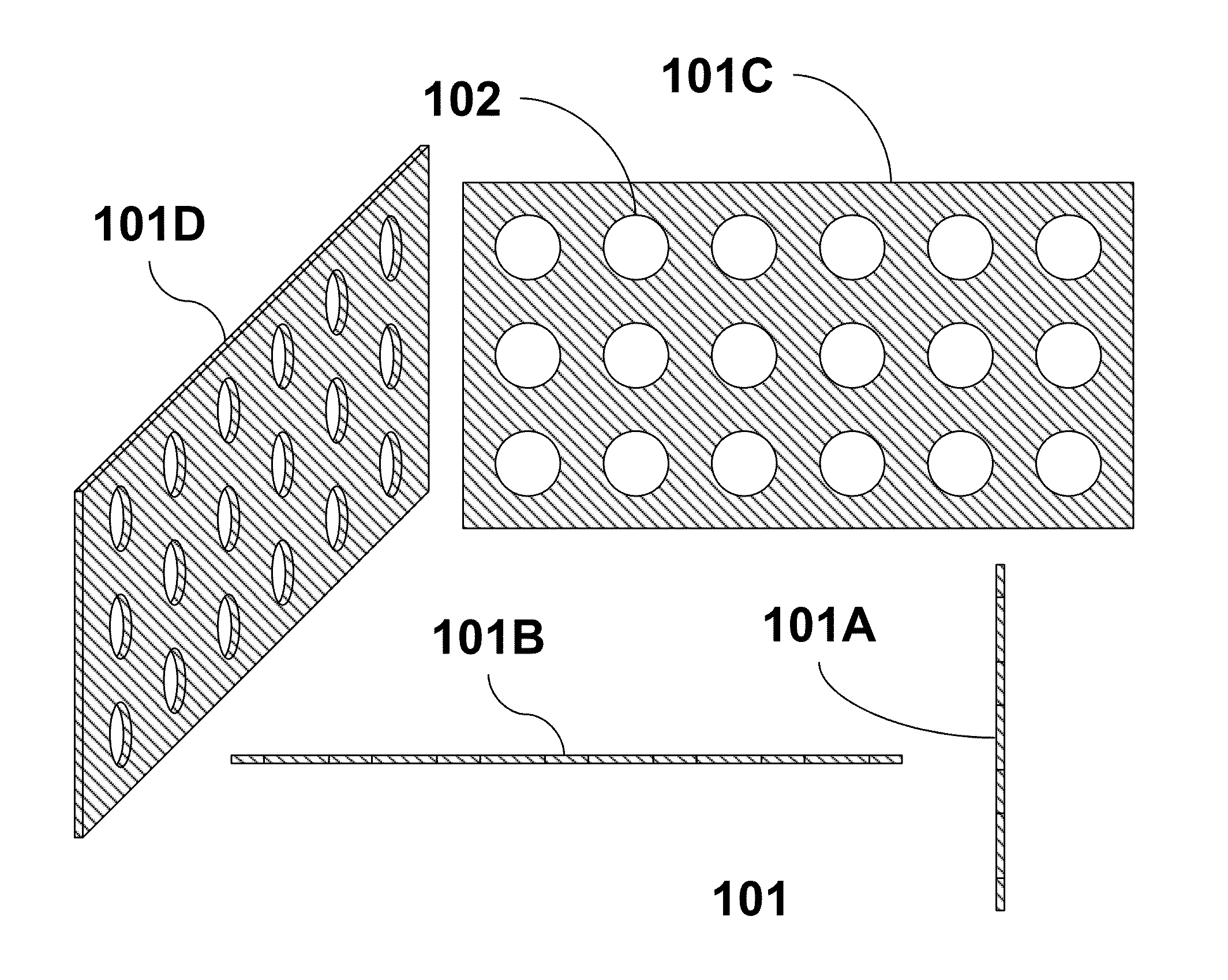
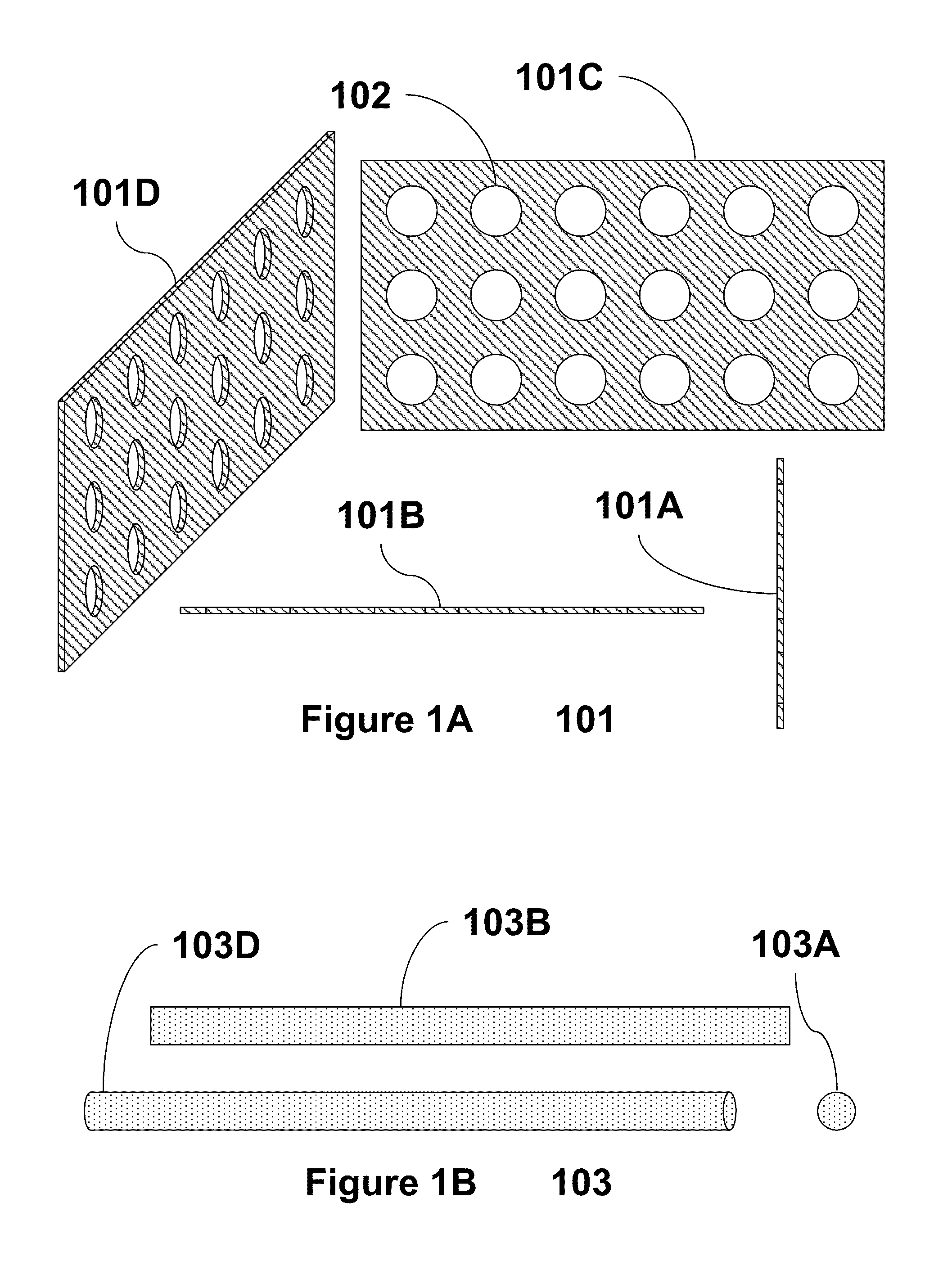
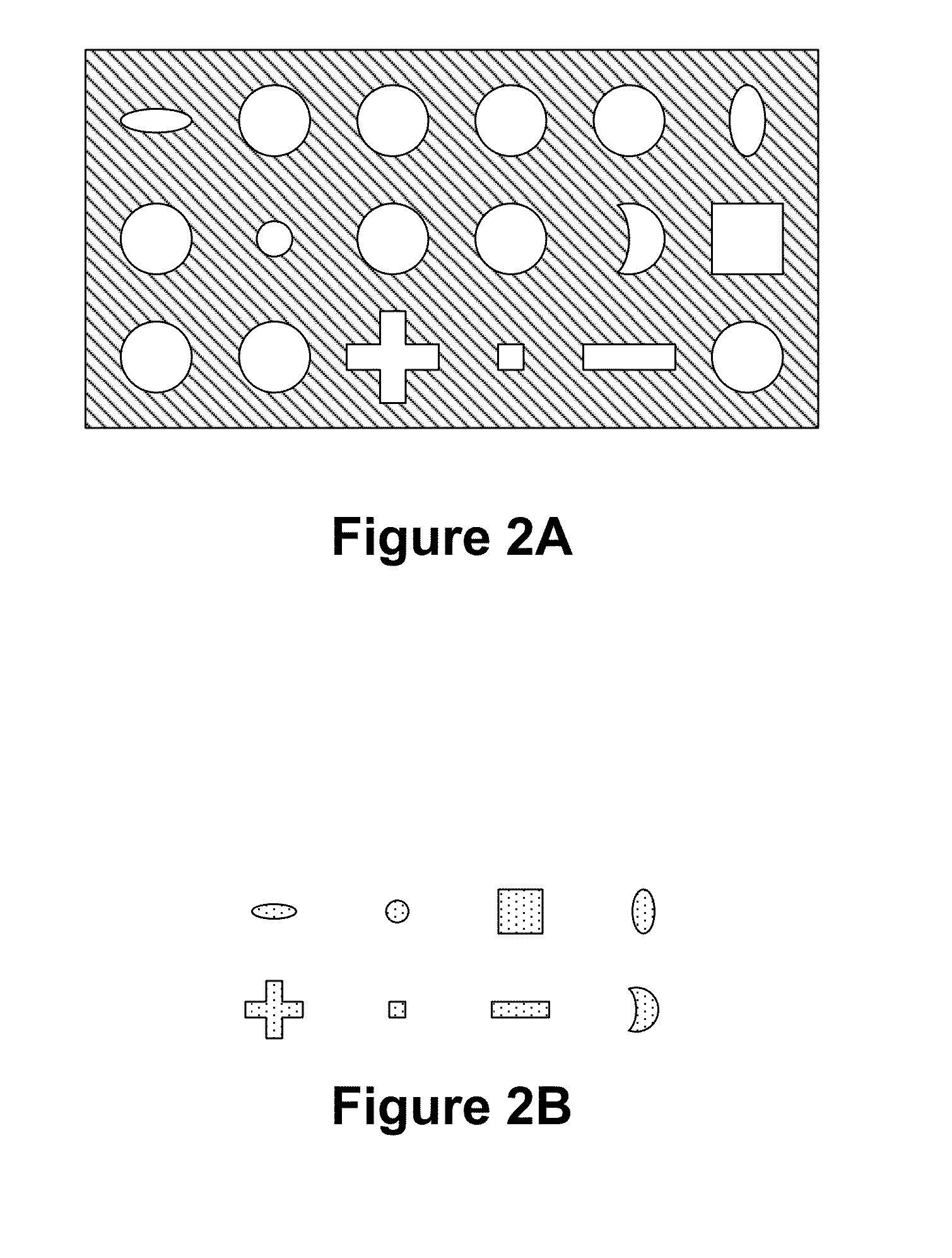
- The development of three-dimensional electrode arrays for part solid, part fluid electrochemical cells, featuring a plurality of plate electrodes with apertures and rod electrodes arranged in a specific orientation to enhance ionic and electronic transport, mechanical robustness, and energy density, while allowing for improved heat management and scalability.

Thin film battery having textured layer
PatentActiveUS20080050656A1
Innovation
- A monolithically integrated lithium thin film battery design featuring a substrate with textured surfaces at angles between 10 and 80 degrees, allowing for a uniform electrolyte layer deposition using physical vapor deposition, which includes a current collector, cathode, and anode within the grooves, thereby increasing areal capacity without stacking multiple cells.


Environmental Impact Assessment of Battery Manufacturing Scale-Up
The environmental implications of scaling up semi-solid and thin-film battery manufacturing present distinct challenges and opportunities that require comprehensive assessment. Both technologies demonstrate significantly different environmental footprints during production scale-up, with varying impacts on resource consumption, waste generation, and energy utilization patterns.
Semi-solid battery manufacturing scale-up introduces substantial environmental considerations primarily related to material processing and facility requirements. The production process demands extensive mixing and coating operations that consume considerable energy, particularly during the preparation of semi-solid electrolyte slurries. Manufacturing facilities require sophisticated climate control systems to maintain optimal humidity and temperature conditions, contributing to increased energy consumption. The scale-up process generates notable amounts of solvent waste from coating operations and requires substantial water usage for cleaning processes.
Thin-film battery manufacturing presents a contrasting environmental profile during scale-up operations. The vacuum-based deposition processes, including sputtering and chemical vapor deposition, require significant energy inputs but generate minimal liquid waste streams. However, the manufacturing process relies heavily on rare earth materials and specialized target materials, creating supply chain environmental pressures. The clean room requirements for thin-film production demand continuous air filtration and environmental control systems, resulting in substantial ongoing energy consumption.
Resource utilization patterns differ markedly between the two technologies during scale-up phases. Semi-solid batteries utilize more abundant materials but require larger quantities of organic solvents and processing chemicals. The manufacturing process generates recyclable metal waste streams but produces challenging-to-treat organic waste products. Conversely, thin-film batteries consume smaller absolute quantities of materials but rely on scarcer elements with more complex extraction environmental impacts.
Waste stream characteristics vary significantly between scaled manufacturing approaches. Semi-solid battery production generates primarily liquid waste requiring specialized treatment facilities, while thin-film manufacturing produces solid waste streams that are often more amenable to recycling processes. The scale-up of semi-solid production requires expanded wastewater treatment capabilities, whereas thin-film scale-up necessitates enhanced material recovery systems for expensive target materials.
Energy intensity analysis reveals that thin-film manufacturing typically requires higher energy inputs per unit area during production but achieves superior energy density in final products. Semi-solid battery manufacturing demonstrates lower peak energy requirements but sustained energy consumption throughout longer processing cycles. The overall environmental impact assessment must consider both production energy requirements and end-use efficiency gains to determine net environmental benefits during large-scale deployment.
Semi-solid battery manufacturing scale-up introduces substantial environmental considerations primarily related to material processing and facility requirements. The production process demands extensive mixing and coating operations that consume considerable energy, particularly during the preparation of semi-solid electrolyte slurries. Manufacturing facilities require sophisticated climate control systems to maintain optimal humidity and temperature conditions, contributing to increased energy consumption. The scale-up process generates notable amounts of solvent waste from coating operations and requires substantial water usage for cleaning processes.
Thin-film battery manufacturing presents a contrasting environmental profile during scale-up operations. The vacuum-based deposition processes, including sputtering and chemical vapor deposition, require significant energy inputs but generate minimal liquid waste streams. However, the manufacturing process relies heavily on rare earth materials and specialized target materials, creating supply chain environmental pressures. The clean room requirements for thin-film production demand continuous air filtration and environmental control systems, resulting in substantial ongoing energy consumption.
Resource utilization patterns differ markedly between the two technologies during scale-up phases. Semi-solid batteries utilize more abundant materials but require larger quantities of organic solvents and processing chemicals. The manufacturing process generates recyclable metal waste streams but produces challenging-to-treat organic waste products. Conversely, thin-film batteries consume smaller absolute quantities of materials but rely on scarcer elements with more complex extraction environmental impacts.
Waste stream characteristics vary significantly between scaled manufacturing approaches. Semi-solid battery production generates primarily liquid waste requiring specialized treatment facilities, while thin-film manufacturing produces solid waste streams that are often more amenable to recycling processes. The scale-up of semi-solid production requires expanded wastewater treatment capabilities, whereas thin-film scale-up necessitates enhanced material recovery systems for expensive target materials.
Energy intensity analysis reveals that thin-film manufacturing typically requires higher energy inputs per unit area during production but achieves superior energy density in final products. Semi-solid battery manufacturing demonstrates lower peak energy requirements but sustained energy consumption throughout longer processing cycles. The overall environmental impact assessment must consider both production energy requirements and end-use efficiency gains to determine net environmental benefits during large-scale deployment.
Cost-Benefit Analysis of Semi-Solid vs Thin-Film Scaling Strategies
The economic viability of scaling semi-solid and thin-film battery technologies presents distinct cost structures and benefit profiles that significantly influence manufacturing decisions. Semi-solid batteries demonstrate favorable economies of scale due to their compatibility with existing lithium-ion production infrastructure, requiring minimal capital expenditure for facility conversion. The manufacturing process leverages conventional coating and assembly equipment, reducing initial investment barriers and enabling faster market entry.
Thin-film batteries face substantially higher upfront capital requirements, necessitating specialized vacuum deposition equipment and cleanroom facilities. The initial investment per production line can exceed $50-100 million, compared to $20-30 million for semi-solid battery lines of equivalent capacity. However, thin-film technology offers superior material utilization efficiency, with waste rates below 5% versus 15-20% for semi-solid processes.
Production cost analysis reveals contrasting trajectories as manufacturing volumes increase. Semi-solid batteries achieve cost reductions primarily through material procurement economies and process optimization, with manufacturing costs decreasing by approximately 20-30% when production scales from pilot to commercial volumes. The technology benefits from established supply chains for active materials and electrolytes.
Thin-film scaling demonstrates steeper cost reduction curves once critical production thresholds are reached. Manufacturing costs can decrease by 40-50% as volumes increase, driven by improved equipment utilization and reduced per-unit overhead allocation. The technology's inherently lower material consumption provides long-term cost advantages, particularly as raw material prices fluctuate.
Operational expenditure considerations favor semi-solid batteries in the near term, with lower energy consumption during manufacturing and reduced maintenance requirements. Thin-film production demands higher energy inputs for vacuum processing and temperature control, increasing operational costs by 15-25%. However, thin-film's superior yield rates and reduced quality control requirements partially offset these disadvantages.
The break-even analysis indicates that thin-film batteries achieve cost parity with semi-solid alternatives at production volumes exceeding 100 MWh annually per facility. Below this threshold, semi-solid batteries maintain significant cost advantages, making them more suitable for emerging markets or specialized applications with limited volume requirements.
Thin-film batteries face substantially higher upfront capital requirements, necessitating specialized vacuum deposition equipment and cleanroom facilities. The initial investment per production line can exceed $50-100 million, compared to $20-30 million for semi-solid battery lines of equivalent capacity. However, thin-film technology offers superior material utilization efficiency, with waste rates below 5% versus 15-20% for semi-solid processes.
Production cost analysis reveals contrasting trajectories as manufacturing volumes increase. Semi-solid batteries achieve cost reductions primarily through material procurement economies and process optimization, with manufacturing costs decreasing by approximately 20-30% when production scales from pilot to commercial volumes. The technology benefits from established supply chains for active materials and electrolytes.
Thin-film scaling demonstrates steeper cost reduction curves once critical production thresholds are reached. Manufacturing costs can decrease by 40-50% as volumes increase, driven by improved equipment utilization and reduced per-unit overhead allocation. The technology's inherently lower material consumption provides long-term cost advantages, particularly as raw material prices fluctuate.
Operational expenditure considerations favor semi-solid batteries in the near term, with lower energy consumption during manufacturing and reduced maintenance requirements. Thin-film production demands higher energy inputs for vacuum processing and temperature control, increasing operational costs by 15-25%. However, thin-film's superior yield rates and reduced quality control requirements partially offset these disadvantages.
The break-even analysis indicates that thin-film batteries achieve cost parity with semi-solid alternatives at production volumes exceeding 100 MWh annually per facility. Below this threshold, semi-solid batteries maintain significant cost advantages, making them more suitable for emerging markets or specialized applications with limited volume requirements.
Unlock deeper insights with Patsnap Eureka Quick Research — get a full tech report to explore trends and direct your research. Try now!
Generate Your Research Report Instantly with AI Agent
Supercharge your innovation with Patsnap Eureka AI Agent Platform!