Simplifying SCADA System Maintenance with Predictive Analysis
MAR 13, 20269 MIN READ
Generate Your Research Report Instantly with AI Agent
Patsnap Eureka helps you evaluate technical feasibility & market potential.
SCADA Predictive Maintenance Background and Objectives
SCADA (Supervisory Control and Data Acquisition) systems have evolved significantly since their inception in the 1960s, transitioning from simple telemetry systems to sophisticated industrial automation platforms. Initially designed for basic monitoring and control of remote equipment, SCADA systems have become the backbone of critical infrastructure across power generation, water treatment, oil and gas, manufacturing, and transportation sectors. The integration of digital technologies, networking capabilities, and advanced sensors has transformed these systems into complex, interconnected networks that manage vast amounts of real-time operational data.
The evolution of SCADA technology has been marked by several key phases, beginning with first-generation monolithic systems, progressing through distributed architectures, and now embracing networked systems with cloud integration and IoT connectivity. This technological progression has exponentially increased the complexity of maintenance requirements, as modern SCADA installations often comprise thousands of field devices, multiple communication protocols, and intricate software layers that require continuous monitoring and upkeep.
Traditional maintenance approaches for SCADA systems have relied heavily on reactive and scheduled preventive maintenance strategies. Reactive maintenance, while cost-effective in the short term, often results in unexpected system failures, production downtime, and safety risks. Scheduled preventive maintenance, though more proactive, frequently leads to unnecessary interventions and resource waste, as components are serviced based on predetermined intervals rather than actual condition.
The primary objective of implementing predictive analysis in SCADA system maintenance is to fundamentally transform maintenance strategies from time-based to condition-based approaches. This transformation aims to leverage the wealth of operational data already collected by SCADA systems to predict equipment failures before they occur, optimize maintenance schedules based on actual equipment health, and minimize unplanned downtime while maximizing asset utilization.
Key technical objectives include developing robust data analytics frameworks capable of processing diverse SCADA data streams, implementing machine learning algorithms for anomaly detection and failure prediction, and creating intelligent maintenance scheduling systems that balance operational requirements with maintenance needs. The ultimate goal is to achieve a self-optimizing maintenance ecosystem that continuously learns from operational patterns and maintenance outcomes to improve prediction accuracy and operational efficiency.
The evolution of SCADA technology has been marked by several key phases, beginning with first-generation monolithic systems, progressing through distributed architectures, and now embracing networked systems with cloud integration and IoT connectivity. This technological progression has exponentially increased the complexity of maintenance requirements, as modern SCADA installations often comprise thousands of field devices, multiple communication protocols, and intricate software layers that require continuous monitoring and upkeep.
Traditional maintenance approaches for SCADA systems have relied heavily on reactive and scheduled preventive maintenance strategies. Reactive maintenance, while cost-effective in the short term, often results in unexpected system failures, production downtime, and safety risks. Scheduled preventive maintenance, though more proactive, frequently leads to unnecessary interventions and resource waste, as components are serviced based on predetermined intervals rather than actual condition.
The primary objective of implementing predictive analysis in SCADA system maintenance is to fundamentally transform maintenance strategies from time-based to condition-based approaches. This transformation aims to leverage the wealth of operational data already collected by SCADA systems to predict equipment failures before they occur, optimize maintenance schedules based on actual equipment health, and minimize unplanned downtime while maximizing asset utilization.
Key technical objectives include developing robust data analytics frameworks capable of processing diverse SCADA data streams, implementing machine learning algorithms for anomaly detection and failure prediction, and creating intelligent maintenance scheduling systems that balance operational requirements with maintenance needs. The ultimate goal is to achieve a self-optimizing maintenance ecosystem that continuously learns from operational patterns and maintenance outcomes to improve prediction accuracy and operational efficiency.
Market Demand for Intelligent SCADA Maintenance Solutions
The global SCADA systems market is experiencing unprecedented growth driven by increasing industrial automation and the critical need for operational efficiency across multiple sectors. Manufacturing industries, particularly in automotive, pharmaceuticals, and food processing, are demanding more sophisticated maintenance solutions to minimize unplanned downtime and optimize production schedules. These sectors recognize that traditional reactive maintenance approaches result in significant revenue losses and safety risks.
Energy and utilities sectors represent the largest market segment for intelligent SCADA maintenance solutions. Power generation facilities, oil and gas operations, and water treatment plants require continuous monitoring capabilities to ensure regulatory compliance and prevent catastrophic failures. The aging infrastructure in developed countries further amplifies the demand for predictive maintenance technologies that can extend asset lifecycles and defer costly capital replacements.
Transportation infrastructure, including railways, airports, and smart city initiatives, increasingly relies on SCADA systems for traffic management and safety monitoring. These applications demand real-time predictive analytics to prevent service disruptions that could affect thousands of users daily. The integration of IoT sensors and edge computing capabilities has created new opportunities for comprehensive condition monitoring across distributed transportation networks.
The market demand is particularly strong for solutions that combine artificial intelligence with traditional SCADA functionality. Organizations seek platforms capable of analyzing historical performance data, identifying failure patterns, and providing actionable maintenance recommendations. This shift from time-based to condition-based maintenance strategies is driving significant investment in predictive analytics capabilities.
Small and medium enterprises are emerging as a growing market segment, seeking cost-effective cloud-based solutions that provide enterprise-level predictive maintenance capabilities without substantial upfront infrastructure investments. This democratization of advanced maintenance technologies is expanding the total addressable market beyond traditional large industrial operators.
Regulatory pressures regarding safety standards and environmental compliance are creating additional market drivers. Industries must demonstrate proactive maintenance practices to meet increasingly stringent regulatory requirements, making intelligent SCADA maintenance solutions essential rather than optional investments.
Energy and utilities sectors represent the largest market segment for intelligent SCADA maintenance solutions. Power generation facilities, oil and gas operations, and water treatment plants require continuous monitoring capabilities to ensure regulatory compliance and prevent catastrophic failures. The aging infrastructure in developed countries further amplifies the demand for predictive maintenance technologies that can extend asset lifecycles and defer costly capital replacements.
Transportation infrastructure, including railways, airports, and smart city initiatives, increasingly relies on SCADA systems for traffic management and safety monitoring. These applications demand real-time predictive analytics to prevent service disruptions that could affect thousands of users daily. The integration of IoT sensors and edge computing capabilities has created new opportunities for comprehensive condition monitoring across distributed transportation networks.
The market demand is particularly strong for solutions that combine artificial intelligence with traditional SCADA functionality. Organizations seek platforms capable of analyzing historical performance data, identifying failure patterns, and providing actionable maintenance recommendations. This shift from time-based to condition-based maintenance strategies is driving significant investment in predictive analytics capabilities.
Small and medium enterprises are emerging as a growing market segment, seeking cost-effective cloud-based solutions that provide enterprise-level predictive maintenance capabilities without substantial upfront infrastructure investments. This democratization of advanced maintenance technologies is expanding the total addressable market beyond traditional large industrial operators.
Regulatory pressures regarding safety standards and environmental compliance are creating additional market drivers. Industries must demonstrate proactive maintenance practices to meet increasingly stringent regulatory requirements, making intelligent SCADA maintenance solutions essential rather than optional investments.
Current SCADA Maintenance Challenges and Technical Barriers
Traditional SCADA systems face significant maintenance challenges that stem from their reactive approach to equipment management. Most industrial facilities still rely on scheduled maintenance intervals or wait-for-failure strategies, leading to unexpected downtime, increased operational costs, and potential safety hazards. The complexity of modern SCADA networks, which often integrate legacy systems with newer technologies, creates additional layers of maintenance difficulty that require specialized expertise and extensive troubleshooting time.
Data integration represents one of the most formidable technical barriers in SCADA maintenance. Industrial environments typically contain heterogeneous systems from multiple vendors, each using different communication protocols, data formats, and proprietary interfaces. This fragmentation makes it extremely challenging to collect, normalize, and analyze maintenance-relevant data across the entire system infrastructure. The lack of standardized data models further complicates efforts to implement comprehensive monitoring solutions.
Legacy system compatibility poses another critical obstacle to modernizing SCADA maintenance practices. Many industrial facilities operate equipment that has been in service for decades, with limited computational resources and outdated communication capabilities. These systems often lack the necessary sensors, processing power, or network connectivity required for advanced predictive analytics. Retrofitting such equipment with modern monitoring capabilities can be prohibitively expensive and technically complex.
Real-time data processing limitations significantly impact the effectiveness of predictive maintenance initiatives. SCADA systems generate massive volumes of operational data, but many existing infrastructures lack the computational capacity to process this information in real-time. Network bandwidth constraints, particularly in geographically distributed systems, can create bottlenecks that prevent timely analysis of critical maintenance indicators.
Skilled workforce shortage represents a persistent challenge in SCADA system maintenance. The specialized knowledge required to understand both operational technology and information technology domains is increasingly rare. Many maintenance teams lack the expertise needed to interpret complex data analytics results or implement sophisticated predictive maintenance strategies, creating a significant gap between available technology capabilities and practical implementation.
Cybersecurity concerns add another layer of complexity to SCADA maintenance modernization efforts. Integrating predictive analytics solutions often requires increased network connectivity and data sharing, potentially expanding the attack surface for malicious actors. Balancing the need for comprehensive data access with robust security measures remains a significant technical challenge that many organizations struggle to address effectively.
Data integration represents one of the most formidable technical barriers in SCADA maintenance. Industrial environments typically contain heterogeneous systems from multiple vendors, each using different communication protocols, data formats, and proprietary interfaces. This fragmentation makes it extremely challenging to collect, normalize, and analyze maintenance-relevant data across the entire system infrastructure. The lack of standardized data models further complicates efforts to implement comprehensive monitoring solutions.
Legacy system compatibility poses another critical obstacle to modernizing SCADA maintenance practices. Many industrial facilities operate equipment that has been in service for decades, with limited computational resources and outdated communication capabilities. These systems often lack the necessary sensors, processing power, or network connectivity required for advanced predictive analytics. Retrofitting such equipment with modern monitoring capabilities can be prohibitively expensive and technically complex.
Real-time data processing limitations significantly impact the effectiveness of predictive maintenance initiatives. SCADA systems generate massive volumes of operational data, but many existing infrastructures lack the computational capacity to process this information in real-time. Network bandwidth constraints, particularly in geographically distributed systems, can create bottlenecks that prevent timely analysis of critical maintenance indicators.
Skilled workforce shortage represents a persistent challenge in SCADA system maintenance. The specialized knowledge required to understand both operational technology and information technology domains is increasingly rare. Many maintenance teams lack the expertise needed to interpret complex data analytics results or implement sophisticated predictive maintenance strategies, creating a significant gap between available technology capabilities and practical implementation.
Cybersecurity concerns add another layer of complexity to SCADA maintenance modernization efforts. Integrating predictive analytics solutions often requires increased network connectivity and data sharing, potentially expanding the attack surface for malicious actors. Balancing the need for comprehensive data access with robust security measures remains a significant technical challenge that many organizations struggle to address effectively.
Existing Predictive Analysis Solutions for SCADA Systems
01 Remote monitoring and diagnostic systems for SCADA
Systems and methods for remote monitoring and diagnostics of SCADA infrastructure enable real-time surveillance of system performance and health. These solutions allow operators to detect anomalies, monitor critical parameters, and perform diagnostics from remote locations. The technology facilitates proactive maintenance by identifying potential issues before they lead to system failures, reducing downtime and improving operational efficiency.- Remote monitoring and diagnostic systems for SCADA: Systems and methods for remote monitoring and diagnostics of SCADA infrastructure enable real-time surveillance of system performance and health. These solutions allow operators to detect anomalies, monitor critical parameters, and perform diagnostics from remote locations. The technology facilitates proactive maintenance by identifying potential issues before they lead to system failures, reducing downtime and maintenance costs.
- Automated maintenance scheduling and predictive analytics: Advanced maintenance systems utilize predictive analytics and machine learning algorithms to automatically schedule maintenance activities based on equipment condition and usage patterns. These systems analyze historical data and real-time sensor information to predict when components are likely to fail, enabling maintenance teams to perform interventions at optimal times. This approach minimizes unplanned outages and extends equipment lifespan.
- Cybersecurity and access control for SCADA maintenance: Security frameworks specifically designed for SCADA maintenance operations provide authentication, authorization, and audit capabilities to protect critical infrastructure during maintenance activities. These solutions implement multi-factor authentication, role-based access control, and encrypted communication channels to prevent unauthorized access. Security measures ensure that maintenance operations do not introduce vulnerabilities or compromise system integrity.
- Mobile and field service management tools: Mobile applications and field service management platforms enable maintenance technicians to access SCADA system information, work orders, and technical documentation while performing on-site maintenance. These tools provide real-time communication between field personnel and control centers, allowing for efficient coordination of maintenance activities. Integration with asset management systems ensures that maintenance records are automatically updated and synchronized.
- Backup and redundancy systems for maintenance continuity: Redundant system architectures and backup mechanisms ensure continuous SCADA operation during maintenance activities. These solutions include hot-swappable components, failover systems, and backup communication channels that allow maintenance to be performed without disrupting critical operations. The technology enables seamless transition between primary and backup systems, maintaining operational continuity while components are serviced or replaced.
02 Predictive maintenance and fault detection
Advanced predictive maintenance techniques utilize data analytics and machine learning algorithms to forecast equipment failures and optimize maintenance schedules. These methods analyze historical data, operational patterns, and sensor readings to predict when components are likely to fail. By implementing predictive maintenance strategies, organizations can transition from reactive to proactive maintenance approaches, minimizing unexpected breakdowns and extending equipment lifespan.Expand Specific Solutions03 Cybersecurity and access control for SCADA systems
Security measures for SCADA systems focus on protecting critical infrastructure from cyber threats and unauthorized access. These solutions include authentication mechanisms, encryption protocols, intrusion detection systems, and secure communication channels. Implementing robust cybersecurity frameworks ensures the integrity and availability of SCADA systems while preventing malicious attacks that could compromise industrial operations.Expand Specific Solutions04 Automated maintenance scheduling and workflow management
Automated systems for maintenance scheduling streamline the planning and execution of maintenance activities. These platforms integrate with SCADA systems to automatically generate maintenance tasks based on predefined criteria, equipment usage, and condition monitoring data. Workflow management tools coordinate maintenance teams, track work orders, and ensure compliance with maintenance protocols, improving overall maintenance efficiency and resource allocation.Expand Specific Solutions05 Data logging and historical analysis for maintenance optimization
Data logging systems capture and store operational data from SCADA systems for historical analysis and maintenance optimization. These systems record equipment performance metrics, alarm events, and operational parameters over extended periods. Historical data analysis enables identification of recurring issues, optimization of maintenance intervals, and improvement of system reliability through evidence-based decision making.Expand Specific Solutions
Key Players in SCADA and Predictive Maintenance Industry
The SCADA predictive maintenance market is experiencing rapid growth, driven by increasing industrial digitalization and the need for operational efficiency. The industry is in a mature expansion phase, with the global SCADA market projected to reach significant valuations as organizations prioritize predictive analytics to minimize downtime and maintenance costs. Technology maturity varies significantly among key players, with established industrial giants like Siemens AG, ABB Ltd., and Hitachi Ltd. leading through comprehensive automation portfolios and advanced AI integration. These companies leverage decades of industrial expertise to deliver sophisticated predictive solutions. Meanwhile, technology specialists like IBM and consulting firms such as Accenture provide complementary analytics platforms and implementation services. The competitive landscape shows a clear division between traditional automation vendors who dominate hardware integration and software specialists focusing on advanced analytics capabilities, creating a dynamic ecosystem where partnerships and acquisitions are increasingly common.
ABB Ltd.
Technical Solution: ABB's predictive maintenance solution for SCADA systems leverages their ABB Ability platform, combining cloud computing, artificial intelligence, and advanced analytics. Their System 800xA SCADA platform incorporates predictive algorithms that analyze equipment performance data, vibration patterns, temperature variations, and electrical parameters to forecast maintenance needs. The system uses machine learning models trained on historical failure data to identify early warning signs of equipment degradation. ABB's solution includes automated work order generation, spare parts optimization, and integration with mobile maintenance applications. Their approach focuses on critical asset monitoring, utilizing digital signatures and anomaly detection to prevent catastrophic failures. The platform provides maintenance teams with actionable insights through intuitive dashboards and mobile interfaces, enabling proactive maintenance scheduling and resource allocation.
Strengths: Strong industrial automation heritage, comprehensive digital platform, global service network. Weaknesses: Limited AI capabilities compared to pure software companies, high licensing costs, complex customization requirements.
Hitachi Energy Ltd.
Technical Solution: Hitachi Energy has developed predictive maintenance capabilities for SCADA systems through their Lumada platform and MicroSCADA Pro solution. Their approach combines edge computing, cloud analytics, and artificial intelligence to enable predictive maintenance of critical infrastructure. The system monitors power grid equipment, substations, and control systems using advanced sensor networks and data analytics. Their predictive algorithms analyze equipment health indicators, load patterns, and environmental factors to predict maintenance requirements. The solution includes automated fault detection, predictive failure analysis, and maintenance optimization algorithms. Hitachi Energy's platform integrates with existing SCADA infrastructure, providing seamless data flow and real-time monitoring capabilities. Their approach emphasizes grid reliability and asset optimization, utilizing machine learning models to improve prediction accuracy over time.
Strengths: Deep expertise in power systems and grid infrastructure, strong AI and analytics capabilities, proven reliability in critical applications. Weaknesses: Limited presence outside power sector, complex integration with non-Hitachi systems, high technical expertise requirements.
Core Innovations in SCADA Predictive Maintenance Patents
Method of operating an electric power system, predictive system, supervisory control and data acquisition system, and electric power system
PatentWO2025061250A1
Innovation
- The implementation of a method that utilizes a Supervisory Control and Data Acquisition (SCADA) system with redundant control and protection subsystems, allowing for seamless operation during maintenance by switching to a backup subsystem, combined with a predictive system that performs asset health assessments to proactively schedule maintenance.


Systems and methods for predictive maintenance using computational models
PatentWO2025043195A1
Innovation
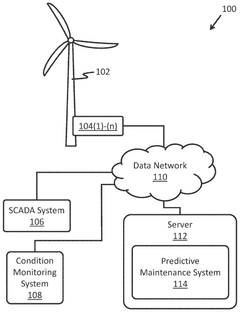
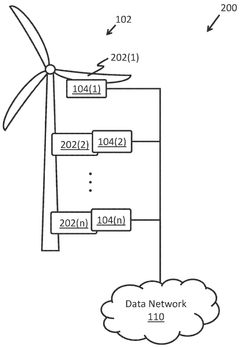
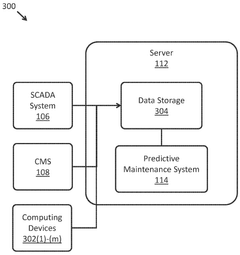
- The system employs a processor configured to receive data from SCADA and CMS systems, generate anomaly scores using anomaly detectors, and utilize an augmented data fusion model to predict the health state of machinery, incorporating an ETL module for data extraction and transformation, and a feedback module for diagnostic data compatibility.
Industrial IoT Integration Standards for SCADA Systems
The integration of Industrial Internet of Things (IoT) technologies with SCADA systems represents a fundamental shift in industrial automation architecture, requiring comprehensive standardization frameworks to ensure seamless interoperability and reliable predictive maintenance capabilities. Current integration standards focus on establishing unified communication protocols, data exchange formats, and security frameworks that enable IoT sensors and devices to effectively communicate with traditional SCADA infrastructure.
The Open Platform Communications Unified Architecture (OPC UA) has emerged as the predominant standard for industrial IoT integration, providing a platform-independent service-oriented architecture that facilitates secure and reliable data exchange between IoT devices and SCADA systems. This standard supports real-time data transmission, historical data access, and event notification mechanisms essential for predictive analysis applications. Additionally, the Industrial Internet Consortium (IIC) Reference Architecture provides a comprehensive framework for implementing IoT solutions in industrial environments, addressing connectivity, data management, and analytics integration requirements.
Communication protocol standardization encompasses multiple layers, including field-level protocols such as Modbus TCP/IP, Ethernet/IP, and PROFINET, which enable direct integration of smart sensors and actuators with SCADA networks. These protocols support time-sensitive networking capabilities crucial for real-time predictive monitoring applications. The IEEE 802.1 Time-Sensitive Networking (TSN) standards further enhance deterministic communication requirements for critical industrial applications.
Data modeling and semantic interoperability standards, including the Asset Administration Shell (AAS) specification and the Digital Twin Definition Language (DTDL), provide structured approaches for representing industrial assets and their operational characteristics within IoT-enabled SCADA environments. These standards facilitate the creation of comprehensive digital representations necessary for advanced predictive analytics algorithms.
Security standardization remains paramount, with frameworks such as IEC 62443 providing comprehensive cybersecurity guidelines for industrial automation systems. These standards address authentication, authorization, encryption, and network segmentation requirements specific to IoT-SCADA integration scenarios, ensuring that predictive maintenance systems maintain operational integrity while enabling advanced analytical capabilities through secure data sharing and processing mechanisms.
The Open Platform Communications Unified Architecture (OPC UA) has emerged as the predominant standard for industrial IoT integration, providing a platform-independent service-oriented architecture that facilitates secure and reliable data exchange between IoT devices and SCADA systems. This standard supports real-time data transmission, historical data access, and event notification mechanisms essential for predictive analysis applications. Additionally, the Industrial Internet Consortium (IIC) Reference Architecture provides a comprehensive framework for implementing IoT solutions in industrial environments, addressing connectivity, data management, and analytics integration requirements.
Communication protocol standardization encompasses multiple layers, including field-level protocols such as Modbus TCP/IP, Ethernet/IP, and PROFINET, which enable direct integration of smart sensors and actuators with SCADA networks. These protocols support time-sensitive networking capabilities crucial for real-time predictive monitoring applications. The IEEE 802.1 Time-Sensitive Networking (TSN) standards further enhance deterministic communication requirements for critical industrial applications.
Data modeling and semantic interoperability standards, including the Asset Administration Shell (AAS) specification and the Digital Twin Definition Language (DTDL), provide structured approaches for representing industrial assets and their operational characteristics within IoT-enabled SCADA environments. These standards facilitate the creation of comprehensive digital representations necessary for advanced predictive analytics algorithms.
Security standardization remains paramount, with frameworks such as IEC 62443 providing comprehensive cybersecurity guidelines for industrial automation systems. These standards address authentication, authorization, encryption, and network segmentation requirements specific to IoT-SCADA integration scenarios, ensuring that predictive maintenance systems maintain operational integrity while enabling advanced analytical capabilities through secure data sharing and processing mechanisms.
Cybersecurity Considerations in Connected SCADA Networks
The integration of predictive analysis capabilities into SCADA systems introduces significant cybersecurity challenges that require comprehensive security frameworks. Connected SCADA networks become more vulnerable to cyber threats as they expand their communication pathways and data exchange protocols to support predictive maintenance functionalities.
Network segmentation emerges as a critical defense strategy for connected SCADA environments. Industrial networks must implement robust isolation mechanisms between operational technology and information technology domains. This separation prevents lateral movement of potential threats while maintaining necessary data flows for predictive analytics. Advanced firewalls and intrusion detection systems specifically designed for industrial protocols become essential components of the security architecture.
Authentication and access control mechanisms require substantial enhancement in predictive SCADA systems. Multi-factor authentication protocols must be implemented across all network access points, including remote monitoring stations and mobile maintenance interfaces. Role-based access controls ensure that predictive analysis data remains accessible only to authorized personnel, while maintaining strict boundaries between different operational levels.
Data encryption becomes paramount when implementing predictive analytics in SCADA networks. Both data-at-rest and data-in-transit encryption protocols must be established to protect sensitive operational information and predictive models. Advanced encryption standards specifically adapted for industrial environments ensure that performance monitoring data and maintenance predictions remain secure throughout the entire data lifecycle.
Continuous monitoring and threat intelligence integration represent evolving security requirements for connected SCADA systems. Real-time security monitoring tools must be capable of distinguishing between normal predictive analysis activities and potential malicious behaviors. Behavioral analytics engines can identify anomalous patterns that may indicate security breaches while avoiding false positives that could disrupt critical maintenance operations.
Regular security assessments and penetration testing become increasingly important as SCADA systems incorporate more connected components for predictive maintenance. These evaluations must address both traditional industrial control system vulnerabilities and new attack vectors introduced by predictive analytics integration, ensuring comprehensive protection against emerging cyber threats.
Network segmentation emerges as a critical defense strategy for connected SCADA environments. Industrial networks must implement robust isolation mechanisms between operational technology and information technology domains. This separation prevents lateral movement of potential threats while maintaining necessary data flows for predictive analytics. Advanced firewalls and intrusion detection systems specifically designed for industrial protocols become essential components of the security architecture.
Authentication and access control mechanisms require substantial enhancement in predictive SCADA systems. Multi-factor authentication protocols must be implemented across all network access points, including remote monitoring stations and mobile maintenance interfaces. Role-based access controls ensure that predictive analysis data remains accessible only to authorized personnel, while maintaining strict boundaries between different operational levels.
Data encryption becomes paramount when implementing predictive analytics in SCADA networks. Both data-at-rest and data-in-transit encryption protocols must be established to protect sensitive operational information and predictive models. Advanced encryption standards specifically adapted for industrial environments ensure that performance monitoring data and maintenance predictions remain secure throughout the entire data lifecycle.
Continuous monitoring and threat intelligence integration represent evolving security requirements for connected SCADA systems. Real-time security monitoring tools must be capable of distinguishing between normal predictive analysis activities and potential malicious behaviors. Behavioral analytics engines can identify anomalous patterns that may indicate security breaches while avoiding false positives that could disrupt critical maintenance operations.
Regular security assessments and penetration testing become increasingly important as SCADA systems incorporate more connected components for predictive maintenance. These evaluations must address both traditional industrial control system vulnerabilities and new attack vectors introduced by predictive analytics integration, ensuring comprehensive protection against emerging cyber threats.
Unlock deeper insights with Patsnap Eureka Quick Research — get a full tech report to explore trends and direct your research. Try now!
Generate Your Research Report Instantly with AI Agent
Supercharge your innovation with Patsnap Eureka AI Agent Platform!