

Simulation-Driven Design for Extreme Environmental Conditions
MAR 6, 20269 MIN READ
Generate Your Research Report Instantly with AI Agent
PatSnap Eureka helps you evaluate technical feasibility & market potential.
Extreme Environment Simulation Design Background and Objectives
Extreme environmental conditions represent some of the most challenging operational scenarios across multiple industries, where conventional design approaches often fall short of ensuring reliable performance and safety. These conditions encompass temperature extremes ranging from cryogenic environments below -200°C to high-temperature applications exceeding 1000°C, pressure variations from deep vacuum to ultra-high pressure systems, corrosive chemical exposures, intense radiation fields, and dynamic mechanical stresses. Traditional design methodologies, which rely heavily on empirical testing and conservative safety factors, have proven inadequate for addressing the complex interdisciplinary challenges posed by such environments.
The evolution of computational capabilities and advanced simulation technologies has fundamentally transformed the landscape of engineering design for extreme conditions. Modern simulation-driven design approaches integrate multi-physics modeling, advanced materials characterization, and predictive analytics to enable comprehensive virtual testing and optimization before physical prototyping. This paradigm shift has emerged as a critical enabler for industries operating in harsh environments, including aerospace, nuclear energy, deep-sea exploration, chemical processing, and emerging space commercialization sectors.
The historical development of extreme environment design has progressed from purely empirical approaches in the early 20th century to sophisticated computational methodologies today. Early aerospace and nuclear programs in the 1950s-1960s established foundational understanding through extensive physical testing, while the digital revolution of the 1980s-1990s introduced finite element analysis and computational fluid dynamics. The current era, characterized by high-performance computing and artificial intelligence integration, enables unprecedented simulation fidelity and predictive accuracy.
Contemporary simulation-driven design objectives focus on achieving multiple critical outcomes simultaneously. Primary goals include ensuring operational reliability and safety under extreme conditions while minimizing development costs and time-to-market. Advanced simulation capabilities enable optimization of material selection, geometric configurations, and operational parameters through virtual experimentation that would be prohibitively expensive or dangerous to conduct physically.
The strategic importance of simulation-driven design extends beyond immediate technical benefits to encompass competitive advantage and innovation acceleration. Organizations leveraging advanced simulation capabilities can explore design spaces previously inaccessible, identify optimal solutions more efficiently, and reduce dependency on costly physical testing programs. This approach enables rapid iteration and refinement of designs while maintaining rigorous safety and performance standards essential for extreme environment applications.
The evolution of computational capabilities and advanced simulation technologies has fundamentally transformed the landscape of engineering design for extreme conditions. Modern simulation-driven design approaches integrate multi-physics modeling, advanced materials characterization, and predictive analytics to enable comprehensive virtual testing and optimization before physical prototyping. This paradigm shift has emerged as a critical enabler for industries operating in harsh environments, including aerospace, nuclear energy, deep-sea exploration, chemical processing, and emerging space commercialization sectors.
The historical development of extreme environment design has progressed from purely empirical approaches in the early 20th century to sophisticated computational methodologies today. Early aerospace and nuclear programs in the 1950s-1960s established foundational understanding through extensive physical testing, while the digital revolution of the 1980s-1990s introduced finite element analysis and computational fluid dynamics. The current era, characterized by high-performance computing and artificial intelligence integration, enables unprecedented simulation fidelity and predictive accuracy.
Contemporary simulation-driven design objectives focus on achieving multiple critical outcomes simultaneously. Primary goals include ensuring operational reliability and safety under extreme conditions while minimizing development costs and time-to-market. Advanced simulation capabilities enable optimization of material selection, geometric configurations, and operational parameters through virtual experimentation that would be prohibitively expensive or dangerous to conduct physically.
The strategic importance of simulation-driven design extends beyond immediate technical benefits to encompass competitive advantage and innovation acceleration. Organizations leveraging advanced simulation capabilities can explore design spaces previously inaccessible, identify optimal solutions more efficiently, and reduce dependency on costly physical testing programs. This approach enables rapid iteration and refinement of designs while maintaining rigorous safety and performance standards essential for extreme environment applications.
Market Demand for Extreme Condition Simulation Solutions
The global market for extreme condition simulation solutions is experiencing unprecedented growth driven by increasing exposure to climate extremes and the critical need for resilient infrastructure design. Industries operating in harsh environments, including aerospace, defense, energy, and automotive sectors, are demanding sophisticated simulation capabilities to ensure product reliability under conditions such as extreme temperatures, high radiation, corrosive environments, and mechanical stress.
Aerospace and defense sectors represent the largest market segment, requiring simulation solutions for spacecraft, satellites, and military equipment that must function reliably in space environments, arctic conditions, and desert climates. The growing commercial space industry has particularly intensified demand for thermal vacuum testing simulations and radiation hardening design tools.
The renewable energy sector has emerged as a significant growth driver, with wind turbine manufacturers needing simulation solutions for offshore installations exposed to salt spray and extreme weather conditions. Solar panel developers require tools to model performance degradation under intense UV radiation and temperature cycling in desert environments.
Automotive manufacturers are increasingly investing in extreme condition simulation as electric vehicle adoption accelerates. Battery systems require extensive modeling for thermal runaway scenarios, cold weather performance, and high-temperature operation. Autonomous vehicle sensors must be validated through simulation for operation in fog, snow, rain, and extreme lighting conditions.
The oil and gas industry continues to drive substantial demand for simulation solutions addressing deep-sea drilling equipment, arctic pipeline systems, and high-temperature downhole tools. Chemical processing facilities require simulation capabilities for equipment operating under corrosive conditions and extreme pressure-temperature combinations.
Emerging markets in developing countries with extreme climates are creating new opportunities for simulation solution providers. Infrastructure projects in regions prone to hurricanes, earthquakes, and extreme heat require specialized design validation tools.
The market is characterized by increasing demand for integrated simulation platforms that can model multiple environmental stressors simultaneously rather than isolated condition testing. Real-time simulation capabilities and cloud-based solutions are becoming essential requirements as design cycles accelerate and remote collaboration increases.
Aerospace and defense sectors represent the largest market segment, requiring simulation solutions for spacecraft, satellites, and military equipment that must function reliably in space environments, arctic conditions, and desert climates. The growing commercial space industry has particularly intensified demand for thermal vacuum testing simulations and radiation hardening design tools.
The renewable energy sector has emerged as a significant growth driver, with wind turbine manufacturers needing simulation solutions for offshore installations exposed to salt spray and extreme weather conditions. Solar panel developers require tools to model performance degradation under intense UV radiation and temperature cycling in desert environments.
Automotive manufacturers are increasingly investing in extreme condition simulation as electric vehicle adoption accelerates. Battery systems require extensive modeling for thermal runaway scenarios, cold weather performance, and high-temperature operation. Autonomous vehicle sensors must be validated through simulation for operation in fog, snow, rain, and extreme lighting conditions.
The oil and gas industry continues to drive substantial demand for simulation solutions addressing deep-sea drilling equipment, arctic pipeline systems, and high-temperature downhole tools. Chemical processing facilities require simulation capabilities for equipment operating under corrosive conditions and extreme pressure-temperature combinations.
Emerging markets in developing countries with extreme climates are creating new opportunities for simulation solution providers. Infrastructure projects in regions prone to hurricanes, earthquakes, and extreme heat require specialized design validation tools.
The market is characterized by increasing demand for integrated simulation platforms that can model multiple environmental stressors simultaneously rather than isolated condition testing. Real-time simulation capabilities and cloud-based solutions are becoming essential requirements as design cycles accelerate and remote collaboration increases.
Current State and Challenges in Extreme Environment Simulation
The current landscape of extreme environment simulation presents a complex array of technological capabilities and persistent challenges that significantly impact design processes across multiple industries. Contemporary simulation technologies have achieved remarkable sophistication in modeling individual environmental factors, yet the integration of multiple extreme conditions remains a formidable technical hurdle.
Existing computational fluid dynamics (CFD) and finite element analysis (FEA) platforms demonstrate strong performance in simulating specific extreme conditions such as high-temperature environments, cryogenic conditions, or high-pressure scenarios. However, these tools often operate in isolation, creating gaps when designers need to evaluate products subjected to simultaneous multiple extreme stressors. The computational complexity increases exponentially when attempting to model coupled phenomena, such as thermal-mechanical interactions under radiation exposure or corrosive chemical environments combined with extreme temperatures.
Multi-physics simulation capabilities represent the current frontier, with platforms like ANSYS Multiphysics, COMSOL, and Abaqus leading the charge. These solutions offer coupled analysis capabilities but face significant limitations in accuracy and computational efficiency when modeling truly extreme conditions. The mathematical models underlying these simulations often rely on interpolation beyond validated experimental ranges, introducing uncertainty that can compromise design reliability.
Hardware limitations constitute another critical constraint in current extreme environment simulation. The computational resources required for high-fidelity multi-physics simulations often exceed practical limits, forcing engineers to make compromises between simulation accuracy and computational feasibility. This challenge is particularly acute when modeling transient phenomena or long-duration exposure effects, where temporal resolution requirements can render simulations computationally prohibitive.
Validation and verification present ongoing challenges, as experimental data for extreme conditions is often limited, expensive to obtain, or impossible to replicate in laboratory settings. This creates a circular problem where simulation accuracy cannot be fully validated, yet these same simulations are relied upon for critical design decisions in aerospace, nuclear, and deep-sea applications.
The integration of artificial intelligence and machine learning techniques shows promise for addressing some computational limitations, but these approaches introduce new challenges related to training data requirements and model interpretability in safety-critical applications.
Existing computational fluid dynamics (CFD) and finite element analysis (FEA) platforms demonstrate strong performance in simulating specific extreme conditions such as high-temperature environments, cryogenic conditions, or high-pressure scenarios. However, these tools often operate in isolation, creating gaps when designers need to evaluate products subjected to simultaneous multiple extreme stressors. The computational complexity increases exponentially when attempting to model coupled phenomena, such as thermal-mechanical interactions under radiation exposure or corrosive chemical environments combined with extreme temperatures.
Multi-physics simulation capabilities represent the current frontier, with platforms like ANSYS Multiphysics, COMSOL, and Abaqus leading the charge. These solutions offer coupled analysis capabilities but face significant limitations in accuracy and computational efficiency when modeling truly extreme conditions. The mathematical models underlying these simulations often rely on interpolation beyond validated experimental ranges, introducing uncertainty that can compromise design reliability.
Hardware limitations constitute another critical constraint in current extreme environment simulation. The computational resources required for high-fidelity multi-physics simulations often exceed practical limits, forcing engineers to make compromises between simulation accuracy and computational feasibility. This challenge is particularly acute when modeling transient phenomena or long-duration exposure effects, where temporal resolution requirements can render simulations computationally prohibitive.
Validation and verification present ongoing challenges, as experimental data for extreme conditions is often limited, expensive to obtain, or impossible to replicate in laboratory settings. This creates a circular problem where simulation accuracy cannot be fully validated, yet these same simulations are relied upon for critical design decisions in aerospace, nuclear, and deep-sea applications.
The integration of artificial intelligence and machine learning techniques shows promise for addressing some computational limitations, but these approaches introduce new challenges related to training data requirements and model interpretability in safety-critical applications.
Existing Simulation Solutions for Harsh Environmental Conditions
01 Simulation-based optimization and design methodology
Methods and systems for using simulation tools to optimize design parameters and configurations. This approach involves iterative simulation processes to evaluate multiple design alternatives, analyze performance metrics, and converge on optimal solutions. The methodology integrates computational models with design workflows to enable data-driven decision making and reduce physical prototyping requirements.- Simulation-based optimization and design automation: Methods and systems for automating design processes through simulation-driven optimization techniques. These approaches utilize computational simulations to evaluate multiple design alternatives and automatically optimize parameters based on performance criteria. The simulation results guide iterative refinements to achieve optimal designs with reduced manual intervention and development time.
- Multi-physics simulation integration for design validation: Integration of multiple simulation domains including structural, thermal, electromagnetic, and fluid dynamics analyses to validate design performance. This approach enables comprehensive evaluation of design behavior under various physical conditions before physical prototyping. The multi-physics simulation framework allows designers to identify potential issues early and make informed design decisions.
- Real-time simulation feedback in design workflows: Systems that provide real-time or near-real-time simulation feedback during the design process, enabling immediate evaluation of design modifications. These methods allow designers to interactively explore design spaces and receive instant performance assessments. The rapid feedback loop accelerates design iterations and improves decision-making efficiency.
- Parametric modeling with simulation-driven constraints: Parametric design methodologies that incorporate simulation-derived constraints and performance requirements directly into the modeling process. These systems automatically adjust design parameters based on simulation results to maintain performance targets while allowing design flexibility. The approach ensures that designs remain within acceptable performance boundaries throughout the development process.
- Machine learning enhanced simulation for design prediction: Application of machine learning algorithms to enhance simulation accuracy and speed in design processes. These methods train predictive models on simulation data to rapidly estimate design performance without running full simulations. The learned models enable quick exploration of large design spaces and identification of promising design candidates for detailed analysis.
02 Virtual prototyping and testing environments
Systems for creating virtual representations of products or systems to conduct testing and validation before physical implementation. These environments enable designers to simulate real-world conditions, assess functionality, and identify potential issues early in the development cycle. The approach reduces development time and costs by allowing comprehensive evaluation through digital models.Expand Specific Solutions03 Multi-physics and multi-domain simulation integration
Techniques for integrating multiple simulation domains such as structural, thermal, electromagnetic, and fluid dynamics into unified design processes. This integration allows for comprehensive analysis of complex interactions between different physical phenomena. The approach enables more accurate prediction of system behavior and supports holistic design optimization across multiple engineering disciplines.Expand Specific Solutions04 Automated design space exploration and parametric analysis
Methods for automatically exploring design parameter spaces using simulation-driven algorithms. These techniques employ parametric modeling and automated iteration to systematically evaluate design variations and identify optimal configurations. The approach leverages computational power to analyze thousands of design alternatives that would be impractical to evaluate manually.Expand Specific Solutions05 Real-time simulation and interactive design feedback
Systems providing real-time simulation capabilities that enable immediate feedback during the design process. These tools allow designers to interactively modify parameters and instantly observe the effects on performance metrics. The approach facilitates rapid design iteration and supports collaborative decision-making by providing immediate visualization of simulation results.Expand Specific Solutions
Key Players in Extreme Environment Simulation Industry
The simulation-driven design for extreme environmental conditions field represents an emerging technology sector in its early growth phase, characterized by increasing market demand driven by climate change challenges and infrastructure resilience requirements. The market demonstrates significant expansion potential as industries seek advanced simulation capabilities for harsh environments. Technology maturity varies considerably across key players, with established entities like IBM and Toyota Motor Europe leveraging mature computational platforms and automotive testing expertise respectively. Research institutions including Centre National de la Recherche Scientifique, Beihang University, and Harbin Institute of Technology contribute foundational research capabilities, while Chinese organizations such as Huawei Cloud Computing Technology and China Academy of Space Technology bring cloud infrastructure and aerospace simulation expertise. The competitive landscape shows a mix of mature industrial players, emerging technology companies, and strong academic research foundations, indicating a technology sector transitioning from research-intensive development toward commercial applications and market deployment.
International Business Machines Corp.
Technical Solution: IBM develops comprehensive simulation platforms for extreme environmental conditions through its hybrid cloud and AI technologies. Their approach integrates high-performance computing with machine learning algorithms to model complex environmental scenarios including extreme temperatures, radiation, and mechanical stress. The platform utilizes digital twin technology to create virtual replicas of physical systems, enabling predictive analysis and optimization before actual deployment. IBM's Watson AI enhances simulation accuracy by processing vast datasets from environmental sensors and historical performance data. Their quantum computing research also contributes to solving complex optimization problems in extreme condition modeling, particularly for aerospace and energy applications where traditional computing methods face limitations.
Strengths: Advanced AI integration, quantum computing capabilities, comprehensive cloud infrastructure. Weaknesses: High implementation costs, complex integration requirements.
Toyota Motor Europe NV/SA
Technical Solution: Toyota employs simulation-driven design extensively for automotive applications in extreme environmental conditions, focusing on vehicle performance in harsh climates ranging from Arctic cold to desert heat. Their Virtual Development Center utilizes advanced computational fluid dynamics and finite element analysis to simulate vehicle behavior under extreme temperature variations, high altitude conditions, and severe weather scenarios. The company integrates real-world testing data from global proving grounds with sophisticated modeling software to validate designs before physical prototyping. Toyota's approach includes thermal management simulation for battery systems in electric vehicles, ensuring optimal performance in temperature extremes from -40°C to +60°C, and structural integrity analysis for components subjected to extreme mechanical and thermal stress.
Strengths: Extensive real-world validation data, proven automotive expertise, comprehensive thermal management solutions. Weaknesses: Limited to automotive applications, proprietary systems with restricted accessibility.
Core Innovations in Multi-Physics Simulation Technologies
Multi-parameter complex extreme environment simulation device
PatentInactiveCN113640203A
Innovation
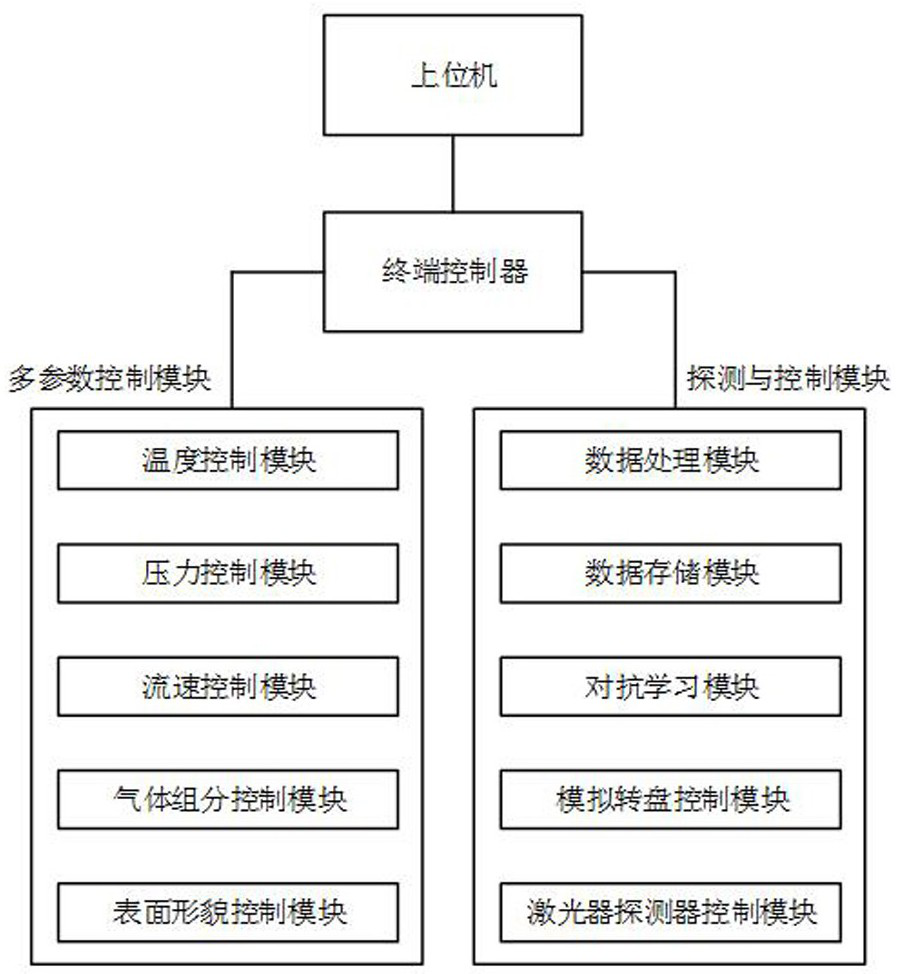
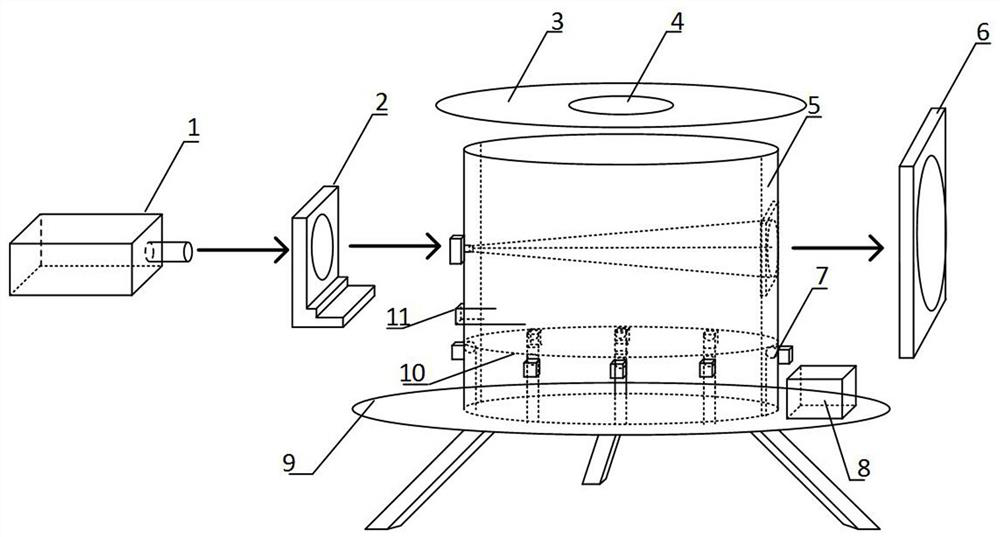
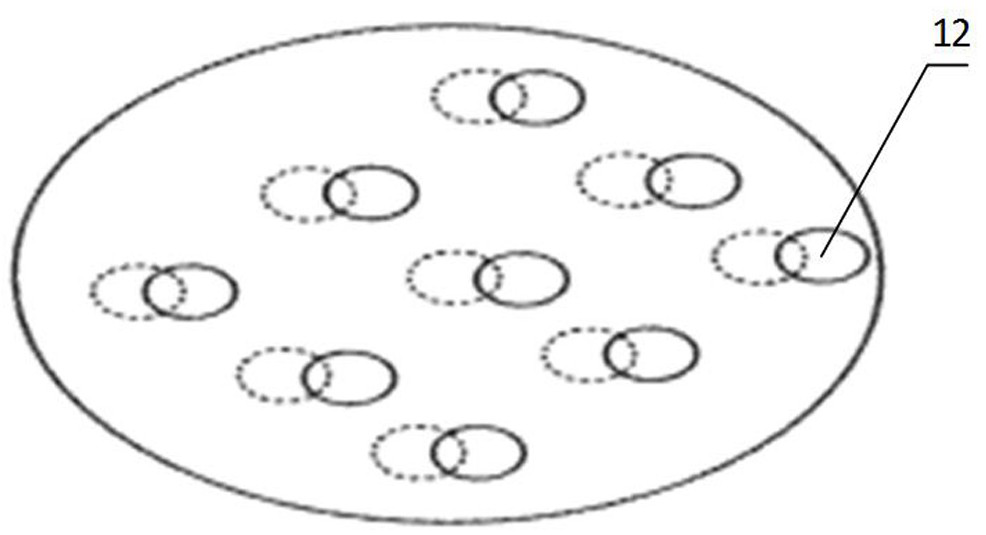
- A multi-parameter complex extreme environment simulation device is designed, including an environmental simulation device base, a thermal protection surface simulation wheel rotation controller, an adjustable flame spray gun, a lens and an area array photoelectric detector. Through the multi-parameter control module and detection and control The module realizes the simulation and detection of complex extreme environments, and uses manual adjustment and adversarial learning methods to optimize environmental parameters.

Systems and methods for concurrently exposing a test specimen to a first environment and a second environment
PatentActiveUS12111330B2
Innovation
- A system and method for concurrently exposing a test specimen to two different environments, with controlled temperatures, pressures, and compositions, allowing simultaneous testing of both the outside and inside surfaces, using a housing with fluid sources and pressure control apparatuses to simulate realistic conditions like supercritical CO2 and mechanical stress.


Environmental Testing Standards and Compliance Requirements
Environmental testing standards and compliance requirements form the regulatory backbone for simulation-driven design targeting extreme environmental conditions. These standards establish quantitative benchmarks and testing protocols that ensure products can withstand harsh operational environments while maintaining safety and performance criteria. International standards organizations such as ISO, IEC, ASTM, and MIL-STD have developed comprehensive frameworks that define testing methodologies for temperature extremes, humidity variations, vibration, shock, corrosion, and radiation exposure.
The aerospace and defense sectors operate under stringent compliance frameworks including MIL-STD-810 for environmental engineering considerations, DO-160 for airborne equipment environmental conditions, and NASA-STD-7001 for space flight hardware. These standards specify precise testing procedures, duration requirements, and acceptance criteria that directly influence simulation parameters and validation protocols. Automotive industries follow ISO 16750 series for road vehicle environmental conditions, while electronics manufacturers adhere to IEC 60068 environmental testing standards.
Compliance verification requires systematic documentation demonstrating that simulation models accurately predict real-world performance under standardized test conditions. This involves correlating computational fluid dynamics results with thermal chamber testing, validating structural analysis against vibration table measurements, and ensuring electromagnetic compatibility simulations align with anechoic chamber evaluations. The traceability between simulation predictions and physical test results becomes critical for regulatory approval processes.
Regional variations in environmental standards create additional complexity for global product deployment. European CE marking requirements, North American UL certifications, and Asian market-specific standards necessitate comprehensive compliance strategies. Emerging regulations addressing climate change impacts and sustainability metrics are increasingly influencing environmental testing protocols, requiring updated simulation approaches that incorporate long-term degradation models and lifecycle assessment considerations.
The integration of artificial intelligence and machine learning into compliance verification processes is transforming traditional testing paradigms. Automated compliance checking systems can now evaluate simulation results against multiple standard requirements simultaneously, identifying potential non-conformances early in the design cycle and reducing costly physical testing iterations while maintaining regulatory confidence.
The aerospace and defense sectors operate under stringent compliance frameworks including MIL-STD-810 for environmental engineering considerations, DO-160 for airborne equipment environmental conditions, and NASA-STD-7001 for space flight hardware. These standards specify precise testing procedures, duration requirements, and acceptance criteria that directly influence simulation parameters and validation protocols. Automotive industries follow ISO 16750 series for road vehicle environmental conditions, while electronics manufacturers adhere to IEC 60068 environmental testing standards.
Compliance verification requires systematic documentation demonstrating that simulation models accurately predict real-world performance under standardized test conditions. This involves correlating computational fluid dynamics results with thermal chamber testing, validating structural analysis against vibration table measurements, and ensuring electromagnetic compatibility simulations align with anechoic chamber evaluations. The traceability between simulation predictions and physical test results becomes critical for regulatory approval processes.
Regional variations in environmental standards create additional complexity for global product deployment. European CE marking requirements, North American UL certifications, and Asian market-specific standards necessitate comprehensive compliance strategies. Emerging regulations addressing climate change impacts and sustainability metrics are increasingly influencing environmental testing protocols, requiring updated simulation approaches that incorporate long-term degradation models and lifecycle assessment considerations.
The integration of artificial intelligence and machine learning into compliance verification processes is transforming traditional testing paradigms. Automated compliance checking systems can now evaluate simulation results against multiple standard requirements simultaneously, identifying potential non-conformances early in the design cycle and reducing costly physical testing iterations while maintaining regulatory confidence.
Digital Twin Integration for Real-Time Environmental Monitoring
Digital twin technology represents a paradigm shift in environmental monitoring for extreme conditions, enabling real-time synchronization between physical systems and their virtual counterparts. This integration creates a bidirectional data flow where sensor networks continuously feed environmental parameters into computational models, while simulation results inform adaptive control strategies for equipment operating in harsh environments.
The foundation of digital twin integration lies in establishing robust sensor networks capable of withstanding extreme temperatures, pressures, and corrosive conditions. These networks must capture multi-dimensional environmental data including temperature gradients, pressure variations, humidity levels, chemical compositions, and mechanical stress patterns. Advanced IoT sensors with edge computing capabilities enable local data processing and filtering, reducing bandwidth requirements while ensuring critical information reaches the digital twin infrastructure in real-time.
Cloud-based digital twin platforms serve as the central nervous system for environmental monitoring, processing vast streams of sensor data through machine learning algorithms and physics-based models. These platforms employ advanced data fusion techniques to reconcile information from multiple sensor types, creating comprehensive environmental profiles that account for spatial and temporal variations across monitored regions.
Real-time model updating mechanisms ensure digital twins remain synchronized with actual environmental conditions. Kalman filtering and particle filtering algorithms continuously calibrate simulation parameters based on incoming sensor data, while uncertainty quantification methods assess model reliability under varying environmental conditions. This dynamic calibration enables predictive capabilities that anticipate environmental changes before they impact system performance.
Integration with simulation-driven design workflows creates closed-loop optimization systems where real-time environmental data directly influences design modifications and operational parameters. Machine learning models trained on historical environmental data can predict extreme weather events, equipment failures, and optimal operational windows, enabling proactive rather than reactive management strategies.
The convergence of 5G connectivity, edge computing, and advanced analytics platforms has made real-time digital twin integration increasingly feasible for remote and extreme environments. These technological advances enable sub-second response times between environmental changes and corresponding simulation updates, critical for applications in aerospace, deep-sea exploration, and arctic operations where rapid environmental shifts can compromise system integrity.
The foundation of digital twin integration lies in establishing robust sensor networks capable of withstanding extreme temperatures, pressures, and corrosive conditions. These networks must capture multi-dimensional environmental data including temperature gradients, pressure variations, humidity levels, chemical compositions, and mechanical stress patterns. Advanced IoT sensors with edge computing capabilities enable local data processing and filtering, reducing bandwidth requirements while ensuring critical information reaches the digital twin infrastructure in real-time.
Cloud-based digital twin platforms serve as the central nervous system for environmental monitoring, processing vast streams of sensor data through machine learning algorithms and physics-based models. These platforms employ advanced data fusion techniques to reconcile information from multiple sensor types, creating comprehensive environmental profiles that account for spatial and temporal variations across monitored regions.
Real-time model updating mechanisms ensure digital twins remain synchronized with actual environmental conditions. Kalman filtering and particle filtering algorithms continuously calibrate simulation parameters based on incoming sensor data, while uncertainty quantification methods assess model reliability under varying environmental conditions. This dynamic calibration enables predictive capabilities that anticipate environmental changes before they impact system performance.
Integration with simulation-driven design workflows creates closed-loop optimization systems where real-time environmental data directly influences design modifications and operational parameters. Machine learning models trained on historical environmental data can predict extreme weather events, equipment failures, and optimal operational windows, enabling proactive rather than reactive management strategies.
The convergence of 5G connectivity, edge computing, and advanced analytics platforms has made real-time digital twin integration increasingly feasible for remote and extreme environments. These technological advances enable sub-second response times between environmental changes and corresponding simulation updates, critical for applications in aerospace, deep-sea exploration, and arctic operations where rapid environmental shifts can compromise system integrity.
Unlock deeper insights with PatSnap Eureka Quick Research — get a full tech report to explore trends and direct your research. Try now!
Generate Your Research Report Instantly with AI Agent
Supercharge your innovation with PatSnap Eureka AI Agent Platform!