
Smart Factory Distributed Control Systems: Performance Review
MAR 19, 20269 MIN READ
Generate Your Research Report Instantly with AI Agent
Patsnap Eureka helps you evaluate technical feasibility & market potential.
Smart Factory DCS Background and Objectives
Smart Factory Distributed Control Systems represent a paradigm shift from traditional centralized manufacturing control architectures to interconnected, intelligent networks that enable autonomous decision-making across production environments. These systems have evolved from early programmable logic controllers and supervisory control systems of the 1970s to today's sophisticated cyber-physical systems that integrate artificial intelligence, edge computing, and real-time analytics.
The historical development of DCS in manufacturing contexts began with basic process automation in chemical and petrochemical industries, gradually expanding to discrete manufacturing sectors. The integration of Internet of Things technologies, machine learning algorithms, and cloud computing platforms has transformed these systems into comprehensive smart manufacturing ecosystems capable of self-optimization and predictive maintenance.
Current technological trends indicate a convergence toward hybrid architectures that combine edge intelligence with cloud-based analytics, enabling real-time local control while maintaining enterprise-level visibility and coordination. Advanced DCS implementations now incorporate digital twin technologies, allowing virtual representation and simulation of physical manufacturing processes for enhanced decision-making capabilities.
The primary objective of modern smart factory DCS performance evaluation centers on quantifying system responsiveness, reliability, and scalability under varying operational conditions. Key performance indicators include latency reduction in control loops, fault tolerance mechanisms, and seamless integration capabilities with existing enterprise resource planning systems.
Strategic goals encompass achieving Industry 4.0 compliance through standardized communication protocols, implementing predictive analytics for proactive maintenance scheduling, and establishing robust cybersecurity frameworks to protect distributed control networks from emerging threats. These systems must demonstrate measurable improvements in overall equipment effectiveness, energy efficiency, and production flexibility.
Future-oriented objectives focus on developing autonomous manufacturing capabilities where distributed control systems can adapt to changing production requirements without human intervention, optimize resource utilization through machine learning algorithms, and maintain consistent quality standards across diverse product lines while minimizing operational costs and environmental impact.
The historical development of DCS in manufacturing contexts began with basic process automation in chemical and petrochemical industries, gradually expanding to discrete manufacturing sectors. The integration of Internet of Things technologies, machine learning algorithms, and cloud computing platforms has transformed these systems into comprehensive smart manufacturing ecosystems capable of self-optimization and predictive maintenance.
Current technological trends indicate a convergence toward hybrid architectures that combine edge intelligence with cloud-based analytics, enabling real-time local control while maintaining enterprise-level visibility and coordination. Advanced DCS implementations now incorporate digital twin technologies, allowing virtual representation and simulation of physical manufacturing processes for enhanced decision-making capabilities.
The primary objective of modern smart factory DCS performance evaluation centers on quantifying system responsiveness, reliability, and scalability under varying operational conditions. Key performance indicators include latency reduction in control loops, fault tolerance mechanisms, and seamless integration capabilities with existing enterprise resource planning systems.
Strategic goals encompass achieving Industry 4.0 compliance through standardized communication protocols, implementing predictive analytics for proactive maintenance scheduling, and establishing robust cybersecurity frameworks to protect distributed control networks from emerging threats. These systems must demonstrate measurable improvements in overall equipment effectiveness, energy efficiency, and production flexibility.
Future-oriented objectives focus on developing autonomous manufacturing capabilities where distributed control systems can adapt to changing production requirements without human intervention, optimize resource utilization through machine learning algorithms, and maintain consistent quality standards across diverse product lines while minimizing operational costs and environmental impact.
Market Demand for Distributed Control in Smart Manufacturing
The global manufacturing sector is experiencing unprecedented transformation driven by Industry 4.0 initiatives, creating substantial demand for distributed control systems in smart factory environments. Traditional centralized control architectures are proving inadequate for modern manufacturing requirements, where flexibility, scalability, and real-time responsiveness are paramount. This shift has generated significant market opportunities for distributed control technologies that can seamlessly integrate with IoT devices, edge computing platforms, and cloud-based analytics systems.
Manufacturing enterprises across automotive, pharmaceutical, food processing, and electronics industries are actively seeking distributed control solutions to address operational challenges including production line flexibility, quality consistency, and energy efficiency optimization. The demand is particularly pronounced in facilities requiring rapid product changeovers, customized production runs, and stringent quality control measures. Companies are prioritizing systems that can support modular production concepts while maintaining high availability and fault tolerance.
The market demand is further amplified by regulatory compliance requirements and sustainability mandates. Manufacturing organizations need distributed control systems capable of providing comprehensive traceability, environmental monitoring, and energy consumption optimization. These requirements are driving adoption of intelligent control architectures that can autonomously adapt to changing production conditions while maintaining regulatory compliance across multiple jurisdictions.
Emerging market segments including electric vehicle manufacturing, renewable energy equipment production, and advanced materials processing are creating new demand patterns for distributed control systems. These industries require highly specialized control capabilities that can manage complex process interactions while supporting rapid scaling and technology evolution. The demand extends beyond traditional process control to encompass predictive maintenance, quality prediction, and supply chain integration functionalities.
Regional market dynamics show particularly strong demand growth in Asia-Pacific manufacturing hubs, where rapid industrialization and government-supported digitalization initiatives are accelerating smart factory implementations. European markets demonstrate strong demand for distributed control systems that support circular economy principles and carbon footprint reduction objectives, while North American markets emphasize cybersecurity capabilities and integration with existing enterprise systems.
Manufacturing enterprises across automotive, pharmaceutical, food processing, and electronics industries are actively seeking distributed control solutions to address operational challenges including production line flexibility, quality consistency, and energy efficiency optimization. The demand is particularly pronounced in facilities requiring rapid product changeovers, customized production runs, and stringent quality control measures. Companies are prioritizing systems that can support modular production concepts while maintaining high availability and fault tolerance.
The market demand is further amplified by regulatory compliance requirements and sustainability mandates. Manufacturing organizations need distributed control systems capable of providing comprehensive traceability, environmental monitoring, and energy consumption optimization. These requirements are driving adoption of intelligent control architectures that can autonomously adapt to changing production conditions while maintaining regulatory compliance across multiple jurisdictions.
Emerging market segments including electric vehicle manufacturing, renewable energy equipment production, and advanced materials processing are creating new demand patterns for distributed control systems. These industries require highly specialized control capabilities that can manage complex process interactions while supporting rapid scaling and technology evolution. The demand extends beyond traditional process control to encompass predictive maintenance, quality prediction, and supply chain integration functionalities.
Regional market dynamics show particularly strong demand growth in Asia-Pacific manufacturing hubs, where rapid industrialization and government-supported digitalization initiatives are accelerating smart factory implementations. European markets demonstrate strong demand for distributed control systems that support circular economy principles and carbon footprint reduction objectives, while North American markets emphasize cybersecurity capabilities and integration with existing enterprise systems.
Current State and Performance Challenges of Factory DCS
Smart factory distributed control systems represent a critical evolution from traditional centralized automation architectures, integrating advanced computing capabilities, real-time communication protocols, and intelligent decision-making algorithms across manufacturing environments. Contemporary DCS implementations leverage edge computing nodes, industrial IoT sensors, and cloud-based analytics platforms to create interconnected control networks that span entire production facilities. These systems typically employ hierarchical control structures combining programmable logic controllers, supervisory control and data acquisition systems, and manufacturing execution systems to achieve comprehensive process orchestration.
Current DCS deployments demonstrate significant performance variations across different industrial sectors, with semiconductor and pharmaceutical manufacturing achieving sub-millisecond response times through dedicated fiber-optic networks and specialized real-time operating systems. However, many legacy manufacturing facilities struggle with integration challenges when implementing distributed architectures, particularly in brownfield environments where existing equipment lacks modern communication capabilities. Network latency issues frequently emerge in large-scale implementations, especially when control loops span multiple production areas or require coordination between geographically separated facilities.
Cybersecurity vulnerabilities represent a paramount challenge in modern DCS implementations, as increased connectivity expands potential attack surfaces while maintaining operational continuity requirements. Traditional air-gapped control systems now face exposure through industrial internet connections, creating tension between operational efficiency and security protocols. Many organizations report difficulties in implementing comprehensive security frameworks without compromising real-time performance requirements or disrupting established operational procedures.
Scalability limitations pose significant constraints for rapidly expanding manufacturing operations, particularly in industries experiencing dynamic production volume fluctuations. Current DCS architectures often require substantial infrastructure investments and extended commissioning periods when adding new production lines or integrating acquired facilities. Interoperability challenges persist across different vendor platforms, creating vendor lock-in scenarios that limit flexibility and increase long-term operational costs.
Data management and analytics capabilities remain underdeveloped in many existing DCS implementations, despite the proliferation of sensor technologies and data collection capabilities. Organizations frequently struggle to extract actionable insights from vast amounts of operational data, limiting their ability to optimize production processes or implement predictive maintenance strategies effectively.
Current DCS deployments demonstrate significant performance variations across different industrial sectors, with semiconductor and pharmaceutical manufacturing achieving sub-millisecond response times through dedicated fiber-optic networks and specialized real-time operating systems. However, many legacy manufacturing facilities struggle with integration challenges when implementing distributed architectures, particularly in brownfield environments where existing equipment lacks modern communication capabilities. Network latency issues frequently emerge in large-scale implementations, especially when control loops span multiple production areas or require coordination between geographically separated facilities.
Cybersecurity vulnerabilities represent a paramount challenge in modern DCS implementations, as increased connectivity expands potential attack surfaces while maintaining operational continuity requirements. Traditional air-gapped control systems now face exposure through industrial internet connections, creating tension between operational efficiency and security protocols. Many organizations report difficulties in implementing comprehensive security frameworks without compromising real-time performance requirements or disrupting established operational procedures.
Scalability limitations pose significant constraints for rapidly expanding manufacturing operations, particularly in industries experiencing dynamic production volume fluctuations. Current DCS architectures often require substantial infrastructure investments and extended commissioning periods when adding new production lines or integrating acquired facilities. Interoperability challenges persist across different vendor platforms, creating vendor lock-in scenarios that limit flexibility and increase long-term operational costs.
Data management and analytics capabilities remain underdeveloped in many existing DCS implementations, despite the proliferation of sensor technologies and data collection capabilities. Organizations frequently struggle to extract actionable insights from vast amounts of operational data, limiting their ability to optimize production processes or implement predictive maintenance strategies effectively.
Existing DCS Performance Optimization Solutions
01 Real-time monitoring and data acquisition systems
Distributed control systems in smart factories utilize real-time monitoring technologies to collect operational data from various production equipment and sensors. These systems enable continuous tracking of manufacturing processes, equipment status, and environmental conditions. The data acquisition infrastructure supports high-speed communication protocols and edge computing capabilities to process information locally before transmission to central control systems. This approach reduces latency and improves response times for critical manufacturing operations.- Real-time monitoring and data acquisition systems: Distributed control systems in smart factories utilize real-time monitoring and data acquisition technologies to collect operational data from various production equipment and sensors. These systems enable continuous tracking of manufacturing processes, equipment status, and environmental conditions. The collected data is processed and analyzed to provide insights into system performance, enabling operators to make informed decisions and optimize production efficiency.
- Distributed architecture and modular control design: Smart factory control systems employ distributed architectures that divide control functions across multiple interconnected nodes rather than relying on centralized control. This modular approach enhances system scalability, flexibility, and fault tolerance. Each control module can operate semi-autonomously while coordinating with other modules through communication networks, allowing for easier system expansion and maintenance without disrupting overall operations.
- Performance optimization through artificial intelligence and machine learning: Advanced distributed control systems integrate artificial intelligence and machine learning algorithms to optimize performance dynamically. These technologies analyze historical and real-time data to predict equipment failures, optimize resource allocation, and improve production scheduling. The systems can automatically adjust control parameters based on learned patterns, reducing downtime and enhancing overall manufacturing efficiency.
- Communication protocols and network integration: Effective distributed control systems rely on robust communication protocols and network infrastructure to ensure seamless data exchange between control nodes, sensors, and actuators. These systems implement industrial communication standards and protocols that support high-speed, reliable data transmission with minimal latency. Network integration capabilities enable interoperability between different equipment manufacturers and legacy systems, facilitating comprehensive factory-wide control and monitoring.
- Security and reliability enhancement mechanisms: Distributed control systems incorporate multiple layers of security and reliability features to protect against cyber threats and ensure continuous operation. These mechanisms include redundant control pathways, fail-safe protocols, access control systems, and intrusion detection capabilities. The systems are designed to maintain operational stability even during component failures or security incidents, with automatic backup and recovery procedures to minimize production disruptions.
02 Distributed architecture and network communication protocols
Smart factory control systems employ distributed architectures that enable multiple control nodes to operate autonomously while maintaining coordinated functionality. These systems implement advanced network communication protocols to ensure reliable data exchange between controllers, sensors, and actuators across the factory floor. The architecture supports scalability and flexibility, allowing for easy integration of new equipment and modification of existing control logic without disrupting overall operations.Expand Specific Solutions03 Performance optimization through artificial intelligence and machine learning
Advanced distributed control systems incorporate artificial intelligence and machine learning algorithms to optimize manufacturing performance. These technologies analyze historical and real-time data to predict equipment failures, optimize production schedules, and improve quality control. The systems can automatically adjust control parameters based on learned patterns and anomaly detection, leading to increased efficiency and reduced downtime in smart factory operations.Expand Specific Solutions04 Integration of cloud computing and edge computing platforms
Modern distributed control systems leverage both cloud and edge computing platforms to balance processing requirements and data management. Edge computing handles time-critical control functions and local data processing, while cloud platforms provide centralized analytics, storage, and enterprise-level integration. This hybrid approach enables smart factories to maintain operational continuity even during network disruptions while benefiting from cloud-based advanced analytics and remote monitoring capabilities.Expand Specific Solutions05 Cybersecurity and system reliability mechanisms
Distributed control systems in smart factories implement comprehensive cybersecurity measures to protect against unauthorized access and cyber threats. These systems include encryption protocols, authentication mechanisms, and intrusion detection systems specifically designed for industrial control environments. Reliability is enhanced through redundant communication paths, fault-tolerant architectures, and automatic failover mechanisms that ensure continuous operation even when individual components fail.Expand Specific Solutions
Key Players in Smart Factory DCS Market
The smart factory distributed control systems market is experiencing rapid growth as Industry 4.0 adoption accelerates across manufacturing sectors. The industry has reached a mature development stage with substantial market expansion driven by digital transformation initiatives and IoT integration demands. Technology maturity varies significantly among key players, with established industrial automation leaders like Siemens AG, ABB Ltd., and Mitsubishi Electric Corp. demonstrating advanced distributed control capabilities through decades of R&D investment. Hitachi Ltd. and Yokogawa Electric Corp. contribute sophisticated process automation solutions, while emerging players like Zhejiang Supcon Software Co. and RS Automation Co. are developing specialized smart factory applications. The competitive landscape shows consolidation around proven technologies, with companies like IBM and Applied Materials bringing complementary AI and semiconductor manufacturing expertise to enhance system performance and reliability.
ABB Ltd.
Technical Solution: ABB's distributed control system solution centers around their System 800xA platform combined with ABB Ability digital solutions for smart factories. The system employs a distributed architecture where control functions are distributed across multiple processing units connected through high-speed industrial Ethernet networks. Their approach integrates advanced process optimization algorithms, predictive maintenance capabilities, and real-time performance monitoring. The platform supports seamless integration of operational technology and information technology, enabling data-driven decision making across distributed manufacturing processes. ABB's solution emphasizes cybersecurity with built-in protection mechanisms and supports various industrial communication protocols for comprehensive connectivity.
Strengths: Strong industrial automation heritage, excellent scalability, and robust cybersecurity framework. Weaknesses: Integration complexity with legacy systems and requires significant training for optimal utilization.
Siemens AG
Technical Solution: Siemens offers comprehensive distributed control systems through their SIMATIC PCS 7 and SIMATIC PCS neo platforms for smart factory applications. Their solution integrates advanced process control with digital twin technology, enabling real-time monitoring and optimization across distributed manufacturing environments. The system features modular architecture with scalable I/O systems, redundant communication networks, and advanced analytics capabilities. Their distributed control approach utilizes edge computing nodes that can operate autonomously while maintaining seamless integration with central control systems, ensuring high availability and fault tolerance in smart manufacturing operations.
Strengths: Market-leading position with proven reliability, extensive integration capabilities, and strong cybersecurity features. Weaknesses: High implementation costs and complexity requiring specialized expertise for deployment and maintenance.
Core Innovations in Smart Factory Control Architecture
Relay interface module for a distributed control system
PatentActiveUS20140310435A1
Innovation
- A relay interface module that communicates I/O data between I/O devices and controllers using a network interface and memory module to store location data, enabling dynamic transfer of I/O data based on location information, thus facilitating direct access and distribution of control applications across multiple controllers.


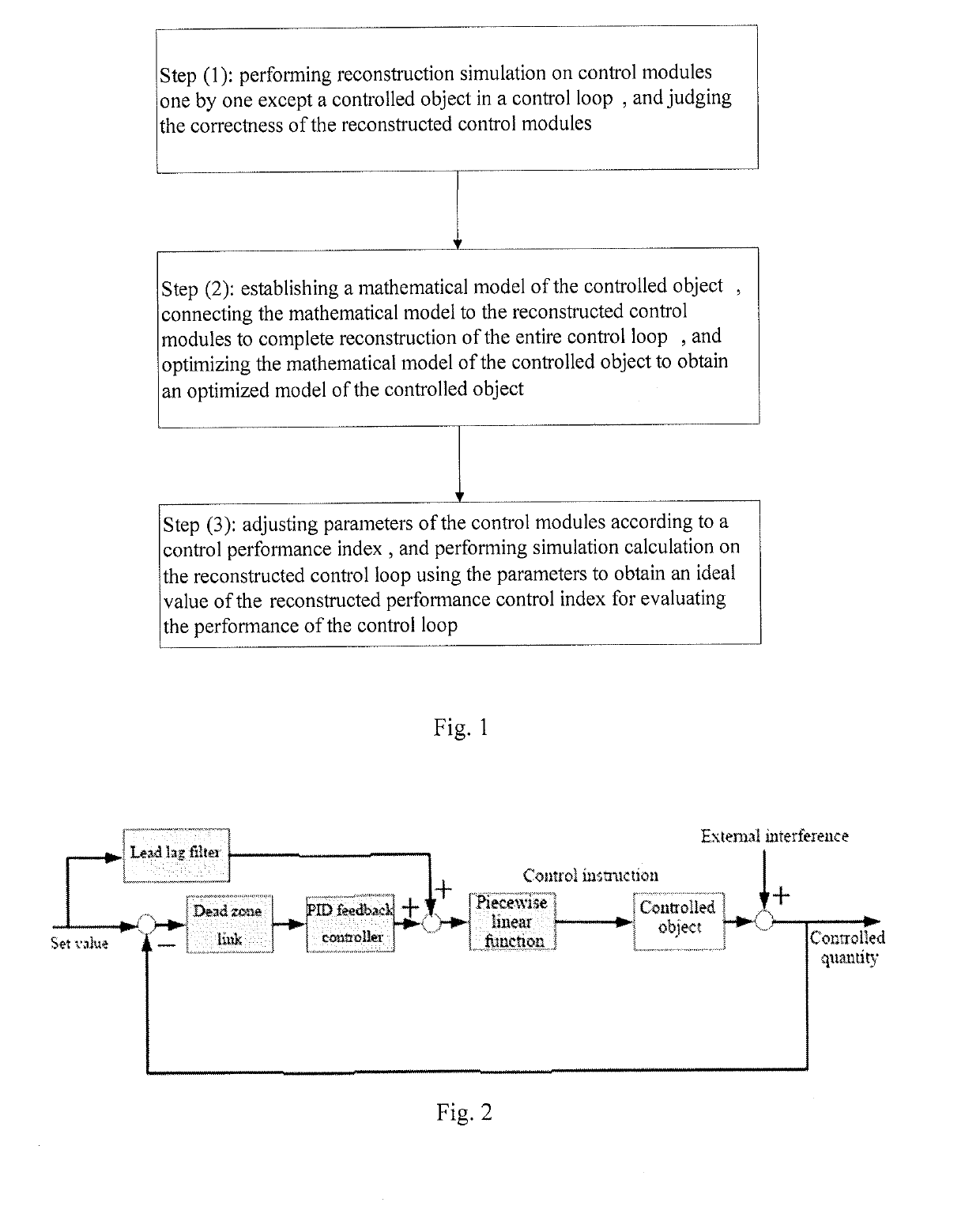
Method and device for evaluating performance of industrial control loops based on full loop reconstruction simulations
PatentActiveUS20190160661A1
Innovation
- A method and device for evaluating industrial control loop performance through full loop reconstruction simulations, which includes reconstructing control modules, establishing a mathematical model, optimizing parameters, and performing simulation calculations to obtain an ideal control performance index, considering the impact of all control modules like PID controllers, filters, and dead-bands.

Industrial Standards and Compliance for Smart Factory DCS
Smart Factory Distributed Control Systems must adhere to a comprehensive framework of industrial standards to ensure operational safety, interoperability, and regulatory compliance. The International Electrotechnical Commission (IEC) 61499 standard serves as the foundational architecture for distributed control systems, defining function blocks and their execution models. This standard enables modular programming approaches that facilitate system scalability and maintenance across diverse manufacturing environments.
The IEC 61131 series provides critical programming language specifications for industrial automation controllers, establishing standardized methods for ladder logic, structured text, and function block diagrams. These standards ensure consistent development practices and enable seamless integration between different vendor systems within smart factory environments.
Cybersecurity compliance has become paramount with the implementation of IEC 62443 standards, which establish security requirements for industrial automation and control systems. This framework addresses network segmentation, access control, and threat detection mechanisms specifically designed for distributed control architectures. Manufacturing facilities must implement multi-layered security protocols to protect against cyber threats while maintaining operational continuity.
Safety integrity requirements are governed by IEC 61508 and its manufacturing-specific derivative IEC 61511, which define Safety Instrumented Systems (SIS) implementation guidelines. These standards mandate rigorous risk assessment procedures and specify Safety Integrity Levels (SIL) that distributed control systems must achieve to ensure personnel and equipment protection.
Communication protocol standardization relies heavily on Industrial Ethernet standards including PROFINET, EtherNet/IP, and EtherCAT, which enable real-time data exchange between distributed control nodes. The Time-Sensitive Networking (TSN) standards IEEE 802.1 series provide deterministic communication capabilities essential for synchronized manufacturing operations.
Compliance verification requires systematic documentation of system architecture, risk assessments, and validation testing procedures. Regular audits must demonstrate adherence to applicable standards while maintaining traceability throughout the system lifecycle. Organizations must establish continuous monitoring frameworks to ensure ongoing compliance as systems evolve and new regulatory requirements emerge.
The IEC 61131 series provides critical programming language specifications for industrial automation controllers, establishing standardized methods for ladder logic, structured text, and function block diagrams. These standards ensure consistent development practices and enable seamless integration between different vendor systems within smart factory environments.
Cybersecurity compliance has become paramount with the implementation of IEC 62443 standards, which establish security requirements for industrial automation and control systems. This framework addresses network segmentation, access control, and threat detection mechanisms specifically designed for distributed control architectures. Manufacturing facilities must implement multi-layered security protocols to protect against cyber threats while maintaining operational continuity.
Safety integrity requirements are governed by IEC 61508 and its manufacturing-specific derivative IEC 61511, which define Safety Instrumented Systems (SIS) implementation guidelines. These standards mandate rigorous risk assessment procedures and specify Safety Integrity Levels (SIL) that distributed control systems must achieve to ensure personnel and equipment protection.
Communication protocol standardization relies heavily on Industrial Ethernet standards including PROFINET, EtherNet/IP, and EtherCAT, which enable real-time data exchange between distributed control nodes. The Time-Sensitive Networking (TSN) standards IEEE 802.1 series provide deterministic communication capabilities essential for synchronized manufacturing operations.
Compliance verification requires systematic documentation of system architecture, risk assessments, and validation testing procedures. Regular audits must demonstrate adherence to applicable standards while maintaining traceability throughout the system lifecycle. Organizations must establish continuous monitoring frameworks to ensure ongoing compliance as systems evolve and new regulatory requirements emerge.
Cybersecurity Considerations in Distributed Control Systems
Cybersecurity has emerged as a critical concern in smart factory distributed control systems, where interconnected devices and networks create multiple attack vectors that can compromise operational integrity. The distributed nature of these systems inherently increases the attack surface, as each connected component represents a potential entry point for malicious actors seeking to disrupt manufacturing processes or steal sensitive industrial data.
Authentication and access control mechanisms form the first line of defense in distributed control environments. Multi-factor authentication protocols must be implemented across all system nodes, ensuring that only authorized personnel can access critical control functions. Role-based access control systems should be deployed to limit user privileges based on operational requirements, preventing unauthorized modifications to system parameters that could impact production performance.
Network segmentation strategies play a vital role in containing potential security breaches within distributed control architectures. Industrial networks should be isolated from corporate IT infrastructure through properly configured firewalls and demilitarized zones. Implementing virtual local area networks (VLANs) can further compartmentalize different operational zones, ensuring that a compromise in one area does not cascade throughout the entire manufacturing system.
Real-time monitoring and intrusion detection systems are essential for identifying anomalous behavior patterns that may indicate cybersecurity threats. Advanced analytics platforms can analyze network traffic, device communications, and operational parameters to detect deviations from normal operational baselines. Machine learning algorithms can enhance threat detection capabilities by identifying subtle patterns that traditional rule-based systems might miss.
Encryption protocols must be implemented for all data transmission between distributed control system components. End-to-end encryption ensures that sensitive operational data and control commands remain protected during transmission across potentially vulnerable network infrastructure. Regular security audits and penetration testing help identify vulnerabilities before they can be exploited by malicious actors.
The integration of cybersecurity measures must be balanced against system performance requirements, as excessive security protocols can introduce latency that impacts real-time control responsiveness. Security-by-design principles should be incorporated from the initial system architecture phase, ensuring that protective measures enhance rather than hinder operational efficiency in smart factory environments.
Authentication and access control mechanisms form the first line of defense in distributed control environments. Multi-factor authentication protocols must be implemented across all system nodes, ensuring that only authorized personnel can access critical control functions. Role-based access control systems should be deployed to limit user privileges based on operational requirements, preventing unauthorized modifications to system parameters that could impact production performance.
Network segmentation strategies play a vital role in containing potential security breaches within distributed control architectures. Industrial networks should be isolated from corporate IT infrastructure through properly configured firewalls and demilitarized zones. Implementing virtual local area networks (VLANs) can further compartmentalize different operational zones, ensuring that a compromise in one area does not cascade throughout the entire manufacturing system.
Real-time monitoring and intrusion detection systems are essential for identifying anomalous behavior patterns that may indicate cybersecurity threats. Advanced analytics platforms can analyze network traffic, device communications, and operational parameters to detect deviations from normal operational baselines. Machine learning algorithms can enhance threat detection capabilities by identifying subtle patterns that traditional rule-based systems might miss.
Encryption protocols must be implemented for all data transmission between distributed control system components. End-to-end encryption ensures that sensitive operational data and control commands remain protected during transmission across potentially vulnerable network infrastructure. Regular security audits and penetration testing help identify vulnerabilities before they can be exploited by malicious actors.
The integration of cybersecurity measures must be balanced against system performance requirements, as excessive security protocols can introduce latency that impacts real-time control responsiveness. Security-by-design principles should be incorporated from the initial system architecture phase, ensuring that protective measures enhance rather than hinder operational efficiency in smart factory environments.
Unlock deeper insights with Patsnap Eureka Quick Research — get a full tech report to explore trends and direct your research. Try now!
Generate Your Research Report Instantly with AI Agent
Supercharge your innovation with Patsnap Eureka AI Agent Platform!