
Sulfide Electrolytes for Aerospace Applications: Performance
APR 13, 20269 MIN READ
Generate Your Research Report Instantly with AI Agent
Patsnap Eureka helps you evaluate technical feasibility & market potential.
Sulfide Electrolyte Aerospace Background and Objectives
The aerospace industry has undergone a transformative evolution in energy storage requirements over the past several decades, driven by increasing demands for higher energy density, enhanced safety, and improved operational reliability in extreme environments. Traditional lithium-ion battery technologies, while successful in terrestrial applications, face significant limitations when deployed in aerospace contexts, including temperature sensitivity, safety concerns related to thermal runaway, and insufficient energy density for next-generation space missions and electric aircraft applications.
Sulfide electrolytes have emerged as a promising solution to address these critical challenges, representing a paradigm shift from conventional liquid electrolyte systems to solid-state architectures. The development trajectory of sulfide-based solid electrolytes began in the early 2000s with fundamental research into lithium sulfide glass systems, progressing through various compositional optimizations including Li2S-P2S5, Li2S-SiS2, and more recently, argyrodite-type structures such as Li6PS5Cl and Li6PS5Br.
The aerospace sector's unique operational requirements have catalyzed intensive research into sulfide electrolyte performance characteristics. Unlike terrestrial applications, aerospace systems must function reliably across extreme temperature ranges from -150°C to +200°C, withstand significant mechanical stress during launch and operation, and maintain performance in vacuum conditions with minimal maintenance opportunities. These demanding specifications have positioned sulfide electrolytes as particularly attractive candidates due to their inherent thermal stability and mechanical robustness compared to polymer or oxide alternatives.
Current technological objectives focus on achieving ionic conductivities exceeding 10 mS/cm at room temperature while maintaining electrochemical stability windows greater than 5V versus lithium. Additionally, the aerospace industry requires electrolyte systems capable of supporting high-rate charge and discharge cycles essential for power-intensive operations such as satellite maneuvering, radar systems, and electric propulsion applications.
The strategic importance of sulfide electrolyte development extends beyond immediate performance metrics to encompass long-term mission reliability and safety considerations. Space missions often span decades, necessitating electrolyte systems with exceptional chemical and electrochemical stability over extended periods without degradation. Furthermore, the weight and volume constraints inherent in aerospace applications demand electrolyte materials that enable maximum energy density while minimizing system complexity and maintenance requirements.
Sulfide electrolytes have emerged as a promising solution to address these critical challenges, representing a paradigm shift from conventional liquid electrolyte systems to solid-state architectures. The development trajectory of sulfide-based solid electrolytes began in the early 2000s with fundamental research into lithium sulfide glass systems, progressing through various compositional optimizations including Li2S-P2S5, Li2S-SiS2, and more recently, argyrodite-type structures such as Li6PS5Cl and Li6PS5Br.
The aerospace sector's unique operational requirements have catalyzed intensive research into sulfide electrolyte performance characteristics. Unlike terrestrial applications, aerospace systems must function reliably across extreme temperature ranges from -150°C to +200°C, withstand significant mechanical stress during launch and operation, and maintain performance in vacuum conditions with minimal maintenance opportunities. These demanding specifications have positioned sulfide electrolytes as particularly attractive candidates due to their inherent thermal stability and mechanical robustness compared to polymer or oxide alternatives.
Current technological objectives focus on achieving ionic conductivities exceeding 10 mS/cm at room temperature while maintaining electrochemical stability windows greater than 5V versus lithium. Additionally, the aerospace industry requires electrolyte systems capable of supporting high-rate charge and discharge cycles essential for power-intensive operations such as satellite maneuvering, radar systems, and electric propulsion applications.
The strategic importance of sulfide electrolyte development extends beyond immediate performance metrics to encompass long-term mission reliability and safety considerations. Space missions often span decades, necessitating electrolyte systems with exceptional chemical and electrochemical stability over extended periods without degradation. Furthermore, the weight and volume constraints inherent in aerospace applications demand electrolyte materials that enable maximum energy density while minimizing system complexity and maintenance requirements.
Market Demand for Advanced Aerospace Energy Storage
The aerospace industry is experiencing unprecedented growth driven by expanding commercial space activities, satellite constellation deployments, and deep space exploration missions. This expansion has created substantial demand for advanced energy storage solutions that can withstand extreme operating conditions while delivering superior performance characteristics. Traditional lithium-ion batteries face significant limitations in aerospace applications, particularly regarding temperature stability, energy density, and safety concerns in vacuum environments.
Satellite manufacturers and space agencies are increasingly seeking energy storage systems that can operate reliably across wide temperature ranges, from the extreme cold of space shadows to intense solar radiation exposure. The proliferation of small satellite constellations for telecommunications and Earth observation has intensified the need for compact, lightweight battery systems with extended operational lifespans. These applications require energy storage solutions that maintain consistent performance throughout mission durations spanning multiple years.
The emerging electric aircraft sector represents another significant market driver, demanding high-energy-density batteries capable of supporting electric propulsion systems. Urban air mobility vehicles and electric vertical takeoff and landing aircraft require energy storage technologies that combine exceptional power-to-weight ratios with enhanced safety profiles. Current battery technologies struggle to meet the stringent certification requirements and performance specifications necessary for manned electric flight applications.
Deep space missions present unique challenges that conventional energy storage technologies cannot adequately address. Extended mission durations, radiation exposure, and extreme temperature variations necessitate robust energy storage solutions with minimal degradation over time. The growing interest in lunar bases, Mars exploration, and asteroid mining operations has created demand for energy storage systems that can function reliably in harsh extraterrestrial environments without regular maintenance or replacement.
Military and defense aerospace applications drive additional market demand for advanced energy storage technologies. Unmanned aerial vehicles, reconnaissance satellites, and space-based defense systems require energy storage solutions that offer enhanced security, reliability, and performance under demanding operational conditions. These applications often involve classified performance requirements and specialized environmental tolerances that exceed commercial aerospace standards.
The convergence of these market forces has created a substantial opportunity for sulfide electrolyte technologies, which offer potential solutions to many limitations of current aerospace energy storage systems. Market analysts project continued growth in aerospace energy storage demand as space commercialization accelerates and electric aviation technologies mature.
Satellite manufacturers and space agencies are increasingly seeking energy storage systems that can operate reliably across wide temperature ranges, from the extreme cold of space shadows to intense solar radiation exposure. The proliferation of small satellite constellations for telecommunications and Earth observation has intensified the need for compact, lightweight battery systems with extended operational lifespans. These applications require energy storage solutions that maintain consistent performance throughout mission durations spanning multiple years.
The emerging electric aircraft sector represents another significant market driver, demanding high-energy-density batteries capable of supporting electric propulsion systems. Urban air mobility vehicles and electric vertical takeoff and landing aircraft require energy storage technologies that combine exceptional power-to-weight ratios with enhanced safety profiles. Current battery technologies struggle to meet the stringent certification requirements and performance specifications necessary for manned electric flight applications.
Deep space missions present unique challenges that conventional energy storage technologies cannot adequately address. Extended mission durations, radiation exposure, and extreme temperature variations necessitate robust energy storage solutions with minimal degradation over time. The growing interest in lunar bases, Mars exploration, and asteroid mining operations has created demand for energy storage systems that can function reliably in harsh extraterrestrial environments without regular maintenance or replacement.
Military and defense aerospace applications drive additional market demand for advanced energy storage technologies. Unmanned aerial vehicles, reconnaissance satellites, and space-based defense systems require energy storage solutions that offer enhanced security, reliability, and performance under demanding operational conditions. These applications often involve classified performance requirements and specialized environmental tolerances that exceed commercial aerospace standards.
The convergence of these market forces has created a substantial opportunity for sulfide electrolyte technologies, which offer potential solutions to many limitations of current aerospace energy storage systems. Market analysts project continued growth in aerospace energy storage demand as space commercialization accelerates and electric aviation technologies mature.
Current State of Sulfide Electrolytes in Aerospace
Sulfide electrolytes represent an emerging class of solid-state ionic conductors that have garnered significant attention in aerospace applications due to their superior ionic conductivity compared to oxide-based alternatives. Currently, the aerospace industry is experiencing a paradigm shift toward solid-state battery technologies, driven by stringent safety requirements and the need for enhanced energy density in space missions and aircraft systems.
The present landscape of sulfide electrolytes in aerospace is characterized by intensive research and development activities, with several promising compositions under investigation. Li₁₀GeP₂S₁₂ (LGPS) and Li₆PS₅Cl (argyrodite) represent the most advanced sulfide electrolyte systems, demonstrating ionic conductivities exceeding 10⁻³ S/cm at room temperature. These materials have shown remarkable potential for space applications where traditional liquid electrolytes face significant limitations due to temperature fluctuations and vacuum conditions.
Major aerospace manufacturers and research institutions are actively pursuing sulfide electrolyte integration into next-generation battery systems. NASA's Glenn Research Center has initiated comprehensive studies on sulfide-based solid-state batteries for deep space missions, while European Space Agency collaborations focus on developing sulfide electrolytes capable of withstanding radiation exposure and extreme temperature variations encountered in orbital environments.
Current implementation challenges include mechanical stability under launch vibrations, chemical compatibility with electrode materials, and manufacturing scalability for aerospace-grade components. The hygroscopic nature of sulfide electrolytes presents particular concerns for aerospace applications, necessitating advanced packaging solutions and controlled atmosphere processing techniques.
Recent technological breakthroughs have addressed several critical performance barriers. Advanced coating strategies using Li₃PO₄ and LiNbO₃ have successfully mitigated interfacial reactions between sulfide electrolytes and high-voltage cathodes, enabling stable operation at voltages exceeding 4V. Additionally, innovative composite approaches incorporating polymer matrices have enhanced mechanical properties while maintaining high ionic conductivity.
The current state reveals promising laboratory-scale demonstrations of sulfide electrolyte-based batteries achieving energy densities above 400 Wh/kg, significantly surpassing conventional aerospace battery technologies. However, technology readiness levels remain relatively low, with most developments at TRL 3-4 stages, requiring substantial advancement before operational deployment in critical aerospace systems.
The present landscape of sulfide electrolytes in aerospace is characterized by intensive research and development activities, with several promising compositions under investigation. Li₁₀GeP₂S₁₂ (LGPS) and Li₆PS₅Cl (argyrodite) represent the most advanced sulfide electrolyte systems, demonstrating ionic conductivities exceeding 10⁻³ S/cm at room temperature. These materials have shown remarkable potential for space applications where traditional liquid electrolytes face significant limitations due to temperature fluctuations and vacuum conditions.
Major aerospace manufacturers and research institutions are actively pursuing sulfide electrolyte integration into next-generation battery systems. NASA's Glenn Research Center has initiated comprehensive studies on sulfide-based solid-state batteries for deep space missions, while European Space Agency collaborations focus on developing sulfide electrolytes capable of withstanding radiation exposure and extreme temperature variations encountered in orbital environments.
Current implementation challenges include mechanical stability under launch vibrations, chemical compatibility with electrode materials, and manufacturing scalability for aerospace-grade components. The hygroscopic nature of sulfide electrolytes presents particular concerns for aerospace applications, necessitating advanced packaging solutions and controlled atmosphere processing techniques.
Recent technological breakthroughs have addressed several critical performance barriers. Advanced coating strategies using Li₃PO₄ and LiNbO₃ have successfully mitigated interfacial reactions between sulfide electrolytes and high-voltage cathodes, enabling stable operation at voltages exceeding 4V. Additionally, innovative composite approaches incorporating polymer matrices have enhanced mechanical properties while maintaining high ionic conductivity.
The current state reveals promising laboratory-scale demonstrations of sulfide electrolyte-based batteries achieving energy densities above 400 Wh/kg, significantly surpassing conventional aerospace battery technologies. However, technology readiness levels remain relatively low, with most developments at TRL 3-4 stages, requiring substantial advancement before operational deployment in critical aerospace systems.
Existing Sulfide Electrolyte Solutions for Space
01 Composition optimization of sulfide electrolytes
Sulfide electrolytes can be optimized by adjusting their chemical composition to enhance ionic conductivity and electrochemical stability. Various sulfide compounds and their combinations are explored to achieve better performance characteristics. The composition may include different ratios of lithium sulfide, phosphorus sulfide, and other additives to improve the overall electrolyte properties. Optimization strategies focus on balancing conductivity, stability, and compatibility with electrode materials.- Composition optimization of sulfide electrolytes: Sulfide electrolytes can be optimized by adjusting their chemical composition to enhance ionic conductivity and electrochemical stability. Various sulfide compounds and their ratios are investigated to achieve optimal performance characteristics. The composition may include lithium sulfide combined with other metal sulfides or phosphorus sulfides to form stable electrolyte materials with improved transport properties.
- Interface modification and coating strategies: The interface between sulfide electrolytes and electrode materials can be modified through various coating techniques to reduce interfacial resistance and prevent unwanted side reactions. Surface treatment methods and protective layers are applied to improve compatibility and stability at the electrode-electrolyte interface, thereby enhancing overall battery performance and cycle life.
- Doping and additive incorporation: Performance of sulfide electrolytes can be enhanced through doping with various elements or incorporating functional additives. These modifications can improve ionic conductivity, mechanical properties, and chemical stability. The dopants and additives are carefully selected to optimize the electrolyte's electrochemical window and reduce grain boundary resistance.
- Processing and manufacturing methods: Various processing techniques are employed to fabricate sulfide electrolytes with desired microstructure and properties. Manufacturing methods include sintering, pressing, and solution-based processes that affect the density, grain size, and ionic conductivity of the final electrolyte material. Process parameters are optimized to achieve high-performance solid electrolytes suitable for battery applications.
- Stability enhancement and degradation prevention: Strategies to improve the chemical and electrochemical stability of sulfide electrolytes focus on preventing degradation mechanisms such as moisture sensitivity and decomposition at high voltages. Protective measures and material modifications are implemented to extend the operational lifetime and maintain performance under various environmental conditions and operating voltages.
02 Interface modification between sulfide electrolytes and electrodes
The interface between sulfide electrolytes and electrode materials is critical for battery performance. Various coating layers and interface engineering techniques are employed to reduce interfacial resistance and prevent unwanted reactions. Surface treatments and buffer layers can improve the contact between the electrolyte and electrodes, enhancing charge transfer efficiency. These modifications help to stabilize the interface and extend the cycle life of batteries using sulfide electrolytes.Expand Specific Solutions03 Doping strategies for enhanced conductivity
Doping sulfide electrolytes with various elements can significantly improve their ionic conductivity and electrochemical performance. Different dopants are introduced into the sulfide matrix to modify the crystal structure and create more conductive pathways for ion transport. The selection of appropriate dopants and their concentrations is crucial for achieving optimal performance. This approach helps to overcome the limitations of pristine sulfide electrolytes and enables better battery performance.Expand Specific Solutions04 Processing and manufacturing methods for sulfide electrolytes
Various processing techniques are developed to fabricate sulfide electrolytes with improved properties and scalability. Methods include mechanical milling, solution processing, and sintering techniques that affect the microstructure and performance of the final product. The manufacturing process parameters such as temperature, pressure, and atmosphere control are optimized to achieve dense and uniform electrolyte layers. These processing methods aim to enable mass production while maintaining high performance characteristics.Expand Specific Solutions05 Stability improvement and degradation prevention
Enhancing the chemical and electrochemical stability of sulfide electrolytes is essential for long-term battery operation. Various strategies are employed to prevent degradation caused by moisture, oxygen, and electrochemical reactions. Protective coatings, encapsulation methods, and compositional modifications help to improve the stability of sulfide electrolytes under operating conditions. These approaches address issues such as decomposition, side reactions, and mechanical degradation to extend battery lifetime.Expand Specific Solutions
Key Players in Aerospace Battery and Electrolyte Industry
The sulfide electrolytes market for aerospace applications represents an emerging sector within the broader solid-state battery industry, currently in early commercialization stages with significant growth potential driven by aerospace demands for high energy density and safety. Market size remains nascent but expanding rapidly as aerospace manufacturers seek advanced energy storage solutions. Technology maturity varies considerably among key players, with established companies like Toyota Motor Corp. and LG Energy Solution leading fundamental research, while specialized firms such as Solid Power Operating and Solivis Inc. focus specifically on sulfide electrolyte development. Asian companies including BYD, POSCO Holdings, and Idemitsu Kosan demonstrate strong manufacturing capabilities, though aerospace-specific applications require further validation. Research institutions like Wuhan University of Technology and CNRS contribute essential foundational knowledge, while the overall competitive landscape suggests the technology is transitioning from laboratory development toward pilot-scale production for specialized aerospace applications.
Idemitsu Kosan Co., Ltd.
Technical Solution: Idemitsu Kosan has developed sulfide solid electrolytes based on Li2S-P2S5-LiI ternary systems, achieving ionic conductivities of 1-3 mS/cm at room temperature. Their technology focuses on improving air stability through compositional optimization and surface treatment methods. The company's sulfide electrolytes demonstrate excellent compatibility with lithium metal anodes and high-voltage cathodes, essential for aerospace energy storage systems. Idemitsu's approach includes developing protective coating layers that maintain electrolyte performance while reducing sensitivity to environmental conditions typical in aerospace applications.
Strengths: Improved air stability, good electrode compatibility, cost-effective production methods. Weaknesses: Moderate ionic conductivity, limited high-temperature performance data for aerospace conditions.
LG Energy Solution Ltd.
Technical Solution: LG Energy Solution has developed sulfide solid electrolytes based on Li10GeP2S12 (LGPS) and β-Li3PS4 compositions for next-generation battery systems. Their technology achieves ionic conductivity values of 12 mS/cm at room temperature with enhanced mechanical properties suitable for aerospace shock and vibration requirements. The company's sulfide electrolytes demonstrate superior electrochemical stability windows of 5V and operational temperature ranges from -40°C to 100°C. LG's approach includes surface coating technologies to minimize air sensitivity and improve processability for aerospace manufacturing environments.
Strengths: High ionic conductivity, wide electrochemical window, temperature resilience. Weaknesses: High production costs, limited commercial availability for specialized aerospace applications.
Core Innovations in High-Performance Sulfide Electrolytes
Elastomer/Inorganic Hybrid Solid-State Electrolytes, Lithium Batteries Containing Same, and Production Processes
PatentInactiveUS20230238575A1
Innovation
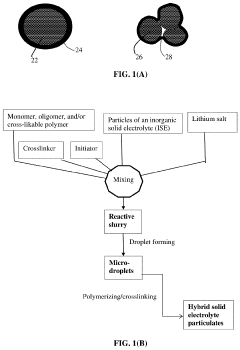
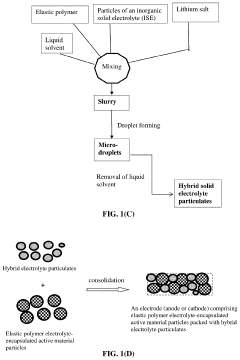
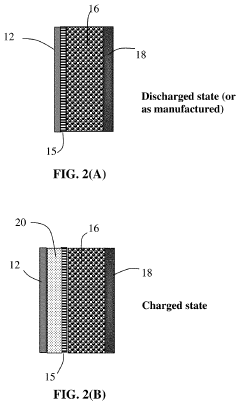
- A hybrid solid electrolyte system comprising inorganic solid electrolyte particles encapsulated in an elastic polymer shell, which provides lithium-ion conductivity from 10^-6 to 5×10^-2 S/cm, minimizes electrolyte volume, and forms a contiguous phase with electrode active materials, while being compatible with existing battery production facilities.
Sulfide based solid electrolyte with improved air-stability and method for producing the same
PatentInactiveKR1020200052651A
Innovation
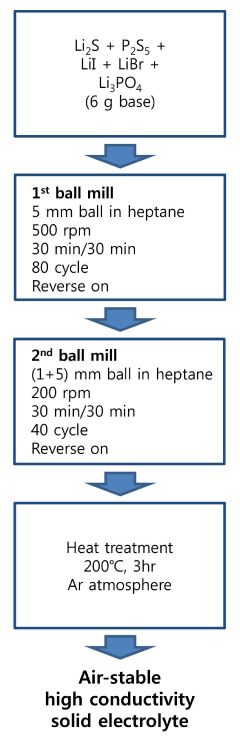
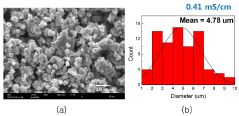
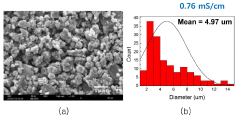
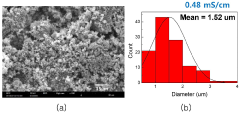
- A method involving the preparation of a solid electrolyte raw material by mixing lithium sulfide, phosphorus pentasulfide, lithium halide, and lithium phosphate, followed by heat-treatment under an inert atmosphere to dope the electrolyte with oxygen, forming a LiBr-LiI-based glass crystalline solid electrolyte, with controlled oxygen and halide molar ratios and heat-treatment conditions to enhance stability and conductivity.
Space Environment Impact on Electrolyte Performance
The space environment presents unprecedented challenges for sulfide electrolyte performance in aerospace applications, fundamentally altering material behavior through multiple environmental stressors. Unlike terrestrial conditions, space environments expose electrolytes to extreme temperature fluctuations, intense radiation fields, and vacuum conditions that can significantly degrade electrochemical performance and structural integrity.
Temperature cycling represents one of the most critical factors affecting sulfide electrolyte stability. In low Earth orbit, materials experience temperature swings from -150°C to +120°C within a single orbital period of approximately 90 minutes. These rapid thermal transitions induce mechanical stress in sulfide electrolytes due to thermal expansion and contraction mismatches with adjacent battery components. The crystalline structure of sulfide materials becomes particularly vulnerable, with repeated cycling potentially causing grain boundary weakening and ionic conductivity degradation.
Radiation exposure in space environments poses severe challenges to sulfide electrolyte molecular stability. High-energy particles, including protons, electrons, and heavy ions, can disrupt the sulfur-metal bonds within the electrolyte matrix. Galactic cosmic rays and solar particle events create ionization cascades that generate defect sites and alter the local chemical environment. These radiation-induced changes typically manifest as decreased ionic conductivity and increased electronic conductivity, compromising the electrolyte's fundamental function as an ionic conductor while maintaining electronic insulation.
Vacuum conditions in space create unique degradation pathways for sulfide electrolytes through sublimation and outgassing phenomena. The absence of atmospheric pressure allows volatile sulfur compounds to escape from the electrolyte surface, leading to compositional changes and surface layer formation. This process is particularly pronounced at elevated temperatures during solar exposure periods, where vapor pressure increases significantly.
Micrometeorite impacts and atomic oxygen exposure in low Earth orbit environments introduce additional degradation mechanisms. Atomic oxygen, highly reactive due to its monatomic state, can oxidize sulfide surfaces, forming sulfate layers that impede ionic transport. Even microscopic impacts can create localized heating and structural damage that propagates through the electrolyte matrix.
The synergistic effects of these environmental factors often exceed the sum of individual impacts, creating complex degradation pathways that require comprehensive testing protocols and protective strategies for successful aerospace implementation of sulfide electrolyte technologies.
Temperature cycling represents one of the most critical factors affecting sulfide electrolyte stability. In low Earth orbit, materials experience temperature swings from -150°C to +120°C within a single orbital period of approximately 90 minutes. These rapid thermal transitions induce mechanical stress in sulfide electrolytes due to thermal expansion and contraction mismatches with adjacent battery components. The crystalline structure of sulfide materials becomes particularly vulnerable, with repeated cycling potentially causing grain boundary weakening and ionic conductivity degradation.
Radiation exposure in space environments poses severe challenges to sulfide electrolyte molecular stability. High-energy particles, including protons, electrons, and heavy ions, can disrupt the sulfur-metal bonds within the electrolyte matrix. Galactic cosmic rays and solar particle events create ionization cascades that generate defect sites and alter the local chemical environment. These radiation-induced changes typically manifest as decreased ionic conductivity and increased electronic conductivity, compromising the electrolyte's fundamental function as an ionic conductor while maintaining electronic insulation.
Vacuum conditions in space create unique degradation pathways for sulfide electrolytes through sublimation and outgassing phenomena. The absence of atmospheric pressure allows volatile sulfur compounds to escape from the electrolyte surface, leading to compositional changes and surface layer formation. This process is particularly pronounced at elevated temperatures during solar exposure periods, where vapor pressure increases significantly.
Micrometeorite impacts and atomic oxygen exposure in low Earth orbit environments introduce additional degradation mechanisms. Atomic oxygen, highly reactive due to its monatomic state, can oxidize sulfide surfaces, forming sulfate layers that impede ionic transport. Even microscopic impacts can create localized heating and structural damage that propagates through the electrolyte matrix.
The synergistic effects of these environmental factors often exceed the sum of individual impacts, creating complex degradation pathways that require comprehensive testing protocols and protective strategies for successful aerospace implementation of sulfide electrolyte technologies.
Safety Standards for Aerospace Energy Storage Systems
The aerospace industry operates under stringent safety frameworks that govern energy storage systems, with sulfide electrolyte-based batteries requiring compliance with multiple regulatory standards. The Federal Aviation Administration (FAA) and European Union Aviation Safety Agency (EASA) have established comprehensive guidelines for lithium-based energy storage systems in aircraft applications, including specific requirements for thermal runaway prevention, fire suppression, and containment protocols. These standards mandate rigorous testing procedures that evaluate battery performance under extreme conditions, including altitude variations, temperature fluctuations, and vibration stress scenarios.
Current safety standards emphasize the critical importance of electrolyte stability and containment mechanisms. Sulfide electrolytes present unique challenges due to their sensitivity to moisture and potential for hydrogen sulfide gas generation upon exposure to atmospheric conditions. The International Civil Aviation Organization (ICAO) Technical Instructions for the Safe Transport of Dangerous Goods by Air specifically address solid-state battery systems, requiring enhanced packaging and monitoring systems for sulfide-based technologies.
Certification processes for aerospace energy storage systems involve multi-phase testing protocols, including cell-level, module-level, and system-level evaluations. These assessments examine thermal stability, mechanical integrity, electrical safety, and environmental compatibility. For sulfide electrolytes, additional testing requirements focus on gas emission analysis, moisture ingress protection, and long-term stability under operational stress conditions.
Emerging safety standards are being developed to address the specific characteristics of solid-state electrolyte systems. The Society of Automotive Engineers (SAE) and RTCA are collaborating on updated guidelines that incorporate lessons learned from automotive solid-state battery development while addressing the unique requirements of aerospace applications. These evolving standards emphasize predictive safety monitoring, advanced battery management systems, and fail-safe design principles that ensure continued operation even under component failure scenarios.
The integration of sulfide electrolyte systems into aerospace platforms requires comprehensive safety management systems that monitor electrolyte integrity, detect early failure indicators, and implement automated protective responses. These systems must demonstrate compliance with existing airworthiness standards while accommodating the novel safety considerations associated with solid-state electrolyte technologies.
Current safety standards emphasize the critical importance of electrolyte stability and containment mechanisms. Sulfide electrolytes present unique challenges due to their sensitivity to moisture and potential for hydrogen sulfide gas generation upon exposure to atmospheric conditions. The International Civil Aviation Organization (ICAO) Technical Instructions for the Safe Transport of Dangerous Goods by Air specifically address solid-state battery systems, requiring enhanced packaging and monitoring systems for sulfide-based technologies.
Certification processes for aerospace energy storage systems involve multi-phase testing protocols, including cell-level, module-level, and system-level evaluations. These assessments examine thermal stability, mechanical integrity, electrical safety, and environmental compatibility. For sulfide electrolytes, additional testing requirements focus on gas emission analysis, moisture ingress protection, and long-term stability under operational stress conditions.
Emerging safety standards are being developed to address the specific characteristics of solid-state electrolyte systems. The Society of Automotive Engineers (SAE) and RTCA are collaborating on updated guidelines that incorporate lessons learned from automotive solid-state battery development while addressing the unique requirements of aerospace applications. These evolving standards emphasize predictive safety monitoring, advanced battery management systems, and fail-safe design principles that ensure continued operation even under component failure scenarios.
The integration of sulfide electrolyte systems into aerospace platforms requires comprehensive safety management systems that monitor electrolyte integrity, detect early failure indicators, and implement automated protective responses. These systems must demonstrate compliance with existing airworthiness standards while accommodating the novel safety considerations associated with solid-state electrolyte technologies.
Unlock deeper insights with Patsnap Eureka Quick Research — get a full tech report to explore trends and direct your research. Try now!
Generate Your Research Report Instantly with AI Agent
Supercharge your innovation with Patsnap Eureka AI Agent Platform!