Thorium Reactors: Bridging Gap with Proliferation-Resistant Technologies
APR 1, 20269 MIN READ
Generate Your Research Report Instantly with AI Agent
PatSnap Eureka helps you evaluate technical feasibility & market potential.
Thorium Reactor Technology Background and Strategic Goals
Thorium reactor technology represents a paradigm shift in nuclear energy development, emerging from decades of research into alternative nuclear fuel cycles. Unlike conventional uranium-based reactors, thorium reactors utilize thorium-232 as fertile material, which converts to fissile uranium-233 through neutron absorption. This fundamental difference in fuel cycle design addresses critical concerns about nuclear proliferation while maintaining the promise of clean, abundant energy generation.
The historical development of thorium reactor technology traces back to the 1960s when researchers at Oak Ridge National Laboratory pioneered the Molten Salt Reactor Experiment. This early work demonstrated the feasibility of thorium-based fuel cycles and established foundational principles that continue to guide contemporary research. The technology gained renewed attention in the 21st century as nations sought proliferation-resistant nuclear technologies that could support growing energy demands while minimizing security risks.
Current technological evolution focuses on several reactor designs, including Molten Salt Reactors, High-Temperature Gas-Cooled Reactors, and Accelerator-Driven Systems. Each design approach offers unique advantages in terms of safety, efficiency, and proliferation resistance. The inherent characteristics of thorium fuel cycles, particularly the production of uranium-233 mixed with uranium-232, create significant technical barriers to weapons development due to the intense gamma radiation emitted by uranium-232 decay products.
The strategic objectives driving thorium reactor development encompass multiple dimensions of energy security and non-proliferation goals. Primary targets include achieving commercial viability of thorium-based power generation systems capable of competing with conventional nuclear and renewable energy sources. Technical milestones focus on demonstrating reactor designs that can operate safely at high temperatures while maintaining fuel cycle efficiency and minimizing radioactive waste production.
Long-term strategic goals emphasize establishing thorium reactors as cornerstone technologies for sustainable nuclear energy deployment in regions with limited uranium resources but abundant thorium reserves. Countries like India, China, and several European nations have identified thorium technology as essential for energy independence and climate change mitigation strategies. The technology's proliferation-resistant characteristics align with international non-proliferation frameworks, potentially enabling broader nuclear technology sharing agreements.
Advanced research objectives target breakthrough innovations in reactor materials, fuel processing technologies, and safety systems that could accelerate commercial deployment timelines. Key performance indicators include achieving breeding ratios exceeding unity, demonstrating passive safety systems, and establishing economically competitive levelized costs of electricity generation compared to existing nuclear technologies.
The historical development of thorium reactor technology traces back to the 1960s when researchers at Oak Ridge National Laboratory pioneered the Molten Salt Reactor Experiment. This early work demonstrated the feasibility of thorium-based fuel cycles and established foundational principles that continue to guide contemporary research. The technology gained renewed attention in the 21st century as nations sought proliferation-resistant nuclear technologies that could support growing energy demands while minimizing security risks.
Current technological evolution focuses on several reactor designs, including Molten Salt Reactors, High-Temperature Gas-Cooled Reactors, and Accelerator-Driven Systems. Each design approach offers unique advantages in terms of safety, efficiency, and proliferation resistance. The inherent characteristics of thorium fuel cycles, particularly the production of uranium-233 mixed with uranium-232, create significant technical barriers to weapons development due to the intense gamma radiation emitted by uranium-232 decay products.
The strategic objectives driving thorium reactor development encompass multiple dimensions of energy security and non-proliferation goals. Primary targets include achieving commercial viability of thorium-based power generation systems capable of competing with conventional nuclear and renewable energy sources. Technical milestones focus on demonstrating reactor designs that can operate safely at high temperatures while maintaining fuel cycle efficiency and minimizing radioactive waste production.
Long-term strategic goals emphasize establishing thorium reactors as cornerstone technologies for sustainable nuclear energy deployment in regions with limited uranium resources but abundant thorium reserves. Countries like India, China, and several European nations have identified thorium technology as essential for energy independence and climate change mitigation strategies. The technology's proliferation-resistant characteristics align with international non-proliferation frameworks, potentially enabling broader nuclear technology sharing agreements.
Advanced research objectives target breakthrough innovations in reactor materials, fuel processing technologies, and safety systems that could accelerate commercial deployment timelines. Key performance indicators include achieving breeding ratios exceeding unity, demonstrating passive safety systems, and establishing economically competitive levelized costs of electricity generation compared to existing nuclear technologies.
Global Energy Market Demand for Clean Nuclear Solutions
The global energy market is experiencing unprecedented demand for clean nuclear solutions as nations worldwide grapple with the dual challenges of meeting growing energy needs while achieving carbon neutrality goals. Traditional fossil fuel dependencies are becoming increasingly untenable due to environmental concerns, volatile pricing, and geopolitical instabilities, creating substantial market opportunities for advanced nuclear technologies.
Thorium-based reactor systems are positioned to address critical market gaps in the clean energy transition. Unlike conventional uranium-fueled reactors, thorium reactors offer inherent proliferation resistance while maintaining high energy output efficiency. This characteristic addresses growing international concerns about nuclear security and non-proliferation, making thorium technology particularly attractive to emerging nuclear markets and countries seeking energy independence without proliferation risks.
The market demand for proliferation-resistant nuclear technologies is intensifying as more nations consider nuclear power as a viable decarbonization pathway. Countries with limited nuclear experience are particularly interested in thorium reactor technology due to its enhanced safety profile and reduced weapons-grade material production potential. This creates significant market opportunities in regions including Southeast Asia, the Middle East, and parts of Africa where energy security and non-proliferation concerns intersect.
Industrial applications represent another substantial market segment driving demand for clean nuclear solutions. High-temperature thorium reactors can provide both electricity generation and process heat for industrial applications, including hydrogen production, desalination, and chemical processing. This dual-purpose capability addresses growing industrial decarbonization requirements while offering economic advantages over traditional nuclear technologies.
The market landscape is further influenced by increasing regulatory support for advanced reactor technologies. Many jurisdictions are developing streamlined licensing frameworks specifically designed for next-generation nuclear systems, including thorium-based designs. This regulatory evolution reduces market entry barriers and accelerates commercial deployment timelines.
Energy security considerations are driving substantial government investments in domestic nuclear capabilities. Thorium's abundant global distribution offers strategic advantages over uranium, which is concentrated in fewer geographic regions. This distribution pattern creates market opportunities for countries seeking energy independence through domestically sourced nuclear fuel cycles.
The integration of thorium reactors with renewable energy systems presents additional market potential. These reactors can provide reliable baseload power to complement intermittent renewable sources, addressing grid stability challenges while maintaining carbon-free electricity generation. This complementary role positions thorium technology as an essential component of comprehensive clean energy portfolios rather than a competing alternative to renewables.
Thorium-based reactor systems are positioned to address critical market gaps in the clean energy transition. Unlike conventional uranium-fueled reactors, thorium reactors offer inherent proliferation resistance while maintaining high energy output efficiency. This characteristic addresses growing international concerns about nuclear security and non-proliferation, making thorium technology particularly attractive to emerging nuclear markets and countries seeking energy independence without proliferation risks.
The market demand for proliferation-resistant nuclear technologies is intensifying as more nations consider nuclear power as a viable decarbonization pathway. Countries with limited nuclear experience are particularly interested in thorium reactor technology due to its enhanced safety profile and reduced weapons-grade material production potential. This creates significant market opportunities in regions including Southeast Asia, the Middle East, and parts of Africa where energy security and non-proliferation concerns intersect.
Industrial applications represent another substantial market segment driving demand for clean nuclear solutions. High-temperature thorium reactors can provide both electricity generation and process heat for industrial applications, including hydrogen production, desalination, and chemical processing. This dual-purpose capability addresses growing industrial decarbonization requirements while offering economic advantages over traditional nuclear technologies.
The market landscape is further influenced by increasing regulatory support for advanced reactor technologies. Many jurisdictions are developing streamlined licensing frameworks specifically designed for next-generation nuclear systems, including thorium-based designs. This regulatory evolution reduces market entry barriers and accelerates commercial deployment timelines.
Energy security considerations are driving substantial government investments in domestic nuclear capabilities. Thorium's abundant global distribution offers strategic advantages over uranium, which is concentrated in fewer geographic regions. This distribution pattern creates market opportunities for countries seeking energy independence through domestically sourced nuclear fuel cycles.
The integration of thorium reactors with renewable energy systems presents additional market potential. These reactors can provide reliable baseload power to complement intermittent renewable sources, addressing grid stability challenges while maintaining carbon-free electricity generation. This complementary role positions thorium technology as an essential component of comprehensive clean energy portfolios rather than a competing alternative to renewables.
Current Thorium Reactor Development Status and Technical Barriers
Thorium reactor technology has experienced significant momentum in recent years, with multiple countries and organizations pursuing various reactor designs. China leads global development efforts through its molten salt reactor program, targeting commercial deployment by 2030. India continues advancing its three-stage nuclear program incorporating thorium utilization, while several Western nations and private companies explore innovative thorium-based designs. Current development encompasses liquid fuel reactors, solid fuel systems, and hybrid approaches combining thorium with existing uranium-based technologies.
The molten salt reactor (MSR) design represents the most advanced thorium implementation pathway, with China's TMSR-LF1 achieving criticality in 2021. This 2-megawatt thermal experimental reactor validates key operational principles for larger commercial units. India's Advanced Heavy Water Reactor (AHWR) demonstrates solid fuel thorium utilization, designed as a 300-megawatt electric unit with enhanced safety features. Private sector initiatives include Flibe Energy's liquid fluoride thorium reactor and ThorCon's molten salt design, both targeting modular deployment strategies.
Despite promising developments, thorium reactors face substantial technical barriers that impede widespread commercialization. The thorium fuel cycle requires initial fissile material, typically uranium-235 or plutonium-239, to initiate the breeding process that converts thorium-232 into fissile uranium-233. This dependency creates supply chain complexities and economic uncertainties for initial reactor deployment.
Corrosion management presents another critical challenge, particularly for molten salt systems operating at high temperatures with chemically aggressive fluoride salts. Material compatibility issues affect reactor vessel integrity, heat exchanger performance, and component longevity. Current nickel-based superalloys demonstrate limited resistance to molten salt corrosion, necessitating advanced material development or frequent component replacement strategies.
Fuel processing and reprocessing technologies for thorium cycles remain underdeveloped compared to established uranium-plutonium systems. The presence of uranium-232 in bred uranium-233 creates intense gamma radiation, complicating fuel handling and processing operations. Additionally, protactinium-233 intermediate isotopes require extended decay periods, affecting fuel cycle economics and reactor operational flexibility.
Regulatory frameworks worldwide lack comprehensive standards for thorium reactor licensing, creating uncertainty for commercial deployment timelines. The absence of established supply chains for thorium fuel fabrication, specialized components, and maintenance services further constrains development progress. These combined technical and institutional barriers require coordinated international efforts to achieve thorium reactor commercialization goals.
The molten salt reactor (MSR) design represents the most advanced thorium implementation pathway, with China's TMSR-LF1 achieving criticality in 2021. This 2-megawatt thermal experimental reactor validates key operational principles for larger commercial units. India's Advanced Heavy Water Reactor (AHWR) demonstrates solid fuel thorium utilization, designed as a 300-megawatt electric unit with enhanced safety features. Private sector initiatives include Flibe Energy's liquid fluoride thorium reactor and ThorCon's molten salt design, both targeting modular deployment strategies.
Despite promising developments, thorium reactors face substantial technical barriers that impede widespread commercialization. The thorium fuel cycle requires initial fissile material, typically uranium-235 or plutonium-239, to initiate the breeding process that converts thorium-232 into fissile uranium-233. This dependency creates supply chain complexities and economic uncertainties for initial reactor deployment.
Corrosion management presents another critical challenge, particularly for molten salt systems operating at high temperatures with chemically aggressive fluoride salts. Material compatibility issues affect reactor vessel integrity, heat exchanger performance, and component longevity. Current nickel-based superalloys demonstrate limited resistance to molten salt corrosion, necessitating advanced material development or frequent component replacement strategies.
Fuel processing and reprocessing technologies for thorium cycles remain underdeveloped compared to established uranium-plutonium systems. The presence of uranium-232 in bred uranium-233 creates intense gamma radiation, complicating fuel handling and processing operations. Additionally, protactinium-233 intermediate isotopes require extended decay periods, affecting fuel cycle economics and reactor operational flexibility.
Regulatory frameworks worldwide lack comprehensive standards for thorium reactor licensing, creating uncertainty for commercial deployment timelines. The absence of established supply chains for thorium fuel fabrication, specialized components, and maintenance services further constrains development progress. These combined technical and institutional barriers require coordinated international efforts to achieve thorium reactor commercialization goals.
Existing Proliferation-Resistant Nuclear Technology Solutions
01 Thorium fuel cycle design for reduced weapons-grade material production
Thorium-based nuclear reactors can be designed with fuel cycles that minimize the production of weapons-grade fissile materials. The thorium-232 to uranium-233 breeding process produces less plutonium compared to conventional uranium fuel cycles. Reactor designs can incorporate features that make it difficult to extract fissile materials suitable for weapons production, such as continuous fuel processing or fuel compositions that result in uranium-233 contaminated with uranium-232, which has strong gamma radiation making weapons fabrication hazardous.- Thorium fuel cycle design for reduced weapons-grade material production: Thorium-based nuclear reactors can be designed with fuel cycles that minimize the production of weapons-grade fissile materials. The thorium-232 to uranium-233 breeding process produces significantly less plutonium-239 compared to conventional uranium fuel cycles. Reactor designs can incorporate features that make it difficult to extract fissile materials during operation, and the fuel composition can be optimized to reduce the concentration of materials suitable for weapons production. These design approaches enhance proliferation resistance by making it technically challenging and economically unfeasible to divert nuclear materials for weapons purposes.
- Molten salt reactor configurations with thorium: Molten salt reactor technology utilizing thorium fuel offers inherent proliferation-resistant characteristics. The liquid fuel form makes it difficult to access and process fissile materials without detection. The continuous fuel processing and online refueling capabilities allow for better monitoring and control of nuclear materials. The high radiation levels associated with uranium-233 and its decay products create additional barriers to material diversion. These reactor configurations can be designed with integrated fuel cycles that keep fissile materials within secure, monitored systems throughout their lifecycle.
- Fuel composition and isotopic barriers in thorium systems: The isotopic composition of thorium-based fuels can be engineered to create proliferation barriers. Uranium-233 produced from thorium can be deliberately contaminated with uranium-232, which has highly radioactive decay products that make handling and weapons fabrication extremely difficult. The fuel can be designed with specific isotopic ratios that are unsuitable for direct weapons use. Fuel fabrication processes can incorporate denaturants or other materials that would require complex separation processes to obtain weapons-usable materials. These compositional approaches provide passive proliferation resistance throughout the fuel lifecycle.
- Integrated safeguards and monitoring systems for thorium reactors: Advanced monitoring and safeguards technologies can be integrated into thorium reactor designs to enhance proliferation resistance. Real-time material accountancy systems can track nuclear materials throughout the fuel cycle. Radiation detection and surveillance systems can identify unauthorized access or diversion attempts. Remote monitoring capabilities allow international agencies to verify compliance with non-proliferation commitments. Design features can include tamper-evident seals, containment systems, and automated reporting mechanisms that provide continuous assurance of peaceful use.
- Thorium reactor core and breeding blanket designs for proliferation resistance: Reactor core configurations and breeding blanket arrangements can be optimized to minimize proliferation risks in thorium systems. Core designs can limit the buildup of fissile materials to levels insufficient for weapons production. Breeding blanket geometries can be configured to produce fuel with isotopic compositions that are inherently proliferation-resistant. The spatial distribution of thorium and fissile materials can be arranged to prevent localized accumulation of weapons-usable materials. Reactor operation parameters can be controlled to maintain fuel characteristics that are unsuitable for diversion throughout the operational cycle.
02 Molten salt reactor configurations with thorium
Molten salt reactor designs utilizing thorium fuel offer inherent proliferation resistance through their operational characteristics. These reactors can operate with liquid fuel that is continuously processed, making diversion of fissile material extremely difficult. The high-temperature liquid fuel system allows for online fuel processing and monitoring, providing transparency and reducing opportunities for material diversion. The reactor design can incorporate safeguards that make clandestine removal of nuclear materials nearly impossible without detection.Expand Specific Solutions03 Fuel composition and isotopic barriers
Specific fuel compositions incorporating thorium can create isotopic barriers that enhance proliferation resistance. The presence of certain isotopes produced during thorium fuel irradiation creates self-protecting characteristics through high radiation fields. Fuel designs can ensure that any extracted fissile material is contaminated with isotopes that make weapons fabrication technically challenging and dangerous. The fuel composition can be optimized to maximize the production of isotopes that serve as proliferation deterrents while maintaining efficient reactor operation.Expand Specific Solutions04 Reactor core design and fuel management strategies
Advanced reactor core designs and fuel management strategies can enhance the proliferation resistance of thorium reactors. Core configurations can be optimized to minimize the accumulation of weapons-usable materials while maximizing fuel utilization. Fuel management approaches include strategies for fuel loading, burnup optimization, and discharge scheduling that reduce the availability of materials suitable for diversion. Reactor designs can incorporate physical barriers and monitoring systems that provide multiple layers of protection against unauthorized access to nuclear materials.Expand Specific Solutions05 Integrated safeguards and monitoring systems
Thorium reactor systems can be designed with integrated safeguards and monitoring technologies that enhance proliferation resistance. Advanced monitoring systems can provide real-time tracking of nuclear materials throughout the fuel cycle. Reactor designs can incorporate features that facilitate international inspection and verification activities. The integration of safeguards by design principles ensures that proliferation resistance is built into the reactor system from the initial design phase, making it an inherent characteristic rather than an added feature.Expand Specific Solutions
Major Players in Thorium Reactor Development Ecosystem
The thorium reactor technology landscape represents an emerging nuclear energy sector in its early developmental stage, characterized by significant technical challenges and limited commercial deployment. The market remains nascent with substantial growth potential, driven by increasing demand for proliferation-resistant nuclear technologies and clean energy solutions. Current technology maturity is relatively low, with most developments concentrated in research institutions and specialized technology companies. Key players include established semiconductor and materials companies like Intel Corp., Taiwan Semiconductor Manufacturing Co., Applied Materials Inc., and Samsung SDI Co., which contribute advanced manufacturing capabilities and materials expertise. Academic institutions such as California Institute of Technology and Hefei University of Technology provide crucial research foundations, while specialized firms like TAE Technologies focus on fusion and advanced nuclear technologies, collectively advancing the technical feasibility of thorium-based reactor systems.
Arizona Board of Regents
Technical Solution: Arizona State University, under the Arizona Board of Regents, conducts nuclear engineering research including thorium reactor technology development. Their research focuses on molten salt reactor designs, advanced fuel cycle analysis, and proliferation resistance studies. The university's nuclear program investigates thorium-uranium breeding cycles, safety characteristics of liquid fuel systems, and computational modeling of reactor physics. Research includes analysis of how thorium fuel cycles inherently resist proliferation through the production of U-232 contaminated U-233, which creates intense gamma radiation making weapons development extremely challenging and detectable. The program also studies advanced materials for corrosive molten salt environments.
Strengths: Comprehensive nuclear engineering program, strong computational capabilities, focus on proliferation resistance analysis. Weaknesses: Academic research focus, limited industrial partnerships, requires significant development for commercial applications.
Intel Corp.
Technical Solution: Intel develops advanced semiconductor technologies and computational systems that support nuclear reactor control and monitoring systems. While not directly involved in thorium reactor development, Intel's processors and AI chips enable sophisticated reactor control systems, safety monitoring, and proliferation detection technologies. Their advanced computing platforms support complex neutronics calculations, real-time reactor physics modeling, and automated safety systems essential for next-generation reactor designs. Intel's secure computing technologies also contribute to proliferation-resistant reactor operations through encrypted control systems and tamper-resistant monitoring hardware that ensures reactor operations remain transparent to international oversight agencies.
Strengths: Leading semiconductor technology, robust security features, proven reliability in critical applications. Weaknesses: Not a nuclear technology company, limited direct nuclear industry experience, requires specialized nuclear partnerships.
Core Innovations in Thorium Fuel Cycle Technologies
Control method for a thorium reactor and a fuel assembly for carrying out said method
PatentWO2003001534A1
Innovation
- The solution involves a heat-releasing assembly with neutron moderators in gas form, regulated by pressure, integrated into the fuel channels of the reactor, using metallic thorium or its alloys with possible additions of uranium or plutonium, and a sophisticated design that includes geometric channels for precise control and safety features.


Non Proliferating Thorium Nuclear Fuel Inert Metal Matrix Alloys for Fast Spectrum and Thermal Spectrum Thorium Converter Reactors
PatentInactiveUS20080144762A1
Innovation
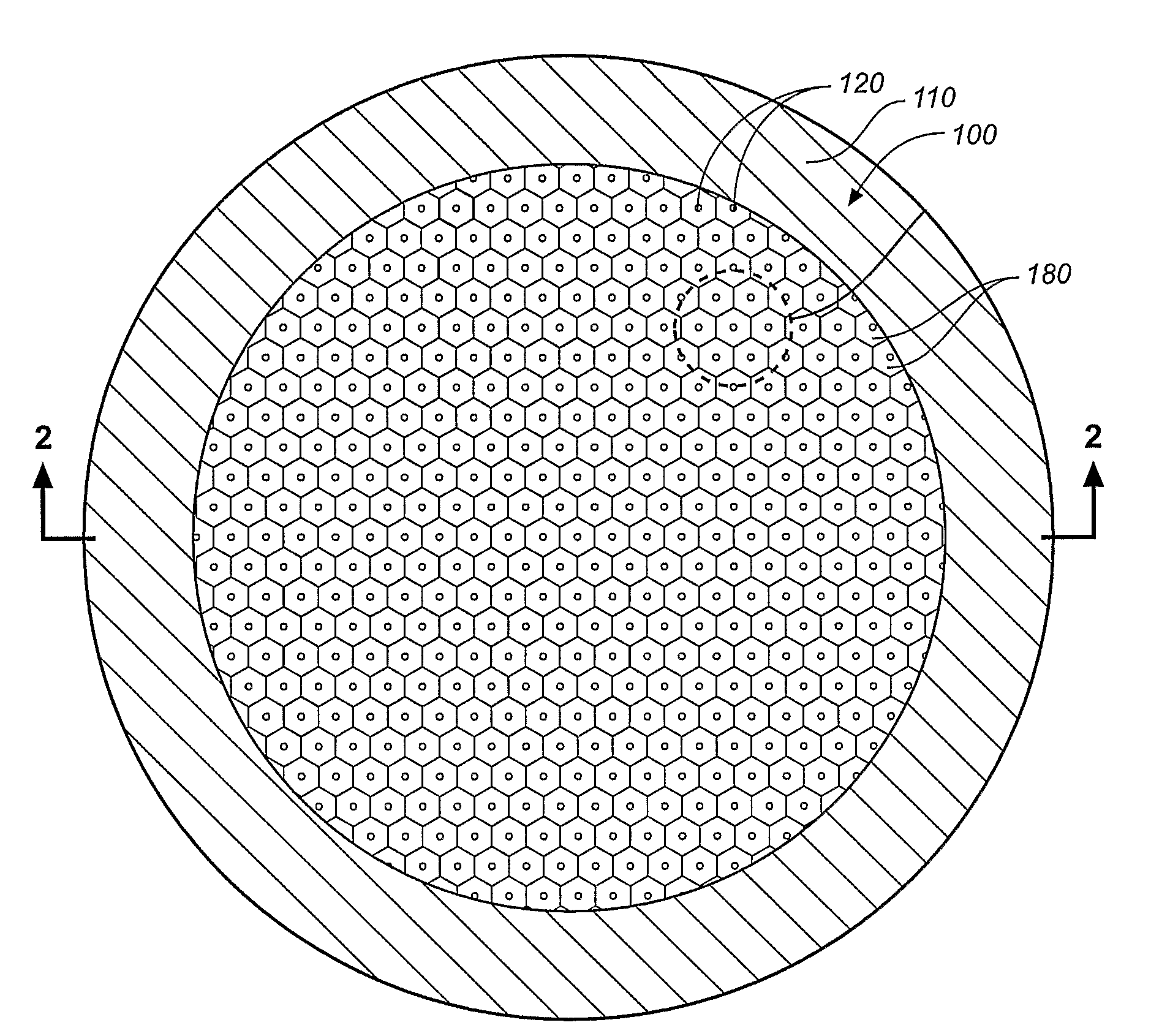
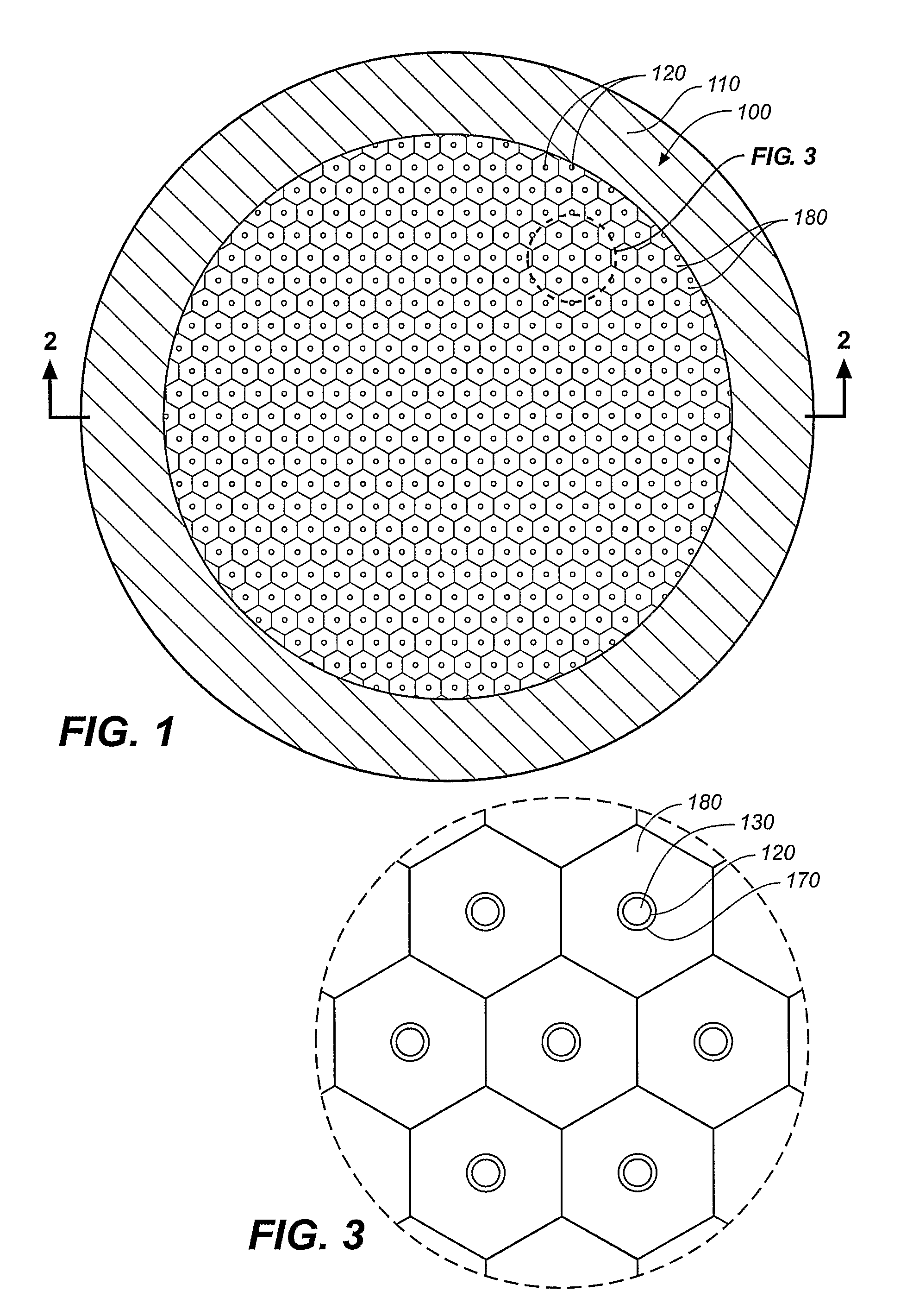
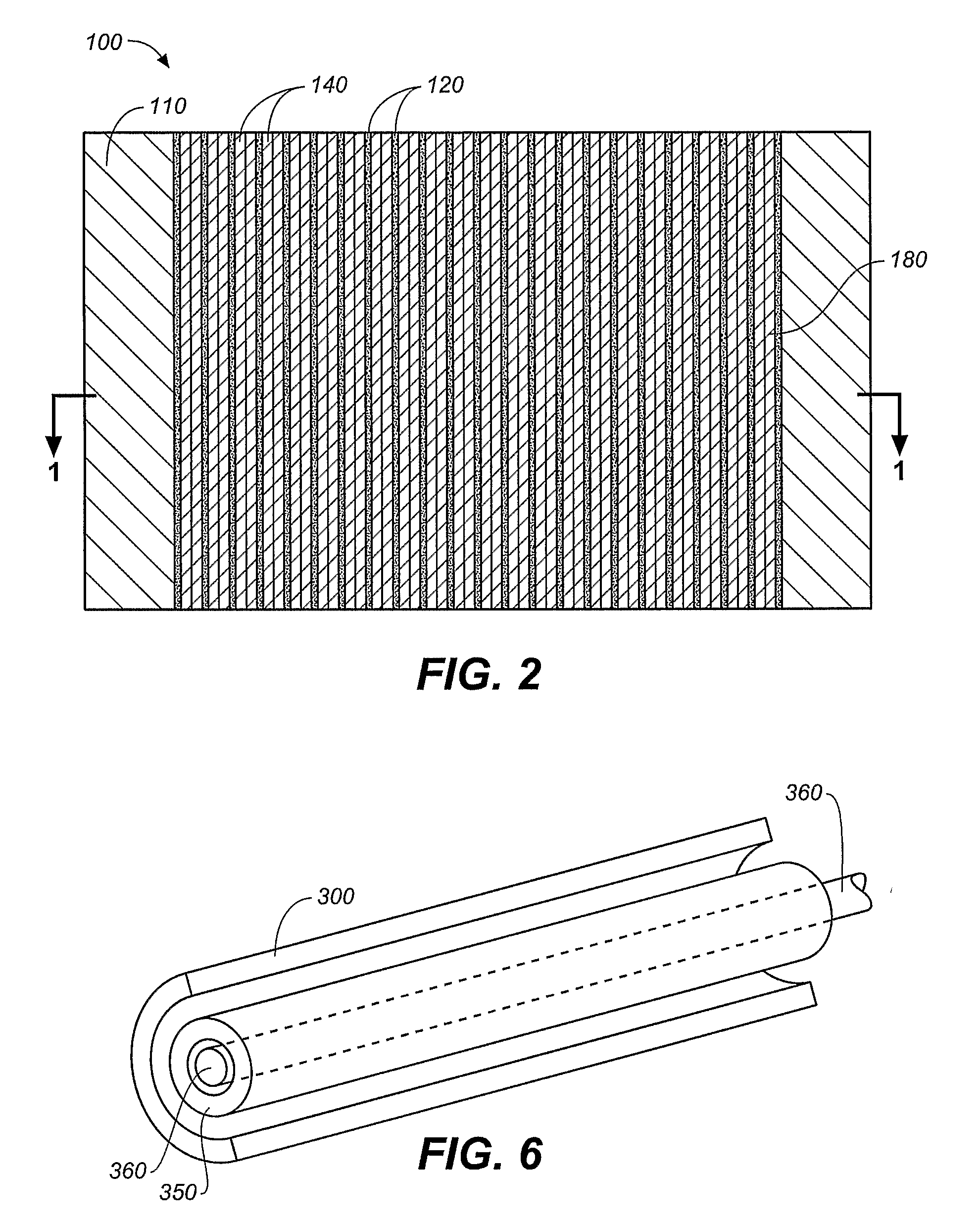
- Development of novel inert metal matrix alloys, such as nickel-aluminum-zirconium (NAZ) and vanadium-aluminum-zirconium (VAZ), which disperse ceramic or metallic actinide particles to create self-regulating, non-proliferative fuel assemblies for thorium converter reactors, capable of efficiently converting thorium to uranium 233 and producing medical isotopes, while minimizing neutron loss and plutonium production.

Nuclear Regulatory Framework for Thorium Technologies
The regulatory landscape for thorium-based nuclear technologies presents a complex framework that requires substantial adaptation from existing uranium-focused regulations. Current nuclear regulatory bodies, including the U.S. Nuclear Regulatory Commission (NRC), International Atomic Energy Agency (IAEA), and national authorities worldwide, have developed comprehensive frameworks primarily designed for conventional light water reactors and uranium fuel cycles.
Thorium fuel cycles introduce unique regulatory challenges that existing frameworks inadequately address. The thorium-uranium-233 breeding process requires specialized licensing procedures, as current regulations lack specific provisions for thorium fuel fabrication, reactor operation parameters, and waste management protocols. Regulatory bodies must establish new safety criteria for molten salt reactors and other thorium-compatible reactor designs, which operate under fundamentally different physical and chemical conditions than conventional reactors.
Licensing pathways for thorium technologies remain underdeveloped across major nuclear jurisdictions. The NRC's Part 50 and Part 52 licensing processes require significant modifications to accommodate thorium reactor designs, particularly regarding fuel qualification, safety analysis methodologies, and operational limits. European regulatory frameworks under WENRA guidelines similarly lack thorium-specific provisions, creating uncertainty for technology developers and investors.
International regulatory harmonization efforts for thorium technologies are in preliminary stages. The IAEA has initiated working groups to develop thorium-specific safety standards and regulatory guidance documents, but comprehensive international frameworks remain years away from implementation. This regulatory fragmentation creates barriers to technology transfer and international collaboration in thorium reactor development.
Proliferation resistance aspects of thorium technologies require new regulatory approaches for safeguards and security. While thorium cycles offer inherent proliferation resistance advantages, regulatory frameworks must establish verification protocols for uranium-233 production and handling. Current IAEA safeguards agreements need supplementation with thorium-specific inspection procedures and material accounting systems.
The regulatory approval timeline for thorium technologies extends significantly beyond conventional nuclear projects due to these framework gaps. Establishing comprehensive thorium regulatory standards requires extensive stakeholder engagement, safety research validation, and international coordination, potentially adding 5-10 years to commercial deployment schedules compared to existing nuclear technologies.
Thorium fuel cycles introduce unique regulatory challenges that existing frameworks inadequately address. The thorium-uranium-233 breeding process requires specialized licensing procedures, as current regulations lack specific provisions for thorium fuel fabrication, reactor operation parameters, and waste management protocols. Regulatory bodies must establish new safety criteria for molten salt reactors and other thorium-compatible reactor designs, which operate under fundamentally different physical and chemical conditions than conventional reactors.
Licensing pathways for thorium technologies remain underdeveloped across major nuclear jurisdictions. The NRC's Part 50 and Part 52 licensing processes require significant modifications to accommodate thorium reactor designs, particularly regarding fuel qualification, safety analysis methodologies, and operational limits. European regulatory frameworks under WENRA guidelines similarly lack thorium-specific provisions, creating uncertainty for technology developers and investors.
International regulatory harmonization efforts for thorium technologies are in preliminary stages. The IAEA has initiated working groups to develop thorium-specific safety standards and regulatory guidance documents, but comprehensive international frameworks remain years away from implementation. This regulatory fragmentation creates barriers to technology transfer and international collaboration in thorium reactor development.
Proliferation resistance aspects of thorium technologies require new regulatory approaches for safeguards and security. While thorium cycles offer inherent proliferation resistance advantages, regulatory frameworks must establish verification protocols for uranium-233 production and handling. Current IAEA safeguards agreements need supplementation with thorium-specific inspection procedures and material accounting systems.
The regulatory approval timeline for thorium technologies extends significantly beyond conventional nuclear projects due to these framework gaps. Establishing comprehensive thorium regulatory standards requires extensive stakeholder engagement, safety research validation, and international coordination, potentially adding 5-10 years to commercial deployment schedules compared to existing nuclear technologies.
International Non-Proliferation Policy Impact on Thorium Development
International non-proliferation policies have created a complex regulatory landscape that significantly influences thorium reactor development worldwide. The Nuclear Non-Proliferation Treaty (NPT) framework, established in 1968, primarily focuses on uranium and plutonium-based technologies, inadvertently creating regulatory gaps for thorium-based systems. While thorium's inherent proliferation resistance should theoretically facilitate smoother regulatory approval, existing nuclear governance structures often treat all nuclear technologies with similar scrutiny levels.
The International Atomic Energy Agency (IAEA) has gradually recognized thorium's proliferation-resistant characteristics, leading to updated safeguards approaches specifically tailored for thorium fuel cycles. These modified protocols acknowledge that thorium-232 cannot directly produce fissile material without neutron bombardment, and that uranium-233 produced in thorium reactors contains uranium-232 contamination, making weapons development significantly more challenging. However, regulatory adaptation remains slow, with many national nuclear regulatory bodies still applying uranium-centric frameworks to thorium projects.
Export control regimes, including the Nuclear Suppliers Group (NSG), have begun differentiating thorium technologies from traditional nuclear materials. Recent policy revisions have created more streamlined approval processes for thorium-related equipment and materials, recognizing their reduced proliferation risks. This shift has particularly benefited countries like India, which possesses substantial thorium reserves but limited uranium resources, enabling expanded international cooperation in thorium research and development.
Regional policy variations significantly impact thorium development trajectories. The United States maintains restrictive policies on uranium-233 handling due to historical weapons program concerns, despite thorium's proliferation-resistant nature. Conversely, countries like Norway, China, and India have developed more accommodating regulatory frameworks that actively promote thorium research while maintaining robust safeguards protocols.
International cooperation initiatives, such as the Generation IV International Forum, have established specific working groups focused on thorium technologies, creating standardized safety and security protocols. These collaborative efforts aim to harmonize international regulations while preserving each nation's sovereignty over nuclear policy decisions, ultimately accelerating thorium reactor deployment through reduced regulatory uncertainty and enhanced technology sharing mechanisms.
The International Atomic Energy Agency (IAEA) has gradually recognized thorium's proliferation-resistant characteristics, leading to updated safeguards approaches specifically tailored for thorium fuel cycles. These modified protocols acknowledge that thorium-232 cannot directly produce fissile material without neutron bombardment, and that uranium-233 produced in thorium reactors contains uranium-232 contamination, making weapons development significantly more challenging. However, regulatory adaptation remains slow, with many national nuclear regulatory bodies still applying uranium-centric frameworks to thorium projects.
Export control regimes, including the Nuclear Suppliers Group (NSG), have begun differentiating thorium technologies from traditional nuclear materials. Recent policy revisions have created more streamlined approval processes for thorium-related equipment and materials, recognizing their reduced proliferation risks. This shift has particularly benefited countries like India, which possesses substantial thorium reserves but limited uranium resources, enabling expanded international cooperation in thorium research and development.
Regional policy variations significantly impact thorium development trajectories. The United States maintains restrictive policies on uranium-233 handling due to historical weapons program concerns, despite thorium's proliferation-resistant nature. Conversely, countries like Norway, China, and India have developed more accommodating regulatory frameworks that actively promote thorium research while maintaining robust safeguards protocols.
International cooperation initiatives, such as the Generation IV International Forum, have established specific working groups focused on thorium technologies, creating standardized safety and security protocols. These collaborative efforts aim to harmonize international regulations while preserving each nation's sovereignty over nuclear policy decisions, ultimately accelerating thorium reactor deployment through reduced regulatory uncertainty and enhanced technology sharing mechanisms.
Unlock deeper insights with PatSnap Eureka Quick Research — get a full tech report to explore trends and direct your research. Try now!
Generate Your Research Report Instantly with AI Agent
Supercharge your innovation with PatSnap Eureka AI Agent Platform!