
YAG Laser vs Semiconductor Laser: Lifetime Comparison
MAR 11, 20269 MIN READ
Generate Your Research Report Instantly with AI Agent
Patsnap Eureka helps you evaluate technical feasibility & market potential.
YAG vs Semiconductor Laser Lifetime Background and Objectives
Laser technology has undergone remarkable evolution since the first demonstration of laser operation in 1960, fundamentally transforming numerous industrial, medical, and scientific applications. Among the diverse laser technologies developed over the past six decades, Yttrium Aluminum Garnet (YAG) lasers and semiconductor lasers have emerged as two dominant platforms, each representing distinct technological approaches with unique operational characteristics and performance profiles.
The development trajectory of YAG lasers began in the 1960s with the introduction of neodymium-doped YAG crystals as gain media, establishing a solid-state laser platform renowned for high power output and excellent beam quality. These systems evolved from laboratory curiosities to robust industrial tools, finding widespread adoption in materials processing, medical procedures, and defense applications. The inherent thermal properties and crystalline structure of YAG materials enabled the development of lasers capable of delivering substantial optical power with remarkable stability.
Semiconductor lasers followed a parallel but distinct evolutionary path, emerging from advances in semiconductor physics and epitaxial growth techniques. The first semiconductor laser demonstration in 1962 marked the beginning of a technology that would eventually revolutionize telecommunications, consumer electronics, and numerous other sectors. The continuous miniaturization and efficiency improvements in semiconductor laser technology have enabled mass production and cost-effective deployment across diverse applications.
The fundamental operational differences between these technologies create distinct lifetime characteristics that significantly impact their practical deployment and total cost of ownership. YAG lasers typically operate through optical pumping of rare-earth ions within a crystalline host matrix, while semiconductor lasers rely on electrical injection and recombination processes within semiconductor junctions. These contrasting physical mechanisms result in different degradation pathways, failure modes, and operational longevity profiles.
Understanding the comparative lifetime performance of YAG versus semiconductor lasers has become increasingly critical as industries seek to optimize equipment reliability, minimize maintenance costs, and ensure consistent operational performance. The objective of this comparative analysis is to establish a comprehensive framework for evaluating the operational lifetime characteristics of both laser technologies, examining the underlying physical mechanisms that influence longevity, and providing quantitative insights into their respective durability profiles under various operating conditions.
The development trajectory of YAG lasers began in the 1960s with the introduction of neodymium-doped YAG crystals as gain media, establishing a solid-state laser platform renowned for high power output and excellent beam quality. These systems evolved from laboratory curiosities to robust industrial tools, finding widespread adoption in materials processing, medical procedures, and defense applications. The inherent thermal properties and crystalline structure of YAG materials enabled the development of lasers capable of delivering substantial optical power with remarkable stability.
Semiconductor lasers followed a parallel but distinct evolutionary path, emerging from advances in semiconductor physics and epitaxial growth techniques. The first semiconductor laser demonstration in 1962 marked the beginning of a technology that would eventually revolutionize telecommunications, consumer electronics, and numerous other sectors. The continuous miniaturization and efficiency improvements in semiconductor laser technology have enabled mass production and cost-effective deployment across diverse applications.
The fundamental operational differences between these technologies create distinct lifetime characteristics that significantly impact their practical deployment and total cost of ownership. YAG lasers typically operate through optical pumping of rare-earth ions within a crystalline host matrix, while semiconductor lasers rely on electrical injection and recombination processes within semiconductor junctions. These contrasting physical mechanisms result in different degradation pathways, failure modes, and operational longevity profiles.
Understanding the comparative lifetime performance of YAG versus semiconductor lasers has become increasingly critical as industries seek to optimize equipment reliability, minimize maintenance costs, and ensure consistent operational performance. The objective of this comparative analysis is to establish a comprehensive framework for evaluating the operational lifetime characteristics of both laser technologies, examining the underlying physical mechanisms that influence longevity, and providing quantitative insights into their respective durability profiles under various operating conditions.
Market Demand Analysis for Long-Life Laser Solutions
The global laser market demonstrates substantial demand for long-life laser solutions across multiple industrial sectors, driven by the critical need for reliable, cost-effective optical systems. Manufacturing industries, particularly those involved in precision cutting, welding, and marking operations, represent the largest consumer segment for durable laser technologies. These applications require continuous operation cycles spanning thousands of hours, making laser lifetime a primary selection criterion alongside power output and beam quality.
Medical device manufacturers constitute another significant demand driver, where laser longevity directly impacts equipment reliability and patient safety. Surgical laser systems, dermatological treatments, and diagnostic equipment all benefit from extended operational lifespans that reduce maintenance intervals and minimize system downtime. The medical sector's stringent regulatory requirements further amplify the importance of proven reliability metrics in laser selection processes.
Telecommunications infrastructure continues expanding globally, creating sustained demand for long-life laser solutions in fiber optic communication systems. Data centers, submarine cable networks, and 5G infrastructure deployments require laser sources capable of operating reliably for extended periods without performance degradation. The exponential growth in data transmission requirements has intensified focus on laser reliability and operational longevity.
Defense and aerospace applications represent a specialized but lucrative market segment where laser lifetime requirements often exceed civilian standards. Military rangefinders, target designation systems, and emerging directed-energy weapons platforms demand exceptional durability under harsh environmental conditions. These applications typically justify premium pricing for proven long-life laser technologies.
The automotive industry's adoption of LiDAR systems for autonomous vehicle development has created new demand patterns for reliable laser sources. Vehicle manufacturers require laser components with automotive-grade reliability standards, emphasizing consistent performance over extended operational periods. This emerging market segment shows particular sensitivity to total cost of ownership calculations that factor in replacement and maintenance costs.
Industrial research and scientific instrumentation markets continue seeking laser solutions that minimize experimental disruption through extended operational periods. Laboratory environments, spectroscopy systems, and materials processing research facilities prioritize laser stability and longevity to ensure consistent experimental conditions and reduce equipment-related variables in research outcomes.
Medical device manufacturers constitute another significant demand driver, where laser longevity directly impacts equipment reliability and patient safety. Surgical laser systems, dermatological treatments, and diagnostic equipment all benefit from extended operational lifespans that reduce maintenance intervals and minimize system downtime. The medical sector's stringent regulatory requirements further amplify the importance of proven reliability metrics in laser selection processes.
Telecommunications infrastructure continues expanding globally, creating sustained demand for long-life laser solutions in fiber optic communication systems. Data centers, submarine cable networks, and 5G infrastructure deployments require laser sources capable of operating reliably for extended periods without performance degradation. The exponential growth in data transmission requirements has intensified focus on laser reliability and operational longevity.
Defense and aerospace applications represent a specialized but lucrative market segment where laser lifetime requirements often exceed civilian standards. Military rangefinders, target designation systems, and emerging directed-energy weapons platforms demand exceptional durability under harsh environmental conditions. These applications typically justify premium pricing for proven long-life laser technologies.
The automotive industry's adoption of LiDAR systems for autonomous vehicle development has created new demand patterns for reliable laser sources. Vehicle manufacturers require laser components with automotive-grade reliability standards, emphasizing consistent performance over extended operational periods. This emerging market segment shows particular sensitivity to total cost of ownership calculations that factor in replacement and maintenance costs.
Industrial research and scientific instrumentation markets continue seeking laser solutions that minimize experimental disruption through extended operational periods. Laboratory environments, spectroscopy systems, and materials processing research facilities prioritize laser stability and longevity to ensure consistent experimental conditions and reduce equipment-related variables in research outcomes.
Current Lifetime Challenges in YAG and Semiconductor Lasers
YAG lasers face significant lifetime challenges primarily related to thermal management and optical component degradation. The crystalline host material experiences thermal stress under high-power operation, leading to thermal lensing effects that degrade beam quality over time. Pump diode degradation represents another critical factor, as the efficiency of optical pumping decreases with accumulated operating hours, directly impacting overall system performance and longevity.
The flashlamp-pumped YAG systems encounter additional challenges with lamp replacement requirements, typically every 10-20 million shots depending on operating conditions. Optical coating degradation on cavity mirrors and output couplers occurs due to high intracavity power densities, particularly affecting UV and deep-UV applications where photochemical damage accelerates component aging.
Semiconductor lasers confront distinct lifetime limitations centered around junction degradation and facet damage. Dark line defects propagate through the active region over time, creating non-radiative recombination centers that reduce quantum efficiency and increase threshold current. These defects typically originate from crystal imperfections, mechanical stress, or high current density operation.
Facet oxidation presents a major challenge for high-power semiconductor lasers, where atmospheric exposure leads to surface recombination and catastrophic optical damage. The aluminum-containing compounds commonly used in laser structures are particularly susceptible to oxidation, creating reliability concerns in harsh operating environments.
Temperature cycling effects impact both laser types but manifest differently. YAG lasers experience mechanical stress from thermal expansion mismatches between different materials, while semiconductor devices suffer from wire bond fatigue and solder joint degradation. The coefficient of thermal expansion differences between the semiconductor chip and mounting substrates create thermomechanical stress that accumulates over operational cycles.
Power degradation mechanisms vary significantly between the two technologies. YAG lasers typically exhibit gradual power decline due to optical component aging, while semiconductor lasers may experience both gradual degradation and sudden failure modes. The wear-out mechanisms in semiconductor devices follow more predictable patterns, enabling better lifetime modeling compared to the complex multi-component degradation in YAG systems.
Current mitigation strategies focus on improved thermal management, advanced coating technologies, and enhanced material quality control, yet fundamental physical limitations continue to constrain achievable lifetimes in both laser technologies.
The flashlamp-pumped YAG systems encounter additional challenges with lamp replacement requirements, typically every 10-20 million shots depending on operating conditions. Optical coating degradation on cavity mirrors and output couplers occurs due to high intracavity power densities, particularly affecting UV and deep-UV applications where photochemical damage accelerates component aging.
Semiconductor lasers confront distinct lifetime limitations centered around junction degradation and facet damage. Dark line defects propagate through the active region over time, creating non-radiative recombination centers that reduce quantum efficiency and increase threshold current. These defects typically originate from crystal imperfections, mechanical stress, or high current density operation.
Facet oxidation presents a major challenge for high-power semiconductor lasers, where atmospheric exposure leads to surface recombination and catastrophic optical damage. The aluminum-containing compounds commonly used in laser structures are particularly susceptible to oxidation, creating reliability concerns in harsh operating environments.
Temperature cycling effects impact both laser types but manifest differently. YAG lasers experience mechanical stress from thermal expansion mismatches between different materials, while semiconductor devices suffer from wire bond fatigue and solder joint degradation. The coefficient of thermal expansion differences between the semiconductor chip and mounting substrates create thermomechanical stress that accumulates over operational cycles.
Power degradation mechanisms vary significantly between the two technologies. YAG lasers typically exhibit gradual power decline due to optical component aging, while semiconductor lasers may experience both gradual degradation and sudden failure modes. The wear-out mechanisms in semiconductor devices follow more predictable patterns, enabling better lifetime modeling compared to the complex multi-component degradation in YAG systems.
Current mitigation strategies focus on improved thermal management, advanced coating technologies, and enhanced material quality control, yet fundamental physical limitations continue to constrain achievable lifetimes in both laser technologies.
Existing Lifetime Extension Solutions and Methods
01 YAG laser lifetime enhancement through optical design and cavity optimization
The lifetime of YAG lasers can be extended through improved optical cavity design, optimized resonator configurations, and enhanced thermal management systems. These approaches focus on reducing thermal stress on laser components, improving beam quality, and minimizing degradation of optical elements through better cooling mechanisms and cavity structure optimization.- YAG laser lifetime enhancement through optical design and cavity optimization: The lifetime of YAG lasers can be significantly improved through optimized optical cavity design, including proper mirror coatings, resonator configuration, and thermal management systems. Advanced cooling mechanisms and stable optical components help reduce thermal stress and degradation of laser crystals, thereby extending operational lifetime. Proper alignment and maintenance of optical elements also contribute to longer service life.
- Semiconductor laser lifetime improvement through current control and thermal management: Semiconductor laser longevity is enhanced by implementing precise current control circuits, temperature stabilization systems, and heat dissipation structures. Proper driving circuits prevent current surges that can damage laser diodes, while effective thermal management reduces junction temperature and prevents catastrophic optical damage. These measures significantly reduce degradation rates and extend operational hours.
- Protective circuits and monitoring systems for laser lifetime extension: Implementation of protective circuits including overcurrent protection, electrostatic discharge protection, and real-time monitoring systems helps prevent premature laser failure. Feedback control mechanisms that monitor output power and adjust operating parameters accordingly ensure stable operation within safe limits. These protective measures detect anomalies early and prevent damage from electrical transients or environmental factors.
- Material and manufacturing improvements for enhanced laser durability: Advanced material selection and manufacturing processes contribute to improved laser lifetime. High-quality laser crystals with reduced defects, improved semiconductor epitaxial layers, and enhanced coating technologies minimize degradation mechanisms. Precision manufacturing techniques ensure better structural integrity and resistance to environmental stress, leading to more reliable and longer-lasting laser devices.
- Hybrid laser systems and redundancy designs for extended operational life: Hybrid configurations combining multiple laser sources or implementing redundancy designs provide extended system lifetime. These approaches include backup laser units, power distribution among multiple emitters, and intelligent switching mechanisms. Such designs ensure continuous operation even when individual components degrade, effectively extending the overall system lifetime and reliability for critical applications.
02 Semiconductor laser lifetime improvement through current control and thermal management
Semiconductor laser longevity can be significantly improved by implementing precise current control circuits, temperature stabilization systems, and heat dissipation structures. These methods prevent excessive junction temperature rise, reduce thermal cycling stress, and maintain stable operating conditions to minimize degradation mechanisms in semiconductor laser diodes.Expand Specific Solutions03 Protective coatings and encapsulation for laser component durability
Application of protective coatings on laser components and proper encapsulation techniques can extend the operational lifetime of both YAG and semiconductor lasers. These protective measures shield sensitive optical surfaces from environmental factors, prevent contamination, and reduce degradation caused by moisture, oxidation, and other external factors.Expand Specific Solutions04 Power supply and drive circuit optimization for extended laser life
Optimized power supply designs and advanced drive circuits contribute to longer laser lifetimes by providing stable electrical conditions, reducing current spikes, and preventing electrical stress on laser components. These systems incorporate feedback control, surge protection, and constant current/voltage regulation to maintain optimal operating parameters throughout the laser's service life.Expand Specific Solutions05 Monitoring and diagnostic systems for predictive lifetime management
Implementation of real-time monitoring systems and diagnostic tools enables predictive maintenance and lifetime extension of laser systems. These systems track performance parameters, detect early signs of degradation, and allow for timely intervention before critical failure occurs. Such approaches include optical power monitoring, temperature sensing, and spectral analysis to assess laser health.Expand Specific Solutions
Major Laser Manufacturers and Lifetime Performance Leaders
The YAG versus semiconductor laser lifetime comparison represents a mature technology sector experiencing steady growth, with the global laser market valued at approximately $16 billion and projected to reach $26 billion by 2030. The industry has transitioned from early development to widespread commercialization across industrial, medical, and telecommunications applications. Technology maturity varies significantly between established players and emerging innovators. Leading companies like Lumentum Operations LLC, Mitsubishi Electric Corp., and Taiwan Semiconductor Manufacturing Co. demonstrate advanced semiconductor laser capabilities, while traditional manufacturers such as Sharp Corp., Panasonic Holdings Corp., and Fujitsu Ltd. maintain strong YAG laser portfolios. Research institutions including Huazhong University of Science & Technology and Shanghai University continue advancing both technologies. The competitive landscape shows semiconductor lasers gaining market share due to superior efficiency and longer operational lifetimes, though YAG lasers retain advantages in high-power applications, creating a bifurcated but complementary market structure.
Mitsubishi Electric Corp.
Technical Solution: Mitsubishi Electric develops both YAG and semiconductor laser systems with focus on industrial applications. Their YAG lasers utilize advanced crystal growth techniques and optimized pump configurations achieving lifetimes of 10,000-15,000 hours. For semiconductor lasers, they employ quantum well structures and advanced facet passivation achieving over 50,000 hours operational lifetime. The company's comparative studies show semiconductor lasers offer 3-5x longer operational life than traditional YAG systems in continuous operation scenarios, with reduced maintenance requirements and lower total cost of ownership.
Strengths: Dual technology expertise, proven industrial track record, comprehensive lifetime testing. Weaknesses: Limited specialization in cutting-edge semiconductor laser architectures.
Lumentum Operations LLC
Technical Solution: Lumentum specializes in high-performance semiconductor laser solutions with advanced epitaxial growth techniques and thermal management systems. Their semiconductor lasers achieve operational lifetimes exceeding 100,000 hours at 25°C through optimized facet coatings and current density control. The company's VCSEL and edge-emitting laser technologies incorporate reliability engineering principles including accelerated aging tests and failure mode analysis. Their laser designs feature enhanced heat dissipation structures and low-threshold current operation to minimize degradation mechanisms.
Strengths: Industry-leading reliability standards, advanced packaging technology, comprehensive testing protocols. Weaknesses: Higher manufacturing costs, complex thermal management requirements.
Core Patents in Laser Degradation and Lifetime Technologies
Semiconductor laser
PatentActiveUS20210273410A1
Innovation
- The semiconductor laser design incorporates a window structure part with a low resistance active layer, where the setback amount of the front side electrode is longer than the window structure part length by 10 μm or more, and the rear side electrode is set back 1.2 times or more the substrate thickness, reducing current density and heat generation.


Laser resistant to internal ir-induced damage
PatentInactiveUS7046712B2
Innovation
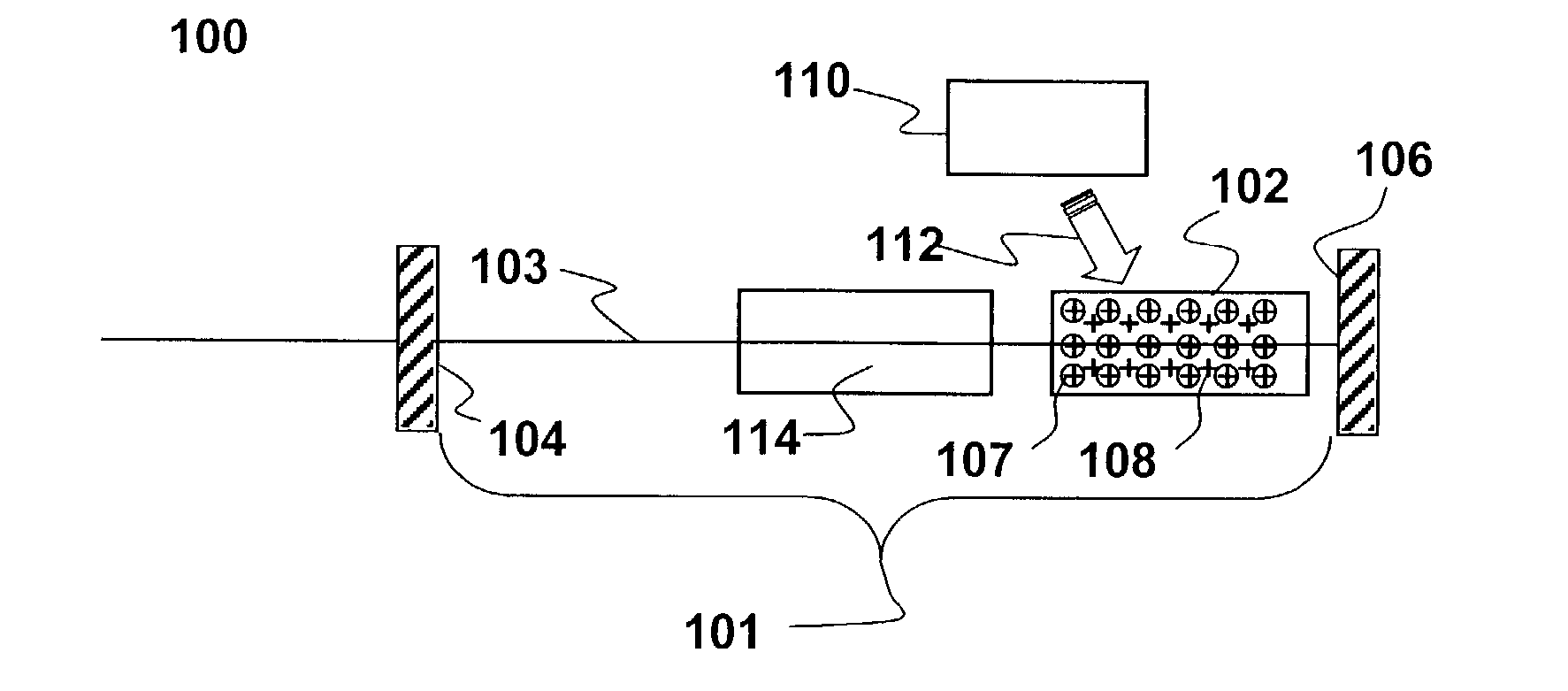
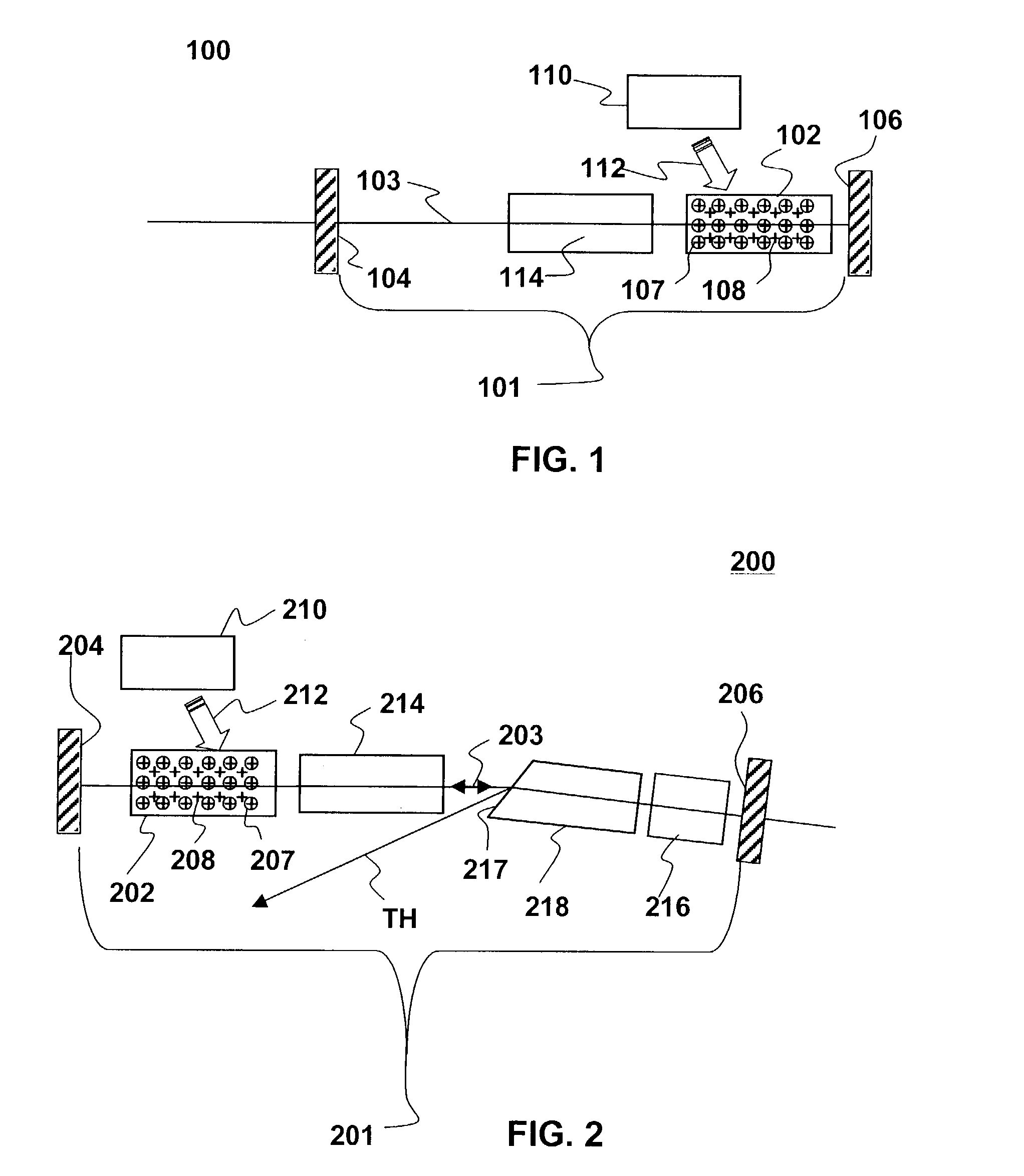
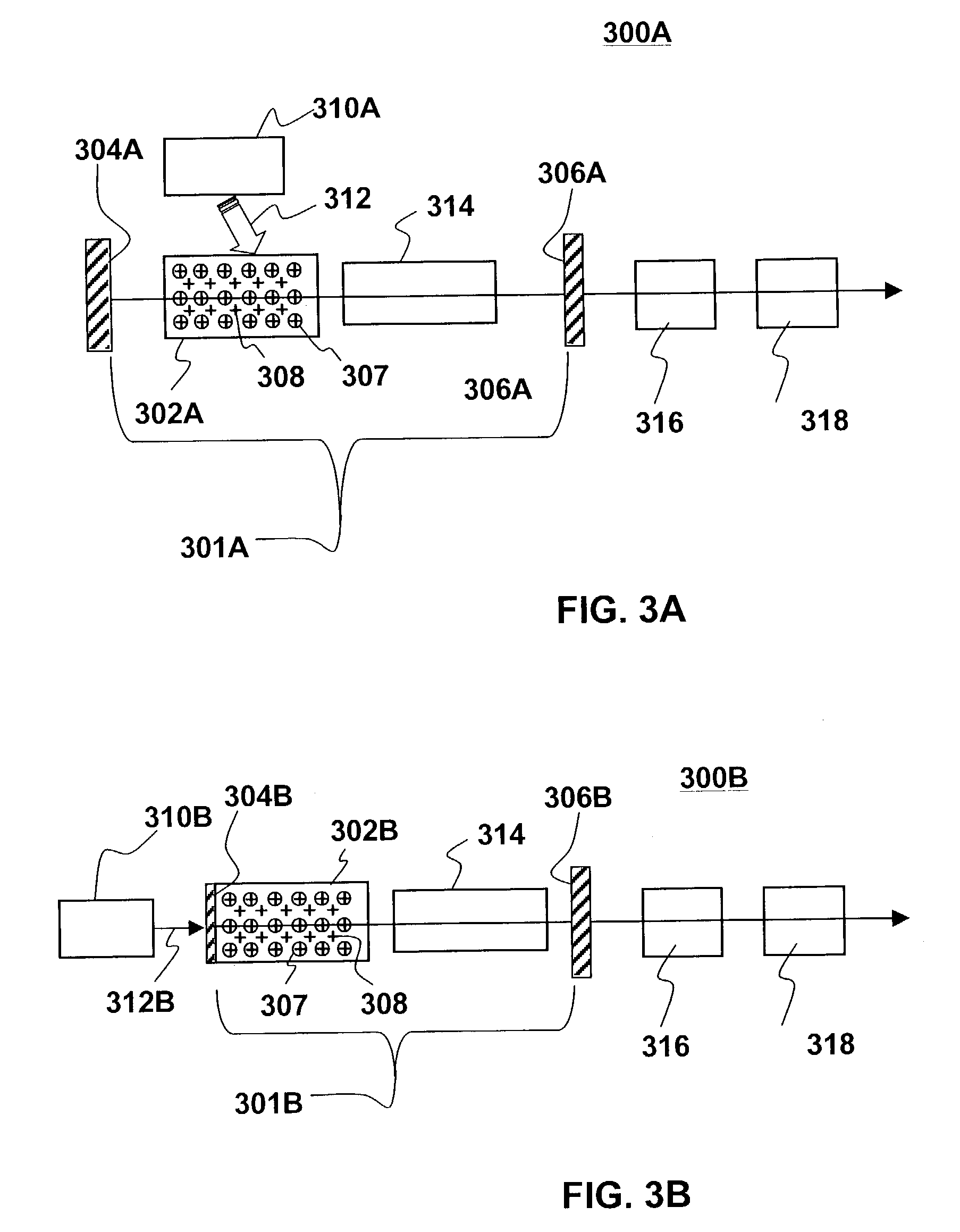
- Co-doping the gain medium of diode-pumped lasers with ions like Cr3+ or Ce3+ to enhance resistance to ionizing radiation and high-intensity internal infrared radiation, reducing color center generation and absorption, thereby extending the laser's operational life.
Laser Safety Standards and Lifetime Testing Regulations
The regulatory landscape for laser safety and lifetime testing encompasses multiple international and national standards that directly impact YAG and semiconductor laser applications. The International Electrotechnical Commission (IEC) 60825 series serves as the primary global framework for laser safety, establishing classification systems based on accessible emission limits and defining mandatory safety requirements for different laser classes. This standard undergoes regular updates to address emerging technologies and applications, with recent revisions incorporating specific considerations for high-power industrial lasers and semiconductor-based systems.
The American National Standards Institute (ANSI) Z136 series provides comprehensive safety guidelines specifically for the United States market, covering workplace safety, medical applications, and educational environments. These standards establish rigorous testing protocols for laser lifetime assessment, including accelerated aging tests, thermal cycling procedures, and optical degradation measurements. The European Union's machinery directive and medical device regulations further complement these standards by mandating specific lifetime validation requirements for laser systems used in industrial and healthcare applications.
Lifetime testing regulations vary significantly between YAG and semiconductor laser technologies due to their distinct failure mechanisms and operational characteristics. Semiconductor lasers must comply with Telcordia GR-468-CORE standards for telecommunications applications, which specify testing procedures for junction temperature effects, current density limitations, and facet degradation assessment. These protocols typically require 10,000-hour accelerated testing at elevated temperatures and currents to predict 25-year operational lifetimes.
YAG laser systems follow different regulatory pathways, particularly for industrial and medical applications where IEC 60601-2-22 governs medical laser equipment safety and performance. The testing requirements emphasize thermal management validation, crystal degradation assessment, and pump source stability evaluation. Military and aerospace applications must additionally comply with MIL-STD-810 environmental testing standards, which include vibration, shock, and extreme temperature cycling protocols.
Recent regulatory developments have introduced stricter lifetime validation requirements driven by increasing laser power levels and expanding application domains. The FDA's guidance documents for medical laser devices now mandate comprehensive lifetime studies with statistical significance requirements, while the European Medicines Agency has established similar protocols for therapeutic laser systems. These evolving standards reflect growing emphasis on long-term reliability and patient safety considerations in laser technology deployment.
The American National Standards Institute (ANSI) Z136 series provides comprehensive safety guidelines specifically for the United States market, covering workplace safety, medical applications, and educational environments. These standards establish rigorous testing protocols for laser lifetime assessment, including accelerated aging tests, thermal cycling procedures, and optical degradation measurements. The European Union's machinery directive and medical device regulations further complement these standards by mandating specific lifetime validation requirements for laser systems used in industrial and healthcare applications.
Lifetime testing regulations vary significantly between YAG and semiconductor laser technologies due to their distinct failure mechanisms and operational characteristics. Semiconductor lasers must comply with Telcordia GR-468-CORE standards for telecommunications applications, which specify testing procedures for junction temperature effects, current density limitations, and facet degradation assessment. These protocols typically require 10,000-hour accelerated testing at elevated temperatures and currents to predict 25-year operational lifetimes.
YAG laser systems follow different regulatory pathways, particularly for industrial and medical applications where IEC 60601-2-22 governs medical laser equipment safety and performance. The testing requirements emphasize thermal management validation, crystal degradation assessment, and pump source stability evaluation. Military and aerospace applications must additionally comply with MIL-STD-810 environmental testing standards, which include vibration, shock, and extreme temperature cycling protocols.
Recent regulatory developments have introduced stricter lifetime validation requirements driven by increasing laser power levels and expanding application domains. The FDA's guidance documents for medical laser devices now mandate comprehensive lifetime studies with statistical significance requirements, while the European Medicines Agency has established similar protocols for therapeutic laser systems. These evolving standards reflect growing emphasis on long-term reliability and patient safety considerations in laser technology deployment.
Cost-Benefit Analysis of Laser Lifetime vs Performance
The economic evaluation of laser systems requires a comprehensive assessment that balances initial investment costs against long-term operational benefits, particularly when comparing YAG and semiconductor laser technologies. This analysis becomes critical as organizations seek to optimize their capital allocation while ensuring sustained performance over extended operational periods.
Initial capital expenditure patterns reveal significant differences between the two technologies. YAG laser systems typically demand higher upfront investments due to their complex optical architectures, precision cooling systems, and sophisticated power supply requirements. The manufacturing complexity of YAG crystals and associated optical components contributes to elevated procurement costs. Conversely, semiconductor lasers benefit from established semiconductor manufacturing processes, resulting in lower initial capital requirements and faster deployment timelines.
Operational cost structures demonstrate contrasting economic profiles over extended service periods. YAG systems exhibit higher energy consumption due to inefficient pump-to-output conversion ratios, typically ranging from 1-5% efficiency. However, their robust construction and proven reliability translate to predictable maintenance schedules and lower component replacement frequencies. Semiconductor lasers achieve superior electrical efficiency, often exceeding 50%, significantly reducing power consumption costs throughout their operational lifetime.
Maintenance economics reveal divergent cost trajectories as systems age. YAG laser maintenance involves periodic lamp replacements, optical alignment procedures, and cooling system servicing, creating predictable but substantial recurring expenses. The modular nature of semiconductor laser arrays enables selective component replacement, potentially reducing maintenance costs but introducing complexity in failure prediction and inventory management.
Performance degradation patterns directly impact economic value proposition over time. YAG systems typically maintain consistent output characteristics throughout their operational lifetime, with gradual degradation curves that allow for predictable performance planning. Semiconductor lasers may experience more rapid initial degradation followed by stabilization, requiring careful consideration of application-specific performance requirements and acceptable degradation thresholds.
Total cost of ownership calculations must incorporate productivity impacts and replacement timing considerations. While semiconductor lasers may offer lower operational costs, their shorter lifespans could necessitate more frequent system replacements, potentially offsetting initial savings. YAG systems, despite higher operational expenses, may provide superior long-term value in applications requiring extended service intervals and minimal performance variation.
Initial capital expenditure patterns reveal significant differences between the two technologies. YAG laser systems typically demand higher upfront investments due to their complex optical architectures, precision cooling systems, and sophisticated power supply requirements. The manufacturing complexity of YAG crystals and associated optical components contributes to elevated procurement costs. Conversely, semiconductor lasers benefit from established semiconductor manufacturing processes, resulting in lower initial capital requirements and faster deployment timelines.
Operational cost structures demonstrate contrasting economic profiles over extended service periods. YAG systems exhibit higher energy consumption due to inefficient pump-to-output conversion ratios, typically ranging from 1-5% efficiency. However, their robust construction and proven reliability translate to predictable maintenance schedules and lower component replacement frequencies. Semiconductor lasers achieve superior electrical efficiency, often exceeding 50%, significantly reducing power consumption costs throughout their operational lifetime.
Maintenance economics reveal divergent cost trajectories as systems age. YAG laser maintenance involves periodic lamp replacements, optical alignment procedures, and cooling system servicing, creating predictable but substantial recurring expenses. The modular nature of semiconductor laser arrays enables selective component replacement, potentially reducing maintenance costs but introducing complexity in failure prediction and inventory management.
Performance degradation patterns directly impact economic value proposition over time. YAG systems typically maintain consistent output characteristics throughout their operational lifetime, with gradual degradation curves that allow for predictable performance planning. Semiconductor lasers may experience more rapid initial degradation followed by stabilization, requiring careful consideration of application-specific performance requirements and acceptable degradation thresholds.
Total cost of ownership calculations must incorporate productivity impacts and replacement timing considerations. While semiconductor lasers may offer lower operational costs, their shorter lifespans could necessitate more frequent system replacements, potentially offsetting initial savings. YAG systems, despite higher operational expenses, may provide superior long-term value in applications requiring extended service intervals and minimal performance variation.
Unlock deeper insights with Patsnap Eureka Quick Research — get a full tech report to explore trends and direct your research. Try now!
Generate Your Research Report Instantly with AI Agent
Supercharge your innovation with Patsnap Eureka AI Agent Platform!