

Method and apparatus for safely and quickly removing snow from narrow pedestrian and vehicular paths
a pedestrian and vehicular path technology, applied in the field of snow removal, can solve the problems of outperforming ride-on style snow blowers, walking-behind snow blowers have substantial risk of falling, and require substantial upper body strength to turn, so as to improve the efficiency of snow removal, and improve the effect of snow removal efficiency
Patent Information
- Authority / Receiving Office
- US · United States
- Patent Type
- Patents(United States)
- Current Assignee / Owner
- Publication Date
- 2021-05-25
Smart Images
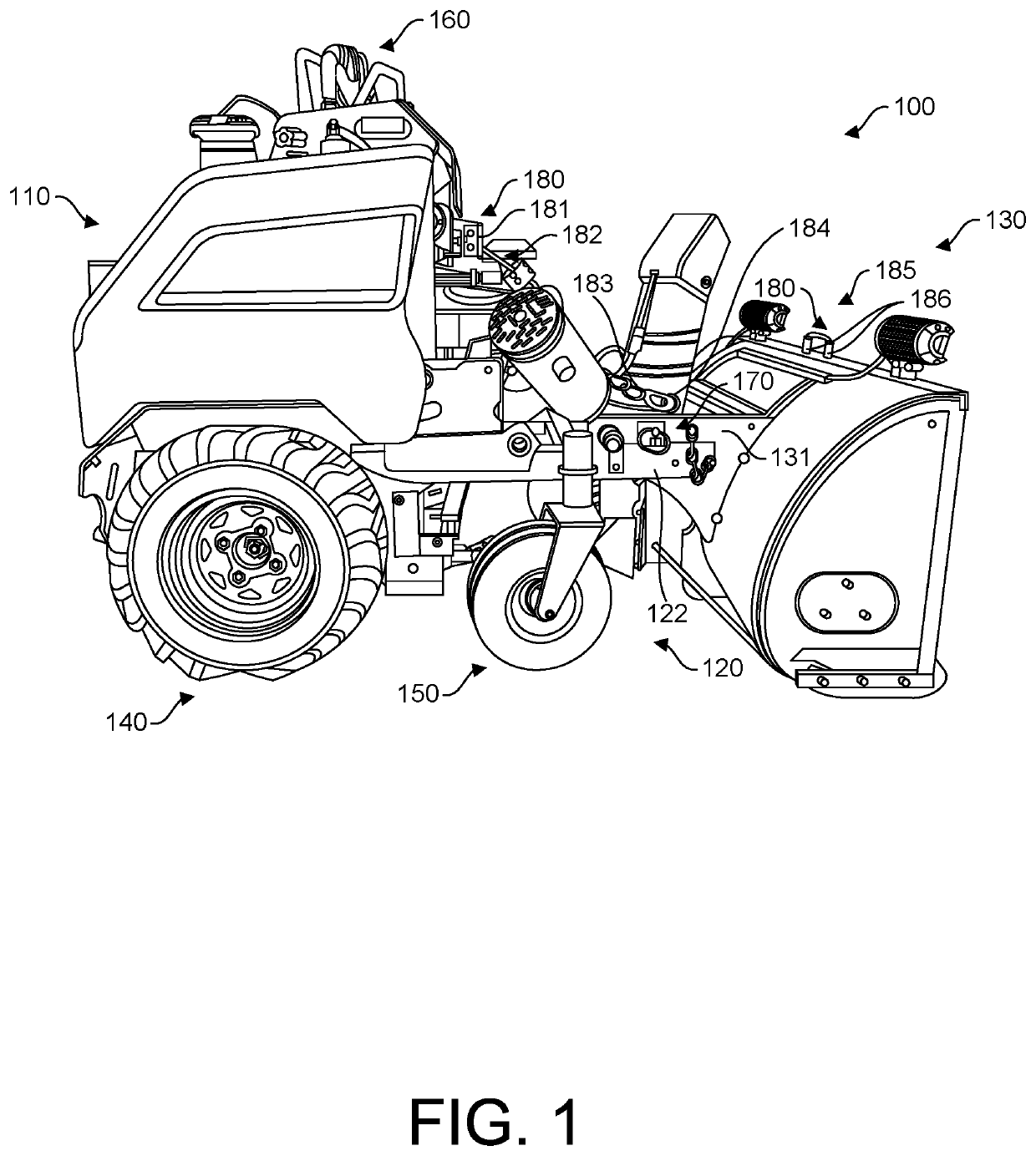
Figure 1 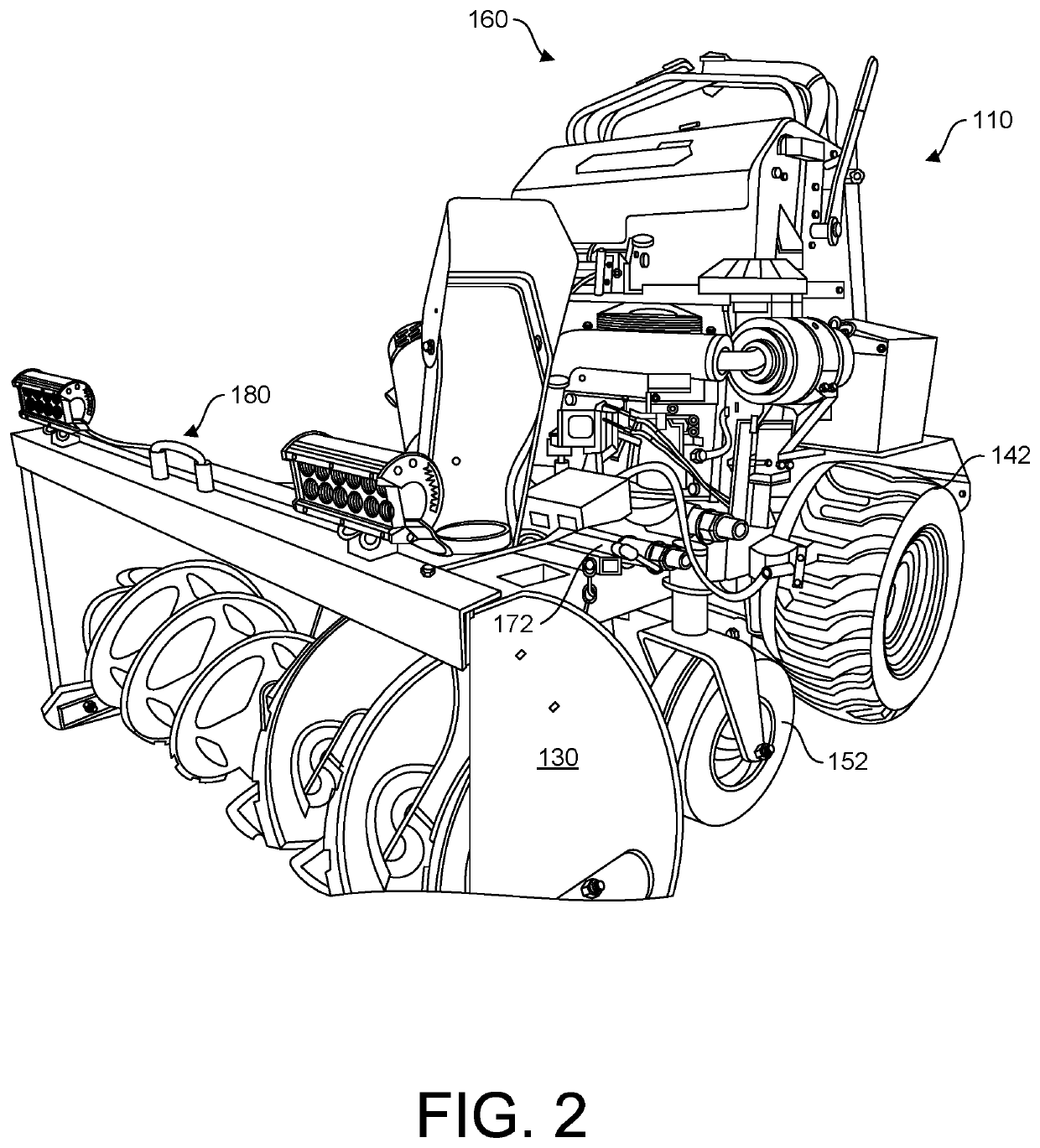
Figure 2 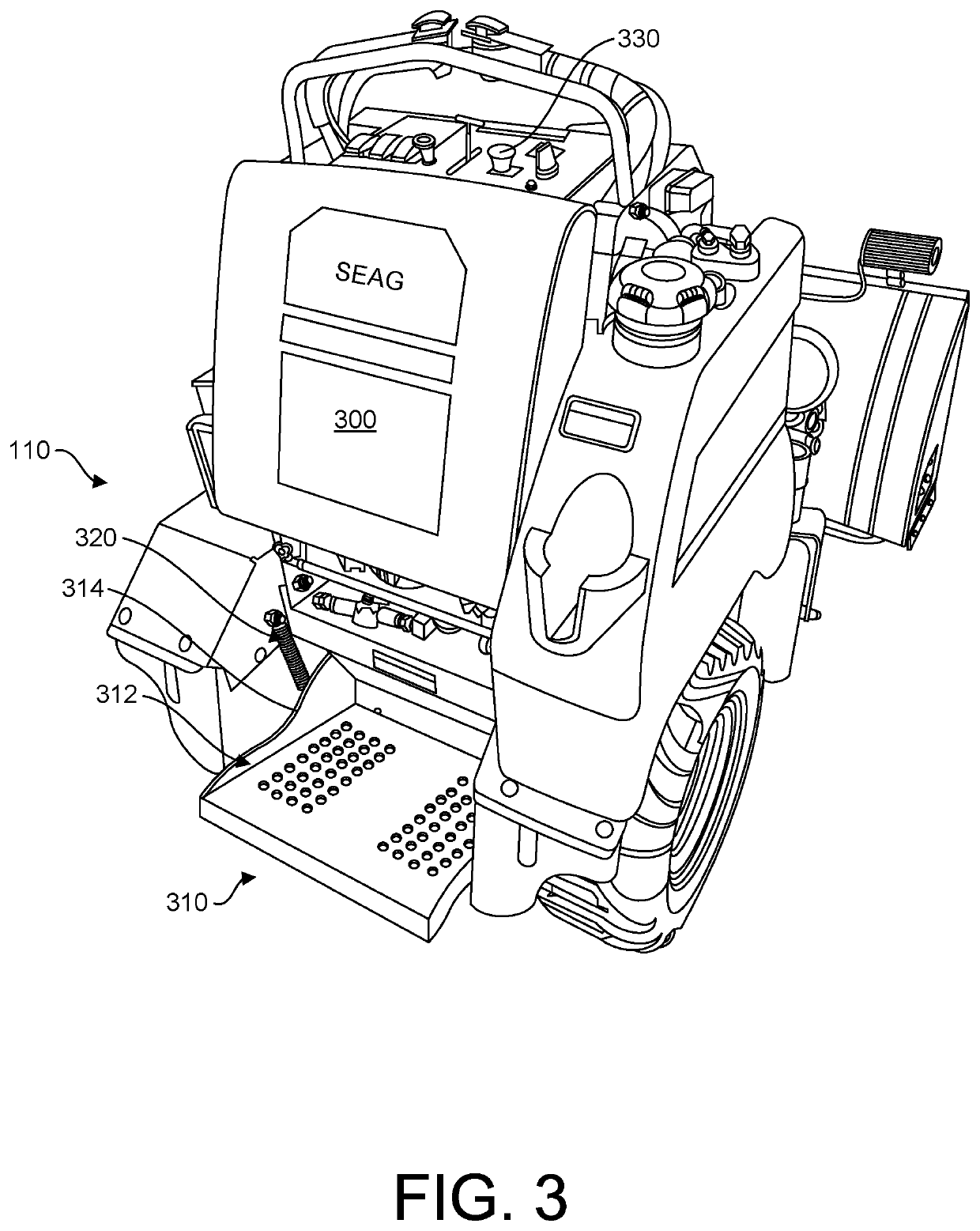
Figure 3
Abstract
Description
FIELD OF THE INVENTION
[0001] The present invention generally relates to snow removal, and more particularly relates to commercial use snow blowers and, even more particularly, relates to rapid snow removal using zero-turn stand-on snow blowers.BACKGROUND OF THE INVENTION
[0002] In the past, walk-behind snow blowers have been used by homeowners as well as commercial snow removal companies. Often these walk-behind snow blowers have substantial risk of slipping and falling, especially when the surface to be cleared is slippery. These walk-behind snow blowers often require substantial upper body strength to turn. Both stand-on and sit-on versions of ride-on snow blowers require much less walking, and therefore have less risk inherent to walking and also require less physical exertion for turning, but the effort and time required to get in and out of the seat of a sit-on can be substantial. Stand-on snow blowers have been well received for several reasons, including the ability to be mounte...
Examples
Embodiment Construction
[0050]Although described with particular reference to a stand-on snow blower, (such as a 2×4 with one powered wheel and one unpowered caster per side) the system and method for removing snow can be implemented in many different types of stand-on snow blowers with only two powered wheels.
[0051]In an embodiment, the system and method for removing snow can be implemented on a ride-on machine which is capable of receiving a snow blower or a snow broom.
[0052]The details below should be viewed as examples of many potential variations of the present invention which are protected hereunder.
[0053]FIG. 1 is a side view of the stand-on snow blower, generally designated 100 of the present invention, which includes a rear operator stand-on portion 110, which can, in many ways, be identical to a rear operator stand-on portion of a V Ride 2 power mower manufactured by Scag Power Equipment of Mayville, Wis., or a suitable substitute. Also shown are: mid caster and attachment zone 120, snow blower h...