

Thermostat with self-configuring connections to facilitate do-it-yourself installation
a self-configuring, thermostat technology, applied in the field of thermostats, can solve the problems of difficult and costly direct hardwiring of a “common” wire from the transformer to the electronic thermostat, disadvantages of using a battery for providing operating power, and need to continually check and replace the battery
Patent Information
- Authority / Receiving Office
- US · United States
- Patent Type
- Patents(United States)
- Current Assignee / Owner
- Publication Date
- 2013-09-03
Smart Images
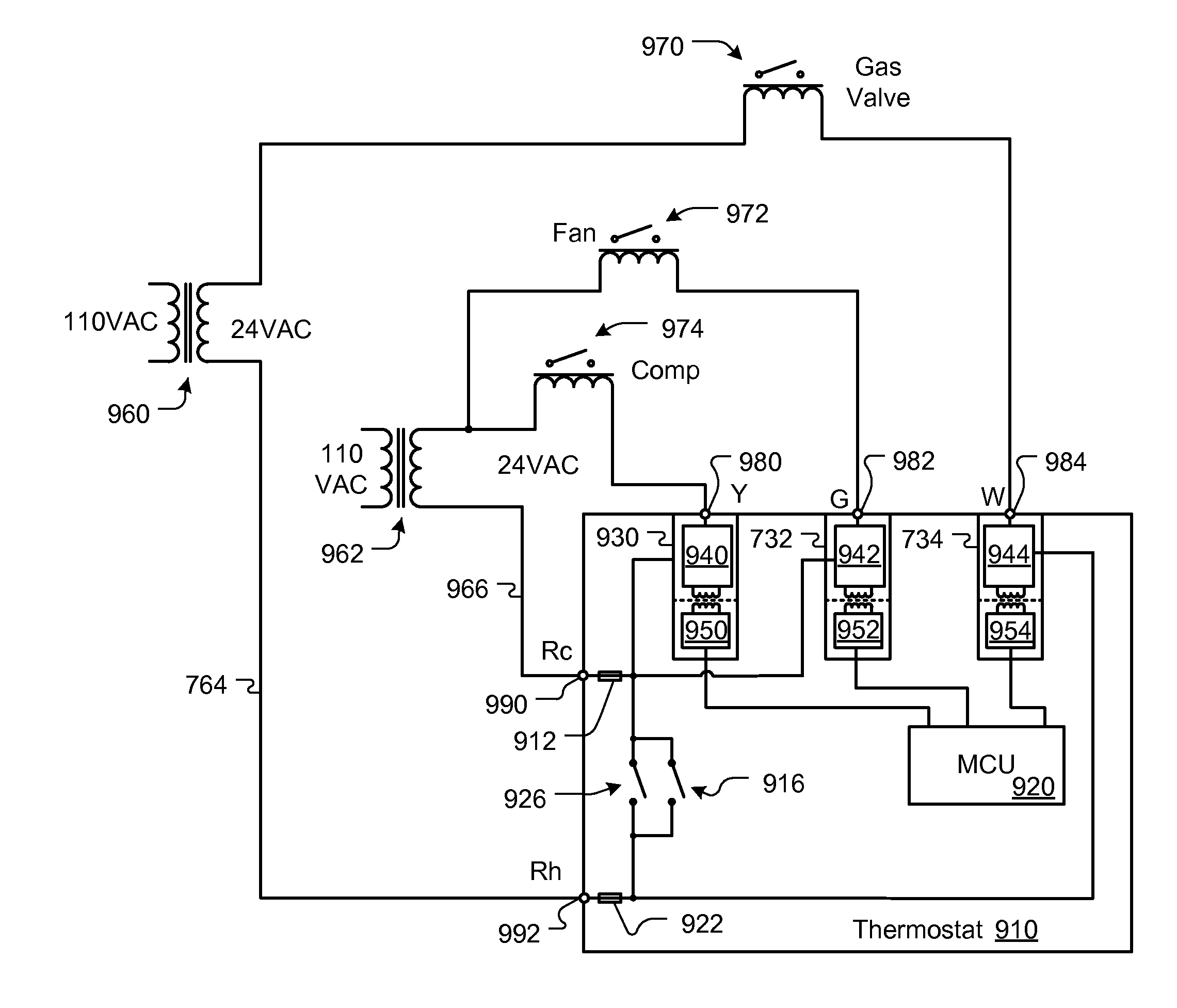
Figure 1 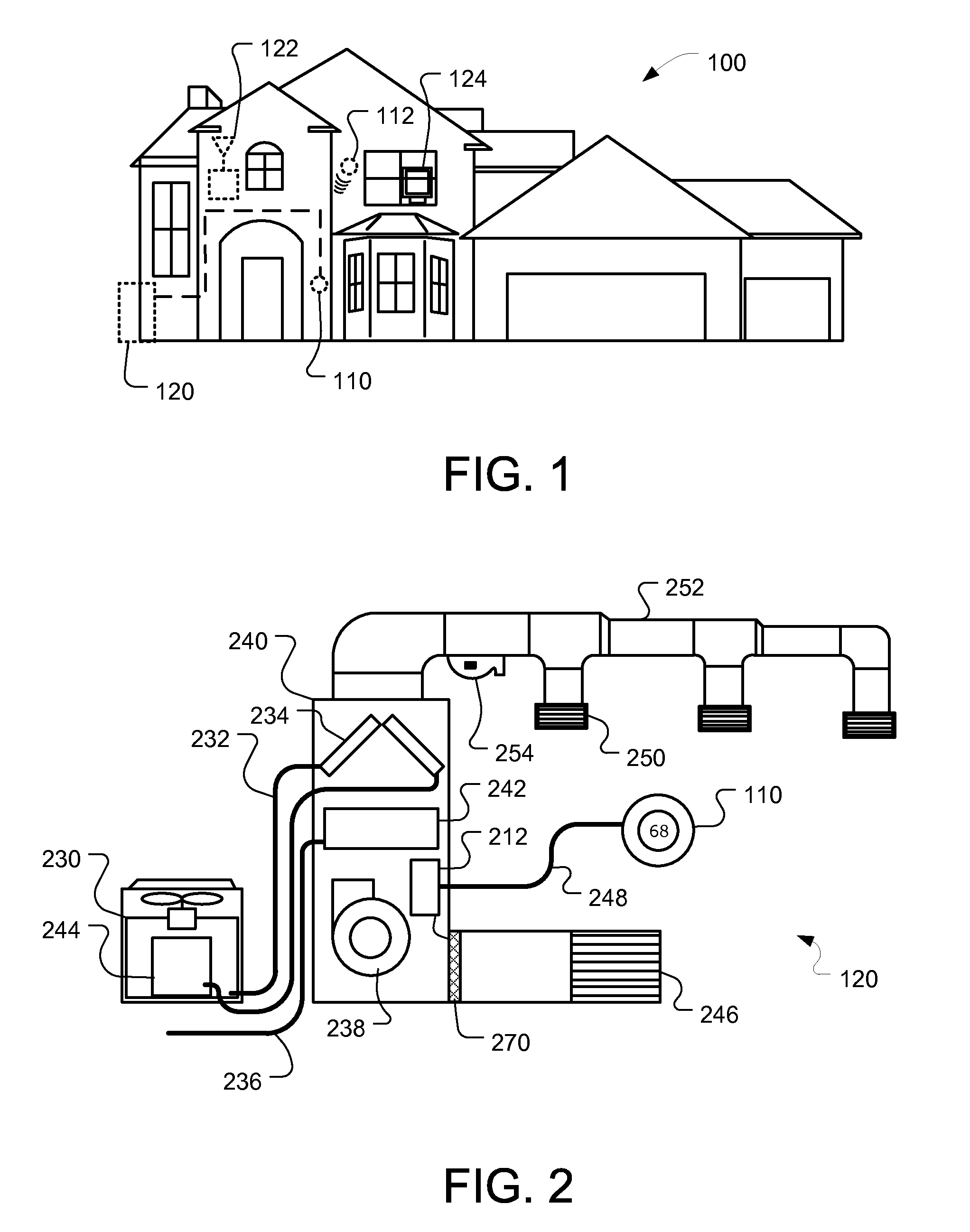
Figure 2 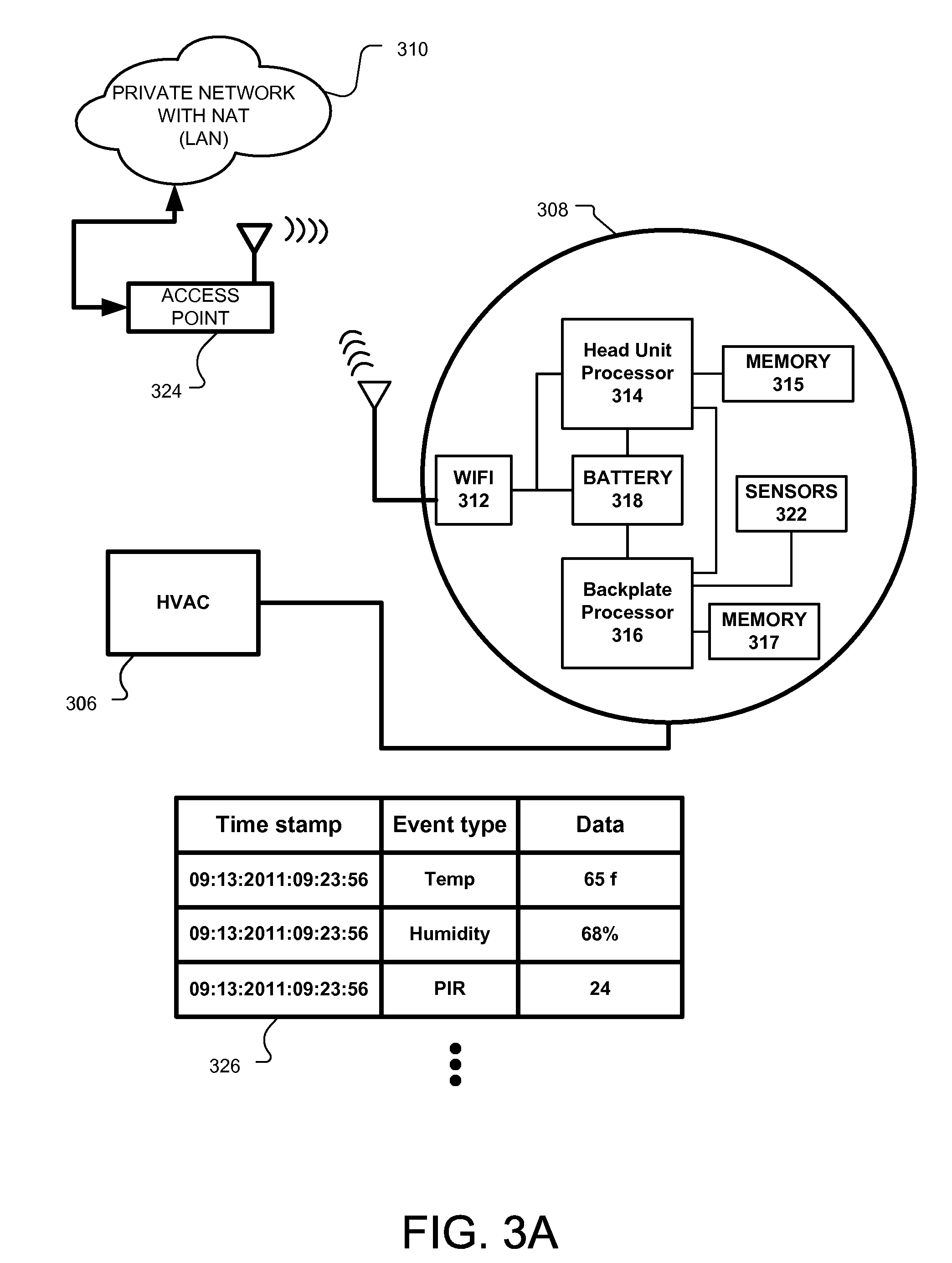
Figure 3
Abstract
Description
CROSS-REFERENCES TO RELATED APPLICATIONS
[0001] This application is a continuation of U.S. Ser. No. 13 / 467,029, filed May 8, 2012, which claims the benefit of U.S. Provisional Application No. 61 / 627,996 filed Oct. 21, 2011, entitled “User-Friendly, Network Connected Learning Thermostat And Related Systems And Methods.”
[0002] U.S. Ser. No. 13 / 467,029 is also a continuation-in-part of the following commonly-assigned applications: PCT Application No. PCT / US11 / 61437 filed Nov. 18, 2011; U.S. Ser. No. 13 / 034,666 filed Feb. 24, 2011; U.S. Ser. No. 13 / 034,674 filed Feb. 24, 2011; and U.S. Ser. No. 13 / 034,678 filed Feb. 24, 2011.
[0003] Each of the above-referenced patent applications is incorporated herein by reference in its entirety for all purposes.TECHNICAL FIELD
[0004] This patent specification relates to systems and methods for the monitoring and control of energy-consuming systems or other resource-consuming systems. More particularly, this patent specification relates control units that g...
Examples
Embodiment Construction
[0033]The subject matter of this patent specification relates to the subject matter of the following commonly assigned applications, each of which is incorporated by reference herein: U.S. Ser. No. 12 / 881,430 filed Sep. 14, 2010; U.S. Ser. No. 12 / 881,463 filed Sep. 14, 2010; U.S. Prov. Ser. No. 61 / 415,771 filed Nov. 19, 2010; U.S. Prov. Ser. No. 61 / 429,093 filed Dec. 31, 2010; U.S. Ser. No. 12 / 984,602 filed Jan. 4, 2011; U.S. Ser. No. 12 / 987,257 filed Jan. 10, 2011; U.S. Ser. No. 13 / 033,573 filed Feb. 23, 2011; U.S. Ser. No. 29 / 386,021, filed Feb. 23, 2011; U.S. Ser. No. 13 / 034,666 filed Feb. 24, 2011; U.S. Ser. No. 13 / 034,674 filed Feb. 24, 2011; U.S. Ser. No. 13 / 034,678 filed Feb. 24, 2011; U.S. Ser. No. 13 / 038,191 filed Mar. 1, 2011; U.S. Ser. No. 13 / 038,206 filed Mar. 1, 2011; U.S. Ser. No. 29 / 399,609 filed Aug. 16, 2011; U.S. Ser. No. 29 / 399,614 filed Aug. 16, 2011; U.S. Ser. No. 29 / 399,617 filed Aug. 16, 2011; U.S. Ser. No. 29 / 399,618 filed Aug. 16, 2011; U.S. Ser. No. 29 / 399,...