
Compound heat-exchanger
A heat exchanger and composite technology, applied in indirect heat exchangers, lighting and heating equipment, etc., can solve the problems that liquid plugs and air bubbles cannot coexist, limited effective contact area, limited effective heat dissipation area, etc., and achieve small size, Effect of increased application range and high cooling performance
Patent Information
- Authority / Receiving Office
- CN · China
- Patent Type
- Patents(China)
- Current Assignee / Owner
- Publication Date
- 2008-12-24
- Estimated Expiration
- Not applicable · inactive patent
Smart Images
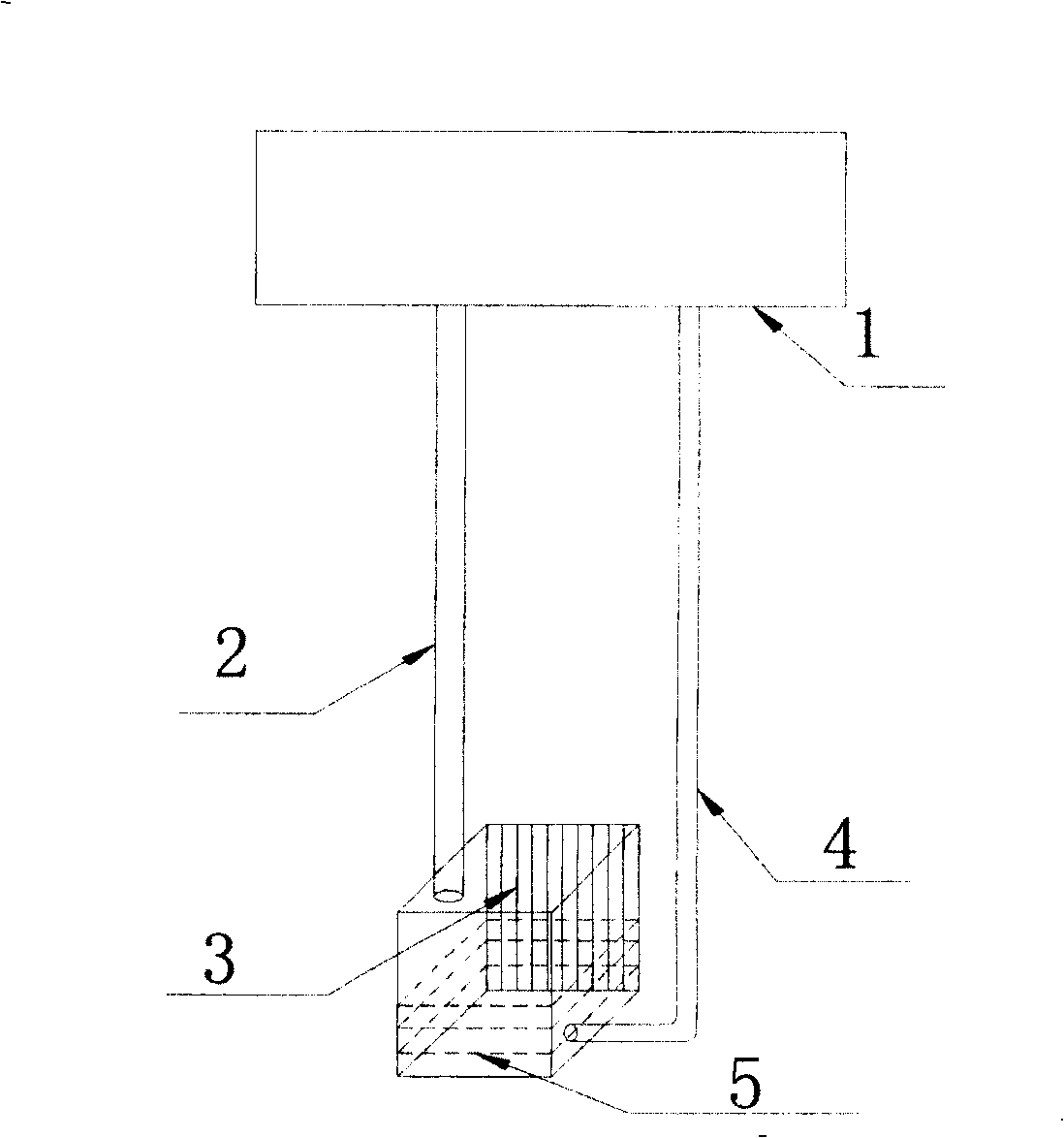
Figure 1 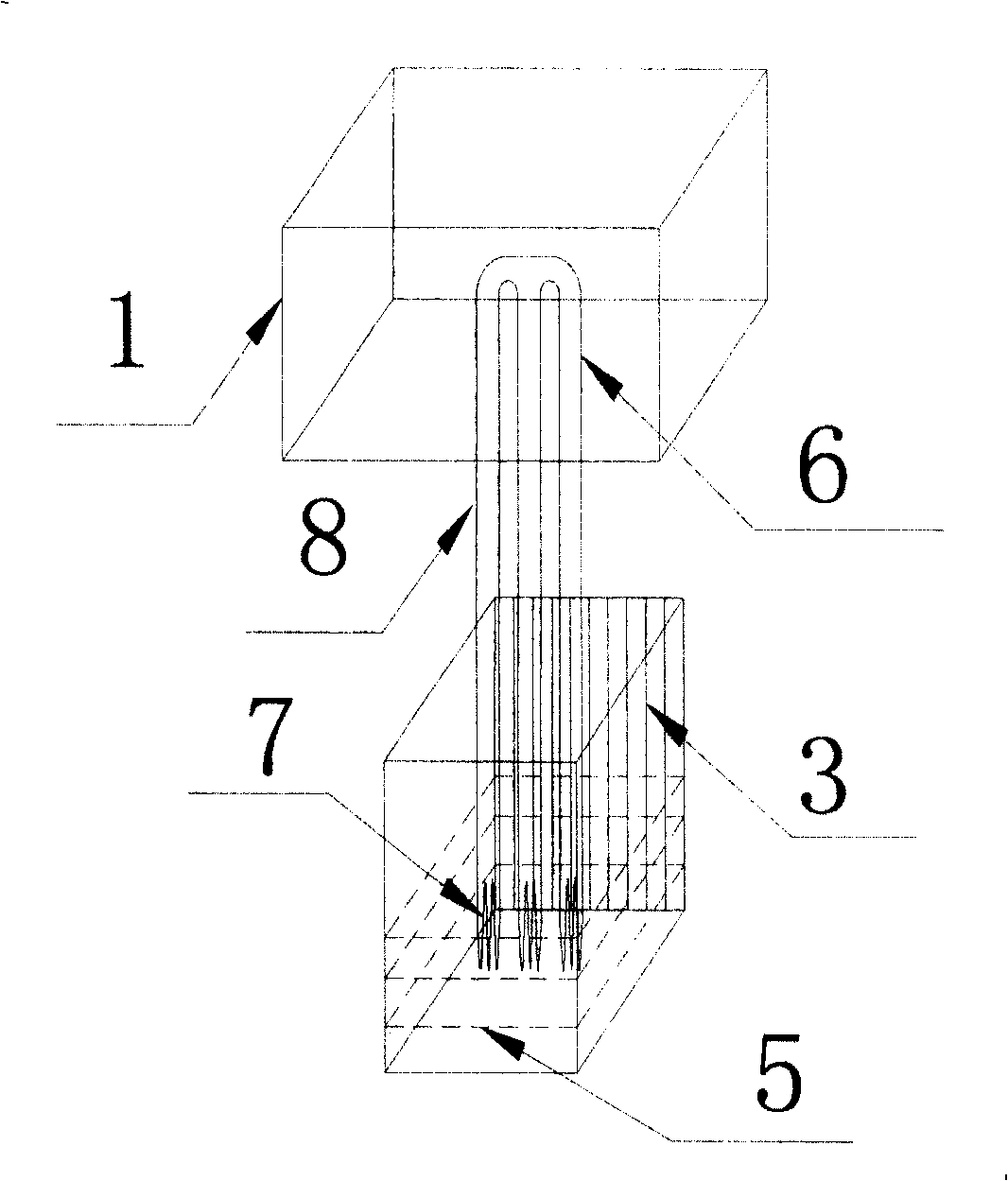
Figure 2 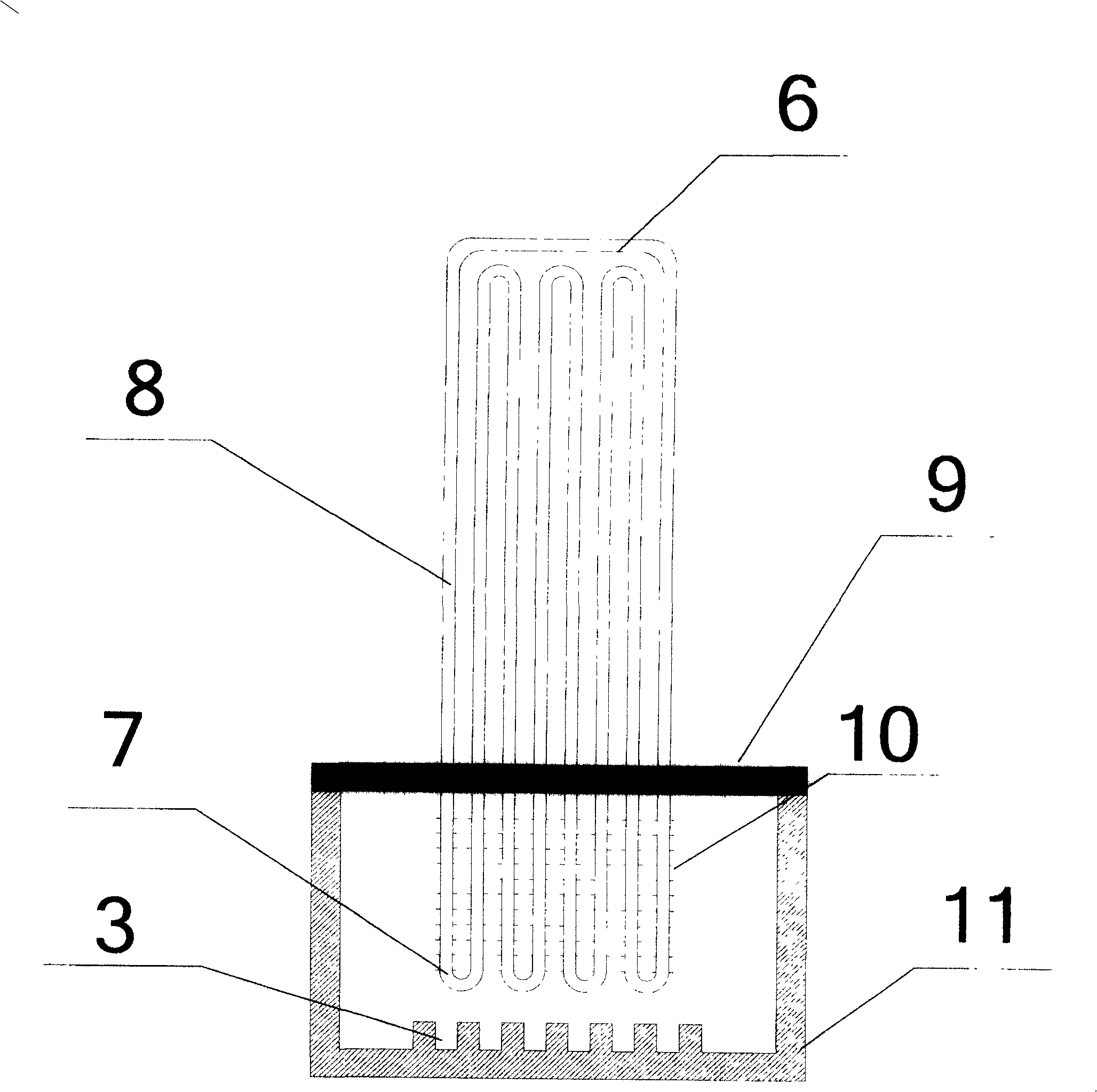
Figure 3
Abstract
Description
technical field
[0001] The invention relates to the field of microscale heat transfer, in particular to a composite heat exchanger. Background technique
[0002] With the continuous advancement of science and technology, the density of electronic components in various electronic products is getting higher and higher, and its high calorific value has gradually become a bottleneck restricting its further development. In this case, the micro heat exchange system came into being. In various micro heat exchange systems, most researchers are engaged in micro heat pipe technology, including capillary type, forced vibration (oscillation) type and micro groove (group) internal heat pipe technology. Single-phase and phase transition research, and achieved a lot of research results.
[0003] The calculation results show that the theoretical limit value of the evaporation heat flux inside the microgroove group has reached 1000W / cm 2 As mentioned above, at the same time, with the help ...
Examples
Embodiment Construction
[0042] Such as figure 1 As shown, this mode is a general way of evaporating and cooling microgrooves. Its main working principle is that the wall surface with microgrooves 3 is in direct contact with the heating element, and the liquid working substance 5 in the cavity evaporates on the surface of microgrooves 3. The heat of the heating element is taken out, and then the steam enters the cooling device 1 along the pipeline 2 to condense, the system heat is taken out by the cooling device 1, and the liquid working medium 5 condenses and flows back into the square cavity. The structure of this scheme is simple, but we know that the biggest problem in this scheme is whether the heat can be taken out in time and the working medium can be condensed to ensure circulation. This is the basis for ensuring the normal operation of this mode. Look, it is difficult to ensure its effective operation under high heat generation. The reason is that under high heat generation, the steam cannot ...