
A drug target related to liver injury and its application
A technology for liver injury and uses, applied in the field of gene technology, can solve problems such as insufficient research
Patent Information
- Authority / Receiving Office
- CN · China
- Patent Type
- Patents(China)
- Current Assignee / Owner
- Publication Date
- 2012-02-22
- Estimated Expiration
- Not applicable · inactive patent
Smart Images
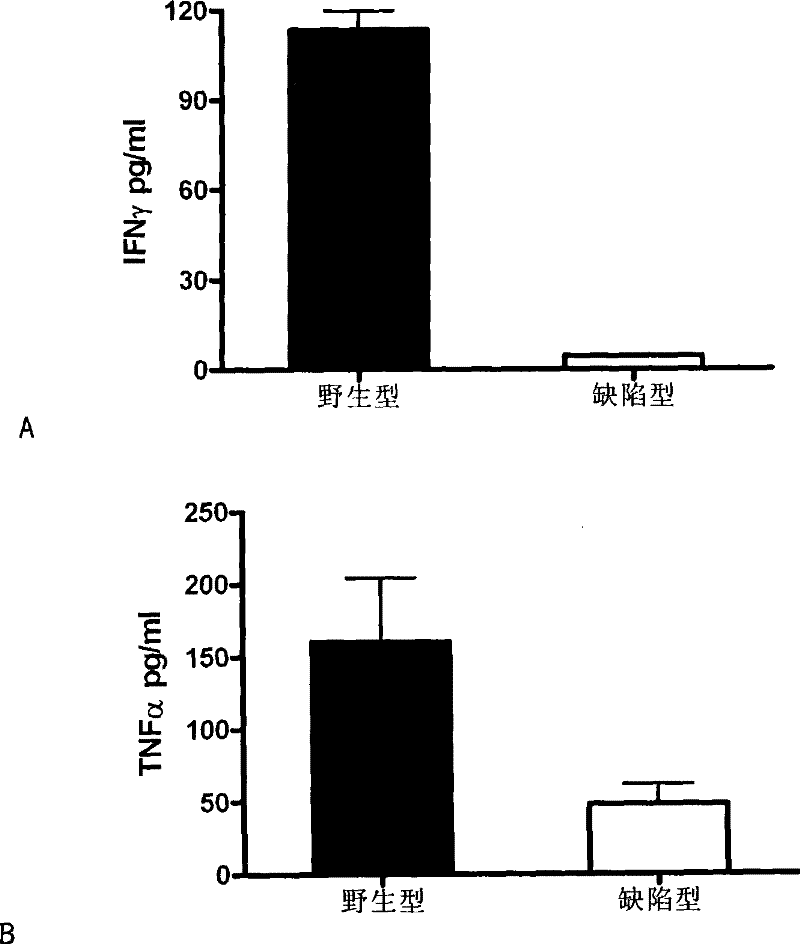
Figure 1 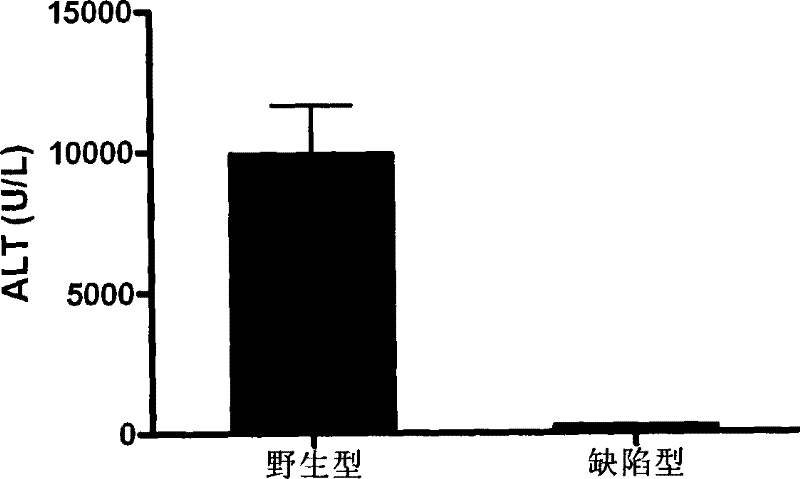
Figure 2 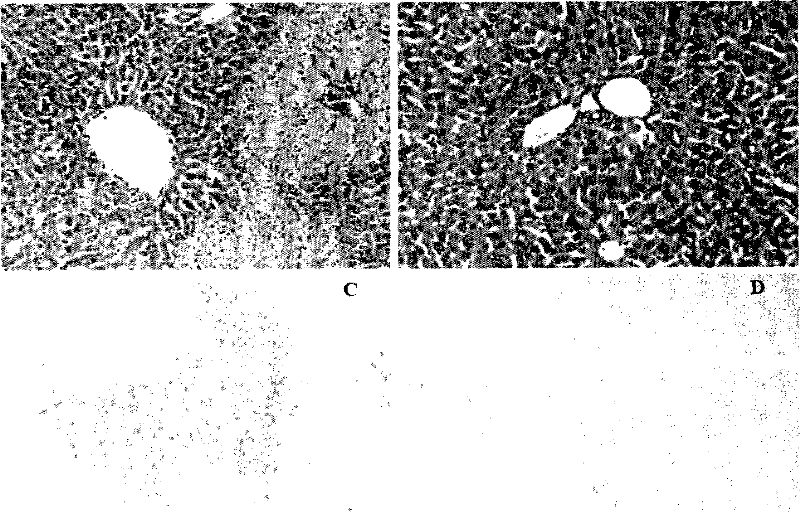
Figure 3
Abstract
Description
technical field
[0001] The invention belongs to the field of gene technology, and more specifically, the invention relates to a liver injury-related drug target and its application. Background technique
[0002] Hepatitis is a major disease that seriously endangers human health. The incidence of hepatitis, especially viral hepatitis, in China continues to be relatively high. As far as hepatitis B is concerned, 2 billion people in the world are infected with hepatitis B virus, of which 690 million are in China. There are carriers of hepatitis B virus surface antigen (HBsAg) around the world 350 million people, one-third of which are in China; 750,000 people in the world die every year from diseases caused by hepatitis B virus infection, of which 280,000 are from China.
[0003] From the perspective of etiology, hepatitis mainly includes viral hepatitis, alcoholic hepatitis, and autoimmune hepatitis. However, studies have found that regardless of the initial etiology, inflam...
Examples
preparation example Construction
[0064] The preparation method of the small interfering RNA is not particularly limited in the present invention, including but not limited to: chemical synthesis method, in vitro transcription method and the like. It should be understood that after knowing the correlation between Scd1 and liver damage, those skilled in the art can conveniently prepare the small interfering RNA in various ways, so as to inhibit liver damage. The small interfering RNA can be delivered into the body (such as the liver site) by using appropriate transfection reagents, or can also be delivered into the body by using various techniques known in the art.
[0065] In addition, the sense and antisense strands contained in the small interfering RNA can be prepared by one or more expression cassettes encoding the sense and antisense strands. When the sense and antisense strands are encoded by a single expression cassette, they can be cleaved from the resulting transcript to form separate sense and antise...
Embodiment 1
[0086] Example 1. Effect of Scd1 deficiency on serum cytokines in mice with liver injury
[0087] In 2004, Lu et al. reported a gene mutant mouse ab xyk (See Mol Gen Genomics (2004) 272:129-137). These mice were backcrossed with Balb / c mice for 2 generations, and used for the research of the present invention as Scd1-deficient mice.
[0088] Normal (wild-type) mice: Balb / c mice, purchased from Shanghai Slack Experimental Animal Co., Ltd.
[0089] In order to study liver-related diseases, a variety of liver-related animal models have been established in recent decades. The establishment of animal models of immune liver disease mainly stimulates and activates immune cells by various means, which increases the expression of various inflammatory cytokines, thereby causing apoptosis and death of hepatic parenchymal cells. Among these means of stimulating active immune cells, tail vein injection of ConA is a well-recognized and effective means, which can simulate the pathogenesis...
Embodiment 2
[0095] Example 2. Scd1 deficiency reduces alanine aminotransferase activity in mice with liver injury
[0096] Normal mice and Scd1-deficient mice were injected with ConA at a dose of 15 mg / kg through the tail vein to induce liver injury, and the serum was collected 17 hours later, and the activity of alanine aminotransferase in the serum was measured by conventional methods.
[0097] see results figure 2 , it can be seen that the serum alanine aminotransferase activity of Scd1-deficient mice was significantly lower than that of normal mice and control mice.
[0098] Thus, downregulation of Scd1 in mice significantly reduced alanine aminotransferase activity in mice with liver injury.