
Time-resolved extreme-low-light multispectral imaging system and method
A multi-spectral imaging and time-resolved technology, applied in the field of extremely weak light detection, can solve the problem of narrow response spectrum range
Patent Information
- Authority / Receiving Office
- CN · China
- Patent Type
- Patents(China)
- Current Assignee / Owner
- Publication Date
- 2013-09-11
Smart Images
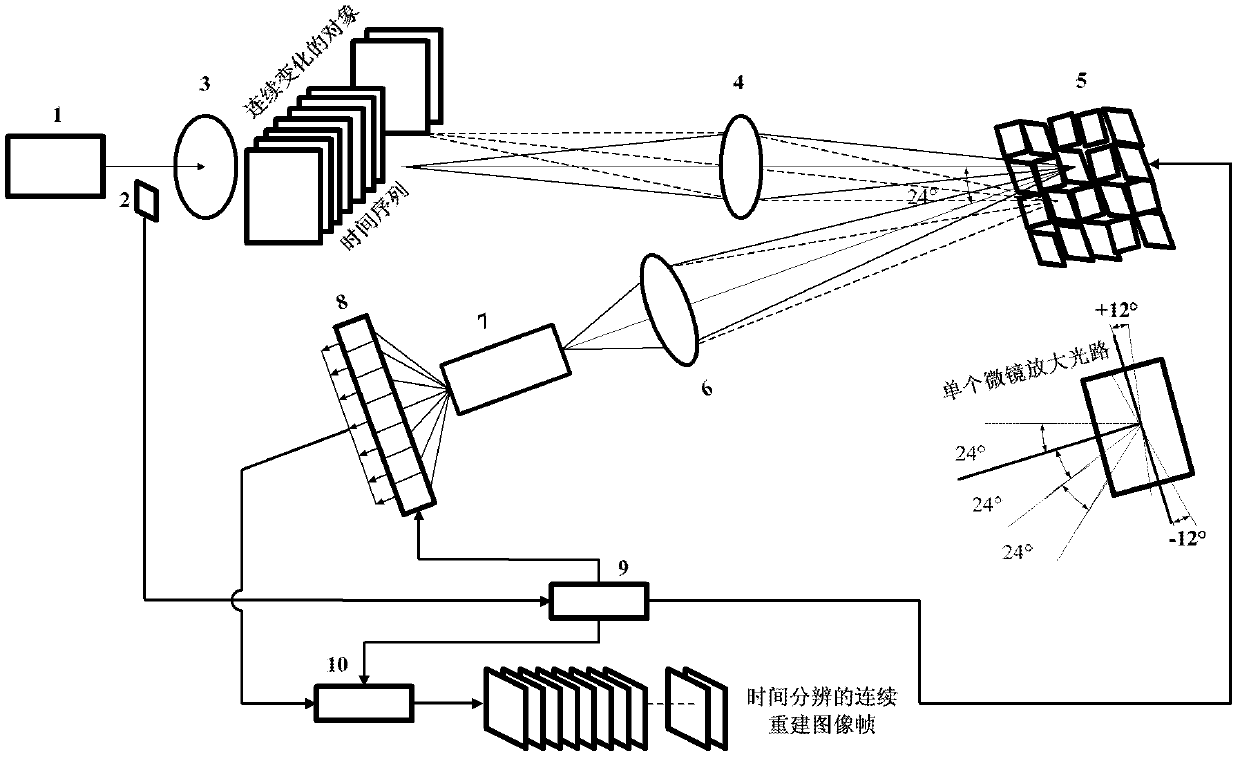
Figure 1 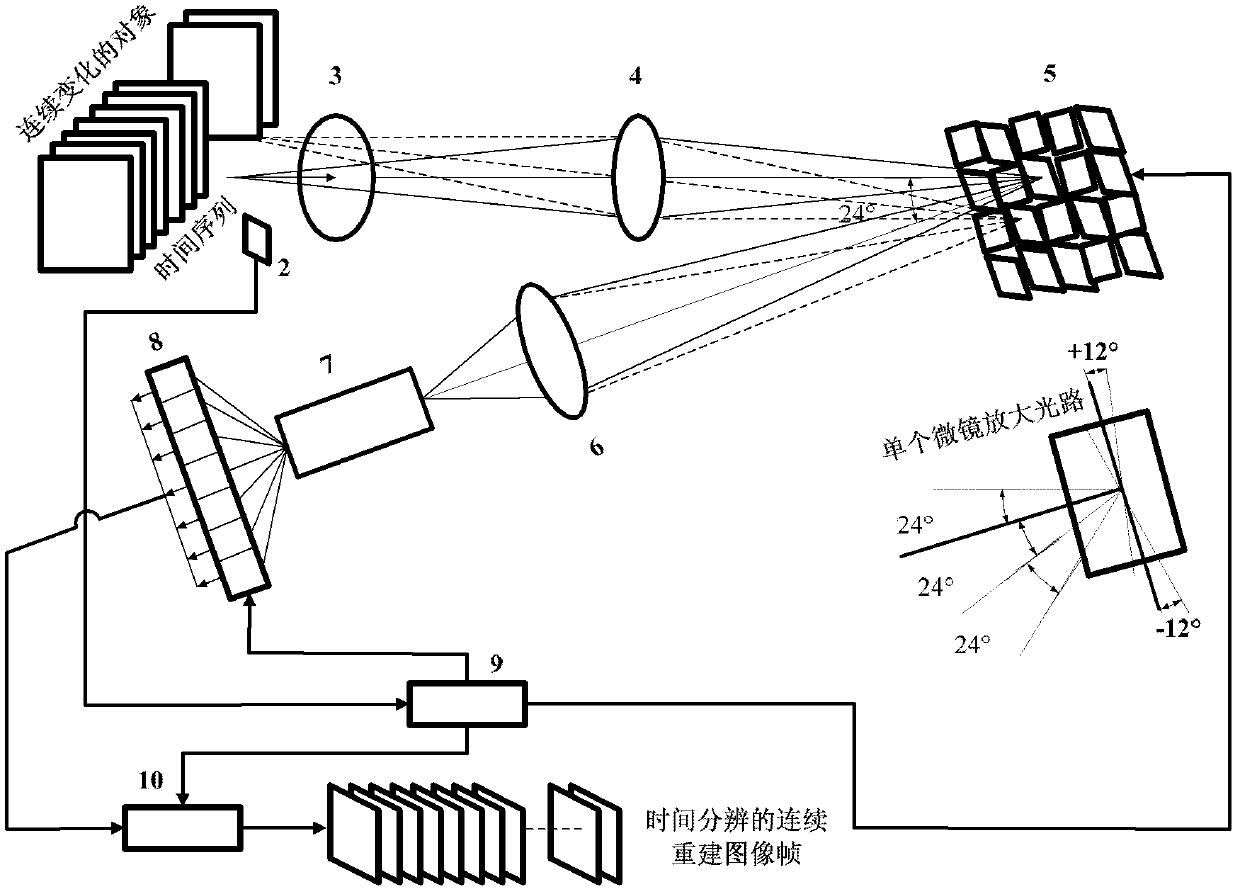
Figure 2 
Figure 3
Abstract
Description
technical field
[0001] The invention relates to the technical field of extremely weak light detection, in particular to a time-resolved extremely weak light multispectral imaging system and method. Background technique
[0002] Multispectral imaging is an important technology to obtain and display accurate color information. One of the reasons is that multispectral images contain more spectral information. The second reason is that multispectral imaging technology overcomes metamerism well. The multi-spectral imaging of extremely low-light objects has broad application prospects in various fields.
[0003] The present invention is based on the improvement and innovation of predecessors' work. In this field, our institute already has a patent "A Very Weak Light Multispectral Imaging Method and System" (application number or patent number: 201110166471.6, applicant or patentee: Center for Space Science and Applied Research, Chinese Academy of Sciences) , the patent is the wo...
Examples
specific Embodiment approach
[0137] According to the above time-resolved extremely weak light multi-spectral imaging method, the specific embodiments of the present invention are as follows:
[0138] Such as figure 1 As shown, the extremely weak light source 1 emits the extremely weak light to trigger the trigger 2, and the drive control module 9 makes the subsequent devices start to work normally, and then every t time interval (this time interval can be extremely short, it is expected to reach picoseconds or even nanoseconds) level, in order to achieve time resolution) to conduct a centralized sampling, and each centralized sampling k times. In each time interval, the extremely weak light passes through the filter 3 to filter out the stray light and hits the continuously changing object (direct transmission is followed by transmitted light, oblique light is followed by reflected light), and then passed through the optical imaging system 4 Imaging on the DMD micromirror array 5, using DLP digital light ...