
Rolling method capable of improving biting condition in rolling process of reversible rolling mill
A technology of rolling process and conditions, applied in metal rolling and other directions, can solve the problems of increasing the size of the rolling mill arch, motor power, increasing the investment in rolling mill equipment, and reducing the surface quality of the steel plate, reducing energy consumption, saving rolling time, The effect of reducing the number of passes
Patent Information
- Authority / Receiving Office
- CN · China
- Patent Type
- Patents(China)
- Current Assignee / Owner
- Publication Date
- 2015-05-20
Smart Images
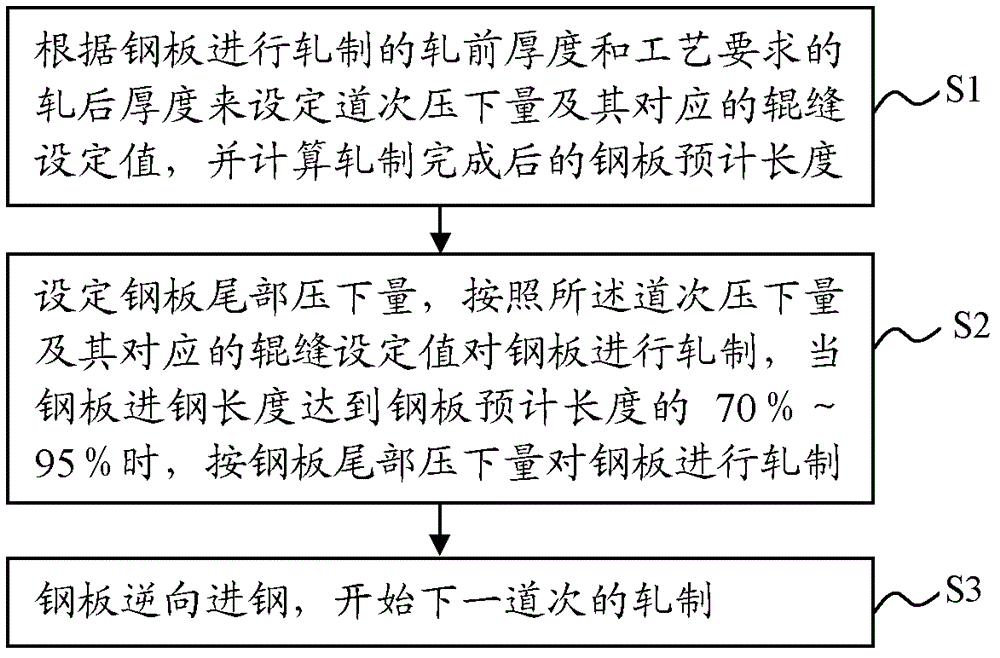
Figure 1 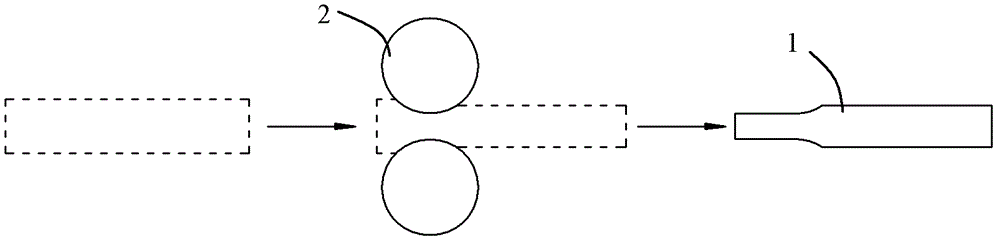
Figure 2 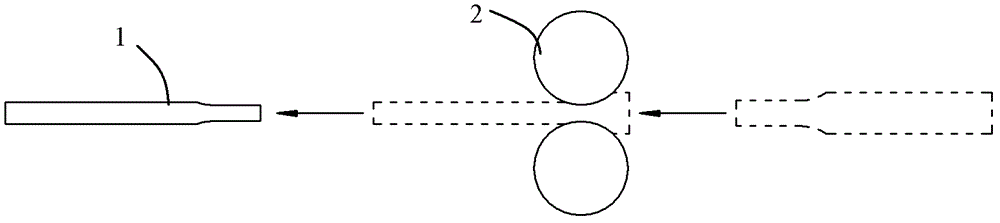
Figure 3
Abstract
Description
technical field
[0001] The invention relates to a rolling process of a reversible rolling mill, in particular to a rolling method for improving the biting condition in the rolling process of the reversing rolling mill. Background technique
[0002] The forming and widening stages of plate rolling and the rough rolling stage of hot rolling all belong to high-quality rolling, and usually both hot rolling rough rolling mills and plate rolling mills use reversing rolling mills. In the rolling process, it is usually desired to use as few passes as possible to reach the target thickness of the rolling stage as soon as possible. There are two main advantages of reducing the rolling time. One is to increase the rolling productivity of the production line; the other is to reduce the temperature loss during the rolling process, thereby reducing the temperature of the heating furnace and saving energy. Reducing the number of passes requires increasing the amount of reduction per pass,...
Examples
Embodiment Construction
[0022] see Figure 1 ~ Figure 4 In the figure, 1 is a steel plate, and 2 is a roll. The steel plate 1 is rolled by using the rolling method of the present invention to improve the biting condition in the rolling process of a reversible rolling mill. Include the following steps:
[0023] Step 1. Setting of pass reduction and roll gap (S1)
[0024] When the steel plate is rolled for one pass on the reversible rolling mill, the pass reduction dh and the corresponding roll gap setting are set according to the thickness before rolling of the steel plate for this pass and the thickness after rolling required by the process value gap, and calculate the estimated length length of the steel plate after the pass rolling is completed using the pass reduction dh and the corresponding roll gap setting value gap. The pass reduction dh is the difference between the pre-rolling thickness of the steel plate and the post-rolling thickness required by the process. Existing rolling mills are u...