
A kind of method for correcting aberration of spectacle lens and spectacle lens thereof
A spectacle lens and lens technology, applied in glasses/protective glasses, glasses/goggles, optics, etc., can solve problems such as uniformity and effectiveness, insufficient aberration correction, lack of
Patent Information
- Authority / Receiving Office
- CN · China
- Patent Type
- Patents(China)
- Current Assignee / Owner
- Publication Date
- 2017-10-24
Smart Images
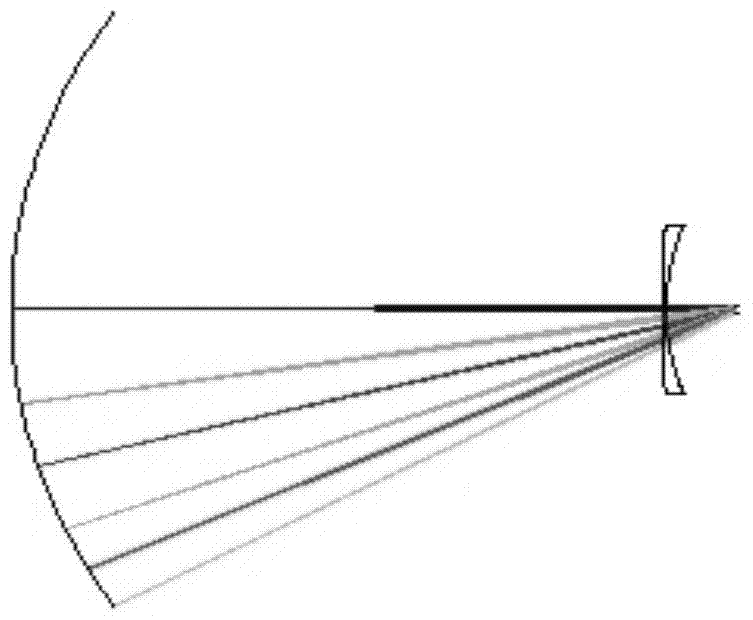
Figure 1 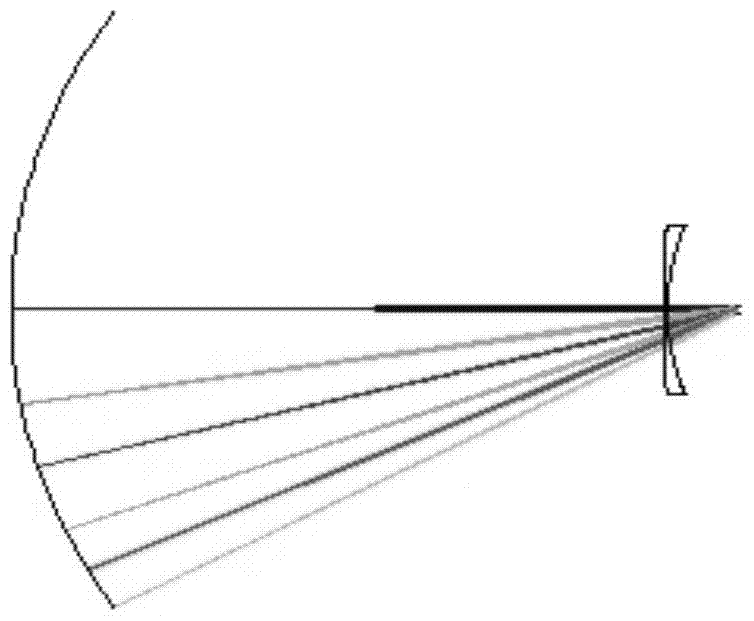
Figure 2 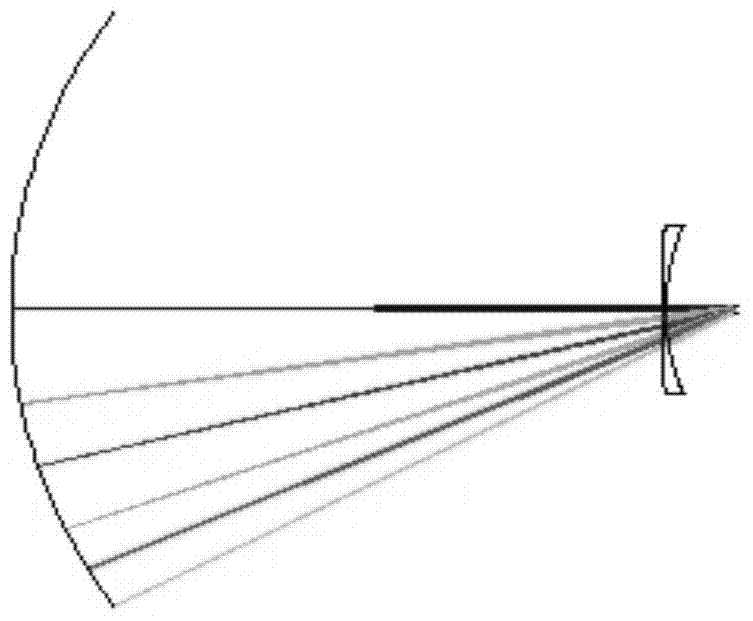
Figure 3
Abstract
Description
technical field
[0001] The invention relates to a spectacle lens manufacturing technology, in particular to a method for correcting aberrations of spectacle lenses and spectacle lenses, which can be applied to various spectacle lenses, including myopia lenses, presbyopic lenses, and aspheric lenses, so as to improve the Peripheral imaging clarity. Background technique
[0002] In order to obtain spectacle lenses with clear vision, it is necessary to eliminate aberrations that affect the imaging clarity of the spectacle lenses during the optical design of the spectacle lenses. Usually these aberrations include spherical aberration, chromatic aberration, astigmatism, spot diagram, transfer function, etc., but how to eliminate the aberration and to what extent there is no standard yet. Furthermore, it is very difficult to measure the aberration of spectacle lenses, which requires professional laboratories, specialized testing instruments, and well-trained testers. Some are av...
Examples
Embodiment 1
[0062] see figure 1Shown, a kind of aberration-correcting spectacle lens, described lens is an aspheric myopia spectacle lens, spectacle lens first surface is the even number aspherical refraction surface, the even number aspheric refraction surface is determined by the following function:
[0063]
[0064] In the formula, Zm is the sagittal height at a certain point (X, Y) on the aspheric refraction surface,
[0065] Cm is the curvature at the center of the apex of the aspheric refractive surface, and
[0066] is the distance from the center of the apex of the aspheric refracting surface,
[0067] A2n, that is, A4, A6, A8, A10, A12, A14, and A16 are high-order coefficients of the aspheric surface.
[0068] The initial structure of this embodiment selects the embodiment one of the invention patent CN1412604A: the lens disclosed by the patent CN1412604A is an aspheric myopia lens, and its diopter is -4D. Diopter -4.5D, the specific parameters are shown in the table be...
Embodiment 2
[0117] Embodiment two: see figure 2 As shown, in this embodiment, its correction method and manufacturing method are similar to Embodiment 1, the difference is: the C1 surface of its first surface is a spherical surface, and its aspheric coefficient: A4=A6=A8=A10=A12 =A14=A16=0;
[0118] The C2 surface of the second surface is an aspheric surface, and its aspheric coefficients: A4=-2.916E-7, A6=-2.929E-10, A8=6.180E-13, A10=-2.434E-14, A12=1.569E -16, A14=-3.668E-19, A16=2.979E-22;
[0119] According to the above optimization results, the following table of comparison between optimized aberrations and unoptimized aberrations is obtained:
[0120]
[0121] It can be seen from the above table that each index in this embodiment is much better than the prior art before optimization.
Embodiment 3
[0122] Embodiment three: see image 3 As shown, an aberration-correcting spectacle lens has a diopter of -6D and is a double-sided aspheric myopia spectacle lens. Its structural parameters are as follows (using the structure of the existing disclosed invention patent ZL201010292410.X as an example):
[0123]Front surface R1 aspheric coefficient: A4=1.122E-7, A6=-6.477E-9, A8=1.632E-11, A10=-1.792E-14, A12=1.03E-17, A14=-2.997E- twenty one,
[0124] A16=3.397E-25;
[0125] R2 aspherical coefficient of rear surface: A4=-5.568E-7, A6=-6.906E-9,
[0126] A8=1.807E-11, A10=-2.137E-14, A12=1.3E-17, A14=-3.901E-21,
[0127] A16=4.517E-25;
[0128]
[0129]
[0130] According to the above parameters, the following aberrations are calculated:
[0131]
[0132] It can be seen from the above table that the aberration GDB40=123.9 (equivalent to X=20.65%) of the invention patent ZL201010292410.X (aspherical myopia lens) is relatively large, so we have a good image quality of ...